


Sign up for the Today newsletter
Get everything you need to know to start your day, delivered right to your inbox every morning.


“Traffic might be the biggest headache that you have to deal with every single day,” Boston Mayor Michelle Wu told reporters last Thursday, touting Google’s technological promise to target small traffic hotspots. “We know that even small tweaks can go a long way.”
Project Green Light uses AI and Google Maps’ driving trends to model traffic patterns and also make signal timing recommendations for city traffic engineers to implement, according to the company’s website. For the past five months, the Google team has been analyzing traffic at hundreds of intersections around Boston and providing suggestions for optimizing traffic signals and patterns to minimize time stopped unnecessarily at red lights.
While transportation planners warn that Google’s technology is not a panacea, the technology offers the promise to quickly, albeit often modestly, reduce preventable traffic snarls.
Since the partnership began, Boston has already implemented Google’s suggestions by changing signal timing at intersections in Fenway-Kenmore, Mission Hill, and Jamaica Plain. Once the changes are made, such as keeping a light green in one direction for longer, the Green Light team then analyzes the resulting impact on traffic and provides the city with that data.
Intersections where changes have been made have quickly seen improvements.
At Huntington Ave. & Opera Place and at Amory Street & Green Street, “stop-and-go traffic has been reduced by over 50 percent,” according to the city. Wu touted the statistics as well, saying that the use of the technology to combat congestion “is one piece of something that we know to be a bigger part of the solution.”
In some cases, she added, that solution can be quite simple. “Sometimes it’s just a matter of how long a particular light stays green going one direction in the intersection versus the cross street,” Wu said.
Worldwide, 13 other cities on four continents are using it, including Rio de Janeiro in Brazil, Manchester in England, and Hamburg in Germany. Google is not currently charging its partner cities to use Green Light, and the program does not require cities to purchase hardware.
Early numbers from Google’s analysis of traffic patterns before and after recommended changes were made to traffic signals during tests conducted in 2022 and 2023 indicate a “potential for up to 30 percent reduction in stops,” according to the company. Google says cities using the technology have also seen, on average, a 10 percent reduction in tailpipe emissions at intersections.
While the city’s transportation department continuously monitors traffic with cameras at intersections, enabling it to respond when traffic snags arise, Wu said manual adjustments can’t fully address the big-picture problem.
“In order for us to really think about traffic and fixing it across the entire city, we can’t just go like by light by light and do it,” she said. With the data from Google, “we can then go in and really have a tailored approach … in a much more effective way.”
The technology can be “incredibly effective,” said Stacy Thompson, the executive director of LivableStreets Alliance, a transit advocacy group based in Cambridge.
At intersections where traffic patterns are changing throughout the day, the traffic lights can be taught “how to respond in more real-time,” she said. Or, she added, the technology can help often backed-up intersections cycle traffic through faster.
But it is not a “one-size-fits-all solution” for tackling congestion, Thompson stressed. Problems arise when the technology only focuses on cars, and intersections in the city need to “work for everyone,” including bikers and pedestrians, she said.
“I would actually love to see an expansion of this program that includes things like queue jumps [when a bus gets priority at an intersection] … things that really are also monitoring pedestrian flow,” Thompson said. “And, of course, optimization for the increasing number of bike lanes and bike signals.”
“All need to fit under this smart signals technology,” said Thompson, who added that the city should be transparent about where and how it is using the technology.
Ultimately, these are the goals, said Michael Lawrence Evans, Boston’s director of emerging technology. But some of that technology does not yet exist, and true adaptive signaling is expensive and requires a lot of hardware and maintenance.
“A platform like Green Light was a pretty low barrier way for us to try more frequent signal timing changes based on fresh data,” he said.
Having that new data “to validate the impact of the interventions is really helpful,” said Santi Garces, Boston’s chief innovation officer, but such tools are “not substitutes for this comprehensive policy approach to building better roads.”
Wu also acknowledged that the AI-powered experiment will not solve Boston’s traffic issues.
Her administration has prioritized making buses more reliable, reducing congestion by ramping up enforcement of double parking, and improving street safety and access, such as by expanding the city’s bike lane network. Artificial intelligence is one more part of the arsenal. The big-picture focus is “on trying to make sure that this is as convenient as possible to get around,” Wu said.
Shannon Larson can be reached at shannon.larson@globe.com. Follow her @shannonlarson98.


Local News
An East Boston father is suing ICE, alleging immigration agents unlawfully stopped, arrested, and detained him because of his race and national origin despite having his legal status, his lawyers said.
Lawyers for Civil Rights filed the lawsuit Thursday on behalf of Jose Pineda, a 62-year-old Salvadoran immigrant who has lived in the U.S. for more than three decades and is authorized to remain and work through humanitarian relief, the nonprofit legal organization said in a press release.
The suit is seeking damages under the Federal Tort Claims Act, alleging false arrest, false imprisonment, assault, and severe emotional distress.
“I came to the United States to escape the civil war that devastated El Salvador. I worked hard, started a family, and built a life here,” said Pineda, who works as a landscaper and lives with his wife and 13-year-old daughter. “I never expected to feel that kind of fear again, much less in the United States.”
According to the 30-page complaint, written by LCR senior attorneys Victoria Miranda and Mirian Albert, Pineda has been a recipient of Temporary Protected Status, which allows certain foreign nationals from designated countries to live and work legally in the U.S.
Pineda also had a pending asylum petition and had been granted a T visa, which provides immigration protections to trafficking victims, the complaint states.
“We will not stand idly by as ICE wreaks havoc on immigrant families. Through racial profiling, ICE agents are carrying out an unquestionably discriminatory agenda,” Miranda said in the release. “The law exists to protect people like Mr. Pineda, and it must be enforced against ICE.”
The lawsuit stems from a May 2025 encounter in Weymouth, where Pineda was driving a landscaping truck to a job site when agents in unmarked ICE vehicles surrounded him, according to the complaint.
“The aggressive nature of the questioning made it clear to Mr. Pineda that he was not being judged based on any evidence of unlawful conduct, but rather on his identity, race, ethnicity, and/or national origin,” Pineda’s attorneys wrote.
The lawsuit alleges ICE officers then “forcibly” handcuffed and shackled Pineda before taking him to the agency’s field office in Burlington.
Officers searched Pineda’s belongings during the stop and again at the field office, allegedly confiscating $600 in cash that he intended to use to pay his family’s rent. The money has not been returned, according to the complaint.
Pineda spent two days in ICE custody under what the lawsuit describes as “cruel and inhumane conditions.”
“After what ICE did to me, and after everything my family has endured, I don’t know if I will ever truly feel safe again,” Pineda said.
According to the complaint, he was held in severely overcrowded cells containing more than 40 people — at times as many as 60 — leaving little room to sit and forcing him to remain standing for much of his detention. Detainees also allegedly shared a single toilet and sink without soap or toilet paper and were not provided toothbrushes, clean clothes, or showers.
Fluorescent lights remained on around the clock, making it difficult to sleep, while temperatures became “extremely cold” overnight and some detainees received only aluminum blanekts for warmth, the complaint states.
Pineda was given only a two-minute phone call during his detention and received two bottles of water each day, along with “inadequate and limited” food and water, according to the complaint.
“Mr. Pineda has suffered devastating and ongoing physical and emotional harm that has impacted all aspects of his life,” his attorneys wrote. “Mr. Pineda brings this action to seek accountability for these violent and traumatizing tortious acts of the ICE officers and to address the harms inflicted upon him.”
According to LCR, Pineda was released following advocacy by Centro Presente, a Massachusetts immigrant rights organization.
After his release, ICE initiated removal proceedings against him depsite his humanitarian protections, the organization said. Those proceedings were ultimately dismissed.
“ICE targeted Mr. Pineda based on nothing more than his perceived national origin and the nature of his work,” Albert said in the press release. “Our laws prohibit this kind of arbitrary and discriminatory enforcement. Through this lawsuit, we seek to hold the federal government accountable for the violence and harm inflicted on Mr. Pineda.”
ICE referred questions about the lawsuit to the Department of Homeland Security. DHS did not immediately respond to a request for comment Thursday evening.
Get everything you need to know to start your day, delivered right to your inbox every morning.

BOSTON (WHDH) – A pedestrian was hit and killed in Roxbury Thursday morning.
The collision occurred just before 8:20 a.m. on Tremont Street.
Police said Tremont Street was closed in both directions between Brigham Circle and Roxbury Crossing.
This is a developing news story; stay with 7NEWS on-air and online for the latest details.
(Copyright (c) 2026 Sunbeam Television. All Rights Reserved. This material may not be published, broadcast, rewritten, or redistributed.)

A 96-year-old Boston woman received the surprise of a lifetime when she discovered the French men’s national soccer team had become her neighbors at the Four Seasons Hotel in the Back Bay.
Shirley, a beloved resident of the neighborhood, said she had no idea she would end up meeting the players in town for the World Cup.
“They’re my buddies,” she said with a laugh.
Her caretaker, Samia, said Shirley has become well known around Back Bay.
“Anyone outside, when we are walking, people come to her and want to talk to her,” Samia said.
The U.S. is out of the World Cup. Fellow co-hosts Mexico and Canada are too. So who should
The excitement around the hotel grew after the French team arrived to stay there during the tournament.
Shirley said the encounter happened unexpectedly while she was eating lunch.
“I was having lunch and they came over, and since then, it’s been wonderful to have them here,” she said.
Shirley said team representatives soon invited her to meet the players.
“And they said, ‘He would like to meet you.’ I said, ‘I’m glad to meet anybody,’” she recalled.
For this Massachusetts teenager, attending a World Cup match was more than a dream come true, it was a milestone in a journey that began when he was diagnosed with Ewing sarcoma — something that might not have happened if he hadn’t been playing soccer.
After the visit, Shirley recorded a cellphone video sharing her excitement.
“This is absolutely — I cannot tell you how unbelievably fabulous this is,” she said.
The meeting ended with a memorable gift: A jersey from French star Kylian Mbappé.
The team also made her a promise.
“[They] told me that if they win, he will sign it, and then it will be worth a lot of money,” she said, laughing.
Samia, who is from Algeria, quickly agreed. She said she was already a devoted supporter of the French squad after spending many years living in France.
“I’m so excited. I went to Philadelphia to watch the game this past weekend. So, believe me, I’m totally 100% with them. I wanted them to go back to France with a cup,” she said.
Shirley said she never expected to become a fan, but she appreciated the sense of community the tournament brought to her neighborhood.
“It’s good to see such camaraderie happening, with people here getting along. Yeah, it’s the greatest thing,” she said.
She said she still did not know why the team wanted to meet her, but she’s grateful nonetheless. Shirley remains hopeful her new friends would keep winning, and keep returning to Boston.


Kelsey Mitchell winner completes Fever comeback against Mercury, without Caitlin Clark


McKeever’s 7′3″ frame made Iowa the ‘obvious choice’ in the transfer portal
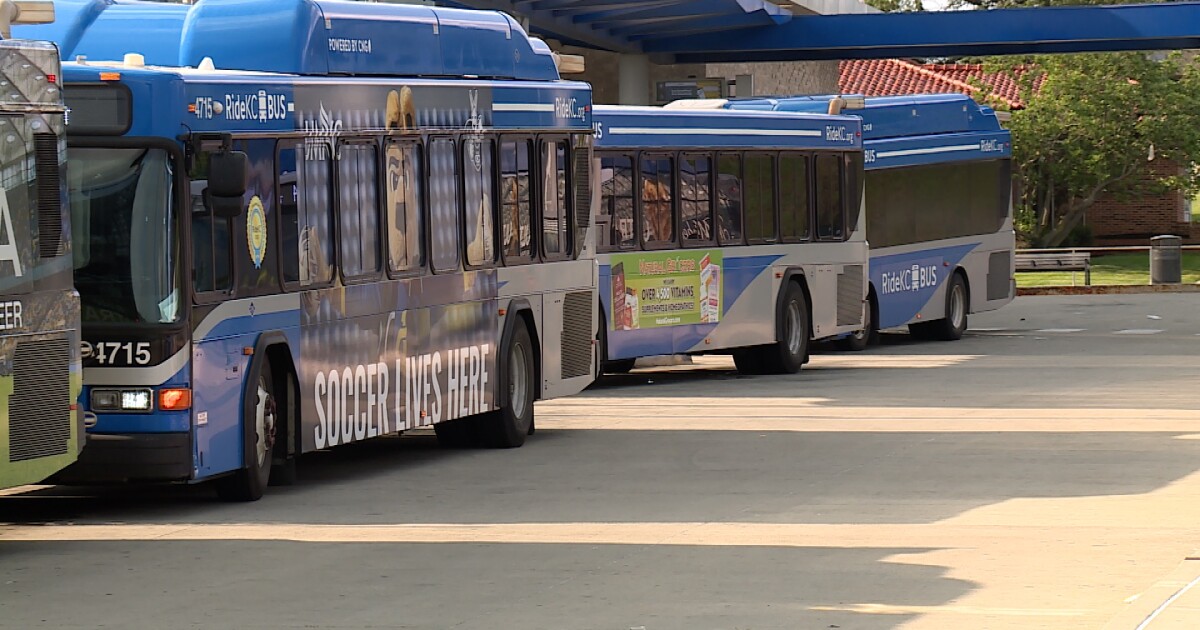
Kansas City to reduce bus transit frequency, extended hours after World Cup matches end


Public Health Student Hollie Hagan found her calling in rural Kentucky


Inside the lab at the heart of Louisiana’s mosquito-borne disease prevention network

Meet 16 obscure Maine Democrats shaping Graham Platner’s replacement


Justice Department sues Maryland over immigration policies


How two Michigan stamping plants power Stellantis turnaround plan

