Sign up for our Boston Marathon newsletter
Get Boston Marathon registration information, start times, live runner tracking, road closures, live updates from race day, special features, and more.


Bernhard Goetz, then a 37-year-old electronics technician, defended himself from a group of would-be robbers on a New York City subway car Dec. 22, 1984.
Four decades later, another New York straphanger argued self-defense to beat homicide charges in another Big Apple subway vigilante case.
In May 2023, Daniel Penny, a 26-year-old Marine veteran who was studying architecture at a New York college, placed 30-year-old Jordan Neely in a headlock to stop a violent outburst that frightened passengers and involved threats about killing them and going to prison for life.
Jurors found Penny not guilty of criminally negligent homicide earlier this month after prosecutors asked the judge to dismiss the most serious charge of manslaughter.
DANIEL PENNY FOUND NOT GUILTY IN SUBWAY CHOKEHOLD TRIAL
Bernhard Goetz, who shot four youths on a crowded subway because he felt he was about to be robbed, was cleared of all attempted murder charges. He was convicted on only one of 13 counts, third-degree weapons possession. (Bettmann via Getty images)
The trials of Goetz and Penny were both highly politicized and scrutinized because of the subjects’ races. Goetz and Penny are both White. Neely and the four men Goetz shot are Black. Legal scholars have spent years discussing whether Goetz would have shot White teens under similar circumstances. Penny’s defense repeatedly accused prosecutors of trying to unfairly inject racial undertones into a trial that did not involve hate crime charges.
Both cases also reflect deeply held public sentiment that crime was getting out of control in New York City. Goetz had been mugged multiple times in the past, which is why he said he was carrying a handgun. Penny put Neely in a chokehold after a spate of subway incidents involving mentally ill homeless people attacking passengers, telling police, “These guys are pushing people in front of trains and stuff.”
Violent crime dropped dramatically in New York City in the late 1990s and 2000s, but some crimes, robberies in particular, have risen again after a wave of anti-police rioting in 2020 and left-wing political movement to “defund the police.”
KYLE RITTENHOUSE TRIAL ‘A SHAM AT BEST,’ SUBWAY VIGILANTE BERNIE GOETZ SAYS: ‘SATISFY A MOB’
Daniel Penny returns to the courtroom after a break during his trial in Manhattan Criminal Court Dec. 3, 2024, in New York City. (Michael M. Santiago/Getty Images)
Goetz was acquitted on attempted murder charges but spent 8½ months in jail for possessing the handgun he used to defend himself without a license.
The case involved four teens — Darrell Cabey, James Ramseur, Troy Canty and Barry Allen. The first two were armed with sharpened screwdrivers, which they claimed were not weapons but tools to break into coin boxes in arcade games, according to court records.
They got on a Manhattan-bound No. 2 train in the Bronx and surrounded Goetz after he boarded at the 14th Street station in Manhattan and sat down by himself.
Goetz had an unlicensed .38-caliber pistol in his belt loaded with five rounds.
Bernhard Goetz leaves the courthouse. (Rick Maiman/Sygma via Getty Images)
The teens approached Goetz, and without displaying any weapons, Canty told him, “Give me $5.”
Rather than being robbed, Goetz pulled out the gun and fired four shots – striking Canty in the chest and Allen in the back. Another round went through Ramseur’s arm and into his side. The fourth shot missed Cabey. Goetz waited a moment, then fired his last shot at Cabey, severing his spinal cord and leaving him paralyzed.
WATCH ‘SCANDALOUS: THE SUBWAY VIGILANTE’ ON FOX NATION
A No. 2 train subway car in the aftermath of the Bernhard Goetz shooting at Manhattan’s Chambers Street Station Dec. 22, 1984. (Carmine Donofrio/NY Daily News Archive via Getty Images)
“I said, ‘You seem to be all right, here’s another,’” Goetz later told detectives. “If I was a little more under self-control … I would have put the barrel against his forehead and fired.”
He added that if he’d been carrying more bullets, he would have kept shooting.
The conductor stopped the train and radioed police. Goetz jumped off the train and fled on foot.
STREAM DANIEL PENNY’S EXCLUSIVE INTERVIEW ON FOX NATION
Screenshot from bystander video showing Jordan Neely being held in a chokehold on the New York City subway. (Luces de Nueva York/Juan Alberto Vazquez via Storyful)
The case sparked a media frenzy, and Goetz surrendered to police in Concord, New Hampshire, nine days later. He told them he’d been illegally carrying a pistol since 1981, when he had been “maimed” during a prior mugging. He also said that, on multiple occasions, he’d warded off other would-be robbers by brandishing the weapon and not firing.
Because of those prior attacks, he said, he knew the teens on the train wanted to rob him based on their behavior and the looks on their faces. Before the case went to trial, at least two of the teens reportedly admitted they were going to rob him, but a court considered those statements hearsay.
Goetz did not immediately respond to a request for comment for this story.
Read the full article from Here

NEWYou can now listen to Fox News articles!
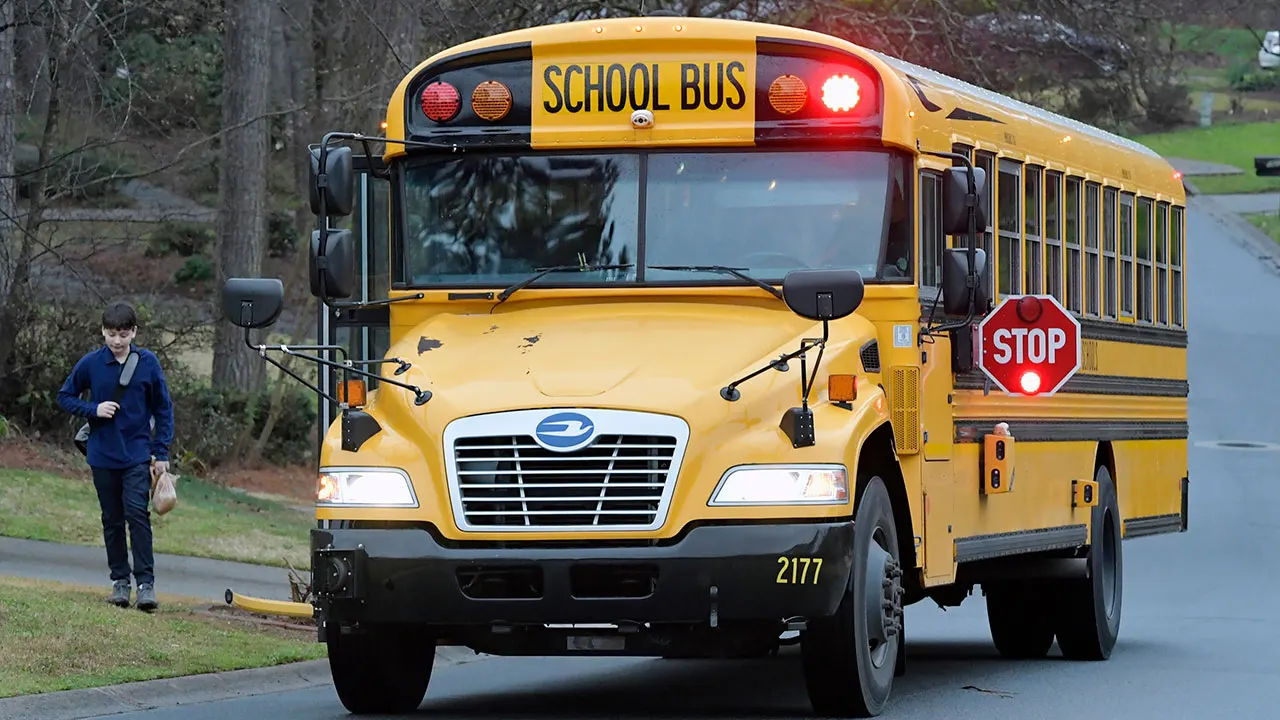
A Pennsylvania school bus driver is accused of driving 54 elementary school children while over four times the legal alcohol limit, authorities said, after reports she was swerving through traffic and nearly hitting vehicles before the bus ended up in a snowbank.
On Tuesday, Montgomery County District Attorney Kevin R. Steele and Douglass Township Police Chief Robert B. Evans announced an arrest warrant for Kelly Weber, 46, of Boyertown.
Weber is charged with driving under the influence, 54 counts each of endangering the welfare of children and reckless endangerment and related summary offenses.
Authorities said police were alerted around 4 p.m. Feb. 6 that a school bus was driving erratically and narrowly missing other vehicles.
A Pennsylvania school bus driver is accused of driving 54 children with a .331% BAC before stopping in a snowbank. She faces DUI and 54 child endangerment counts. (AP Photo/Mike Stewart, File)
A responding officer later found the bus stopped in a snowbank.
Investigators said officers found an open 750ml bottle of Tito’s vodka, two empty 50ml bottles and a receipt showing the alcohol was purchased earlier that morning.
RHODE ISLAND TEACHER ACCUSED OF SEXTING, KISSING HIGH SCHOOL BOY
A Pennsylvania school bus driver is accused of driving 54 children with a .331% BAC before stopping in a snowbank. She faces DUI and 54 child endangerment counts. (iStock)
According to authorities, a blood test showed Weber’s blood alcohol concentration was .331%, more than four times the legal limit of .08%, and detected Delta-9 Carboxy THC.
Investigators said 54 children were on the bus, including five younger than 6. Several children called or texted their parents during the ride because they were frightened by the driving, and one child exited at an earlier stop and was picked up by his parents, authorities said.
HIGH SCHOOL BASKETBALL COACH CHARGED WITH RAPING FOSTER DAUGHTER, SERVING VICTIM TEQUILA SHOTS: REPORT
A Pennsylvania school bus driver is accused of driving 54 children with a .331% BAC before stopping in a snowbank. She faces DUI and 54 child endangerment counts. (iStock, File)
“More than 50 young children were in a dangerous situation created by this defendant, who chose to consume a significant amount of alcohol and then get behind the wheel of a school bus and drive miles while intoxicated,” Steele said. “We are all thankful that this defendant didn’t crash the bus and cause further harm to these children.”
CLICK HERE TO DOWNLOAD THE FOX NEWS APP
Weber checked herself into a rehabilitation facility after the incident, authorities said. She is expected to turn herself in for arraignment, at which time bail will be set.
Related Article

Read the full article from Here

Boston Marathon
In our “Why I’m Running” series, Boston Marathon athletes share what’s inspiring them to make the 26.2-mile trek from Hopkinton to Boston. Looking for more race day content? Sign up for Boston.com’s pop-up Boston Marathon newsletter.
Name: Brianna Poehler
City/State: Granby, Mass.
I am running the 2026 Boston Marathon with Miles for Miracles in support of Boston Children’s Hospital. The Boston Marathon is deeply personal to me and my family.
My daughter is a liver transplant survivor, and at just 11 months old, she received a life-saving liver transplant at Boston Children’s Hospital.
What could have been the most devastating chapter of our lives became a story of hope, resilience, and extraordinary care because of the BCH team.
When our daughter was so small and so sick, the doctors, nurses, and staff at Boston Children’s carried us through the unimaginable.
They combined world-class medical expertise with compassion that went far beyond treatment plans and hospital rooms. They cared for our daughter as if she were their own. They supported us as anxious, exhausted parents. They gave us answers when we had questions, and reassurance when we were overwhelmed.
Most importantly, they gave our daughter a second chance at life.
Today, she is thriving because of that gift. Every milestone she reaches is a reminder of the miracle she received and the team that made it possible. Running the Boston Marathon is my way of honoring that gift and saying thank you in the most meaningful way I can.
The marathon is a test of endurance, determination, and heart — qualities I saw in my daughter during her fight and in the Boston Children’s team every single day.
With every mile I run, I will be thinking of her strength, her transplant journey, and the families who are walking similar paths right now.
By running with Miles for Miracles, I hope to raise funds that will support groundbreaking research, life-saving treatments, and compassionate care for children like my daughter. This race is more than 26.2 miles — it is a celebration of survival, gratitude, and hope.
Editor’s note: This entry may have been lightly edited for clarity or grammar.
Get Boston Marathon registration information, start times, live runner tracking, road closures, live updates from race day, special features, and more.

Along with the best football prospects the season has to offer, the NFL Draft promises to bring hundreds of thousands of visitors to Pittsburgh from April 23 to 25.
If the turnout approaches that of Detroit in 2023, those descending on the North Shore and Downtown could reach 700,000 over the three days. For reference, that’s more than 10 times Acrisure Stadium’s 68,400 seats, and more than double the city’s roughly 308,000 residents.
Where will they stay? How will they get around?
Event planners at VisitPittsburgh say the city is up to the task.
“They picked us out of several cities because we have the infrastructure,” said Perry Ivery, general manager of the Oaklander Hotel and board chair of VisitPittsburgh.
Last year, Wisconsin’s Green Bay comfortably accommodated a unique visitor count three times its 106,000 population, according to residents and local leaders.
Ivery said there are some 26,000 hotel rooms across the Pittsburgh Metropolitan Statistical Area, the bulk of which are concentrated in and around Downtown.
Even if each room holds two to four people, the total still appears to fall short. But Ivery said many attendees will be locals, whether from Pittsburgh, surrounding counties or neighboring states within a day’s drive.
Plus, a high proportion of out-of-town guests could have Pittsburgh roots and a free bed to claim in a family home, he added.
There are also around 3,500 units available for short-term rental in and around Pittsburgh through platforms like Airbnb and VRBO.
“We’re all working together to make sure everybody has a great hospitality experience in the City of Pittsburgh,” Ivery said.
Infrastructure from roads to parking, and bus and light rail routes, will also feel the strain.
Pittsburgh Regional Transit normally services around 100,000 riders on an average weekday, across its entire network. Spokesperson Adam Brandolph said the agency is prepared for the transit demands of what’s expected to be the biggest event the city has hosted.
“We’re confident that we’ll be able to meet the needs of visitors to the draft as well as daily riders,” he said, noting “no major closures or detours” are planned for the event other than the University Line project, which may see less construction during that week.
Brandolph said the agency is finalizing plans and intends to make more information public soon.
A spokesperson for VisitPittsburgh said a local committee is working with a range of stakeholders including transportation agencies, engineering partners and local government “to deliver a coordinated and comprehensive plan for the region.”
“This includes collaboration with public transit agencies on adjusted service plans, clearly marked detour routes, designated rideshare zones and proactive communication with residents, businesses and commuters,” said Alex Kenzakoski, communications director for VisitPittsburgh.
“Our shared goal is to minimize disruption, keep the region moving and make travel as predictable and seamless as possible for both fans and locals.”
Kenzakoski said details on road closures, transit adjustments and travel guidance will be made known ahead of the draft, and encouraged fans to download the NFL OnePass app for transportation information and updates.
Ivery said a successful draft week execution could line Pittsburgh up for future hosting prospects.
“There’re going to be folks that come in that have never been to Pittsburgh … This is a case to showcase our town, and our hotels,” he said.
“We’re friendly, we have grit, we’re very excited to showcase that we can do large-scale activities.”
This story first appeared in Pittsburgh’s Public Source. Read the original here.





Exclusive: DeepSeek withholds latest AI model from US chipmakers including Nvidia, sources say


Mother and daughter injured in Taunton house explosion


Setting sail on iceboats across a frozen lake in Wisconsin


AM showers Sunday in Maryland


10 acres charred, 5 injured in Thornton grass fire, evacuation orders lifted


Florida man rescued after being stuck in shoulder-deep mud for days


Wildfire near Gum Swamp Road in Livingston Parish now under control; more than 200 acres burned


2026 OSAA Oregon Wrestling State Championship Results And Brackets – FloWrestling