Connect with us

News

President Xi in Paris, Met Gala in New York and a rate decision in London

Published

on

President Xi in Paris, Met Gala in New York and a rate decision in London

Stay informed with free updates

This article is an on-site version of our The Week Ahead newsletter. Subscribers can sign up here to get the newsletter delivered every Sunday. Explore all of our newsletters here

Hello and welcome to the working week.

Get out your glad rags because it’s time for the rich and powerful to show off in front of the cameras. Yes, New York is hosting the annual Met Gala and the theme is Sleeping Beauties: Reawakening Fashion. Will Elon Musk turn up again looking like an awkward teenager in his white tie and tails? For more details, read the excellent Fashion Matters newsletter. FT subscribers can sign up here.

Advertisement

China’s President Xi Jinping may well be hoping that a bit of French fashion chic will rub off on him as he arrives in Paris for the first of several European state visits this week. Monday will be the key meeting with both French President Emmanuel Macron and European Commission head Ursula von der Leyen. Xi will then travel to Serbia and Hungary.

This week’s newsworthy rate setters are the Bank of England and, to a lesser extent, the Reserve Bank of Australia. Neither is expected to move rates, but watch out for signals that cuts are coming soon. UK watchers will be looking out for the first stab at first-quarter GDP numbers on Friday, expected to confirm the general perception of an economy at best only able to produce sluggish growth. Elsewhere, China looks to trade and Germany to factory orders.

It’s a delayed start to the week for the financial markets in London, Tokyo and Seoul due to the May Day and Children’s Day public holidays, but still a fairly busy week for corporate news. Media is a strong theme for this week’s results, with Disney, Fox, Warner Bros Discovery and (big for the UK) ITV all reporting. Also, on Tuesday, BP reports first-quarter numbers, with analysts expecting strong growth in gas trading but weaker fuel margins. Will there be any more changes to the senior management team in the wake of the Bernard Looney scandal?

One more thing . . . 

This is a bumper week for British anniversaries. Monday not only marks a year since King Charles III was crowned at Westminster Abbey (and he now has a pretty scroll to prove it), but is the 30th anniversary of the Channel Tunnel’s formal opening and the 70th of Roger Bannister breaking the four-minute mile.

Before the week is out, it will also be another significant anniversary (at least to me): my birth. This will be celebrated by my finally getting to see Nye at London’s National Theatre (as endorsed by my employer) with supper at the (equally eagerly anticipated) theatre restaurant Lasdun. If you don’t believe me on that last point, read this persuasive review from the world’s most eloquent food critic (IMHO) Tim Hayward.

Advertisement

How do you intend to spend the week ahead, and what are your priorities? Email me at jonathan.moules@ft.com or, if you are reading this from your inbox, hit reply.

Key economic and company reports

Here is a more complete list of what to expect in terms of company reports and economic data this week.

Monday

  • China, EU, France, Germany, India: Caixin/HCOB/HSBC April services purchasing managers’ survey (PMI) data

  • Japan/South Korea: Children’s Day. Financial markets closed

  • UK/Ireland: May Day bank holiday. Financial markets closed

  • Results: BioNTech Q1, Tyson Foods Q2, Westpac HY

Tuesday

  • Apple hosts a product launch event called Let Loose with the usual secrecy around the device being unveiled, though many expect a new iPad tablet

  • Australia: Reserve Bank of Australia monetary policy decision

  • Germany: March industrial orders and foreign trade figures

  • Japan: April services PMI data

  • UK: BRC-KPMG Retail Sales Monitor and Halifax House Price index

  • Results: Adecco Q1, ANZ HY, Bouygues Q1, BP Q1, Deutsche Post Q1, Electronic Arts Q4, Geberit Q1, Heidelberg Materials Q1, IAC Q1, Infineon Technologies Q2, IWG Q1, Kenvue Q1, Lyft Q1, Nintendo FY, Reddit Q1, Ricoh FY, Saudi Aramco Q1, UBS Q1, UniCredit Q1, Walt Disney Co Q2

Wednesday

  • US Federal Reserve’s Exploring Careers in Economics event in Washington. Speakers include Fed board vice-chair Philip Jefferson

  • Brazil: Banco Central do Brasil Monetary Policy Committee (Copom) rate-setting decision announced

  • Germany: March industrial production

  • Results: Ahold Delhaize Q1, Airbnb Q1, Alliance Pharma FY, Alstom FY, Anheuser-Busch InBev Q1, Bertelsmann Q1, Boohoo FY, BMW Q1, Continental Q1, Fox Corp Q3, Henkel Q1, Itochu FY, Match Q1, OSB Q1 trading update, Puma Q1, Renishaw trading update, Skanska Q1, Toyota FY, Tripadvisor Q1, Uber Q1, Wetherspoon trading update

Thursday

  • China: April trade balance figures

  • Russia: Victory Day. Financial markets closed

  • UK: Bank of England’s Monetary Policy Committee rate-setting decision. Later, the bank will host a virtual Q&A with its chief economist Huw Pill on its latest Monetary Policy Report. Register here. Also, Rics Residential Market Survey and REC-KPMG Jobs Report

  • Results: 3i FY, Asahi Kasei FY, Balfour Beatty AGM trading update, Enel Q1, Ferrovial Q1, ITV Q1 trading update, Nikon FY, Nippon Steel FY, Nissan FY, Panasonic FY, Telefónica Q1, Warner Bros Discovery Q1, Wood Q1 trading update and AGM

Friday

  • Indonesia: Ascension of Jesus Christ holiday. Financial markets closed

  • Eurozone: European Central Bank publishes its last monetary policy meeting minutes

  • Japan: March trade balance figures

  • UK: preliminary Q1 GDP estimate

  • US: University of Michigan May consumer sentiment survey

  • Results: CRH Q1, Honda FY, KDDI FY, IAG Q1, Iveco Q1, Mazda FY, NTT FY, Tata Motors FY

World events

Finally, here is a rundown of other events and milestones this week.

Monday

  • Chad: presidential election first round, with a run-off vote on June 22 if required, the result of constitutional changes approved in a referendum last year

  • France: Chinese President Xi Jinping travels to Paris where he will meet French President Emmanuel Macron and European Commission head Ursula von der Leyen for a state visit

  • Israel: Holocaust Martyrs’ and Heroes’ Remembrance Day aka Yom HaShoah.

  • Panama: winner in the presidential election expected to be announced, after one of the most unusual campaigns since democracy was restored after a US invasion in 1989

  • UK: deadline for candidates to register in the Scottish National party’s leadership contest following the chaotic departure of Humza Yousaf

  • US: 108th annual Pulitzer Prize winners and nominated finalists announced online for prizes in journalism, drama, letters and music. Separately, the Costume Institute Benefit, aka the Met Gala, is held in New York. Here are what attendees wore last year to the fashion industry’s big night out

Tuesday

Wednesday

  • North Macedonia: parliamentary elections and presidential election run-off

  • UK: Prince Harry attends the Invictus Games 10th anniversary service at St Paul’s Cathedral in London

Thursday

  • EU: Europe Day, marking the 1960 declaration issued by Robert Schuman proposing a European continent united in solidarity

  • Russia: military parade in Red Square, Moscow, to mark the second world war victory day

  • UK: City of London Corporation’s Easter Banquet for the Diplomatic Corps, with a speech by foreign secretary Lord David Cameron

Friday

  • Iran: parliamentary election run-off

  • UK: Christopher Berry and Christopher Cash appear in court in London accused of spying for China

Saturday

  • Sweden: Eurovision Song Contest, hosted by last year’s winning nation

  • US: Republican presidential candidate Donald Trump stages a campaign rally in Wildwood, New Jersey

Sunday

  • Lithuania: presidential election

  • Spain: Catalonia regional parliamentary elections

  • UK: Bafta TV Awards held at London’s Royal Festival Hall

Recommended newsletters for you

One Must-Read — The one piece of journalism you should read today. Sign up here

Working It — Discover the big ideas shaping today’s workplaces with a weekly newsletter from work & careers editor Isabel Berwick. Sign up here

Advertisement

News

Brass bands in Beijing make way for sticker shock at home as Trump returns to escalating inflation

Published

on

Brass bands in Beijing make way for sticker shock at home as Trump returns to escalating inflation

WASHINGTON (AP) — President Donald Trump returned from the spectacle of a Chinese state visit to a less than welcoming U.S. economy — with the military band and garden tour in Beijing giving way to pressure over how to fix America’s escalating inflation rate.

Consumer inflation in the United States increased to 3.8% annually in April, higher than what he inherited as the Iran war and the Republican president’s own tariffs have pushed up prices. Inflation is now outpacing wage gains and effectively making workers poorer. The Cleveland Federal Reserve estimates that annual inflation could reach 4.2% in May as the war has kept oil and gasoline prices high.

Trump’s time with Chinese leader Xi Jinping appears unlikely to help the U.S. economy much, despite Trump’s claims of coming trade deals. The trip occurred as many people are voting in primaries leading into the November general election while having to absorb the rising costs of gasoline, groceries, utility bills, jewelry, women’s clothing, airplane tickets and delivery services. Democrats see the moment as a political opportunity.

“He’s returning to a dumpster fire,” said Lindsay Owens, executive director of Groundwork Collaborative, a liberal think tank focused on economic issues. “The president will not have the faith and confidence of the American people — the economy is their top issue and the president is saying, ‘You’re on your own.’”

The president’s trip to Beijing and his recent comments that indicated a tone-deafness to voters’ concerns about rising prices have suggested his focus is not on the American public and have undermined Republicans who had intended to campaign on last year’s tax cuts as helping families.

Advertisement

Trump described the trip as a victory, saying on social media that Xi “congratulated me on so many tremendous successes,” as the U.S. president has praised their relationship.

Trump told reporters that Boeing would be selling 200 aircraft — and maybe even 750 “if they do a good job” — to the Chinese. He said American farmers would be “very happy” because China would be “buying billions of dollars of soybeans.”

“We had an amazing time,” Trump said as he flew home on Air Force One, and told Fox News’ Bret Baier in an interview that gasoline prices were just some “short-term pain” and would “drop like a rock” once the war ends.

Inflationary pain is not a factor in how Trump handles Iran

Trump departed from the White House for China by saying the negotiations over the Iran war depended on stopping Tehran from developing nuclear weapons. “I don’t think about Americans’ financial situation. I don’t think about anybody. I think about one thing: We cannot let Iran have a nuclear weapon,” Trump said.

That remark prompted blowback because it suggested to some that Trump cared more about challenging Iran than fighting inflation at home. Trump defended his words, telling Fox News: “That’s a perfect statement. I’d make it again.”

Advertisement

The White House has since stressed that Trump is focused on inflation.

Asked later about the president’s words, Vice President JD Vance said there had been a “misrepresentation” of the remarks. White House spokesman Kush Desai said the “administration remains laser-focused on delivering growth and affordability on the homefront” while indicating actions would be taken on grocery prices.

But as Trump appeared alongside Xi, new reports back home showed inflation rising for businesses and interest rates climbing on U.S. government debt.

His comments that Boeing would sell 200 jets to China caused the company’s stock price to fall because investors had expected a larger number. There was little concrete information offered about any trade agreements reached during the summit, including Chinese purchases of U.S. exports such as liquefied natural gas and beef.

“Foreign policy wins can matter politically, but only if voters feel stability and affordability in their daily lives,” said Brittany Martinez, a former Republican congressional aide who is the executive director of Principles First, a center-right advocacy group focused on democracy issues.

Advertisement

“Midterms are almost always a referendum on cost of living and public frustration, and Republicans are not immune from the same inflation and affordability pressures that hurt Democrats in recent cycles,” she added.

Democrats see Trump as vulnerable

Democratic lawmakers are seizing on Trump’s comments before his trip as proof of his indifference to lowering costs. There is potential staying power of his remarks as Americans head into Memorial Day weekend facing rising prices for the hamburgers and hot dogs to be grilled.

“What Americans do not see is any sympathy, any support, or any plan from Trump and congressional Republicans to lower costs – in fact, they see the opposite,” Senate Democratic leader Chuck Schumer of New York said Thursday.

Vance faulted the Biden administration for the inflation problem even though the inflation rate is now higher than it was when Trump returned to the White House in January 2025 with a specific mandate to fix it.

“The inflation number last month was not great,” Vance said Wednesday, but he then stressed, “We’re not seeing anything like what we saw under the Biden administration.”

Advertisement

Inflation peaked at 9.1% in June 2022 under Biden, a Democrat. By the time Trump took the oath of office, it was a far more modest 3%.

Trump’s inflation challenge could get harder

The data tells a different story as higher inflation is spreading into the cost of servicing the national debt.

Over the past week, the interest rate charged on 10-year U.S. government debt jumped from 4.36% to 4.6%, an increase that implies higher costs for auto loans and mortgages.

“My fear is that the layers of supply shocks that are affecting the U.S. economy will only further feed into inflationary pressures,” said Gregory Daco, chief economist at EY-Parthenon.

Daco noted that last year’s tariff increases were now translating into higher clothing prices. With the Supreme Court ruling against Trump’s ability to impose tariffs by declaring an economic emergency, his administration is preparing a new set of import taxes for this summer.

Advertisement

Daco stressed that there have been a series of supply shocks. First, tariffs cut into the supply of imports. In addition, Trump’s immigration crackdown cut into the supply of foreign-born workers. Now, the effective closure of the Strait of Hormuz has cut off the vital waterway used to ship 20% of global oil supplies.

“We’re seeing an erosion of growth,” Daco said.

Advertisement
Continue Reading

News

Top Drug Regulator Is Fired From the F.D.A.

Published

on

Top Drug Regulator Is Fired From the F.D.A.

Dr. Tracy Beth Hoeg, the Food and Drug Administration’s top drug regulator, said she was fired from the agency Friday after she declined to resign.

She said she did not know who had ordered her firing or why, nor whether Health Secretary Robert F. Kennedy Jr. knew of her fate. The Department of Health and Human Services did not immediately respond to a request for comment.

The departure reflected the upheaval at the F.D.A., days after the resignation of Dr. Marty Makary, the agency commissioner. Dr. Makary had become a lightning rod for critics of the agency’s decisions to reject applications for rare disease drugs and to delay a report meant to supply damaging evidence about the abortion drug mifepristone. He also spent months before his departure pushing back on the White House’s requests for him to approve more flavored vapes, the reason he ultimately cited for leaving.

Dr. Hoeg’s hiring had startled public health leaders who were familiar with her track record as a vaccine skeptic, and she played a leading role in some of the agency’s most divisive efforts during her tenure. She worked on a report that purportedly linked the deaths of children and young adults to Covid vaccines, a dossier the agency has not released publicly. She was also the co-author of a document describing Mr. Kennedy’s decision to pare the recommendations for 17 childhood vaccines down to 11.

But in an interview on Friday, Dr. Hoeg said she “stuck with the science.”

Advertisement

“I am incredibly proud of the work we were doing,” Dr. Hoeg said, adding, “I’m glad that we didn’t give in to any pressures to approve drugs when it wasn’t appropriate.”

As the director of the agency’s Center for Drug Evaluation and Research, she was a political appointee in a role that had been previously occupied by career officials. An epidemiologist who was trained in the United States and Denmark, she worked on efforts to analyze drug safety and on a panel to discuss the use of serotonin reuptake inhibitors, the most widely prescribed class of antidepressants, during pregnancy. She also worked on efforts to reduce animal testing and was the agency’s liaison to an influential vaccine committee.

She made sure that her teams approved drugs only when the risk-benefit balance was favorable, she said.

The firing worsens the leadership vacuum at the F.D.A. and other agencies, with temporary leaders filling the role of commissioner, food chief and the head of the biologics center, which oversees vaccines and gene therapies. The roles of surgeon general and director of the Centers for Disease Control and Prevention are also unfilled.

Advertisement
Continue Reading

News

Supreme Court is death knell for Virginia’s Democratic-friendly congressional maps

Published

on

Supreme Court is death knell for Virginia’s Democratic-friendly congressional maps

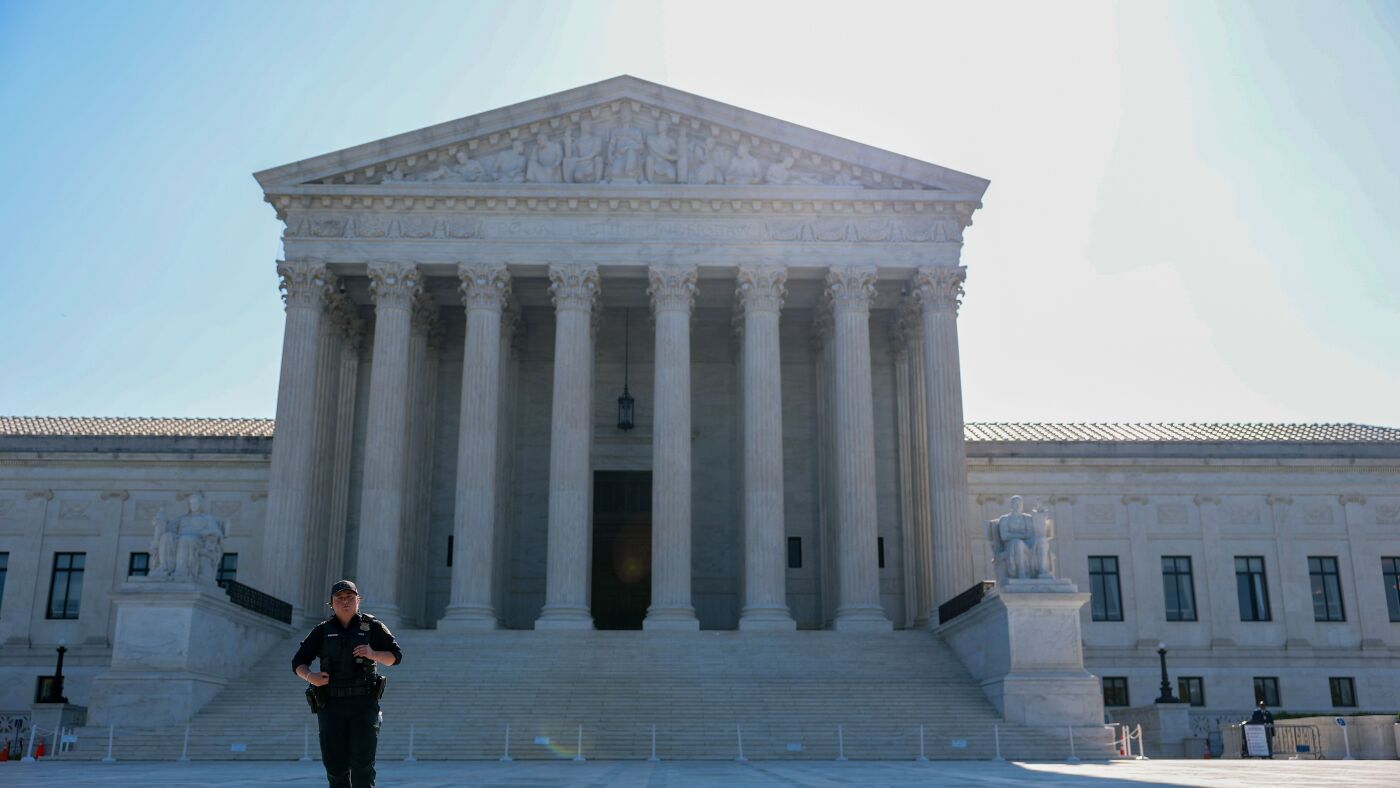
The U.S. Supreme Court

Andrew Harnik/Getty Images


hide caption

toggle caption

Advertisement

Andrew Harnik/Getty Images

The U.S. Supreme Court refused Friday to allow Virginia to use a new congressional map that favored Democrats in all but one of the state’s U.S. House seats. The map was a key part of Democrats’ effort to counter the Republican redistricting wave set off by President Trump.

The new map was drawn by Democrats and approved by Virginia voters in an April referendum. But on May 8, the Supreme Court of Virginia in a 4-to-3 vote declared the referendum, and by extension the new map, null and void because lawmakers failed to follow the proper procedures to get the issue on the ballot, violating the state constitution.

Virginia Democrats and the state’s attorney general then appealed to the U.S. Supreme Court, seeking to put into effect the map approved by the voters, which yields four more likely Democratic congressional seats. In their emergency application, they argued the Virginia Supreme Court was “deeply mistaken” in its decision on “critical issues of federal law with profound practical importance to the Nation.” Further, they asserted the decision “overrode the will of the people” by ordering Virginia to “conduct its election with the congressional districts that the people rejected.”

Advertisement

Republican legislators countered that it would be improper for the U.S. Supreme Court to wade into a purely state law controversy — especially since the Democrats had not raised any federal claims in the lower court.

Ultimately, the U.S. Supreme Court sided with Republicans without explanation leaving in place the state court ruling that voided the Democratic-friendly maps.

The court’s decision not to intervene was its latest in emergency requests for intervention on redistricting issues. In December, the high court OK’d Texas using a gerrymandered map that could help the GOP win five more seats in the U.S. House. In February, the court allowed California to use a voter-approved, Democratic-friendly map, adopted to offset Texas’s map. Then in March, the U.S. Supreme Court blocked the redrawing of a New York map expected to flip a Republican congressional district Democratic.

And perhaps most importantly, in April, the high court ruled that a Louisiana congressional map was a racial gerrymander and must be redrawn. That decision immediately set off a flurry of redistricting efforts, particularly in the South, where Republican legislators immediately began redrawing congressional maps to eliminate long established majority Black and Hispanic districts.

Advertisement
Continue Reading
Advertisement

Trending