News
Christine Blasey Ford aims to own her story with 'One Way Back'


Christine Blasey Ford speaks during a hearing of the Senate Judiciary Committee, Sept. 27, 2018, on Capitol Hill in Washington, D.C.
Michael Reynolds/AP
hide caption
toggle caption
Michael Reynolds/AP

Christine Blasey Ford speaks during a hearing of the Senate Judiciary Committee, Sept. 27, 2018, on Capitol Hill in Washington, D.C.
Michael Reynolds/AP
Christine Blasey Ford said civic duty compelled her to come forward when she learned Brett Kavanaugh was President Trump’s top choice for a Supreme Court opening in the summer of 2018. But her testimony did not change the ultimate result of Kavanaugh’s nomination.
Ford testified before the Senate Judiciary Committee that Kavanaugh had sexually assaulted her at a party back when they were teenagers in the Washington, D.C., area. When it was Kavanaugh’s turn to testify, he denied it happened.
In her new book, One Way Back, she writes “My story just can’t be about the three months in 2018 when my life exploded in front of the world’s eyes. My life weaves together surfing, statistics, motherhood, friendships, and politics.”
In an interview on Morning Edition, Ford said it was only a couple of years ago that she felt ready to revisit how her life was upended by Kavanaugh’s rise to the exalted position on the U.S. Supreme Court. Tired of an endless smear campaign, she decided it was time to write her own story.
While she moved far away from Washington, Ford says what she experienced there in her teenage years left an indelible mark. Reluctant to testify in a public setting, Ford forged ahead nonetheless. She writes that part of what gave her the strength to do so was her love of surfing; Ford equates the experience to facing the intensity of ocean waves. “You’ve got to take the wave and you might wipe out. You might get crushed and held under by three waves or you might get a great wave, you know? But you’re going to have to take it,” she told NPR’s Michel Martin.
Ford received tens of thousands of letters from supporters and detractors. She would have to hire a security team, take her family into hiding after threats to kill her, and she would see her character and sanity assailed for years.
But she also became a symbol of courage and hope to untold numbers of people. Following is an interview between NPR’s Michel Martin and Christine Blasey Ford. It has been lightly edited for length and clarity.
To hear the broadcast version of this conversation, use the audio player at the top of this page.
How did you come to share your story with the judiciary committee?
When I saw the short list, I was concerned and felt that I at least needed to share the information, not necessarily publicly, but let the government know that that had happened to me and that possibly they would want to look into some of the other candidates on that list.
Why did you think that was important to do?
I felt like as a citizen that it’s our responsibility to weigh in when we have relevant information for a job of that level of esteem and importance. I grew up in Washington, D.C., so I had high reverence for all of our governmental institutions and the Supreme Court as a child visiting there on field trips, that seemed to be where we send the best of the best. And I just felt a sense of patriotism and civic duty that I needed to let someone know and that they could then decide if it was of import.
This is years after Anita Hill was subpoenaed to testify, after it became known that she had had what she said was an experience of sexual harassment with Clarence Thomas when they both worked together. And that was a very bruising experience, you know, for all involved. Do you remember the whole experience with Anita Hill and Clarence Thomas? Did you think it would be like that or did you think it would be different than that?
I do remember that very well, and I remember most about that is her level of detail in recalling the incidents. I was hoping that it was not going to be similar. I was very scared of the idea of sitting in front of the Senate, and I was hoping that there was some other way that it could play out where I could share the information with the senators without having to sit in Washington, D.C., with them in that big room where she sat.
One of the things that surprised me, people may remember this from the coverage even at the time, is that the committee really did not want to hear from you. Did you find that surprising after all these years after Anita Hill was subpoenaed to testify against Clarence Thomas, and they were heavily criticized for this. At the time, the Judiciary Committee was all male. That was one of the issues sort of at play here .But did you think it would be different all these years later, that they really did want to hear from you?
I did overestimate how interested they would be in this information. I really thought that it was important for them to know and that they would want to know. And I viewed myself as helpful like I was trying to be helpful to them and apparently that was not how they necessarily viewed it and it became highly politicized.
When a decision was made and it was clear that you were then going to testify, can you even sort of describe what it was like to be in the middle of that?
I was still ambivalent about speaking publicly in front of the Senate. I wanted to meet with them privately. And I wrote a letter saying that I felt that was the best thing to do for his family and for my family and would reduce sort of the amount of attention and the circus around it and as well as the threats to both families. So that was my preference but it didn’t happen that way. They wanted to have an open hearing. I wasn’t watching it or thinking about how it connected to a MeToo movement or to another hearing. I was just trying to get through it.
What made you finally decide to cross that threshold? I was struck by your saying up to the last minute you were not sure you were going to go through with it. Why do you think you did?
Well, I certainly had a phone and email inbox full of messages of people telling me not to do it, either for caring reasons or for reasons where they were trying to scare me. And then I also had text messages and emails full of people from all over the world saying, we need you to do this as survivors. And so I had a lot of people, weighing in on what I should do. And it seemed like it was about 50-50 and finally I thought, this is so stressful, maybe this will just end the stress and that maybe if I testify, it’ll be over.
The level of smear media and a report from the Senate or from half of the committee with allegations that are salacious and criminal, that felt really gut wrenching for me because those were the people that I set out to help. So to me, that’s kind of the hardest part is setting out as a citizen and feeling you have a patriotic duty and a higher calling and that you’re willing to sustain some level of backlash. But to have the actual people that you’re trying to help be the people who are involved in that backlash is a little bit difficult to come to terms with. And part of why I wrote the book is I don’t want it to be the case that other people don’t come forward. So I wanted to show that no matter how scary this is, it is something you can live through and survive and come out the other side.
Nina Kravinsky produced the audio for this story. Meghan Sullivan edited the digital version.



Note: Map shows the area with a shake intensity of 4 or greater, which U.S.G.S. defines as “light,” though the earthquake may be felt outside the areas shown. The New York Times
A light, 4.9-magnitude earthquake struck in Louisiana on Thursday, according to the United States Geological Survey.
The temblor happened at 5:30 a.m. Central time about 6 miles west of Edgefield, La., data from the agency shows.
U.S.G.S. data earlier reported that the magnitude was 4.4.
As seismologists review available data, they may revise the earthquake’s reported magnitude. Additional information collected about the earthquake may also prompt U.S.G.S. scientists to update the shake-severity map.
Source: United States Geological Survey | Notes: Shaking categories are based on the Modified Mercalli Intensity scale. When aftershock data is available, the corresponding maps and charts include earthquakes within 100 miles and seven days of the initial quake. All times above are Central time. Shake data is as of Thursday, March 5 at 8:40 a.m. Eastern. Aftershocks data is as of Thursday, March 5 at 10:46 a.m. Eastern.

To read this article for free
Register now
Once registered, you can:
• Read free articles
• Get our Editor’s Digest and other newsletters
• Follow topics and set up personalised events
• Access Alphaville: our popular markets and finance blog
RI Lottery Numbers Midday, Numbers Evening winning numbers for March 5, 2026

South Carolina Lottery Pick 3, Pick 4 results for March 5, 2026
SD Lottery Millionaire for Life winning numbers for March 5, 2026

Lady Vols fall to Alabama in SEC Tournament for seventh loss in row
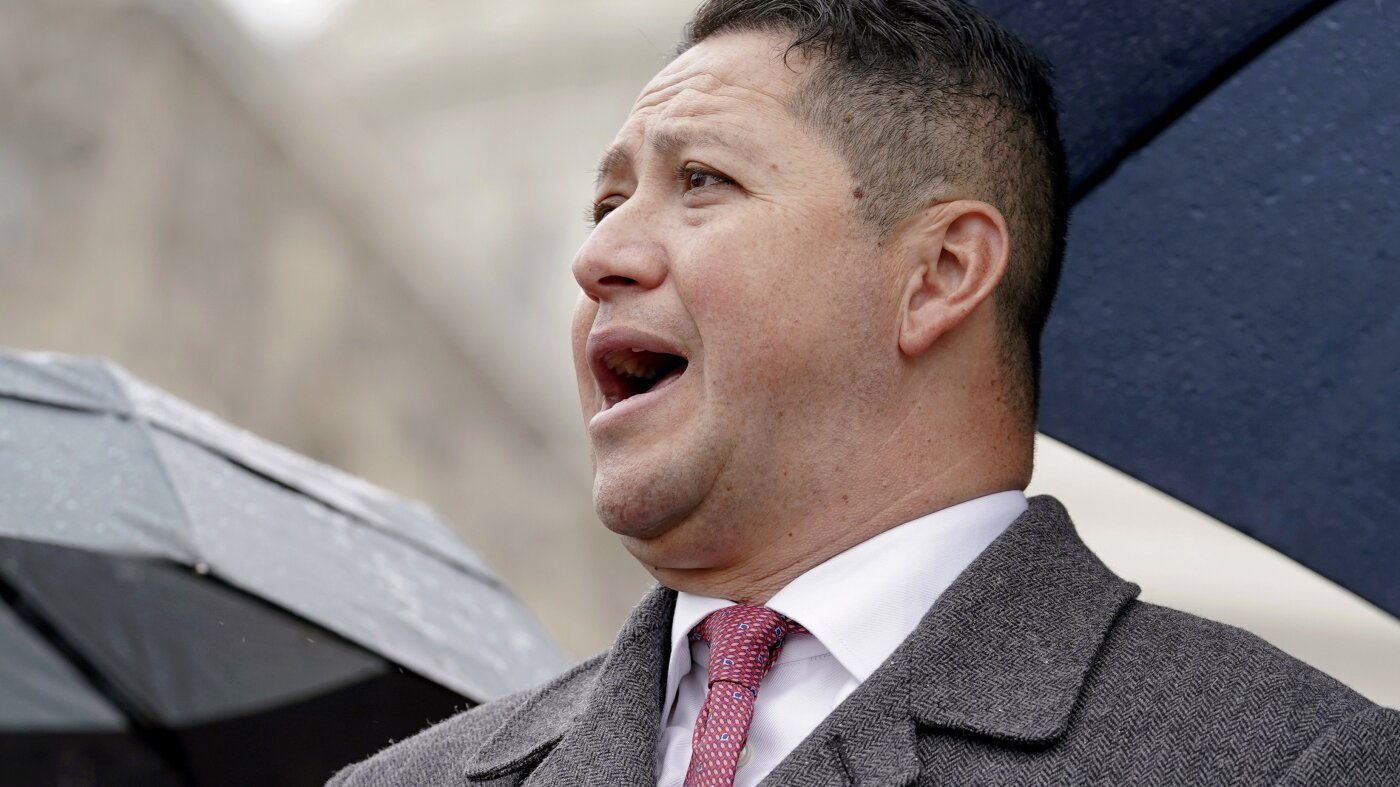
GOP Rep. Tony Gonzales of Texas ends reelection bid after admitting to affair with aide

Florida High School Football Rankings: Top 25 teams – Oct. 21

Cleary's 21 help Le Moyne down Central Connecticut State 69-64 in OT

How old is Bo Nix? What to know about Oregon quarterback ahead of 2024 NFL Draft

99th annual Pony Swim held in Virginia

Indiana Members Credit Union announced as new anchor tenant at Bottleworks District

DOJ continues Biden autopen probe despite former president unlikely to face charges
Fact check: Did French border guards mock influencers returning from Dubai amid Iran war?
Iran’s fight for survival / The widening war / Trump’s nebulous goals : Sources & Methods

Map: 4.9-Magnitude Earthquake Shakes Louisiana

Paxton vows he’s ‘staying in this race’ even if Trump backs Cornyn in Texas GOP clash
-

 World1 week ago
Exclusive: DeepSeek withholds latest AI model from US chipmakers including Nvidia, sources say
-

 Wisconsin4 days ago
Setting sail on iceboats across a frozen lake in Wisconsin
-

 Massachusetts1 week ago
Mother and daughter injured in Taunton house explosion
-

 Massachusetts3 days ago
Massachusetts man awaits word from family in Iran after attacks
-

 Maryland5 days ago
AM showers Sunday in Maryland
-

 Florida5 days ago
Florida man rescued after being stuck in shoulder-deep mud for days
-

 Denver, CO1 week ago
10 acres charred, 5 injured in Thornton grass fire, evacuation orders lifted
-

 Oregon7 days ago
2026 OSAA Oregon Wrestling State Championship Results And Brackets – FloWrestling