Wisconsin
City by City: Wisconsin, Duluth, Hermantown


Wisconsin – The Wisconsin Department of Natural Resources is accepting applications for its 2025 class of conservation wardens. Wardens are credentialed law enforcement officers who have the opportunity to protect the state’s natural resources, build relationships, and serve their communities in unique and essential ways. The deadline to apply is May 7th. For more information on how to apply visit the DNR’s website by clicking here.
Duluth, Minn.- Sidewalk Days is happening July 10 through 12. The event draws hundreds of people each day, and the organization Downtown Duluth is looking for buskers to fill the blocks of the festival. There are several slots throughout the day available to perform. If you are interested in showing off your musical talents at this event. If you wish to sign up for one of the available times contact Melissa LaTour at mlatour@downtownduluth.com.
Hermantown, Minn.- This weekend in Hermantown people are gathering to walk for a good cause. The 16th annual Autism Walk Northland is happening this Sunday. Doors open at 10 a.m. and the walk begins at 11 a.m. in the Hermantown High School Gym. Kids activities, including free snacks, will be available from 10 a.m. to 2 p.m., all money raised goes to autism programs in the Northland.
Tips: If there’s something going on in your neighborhood that you think we should know about, send us an email at CitybyCity@NorthernNewsNow.com, and it might be featured as we go around the Northland City by City.
Previous Day: City by City: Northern Wisconsin, Aurora, Ironwood
Click here to download the Northern News Now app or our Northern News Now First Alert weather app.
Copyright 2024 Northern News Now. All rights reserved.



Wisconsin hockey coach Mark Johnson reflects on 9th national title
The Badgers’ 3-2 victory over Ohio State Sunday March 22 gave coach Mark Johnson his ninth national title. Here is what he said afterward.
It’s hard to match what the University of Wisconsin and Ohio State women’s hockey teams have accomplished – meeting four consecutive years for the NCAA championship. With a 3-2 win Sunday, March 22, the Badgers are back-to-back champs and winners in three of the four battles, all separated by one goal.
Similar to USA-Canada in the Olympic finals – a meeting this year that featured players from both UW and OSU – the programs simply seem destined to meet with the season on the line.
These are the other best postseason rivalries in Wisconsin sports:
UW-Whitewater vs. Mount Union football
This is perhaps the most obvious Wisconsin sports postseason rivalry, the battle for the Amos Alonzo Stagg Bowl and the NCAA Division III football championship.
UW-Whitewater first met Mount Union in 2005 for all the marbles, and then the program met a staggering seven consecutive seasons, with Whitewater winning four times (2007, 2009, 2010 and 2011).
They met again in 2013 and 2014, with Whitewater winning both. But, Mount Union still has 13 titles in program history, while Whitewater has six.
Since 1996, the two powerhouse NFL franchises have met 10 times in the postseason, and though the Packers had the early success, with wins in four of the first five playoff meetings, San Francisco has won the last five games, all since 2013.
For Packers fans, that includes many memorable highs and lows, including an NFC championship win in early 1998 en route to a second straight Super Bowl and a franchise-affirming road win in the divisional round in early 1996, even with Dallas awaiting to eliminate the Packers in the NFC title game one week later.
The more recent games included a heartbreaking divisional loss in Santa Clara after the 2023 season, a snow-aided special-teams debacle after the 2021 season and a double dose of Colin Kaepernick after the 2012 and 2013 seasons.
Marquette men’s basketball vs. Kentucky
If we merge Wisconsin and Marquette together, we get a rich tapestry of battles with Kentucky in the men’s NCAA Tournament, though Marquette has the greater volume.
For Wisconsin, the battles include a stellar high (beating undefeated Kentucky in 2015) and an agonizing loss (in the 2014 Final Four), not to mention a 2003 loss in the Sweet 16.
Marquette, of course, has its own recent thrill against UK, smashing the top-ranked Wildcats in the Elite Eight of the 2003 tournament behind Dwyane Wade’s triple-double. An upset win in the Sweet 16 of the 1994 tournament can’t be forgotten, either, with point guard Tony Miller and his nine assists helping MU stage a 75-63 victory.
MU also met Kentucky in 2008 (a 74-66 win in the first round), with the other entrants in the rivalry dating to the 1970s and earlier.
Kentucky won in 1975 (second round), 1972 (Sweet 16), 1968 (Sweet 16) and 1959 (regional third-place game) but Marquette won in 1971 (regional third-place game), 1969 (Sweet 16) and 1955 (Sweet 16).
Technically, the Bucks have faced Philadelphia (nine times) more than Boston (eight times) in the postseason, but the Celtics provide some recent history and some tense battles over the years that weren’t always restricted to the floor.
Milwaukee got the best of Boston in 2019 during the Eastern Conference semis – the series when Paul Pierce said he thought the series was over after Boston’s Game 1 victory; Milwaukee won the next four – but Boston also defeated the Bucks in 2022 in seven games without an injured Khris Middleton, and the Celtics got Milwaukee in a seven-game opening-round series in 2018, with Giannis Antetokounmpo and his team on the cusp of an ascent.
There’s plenty of history to go with those recent meetings, too, not the least of which was the 1974 NBA Finals, when Kareem Abdul-Jabbar and Oscar Robertson played their last game together at the Arena in a heartbreaking seventh-game loss to the Celts.
Boston twice eliminated the Bucks in the Eastern Conference finals (1986 and 1984), in addition to a seven-game series win over the Bucks in the 1987 Eastern semis, a series that featured a fight between Boston’s Kevin McHale and a Milwaukee fan in Game 3, part of a litany of wild events in that series.
Milwaukee did get a sweep over the 1983 Celtics in the Eastern semis, but it’s just 2-6 all time against Boston.
Arrowhead vs. Homestead football
There are a number of combinations in the high school football (or basketball) sphere that could apply here. For example, Catholic Memorial has met Notre Dame in Green Bay for the state football title three times. So have fellow state powerhouses St. Mary’s Springs and Stratford. Edgar met Black Hawk in 2018, then met the Black Hawk/Warren co-op in 2019 and 2023.
But Arrowhead and Homestead met three years in a row for the Division 1 state title from 2006 through 2008, with legendary coaches Dave Keel and Tom Taraska at the helm. Homestead won the first meeting between the Milwaukee-area behemoths, 35-0, and Arrowhead answered with a 31-7 win the following year. That set up the 2008 rubber match, a 13-11 win for Homestead.

Manuel Franco claims his $768 million Powerball jackpot
Manuel Franco, 24, of West Allis was revealed Tuesday as the winner of the $768.4 million Powerball jackpot.
Mark Hoffman, Milwaukee Journal Sentinel
The Wisconsin Lottery offers multiple draw games for those aiming to win big.
Here’s a look at March 22, 2026, results for each game:
Winning Pick 3 numbers from March 22 drawing
Midday: 1-7-8
Evening: 4-2-4
Check Pick 3 payouts and previous drawings here.
Winning Pick 4 numbers from March 22 drawing
Midday: 8-9-6-0
Evening: 1-8-7-4
Check Pick 4 payouts and previous drawings here.
Winning All or Nothing numbers from March 22 drawing
Midday: 02-03-04-08-09-16-17-18-19-21-22
Evening: 01-02-04-10-11-12-14-18-19-21-22
Check All or Nothing payouts and previous drawings here.
Winning Badger 5 numbers from March 22 drawing
01-10-20-21-28
Check Badger 5 payouts and previous drawings here.
Winning SuperCash numbers from March 22 drawing
09-16-20-25-29-39, Doubler: N
Check SuperCash payouts and previous drawings here.
Feeling lucky? Explore the latest lottery news & results
Are you a winner? Here’s how to claim your lottery prize
- Prizes up to $599: Can be claimed at any Wisconsin Lottery retailer.
- Prizes from $600 to $199,999: Can be claimed in person at a Lottery Office. By mail, send the signed ticket and a completed claim form available on the Wisconsin Lottery claim page to: Prizes, PO Box 777 Madison, WI 53774.
- Prizes of $200,000 or more: Must be claimed in person at the Madison Lottery office. Call the Lottery office prior to your visit: 608-261-4916.
Can Wisconsin lottery winners remain anonymous?
No, according to the Wisconsin Lottery. Due to the state’s open records laws, the lottery must, upon request, release the name and city of the winner. Other information about the winner is released only with the winner’s consent.
When are the Wisconsin Lottery drawings held?
- Powerball: 9:59 p.m. CT on Monday, Wednesday, and Saturday.
- Mega Millions: 10:00 p.m. CT on Tuesday and Friday.
- Super Cash: 9:00 p.m. CT daily.
- Pick 3 (Day): 1:30 p.m. CT daily.
- Pick 3 (Evening): 9:00 p.m. CT daily.
- Pick 4 (Day): 1:30 p.m. CT daily.
- Pick 4 (Evening): 9:00 p.m. CT daily.
- All or Nothing (Day): 1:30 p.m. CT daily.
- All or Nothing (Evening): 9 p.m. CT daily.
- Megabucks: 9:00 p.m. CT on Wednesday and Saturday.
- Badger 5: 9:00 p.m. CT daily.
That lucky feeling: Peek at the past week’s winning numbers.
Feeling lucky? WI man wins $768 million Powerball jackpot **
WI Lottery history: Top 10 Powerball and Mega Million jackpots
This results page was generated automatically using information from TinBu and a template written and reviewed by a Wisconsin editor. You can send feedback using this form.

WEST BEND, WI — Washington County deputies say a Girl Scouts camp in West Bend, Wisconsin, was the site of a drug and illegal firearms operation uncovered earlier this month.
See Also: Firefighters save cat from third-floor blaze in Fort Pierce
Deputies responded to a domestic violence call at a home on the Camp Silver Brook grounds on March 15 where they located and arrested 48yearold Paul David. David lived at the property with his wife, who is a Girl Scouts employee, and their two children.
According to court documents, investigators found nearly 700 grams of marijuana, nine marijuana plants, psychoactive mushrooms, and 13 guns stored in areas accessible to children.
Deputies say David is a convicted felon and is prohibited from possessing firearms.
Girl Scouts officials said no scouts were harmed and confirmed the employee has been placed on leave. David has since posted bail, left the campgrounds, and is barred from coming within 1,000 feet of the property.
His next court appearance is scheduled for May.

John Daly calls himself a ‘jacka–‘ after falling down desert hill during tournament

ATM jackpotting attacks surge across the US

Data centers under scrutiny by California lawmakers as fears rise about health and energy impacts
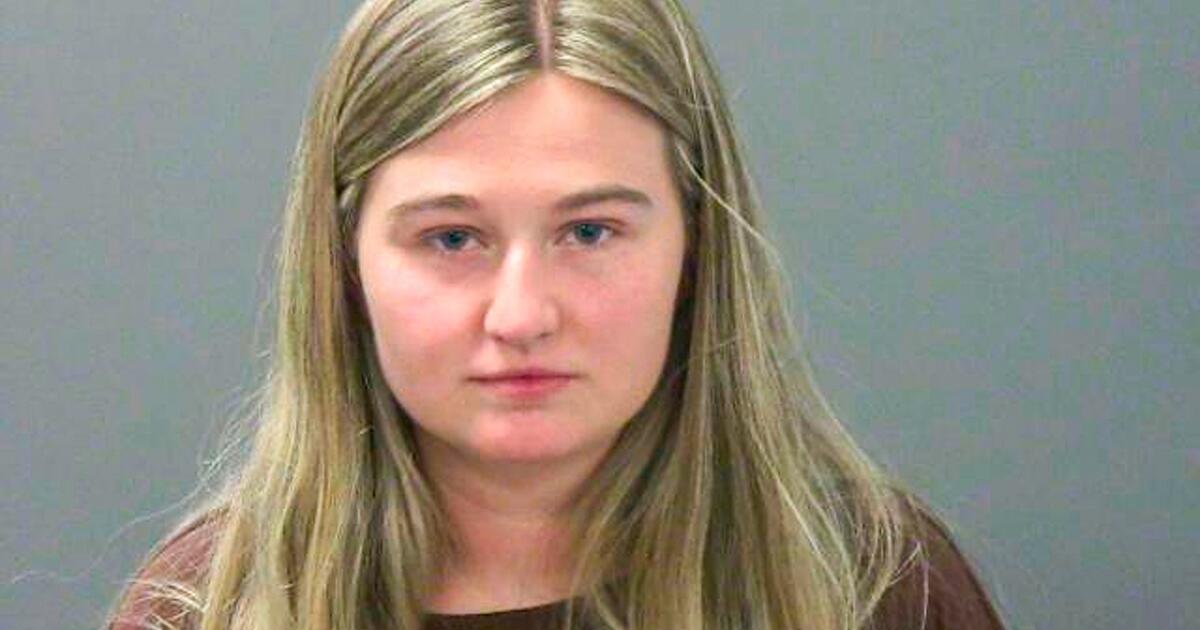
Kendra Duggar charged with child endangerment after husband Joseph Duggar’s arrest

Open-air ‘mall parks’ are on the rise in SoCal — and exhausted parents are loving it

Florida High School Football Rankings: Top 25 teams – Oct. 21

How old is Bo Nix? What to know about Oregon quarterback ahead of 2024 NFL Draft

Cleary's 21 help Le Moyne down Central Connecticut State 69-64 in OT

99th annual Pony Swim held in Virginia

Indiana Members Credit Union announced as new anchor tenant at Bottleworks District

Von der Leyen clinches Australia trade deal

Trump administration places Christopher Columbus statue on White House grounds

See TSA Wait Times at Major U.S. Airports

Senate hopeful with deep Dem ties slapped with scathing complaint targeting alleged family payout ‘scheme’

How the Iran war is about to hit your wallet
-

 Detroit, MI5 days ago
Drummer Brian Pastoria, longtime Detroit music advocate, dies at 68
-

 Oklahoma1 week ago
Family rallies around Oklahoma father after head-on crash
-

 Georgia1 week ago
How ICE plans for a detention warehouse pushed a Georgia town to fight back | CNN Politics
-

 Alaska1 week ago
Police looking for man considered ‘armed and dangerous’
-

 Movie Reviews5 days ago
‘Youth’ Twitter review: Ken Karunaas impresses audiences; Suraj Venjaramoodu adds charm; music wins praise | – The Times of India
-

 Education1 week ago
Video: Turning Point USA Clubs Expand to High Schools Across America
-
 Science1 week ago
Long COVID leaves thousands of L.A. county residents sick, broke and ignored
-

 Sports3 days ago
IOC addresses execution of 19-year-old Iranian wrestler Saleh Mohammadi