Midwest
Wisconsin attorney argues 175-year-old abortion ban validity to state Supreme Court

An attorney for a Wisconsin prosecutor made the case to reinstate a 175-year-old abortion ban to the state’s Supreme Court on Monday.
His argument comes more than two years after the U.S. Supreme Court overturned Roe v. Wade, which effectively ended recognition of a constitutional right to abortion and gave states the power to allow, limit or ban the practice altogether.
In December, Sheboygan County District Attorney Joel Urmanski appealed a Dane County judge’s ruling that said there is no state ban on abortions, invalidating the 175-year-old abortion ban.
While a ruling is not expected for weeks, abortion advocates are almost certain to win the case, since liberal justices control the court.
WI REPUBLICAN PROSECUTOR PLANS APPEAL IN STATE ABORTION CASE
Janet Protasiewicz, 60, is sworn in for her position as a State Supreme Court Justice at the Wisconsin Capitol rotunda in Madison, Wis. on August 1, 2023. (Sara Stathas for The Washington Post via Getty Images)
The Associated Press reported that one of the judges, Janet Protasiewicz, made remarks on the campaign trail that she supports abortion rights.
The hearing on Monday lasted about two hours, though no decision was made.
Rebecca Dallet, another liberal justice, told Matthew Thome, the attorney representing Urmanski, that the ban was passed in 1849 by white men who had all the power.
Liberal Justice Jill Karofsky pointed out to Thome that the 1849 law does not provide exceptions for rape or incest, and reactivating the ban could result in doctors not providing medical care.
WISCONSIN DISTRICT ATTORNEY APPEALS COURT DECISION ALLOWING ABORTIONS TO RESUME WITHIN STATE
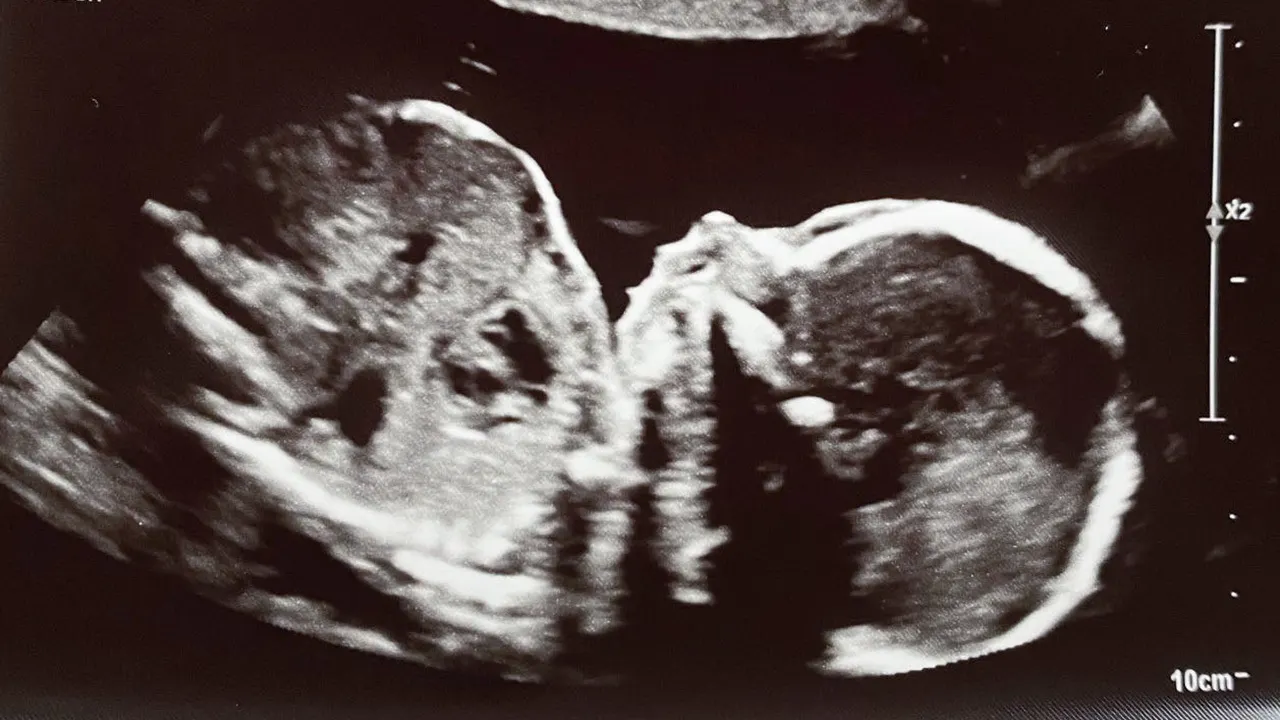
Ultrasound image of a baby at 19 weeks gestation. (Fox News)
Thome told the court on Monday that he was not arguing about the implications of reinstating the ban on abortion. Instead, he maintained that the legal theory of new laws repealing old ones is shaky.
He also argued that the ban and newer restrictions on abortion can overlap.
Thome pleaded to the justices that a ruling that the 1985 law effectively repealed the ban would be “anti-democratic.”
“It’s a statute this Legislature has not repealed, and you’re saying, no, you actually repealed it,” he said.
Justice Dallet told Thome that disregarding laws passed over the last 40 years to go back to 1849 would be undemocratic.
The state’s ban on abortion from 1849 held up until 1973, when the U.S. Supreme Court recognized the right to abortion nationwide in the landmark Roe v. Wade case. But when the U.S. Supreme Court ruled in favor of the Dobbs decision and overturned Roe v. Wade on June 24, 2022, states regained the power to decide their own laws on abortion.
PLANNED PARENTHOOD OF WISCONSIN TO RESUME ABORTIONS IN SHEBOYGAN BEFORE YEAR’S END
Wisconsin Attorney General Josh Kaul speaks at a campaign stop, Oct. 27, 2022, in Milwaukee.
Democratic Attorney General Josh Kaul filed a lawsuit challenging the law in 2022. He argued that a 1985 Wisconsin law that allows abortions before a baby can survive outside the womb supersedes the ban.
Urmanski contends that the ban was never repealed, and it can co-exist with the 1985 law since it did not legalize abortion at any point.
He also argues that other modern-day abortion restrictions do not legalize the practice.
Dane County Circuit Judge Diane Schlipper ruled last year that the ban outlaws feticide, or the killing of a fetus without the mother’s consent, but not consensual abortions.
Because of the ruling, Planned Parenthood was able to resume offering abortions in Wisconsin after halting procedures when Roe was overturned.
The Associated Press contributed to this report.
Read the full article from Here



Detroit Pistons forced Game 7 with a 115-94 win over the Cleveland Cavaliers in Game 6 in Cleveland on Friday.
Pistons forced Game 7 with a 115-94 win over the Cavaliers in Game 6 in Cleveland on Friday.
Detroit — After staving off elimination Friday night at Rocket Arena, the Detroit Pistons will face the Cleveland Cavaliers at Little Caesars Arena on Sunday night, with the series tied 3-3. If the Pistons win Game 7, they will reach the Eastern Conference Finals for the first time since 2008 and will compete against the New York Knicks.
In preparation, the Pistons released their final injury report for the series, which lists Kevin Huerter, Caris LeVert, and Duncan Robinson as questionable for Game 7. LeVert (right heel contusion) and Robinson (lower back soreness) were listed as questionable ahead of the Pistons’ 115-94 Game 6 victory but played vital roles in the win.
Robinson returned to the lineup after missing Game 5 Wednesday night, finishing with 14 points while shooting 4-of-7 from behind the arc in 20 minutes. However, he returned from the injury by coming off the bench for the first time this season. Coach J.B. Bickerstaff chose to keep Daniss Jenkins in the starting lineup to assess Robinson’s condition.
Huerter has been listed as questionable for the third time since his return for a left adductor strain that forced him to miss seven consecutive games. He sustained the injury during the Pistons’ first-round series against the Orlando Magic. He played for three minutes in his comeback on Wednesday night but left the game shortly thereafter. Despite being available, Huerter did not play in Game 6.
However, the most significant reveal from the Pistons’ injury report was the noticeable absence of Jalen Duren. The All-Star center rolled his left ankle midway through the third quarter of Game 6 after colliding with Cavaliers guard James Harden.
Bickerstaff substituted Duren immediately for Paul Reed. He made a couple of trips to the locker room, but returned at the start of the fourth quarter. As a result, Duren had his most impactful game of the series, finishing with 15 points and 11 rebounds, including seven offensive rebounds and two blocks.
NBA Playoffs, second round: No. 1 Pistons vs. No. 4 Cavaliers
Series tied 3-3
Game 1: Pistons 111, Cavaliers 101
Game 2: Pistons 107, Cavaliers 97
Game 3: Cavaliers 116, Pistons 109
Game 4: Cavaliers 112, Pistons 103
Game 5: Cavaliers 117, Pistons 113 (OT)
Game 6: Pistons 115, Cavaliers 94
Game 7: at Detroit, Sunday, 8 p.m. (Amazon Prime)
coty.davis@detroitnews.com
@cotydavis_24

MILWAUKEE – The University of Wisconsin-Milwaukee’s 134th commencement ceremony is this weekend, and for one family, this year’s class proves to be extra special.
Son graduating with honors
What they’re saying:
“It just feels like it hasn’t set in quite yet, but once it does, I’m sure it’ll feel pretty good,” said Will Peters, who is graduating with honors in computer science and as a Wisconsin Army National Guard commissioned officer.
FREE DOWNLOAD: Get breaking news alerts in the FOX LOCAL Mobile app for iOS or Android
But there’s another milestone that makes this year’s graduation one that Peters will always remember.
Mother getting master’s degree
What they’re saying:
“He’s getting his undergraduate degree, and I’m getting my master’s degree in nursing,” said Mary Peters, Will’s mother.
That’s right: Both mother and son are crossing the graduation stage. Mary, a UWM academic program specialist as well, said she will cherish the moment forever.
“It’s just exciting, because I graduated from UW-Milwaukee with my nursing degree, my undergraduate, in December 2001,” she said. “I went back for my master’s degree, and I didn’t know that Will and I are going to be graduating the same day.”
Peters family Panther pride
Dig deeper:
Chris Peters is cheering them on, not only as father and husband, but also as a UWM faculty member and alumnus.
“We really hope that Will would carry on what became a family tradition of graduating from UWM. We believe in UWM, we believe that we got a very high-quality education,” he said.
Chris, Mary and Will Peters
Just like his wife, Chris graduated from UWM with a bachelor’s in nursing and eventually earned his doctorate while working for the university.
“I’m very proud of my wife and my son,” he said. “It’s got a lot of the resources of a large university, but it’s still small enough to know you by name and take care of people who needed it, and it’s been a great experience for the whole family.”
SIGN UP TODAY: Get daily headlines, breaking news emails from FOX6 News
For the Peters family, Panther pride will always run deep.
“We’re Panthers. We’re proud to work here. We’re proud to be alumni here. We’re proud of what UWM has done for us, and we’re now working for the opportunity to give back to the campus and the students,” said Chris.
The Source: FOX6 News interviewed the Peters family.
Minneapolis, MN
Minnesota’s Unsung State Park Unit Is An Idyllic Minneapolis Day Trip To Boat, Fish, And Hike – Islands

Minnesota is serious about its lakes. Their “Land of 10,000 Lakes” slogan isn’t an exaggeration. In fact, the true count is 11,842, based on their definition of what constitutes a lake, which Wisconsin likes to argue about with them. Regardless of whose definition you use, Minnesota has a lot of lakes to choose from, which means you can still find a little slice of solitary lakeside serenity if you know where to look. One of those places is Greenleaf Lake.
Idyllic Greenleaf is only about 1.5 hours from Minneapolis, and it’s never crowded — in fact, there’s a good chance you’ll have it all to yourself. Most of the bigger, more popular lakes, like Red Lake, Leech Lake, and Lake Superior’s shoreline, are in Minnesota’s northern half, several hours from the Twin Cities. But there’s no need to wander so far from urban amenities and the well-connected airport, when you can enjoy an idyllic day on Greenleaf Lake instead.
The state recreation area that protects this beautiful lake started as a grassroots effort to establish a state park within 30 miles of every Minnesotan. After years of work, the agreements, land acquisition, and funding all finally fell into place, and the park was transferred to the state in 2009. Almost 20 years later, the park is still an unassuming and peaceful place for a day trip from Minneapolis for those who don’t need much to enjoy the outdoors.
Enjoying Greenleaf Lake State Recreation Area
The first thing to know about Greenleaf Lake State Recreation Area is that this park embraces its primitive natural habitat. There are actually two lakes in the park, Greenleaf and Sioux, but there aren’t many facilities here beyond the peaceful, natural surroundings. The park’s entrance and only parking area is at Greenleaf Lake, which has a small boat launch, a fishing pier, and a few picnic tables, all surrounded by trees and vegetation. Enjoy a lazy morning of boating and fishing for panfish, pike, walleye, and largemouth bass on the lake, followed by a delicious picnic lunch while you read away the afternoon with only the birds to keep you company. Minnesota may be known for having some of the friendliest people in America, but you’re unlikely to run into more than a handful here. Quiet solitude awaits at this park.
The park’s one hiking trail begins at the parking area and winds just a mile through an open field and into a small forest south of Greenleaf Lake, before you’ll have to turn around and return the way you came. Bring insect-repellent clothes and spray to protect your skin, as bugs can be overwhelming in the warm seasons, and ticks are always a possibility in the woods. One Google reviewer described the trail as unwalkable due to the bugs. The rest of the park, including Sioux Lake, isn’t easily accessible. Most visitors won’t ever see Sioux Lake because there are no trails to it.
The lack of park facilities has turned off some visitors and contributed to some poor reviews on Tripadvisor. The people that leave Greenleaf Lake five-star reviews on Google are the ones that just enjoy being out in nature. If you prefer a Minnesota state park with more amenities, consider Lake Bemidji State Park instead.
Planning your day at Greenleaf Lake
While Minneapolis is one of America’s best cities for getting around without a car, you’ll need one to explore beyond the metro area. Getting to Greenleaf Lake State Recreation Area is easy with GPS, but don’t rely on following park signs once you get close. Visitors report there aren’t any on the small backroads that lead to the park. The entrance road is nothing fancy, a narrow dirt road that leads to a small parking area. If you’re visiting just to get your park passport stamp, it’s not actually at the park. It’s at the DNR office in Hutchinson.
Before arriving at Greenleaf Lake State Recreation Area, be sure to stop for a restroom break. There are no facilities, sometimes not even a porta-potty, at the park. The closest convenience stores are in Litchfield, Dassel, or Hutchinson, each about 15 to 20 minutes from the parking area at Greenleaf Lake. If you’re a seasoned backpacker and are prepared to do your business in the woods, make sure you follow Leave No Trace principles.
-

 Wyoming5 minutes ago
8 Old-Timey General Stores In Wyoming
-

 Crypto11 minutes ago
The $40 Billion Opportunity: Why Nubank and Revolut Are Betting Big on Mexico
-

 Finance17 minutes ago
Delphi Doubles Down on Ellington Financial Stake with $8.7 Million Buy | The Motley Fool
-

 Fitness23 minutes ago
Why telling people to exercise more rarely works – and the more effective alternative
-

 Movie Reviews35 minutes ago
‘Hokum’ movie review: Damian McCarthy’s nasty little ghost story is undone by its own explanations
-

 World47 minutes ago
Video: Train Crashes Into Bangkok Traffic, Killing at Least 8 People
-
 Lifestyle2 hours ago
Bulgarian banger ‘Bangaranga’ bags country its 1st Eurovision win
-

 Technology2 hours ago
Sony tries to explain that its AI Camera Assistant doesn’t suck

