Ohio
Ohio is poised to become 2nd state to restrict transgender health care for adults


Ohio Gov. Mike DeWine announced proposals this month that transgender advocates say could block access to gender-affirming care provided by independent clinics and general practitioners, leaving thousands of adults scrambling for treatment and facing health risks.
READ MORE: Efforts to restrict transgender health care endure in 2024, with more adults targeted
Ashton Colby, 31, fears the clinic where he gets the testosterone he has taken since age 19 would no longer offer it. The transgender Columbus man believes he could eventually be treated by another provider that would meet the new requirements. But even a few months’ wait could leave Colby experiencing a menstrual cycle for the first time in many years.
“My mental health has been stressed,” Colby said. “These are feelings related to being transgender that I have not felt in years, but now I’m thrown into feeling devastated about my experience as a transgender person.”
DeWine announced the proposed rules amid a whirl of activity that could push Ohio further than most other states in controlling gender-affirming care and make it just the second to set forth restrictions on adult care.
He also signed an executive order to ban gender-affirming surgery for minors but vetoed a bill that would ban all gender-affirming care for minors. One chamber of the state legislature has already overridden it and the other is voting Jan. 24 on whether to do so.
READ MORE: Trans youth ‘terrified’ of what Louisiana’s new health care ban will mean
“It is a policy project that attempts to make it so onerous, so restrictive to get care, that people are functionally unable to do so,” said Kellan Baker, executive director of the Whitman-Walker Institute, a Washington-based organization focused on the health of LGBTQ+ people.
The policies focused on care for adults come in draft administrative rules released this month by the Ohio Department of Health and the state’s Department of Mental Health and Addiction Services.
They would require psychiatrists, endocrinologists and medical ethicists to have roles in creating facility-wide gender-affirming care plans for patients of all ages. Patients under 21 would have to receive at least six months of mental health counseling before starting gender-affirming medication or surgery. Providers would be barred from referring minors to treatment elsewhere, such as clinics in other states.
When he announced the measures, DeWine said they would ensure safe treatment and make it impossible to operate “fly-by-night” clinics.
The rules are not intended to stop treatment for those already receiving it and are in line with the way specialized care is generally practiced, even if the approach isn’t always state-mandated, said DeWine spokesperson Dan Tierney, who noted the administration is open to wording changes to clarify the rules.
Still, advocates say those rules go beyond the standard of care established by organizations including the World Professional Association for Transgender Health, and at any rate there are no sketchy gender clinics in the state.
“It’s bad and unnecessary bureaucracy, and we know what they’re trying to do — and they’re hoping to cut off health care for as many people as possible,” said Dara Adkison, board secretary for the advocacy group TransOhio. “It’s not subtle.”
Mimi Rivard, a nurse practitioner and clinical director at Central Outreach Wellness Center Ohio’s Columbus clinic, said clinics already successfully prescribe hormones without the involvement of endocrinologists and there aren’t enough of those specialists in the state to do the current work, plus serve an estimated 60,000 Ohioans of transgender experience.
Many transgender patients are wary of other medical settings, which they might see as unfriendly, for more routine needs like hypertension or diabetes, but clinics like hers also treat them for those conditions, she said.
“We have to behave in ways that are consistent with the oaths we’ve taken as caregivers,” Rivard said. “And these guidelines will not allow for this.”
Patients who have undergone surgery and stop hormones could be at risk for osteoporosis and extreme fatigue, she said.
Dr. Carl Streed Jr., president of U.S. Professional Association for Transgender Health, who provides gender-affirming care in Boston, noted abortion is the only other realm in which states have weighed in to bar health professionals from providing services allowed by their licenses.
“The rules are draconian. They don’t follow any standard of care,” Streed said. “It is a veil of this false sense of safety that will effectively lead to a ban.”
How the policy would affect transgender patients might depend on where they are treated. The big academic medical centers providing gender-affirming care already employ the required specialists.
Equitas Health, a Columbus-based nonprofit focused on LGBTQ+ health care, strongly opposes the regulations but also says it will fulfill the requirements to continue offering gender-affirming care if the rules are finalized.
Advocates warn the care might not be available via smaller clinics or general practitioners, creating more hurdles to care for lower-income, minority and rural transgender people.
Adkison, who lives in Cleveland, expects their own treatment to continue.
“I’m a white person living in the city near multiple major hospital systems,” they said. “I’m definitely not as concerned as many of my friends.”
GOP-controlled governments in 22 other states already have passed bans or restrictions on gender-affirming care for minors. So far, though, adoption of policies aimed at adults is rare.
The only other restriction currently in force at the state level is in Florida, where a law took effect last year requiring physicians to oversee any health care related to transitioning, and for those appointments to be in person. Those rules have been onerous for people who have received care from nurse practitioners or used telehealth.
READ MORE: Florida’s ban on gender-affirming care for minors also limits access for trans adults
It’s not clear when the Ohio rules might take effect, or in what form if they are finalized. The health department is taking public comment until Feb. 5; for the Department of Mental Health and Addiction Services proposal, public comment is open only until Jan. 26.
The rules also are subject to review of a legislative committee looking at whether rules exceed the administration’s power, something DeWine’s proposals do, said Rhea Debussy, spokesperson for Equitas Health.
“He’s really done an impressive job in the last two weeks, making a lot of Democrats, a lot of progressives, a lot of conservatives and Republicans across the state of Ohio very mad at him,” she said.
The measures were unveiled Jan. 5, the same day DeWine signed an executive order banning gender-affirming surgery for those under 18. Advocates expect the move will have little practical impact because such surgeries are almost never performed on minors.
“It’s very cruel,” said Erin Upchurch, executive director of Kaleidoscope Youth Center, a Columbus-based organization serving young LGBTQ+ people. “It’s vindictive, it’s mean and it’s unnecessary.”



The most recent basketball season might be over for Ohio State, but in the modern era of college basketball, what happens off the court is almost just as chaotic as what happens on it. The main culprit for this is the transfer portal, and on Sunday, Ohio State’s offseason seems to have gained some traction.
According to a report, Ohio State forward Devin Royal plans to enter the transfer portal after three seasons with the Buckeyes, perhaps ending a career that began with high expectations and finished with a strong junior season. The 6-foot-6, 230-pound Pickerington Central product leaves with one season of eligibility remaining after appearing in 96 of 102 games at Ohio State.
Royal arrived in Columbus as a consensus four-star recruit and Ohio’s Mr. Basketball in 2023, becoming the 12th player in Ohio State basketball history to earn that honor. At Pickerington Central, he helped lead the program to a state title-game appearance in each of his final two seasons and earned first-team All-Ohio recognition as a junior and senior.
As a freshman in 2023-24, Royal played in 33 of 36 games and averaged 4.7 points and 2.4 rebounds per game, emerging as more of a threat as the season progressed. He had a nice sophomore leap, starting 27 games and averaging 13.7 points and a team-best 6.9 rebounds per game while shooting 52.5 percent from the floor. Royal delivered a breakout season with six 20-point games, three double-doubles, and a career-high 31 points and 15 rebounds against Valpo. He followed that with another solid season in 2025-26, starting all 32 games he played and averaging 13.7 points, 5.7 rebounds, and 1.6 assists per game.
Royal’s potential departure is a significant roster move because he developed into one of Ohio State’s most reliable interior scorers and rebounders. Ohio State finished No. 8 in the Big Ten this season, with a record of 21-13 and 12-8 within the conference. However, with the arrival of 5-star forward Anthony Thompson, his starting spot would seem to be very much in jeopardy.
For the Buckeyes, it may close the book on a homegrown player who went from top in-state recruit to everyday starter in three years. As of now, there aren’t any suitors known, but as all of this becomes more official, we’ll bring you further news.
Contact/Follow us @BuckeyesWire on X (formerly Twitter) and like our page on Facebook to follow ongoing coverage of Ohio State news, notes, and opinion. Follow Sunny on X:@thesunnyv

COLUMBUS, Ohio (WCMH) — Ohio artist David Griesmyer said the colorful, resilient Cuba he’s frequented looked different his most recent trip as the island nation continues under a U.S.-induced blackout.
“To see the whole nation just plunge into darkness, it was odd,” Griesmyer said. “But then to see all the grandmas holding up battery powered lights in the dark and seeing children kicking a makeshift ball down the streets through the city, everybody was outside talking … It didn’t stop them. They’re there. There’s a fire inside of that. But it was dark. It was dark.”
The darkness was brought on by an American fuel blockade that has created a nationwide blackout and brought the tourism industry to a screeching halt. President Donald Trump has commented about a possible takeover of Cuba, where residents are living without power, heat or clean water.
The issue is front of mind for 60 Ohio artists, business and government leaders who traveled to the Havana Bienal last year, a prestigious international art festival. Ohio artists with close ties to the Cuban art scene want Ohioans to think about Cuba’s people, not its politics, as the blackout goes on.
“They are so resilient,” Michael Reese, Columbus art consultant, said. “And I just believe tomorrow’s going to be better because if they don’t go down the rabbit hole, they’ll never get out. So they just push on.”
The U.S. has maintained an economic embargo on Cuba since the 1960s, when Cuba became the center of a Cold War confrontation between two superpowers. In 1962, the Soviet Union attempted to deploy nuclear weapons to Cuba, which sits 90 miles away from the southern tip of the U.S. The attempt led to the 16-day Cuban Missile Crisis, considered the closest the Cold War came to using nuclear arms.
Cuba has been under U.S. embargo since, but the situation turned dire in January when the U.S. cut off access to Venezuela, Cuba’s main oil supplier. The U.S. has also blocked fuel and product deliveries from trading partners like Mexico.
In capital city Havana, home to 2 million people, residents are living without ways to keep food cold or operate water treatment plants. Residents can only cook using charcoal grills and have no internet access. Ohio documentarian Tariq Tarey is making a film about the Cuban people and said outside Havana, resources are scarcer.
“It is literally dark ages. Water scarce, internet is gone for weeks on end. Horse and buggy is the only thing that’s moving,” Tarey said. “It is dire. It’s absolutely dire.”
It had already been difficult to get items before the blackout. The coalition who attended the Bienal each brought a second suitcase stuffed with necessities to give away. Tarey recalled visiting a Cuban clinic and noting medical equipment that read “Made in East Germany,” a nation that has not existed for 36 years.
Columbus City Councilmember Lourdes Barrosa de Padilla was among those who traveled to the Bienal last year, accompanied by her mother and daughters. Barrosa de Padilla’s parents fled Fidel Castro’s regime in Cuba, and she showed her daughters the small village her parents grew up in. Now, family tells her conditions are difficult.
“The challenge is that there’s not petroleum, there’s not cash. You cannot run a generator either,” Barrosa de Padilla said, adding a cousin had just three hours of power for a week due to the blockade.
Griesmyer was in Havana in mid-March and said the streets were empty of the thousands of tourists he’d grown used to seeing. While there, he watched the city go dark. He also witnessed an afternoon where Elon Musk used StarLink technology to temporarily give everyone in Cuba free Internet.
“This was history,” Griesmyer said. “And one of the people said to me, ‘Yes, we want electricity, but we want the freedom to be able to communicate and to to talk to people and know what’s going on.’ Because that’s scarier than not having electricity, just to not know.”
Starlink is not officially permitted to be used in Cuba, and Cuban officials allege Musk is breaking U.S. trade restrictions by providing free internet. Cuban officials are also worried about possible aggression from the U.S. as Trump threatens military intervention.
“I do believe I’ll be … having the honor of taking Cuba,” Trump said in mid-March. “Whether I free it, take it – think I could do anything I want with it. You want to know the truth. They’re a very weakened nation right now.”
Barrosa de Padilla said Trump’s threats to take over Cuba are complicated. She said the people of Cuba know their current government isn’t working, but feels American intervention in other countries’ governments is not putting America First.
While visiting Cuba, Barrosa de Padilla’s mother died from a heart attack. Barrosa de Padilla said her mother took her final breath in the homeland she loved, surrounded by the poverty she fled.
“It was a beautiful end to my mother’s story because she died in her hometown with her sister, her last living sibling,” Barrosa de Padilla said. “And the place where she first opened her eyes, she closed.”
Reese and Griesmyer said despite the darkness, lack of resources and uncertainty, the people of Cuba believe things will get better. Griesmyer said neighbors share the food he brings to the island so everyone can eat. He said people are dancing through the darkness.
There is much more to the story of Ohio, art, life and Cuba. See the full story on Sunday Briefing at 10 a.m.
Ohio
No. 9 Penn State men’s lacrosse stays perfect in Big Ten play, beats No. 6 Ohio State on the road

Penn State notebook | Men’s lacrosse coach Jeff Tambroni talks UNC loss, upcoming Ohio State matchup
Penn State is trying to build momentum as it has entered Big Ten play. The squad has won thr…
Submit a Letter to the Editor
If you’re interested in submitting a Letter to the Editor, click here.
Submit
Send Letter to the Editor
googletag.cmd.push(function() {
googletag.display(‘ad-1563088’);
});

Argus Leader First/Second Five: South Dakota’s best girls high school basketball players

Tracking every Tennessee Titans pre-NFL draft visit for 2026

Scouting the women’s NCAA Elite 8 contest between Michigan and Texas

Rockslide caught on camera during Southern Utah wedding

Star bartender raised in VT hunts the ‘big shebang’ of a James Beard

Florida High School Football Rankings: Top 25 teams – Oct. 21

How old is Bo Nix? What to know about Oregon quarterback ahead of 2024 NFL Draft

Cleary's 21 help Le Moyne down Central Connecticut State 69-64 in OT

99th annual Pony Swim held in Virginia

Indiana Members Credit Union announced as new anchor tenant at Bottleworks District

Video: Iran to Allow More Oil Ships Through Strait of Hormuz, Trump Says

Dem senator warns deportation could let Virginia woman’s illegal immigrant killer ‘escape accountability’

Newsletter: G7 ministers to hold talks on war’s economic fallout
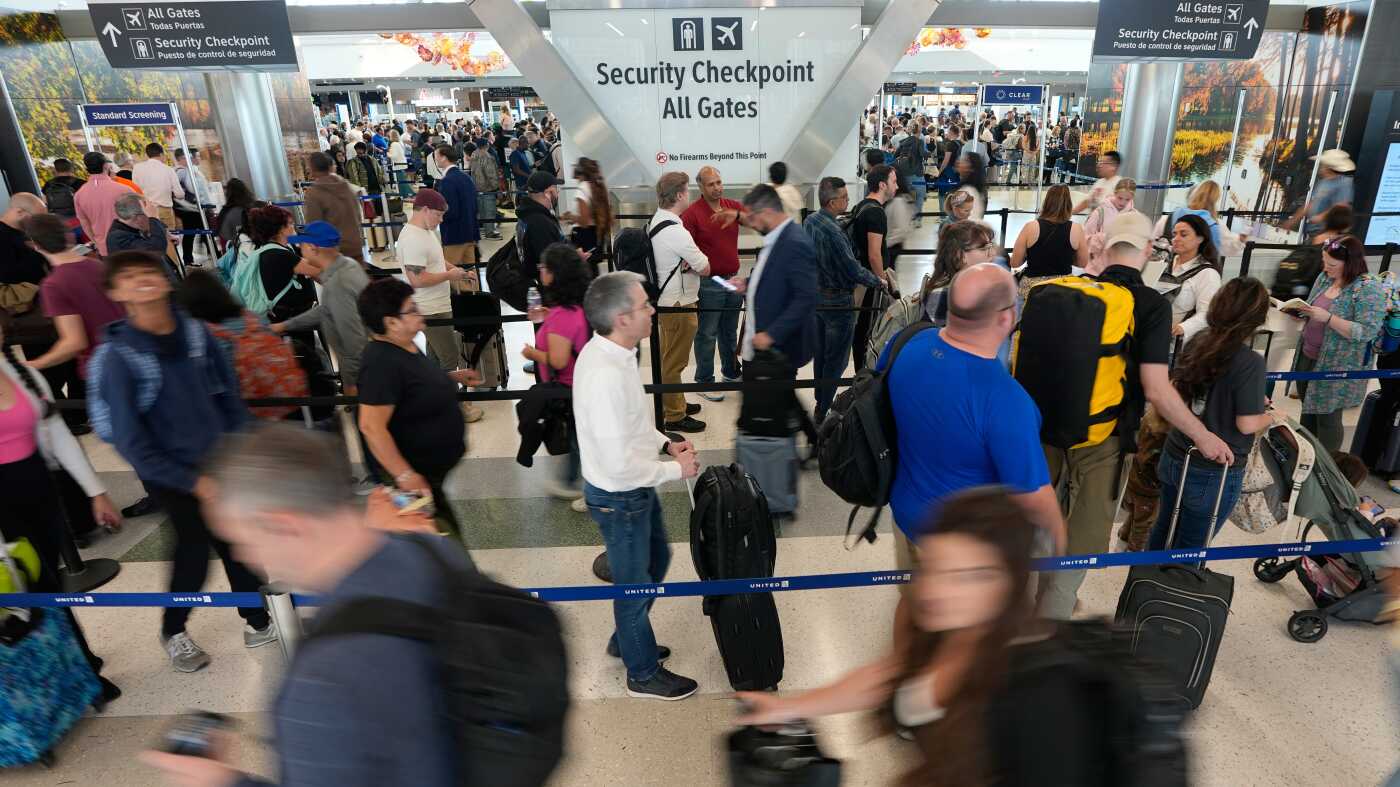
ICE officers could remain at airports after TSA workers are paid

Scathing report claims nation’s oldest labor union ‘betrayed’ MAGA members through ‘shocking’ spending
-

 Sports1 week ago
IOC addresses execution of 19-year-old Iranian wrestler Saleh Mohammadi
-

 Miami, FL4 days ago
Jannik Sinner’s Girlfriend Laila Hasanovic Stuns in Ab-Revealing Post Amid Miami Open
-

 New Mexico1 week ago
Clovis shooting leaves one dead, four injured
-

 Tennessee7 days ago
Tennessee Police Investigating Alleged Assault Involving ‘Reacher’ Star Alan Ritchson
-

 Politics1 week ago
Schumer gambit fails as DHS shutdown hits 36 days and airport lines grow
-

 Minneapolis, MN4 days ago
Boy who shielded classmate during school shooting receives Medal of Honor
-

 Science1 week ago
Record Heat Meets a Major Snow Drought Across the West
-

 Technology1 week ago
YouTube job scam text: How to spot it fast