North Dakota
High school students fill UND Memorial Union to compete in North Dakota Esports Tournament


GRAND FORKS – Evan Guilmino, a sophomore from Minot North High School, sat studying the skills and strategies of possible competitors in the Super Smash Bros video game as he prepared for a championship game Saturday afternoon, March 29, in the North Dakota Esports State Tournament at UND.
“This is my first year (in esports),” said Guilmino, who specializes in the character King K. Rool in the Super Smash Bros game. But “I’m also getting good at Mortal Combat.”
These are a couple of the seven games that students in grades 9-12 were competing in, either individually or in teams, during the state tournament.
Guilmino was one of 268 high school students at 36 schools throughout the state who gathered for the tournament Friday and Saturday, March 28 and 29, hosted by Fenworks at the UND Memorial Union.
“I get to meet new players from around the state,” he said, “and get to show off a little bit.”
Pamela Knudson / Grand Forks Herald
“Esports,” which is short for “electronic sports,” involves organized, competitive video game competition. It engages students in an environment steeped in “camaraderie and community,” said Hayden Sherva, marketing coordinator at Fenworks. “Of course, there are rivalries, like other sports, but (esports) is bringing them together.”
“It aligns very closely with other traditional sports,” Sherva said. “Everyone likes to have something they’re good at, that they can invite their families and friends to, invite new friends to, and show off the skills they’re learned.
“It brings a lot of students out of their shells,” he said, recalling the story of a very shy student who transferred into a Dunseith, North Dakota, school. He was so proficient in video gaming he was asked to be captain of the school’s team.
The student underwent “radical change,” Sherva said. And “he played a big role in helping the GM (general manager) organize esports” at that school.
Esports is “very communication-based,” he said, and offers students an avenue to “befriend others in their school that they may not have met before.”
Sherva’s employer Fenworks, a Grand Forks-based company, promotes esports career pathways to students. This is the fourth time Fenworks has hosted the North Dakota state competition in Grand Forks. Earlier this year, it hosted state tourneys in Wyoming, Minnesota and South Dakota, Sherva said.
Surveying the Memorial Union filled with esports tourney participants, UND President Andy Armacost said, “It’s incredible to have all these students here. There’s such a sense of teamwork and camaraderie.”
Having walked by a winning Minot team, he said, “you can see the pride (on their faces).” UND launched a bachelor’s degree in esports about five years ago, but esports draws interest from majors and non-majors alike, he said. Several esports labs are available for student use in the Union’s lower level.
“It draws (students) from all over campus,” Armacost said.
In the past, video gaming was viewed differently than it is now, Sherva said. The stereotypical notion of a young person spending time isolated in the basement playing video games is no longer true thanks to esports.
The skills students learn from participating in esports – such as strategic thinking, leadership and effective communication – are applicable to many careers fields.
Students benefit from enhanced “self-confidence, which is so important for every single aspect of life,” Sherva said. “And the team-building aspect is there.”

Pamela Knudson / Grand Forks Herald
In addition to “soft skills,” students learn to become more comfortable with technology and more digitally literate, preparing them for work in “really anything STEM related,” he said. “In most workplaces, it’s hard to get a job if you don’t know how to use a computer.”
And esports presents a wide variety of job opportunities including photography, live-streaming and “casting,” a role similar to the announcer at a sporting event.
The field offers an abundance of “real-world opportunities to get a real job” in today’s market and in the new careers that are unfolding, Sherva said.




North Dakota
Greenpeace seeks new trial, claiming jury pool biased in case over Dakota Access Pipeline
Greenpeace has asked for a second trial after a judge entered a $345 million judgment against the organization in a landmark case brought by the developer of the Dakota Access Pipeline.
The case “threatens to result in one of the largest miscarriages of justice in North Dakota’s history,” attorneys for the environmental group wrote in a brief filed last week.
After a three-week trial roughly a year ago, a Morton County jury directed Greenpeace to pay Energy Transfer about $667 million, finding the environmental group at fault for inciting illegal acts against the company during anti-pipeline protests in North Dakota in 2016 and 2017 and for publishing false statements that harmed Energy Transfer’s reputation.
Greenpeace denies Energy Transfer’s claims and maintains that it brought the lawsuit to hurt the environmental movement.
Southwest Judicial District Judge James Gion in October slashed the jury’s award to $345 million, though he didn’t finalize the award until late February.
Greenpeace is now taking steps to fight the judgment, which includes its motion for a new trial.
The environmental group’s reasons for the request include claims that the jury instructions and verdict form contained errors, and that Energy Transfer was allowed to present unfair and irrelevant evidence to jurors. The group also alleges the jury pool was biased.
Greenpeace says the jury’s award assumes that Greenpeace was entirely responsible for any injury Energy Transfer sustained related to the protests. Jurors were not given the opportunity to consider whether Greenpeace was only at fault for a portion of the damages, the organization wrote in its brief.
Attorneys for Greenpeace also referenced the mailers and other media circulated to Mandan and Bismarck residents before the trial that contained anti-Dakota Access Pipeline protest and pro-energy industry content.
The environmental group seeks a new trial in Cass County, arguing in part that the jury pool in the Fargo area would be more fair because its residents did not directly experience the Dakota Access Pipeline protests and because the local economy is less dependent on the energy industry.
If Greenpeace’s request for a new trial is denied, it plans to appeal the case to the North Dakota Supreme Court, the organization has said.
Greenpeace previously asked for the trial to be moved from Morton County to Cass County in early 2025, which Gion and the North Dakota Supreme Court denied.
The lawsuit is against three separate Greenpeace organizations — Greenpeace USA, Greenpeace International and Greenpeace Fund.
Energy Transfer as of Wednesday morning had not submitted a response to Greenpeace’s motion for a new trial. Previously, the company has defended the jury’s verdict and disputed Greenpeace’s claims that the court proceedings were not fair.
Energy Transfer has indicated it may appeal Gion’s decision to reduce the award to $345 million.
Greenpeace will not have to pay any of the $345 million judgment for at least a couple of months, Gion ruled Tuesday.
Court documents indicate that the organization could have to pay a bond of up to $25 million while appeals proceed, though the environmental group has asked the judge to waive or reduce this amount. Gion has not decided on this motion.
He noted that obtaining such a large bond will be challenging.
“The magnitude of this matter defies simple decisions,” Gion wrote.
Energy Transfer in court filings urged the judge to require Greenpeace to post the full $25 million.
Any bond money Greenpeace provides would be held by a third party while the appeals proceed, according to Greenpeace USA.
Greenpeace International has filed a separate lawsuit in the Netherlands that accuses Energy Transfer of weaponizing the U.S. legal system against the environmental group. Energy Transfer asked Gion to order that the overseas suit be paused while the North Dakota case is still active, which Gion denied. The company appealed his ruling to the North Dakota Supreme Court, which has yet to make a decision on the matter.

(Photo by Jeff Beach/North Dakota Monitor)
(North Dakota Monitor) – The cost of the power line and substation needed by a data center north of Fargo has risen from $75 million to $110 million, but developers say the data center company will still cover the entire cost of the project.
Applied Digital needs the project to power its data center being built between Fargo and Harwood. The data center requires 280 megawatts of power at peak demand.
Applied Digital will pay for the project but it will be owned by Grand Forks based, Minnkota Power Cooperative.
The North Dakota Public Service Commission held a hearing in Fargo on what is known as the Agassiz Transmission Line and Substation.


Activists steal wax figure of Emmanuel Macron
Greenpeace activists stole a wax figure of French President Emmanuel Macron to protest France’s trade with Russia.
Greenpeace has asked for a second trial after a judge entered a $345 million judgment against the organization in a landmark case brought by the developer of the Dakota Access Pipeline.
The case “threatens to result in one of the largest miscarriages of justice in North Dakota’s history,” attorneys for the environmental group wrote in a brief filed last week.
After a three-week trial roughly a year ago, a Morton County jury directed Greenpeace to pay Energy Transfer about $667 million, finding the environmental group at fault for inciting illegal acts against the company during anti-pipeline protests in North Dakota in 2016 and 2017 and for publishing false statements that harmed Energy Transfer’s reputation.
Greenpeace denies Energy Transfer’s claims and maintains that it brought the lawsuit to hurt the environmental movement.
Southwest Judicial District Judge James Gion in October slashed the jury’s award to $345 million, though he didn’t finalize the award until late February.
Greenpeace is now taking steps to fight the judgment, which includes its motion for a new trial.
The environmental group’s reasons for the request include claims that the jury instructions and verdict form contained errors, and that Energy Transfer was allowed to present unfair and irrelevant evidence to jurors. The group also alleges the jury pool was biased.
Greenpeace says the jury’s award assumes that Greenpeace was entirely responsible for any injury Energy Transfer sustained related to the protests. Jurors were not given the opportunity to consider whether Greenpeace was only at fault for a portion of the damages, the organization wrote in its brief.
Attorneys for Greenpeace also referenced the mailers and other media circulated to Mandan and Bismarck residents before the trial that contained anti-Dakota Access Pipeline protest and pro-energy industry content.
The environmental group seeks a new trial in Cass County, arguing in part that the jury pool in the Fargo area would be more fair because its residents did not directly experience the Dakota Access Pipeline protests and because the local economy is less dependent on the energy industry.
If Greenpeace’s request for a new trial is denied, it plans to appeal the case to the North Dakota Supreme Court, the organization has said.
Greenpeace previously asked for the trial to be moved from Morton County to Cass County in early 2025, which Gion and the North Dakota Supreme Court denied.
The lawsuit is against three separate Greenpeace organizations — Greenpeace USA, Greenpeace International and Greenpeace Fund.
Energy Transfer as of Wednesday morning had not submitted a response to Greenpeace’s motion for a new trial. Previously, the company has defended the jury’s verdict and disputed Greenpeace’s claims that the court proceedings were not fair.
Energy Transfer has indicated it may appeal Gion’s decision to reduce the award to $345 million.
Greenpeace will not have to pay any of the $345 million judgment for at least a couple of months, Gion ruled Tuesday.
Court documents indicate that the organization could have to pay a bond of up to $25 million while appeals proceed, though the environmental group has asked the judge to waive or reduce this amount. Gion has not decided on this motion.
He noted that obtaining such a large bond will be challenging.
“The magnitude of this matter defies simple decisions,” Gion wrote.
Energy Transfer in court filings urged the judge to require Greenpeace to post the full $25 million.
Any bond money Greenpeace provides would be held by a third party while the appeals proceed, according to Greenpeace USA.
Greenpeace International has filed a separate lawsuit in the Netherlands that accuses Energy Transfer of weaponizing the U.S. legal system against the environmental group. Energy Transfer asked Gion to order that the overseas suit be paused while the North Dakota case is still active, which Gion denied. The company appealed his ruling to the North Dakota Supreme Court, which has yet to make a decision on the matter.
North Dakota Monitor is part of States Newsroom, the nation’s largest state-focused nonprofit news organization.

Trump reiterates threats to bomb Iran’s power plants and bridges

How a Family of 3 Lives on $25,000 in Corona, Queens

Trick Trick joined Waka Flocka onstage at ‘The Boys 4 Life Tour’ stop in Detroit – Detroit Metro Times

NFL Experts Continue to Link Former 49ers WR Back to San Francisco

What we learned in FC Dallas’ win vs DC United

Florida High School Football Rankings: Top 25 teams – Oct. 21

How old is Bo Nix? What to know about Oregon quarterback ahead of 2024 NFL Draft

Cleary's 21 help Le Moyne down Central Connecticut State 69-64 in OT

99th annual Pony Swim held in Virginia

Indiana Members Credit Union announced as new anchor tenant at Bottleworks District
Trump reiterates threats to bomb Iran’s power plants and bridges

Trump threatens Iranian infrastructure over Strait of Hormuz | BBC News

GOP races to pass ICE, Border Patrol funding bill as priorities pile up, divisions emerge
Jet fuel crisis: Rationing triggered at four airports in Italy
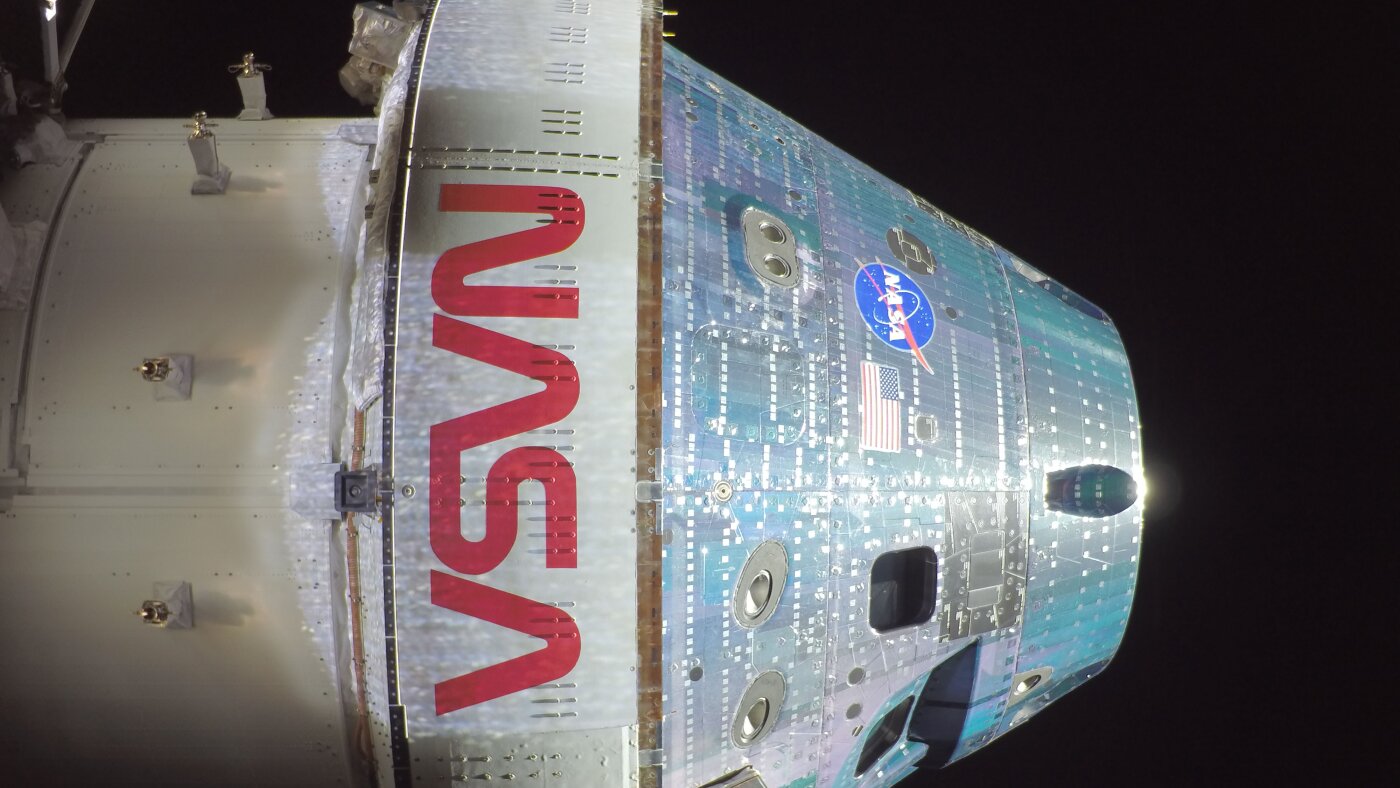
NASA’s Artemis II crew readies for Monday’s lunar flyby. Here’s what you need to know
-

 South-Carolina1 week ago
South Carolina vs TCU predictions for Elite Eight game in March Madness
-

 Atlanta, GA2 days ago
1 teenage girl killed, another injured in shooting at Piedmont Park, police say
-

 Vermont1 week ago
Skier dies after fall at Sugarbush Resort
-

 Movie Reviews4 days ago
Vaazha 2 first half review: Hashir anchors a lively, chaos-filled teen tale
-

 Politics1 week ago
Trump’s Ballroom Design Has Barely Been Scrutinized
-

 Atlanta, GA1 week ago
Fetishist ‘No Kings’ protester in mask drags ‘Trump’ and ‘JD Vance’ behind her wheelchair
-
 Entertainment5 days ago
Inside Ye’s first comeback show at SoFi Stadium
-

 Politics1 week ago
JD Vance says he was ‘obsessed’ with UFOs, believes aliens are actually ‘demons’