Kansas
Salina’s Ken Stonebraker will enter Kansas Football Coaches Association Hall of Fame


Life comes full circle sometimes. When it happens in the great fraternity of Kansas high school football coaches, it can take on a whole new meaning.
Longtime Kansas high school football coaching giants Ken Stonebraker and Chuck Porter will be inducted this December in the Kansas Football Coaches Association Hall of Fame. A culmination of years of molding young men into men after their paths first crossed in early 1985.
“I was signed at my house in Ellsworth to go to Wichita State by WSU assistant coach Chuck Porter,” Stonebraker recently recalled. “Chuck had great success as a high school football coach in Kansas and he is in this 2024 hall of fame class with me. We did meet once as opposing coaches in a playoff game and that was special, too. He was a terrific coach and a better person.”
Stonebraker’s Salina South Cougars defeated Porter’s Buhler Crusaders 51-7 in the first round of the 1997 Class 5A playoffs.
“We were pretty good that year. We lost to Liberal in the semifinals 21-17 and they went on and won it,” Stonebraker remembered.
Stonebraker and Porter will be enshrined later this year alongside Rich Anderson (St Xavier, Washington County, Goodland, Pratt, Liberal); Girard’s Craig Crespino; Pittsburg Colgan’s Frank Crespino; Sedan’s Les Davis; Ted Easter (Valley Heights, Derby, Andale); and Frankfort’s Larry Schrader. Easter is the first assistant coach to be elected for the HOF.
“To be honest it is quite a humbling experience,” Stonebraker said of the HOF election. “There are so many great coaches across the State of Kansas that I feel like others are deserving. To be included with a group of coaches like that is nice. I am not one who wants individual recognition as I know I could not do what I did without all my assistant coaches, players, parents and everybody who contributed to our program.”
In 14 years at South, 1994-2007, Stonebraker fashioned a 101-47 record where the Cougars won state championships in 2000 and 2004 and a runner up finish in 2003.
“We made six trips to the semifinals and were in the playoffs 10 years out of 14 years as head coach,” he said. “Prior to taking the head job in 1994, Salina South had been to the playoffs once in school history.”
He was the Kansas Coaches Association Class 5A coach of the year in 2000 and the overall coach of the year (all classes) in 2001.
“I transitioned to Athletic Director in 2007 and was named the Kansas Athletic Director of the Year in 2016 by the Kansas Interscholastic Athletic Administrators Association,” Stonebraker said.
But three words accounted for thousands of words, especially in Salina.
South vs Central. Coach Ken Stonebraker’s Cougars vs Coach Marvin Diener’s Mustangs.
“People forget Salina was the hub every year for the premier game of the year in Week 2,” Diener said. “And we could play two times in a year in Week 2 and (state) semifinals with the winner going to the championship game.”
They met an uncanny 20 times in football in the 12 years the two friends faced off on the gridiron from 1994-2005. Diener’s Mustangs won 13 of the epic games.
“There would be 6-7,000 people at Salina District Stadium. The end zones were full. Fans would come early and the stands were packed in pregame,” Diener said. “Ringing the bell after the game was a big issue. The atmosphere was beyond what you could imagine. But for the two of us as friends, it was hard. It had a toll man.”
“We had some unbelievable games with Salina Central for several years,” Stonebraker said. “It became commonplace to play them two times a year. When I took the head job at Salina South they were coming off their first state title. We worked extremely hard to try and beat our cross town rival.
“Once we began competing with them we realized we were a state caliber team. I don’t think we would have reached the height of our program without Salina Central and I am not sure Central would have had all of their success without us. The games we played were pretty wild most times and very close.”
But it never changed their friendship and the respect each coaching giant had for one another.
“I will always appreciate Ken,” said Diener, who was 253-111 in his coaching career and was an original member of the KFCA HOF class in 2020.
“Marvin became a good friend,” Stonebraker lamented. “Not everybody in Salina understood or liked that we could be friends. But we shared a lot of information with each other as we played the same opponents. There were only two weeks a year we didn’t talk during the season.
“I respected Marvin and his program tremendously and I think he shared that same respect with me. I think we took the success of both programs for granted because it is just what seemed to happen every year. One of us played for the state title for eight straight years which was quite a run for our city.”
Stonebraker played two years for Dick Foster’s Coffeyville Community College Red Ravens. His 1983 freshman season they won the national championship.
In 1985 and ’86, he starred for the Wichita State Shockers where he earned academic All-Missouri Valley Conference honors. He graduated in 1988 from WSU with his degree in Education. That fall he was named head football coach at Argonia High in south central Kansas, a position he held for four years before he became an assistant in football and track until his move to Salina.
“I think one of my strongest features as a coach was that I allowed my assistant coaches to coach and be involved in decision making, game planning and overall production of our football program,” Stonebraker, who touched around 5,000 athletes’ lives in 34 years, said. “I relied very heavily on our entire staff, and I had a great staff. I could not have done what I did without the support of our entire staff.
“I also learned that being a leader of young men was more important than the X’s and O’s. Kids are hungry to be led and believe in something. It is vital for the head coach to be a strong leader and I think I recognized that and did my best to provide that leadership.”
Stonebraker’s influence on being a coach and mentor began in Ellsworth County.
“I grew up with a coach. My dad was a head basketball and track coach in Atwood and Ellsworth. He won a state championship in each sport and both my mom and dad were huge influences in my life,” Stonebraker said. “My high school football coach, Pep Shanelec, was also a huge influence. I had the opportunity to play for Dick Foster at Coffeyville and he was a legend. We won the national championship, and I learned a lot about a winning culture. I then played at Wichita State and learned a lot from some great coaches there.”
Stonebraker said many people played an important part in his teams’ success.
“I could not have done this job without the support of my family. My wife Amy and my kids Jessica and Justin were all in and they were committed to my career and lifestyle,” said Stonebraker, who coached around 40 players who played in college. “And like I said earlier, I can’t say enough about the assistant coaches that I had at South. I learned so much from them and it was a team effort.
“And most importantly we had great players during my tenure as head coach. I’ve told a lot of people that I was a lot better coach when I had great players. And we had good, hard-nosed kids that did what they were coached to do and played together as a team.”
He conveyed this message to his past players.
“I was pretty tough on kids. I had high expectations,” the all-time winningest coach in South history said. “I hope they know that I loved them. I tried to convey that when I was coaching them. They need to know that they had a huge impact on me as a coach. In education-based athletics you want to see your athletes become great men and women, leaders, and mothers and fathers. To be able to watch these young people grow up and become great adults makes me happy.”
He’s also happy later this year he will be enshrined into greatness that will soon honor a new total of 27 of the greatest Kansas prep football coaches of all-time.
“I can’t believe that I was able to do what I did as a living,” he said. “We all want to win, and I think winning is important. But the relationships I have built with my players, coaches, parents and community members are far more important to me than any games we won. I hope that I had an impact on them because so many had an impact on me. I feel so lucky to have had these experiences.”



The Kansas Lottery offers several draw games for those aiming to win big.
Here’s a look at July 10, 2026, results for each game:
Winning Mega Millions numbers from July 10 drawing
02-39-44-46-56, Mega Ball: 23
Check Mega Millions payouts and previous drawings here.
Winning Pick 3 numbers from July 10 drawing
Midday: 4-0-8
Evening: 0-0-3
Check Pick 3 payouts and previous drawings here.
Winning 2 By 2 numbers from July 10 drawing
Red Balls: 01-03, White Balls: 02-08
Check 2 By 2 payouts and previous drawings here.
Winning Millionaire for Life numbers from July 10 drawing
14-42-46-47-57, Bonus: 05
Check Millionaire for Life payouts and previous drawings here.
Feeling lucky? Explore the latest lottery news & results
Are you a winner? Here’s how to claim your lottery prize
All Kansas Lottery retailers will redeem prizes up to $599. For prizes over $599, winners can submit winning tickets through the mail or in person at select Kansas Lottery offices.
By mail, send a winner claim form and your signed lottery ticket to:
Kansas Lottery Headquarters
128 N Kansas Avenue
Topeka, KS 66603-3638
(785) 296-5700
To submit in person, sign the back of your ticket, fill out a claim form, and deliver the form along with your signed lottery ticket to Kansas Lottery headquarters. 128 N Kansas Avenue, Topeka, KS 66603-3638, (785) 296-5700. Hours: 8 a.m. to 5 p.m., Monday through Friday. This office can cash prizes of any amount.
Check previous winning numbers and payouts at Kansas Lottery.
When are the Kansas Lottery drawings held?
- Powerball: 9:59 p.m. CT Monday, Wednesday and Saturday.
- Mega Millions: 10 p.m. CT Tuesday and Friday.
- Pick 3 Midday/Evening: 1:10 p.m. and 9:10 p.m. CT daily.
- 2 By 2: 9:30 p.m. CT daily.
- Lucky for Life: 9:38 p.m. CT daily.
- Lotto America: 9:15 p.m. CT Monday, Wednesday and Saturday.
- Super Kansas Cash: 9:10 p.m. CT Monday, Wednesday and Saturday.
- Millionaire for Life: 10:15 p.m. CT daily.
This results page was generated automatically using information from TinBu and a template written and reviewed by a Kansas editor. You can send feedback using this form.

WICHITA, Kan. (KSNW) — Two Kansas parents were charged Thursday in connection with the shooting deaths of their two children.
The Ellsworth County Attorney’s Office charged Aaron French and Makayla French of Brookville with four counts each of aggravated child endangerment.
On March 28, law enforcement responded to a home near Kansas Highway 141 and Avenue N near Kanopolis Lake.
A 5-year-old girl and an 8-year-old boy had been shot, according to the Kansas Bureau of Investigation. The 5-year-old was pronounced dead at the scene. The 8-year-old was taken to a Wichita hospital, where he died almost a week later.
The KBI said a young child in the home picked up a loaded, unsecured shotgun and shot the siblings.
Aaron French, 37, and Makayla French, 28, have been ordered to appear in court on July 28.
For more Kansas news, click here. Keep up with the latest breaking news by downloading our mobile app and signing up for our news email alerts. Sign up for our Storm Track 3 Weather app by clicking here. To watch our shows live on our website, click here.
KSHB 41 reporter Isabella Ledonne reports on stories in Overland Park, Johnson County and topics about government accountability. Share your story idea with Isabella.
—
Saturday marks the final FIFA World Cup 26 match in Kansas City with Argentina set to meet Switzerland on the pitch at Kansas City Stadium.
Kansas City to reduce bus transit frequency, extended hours after World Cup
Public transportation received a big boost during the World Cup.
Johnson County launched JOCO United, and according to leaders, the airport drop and ride service that was implemented for the tournament will stick around.
“It has been very smooth every time,” Johnson County resident Mariah Wickham said. “I’ve been up and down so many times.”
Kansas City, Missouri, also bumped up its transit options, but not all of the those will be sticking around once the final whistle blows.
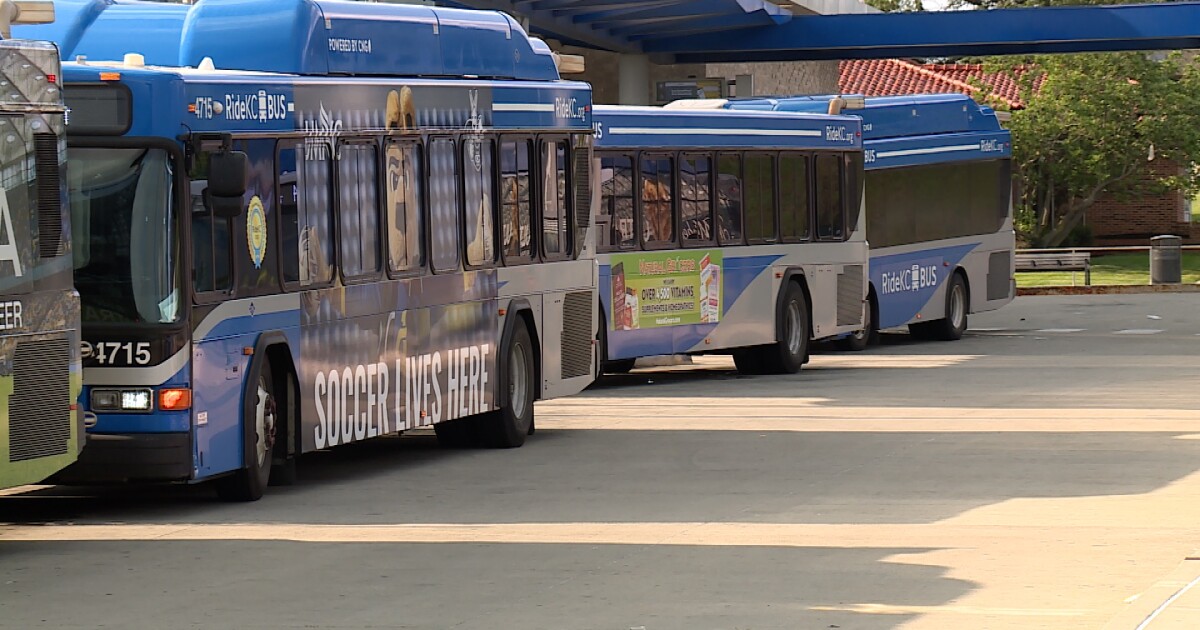
Tens of thousands of people have been using the airport link, streetcar and the buses to get around Kansas City. The city poured millions of dollars into building up its public transit infrastructure. The KCATA added more frequency to bus transit lines and the streetcar, pushing more fans to use public transportation during the tournament.
Brian Luton
“With the World Cup here, I was able to exercise using the streetcar more frequently and that was really fun,” Trish Luancing said. “It wold be nice to not have to drive everywhere and not have to worry about parking.”
But thousands have been relying on public transit for years, regardless of what event was in town.
“It’s been busier since the World Cup,” Jeffrice Jackson, a bus rider, said. “It’s been smooth sailing.”
The KCATA added streetcar ‘bus bridge’ links, extended bus service hours and increased frequency on East-West routes to link riders to the streetcar. It’s benefited both travelers and commuters.
Brian Luton
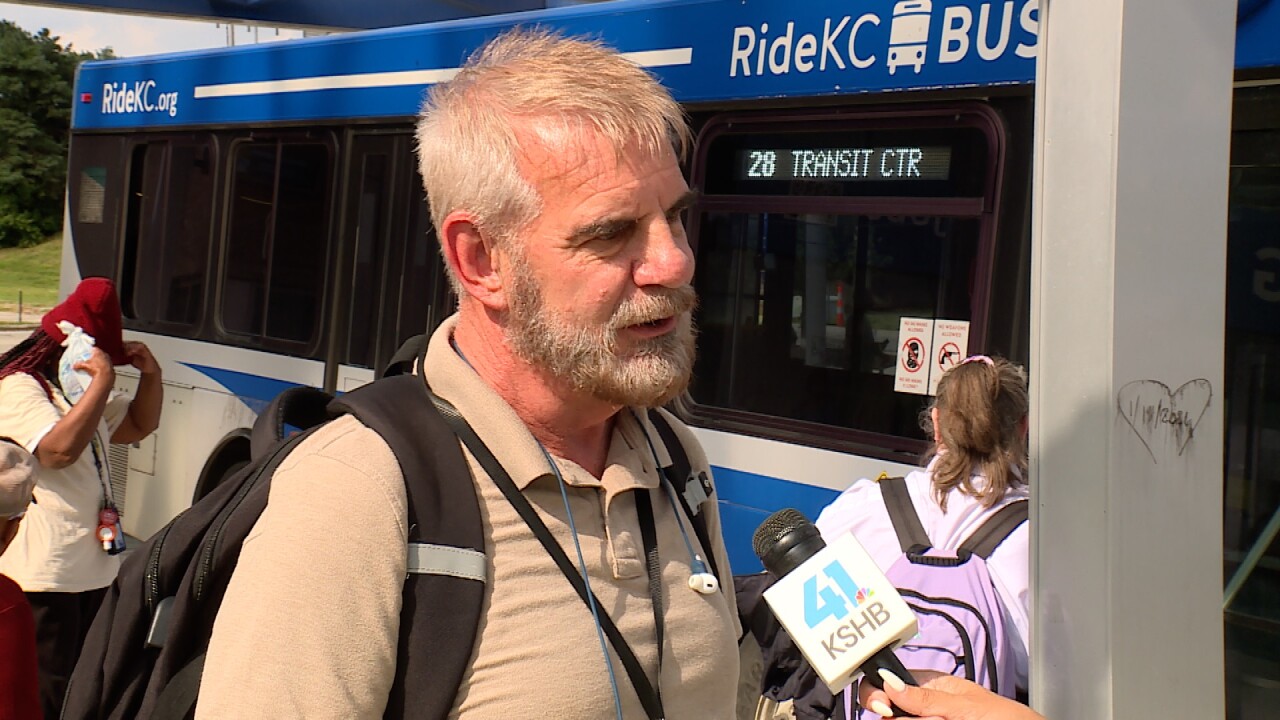
“[Service] has been more consistent with the World Cup than it was previously,” Jerry Breault, a rider said. “We were missing buses or routes because there weren’t enough drivers to drive that route.”
But the add-on’s stop on Sunday, July 12. If the transit authority can’t find more money, more than a dozen routes will be cut, potentially impacting more than 8,000 riders.
“It’s a little frustrating,” Breault said. “A lot of us rely on it just to get back and forth to work, to take care of our daily needs. It looks like we may be having to find alternatives and we’re not very happy about that.”
The KCATA will potentially suspend these weekday and weekend routes by September:
Weekday Route Eliminations:
- 9 – 9th Street, 365 average weekday ridership
- 21 – Cleveland Antioch, 512 average weekday ridership
- 23 – 23rd Street, 266 average weekday ridership
- 25 – Troost Local, 1,460 average weekday ridership
- 27 – 27th Street, 422 average weekday ridership
- 57 – Wornall, 411 average weekday ridership
- 71 – Prospect Local, 464 average weekday ridership
Weekend Route Eliminations:
- 9 – 9th Street, 349 average weekend ridership
- 21 – Cleveland Antioch, 312 average weekend ridership
- 23 – 23rd Street, 312 average weekend ridership
- 25 – Troost Local, 1,431 average weekend ridership
- 27 – 27th Street, 455 average weekend ridership
- 57 – Wornall, 595 average weekend ridership
- 71 – Prospect Local, 982 average weekend ridership
Bus fares came back earlier this summer to offset some of the operation costs, but many have reported issues with the free fare cards and eligibility.
“There’s always funding challenges with the KCATA,” Kansas City, Missouri, Mayor Quinton Lucas said. “How are the fare re-institutions working right now?”
Brian Luton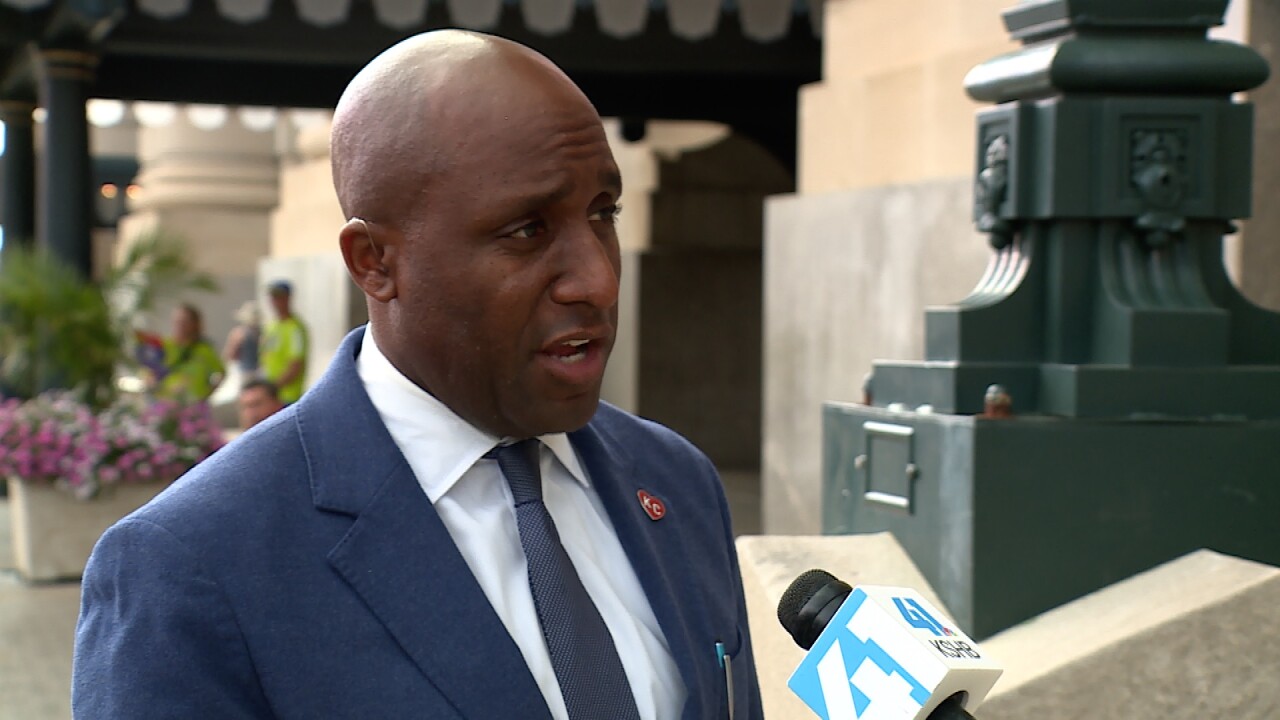
Mayor Lucas told KSHB 41 News Reporter Isabella Ledonne the transit improvements implemented for the World Cup “should continue,” and there are plans to talk with the KCATA commissioners to “make it work”.
“KCATA cannot just be Kansas City supported alone forever,” Mayor Lucas said. “Our approach and our preference is that the region got to see how much they would like [expanded service] during the World Cup. It was always intentional that if they liked it, maybe they would invest and maybe they would want this thing to go further.”
That’s good news to the thousands of daily riders.
Brian Luton
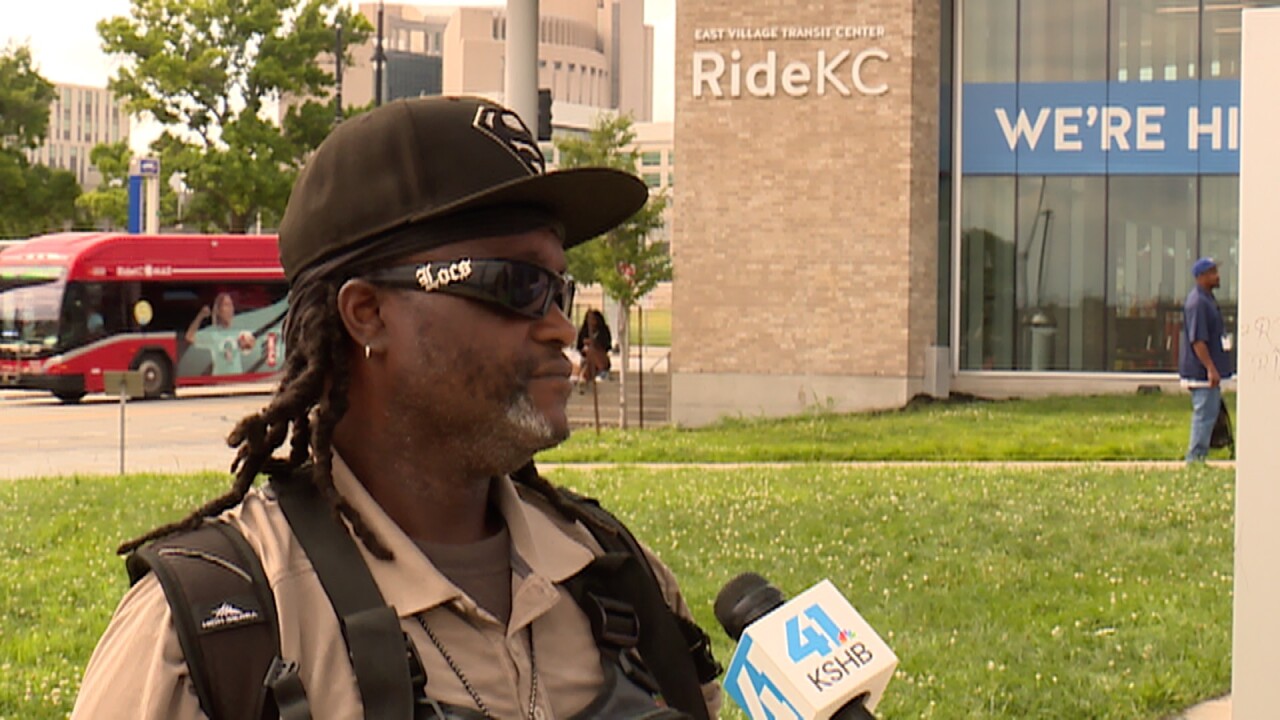
“I think it’s good because it helps people get around if they need to get around,” Jackson said.
The KCATA did not make themselves available for an interview.
—

-

 Los Angeles, Ca8 minutes ago
New details emerge in fatal stabbing of boy in El Monte
-

 Detroit, MI35 minutes ago
1 dead, 1 injured after two-vehicle crash at Collingwood and Belleterre in Detroit
-

 San Francisco, CA42 minutes ago
4 arrested, 3 cited after brawl following Giants vs. Rockies game at Oracle Park
-

 Dallas, TX50 minutes ago
Mark Cuban takes legal action against Dallas Mavericks ownership over potential new arena deal
-

 Miami, FL53 minutes ago
South Florida Dirt: A timeline of the Vacchi vs. Stern legal battle
-

 Boston, MA58 minutes ago
Tall Ships begin historic Boston parade of sails
-

 Denver, CO1 hour ago
Lakers Proposed to Land Peyton Watson in Massive 9-Player Blockbuster Trade
-

 Seattle, WA1 hour ago
Cyclists fill backroads for annual summer Seattle-to-Portland ride

