Kansas
MMIP Series | KSHB 41 I-Team discovers scant interest among Kansas police in MMIP training

KANSAS CITY, Mo. — Over the last two years, the KSHB 41 I-Team has investigated the MMIP (Missing and Murdered Indigenous People) crisis in our community.
It’s a national movement that highlights how Indigenous people, particularly women, face much higher rates of violence, including assault, rape, murder, and trafficking.
The I-Team covered the disappearance of Quana Big Spring, a Belton teenager, and the Independence cold case murder of Lakota Renville.
Those are two examples of how the crisis is playing out in the Kansas City area.
This is a place the public may not think is part of this nationwide epidemic.
During our investigation, we also learned Kansas lawmakers passed a bill in 2021 that offers free training to law enforcement officers on how to investigate MMIP cases, as they have certain cultural and jurisdictional aspects that set them apart.
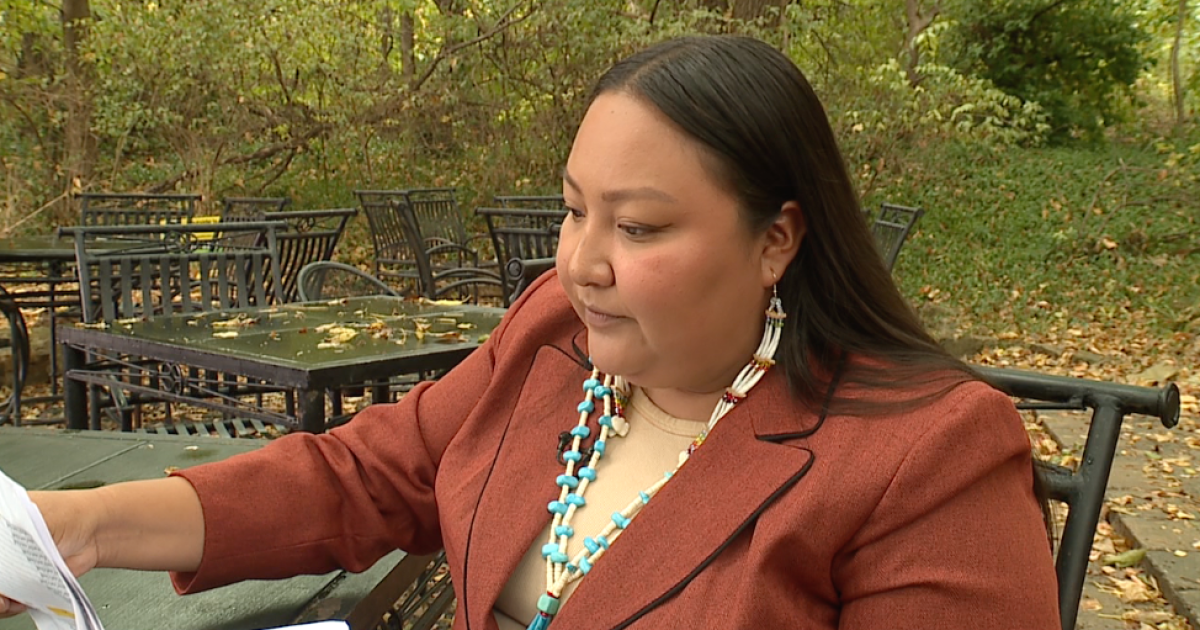
“It was Kansas’ first step for MMIP,” Kansas Representative Christina Haswood said, a Democrat from Lawrence who co-sponsored the bill and helped it pass.
The I-Team wanted to find out just how many law enforcement agencies actually took that step.
We reached out to every one of them, more than 300 police departments and sheriff’s offices across the state. We asked how many were aware of the MMIP training and had taken the class.
The class is voluntary, not mandatory.
37 agencies responded. 27 of those were aware of the training and nine agencies had already taken it, which is 3%.
Our findings shocked and disappointed Haswood, who is one of the only Native American lawmakers in the state.
“And you said you reached out to everyone?” Haswood said when we handed her our findings. The data was compiled onto a spreadsheet.
“That really gets me fired up because we can see with your findings that there’s such a big gap of communication and education, that there’s definitely work that needs to be done,” she said.
Fighting for this training is personal to her. Many of her constituents in Lawrence are Native and represent tribal nations across the country.
“It really angers me that we come together, and we say, ‘Here are the resources that you ask [for] and can hopefully get you elevated on your knowledge,’” Haswood said. “But when it’s given voluntarily, the resources are not being used.”
Haswood says there’s a perception at the statehouse that Native Americans don’t exist. She says she has spent a lot of time explaining to other lawmakers that Native Americans don’t just live on reservations and that Native issues are still relevant today.
Another perception the I-Team noticed was multiple law enforcement agencies saying the MMIP training isn’t a high priority because they’re not close to a reservation or they don’t know of any MMIP cases.
“This is an issue that even though you might not see every day with your own eyes, it is happening, and if we continue to operate like this, when it does happen, that we don’t have a system that’s robust enough to help Indigenous peoples,” Haswood said.
Kansas is home to four tribal nations: Prairie Band Potawatomi Nation, Kickapoo Tribe in Kansas, Iowa Tribe of Kansas and Nebraska, and Sac and Fox Nation of Missouri in Kansas and Nebraska.
Although MMIP cases don’t happen as frequently in Kansas as in other part of the U.S., the issue still hits close to home for many families.
We met some of those families last spring when we visited the Prairie Band Potawatomi Nation for a MMIW walk and ceremony.
“The MMIW movement is new, but the issues are not,” one speaker said.
Much of the movement focuses on Indigenous women, which is what the “W” stands for, though it was expanded to include all Indigenous people.
We talked to sisters Jessi and Rachelle Blacksmith, who run the MMIP chapter of northeast Kansas. They’re advocating for their brother, Willie Blacksmith, who was murdered in July 2022.
“We’re trying to make something good out of what happened to our brother to help others,” Rachelle said.
They learned about the state’s MMIP training and took it themselves. They say it would be beneficial to all police agencies.
“What are you supposed to do if a murder happens? This tells you what to do, this goes through the steps [of] what to do,” Jessi said.
Haswood says its about livelihoods and knowing that government systems have their back.
She hopes she can add more teeth to the training by making sure all agencies are aware of the training and set aside an hour to take it, and make it mandatory, instead of voluntary.
“I’ll continue to fight for this issue,” Haswood said.
Only one law enforcement agency, the Galena police department, out of the 325 in the state, said they’d make the training mandatory.
Several agencies said they’d take it or would consider taking it after we reached out.
The Gardner police department took the training the day we called.
During our investigation, we contacted Salina police about the training and a 2019 MMIP case in their jurisdiction. We later received a call from one of the department’s detectives, who told us he spent four hours investigating that 2019 case after we reached out. He discovered the missing man was an unclaimed body in Columbia, Missouri.
Although it’s a sad ending, the man’s daughter, who had spent years contacting morgues across the country, told us she was grateful to have closure and finally know what happened to her dad.
We shared that story with Haswood, who said the training is “literally helping people.”
Anyone can take the online training by going to the Kansas Law Enforcement Training Center page.



Kansas
Where to watch St. Louis Cardinals vs Kansas City Royals: TV channel, start time, streaming for June 19


What to know about MLB’s ABS robot umpire strike zone system
MLB launches ABS challenge system as players test robot umpire calls in a groundbreaking season.
The 2026 MLB season has surpassed the quarter mark, and after each team’s first 40 games, there’s plenty of reasons to tune in all summer long.
Chicago White Sox slugger Munetaka Murakami has already proven doubters wrong by launching 17 home runs, Pittsburgh’s Paul Skenes consistently looks like the best version of himself on the mound and Milwaukee ace Jacob Misiorowski is throwing harder than any starter in the majors.
The MLB action continues on Friday as the St. Louis Cardinals visit the Kansas City Royals.
Here’s everything you need to know to tune in for the first pitch.
See USA TODAY’s sortable MLB schedule to filter by team or division.
What time is St. Louis Cardinals vs Kansas City Royals?
First pitch between the Kansas City Royals and St. Louis Cardinals is scheduled for (ET) on Friday, June 19.
How to watch St. Louis Cardinals vs Kansas City Royals on Friday
All times Eastern and accurate as of Friday, June 19, 2026, at 6:33 a.m.
- Matchup: STL at KC
- Date: Friday, June 19
- Time: (ET)
- Venue: Ewing M. Kauffman Stadium
- Location: Kansas City, Missouri
- TV: Apple TV
- Streaming: MLB.TV on Fubo
Watch MLB all season long with Fubo
MLB regional blackout restrictions apply
MLB scores, results
MLB scores for June 19 games are available on usatoday.com . Here’s how to access today’s results:
See scores, results for all of today’s games.

KANSAS CITY, Mo. (KCTV) — It’s been a week since the World Cup began in Kansas City, but some local businesses aren’t feeling the expected influx in traffic and are asking for support.
On Thursday, KC2026 provided numbers for the FIFA Fan Festival and the ConnectKC26 transportation system.
From June 11 to June 16, KC2026 said more than 63,000 people attended the FIFA Fan Festival.
There are mixed results for where everyone is from:
- 52% from Kansas or Missouri
- 33% from the United States
- 15% from out of the country
As of 2 p.m. on June 17, ConnectKC26 has a total of 86,540 registered passes.
Breakdown of routes from KC2026:
- Stadium Direct: 57,302
- Regional Direct: 17,284
- Airport Direct: 11,954
As for business traffic, it depends on where you look. Some businesses in the Country Club Plaza said they’ve seen an uptick, especially on the first match day.
“We just had a really fun time with all of the fans, and I think we did a good job preparing for it,” said KC Style Haus Owner, Deserae Minor.
But many businesses are sharing their disappointment online.
‘Ghost town’
Caitlin Benedict, who owns Bisou, a European-style coffee and pastry shop, took to Instagram after shopping at a Crossroads night market.
“We are all in this together, it sucks. It was dead. It’s been dead everywhere,” said Bisou Owner, Caitlin Benedict.
After sharing her disappointment online, she saw an uptick in business on Thursday.
“It’s nice when the community can help out, and you can back up your own hometown at the same time,” said Janet Garciga, who drove in from Lee’s Summit to visit Bisou.
“I don’t want them to just come to Bisou, and I don’t want it to just be for a day. I want them to go everywhere else, and I want them to support everyone else, and consistently, especially for the next month and a half while FIFA is here,” said Benedict.
She heard from businesses experiencing the same issues in Mission, other spots downtown, Kansas City, Kansas, and Overland Park.

Down the road in the Crossroads, Buffalo State Pizza saw fans for the French match on Tuesday.
“But after that, I mean, we even close early on Tuesday because that was, it was dead,” said Buffalo State Pizza Owner, Phillippe Lechevin.
Shopping bags and matchas aren’t filling up at Dear Society either.
“The 10 years that I’ve been here in Kansas City. I have seen a lot of these big events coming into town, and we’ve been told to prepare and get ready for these huge crowds. And to be honest, after the NFL draft and after so many things that I’ve seen in 10 years, I didn’t do anything different,” said Dear Society Owner, Chanel Jezek. “I kind of knew. I had a feeling like we weren’t going to be as busy as they were projecting because they’ve done this to us before.”

Multiple factors = slow traffic
All three, Bisou, Buffalo State Pizza, and Dear Society, said there isn’t really someone to blame, but rather multiple factors that could be part of the issues.
A lot of eateries in town added a 20% automatic gratuity to bills, Bisou and Buffalo State Pizza decided not to take part, but worry that it is keeping locals away.
Visit KC projected 650,000 visitors throughout the entire tournament, and these businesses wonder if the possibility of large crowds and no parking is also keeping residents at home.
“I think we lost a lot of the regular ones. You know, the number was shown earlier back in February, you know, the 600,000 people. People who have the option to work from home, but maybe they didn’t want to deal with the traffic, since there’s no traffic. So hopefully they’re going to come back,” said Lechevin. “People may realize, actually, you know, it’s not as crazy as it is. I can still park in my regular spot and have lunch at my regular spot without being, you know, charged an extra amount.”
Jezek said she’d love to see KC2026 and FIFA add more locally owned businesses on their website so fans know where to find them.
“We are not seeing an increase in traffic on the streets. We are not crowded like they were predicting. You can still come in. You can still support your local businesses, your favorite coffee shops, your favorite places to grab your gifts, or whatever. We’re here. We’re slow. And there are more places to park,” said Jezek.
Benedict said it is an honor to have the World Cup here, but wants to see more honesty and support from leaders.
“I feel like it’s good for our city. It’s recognition. But at the same time, I want leadership to step in and say, okay, we didn’t get as many travelers as we should have,” said Benedict.
These businesses are hopeful that fans, locals, and other owners all come out and support these small shops throughout the metro during the World Cup and beyond.
“I would say just keep coming and supporting us and showing up,” said Jezek.
KCTV5 reached out to Visit KC, but did not have any numbers it could share at this time.
Mayor Quinton Lucas’ office shared the statement below after this story aired on Thursday:
“While the economic impact of a global event of this magnitude will naturally vary by business and by neighborhood, Mayor Lucas is encouraged by what he is hearing from Kansas City’s entertainment and hospitality sectors. Hotels, bars, and restaurants reported strong activity as Kansas City welcomed tens of thousands of guests for the opening match. As we look toward this weekend’s games and the remainder of the tournament, we’ll continue to highlight opportunities for our visitors and residents alike to join in the fun and celebration of this one in a generation moment.”
Businesses are hopeful that the longer the World Cup goes on, the more people will show up. KCTV5 plans to check in with these businesses throughout the tournament to see if traffic picks up.
Copyright 2026 KCTV. All rights reserved.

Cooler temperatures today, but we will keep a chance of thunderstorms going in south-central Kansas this morning. One or two could be strong.
Temperatures stay cooler in southern Kansas thanks to clouds and rain in the area. Warmer temps and sunshine to the north.

Another chance of severe weather will visit Kansas this weekend, with a complex of strong storms rolling across the area Saturday night.

KSN Storm Track 3 Forecast from Meteorologist Jack Maney:
Wichita:
Today: Mostly cloudy. 60% chance of showers and storms. Hi: 80 Wind: NE 8-18
Tonight: Mostly to partly cloudy. 10% chance of showers. Lo: 62 Wind: NE/E 5-15
Tomorrow: Partly cloudy. 20% chance of showers and storms. Hi: 85 Wind: E/SE 5-15
Tomorrow Night: Partly to mostly cloudy. 30% chance of showers and storms. Lo: 68 Wind: SE 5-15
Wichita Weekly
Sat: Hi: 87 Lo: 73 Partly to mostly cloudy. 50% chance of showers and storms.
Sun: Hi: 92 Lo: 67 Mostly cloudy. 30% chance of showers and storms.
Mon: Hi: 82 Lo: 65 Partly cloudy. 10% chance of showers and storms.
Tue: Hi: 84 Lo: 66 Partly cloudy. 10% chance of showers and storms.
Wed: Hi: 86 Lo: 68 Partly cloudy. 20% chance of showers and storms.
Thu: Hi: 88 Lo: 69 Partly cloudy. 10% chance of showers and storms.
SOUTHWEST: Dodge City, Garden City, Liberal, Greensburg, Guymon
Southwest:
Today: Partly to mostly cloudy. 20% chance of showers and storms. Hi: 84 Wind: NE/E 10-25
Tonight: Mostly to partly cloudy. Lo: 58 Wind: E/SE 5-15
Tomorrow: Partly cloudy. 20% chance of showers and storms. Hi: 85 Wind: SE 8-18
Tomorrow Night: Partly to mostly cloudy. 30% chance of showers and storms. Lo: 62 Wind: SE 5-15
Southwest Weekly
Sat: Hi: 92 Lo: 66 Mostly cloudy. 40% chance of showers and storms.
Sun: Hi: 91 Lo: 59 Mostly cloudy. 20% chance of showers and storms.
Mon: Hi: 82 Lo: 58 Mostly cloudy. 30% chance of showers and storms.
Tue: Hi: 83 Lo: 60 Mostly to partly cloudy. 30% chance of showers and storms.
Wed: Hi: 85 Lo: 61 Partly cloudy. 20% chance of showers and storms.
Thu: Hi: 89 Lo: 62 Partly cloudy. 10% chance of showers and storms.
NORTHWEST: Colby, Goodland, Hill City, Oberlin, McCook
Northwest:
Today: Partly cloudy to mostly sunny. Hi: 86 Wind: NE/E 5-15
Tonight: Mostly clear to partly cloudy. Lo: 61 Wind: E/S 5-15
Tomorrow: Partly cloudy. 20% chance of showers and storms. Hi: 86 Wind: S/SE 8-18
Tomorrow Night: Partly cloudy. 20% chance of showers and storms. Lo: 61 Wind: SE 5-15
Northwest Weekly
Sat: Hi: 90 Lo: 61 Partly to mostly cloudy. 50% chance of showers and storms.
Sun: Hi: 84 Lo: 55 Mostly cloudy. 20% chance of showers and storms.
Mon: Hi: 78 Lo: 56 Mostly to partly cloudy. 30% chance of showers and storms.
Tue: Hi: 82 Lo: 58 Partly cloudy. 30% chance of showers and storms.
Wed: Hi: 85 Lo: 59 Partly cloudy. 20% chance of showers and storms.
Thu: Hi: 87 Lo: 60 Partly cloudy. 10% chance of showers and storms.
NORTHCENTRAL: Salina, Great Bend, Hays, Russell, Beloit, Osborne
North Central:
Today: Mostly to partly cloudy. 10% chance of showers and storms. Hi: 83 Wind: NE 8-18
Tonight: Partly cloudy. Lo: 60 Wind: NE/SE 5-15
Tomorrow: Partly cloudy. 20% chance of showers and storms. Hi: 86 Wind: SE 8-18
Tomorrow Night: Partly to mostly cloudy. 30% chance of showers and storms. Lo: 66 Wind: SE 5-15
North Central Weekly
Sat: Hi: 88 Lo: 70 Partly to mostly cloudy. 70% chance of showers and storms.
Sun: Hi: 88 Lo: 63 Mostly cloudy. 30% chance of showers and storms.
Mon: Hi: 81 Lo: 62 Mostly to partly cloudy. 10% chance of showers and storms.
Tue: Hi: 84 Lo: 64 Partly cloudy. 20% chance of showers and storms.
Wed: Hi: 86 Lo: 66 Partly cloudy. 20% chance of showers and storms.
Thu: Hi: 88 Lo: 67 Partly cloudy. 10% chance of showers and storms.

-

 New York48 minutes ago
Video: Fans Show Up to the Parade in Their Best Knicks-Themed Attire
-

 Los Angeles, Ca55 minutes ago
Victims sought after man allegedly points gun at passing cars in Santa Clarita Valley
-

 Detroit, MI1 hour ago
Best barbershop in Metro Detroit: Finalists for this year’s Vote 4 The Best
-

 San Francisco, CA1 hour ago
How to watch San Francisco Giants vs. Miami Marlins
-

 Dallas, TX2 hours ago
Drivers in North Texas struggle with Friday floods
-

 Miami, FL2 hours ago
Three wildfires burn more than 20,000 acres in Miami-Dade, force road closures
-

 Boston, MA2 hours ago
MBTA, state transportation chief apologizes for ‘insensitive’ employee hair-pulling incident
-

 Denver, CO2 hours ago
Man arrested on suspicion of murder in Denver shooting near South Park Hill, Hale

