Kansas
KBI history offers ample reasons for Kansans to scrutinize Marion raid investigation • Kansas Reflector


The Kansas Bureau of Investigation misled the public in two of its most high-profile cases, with the truth emerging only decades after those cases were closed. That history should reinforce skepticism of special prosecutors’ interpretation of KBI files in the raid on the Marion County Record newspaper.
The only reason the public learned what the KBI really knew about the murders Truman Capote documented in “In Cold Blood” and who killed Nick Rice on the streets of Lawrence in 1970 was because those cases’ raw investigative files eventually saw the light of day.
Those records proved that the KBI hid crucial facts that would have revealed the truth about high-profile crime victims. The only way to be sure history doesn’t repeat itself is for the agency to fully disclose files related to the Marion investigation for every charge the report says can’t be brought.
Clutter conundrum
“In Cold Blood” relates the 1959 murders of four members of the Clutter family in a western Kansas farmhouse and how the killers were brought to justice by the KBI.
The KBI provided Capote “first-class service” to help him to write his manuscript, including exclusive access to investigative files such as the “diary of 16-year-old Nancy Clutter — her final entry logged only moments before two strangers invaded her home … and murdered her, her brother and her parents.”
With the KBI’s help, Capote was able to describe the crime and motivations of the killers and victims in vivid detail, leading to international fame for him, acclaim for the KBI agents credited with apprehending the suspects, and the advent of the true crime genre.
According to “In Cold Blood,” once the two killers realized that $10,000 they had hoped to steal was not on the premises, they murdered the family in frustration. In the decades that followed the book’s publication in 1965, thanks to the KBI’s world-famous messenger, the public had little reason to question the motive behind the Clutter killings.
But the way Capote describes the murders indicates the killers took their time, which runs counter to the notion that they were robbers fueled by random rage. This dichotomy has “invited conjecture” since “In Cold Blood” was published “about what Capote left out of the story,” in the words of Forensic Files Now.
Even so, the public may never have been able to challenge or verify the KBI’s version had the state of Kansas, at the KBI’s insistence, not filed a misguided lawsuit in 2012 seeking “to prevent the publication of investigative files related to the murders. “
The revelations in that case, which ended in 2019 only after the Kansas Court of Appeals affirmed an award of attorney fees against the state for more than $168,000, included KBI investigative reports documenting a meeting between three men in Cimarron, a town near the Clutter home, about an hour after the murders.
According to images of KBI investigative files included in 2019’s “Every Word is True,” a book detailing the records the KBI sought to suppress, two of the three men matched the descriptions of Perry Smith and Richard Hickock, who were convicted of the Clutter murders. And Hickock would go on to suggest in his memoir, written before he was executed in 1965 and which the KBI also sought to suppress through its lawsuit, that the Clutters were the victims of a contract killing.
“We were running short on time,” Hickock wrote. “It was almost two o’clock and our meeting with Roberts was about an hour away. We didn’t want to miss that. Five thousand bucks is a lot of dough.”
This information may not be enough, on its own, to definitively conclude why the Clutters were killed. But the lengths the KBI went to try to suppress the evidence in an ultimately futile attempt to maintain the integrity of its robbery-gone-wrong narrative is curious. Why would it be worth going to such lengths to keep the public from learning about something that happened so long ago?
Ultimately, without the raw investigative files, Capote’s account would have remained unchallenged, and the public would never have had such a clear reason to question whether investigators should have dug deeper.
Revising Rice
On July 20, 1970, in a tragic event that effectively ended the era known as the “Days of Rage” in Lawrence, local police fired on dozens of students and others demonstrating near the University of Kansas campus, leaving 18-year-old bystander Nick Rice dead. No one was ever held criminally responsible for his death.
But after Nick’s brother obtained the raw investigative files as a result of an open records request, the Lawrence Times reported in 2021 that within three hours of Nick’s death, the KBI had “a tacit admission of guilt from an officer who was involved in the incident: Jimmy Joe Stroud.”
(Editor’s note: The author represented Nick’s brother in obtaining the KBI’s raw investigative files.)
KBI agents had learned shortly after arriving in Lawrence that Stroud had told the Douglas County district attorney that Stroud “believed that he might have shot the dead boy.”
The KBI also had access to excerpts of transcripts of interviews the DA conducted with officers responding to the protest when Nick died, including Stroud.
Stroud’s first statement that appears on the transcript is: “You got me on a spot.”
Moments later, he said: “Let me ask a question. Am I to be charged with shooting the man?”
The transcripts further show that another officer believed Stroud “could have hit” Nick because he “heard him say ‘I shot at him.’ ”
The KBI was privy to all this information as part of its investigation into Nick’s death. And while the attorney general and the KBI director produced a report a month after he was killed intended in part to close the book on the ordeal, it had this to say about cause of death: “We cannot demonstrate that he was killed by a police bullet. We cannot demonstrate he was not killed by a police bullet.”
When confronted with questions about that explanation at a press conference held in conjunction with issuing the report, the attorney general quoted the document rather than offer any additional insight.
Making matters worse, the files Nick’s brother obtained show that less than a week after Nick was killed, the KBI knew a Lawrence police officer had “tampered with” the only bullet found at the scene when he “pocketed it and took it home rather than following proper evidentiary procedures.”
Still, the agency chose to keep the public, as well as Nick’s family, in the dark about the role Lawrence police played in his death.
When reached last week for comment, KBI communications director Melissa Underwood declined to say whether the agency’s willingness to keep the public in the dark in two of the agency’s most important cases had any bearing on public confidence in the special prosecutors’ report on Marion, or whether the public would benefit from disclosure of the raw investigative files.
KBI should disclose Marion-related records
Without the KBI’s files, it would be impossible to corroborate Hickock’s claims that he was the Clutters’ hit man or explain who killed Nick.
Keeping such crucial information from the public prevented Kansans, for decades, from making informed decisions about whether to trust law enforcement.
Once again, this time by filing a single charge for conduct taking place only after the raids and declining to bring any others, law enforcement is asking the public to trust its version of the facts in a high-profile case. But given the decades it took to the public realize what really happened to the Clutters and Rice, as well as the absence of criminal accountability for anything that happened leading up to the Marion raids, the only way to engender public confidence in the special prosecutors’ report is for the KBI to disclose investigative files related to every charge that was not filed. With cases involving pre-raid conduct effectively closed, such disclosures would not affect any ongoing matters.
The public deserves nothing less than full disclosure as it continues to grapple with what happened in Marion on Aug. 11, 2023.
Max Kautsch focuses his practice on First Amendment rights and open government law. Through its opinion section, the Kansas Reflector works to amplify the voices of people who are affected by public policies or excluded from public debate. Find information, including how to submit your own commentary, here.



The Kansas Lottery offers several draw games for those aiming to win big.
Here’s a look at July 10, 2026, results for each game:
Winning Mega Millions numbers from July 10 drawing
02-39-44-46-56, Mega Ball: 23
Check Mega Millions payouts and previous drawings here.
Winning Pick 3 numbers from July 10 drawing
Midday: 4-0-8
Evening: 0-0-3
Check Pick 3 payouts and previous drawings here.
Winning 2 By 2 numbers from July 10 drawing
Red Balls: 01-03, White Balls: 02-08
Check 2 By 2 payouts and previous drawings here.
Winning Millionaire for Life numbers from July 10 drawing
14-42-46-47-57, Bonus: 05
Check Millionaire for Life payouts and previous drawings here.
Feeling lucky? Explore the latest lottery news & results
Are you a winner? Here’s how to claim your lottery prize
All Kansas Lottery retailers will redeem prizes up to $599. For prizes over $599, winners can submit winning tickets through the mail or in person at select Kansas Lottery offices.
By mail, send a winner claim form and your signed lottery ticket to:
Kansas Lottery Headquarters
128 N Kansas Avenue
Topeka, KS 66603-3638
(785) 296-5700
To submit in person, sign the back of your ticket, fill out a claim form, and deliver the form along with your signed lottery ticket to Kansas Lottery headquarters. 128 N Kansas Avenue, Topeka, KS 66603-3638, (785) 296-5700. Hours: 8 a.m. to 5 p.m., Monday through Friday. This office can cash prizes of any amount.
Check previous winning numbers and payouts at Kansas Lottery.
When are the Kansas Lottery drawings held?
- Powerball: 9:59 p.m. CT Monday, Wednesday and Saturday.
- Mega Millions: 10 p.m. CT Tuesday and Friday.
- Pick 3 Midday/Evening: 1:10 p.m. and 9:10 p.m. CT daily.
- 2 By 2: 9:30 p.m. CT daily.
- Lucky for Life: 9:38 p.m. CT daily.
- Lotto America: 9:15 p.m. CT Monday, Wednesday and Saturday.
- Super Kansas Cash: 9:10 p.m. CT Monday, Wednesday and Saturday.
- Millionaire for Life: 10:15 p.m. CT daily.
This results page was generated automatically using information from TinBu and a template written and reviewed by a Kansas editor. You can send feedback using this form.

WICHITA, Kan. (KSNW) — Two Kansas parents were charged Thursday in connection with the shooting deaths of their two children.
The Ellsworth County Attorney’s Office charged Aaron French and Makayla French of Brookville with four counts each of aggravated child endangerment.
On March 28, law enforcement responded to a home near Kansas Highway 141 and Avenue N near Kanopolis Lake.
A 5-year-old girl and an 8-year-old boy had been shot, according to the Kansas Bureau of Investigation. The 5-year-old was pronounced dead at the scene. The 8-year-old was taken to a Wichita hospital, where he died almost a week later.
The KBI said a young child in the home picked up a loaded, unsecured shotgun and shot the siblings.
Aaron French, 37, and Makayla French, 28, have been ordered to appear in court on July 28.
For more Kansas news, click here. Keep up with the latest breaking news by downloading our mobile app and signing up for our news email alerts. Sign up for our Storm Track 3 Weather app by clicking here. To watch our shows live on our website, click here.
KSHB 41 reporter Isabella Ledonne reports on stories in Overland Park, Johnson County and topics about government accountability. Share your story idea with Isabella.
—
Saturday marks the final FIFA World Cup 26 match in Kansas City with Argentina set to meet Switzerland on the pitch at Kansas City Stadium.
Kansas City to reduce bus transit frequency, extended hours after World Cup
Public transportation received a big boost during the World Cup.
Johnson County launched JOCO United, and according to leaders, the airport drop and ride service that was implemented for the tournament will stick around.
“It has been very smooth every time,” Johnson County resident Mariah Wickham said. “I’ve been up and down so many times.”
Kansas City, Missouri, also bumped up its transit options, but not all of the those will be sticking around once the final whistle blows.
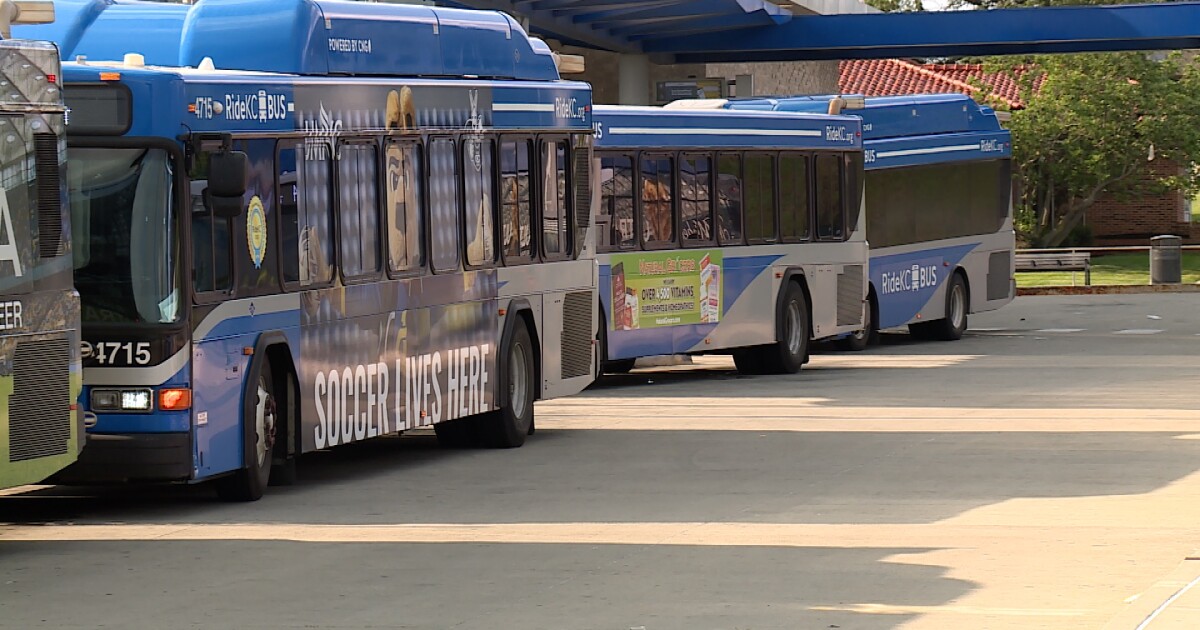
Tens of thousands of people have been using the airport link, streetcar and the buses to get around Kansas City. The city poured millions of dollars into building up its public transit infrastructure. The KCATA added more frequency to bus transit lines and the streetcar, pushing more fans to use public transportation during the tournament.
Brian Luton
“With the World Cup here, I was able to exercise using the streetcar more frequently and that was really fun,” Trish Luancing said. “It wold be nice to not have to drive everywhere and not have to worry about parking.”
But thousands have been relying on public transit for years, regardless of what event was in town.
“It’s been busier since the World Cup,” Jeffrice Jackson, a bus rider, said. “It’s been smooth sailing.”
The KCATA added streetcar ‘bus bridge’ links, extended bus service hours and increased frequency on East-West routes to link riders to the streetcar. It’s benefited both travelers and commuters.
Brian Luton
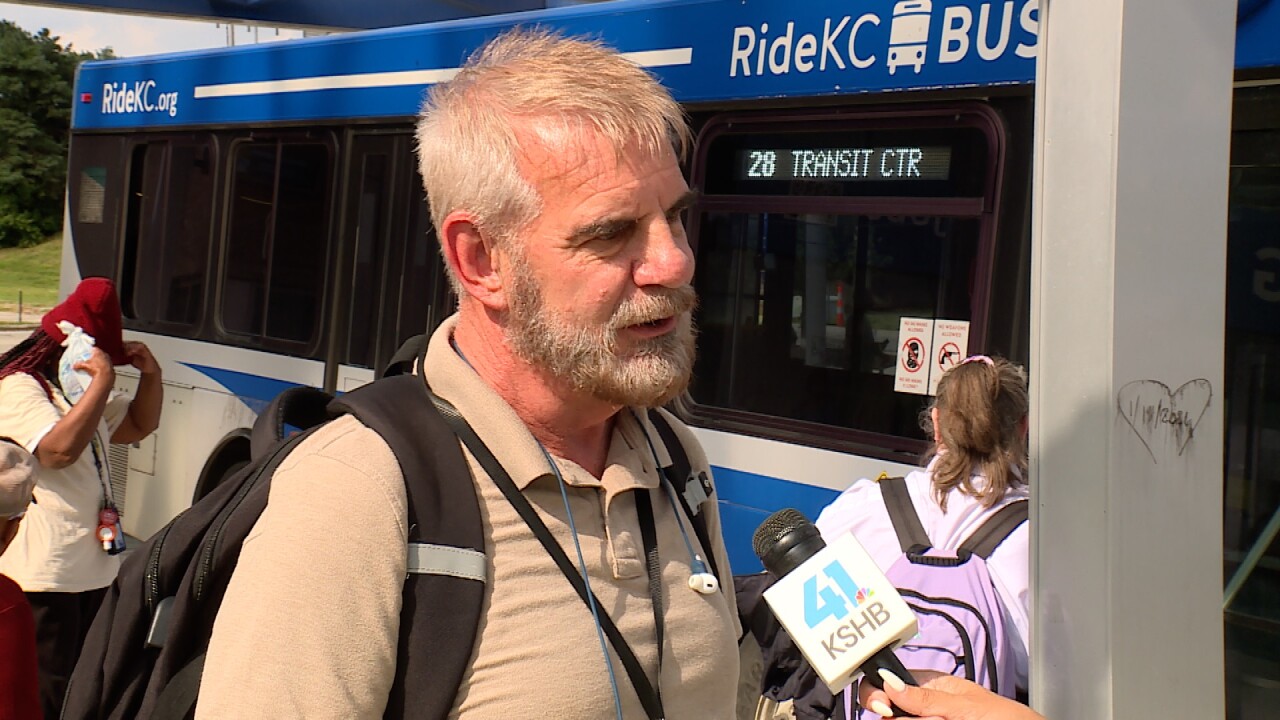
“[Service] has been more consistent with the World Cup than it was previously,” Jerry Breault, a rider said. “We were missing buses or routes because there weren’t enough drivers to drive that route.”
But the add-on’s stop on Sunday, July 12. If the transit authority can’t find more money, more than a dozen routes will be cut, potentially impacting more than 8,000 riders.
“It’s a little frustrating,” Breault said. “A lot of us rely on it just to get back and forth to work, to take care of our daily needs. It looks like we may be having to find alternatives and we’re not very happy about that.”
The KCATA will potentially suspend these weekday and weekend routes by September:
Weekday Route Eliminations:
- 9 – 9th Street, 365 average weekday ridership
- 21 – Cleveland Antioch, 512 average weekday ridership
- 23 – 23rd Street, 266 average weekday ridership
- 25 – Troost Local, 1,460 average weekday ridership
- 27 – 27th Street, 422 average weekday ridership
- 57 – Wornall, 411 average weekday ridership
- 71 – Prospect Local, 464 average weekday ridership
Weekend Route Eliminations:
- 9 – 9th Street, 349 average weekend ridership
- 21 – Cleveland Antioch, 312 average weekend ridership
- 23 – 23rd Street, 312 average weekend ridership
- 25 – Troost Local, 1,431 average weekend ridership
- 27 – 27th Street, 455 average weekend ridership
- 57 – Wornall, 595 average weekend ridership
- 71 – Prospect Local, 982 average weekend ridership
Bus fares came back earlier this summer to offset some of the operation costs, but many have reported issues with the free fare cards and eligibility.
“There’s always funding challenges with the KCATA,” Kansas City, Missouri, Mayor Quinton Lucas said. “How are the fare re-institutions working right now?”
Brian Luton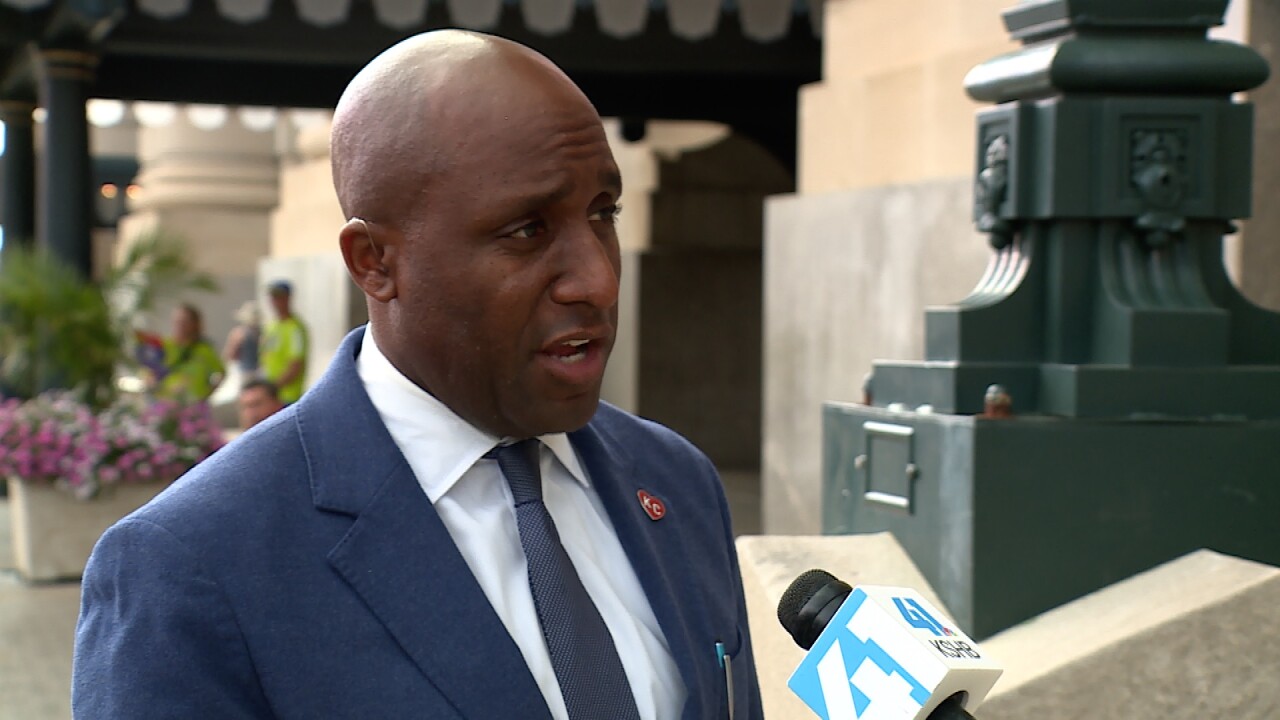
Mayor Lucas told KSHB 41 News Reporter Isabella Ledonne the transit improvements implemented for the World Cup “should continue,” and there are plans to talk with the KCATA commissioners to “make it work”.
“KCATA cannot just be Kansas City supported alone forever,” Mayor Lucas said. “Our approach and our preference is that the region got to see how much they would like [expanded service] during the World Cup. It was always intentional that if they liked it, maybe they would invest and maybe they would want this thing to go further.”
That’s good news to the thousands of daily riders.
Brian Luton
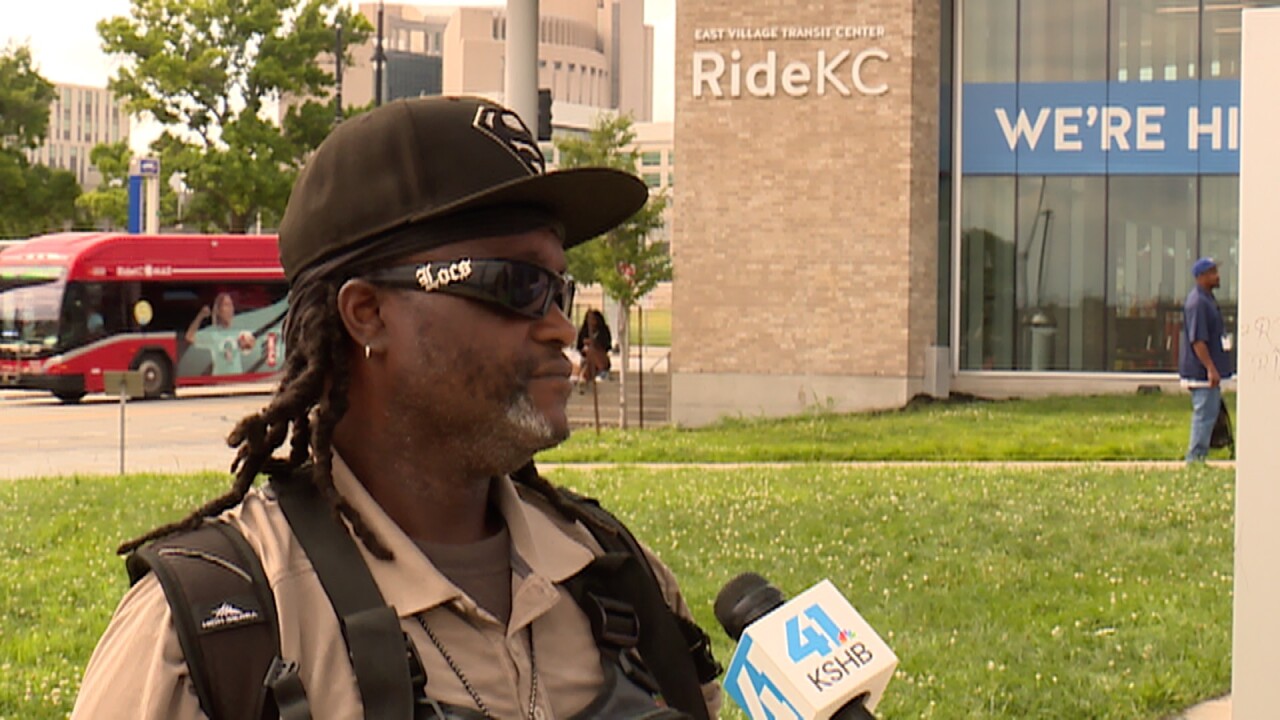
“I think it’s good because it helps people get around if they need to get around,” Jackson said.
The KCATA did not make themselves available for an interview.
—

-

 Alaska24 seconds ago
Delegation Welcomes Corps Permit for King Cove Road
-

 Arizona5 minutes ago
2026 MLB Draft: Arizona likely to be minimally impacted after down season
-

 Arkansas12 minutes ago
ARKANSAS A-Z: Band formed by faculty members of what is now UCA | Arkansas Democrat Gazette
-
 California15 minutes ago
Disneyland turns to cheaper evening passes and the internet speculation explodes
-

 Colorado20 minutes ago
Colorado mountains could see near-record temperatures as heat dome develops over the West
-
Connecticut27 minutes ago
I moved from Connecticut to the South chasing a cheaper, simpler life. It wasn’t at all what I expected, so I moved back.
-

 Delaware28 minutes ago
New information on “sophisticated cybercriminal attack” against Delaware County
-

 Florida35 minutes ago
NW Florida authorities make two more arrests in murder case


