Iowa
No. 4 Iowa State bonds over blond hair dye, beats No. 17 Northern Iowa, 27-14, on Sunday at Hilton


Iowa State Cyclones Casey Swiderski takes down Northern Iowa Panthers Cael Rahnavardi during their 149-pound wrestling at Hilton Coliseum on Sunday, Feb. 11, 2024, in Ames, Iowa. © Nirmalendu Majumdar/Ames Tribune / USA TODAY NETWORK
AMES — Casey Swiderski and several of his Iowa State wrestling teammates recently journeyed to the hair care aisle. They scanned the many selections and settled on the cheapest option: An unnatural-looking, but bond-deepening blond dye they all unveiled during the No. 4 Cyclones’ 27-14 dual win Sunday over intra-state rival and No. 17 Northern Iowa before a crowd of 5,615 at Hilton Coliseum.
“I think it just shows how tight we are and, it’s OK, whatever,” said Swiderski, who’s ranked No. 7 nationally at 149 pounds by FloWrestling. “We might look ridiculous. It’s OK. We’re gonna run you out of bounds, or we’re gonna take you down, so whatever.”
Swiderski joined three teammates in winning by technical fall Sunday against the Panthers. The Cyclones scored bonus points in five of their six victories en route to their fifth straight dual win over their cross-state rival.
“We just didn’t punch enough,” said Panther head coach Doug Schwab, whose team got an upset win to start the meet when redshirt freshman 125-pounder Trever Anderson beat No. 21 Kysen Terukina, 8-5, in sudden victory. “We needed to punch more. Hell, we got tech-falled four times. I don’t know how the hell you’re gonna win a dual meet that way.”
Anderson’s gritty win served as a bright spot for UNI — as did No. 13 157-pounder Ryder Downey’s 12-9 triumph over ISU’s No. 9 Cody Chittum. Downey was put on his back early, but battled back and scored three back points of his own in the closing seconds to cement the comeback victory.
“You get put to your back in that situation and you get down, and you know what? It’s OK,” Schwab said. “And here’s the thing: Get the next score. Win the next position (and) win the next position. Make it simple. You don’t need to get it back at once.”
The Cyclones’ 149-pounder Anthony Echemendia adopted a similar approach during the most anticipated matchup of the dual. Echemendia, ranked No. 9 at his weight, scored a takedown with 18 seconds remaining to outlast No. 6 Cael Happel, 9-6. The bout served as a rematch of sorts, as Happel beat Echemendia, 9-3, in December at the Cliff Keen Las Vegas Invitational.
“All that support you get from your teammates and your coaches, it’s what pushes you with 20 seconds, or 10 seconds left,” Echemendia said. “You have all that stuff in your head and you’re like, ‘Man, I can’t fail in front of these people.’ They’re supporting me and they believe in me, so that’s what I keep in mind in those close matches.”
Echemendia said Swiderski, in particular, has been in his corner after both intended to fight for the top-spot at 149 before the season. Echemendia decided to cut weight to ensure both could be in the lineup — and it’s paid dividends on both a team and individual basis.
“I’ve actually never told him, but I respect the hell out of him,” Swiderski said before his hand met Echmendia’s for a heartfelt handshake. “Because now we’re both out here and we’re the one-two punch, and I think it’s only up from here.”
Iowa State also got bonus-point wins from No. 8 ranked 133-pounder Evan Frost, second-ranked 165-pounder David Carr, No. 23 174-pounder MJ Gaitain, and No. 3 heavyweight Yonger Bastida.
As for the “ridiculous” hair dye? That’s not going down the drain anytime soon, Swiderski said. So expect plenty of reapplications well into March.
“I think it’s whatever,” he said. “Just let ‘em know. You don’t want to get beat by the blond guy.”



WATERLOO (KCRG) – The Amber Alert for 12-year-old Deyton Annabelle Cranston has been canceled.
The Iowa Department of Public Safety said Cranston was located and the Waterloo Police Department is investigating.
PREVIOUS STORY:
Iowa (KCRG) – An amber alert has been issued for a missing 12-year-old out of Waterloo.
12-year-old Deyton Annabelle Cranston was last seen wearing a white tank top and a blue skirt and wearing clear glasses.
She’s described as 5′4′, 135 and has blonde hair and brown eyes.
Officials say to look out for a red Toyota Camry with all tinted windows, a black spoiler, and no license plate on the front.
Anyone with information should contact authorites.
Copyright 2026 KCRG. All rights reserved.

Here are the candidates for High School on SI’s Iowa high school athlete of the week for March 30-April 4. Read through the nominees and cast your vote.
Voting closes at 11:59 p.m. PT on Sunday, April 12. The winner will be announced in the following week’s poll. Here are this week’s nominees:
Greyson Hartman, Washington boys track and field
The junior recorded the second-best United States throw in the shot put with a toss of 67-3.5. It is the second-best throw in Iowa history, breaking the Class 3A mark set by NFL standout Tristan Wirfs.
Shea Rapp, Ridge View girls track and field
Rapp won the high jump and the 200 at the Audubon Early Bird while also running on the winning distance medley relay and runner-up 4×400 relay.
Rylee Hemmingsen, Treynor girls track and field
Hemmingsen showed off her skills by winning the 100 hurdles, running on the winning shuttle hurdle and 4×400 relays, and placing second in the high jump at the Audubon Early Bird.
Cash Varner, Alburnett boys track and field
Varner was cash at the Benton Early Bird, placing first in both the 100 dash and long jump.
Aiden Gosselink, Grinnell girls track and field
Gosselink hit the Blue Standard to qualify for the Drake Relays in the long jump while also winning the 100 at the Benton Early Bird.
Rylan Peters, Waverly-Shell Rock boys track and field
Peters set a new school-record in the long jump at 23-8 while also hitting the Blue Standard and qualifying for Drake Relays.
Jase Price, Des Moines Christian boys soccer
Price had quite the varsity debut, as the freshman recorded a haul by scoring four goals in a win over Boone.
Aiden Kellar, Treynor boys soccer
Kellar tallied a hat trick with three goals in a 5-1 win for the Cardinals over Harlan.
Kaden Theisen, Western Dubuque boys soccer
Theisen was peppered with 20 shots in a match vs. Beckman Catholic, saving 19 of them to help the Bobcats to a 2-1 win.
Lucas Sidles, Independence boys track and field
Sidles swept the throwing events at the West Delaware Early Bird, winning the shot put and discus.
Adam Kacmarynski, Pella Christian boys track and field
Kacmarynski won the 100 and ran on the winning sprint medley and 4×100 relays at the Chariton Invitational.
Mark Fraise, Davis County boys track and field
Fraise finished first in the 400 hurdles, was on the first place shuttle hurdle and 4×400 relays, and also ran on the second place distance medley relay.
Gage Hoppenworth, Johnston boys track and field
Hoppenworth had a three-gold night at the Dowling Catholic meet, winning the 110 and 400 hurdles while running the third leg on the winning shuttle hurdle relay.
Alayna Goldsberry, Southeast Polk girls track and field
The junior won the 100 and 200 at her home invitational while running the anchor on the second place 4×400 relay.
Natalie Sitzmann, Waukee girls track and field
Sitzmann, a senior, won the 200 and ran on the first place shuttle hurdle and 4×400 relays at her home invitational.
Isabel Spradling, Des Moines Roosevelt girls track and field
Spradling picked up a first in the 1,500 and was on the gold-medal 4×400 and 4×800 relays at the Waukee Invitational.
Alayna Williams, Carlisle girls soccer
Williams, a senior, recorded five goals in a season-opening win over Knoxville, 10-1.
Carly Torneten, Harlan Community girls soccer
Torneten not only scored four goals, but she recorded four assists vs. Carroll.
About Our Athlete of the Week Voting
High School on SI voting polls are meant to be a fun, lighthearted way for fans to show support for their favorite athletes and teams. Our goal is to celebrate all of the players featured, regardless of the vote totals. Sometimes one athlete will receive a very large number of votes — even thousands — and that’s okay! The polls are open to everyone and are simply a way to build excitement and community around high school sports. Unless we specifically announce otherwise, there are no prizes or official awards for winning. The real purpose is to highlight the great performances of every athlete included in the poll.

Iowa State Cyclones men’s basketball head coach T.J. Otzelberger knew that his program was in for a busy offseason.
Before any moves were made with the roster, whether it be players entering the transfer portal or declaring for the NBA draft, Otzelberger knew that he would have five seniors who would have to be replaced on the roster.
In addition to player needs, the head coach needs to replenish his coaching staff. Two of his assistants, JR Blount and Kyle Green, were hired as head coaches. Blount is heading to the San Diego Toreros, and Green was brought back for a fourth stint with the Northern Iowa Panthers.
Both were integral parts of the team’s success, with Blount being a leader on the recruiting front and Green being an architect behind the team’s defense. Who could Otzelberger turn to as a replacement?
Tim Buckley is great option for Iowa State coaching staff
One person who would make a lot of sense as a candidate is Tim Buckley. Most recently, he was on staff with the Cincinnati Bearcats, but with their head coaching change of Wes Miller to Jerrod Calhoun, Buckley is back on the market.
He is someone with whom Otzelberger has familiarity, which could play a big role in the evaluation process when candidates are interviewing. The two worked together with the UNLV Runnin’ Rebels from 2019-21, the position which Otzelberger held before Iowa State.
Buckley could help replace some of what Green’s departure is being lost with the defensive game plan.
“Buckley seems to have a defensive background, and he was described as being “old school” to Cyclone Alert by one source close to the Bearcat program,” wrote Alec Busse of Cyclone Report, part of the 247Sports Network (subscription required).
Familiarty, defense are biggest assets Buckley provides
He also has some experience working in the Midwest. Buckley spent one campaign in 2007-08 with the Marquette Golden Eagles and worked with the Wisconsin Badgers in the mid-1990s.
Since Otzelberger took over as head coach, the Cyclones have found a ton of success recruiting in Wisconsin. Buckley can help keep the pipeline active.
He would also bring an established relationship with Otzelberger and plenty of experience. Buckley has been on different sidelines as a coach for nearly 40 years and has been a head coach previously with Rockford and the Ball State Cardinals.
A bonus: Buckley knows the Big 12 landscape after working with Cincinnati the last two seasons. That is an underrated part of his resume, as he can help give some insight into how opponents game plan against Otzelberger and his team while bringing some new ideas to the table in how Iowa State can stop them.

Suno is a music copyright nightmare

Baby among 3 dead in holiday horror as Easter egg hunt turns deadly

GOP races to pass ICE, Border Patrol funding bill as priorities pile up, divisions emerge

5 key factors may predict stroke risk years after first event, study finds

Dawn Staley gives classy answer after Geno Auriemma question following national title loss: ‘It’s UCLA’s day’

Florida High School Football Rankings: Top 25 teams – Oct. 21

How old is Bo Nix? What to know about Oregon quarterback ahead of 2024 NFL Draft

Cleary's 21 help Le Moyne down Central Connecticut State 69-64 in OT

99th annual Pony Swim held in Virginia

Indiana Members Credit Union announced as new anchor tenant at Bottleworks District
GOP races to pass ICE, Border Patrol funding bill as priorities pile up, divisions emerge
Jet fuel crisis: Rationing triggered at four airports in Italy
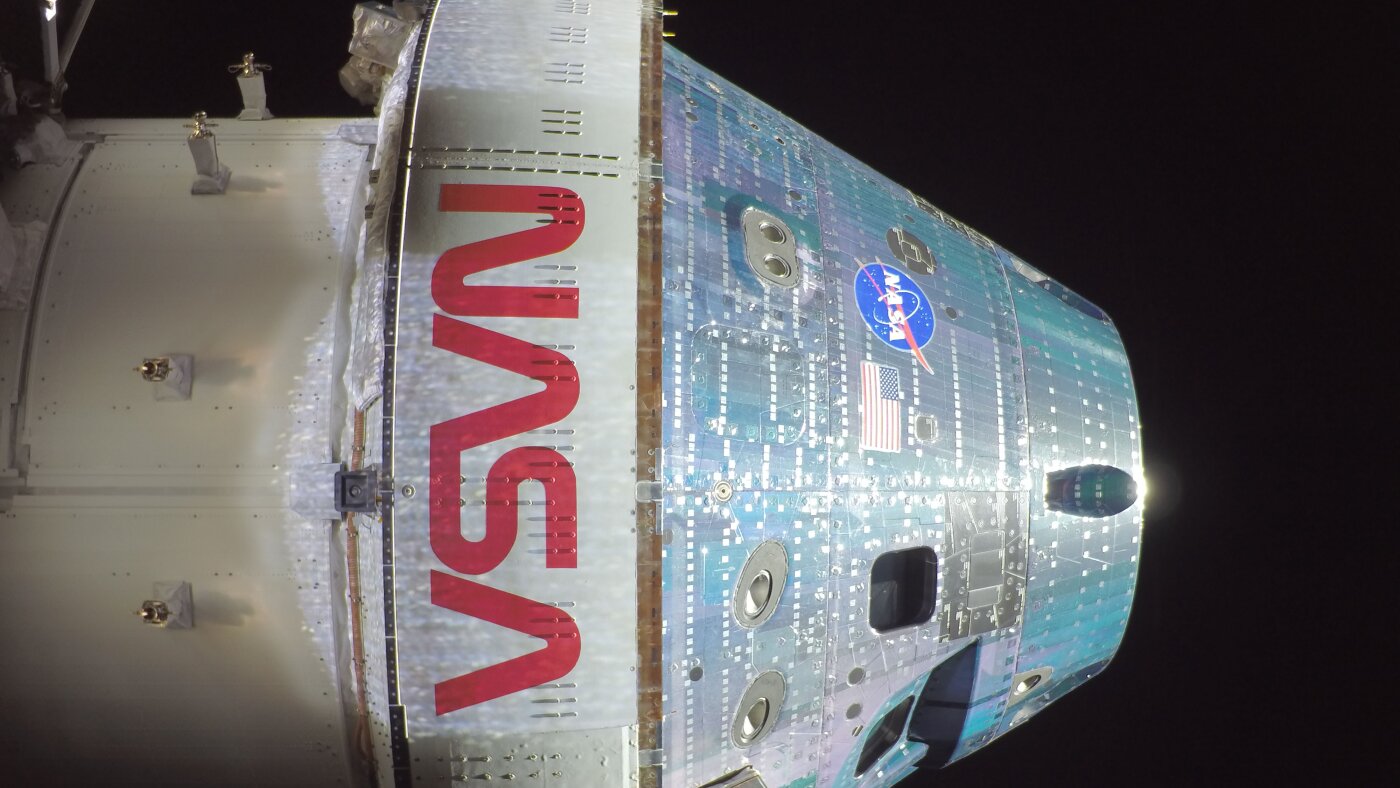
NASA’s Artemis II crew readies for Monday’s lunar flyby. Here’s what you need to know

Tax day is next week: Avoid these 5 common mistakes that can cost you money

Hamas armed wing says disarmament demands not acceptable
-

 South-Carolina1 week ago
South Carolina vs TCU predictions for Elite Eight game in March Madness
-

 Atlanta, GA1 day ago
1 teenage girl killed, another injured in shooting at Piedmont Park, police say
-

 Vermont1 week ago
Skier dies after fall at Sugarbush Resort
-

 Movie Reviews4 days ago
Vaazha 2 first half review: Hashir anchors a lively, chaos-filled teen tale
-

 Politics1 week ago
Trump’s Ballroom Design Has Barely Been Scrutinized
-

 Atlanta, GA1 week ago
Fetishist ‘No Kings’ protester in mask drags ‘Trump’ and ‘JD Vance’ behind her wheelchair
-
 Entertainment4 days ago
Inside Ye’s first comeback show at SoFi Stadium
-

 Politics1 week ago
JD Vance says he was ‘obsessed’ with UFOs, believes aliens are actually ‘demons’