Indianapolis, IN
Black innovation is American history. – Indianapolis Recorder


As Black History Month continues, the conversation often turns to enduring struggles and cultural triumphs. However, in the halls of the Indiana Statehouse, City-County Councilman Keith Graves (District 9) pointed to a more fundamental truth: the very infrastructure of modern American life — from the traffic light that guides our everyday commute to the refrigerator that preserves our everyday foods — is profoundly shaped by Black inventors whose stories have been systematically overlooked.
“The successes and the value that they (Black innovators) brought to our society is lost over the years, and sometimes intentionally lost,” Graves said during the Indy Black Chamber of Commerce’s Lunch with Legislators event.
Graves highlights figures like Garrett A. Morgan, the son of freed slaves who patented an early three-position traffic signal in 1923, a direct precursor to the lights that now orchestrate global traffic. He points to John Standard, who in 1887 refined the refrigerator with an improved ice-chamber (‘ice box’) design, advancing the technology of modern kitchen preservation.
Perhaps most poetically, Graves notes the humble reservoir in the ballpoint pen, an innovation by William B. Purvis in 1890 that solved the problem of even ink flow.
“All these pens in here,” Graves remarked, “those are Black inventions.”
These are not niche footnotes; they are pillars of daily life. Yet, as Graves argues, the narrative of American innovation has too often been whitewashed.
“We talk a lot about our experiences on the negative side,” Graves said. “I want us to promote the positives that we brought to this country and to the world.”
This erasure has tangible consequences for the present. Graves, a financial advisor with over two decades of experience, connects the historical dots to a contemporary crisis: the stifling of Black wealth creation.
“We had the country’s first Black millionaire in this city,” Graves said, referring to Madam C.J. Walker, the haircare magnate who built her empire in Indianapolis. “And there’s no reason why we shouldn’t see just tons of examples of her legacy around our city. We see Irsay, we see Eskenazi, we see Lucas … but we don’t see Black families’ names on buildings.”
His sentiment underscores a central theme: innovation without ownership and recognition fuels inequality. The genius of Black creators was harnessed to build national prosperity. At the same time, systemic barriers often prevented them and their descendants from fully sharing in its wealth.
The fabric of modern American life is woven with inventions by Black innovators, whose groundbreaking work from the late 19th century onward created the infrastructure of our daily routines. In 1881, Lewis Latimer made electric lighting practical and affordable with his durable carbon filament. Frederick McKinley Jones advanced the modern grocery supply chain in 1940 by inventing the mobile refrigeration unit. This legacy continued into the 1970s with Shirley Jackson, whose pioneering telecommunications research laid the foundation for touch-tone phones, fiber optics and caller ID.
Co-author of “Foundational Black American Inventors: 20 Household Inventions You Use Every Day,” Theresa Almon knows how important it is to preserve Black history for people.
“Why didn’t we learn this in school?” Almon asked on social media. “The doorknob microphone, potato chips and so much more were invented by foundational Black Americans.”
OLED montiors? Invented by Mark Dean. The standing dust pan? Invented by Lloyd Ray. The modern indoor toilet? Created by Thomas Elkins. The lightweight military cot? An invention of Leonard Bailey. The keychain? Frederick Loudin. The modern indoor clothes dryer? George Sampson.
The list of Black innovations is virtually endless.
The councilman’s call is for a conscious re-orientation — in education, in public discourse and in policy.
“We need to be focused on creating Black wealth again,” Graves told the Indianapolis Recorder. Graves views events like “Lunch with Legislators” as foundational for building the alliances necessary to “protect success,” noting that “when we see Black people succeeding, we see the forces that be trying to thwart it.”
Looking forward, Graves announced his kickoff event for his City-County Council re-election campaign, centered on education, homelessness, healthcare access and Indianapolis’ crisis-level eviction rates. His uses his platform as a modern extension of the same fight for equity and recognition.
The story of Black innovation is not a segregated subplot. It is the story of the American pencil, pantry, and street corner. As Graves powerfully reminds us, honoring that history is not merely an act of retroactive gratitude; it is an essential step toward building a future where the next generation of Garrett Morgans and Madam Walkers can see their names — and their legacies — written into the fabric of the nation they helped invent.
“We should be teaching about this all year, not just one month,” Almon said.
Contact Multimedia Reporter Noral Parham at 317=762=7846. Follow him on X @3Noral. For more news, visit indianapolisrecorder.com.
Noral Parham is the multi-media reporter for the Indianapolis Recorder, one of the oldest Black publications in the country. Prior to joining the Recorder, Parham served as the community advocate of the MLK Center in Indianapolis and senior copywriter for an e-commerce and marketing firm in Denver.



Indianapolis, IN
When the Spotlight Hits the Game, Black Artists Take Center Stage – Indianapolis Recorder

When the lights come up on a championship court, most eyes are fixed on the game. The buzzer. The movement. The moment.
But behind every major sporting event — behind the spectacle that draws thousands into arenas and millions to their screens, there is another story unfolding. One that doesn’t always get the same visibility, but carries just as much cultural weight. It is the story of the artists.
In cities like Indianapolis, where sports are woven into the community’s identity, art often works quietly in the background — shaping how those moments are experienced, remembered, and understood. Murals, performances, visual storytelling, and cultural programming all help define what a moment means, not just what it looks like.
And for Black artists, that work carries an additional responsibility. Because too often, the cultural contributions of Black communities are present in the experience but absent from the narrative.
Black artists don’t just capture moments. We contextualize them. We connect them to history, to struggle, to joy, to resilience. We tell the fuller story, one that reflects the communities that have long shaped the culture surrounding the game itself. And the impact of that work is not just cultural — it is economic.
The arts and cultural sector contributes more than $1 trillion to the U.S. economy and supports millions of jobs. Cities that invest in their creative ecosystems are not simply supporting the arts; they are strengthening a major driver of growth, talent attraction, and community vitality. Research also shows that diverse creative environments lead to stronger innovation and more meaningful engagement, reinforcing what many communities already experience firsthand.
When Black artists are included, the work does not just become more representative; it becomes more relevant, more connected, and more complete.
Indianapolis has a deep and often underrecognized legacy of Black artistic expression. From visual arts to performance, from community-centered storytelling to intergenerational creative practice, Black artists in this city have consistently created work that reflects both who we are and where we are going. But visibility has not always kept pace with contribution.
Across the country, studies have shown that artists of color remain significantly underrepresented in major cultural institutions and platforms. That gap is not a reflection of talent—it is a reflection of access, investment, and whose stories have historically been prioritized.
Major events bring energy, investment, and attention to a city. They also create a rare opportunity: a chance to be intentional about whose stories are elevated alongside the main stage.
When Black artists are included — not as an afterthought, but as a central part of the cultural experience — the impact is different. The city feels more complete. The story becomes more honest. The moment becomes more connected to the people who live here every day. This is not just about representation. It is about accuracy.
Because culture is not created in isolation. It is built through community. And when we fail to include the voices of those who have helped shape that culture, we present an incomplete picture — not just to visitors, but to ourselves.
At the Asante Art Institute of Indianapolis, our work is grounded in that belief. We exist to create space for artists to explore identity, history, and creativity in ways that build confidence, deepen understanding, and strengthen community connection. Through arts-centered programming, we are not only developing artists; we are cultivating storytellers, leaders, and individuals who see themselves as active participants in shaping the world around them.
That work matters in moments like these.
Because when the spotlight turns to Indianapolis during championship season, the question is not just what the world will see, but what story we choose to tell.
Will it be surface-level, focused only on the game? Or will it reflect the depth, diversity, and creativity of the communities that make this city what it is? That answer depends on who we invite into the frame.
This championship weekend, that broader story will take shape through A Touch of Glory, a production that brings together art, history, and sport to honor legacy and connection across generations. It is a reminder that the game is only part of the story, and that the cultural narratives surrounding it deserve just as much attention.
When we make space for those narratives — when we invest in artists, elevate their voices, and recognize their role in shaping how moments are experienced — we don’t just enhance events. We strengthen the cultural fabric of our city. And long after the final buzzer sounds, that is the story that lasts.
Deborah Asante is the Founder and Artistic Director of the Asante Art Institute of Indianapolis, dedicated to advancing cultural storytelling, fostering creative expression, and empowering communities through the arts.

INDIANAPOLIS (WISH) — Staring Monday, Immigration and Customs Enforcement (ICE) will assist TSA airports across the country. A budget battle in congress is keeping TSA from getting paid, creating staffing issues.
Many travelers that spoke with News 8 say they weren’t expecting to see ICE during their Spring travel. Some say they are hopeful it could ease the long wait times. Others say it raises new concerns while traveling.
“TSA definitely needs some help right now, but what kind of security are [ICE] going to provide?” Hugo Lopez, who was traveling through the Indianapolis International Airport said. “Is it the same type of security they are doing in Minneapolis? You know, where even U.S. citizens are going to be concerned about now having the right paperwork.”
ICE is expected to support TSA teams at select airports, but they have not announced which airports ICE officers will be assigned to, other than the Hartsfield-Jackson Atlanta International Airport.
“They might be sent here to do something positive,” traveler Ade Yemi said. “They may end up doing something negative to a lot of people. I am just not one for it.”
Despite potential shorter wait times, many travelers told News 8, it’s not worth it.
“I mean regardless of the line, people have been able to navigate and get to their destination,” Yemi said. “I would like to keep it business as usual.”
“Personally, I would wait in the line because right now the problem is more economical than political,” Lopez said. “When I came out of El Paso, I thanked the TSA agent. I said ‘I appreciate what you guys are doing. You aren’t getting paid, but you are still here on the front lines.’”
Lopez says he would feel more comfortable with ICE around, under one circumstance, “If ICE personelle were to come here, probably without guns,” Lopez said. “People would feel safer around them. There is no need for them and there is already so many police forces here. We don’t need another federal entity with guns blazing.”
Federal officials have indicated that this task for ICE is not intended to conduct immigration enforcement activities. ICE is only meant to help with crowd control.

INDIANAPOLIS (WISH) — Record highs are in jeopardy with high temperatures in the low 80s for most. Scattered storms will develop later this evening after a very warm day.
TODAY: Mostly sunny to partly cloudy skies this afternoon. The cold front arrives sooner in north-central Indiana, where highs will get into the 70s and fall quickly. A slight (2/5) risk of severe storms is in place mainly after 7 PM south of I-70.

TONIGHT: At first, cells pop up before forming a line. Large hail is the primary threat, especially as the storm mode is cellular at the start. Once a line forms, the damaging wind threat will also be elevated. Tornado threat is very low, but not zero. Storms move south of south-central Indiana around 11 PM EDT. Low temperatures in the mid-30s.
TOMORROW: Partly cloudy, cooler. High temperatures in the low 50s.
7-DAY FORECAST: A gradual warm-up is anticipated this week. Scattered showers and storms move back in for Thursday. Otherwise, most of this forecasting period will be dry.

‘Sherlock’ Creator Steven Moffat and Producer Sue Vertue on New Show ‘Number 10’: A ‘Workplace Comedy Drama in the Most Ridiculous Workplace’

See TSA Wait Times at Major U.S. Airports

Which Countries Depend the Most on Persian Gulf Oil and Gas

Do You Know the Comics That Inspired These TV Adventures?
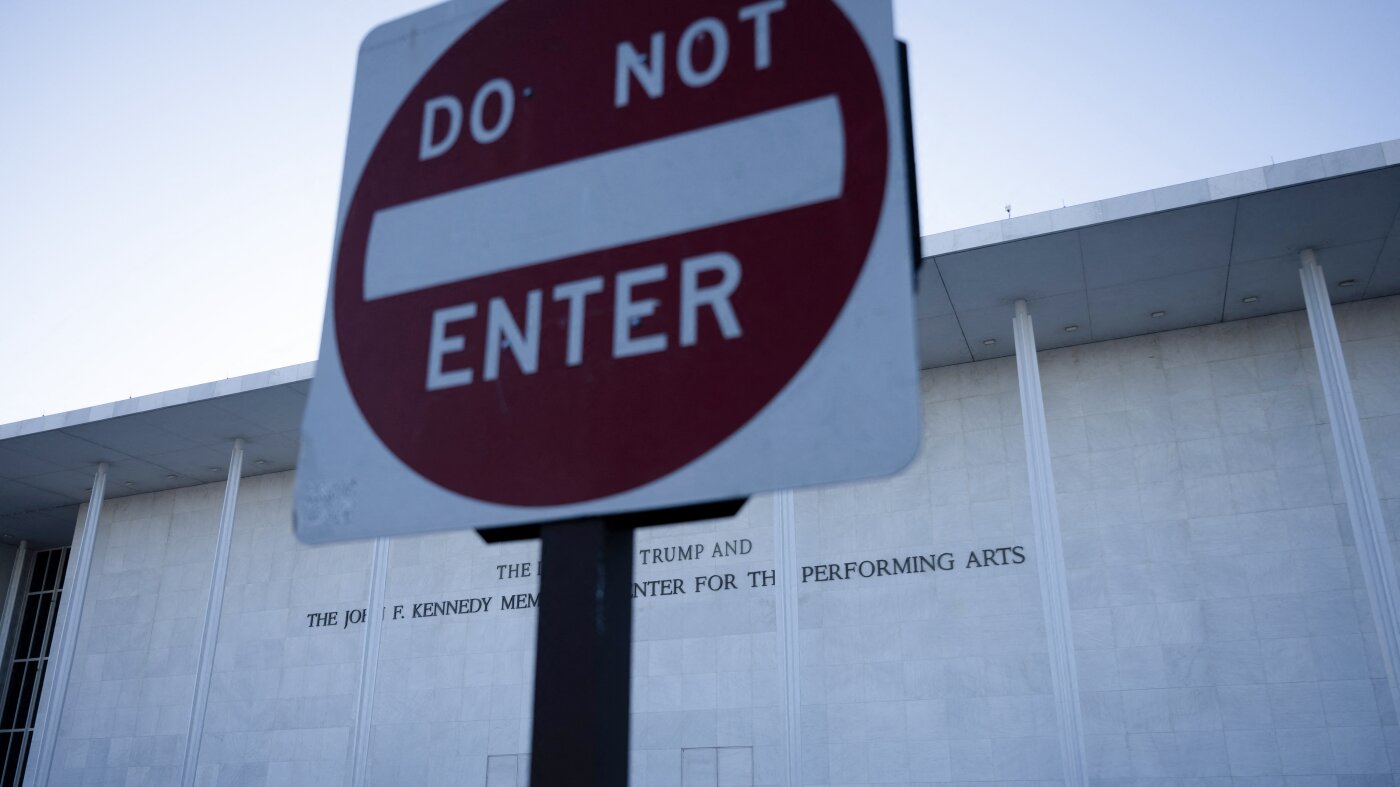
8 architecture and culture groups sue Trump and the Kennedy Center board

Florida High School Football Rankings: Top 25 teams – Oct. 21

How old is Bo Nix? What to know about Oregon quarterback ahead of 2024 NFL Draft

Cleary's 21 help Le Moyne down Central Connecticut State 69-64 in OT

99th annual Pony Swim held in Virginia

Indiana Members Credit Union announced as new anchor tenant at Bottleworks District
See TSA Wait Times at Major U.S. Airports

Senate hopeful with deep Dem ties slapped with scathing complaint targeting alleged family payout ‘scheme’

How the Iran war is about to hit your wallet

Suspect in slaying of Loyola University student was in the country illegally, officials say

Video: Plane Collides With Vehicle at LaGuardia Airport
-

 Detroit, MI5 days ago
Drummer Brian Pastoria, longtime Detroit music advocate, dies at 68
-

 Oklahoma1 week ago
Family rallies around Oklahoma father after head-on crash
-

 Georgia1 week ago
How ICE plans for a detention warehouse pushed a Georgia town to fight back | CNN Politics
-
 Science1 week ago
Federal EPA moves to roll back recent limits on ethylene oxide, a carcinogen
-

 Alaska1 week ago
Police looking for man considered ‘armed and dangerous’
-

 Movie Reviews5 days ago
‘Youth’ Twitter review: Ken Karunaas impresses audiences; Suraj Venjaramoodu adds charm; music wins praise | – The Times of India
-
 Science1 week ago
Long COVID leaves thousands of L.A. county residents sick, broke and ignored
-

 Education1 week ago
Video: Turning Point USA Clubs Expand to High Schools Across America