Denver, CO
Traffic, parking and transportation at Burnham Yard are focal points around Denver Broncos stadium plans


As the Denver Broncos design a new stadium for Burnham Yard, one of the most critical elements — with some of the highest potential for backlash from neighbors and the team’s fans — will be the plan for getting people to and from the site.
Questions about parking, traffic management, transit access and accessibility have emerged as major concerns for neighbors of the future stadium during early community meetings in west Denver organized by the city and the team.
“It is probably the No. 1 topic that we’re hearing,” said Troy Halouska, the vice president of the La Alma Lincoln Park Neighborhood Association.
Lindsey Noble, a resident of the neighborhood, said in an interview with The Denver Post that she and her neighbors were “pretty concerned about traffic and parking” from the events the new stadium would host — which the team has said would go well beyond Broncos home games.
“They (the Broncos) are creating these problems, and some of the solutions I have heard have to do with altering our neighborhood or changing streets,” she said. “These aren’t things we want.”
The Broncos are still early in the process of laying out plans for the abandoned rail yard as the team aims to build a stadium by 2031. The team has already released some transportation-related details, including proposed changes to street crossings with the Regional Transportation District’s light rail tracks, potential parking options for events, and plans for connections to existing pedestrian and bike infrastructure.
The team plans to build more than just a stadium, though. Alongside their home field, the Broncos want to create a mixed-use entertainment district that uses the space year-round. Like other modern stadiums, it would have restaurants, open space and, potentially, hotels or apartments outside the venue.
Officials with the Broncos say they have heard the worries from nearby residents about the massive development’s potential impact on their neighborhoods. They say they’re looking for ways to integrate the site into the community — without flooding nearby streets with thousands of cars and people.
Generally, the team plans to address those concerns by designing the site in such a way that eventgoers are guided in through the north and south ends of the site, rather than being routed through the mostly residential neighborhood to the east.
The site itself, once the rail yard is cleared, will be nestled between two rail corridors — freight lines to the west and RTD’s light rail tracks to the east. Entities connected to the Broncos have been buying up properties beyond the banana-shaped rail yard for the stadium and surrounding district.

A bit farther to the west of the site is Interstate 25, and the north and south boundaries are generally West 13th Avenue and West Sixth Avenue. An early conceptual plan the team submitted to the city shows how its designers plan to connect local streets through the site. One new street would connect West Eighth Avenue to Osage Street, for instance, incorporating city plans to lower part of Eighth’s current viaduct.
Josh Brooks, a principal at Sasaki, the architecture firm designing the site’s master plan, said during a community meeting in February that the team plans to design the area so that noise and visual impacts are pushed as far from the residential neighborhood as possible.
“Our intention is to ensure this is an integrated community, a mixed-use development that really serves as an extension of the city and becomes part of the shared memory of the community,” Brooks said.
One of the things that most attracted the team to Burnham Yard was its connectivity with other areas. Located near I-25, Sixth and Eighth avenues, an RTD station, walking paths and planned bike lanes, the site won’t need massive changes to help bring in visitors.
But that doesn’t mean the team won’t have plenty of work to do on that front.

During the February community information meeting at the La Alma Recreation Center, the Broncos conducted a quick survey of attendees to ask what their top concerns were. The most-selected item was “traffic congestion during games/events,” followed closely by “impacts to housing expenses.”
The design for the site will focus on connecting existing roads and pedestrian paths and easing those neighborhood concerns, Brooks said.
The Broncos will work with the city in the coming months to develop a small-area plan, which will set out the design for the expanse surrounding the stadium site. While the stadium itself will be privately financed, the team has said, the city and state could be on the hook for infrastructure improvements nearby.
The city already plans to pay for improvements to two major road connections, the nearby Sixth and Eighth avenue viaducts, as part of bond projects passed by voters last fall.
Train crossings and transit access
One advantage of the Burnham Yard site is that it already has an RTD rail station next to it, making transit access easier. But the 10th and Osage station is accessible only from the east, with Burnham Yard west of the tracks. So it would need to be reconstructed to allow pedestrian access from both directions.
Working together with RTD, the Broncos are proposing changes to several light rail crossings. At 13th Avenue, the team has suggested a bridge for trains to pass over the street, with a place for drivers, cyclists and pedestrians to cross beneath.

At 12th and 9th avenues, team officials are proposing a separated-grade crossing for cyclists and pedestrians to also pass underneath the light rail tracks.
Eleventh, 10th and 8th avenues would have at-grade crossings. Halouska, with the La Alma Lincoln Park Association, said residents would like as few at-grade crossings as possible to prevent collisions or other safety hazards.
Besides concerns about transit crossings, Noble expressed worry that there also might not be enough light rail cars on a game day to transfer everyone who arrives and departs that way.
A spokesperson for RTD said there was no one available to discuss the transit agency’s plans for the area.
“RTD is regularly meeting with the project team and other partners to provide feedback and ask questions about their proposed stadium plans. Specific information about any proposed changes to RTD’s services or operations is not yet available,” RTD’s Pauline Haberman said.
What about parking?
Other concerns about the plan center on where those who drive to the stadium will park.
Halouska said even when his group tries to host meetings about other topics, parking is the concern its leaders hear about the most from the neighborhood.
“The Broncos have said themselves they really want this area to be activated 300 days a year, and so folks in the neighborhood are very concerned about what kind of impact that will have on parking,” he said. “We really need more details from the team and the city.”

Team officials have said they plan to provide the same amount of parking at the new site as Empower Field has — which is roughly 7,000 spots. But instead of a stadium surrounded by surface parking, officials are proposing making use of parking structures and shared parking systems.
Noble said the on-site parking spots could make a big difference in the impact to the neighborhood.
The city could also add resident-only parking permit rules for the surrounding streets, much like a longstanding system in the Jefferson Park neighborhood around Empower Field.
A spokesperson for the Department of Transportation and Infrastructure said the same system is possible for Burnham Yard, but it’s too early to know specifics of how it would work.
“We won’t begin designing anything until we understand how the site will work, where impacts could occur, and there’s a focused conversation on (residential parking permits),” Nancy Kuhn wrote in an email.
Halouska said that could help, but only if the parking permits are regularly enforced.
“Having the permits is a fine idea — though it does cost money to get a permit — but if it’s not enforced, then it’s kind of pointless,” Halouska said.
Bike and pedestrian access
It won’t just be public transportation and cars getting people to events or the new development. The Broncos also plan to build connections to surrounding bike and pedestrian infrastructure, like the South Platte River Trail and the bike lane along 13th Avenue, Brooks said.
There could also be a connection to the proposed 5280 urban trail, which as envisioned by planners would weave through several neighborhoods that include La Alma Lincoln Park, Golden Triangle, Capitol Hill, LoDo and Ballpark. The effort, led by the Downtown Denver Partnership, is not yet fully under construction. About a quarter of the plan is in “next steps development,” according to the DDP.
Noble said she hoped the team would find some ways to encourage people to travel to the stadium without driving.
“Really, I think incentivizing people to ride their bike and take public transportation is the way to go to mitigate the impacts,” she said. “Make it easy. Make it affordable.”
Officials say they will wrap up the community-informed small area plan, which will provide policy guidance for city decision-makers, by the end of this year. It will include resident feedback and ideas about housing, sidewalks, open space and grocery access, among other things.
The Broncos and the city plan to host their next community meeting in May.
Get more Colorado news by signing up for our Mile High Roundup email newsletter.



Denver Nuggets standout forward Peyton Watson could find himself on another team before you know it.
With the Nuggets reportedly open to a sign-and-trade of Watson, could Denver really lose a core piece to their rotation?
It’s hard to imagine many teams being able to shoulder the financial weight of a Watson contract at this point because of the aprons and such, but he’s absolutely an asset to any contending team.
We’ve gone through and identified a few teams that make sense for Watson in the fall… including the one he’s already on at the moment. Hey, he might stay home, you never know!
The Clippers have been linked to Watson as a possible destination; he could help them immensely.
The Pistons have also been linked to Watson, which would help them a lot to contend for an NBA title.
Look, HYPOTHETICALLY, the Nets could move around some cap space with some player trades and such and get a deal done. They are one of the only teams in the NBA right now not in the negative with cap space.
The Grizzlies are the team with the least amount of negative cap space right now, per Spotrac. If they really wanted to pull off a Watson sign-and-trade… it would be hypothetically possible from a money standpoint.
Denver Nuggts
Look, it’s very possible Watson just stays in Denver on a brand-new deal. Who knows at this point?

DENVER (KDVR) – A Denver Park Hill Resident says trash in her alley hasn’t been picked up by city-run waste collection in more than 2 months.
“It’s starting to be frustrating because that pile has been there 2.5 months, and I’m not kidding about that,” Andrea Sanders-Childs said.
A spokesperson for Denver’s Department of Transportation and Infrastructure (DOTI) says they did receive a call about the address on Krameria in mid-June and are investigating the case as ‘illegal dumping’ versus ‘missed collection.’
The DOTI spokesperson says more information will be available when the inspector assigned to the area returns on Wednesday.
Sanders-Childs said that the people who live in the home closest to the mess had actually rented a dumpster; however, it was eventually picked up and towed away.
In the meantime, for Denver residents, DOTI provided FOX31 with the following reminders:
- Carts that are overfilled, stuffed or too heavy cannot be emptied
- All trash must be inside the cart, and overflow trash cannot be collected
- To report illegal dumping, call 311

Denver may be hundreds of miles from the nearest coastline, but Coloradans know that you don’t need an ocean to embrace beach season. Around here, a beach isn’t defined by sand or crashing waves—it’s a state of mind.
Whether you’re sipping an ice-cold Corona Extra beneath string lights, soaking up sunshine on a rooftop, relaxing beside a mountain view or gathering with friends at your favorite neighborhood patio, every Colorado summer has its own version of paradise.
That’s exactly what inspired Corona Extra and 303 Magazine’s Beach Anywhere campaign, celebrating the patios that capture the carefree spirit of a beach day—without ever leaving Denver.
VOTE HERE or below
Whether your perfect patio includes rooftop skyline views, oversized yard games, sports on big screens, frozen cocktails, live music, or a laid-back neighborhood atmosphere, one of these contenders is ready to become your Beach Anywhere destination.

Every Patio Has Its Own Beach
Colorado summers look a little different than those on the coast—and that’s exactly the point.
Our beaches are found on rooftop decks overlooking downtown, lakeside breweries, mountain-facing patios and hidden neighborhood gems where conversations last until sunset.
Add a cold Corona Extra, your favorite people, and plenty of sunshine, and you’ve found your own version of paradise.
Now it’s time to decide which patio deserves the title.
Voting runs July 7–31, with the winner announced August 4.

Must be 21 years of age or older and a Colorado resident to participate. Please enjoy Corona Extra responsibly.
-

 Washington, D.C4 minutes ago
Police search for suspect caught on camera slashing tires in Georgetown
-

 Cleveland, OH11 minutes ago
Ohio ICAC Task Force’s “Operation Guardians’ Watch” Results in 25 Individuals Arrested and Charged for Attempting to Meet with an Underage Child to Engage in Sexual Activity
-

 Austin, TX14 minutes ago
Texas’ Goosby hosts camp to benefit heart research
-

 Alabama19 minutes ago
Alabama teen charged with stabbing mom to death issued vile threat to dad — as new pic shows bloodbath left behind
-

 Alaska26 minutes ago
Outmigration, inflation, choice schools: Alaska school closures likely to continue without changes
-
 Arizona29 minutes ago
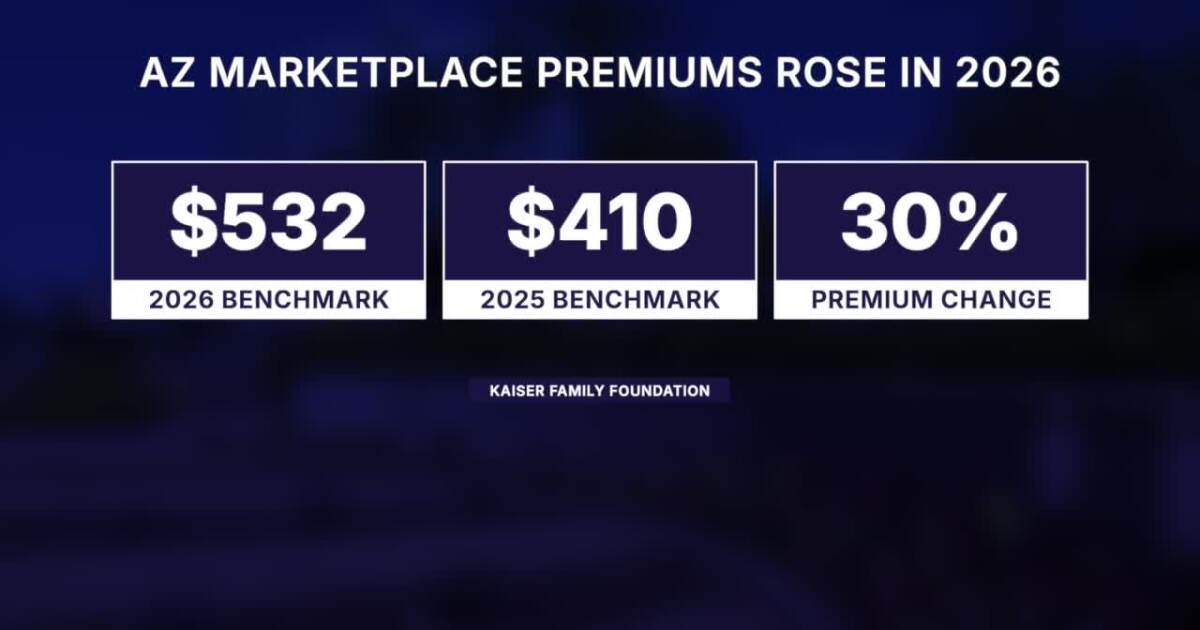
WATCH: Arizona’s health insurance marketplace is seeing dropping enrollment
-

 Arkansas34 minutes ago
ARKANSAS SIGHTSEEING: Randolph County can claim many firsts in Arkansas | Northwest Arkansas Democrat-Gazette
-

 California41 minutes ago
Toddler sustains brain injury in fall after California childcare worker threw him into the air, lawsuit says

