Georgia
Republicans fear this Democrat in Georgia Senate race: ‘This guy’s no slouch’


Rep. Buddy Carter warned a crowd of Republicans in Roberta, Georgia, in January that he faced an uphill battle in November to unseat Democrat Sen. Jon Ossoff in the purple state, if he becomes the Republican nominee.
“Look, this guy’s no slouch,” the Georgia congressman said, according to a recording of the remarks obtained by The Washington Post. “He’s pretty sharp, he’s articulate, he’s young, he’s handsome, he talks well. You better have somebody who can go toe to toe with him.”
Publicly, Republicans in the state and in Washington continue to list Georgia as their top pickup opportunity in the Senate as they defend their 53-seat majority in a midterm year in which their party faces fierce political headwinds. Donald Trump won the state by more than two percentage points in 2024, and Republicans have painted Ossoff as too liberal for Georgia.
But behind closed doors, Republicans have tamped down their hopes of unseating the 39-year-old powerhouse fundraiser as he seeks another term. They’re lamenting their bitterly divided primary field made worse by a recruiting failure when popular Republican Gov. Brian Kemp declined to run for the seat. Carter, Rep. Mike Collins and Derek Dooley, a former college football coach endorsed by Kemp, are the main competitors in the May 19 GOP primary.
Collins – a close Trump ally with a blisteringly MAGA social media presence that could alienate moderate voters – leads in most polls of the Republican primary. The Cook Political Report rates the general election as a toss-up.
“I’m not feeling bullish about it,” said one Republican strategist who was granted anonymity to provide a more candid assessment. “[Ossoff] has wisely avoided the temptation of going on cable news for six years and playing to the base for social media likes. … I think he’s going to reap the benefits of that.”
Sen. Thom Tillis, a Republican retiring from his North Carolina seat this year, said Ossoff has done “a good job presenting as a moderate candidate,” although Tillis does not believe he actually is moderate.
Republicans risked ceding crucial independent and moderate Republican voters to Ossoff if they nominate a more hard-right candidate, Tillis said.
“If these people want a purity test and they put somebody forth that’s the darling of the MAGA base, but doesn’t resonate with unaffiliated [voters] and right of center fiscal Republicans, that’s a recipe for losing,” said Tillis, whose neighboring state shares similar political characteristics to Georgia.
The skinny former House staffer who won his Senate seat in a runoff election in 2021 did not always inspire the same fear from his opponents. Republicans believed Ossoff, then a political neophyte, had ridden the coattails of Sen. Raphael G. Warnock (D-Georgia), a charismatic preacher he shared the ticket with, and also benefited from an odd election season in which Trump depressed Republican turnout by falsely claiming widespread voter fraud. Just a couple of years earlier, Ossoff had lost a House special election that took place shortly after Trump was first sworn in, disappointing Democrats across the country.
“The first time I ever saw him was when he was running in that Georgia 6 special election and I was like, ‘Oh God, just what we need: Another former staffer,’” recalled Caitlin Legacki, a Democratic strategist. “But he has got game.”
When he got to Washington, Ossoff built a Senate office that prioritized responsiveness to constituents and a hyper focus on local Georgia issues. Inspired by the late Republican senator Johnny Isakson, Ossoff said he wanted his office to provide excellent constituent services to any Georgian, regardless of their political affiliation. In 2025, he joined the powerful Senate Appropriations Committee, allowing him to steer more money to projects back home.
“I don’t crave attention. I’m not doing this for the spotlight,” Ossoff said in a brief interview in the Capitol. “I want to do a great job for the state.”
Attention is exactly what the senator has been getting, however, as he’s broken from his hyper-local focus in recent months to deliver stinging attacks on Trump and his administration that have won him admiration from national Democrats. A speech he gave in suburban Atlanta excoriating Trump for empowering a wealthy “Epstein class” to rule the country while slashing public services went viral. And in recent remarks at a Black church, Ossoff lashed out at the Trump administration’s actions as evil, criticizing Republicans from a biblical perspective.
“There’s a wickedness to the program,” he said earlier this year. “I don’t know, pastor, where it is in scripture that it says deny care to the sick, take from those with the least to give to those with the most, violate the house of worship to hunt down the refugee. Where in the scripture are those lessons taught?”
The rhetoric is not the standard, careful stump speeches many vulnerable lawmakers up for reelection in purple or red states stick to to avoid missteps or alienating middle-of-the-road voters. And it could add another element of risk to his strategy of winning over moderate voters in the state.
It’s also sparked speculation that he has an eye on a future presidential run that may be taking precedence over his reelection bid. But Ossoff’s fans believe his fiery approach makes him seem more authentic to voters in Georgia, who wouldn’t buy an election-year makeover from the senator.
“One of the biggest mistakes that vulnerable members make is that in an election year they all of a sudden start tacking to the middle, and that’s just transparently obvious to all the voters,” said Dan Pfeiffer, a longtime former Barack Obama aide who now co-hosts the “Pod Save America” podcast popular among liberals. “He’s standing strong.”
Pfeiffer called Ossoff “one of the best communicators in the Democratic Party.”
At a recent event Ossoff held in Savannah, several fans in the audience said they hoped Ossoff would consider a presidential run in the future.
“In his recent speeches, he’s sounded very presidential,” noted Ray Mosley, a Bulloch County commissioner.
But Ossoff brushed off that speculation as a “curse,” and said he is remaining focused on what he believes will be a bruising race in the state.
“The Republican field is a mess, but I’m running every day like I’m behind and I expect this to be an extremely close and competitive race,” he said.
Republicans are planning to pour millions into the race, and have already attacked him in ads on illegal immigration and for “chaos” at Hartsfield-Jackson Atlanta International Airport, blaming the long security lines on his votes against funding the Department of Homeland Security.
They believe Ossoff has not broken enough from Democrats on key votes to adequately distance himself from the party in a purple state that voted for Trump just over a year ago. Ossoff broke with Democrats to support the Laken Riley Act on final passage, which expanded detention for immigrants accused of some crimes. (The bill is named after a college student in Georgia who was murdered by an undocumented immigrant.) But he usually votes with his party.
“His record is Joe Biden’s record,” said Rep. Brian Jack (R-Georgia), who added Georgians found Biden toxic. “I’m not sure what legislation he could advocate for that wasn’t a Biden priority.”
Ossoff is known to be extremely deliberative about votes – to the point of hand-wringing – and discusses legislation extensively with colleagues before making a decision.
“He’s incredibly methodical, but also thoughtful about the impact that the policies we pass or don’t pass have on the people he represents,” said Sen. Mark Kelly (D-Arizona), another swing state politician who campaigned with Ossoff in Georgia earlier this year.
Shortly after Trump’s election in 2024, Ossoff voted for a Sen. Bernie Sanders-backed resolution to block some arms transfers to Israel as the war in Gaza had devolved into a humanitarian crisis. Just 19 members of the Democratic caucus backed the resolution, and Ossoff faced a fierce backlash back home for his vote.
Jeremy Ben-Ami, the leader of the liberal Jewish group J Street, said he spoke with Ossoff ahead of the vote, and that the senator was under intense pressure to vote against the resolution. “He knew what he was getting himself into and he took a principled stand,” Ben-Ami said of the Jewish senator. Now, Ben-Ami said, as public opinion has turned against Israel’s actions in the war, “time has proven him right and the wind has shifted.”
Republicans in Georgia hope that the MAGA base will show up for whichever Republican emerges from their primary in the fall. “We won the state of Georgia for President Trump, proving that it is indeed a red state,” Rep. Andrew Clyde (R-Georgia) said. “We just need to do the same thing for whoever our Senate candidate is going to be.”
Ossoff and his allies say he has the support of a coalition that extends beyond the Democratic base, however. Trump’s approval rating was only 43 percent in Georgia in a 2025 Atlanta Journal-Constitution poll.
“In order to win in Georgia, you need a coalition,” Warnock said. “The Democratic faithful, the base and reasonable people in the middle who want to see us focus not so much on the politics and more on the everyday concerns of ordinary people. That’s what Jon Ossoff is doing.”



It’s hard to have a better start to the decade than the Georgia Bulldogs have during the 2020s.
They’ve finished ranked inside the top seven of the final AP Poll in each season of the 2020s. Georgia has appeared in four of the six College Football Playoffs in this current decade and the Bulldogs are the only team in the sport to have won multiple national championships since the start of the 2020 season.
Chip Patterson of CBS Sports stated that as it stands right now, the Bulldogs are in fact the team of the 2020s.
“From the start of the 2021 season through the end of 2023, Georgia went 42-2 with two national championship game wins and the only defeats coming to Nick Saban and Alabama in SEC Championship Game appearances,” Patterson wrote. “And while the winning percentage has dipped a bit in the last two seasons (23-5), those years have each included SEC Championship Game wins. Kirby Smart helped build the juggernaut of the 2010s with Saban, and as we stare down the final four years of the 2020s, he’s currently driving the frontrunner to be the team of the decade.”
Patterson notes that Ohio State is nipping on the heels of the Bulldogs, despite Georgia having a 3-1 edge in terms of conference championships.
Georgia is the only team with multiple national championships in this current decade, but Ohio State, Indiana and Alabama all seem like possible threats to get a second.
Oregon, Texas, Miami and Notre Dame appear to be annual threats to win a national championship. Especially in a world with an expanded College Football Playoff.
We’re past the halfway point when it comes to this decade, yet there are still four seasons left for one team to stake its claim as the dominant program of the decade. While the Bulldogs have gotten out to an early lead, there is still time for someone else to catch them.
So what do the Bulldogs have to do to ensure they remain in position to be the team of the decade?
The simplest answer is to grab another national championship. Alabama won four during the 2010s, with Smart serving as the defensive coordinator for three of them. Nebraska won three in the 1990s, while Miami did the same in the 1980s.
To get a third national title though Georgia will need more breaks than it got in 2021 or 2022. Those titles came in an era where there were just four teams in the College Football Playoff. Georgia also played just eight SEC games in those seasons. Going forward, the Bulldogs, and every other SEC team, will play nine conference games each season.
There’s also the other notable change that comes because of changes to NIL rules and the transfer portal. While NIL was legal during the 2021 and 2022 seasons, it’s a totally different beast now in terms of the way it impacts team building.
As for the transfer portal, we’ve already seen how Georgia has had to prioritize retention with its current roster. While Georgia brought in only nine players via the transfer portal, it also only lost 12 members from last season’s team. Both of those marks are the fewest in the SEC.
While Georgia has a plan when it comes to working the transfer portal, one of the questions that will ultimately define how the Bulldogs finish out the decade comes in the form of talent acquisition.
The Bulldogs signed a top 5 high school recruiting class in every recruiting cycle from 2020 through 2025 using the 247Sports Composite rankings.
Georgia’s 2020 and 2024 recruiting classes were ranked No. 1 in the country. But the 2026 recruiting cycle ranked sixth. The current 2027 class sits at No. 13, with only a small handful of targets remaining uncommitted.
Potential changes to the way the sport is governed are possible, but who knows what further consequences potential government intervention will have on the sport.
For as much as has changed in the sport from when the decade began, Georgia has been able to find stability in a way not every contender has in recent years. Consider that this year will be the fourth straight that Glenn Schumann and Mike Bobo have served as the offensive and defensive coordinators at Georgia.
Georgia’s staying power is a big reason why some view Smart as one of the top coaches in the sport.
“The argument for Smart is his program remains the gold standard for elite, sustained success even as the expanded CFP, the portal and NIL have in many ways made his job tougher,” ESPN’s Max Olson said. “He has maintained an incredibly high standard at Georgia with no bad years, finishing in the top seven of the AP poll in nine consecutive seasons, with eight trips to the SEC title game.”
If the Bulldogs continue to find themselves in the College Football Playoff, eventually the breaks will go their way. In 2022, Ohio State’s Noah Ruggles missed a 50-yard field goal attempt as time expired. Last season, Ole Miss kicker Lucas Carneiro made a 47-yard field goal in the final moments of the College Football Playoff.
Smart has always built Georgia to sustain. It’s a big reason why to this point in the decade, the Bulldogs are viewed as the team of the decade.
To ensure that title sticks throughout the rest of the decade, the Bulldogs are going to need to continue to accumulate talent at an elite level. That aspect will almost certainly look different compared to the beginning of the decade.
Ultimately, national championships will go a long way in shaping which team ends the decade as the defining team. Ohio State likely isn’t going anywhere, while Texas and others seem committed to spending whatever it takes to stay atop the sport.
Georgia is the only SEC team to make the College Football Playoff in each of the last two seasons. Oregon, Indiana and Ohio State are the only other teams to make it in both seasons.
No team has yet won a College Football Playoff game in multiple 12-team formats. Perhaps that speaks to how difficult it will be to maintain success on an annual basis.
This demonstrates just how much more difficult the task ahead is for the Georgia Bulldogs.

CRISP COUNTY, Ga. (WGXA) — Four teenagers are facing multiple felony charges for the murder of a 20-year-old man in Cordele last month.
On Friday, the Georgia Bureau of Investigation announced the arrests of 17-year-old Bianca Armani King-Knight, 17-year-old Kaylee Posey, and 19-year-old William Troy Posey all from Crisp County and 19-year-old Trenton Donnell Lane from Wilcox County, in connection to a shooting that left one person dead and another injured on the 1000 block of Dayton Road.
The GBI identified the victim as Correnthian Jeremiah Cooks, 20, who died at a local hospital after being found shot on around 6:45 p.m. on June 27. While the other male victim received treatment and was later released.
All four teenagers were charged with one count of felony murder and three counts of aggravated assault on June 29 and are currently being held at the Crisp County Jail.
The investigation remains ongoing, and anyone with information is urged to contact the GBI Regional Investigative Office in Americus at (229)-931-2439, the Cordele Police Department at (229) 273-3102 or submit an anonymous tip online.
Stick with WGXA as we learn more and keep you ready for what’s next.
Georgia
“Operation Southern Slow Down” returns to target speeding drivers across Georgia and Florida

Heading out on the road for a little summer vacation? Law enforcement agencies across the South have a warning: Slow down or face consequences.
The ninth annual “Operation Southern Slow Down” will run from July 13 to 19 across Georgia, Florida, Alabama, South Carolina, and Tennessee.
All five states and local law enforcement agencies will be taking part in the speed enforcement and awareness campaign, which officials say is designed to prevent crashes and save lives by reminding drivers of the dangers of speeding and reckless driving.
During the time period, drivers will see more law enforcement on roads across all five Southern states.
Last year’s operation ended with nearly 53,000 citations and warnings for speeding, 2,230 for reckless driving, and over 3,000 for violating distracted driving laws. Over 1,400 drivers were arrested on DUI charges, including 501 in Georgia.
“Operation Southern Slow Down” began in 2017 in an effort to reduce crashes and save lives. Federal crash data shows that speed was a factor in one out of five fatal traffic crashes in Georgia from 2020 to 2024. A 2023 report by the Governor’s Office of Highway Safety found that over half of those killed or seriously injured in multi-vehicle crashes where speed was a factor were not the speeding driver.
“Unsafe driver behaviors like speeding are a major contributor to fatalities and serious injuries on our roadways,” said Florida Department of Transportation Secretary Jared W. Perdue, P.E. “Remember that your actions behind the wheel can have life-altering impacts: slow down and drive responsibly to help get everyone to their destinations safely.”
Authorities say drivers should always wear a seat belt and make sure to give others who are traveling at high speeds on the roads plenty of space.
-

 Illinois3 minutes ago
Woman in custody after breaking into home in Aurora, Illinois, police say
-

 Indiana5 minutes ago
Maximum Offer Relishes Stakes in Indiana Oaks
-

 Iowa11 minutes ago
Iowa State Football Predicted for Tough First Season Under Jimmy Rogers
-
 Kansas18 minutes ago
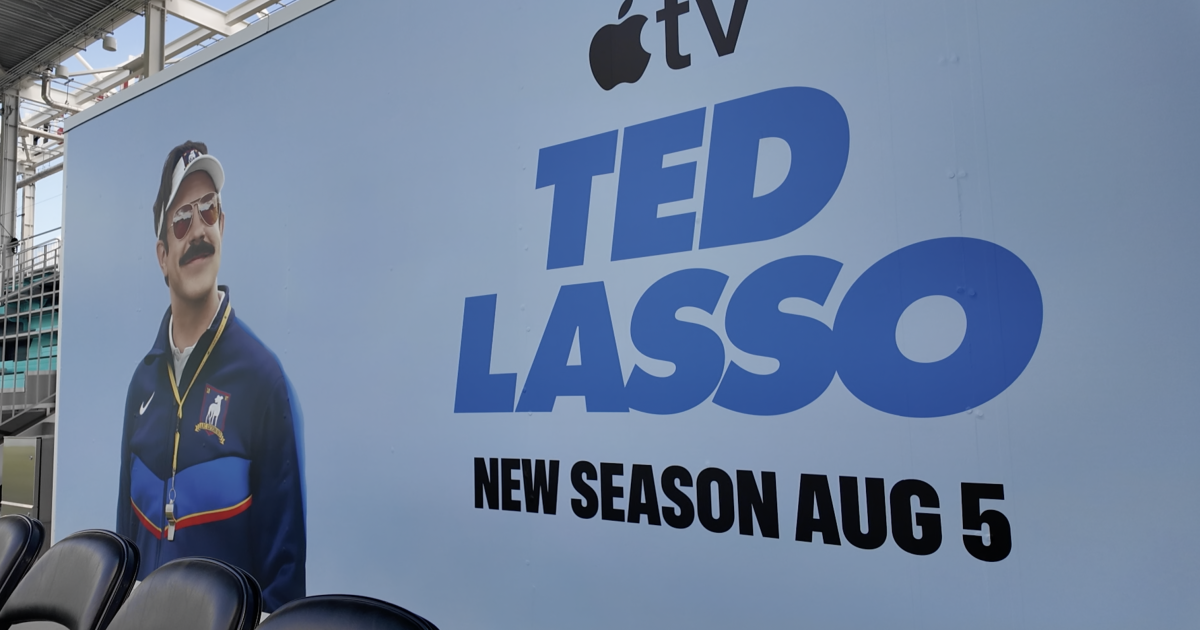
New season of ‘Ted Lasso’ brings Kansas City back into global spotlight
-
Kentucky21 minutes ago
Lucas Glover hangs onto lead in ISCO Championship in Kentucky
-

 Louisiana26 minutes ago
LSP: Ascension Parish resident dies in two-vehicle crash
-

 Maine33 minutes ago
Collins confident as Maine Democrats move to replace Platner
-

 Maryland35 minutes ago
The Final Stretch for Maryland’s 2027 Class: Identifying the Remaining Must‑Gets


