Indiana
Indiana governor candidate Q&A: Jamie Reitenour on the issues


Who is Jamie Reitenour: 2024 gubernatorial candidate?
Jamie Reitenour, a 2024 gubernatorial candidate is interviewed on Dec. 8, 2023, at the Indianapolis Star.
Jamie Reitenour admits that for most of her life, she was a conservative voter who felt like she was merely checking boxes.
But the 2016 election piqued her interest in politics. Not long after, the Indianapolis mother of five said, she felt a calling from God to become governor of Indiana. Last year, she said, she felt the calling resurge and decided to act on it.
She has significant ground to cover in terms of name recognition compared to her opponents in the Republican primary, which include Fort Wayne businessman Eric Doden, U.S. Sen. Mike Braun, Lt. Gov. Suzanne Crouch, former Attorney General Curtis Hill and former Commerce Secretary Brad Chambers. Donald Rainwater is running as a Libertarian and former schools Superintendent Jennifer McCormick as a Democrat.
IndyStar asked Reitenour, as well as the seven other candidates, a set of questions about issues relevant to the 2024 race, some of which were submitted by readers. This interview is edited for length and clarity.
Q: What do you think sets you apart from your competition in the Republican primary?
A: I haven’t been in politics. That’s why people should want me in politics. Because America needs normal people. Not perfect people ― true people. Because the country is in need. And the people are hurting. It’s real. So that’s the biggest difference.
Q: What would be your first priority as governor?
A: I’ve traveled over 13,000 miles in the last two years ― I got started January 2022. And so as I went around, I looked for, where is the most vulnerable place in our state? And what I saw was that education is the area where it is most vulnerable. Our children are vulnerable. Our scores are low. Kids are losing their identity. They’re losing their desire. That’s a big deal ― their vision for life. When you leave, and you have no reason to continue to get a job, when you’ve got half a society that’s just dropping off and saying, who cares? That’s a big deal.
So my head of education, her name is Paige Miller. And she’s a Mom for Liberty. I love that group; they are a wonderful group of people. We bring to the table, desiring that every senior would graduate having completed an apprenticeship. Senior year is a year where they’re not doing a whole lot anyway. We want Indiana to be the training capital of the United States. So we start there, and we very rapidly go around the state. We’ve got great plans for our small towns. We’ve got our eyes on Gary, Indiana.
Q: In many ways today’s Republican Party has factions defined by one’s posture toward Donald Trump. What’s yours?
A: Whether it’s President Trump or Tim Scott or Nikki Haley or Ron DeSantis ― if any of those people were in the position that President Trump has been put in, I’d have a problem with it. I don’t believe that what’s happening in our country is fair justice. I think it’s easy to not like a person or blame something on a person’s personality, but I love the law. And there’s a lot to be wanting, in the situation that he finds himself in. In the Bible, in Micah, it says, “What is required of you but to do justly, and to love mercy and to walk humbly before thy God.” I would just say to anyone in that position, I would want everyone to do justly. And I think that is wanting, so I would direct my comment less to the person and more to the situation.
Q: Do you believe the 2020 election was stolen from Donald Trump?
A: I believe the 2020 election had an incredible amount of irregularity, and it should have been questioned.
Q: Where do you stand on Indiana’s new abortion law, and what changes to it would you support?
A: I definitely am a person that believes in life at conception, and I’m not an exception person. I’m just, life at conception. I know a lot of babies that people would have said “no” to that are just so beautiful. And our society needs their beauty.
Q: Gun violence is an epidemic in today’s American society. How should Indiana respond?
A: Fatherless homes is an epidemic in our society, and that’s what we need to be addressing. Kids model their examples. They want to be wanted. They want leadership. They want to belong.
The issue is not the item they’re picking up to do violence; the issue is their homes and the brokenness of their homes. There needs to be a wake-up call for the families that have been constantly going to the same well, but the water has run dry, and the solutions are not working. So they need to be looking for something different. My solution to gun violence is education. It’s walking in those streets, looking at those children, going to those high schools.
I’m willing to consider very outside-of-the-box things for schools that are struggling in education. If you’ve got a 10% graduation rate, everything is on the table. We will talk apprenticeships, we will talk early training in freshman year. We will talk all solutions so that kids can get out of this cycle of poverty and violence and broken family and really experience what they were made for.
Q: The 2023 legislative session dealt with culture war topics such as LGBTQ issues and school library books. Where do you stand on those issues?
A: Some of the books they’ve read, the way that they speak in these books are things that I would never let my children hear. So, there was a need for discretion. So I’m happy with the laws that have promoted that discretion and given the boundaries. But it was done for just up to third or fourth grade. It’ll be interesting to see if they stop at third grade or if they continue it for all the grades. I think if it’s good for a third grader, I don’t understand how it cuts off at fourth grade. I think it’ll be an interesting conversation.
Q: Should citizens have a right to collect signatures to put questions on the ballot without legislative approval?
A: Yeah, I think Hoosiers should.
Contact IndyStar state government and politics reporter Kayla Dwyer at kdwyer@indystar.com or follow her on Twitter @kayla_dwyer17.



(WISH) — A severe thunderstorm watch for Indianapolis and other central Indiana counties, which had been set to run through midnight Thursday, was canceled about 9:15 p.m. Thursday.
The Severe Thunderstorm Prediction Center at 7:45 p.m. Thursday issued the watch for these Indiana counties: Allen, Blackford, Boone, Carroll, Cass, Clay, Clinton, Delaware, De Kalb, Fulton, Grant, Hamilton, Hancock, Hendricks, Howard, Huntington, Johnson, Kosciusko, Lagrange, Madison, Marion, Miami, Montgomery, Morgan, Noble, Owen, Putnam, Steuben, Tippecanoe, Tipton, Wabash, Wells and Whitley.
Other cities in the watch area are Angola, Carmel, Crawfordsville, Fishers, Fort Wayne, Kokomo, Logansport, Noblesville, Marion, Muncie, Warsaw and Westfield.
Storm warnings that had been issued earlier for the watch area warned over 60 mph gusts, which can cause damage to roofs, siding and trees. Tornadoes were possible, but the National Weather Service at Indianapolis did not issue any tornado warnings.
As of 9 p.m., an automated system from the Indianapolis weather service said a storm spotter reported a large tree being uprooted on the southwest side of Terre Haute about 7:14 p.m. due to thunderstorm winds.
Also, about 14% of electricity customers in Parke County, north of Terre Haute, were without power at 9 p.m. Thursday. About 40 minutes earlier, about 24% of Parke County electricity customers were without power.

The Indiana 225 truss bridge over the Wabash River in Tippecanoe County remains closed as work begins on its rehabilitation, according to a community announcement. The Indiana Department of Transportation announced that erosion control and right-of-way clearing are underway to prepare for the project.
The single-lane bridge south of Battle Ground will undergo deck replacement as part of the rehabilitation efforts.
The work is expected to continue until 2028, although the timeline is weather-dependent and subject to change.
Motorists are encouraged to find alternate routes and exercise caution while traveling in the area.
Updates on road conditions and traffic alerts can be monitored through various platforms, including the INDOT West Central Facebook page, X (formerly Twitter), TrafficWise at 511in.org, and mobile apps available on the iTunes App Store and Google Play store for Android devices, according to the announcement.
This story was created with the assistance of Artificial Intelligence (AI). Journalists were involved in every step of the information gathering, review, editing and publishing process. Learn more at cm.usatoday.com/ethical-conduct/.

INDIANAPOLIS (WISH) — Hailey Buzbee’s parents witnessed Governor Mike Braun sign two bills into law that are designed to protect children from social media and exploitation.
The ceremonial signing is a symbol that the state is ready to protect children from online predators. Hailey’s father, Beau, said it’s a good step forward.
“There’s no greater evil than those who seek and do harm to our children. And so I appreciate all the hardwork, effort, and the fight that you are taking to it,” Beau said.
House Bill 1303 expands the Silver Alert to include a missing child as a high-risk person. And it creates harsher penalties for distribution and possession of child sexual abuse material.
House Bill 1408 requires social media platforms to get parental consent for children under 16.
The Buzbee family has been pushing for these changes after 17-year-old Hailey Buzbee met a man online and was later found dead in Ohio.
“Indiana could be known on the leaderboard across the country as a place that protects our children. And the risk and vulnerability and threat in our homes, our community in our state will start to dissipate,” Beau said.
The Governor said last year, Indiana State Police and the Internet Crimes Against Children Task Force arrested nearly 500 child predators. Braun added that the team rescued 126 children. This year, they arrested 92 people and saved children.
“This has become such a big deal across the country, and the consequences are everywhere. Parents will have to weigh in to make it clear that it’s a big deal. Legislatures are going to have to get together, and again we need to put pressure on the companies that put that stuff out and profit from it,” Braun said.
While legislation is one step, the Governor says it’s not the only path towards prevention. He encouraged parents to be vigilant. “Don’t assume that something may not be happening because that’s where the starting point is. This is the beginning of trying to remediate it, and we’re just getting started.”
The Governor also said he supports the Pink Alert System championed by the Buzbee family, which focuses on high-risk missing children and cases involving online grooming or trafficking.
Beau called this moment “hopeful.”
The Buzbee family is pushing for Hailey’s law, which includes the pink alert system and online safety training in schools. They are working with lawmakers to present for next year’s legislative session.

Utah Completes Comeback, Beats Seattle 6-2 | Utah Mammoth

UVM wants to use state scholarship money to pay for a new sports complex. Vermont legislators are skeptical. – VTDigger

Virginia sees 33,000 ACA enrollment drop since subsidies expired, more likely on the way

Federal planners approve preliminary Commanders stadium plan, but have parking questions – WTOP News

Has Wisconsin Supreme Court candidate Chris Taylor been ‘pushing noncitizen voting’?

Florida High School Football Rankings: Top 25 teams – Oct. 21

How old is Bo Nix? What to know about Oregon quarterback ahead of 2024 NFL Draft

Cleary's 21 help Le Moyne down Central Connecticut State 69-64 in OT

99th annual Pony Swim held in Virginia

Indiana Members Credit Union announced as new anchor tenant at Bottleworks District

Video: Trump Struck Iran. Now Farmers Are Paying the Price.

What B-52 bombers bring to Iran fight — and what it means for the war now

Podcast: Hungary elects: what is at stake and who is likely to win?
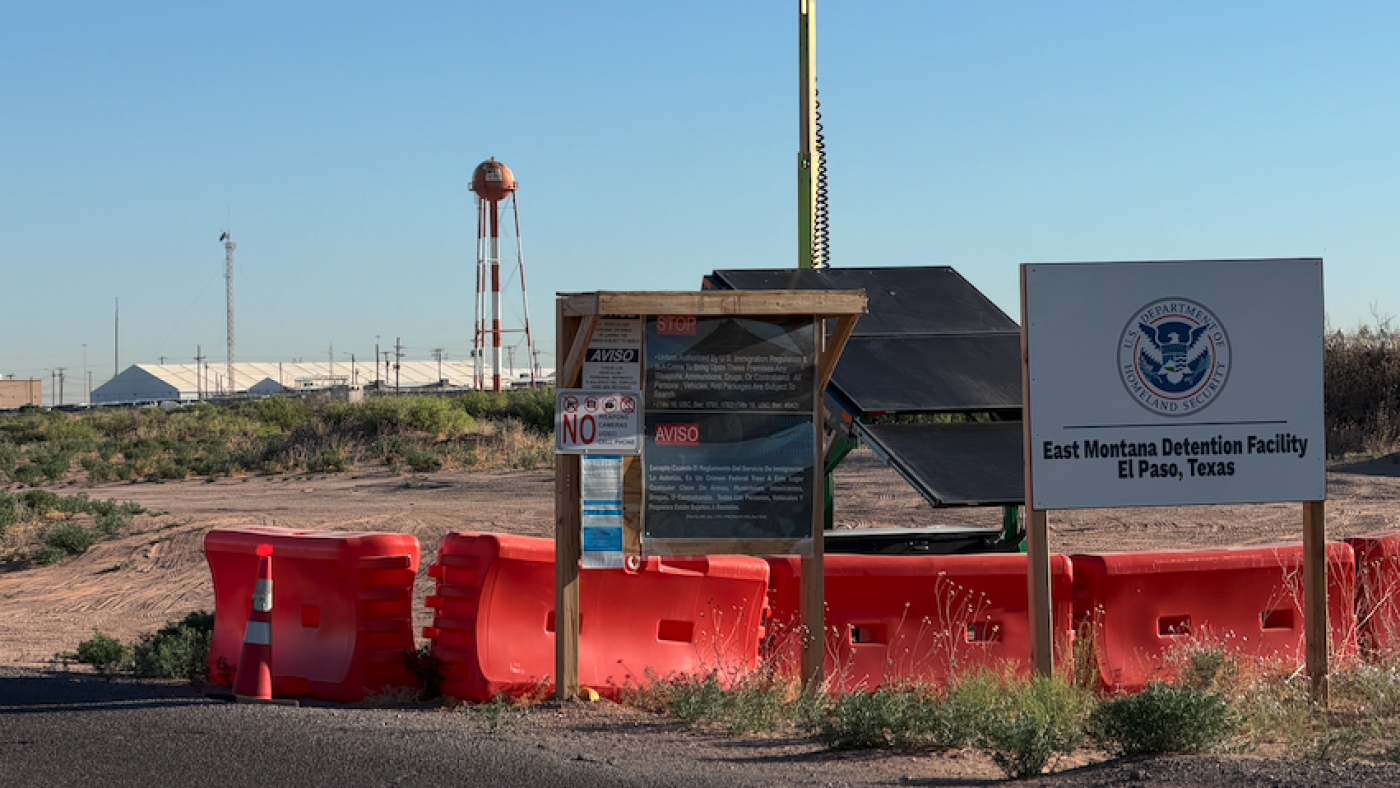
ICE detention deaths are on a record pace. One Texas facility bears the brunt

GOP rails against ‘s— sandwich’ deal as all eyes turn to House to end DHS shutdown
-

 South-Carolina5 days ago
South Carolina vs TCU predictions for Elite Eight game in March Madness
-

 Culture1 week ago
Wil Wheaton Discusses ‘Stand By Me’ and Narrating ‘The Body’ Audiobook
-

 Miami, FL1 week ago
Jannik Sinner’s Girlfriend Laila Hasanovic Stuns in Ab-Revealing Post Amid Miami Open
-

 Culture1 week ago
What Happens When We Die? This Wallace Stevens Poem Has Thoughts.
-

 Minneapolis, MN1 week ago
Boy who shielded classmate during school shooting receives Medal of Honor
-

 Vermont5 days ago
Skier dies after fall at Sugarbush Resort
-

 Education1 week ago
Video: Transgender Athletes Barred From Women’s Olympic Events
-

 Politics5 days ago
Trump’s Ballroom Design Has Barely Been Scrutinized