Science
Measles Cases in Kansas May Be Linked to Texas Outbreak


Measles cases in Kansas more than doubled in the last week, bringing the tally to 20, while another outbreak in Ohio has sickened 10 people, local public health officials reported on Wednesday.
There have been several large outbreaks in the United States this year, including one in West Texas that has spread to more than 320 people and hospitalized 40. Health officials have worried that the Texas outbreak may be seeding others.
More than 40 measles cases have been reported in New Mexico, and seven have been identified in Oklahoma. In both states, health officials said the infections were connected to the Texas outbreak.
In Kansas, the virus has mainly infected unvaccinated children in the southwest corner of the state. Genetic sequencing has suggested a link to the Texas and New Mexico outbreaks, state health officials told The New York Times on Wednesday.
Fourteen other states have reported isolated measles cases in 2025, more often the result of international travel. In Ohio, nine of the 10 cases were traced to an unvaccinated man who recently traveled abroad.
“Given the measles activity in Texas, New Mexico and other states around the country, we’re disappointed but not surprised we now have several cases here in Ohio,” said Dr. Bruce Vanderhoff, director of the state’s Department of Health.
Experts fear that declining vaccination rates nationwide have left the country vulnerable to a resurgence of preventable illnesses, including measles.
Just under 93 percent of children in kindergarten had the vaccine for measles, mumps and rubella in the 2023-24 school year, according to the Centers for Disease Control and Prevention.
Experts recommend that at least 95 percent of people in a community be vaccinated in order to avoid outbreaks.
In Kansas, about 90 percent of kindergartners were given the M.M.R. shot in the 2023-24 school year, according to state data.
About 89 percent of kindergartners in Ohio had the M.M.R. shot that year.
Measles, which spreads when an infected person breathes, coughs or sneezes, is one of the most contagious known viruses.
Within a few weeks of exposure, those who are infected may develop a high fever, a cough, a runny nose and red, watery eyes. Within a few days, a telltale rash breaks out, first as flat, red spots on the face and then spreading down the neck and the torso to the rest of the body
In most cases, these symptoms resolve in a few weeks. But in rare cases, the virus causes pneumonia, making it difficult for patients, especially children, to draw oxygen into their lungs.
The infection can also lead to brain swelling, which can cause lasting damage, including blindness, deafness and intellectual disabilities. For every 1,000 children who contract measles, one or two will die, according to the C.D.C.
One child has died in the Texas outbreak, the first such death in the United States in a decade. One suspected measles death was also reported in New Mexico.



Video released by Chinese state media shows a state-owned aerospace company launching a rocket and recovering part of it on Friday. The successful launch of a reusable rocket was a major step for China toward challenging SpaceX’s satellite internet dominance.
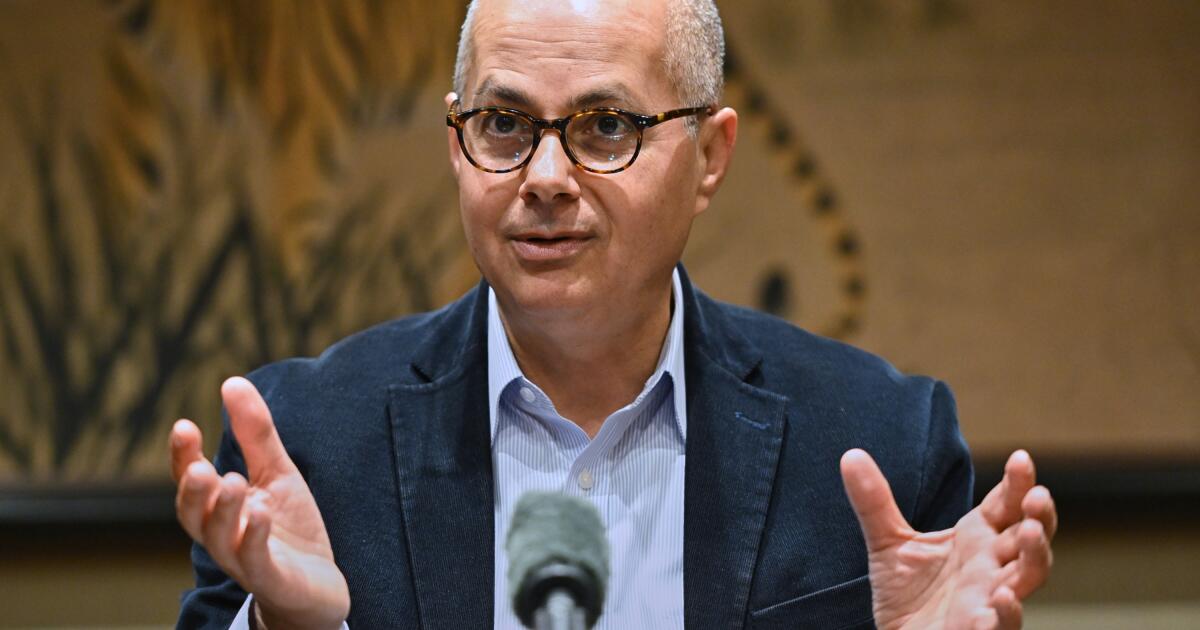
Nobel Prize recipient Omar Yaghi is leaving his role at UC Berkeley to lead the development of a new artificial intelligence institute at Tsinghua University in Beijing, the Chinese university announced.
Yaghi will head the AI Chemistry and Materials Research Institute at Tsinghua, where he was appointed an honorary professor in 2022. Known as AIMATRY (AI × Materials × Chemistry), the new center will focus on material design and synthesis through artificial intelligence, according to a statement from the university.
In 2025, Yaghi shared the Nobel Prize in chemistry with Susumu Kitagawa of Kyoto University and Richard Robson of the University of Melbourne for their development of metal-organic frameworks, a type of super-porous material in which metal ions and carbon-based molecules combine to form crystals with exceptionally large surface areas.
The material has the potential to combat climate change by capturing and storing carbon or other pollutants, and by extracting water from the atmosphere in water-scarce areas. Upon awarding the prize, a member of the Nobel committee likened the technology’s ability to store enormous amounts of stuff in seemingly compact spaces to Hermione Granger’s enchanted handbag in the Harry Potter series.
Yaghi’s Irvine-based company, Atoco, has said it will start taking orders later this year for its technology that harvests water from the air.
A representative for Yaghi said he was not yet available to respond to questions.
China is one of several countries that has been actively recruiting scientists from the U.S., where the Trump administration has slashed science funding, suspended research grants, fired science advisors and tightened immigration restrictions.
“For many, many years, our funding was very competitive; if you worked hard and you were doing good research, you would get funding,” Yaghi said of the U.S. in an interview with Scientific American earlier this year. “The current state is not so encouraging because of the cutting back on grants and support of science by the very agencies that many university researchers rely on.”
Yaghi was born in Jordan to Palestinian refugees, and immigrated to the U.S. when he was 15 to study.
“We’ve learned over and over in human civilization that scholars can move across borders,” Yaghi told the New York Times last year. “This is how knowledge spread and how vast regions of the world lifted themselves out of poverty.”
Science
Trump administration seeks to limit federal funding that doesn’t ‘advance’ presidential policies

A new rule proposed by the White House Office of Management and Budget would fundamentally overhaul the way federal grants are awarded and overseen — a sweeping change that one scientific society said “would all but end the use of scientific merit in the selection of grants and programs across the government.”
Proposed in late May, the rule would give political appointees unprecedented control over federal grants for research, education and infrastructure, and specifies that government funds can only be spent on projects “aligned with administration policies and priorities,” according to a copy of the proposed rule.
The rule would also restrict research topics, limit U.S. scientists’ ability to collaborate with colleagues in other countries and make it easier for the government to suspend or cancel grants at any time.
The changes are intended to improve “transparency, accountability, and oversight for Federal awards” while “ensuring that American tax dollars are not wasted or misused,” according to the White House office.
But critics say that if the rule is implemented, the final sign-off for grants will no longer be in the hands of subject-matter experts within individual agencies, but in those of political appointees.
“This touches all parts of American life,” said Dr. Eric Rafla-Yuan, a psychiatrist who practices at the Veterans Administration and San Diego County’s psychiatric hospital.
“Control of how all of the federal grants and programs are funded will fall under a small group of highly partisan individuals who would have very few limits on how they spend these billions of taxpayer dollars,” said Rafla-Yuan, who also chairs the Committee to Protect Public Mental Health advocacy group. “This touches everyone’s life, even if they don’t realize it.”
OMB published the proposed rule May 29, opening a 45-day comment period that closes July 13.
Opposition to the proposed rule has mobilized multiple sectors of society. Professional groups representing cancer researchers, civil engineers, county governments, medical schools, housing agencies, city and municipal governments, nonprofits and others have publicly expressed concerns about potential consequences.
By midday Thursday, the Federal Register logged nearly 100,000 comments about the proposal, many of them expressing concern.
“I understand the need for oversight, fiscal responsibility, and accountability. That is not the issue,” wrote Jack Feldman, a neuroscientist who holds the David Geffen School of Medicine Chair in Neuroscience at UCLA. “The issue is whether scientific research is to be judged by scientific merit, or whether it can be approved, denied, or terminated according to broad political criteria that may change from one administration to the next.”
Crucially, the rule converts policies governing federal grants from “guidance” into binding regulations that all agencies would be required to follow. It would give political appointees power to override federal agencies’ merit-based reviews and mandate that a political appointee review decisions to ensure that all awards “demonstrably advance the President’s policy priorities.”
The elevation of political appointees in what were previously merit-based decisions has alarmed many scientists.
“The proposed rule changes would all but end the use of scientific merit in the selection of grants and programs across the government,” read a statement from the Planetary Society, a nonprofit dedicated to space research.
Researchers and science groups have also expressed concern about a section of the rule prohibiting the promotion of “theories of disparate-impact liability” — a legal concept that refers to policies that appear neutral but cause disproportionate harm to certain groups.
The section’s vague language and many loopholes could have a chilling effect on any research that studies the effects of a disease, policy or public health intervention on any specific group of people, Rafla-Yuan said.
As an example, he said, “if there’s a specific age range that is at higher risk for suicide, and we want to figure out, well, what’s going on with people that are aged 14 to 19 … we can’t do that under the wording in this rule.”
New restrictions on collaborations with scientists in other countries would hinder opportunities for U.S. researchers and limit innovation, said Joanne Padrón Carney, chief government relations officer for the American Assn. for the Advancement of Science.
“Science is a global enterprise. Especially in biomedical and public health fields, diseases don’t care about borders or government policies,” she said.
California’s congressional delegation sent a letter Wednesday asking OMB to rescind the proposal, outlining concerns about its impact on scientific innovation, U.S. competitiveness and the fiscal stability of local governments, many of which rely on federal grants for local services.
The proposed rule grants the federal government broad powers to suspend or cancel grants for any reason, introducing “unprecedented unpredictability into local governance,” the lawmakers wrote, “leaving vital infrastructure projects unfinished and abandoning vulnerable populations who rely on these services.”
Republican Sen. Susan Collins has also asked the White House to withdraw certain parts of the letter and extend the public comment period, saying the proposed rule as written would “harm small and rural communities, undermine scientific and biomedical research, and conflict with Congress’ control over the federal funding process.”
-

 Los Angeles, Ca1 hour ago
Ritzy Pasadena hotel settles lawsuit for allegedly price gouging wildfire victims
-

 Detroit, MI1 hour ago
Brother Nature at Night: Jack’s backyard & kayaking the Huron River
-

 San Francisco, CA2 hours ago
Hardin Fire in Napa County burns 55 acres near Pope Valley
-

 Dallas, TX2 hours ago
Former Dallas ISD Superintendent Michael Hinojosa runs for Dallas Mayor
-

 Miami, FL2 hours ago
South Florida mother arrested for leaving daughter chained to fence, police say
-

 Boston, MA2 hours ago
Boston man charged after allegedly assaulting Burger King employee, punching customer
-
 Denver, CO2 hours ago
Denver Country Club caddie earns full-ride Evans Scholarship, becomes first in family to attend college
-

 Seattle, WA2 hours ago
Seattle very much in running for another World Cup

