Illinois
Two months after Illinois launched food program, farmers still waiting to get paid


A long-delayed state program to get fresh food from local farms to vulnerable communities in Illinois was finally launched in March. But two months later, participants are still struggling to get money from the state to pay farmers and cover program expenses.
“We started with intentions of having money earlier than this and (the farmers) trusted us,” said Brenda Stewart, who runs Run-A-Way Buckers, a community organization distributing produce in eastern Illinois’ Pembroke Township. “I’m thankful they didn’t hold it against us.”
The $30 million federally funded effort aims to rebuild the state’s local food system by connecting underrepresented farmers with communities in need. Even though farms make up 75% of Illinois’ land area, only 5% of the food grown in Illinois is purchased in-state.
When Gov. J.B. Pritzker first announced the nonprofits selected to distribute food in early March, many — including Run-A-Way Buckers — jumped at the opportunity to get started. The announcement was overdue so Black, first-generation and veteran farmers had already ramped up production in anticipation, food was spoiling and families were waiting.
Diane McDonald organizes a network of fellow small-scale Black farmers that has been giving over 100 pounds of produce to Run-A-Way Buckers per week for the last two months. They haven’t been paid for any of it yet, but she isn’t giving up on the program.
“It’s been a crunch. It’s been a lot of out-of-pocket money,” said McDonald. “But, we’re determined to continue until (the state) get(s) it together. It’s a worthy cause, and I appreciate the fact that small farmers are being acknowledged because we’re very important to the agricultural system.”
While farmers have been on the hook, the Illinois Equitable Access Towards Sustainable Systems (IL-EATS) program has been “the talk of the town” among recipients, Stewart said.
The Swiss chard and goat cheese have been big hits at the local senior center, where Run-A-Way Buckers has been sending two dozen bags of locally-grown food each week. The seniors have enjoyed exchanging recipes for these healthy goods that are now available to them.
“It’s bringing out togetherness and a sense of adventure in them, and I love that,” said Velsie Kim Bridges, who runs the center’s nutrition program.
Good intentions, flawed execution
The U.S. Department of Agriculture is funding similar programs that connect underrepresented farmers and underserved communities in every state except Wyoming.
Most have had their programs up and running for a while. Wisconsin, for example, announced a funding agreement with the federal government in August 2022 and delivered $1.4 million worth of food by the end of last year.
Illinois reached a funding agreement only two months later, but it didn’t finalize contracts with food distributors until this spring.
Illinois farmers anxious after ramping up production for food program that was delayed
Wisconsin and other states chose to work with established food banks. “Illinois opted for a more inclusive model,” according to a statement from the Illinois Department of Human Services, which is managing the program with the state’s Department of Agriculture.
The state put out an open call for farmers and food distributors to apply for a portion of the grant money to ensure smaller organizations with strong ties to local communities could participate.
McDonald appreciated the opportunity to feed her neighbors who have been generally unable to access or afford her fresh produce. Much of what she grows is shipped to farmers markets an hour and a half away in Chicago.
“We did give food to the pantry on a volunteer basis, but this was on a larger scale. We could reach more people in the community,” said McDonald, who also runs a program that teaches local youth how to farm.
The human services department acknowledged that Illinois’ more grassroots approach, which helped farmers like McDonald get involved, made it more difficult to launch its program.
“Taking a different approach than other states … to advance equity and ensure new providers have the same opportunities was the right choice for Illinois,” the human services department said in a statement. “Doing what is right is not always the easiest route in the short term, but we will continue to learn and adjust as we strive to ensure this new program is successful.”
Some funds flowing

In early May, the human services department announced it finally had the federal funds to reimburse food costs.
This came as a relief to Marty Travis, whose nonprofit Down at the Farms, 100 miles south of Chicago in Fairbury, was selected to coordinate food distribution. He took nearly $120,000 out of Down at the Farms — tapping into grant money and forgoing necessary infrastructure upgrades — to pay farmers.
“We’ve exhausted all of that money that we felt like we could set aside without putting ourselves in total jeopardy,” Travis said.
Meanwhile, Stewart’s Run-A-Way Buckers waited for funds to flow before paying farmers. Consequently, McDonald has struggled to pay the farmhands helping her harvest, package and transport the over 100 pounds of produce she’s giving Run-A-Way Buckers each week.
“They’ve been hanging in there with me,” McDonald said. “The out-of-pocket money is all I have to give them to keep them coming and helping.”
The human services department told nonprofits they could expect to receive two months of advance payment and monthly reimbursements, but their contract stipulates they must be able to front at least 60 days worth of program expenses.
Just as the program reached that two-month mark, Travis and Stewart received their first checks for food costs. But, the wait isn’t over. Illinois has yet to secure federal funds for labor and transportation costs, which account for 30% to 45% of participating nonprofits’ program expenses. One employee at Run-A-Way Buckers is still owed about $16,000 for the time he has spent managing distribution.
More representation

In April, the farmers and nonprofits waiting for reimbursement discovered the state quietly slashed the prices the program would pay for food.
Chicken breast that was originally valued at $15.75 per pound was suddenly $8.25 per pound.
The program had originally garnered lots of excitement for essentially paying retail prices for wholesale products.
“I was gonna say it’s irresponsible, but it’s just not fair,” said Travis, a seventh-generation farmer.
The prices are subject to be updated twice per year, and the April changes reflected price fluctuations and the addition of new food items not included on the original list, according to a statement from the human services department.
“That’s like everybody else coming out here, making all these promises about how they’re going to help this community, and then they never follow through. We’ve had a lot of that happen, so it’s not building up good trust among us,” said McDonald, recalling her experience with the government as a rural Black farmer.
With new farm bill in the works, Illinois farmers go to Washington to urge investments in environmental justice
After listening to feedback from farmers and food distributors, the state agreed to revert to the originally advertised prices.
In light of this, farmers are demanding more transparency and representation in the program, which is scheduled to run through September 2025.

“We’re out here daily, dealing with the elements to make the produce the best that we can give, so I think that we should have some kind of say in the policymaking,” McDonald said.
The program has had growing pains but, across the state, there remains a steadfast commitment to strengthening local food systems and hope that this initiative will do just that.
“It will sort itself out. But we’ve lost trust, we’ve lost time and we’ve lost the ability to keep all of our farmers engaged in this. We can’t break the back of all the farmers,” Travis said. “We just need to follow through. We need to close the loop.”



Some communities saw their bills rise 75% or more.
The median property tax bill for Chicago homeowners rose by a record last year, and some parts of the city saw much steeper increases than others.
The citywide median rise was 16.7%, according to a report from the Cook County Treasurer’s office on bills for tax year 2024.
Many poor communities in Chicago saw the largest increases. In 15 areas on the South and West sides, property taxes shot up 30% because of rising home values. In West Garfield Park, North Lawndale, Englewood, West Pullman and West Englewood, property tax bills rose 75% or more.
Chicago homeowners have suffered in recent years. While property taxes did increase in some Cook County suburbs in 2024, city homeowners felt the bulk of the pain. That’s because assessed values on downtown commercial buildings fell 7.2%, reducing taxes on those properties.
Lower commercial assessments don’t reduce what the city expects to collect in property taxes — it just means homeowners pay a larger share.
Other reasons for Chicago homeowners’ high bills this year included a 6.3% increase in the levy, or what taxing bodies request. That rise was driven by a larger request from Chicago Public Schools and a higher amount earmarked for Tax Increment Financing districts. TIF districts collected 10.4% more year over year in 2024, totaling over $1.3 billion.
For 2024 the total Cook County levy was $19.2 billion, up about 4.8% from the previous year. The Chicago-area inflation rate was closer to 3.5%.
Cook County property taxes have outpaced inflation for a long time. Since 1995, they’ve gone up 181%, from $6.8 billion in 1995 to $19.2 billion in 2024, according to the county treasurer. Adjusted for inflation, that’s a 48% increase. If property taxes had risen on pace with inflation, the 2024 levy would have been $13 billion rather than $19.2 billion.
This rising burden can’t continue. Since 2019, more than 1,000 Cook County homeowners — including 125 senior citizens — have lost their homes and all their equity over a property tax debt smaller than the price of a 10-year-old Chevy Impala.
The U.S. Supreme Court has found the practice of taking more than the tax owed to be unconstitutional, but the Illinois General Assembly has yet to change the law to stop it. Cook County Treasurer Maria Pappas delayed the property tax lien sale scheduled for last August, but it’s now set for March.
Of the Illinois residents who moved out in 2024, 95% went to lower-tax states. Lawmakers must reduce the property tax burden. They should cap how long TIFs can last and limit how many times they can be extended. Returning that money to general use would bring much-needed transparency and real property tax relief for Illinois residents.
Also, legislators are allowed to work as property tax appeal lawyers, enabling them to profit from ever-growing tax hikes. Imprisoned former Illinois House Speaker Mike Madigan did that, as did former Chicago Ald. Ed Burke. This practice should not be prohibited.
The best way to reduce the property tax burden is to reform its largest driver: public-sector pensions. In Chicago, 80% of property taxes go toward its growing pension debt. Rather than seeking to control spending, Gov. J.B. Pritzker recently signed a “pension sweetener” for Chicago police and firefighters that will increase liabilities by $11.1 billion.
Reforming the state constitution would allow for moderate pension changes, increasing the fiscal health of those systems and reducing the property tax burden on Chicago homeowners.
Until changes are made, Cook County homeowners will continue to see their property tax bills climb.

It was a particularly heinous crime. Four workers at a cemetery near Chicago dug up more than 100 bodies and dumped the remains elsewhere in the grounds, in order to resell the burial plots for profit.
Now, nearly two decades after the scandal broke at Burr Oak cemetery in Alsip, Illinois, scientists have released details of how a tiny clump of moss became crucial forensic evidence that helped convict the grave robbers.
Dr Matt von Konrat, head of botanical collections at the Field Museum in Chicago, was drawn into the case in 2009 when he received a phone call from the FBI. “They asked if I knew about moss and brought the evidence to the museum,” he said.
An investigation by local police had found human remains buried under inches of earth at the cemetery, a site of enormous historical importance. Several prominent African Americans are buried at the cemetery, including Emmett Till, whose murder in 1955 became a catalyst for the civil rights movement, and the blues singer Dinah Washington.
Alongside the re-buried remains, forensic specialists spotted various plants, including a piece of moss about the size of a fingertip. Hoping that it would help them crack the case, the FBI asked von Konrat to work out where the moss came from and how long it had been there.
After examining the moss under a microscope and comparing it with dried specimens in the museum’s collection, the scientists identified it as common pocket moss, or Fissidens taxifolius. A survey at the cemetery found that the species did not grow where the corpses were discovered, but was abundant in a lightly shaded area beneath some trees where police suspected the bodies had been dug up. The moss had evidently been moved with the bodies.
But when was the crime committed? The answer lay in a quirk of moss biology. “This is the cool thing about moss,” von Konrat said. “When we’re dead, we’re dead, but with mosses, it’s bizarre. Even when we might think they’re dead, they can still have an active metabolism.” The metabolism drops slowly over time as cells gradually die off.
One way to measure moss metabolism is to bathe it in light and see how much is absorbed by the chlorophyll used to make food through photosynthesis, and how much light is re-emitted. The scientists ran tests on the moss found with the bodies, on a fresh clump from the cemetery, and other specimens from the museum’s collection.
“We concluded that the moss had been buried for less than 12 months and that was important because the accused’s whole line of defence was that the crime took place before their employment. They were arguing that it happened years and years earlier,” said von Konrat. Details are published in Forensic Sciences Research.
Doug Seccombe, a former FBI agent who worked on the case and a co-author of the study, said the plant material from the cemetery was “key” to securing the convictions when the case went to trial.
Von Konrat, who is a fan of the BBC forensic science drama Silent Witness, never expected to be working on a criminal case, but now wants to highlight how important mosses might be for forensic investigations. “I had no idea we’d be using our science, our collections, in this manner,” he said. “It underscores how important natural history collections are. We never know how we might apply them in the future.”
Illinois
Andretti family’s popular go karting and gaming facility opening first Illinois location. See inside

A popular indoor go karting and gaming company is opening up its first Illinois location in a Chicago suburb this week.
Andretti Indoor Karting & Games announced it will open its doors on a brand new Schaumburg location at 4 p.m. on March 10, with a grand opening event slated for March 14.
The facility will feature numerous attractions, including “high-speed electric Superkarts on a multi-level track” and an arcade with professional racing simulators and two-story laser tag arena, in a 98,000-square-foot facility. There’s also bowling, a movie theater and more, the company said.
The Schaumburg location, at 1441 Thoreau Dr., will mark Andretti’s 13th facility in the U.S.
“We’re thrilled to open our thirteenth location in the thriving village of Schaumburg,” said Eddie Hamman, managing member. “Andretti is the perfect addition to all the amazing experiences across Chicagoland, and we look forward to meeting the communities that make this market a top destination.”
The company said it plans to host a “sneak preview” event beginning at 11 a.m. on March 10, where several guests will “be treated to free racing, attractions, and arcade play with food and beverage options available for purchase.” The Andretti family will also be on-hand for autograph sessions that afternoon.
A limited number of spots will be made available to RSVP to the preview.
Then on March 14, the first 100 guests to visit the facility to be given one hour of free arcade play and entered to win a raffle for a free birthday party. Ten guests could also win free arcade play for a year.
SD Lottery Millionaire for Life winning numbers for March 5, 2026

Lady Vols fall to Alabama in SEC Tournament for seventh loss in row
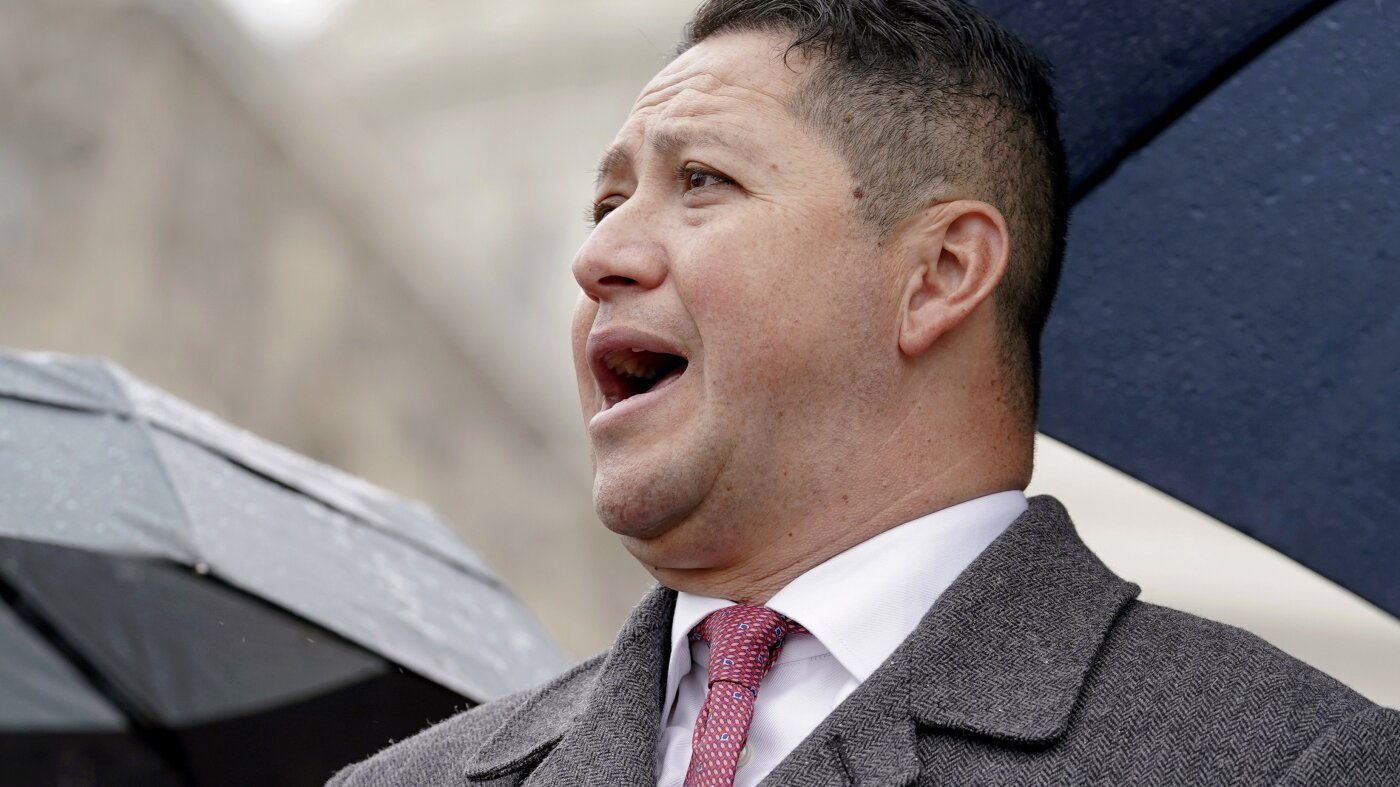
GOP Rep. Tony Gonzales of Texas ends reelection bid after admitting to affair with aide

Utah Blanks Philadelphia, 3-0 | Utah Mammoth

Friends, family rally behind Vermont veteran charged with domestic terrorism

Florida High School Football Rankings: Top 25 teams – Oct. 21

Cleary's 21 help Le Moyne down Central Connecticut State 69-64 in OT

How old is Bo Nix? What to know about Oregon quarterback ahead of 2024 NFL Draft

99th annual Pony Swim held in Virginia

Indiana Members Credit Union announced as new anchor tenant at Bottleworks District

DOJ continues Biden autopen probe despite former president unlikely to face charges
Fact check: Did French border guards mock influencers returning from Dubai amid Iran war?

Iran’s fight for survival / The widening war / Trump’s nebulous goals : Sources & Methods

Map: 4.9-Magnitude Earthquake Shakes Louisiana

Paxton vows he’s ‘staying in this race’ even if Trump backs Cornyn in Texas GOP clash
-

 World1 week ago
Exclusive: DeepSeek withholds latest AI model from US chipmakers including Nvidia, sources say
-

 Wisconsin4 days ago
Setting sail on iceboats across a frozen lake in Wisconsin
-

 Massachusetts1 week ago
Mother and daughter injured in Taunton house explosion
-

 Maryland5 days ago
AM showers Sunday in Maryland
-

 Massachusetts3 days ago
Massachusetts man awaits word from family in Iran after attacks
-

 Florida5 days ago
Florida man rescued after being stuck in shoulder-deep mud for days
-

 Denver, CO1 week ago
10 acres charred, 5 injured in Thornton grass fire, evacuation orders lifted
-

 Oregon7 days ago
2026 OSAA Oregon Wrestling State Championship Results And Brackets – FloWrestling