Midwest
Governor denies clemency for Missouri double homicide convict who sexually assaulted cousin's corpse

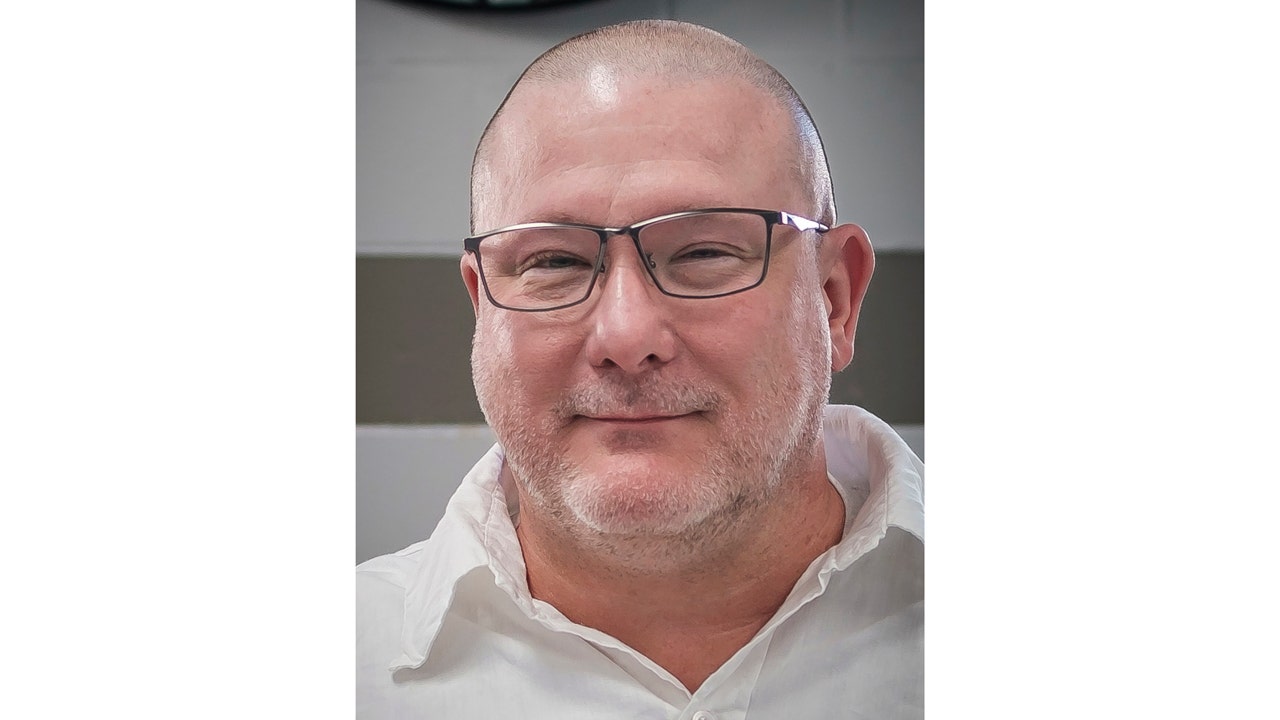
- Republican Missouri Gov. Mike Parson on Monday denied clemency for death row inmate Brian Dorsey, who is scheduled to be executed Tuesday.
- Dorsey, 52, is convicted of the 2006 killings of Ben and Sarah Bonnie, the latter of whom was his cousin. Dorsey sexually assaulted Sarah Bonnie’s corpse after killing her.
- “Governor Parson has chosen to ignore the wealth of information before him showing that Brian Dorsey is uniquely deserving of mercy,” Dorsey’s attorney, Megan Crane, said in a statement. “Brian has spent every day of his time in prison trying to make amends for his crime, and dozens of correctional officers have attested to his remorse, transformation, and commitment to service.”
Missouri Gov. Mike Parson on Monday denied clemency for Brian Dorsey one day before the inmate’s scheduled execution for killing his cousin and her husband nearly two decades ago.
The governor’s decision is “devastating,” said Megan Crane, Dorsey’s attorney, in an email. The clemency petition included requests from 72 current and former corrections officers who vouched for Dorsey’s rehabilitation while behind bars, as well as support from a former Missouri Supreme Court justice and others.
“Governor Parson has chosen to ignore the wealth of information before him showing that Brian Dorsey is uniquely deserving of mercy,” Crane said in a statement. “Brian has spent every day of his time in prison trying to make amends for his crime, and dozens of correctional officers have attested to his remorse, transformation, and commitment to service.”
MISSOURI DEATH ROW INMATE COULD RECEIVE ‘SURGERY WITHOUT ANESTHESIA’ IF NO SUITABLE VEIN FOUND, ATTORNEYS SAY
Parson has never granted a clemency request as governor. His office didn’t immediately respond to requests for comment.
An appeal focused on Dorsey’s record of good record of behavior is still pending before the U.S. Supreme Court. Another appeal to the High Court says his life should be spared because his trial lawyers were paid a $12,000 flat fee that provided them with no incentive to invest time in his case. On their recommendation, Dorsey pleaded guilty despite having no agreement with prosecutors that he would be spared the death penalty.
Dorsey, 52, formerly of Jefferson City, was convicted of killing Sarah and Ben Bonnie on Dec. 23, 2006, at their home near New Bloomfield. Prosecutors said that earlier that day, Dorsey called Sarah Bonnie seeking to borrow money to pay two drug dealers who were at his apartment.
Dorsey went to the Bonnies’ home that night. After they went to bed, Dorsey took a shotgun from the garage and killed both of them before sexually assaulting Sarah Bonnie’s body, prosecutors said.
A photo released by the Federal Public Defender, shows inmate Brian Dorsey at the Potosi Correctional Center, Washington County, Missouri. Dorsey is scheduled to be executed Tuesday, April 9, 2024, for killing two people in 2006. (Jeremy Weis, Federal Public Defender via AP)
Sarah Bonnie’s parents found the bodies the next day. The couple’s 4-year-old daughter was unhurt.
Attorneys for Dorsey said he suffered from drug-induced psychosis at the time of the killings. In prison, he’s gotten clean, they said.
“The Brian I have known for years could not hurt anyone,” one officer wrote. “The Brian I know does not deserve to be executed.”
In a letter to Parson as part of the clemency petition, former Missouri Supreme Court Justice Michael Wolff wrote that he was on the court when it turned aside an appeal of his death sentence in 2009. Now, he says, that decision was wrong.
“Missouri Public Defenders now do not use the flat fee for defense in recognition of the professional standard that such an arrangement gives the attorney an inherent financial conflict of interest,” Wolff wrote.
Meanwhile, the Missouri Department of Corrections is taking measures to reduce Dorsey’s risk of suffering during the execution. A settlement filed Saturday ends a federal lawsuit that said Dorsey could face tremendous pain if required to undergo what’s known as a cutdown procedure to find a suitable vein for injection of the lethal dose of pentobarbital.
Dorsey is described as obese, has diabetes and is a former intravenous drug user — all factors that could make it more difficult to find a vein for injection, his lawyers have said. A cutdown procedure involves an incision that could be several inches wide, then the use of forceps to pull apart tissue to get to a vein.
Missouri’s execution protocol includes no provision for anesthetics. Attorneys for Dorsey had argued that without a local anesthetic, Dorsey could be in so much pain that it would impede his right to religious freedom in his final moments by preventing him from having meaningful interaction with his spiritual adviser, including the administration of last rites.
The settlement doesn’t spell out the specific changes agreed to by the state, or if anesthetics would be used if a cutdown procedure is necessary. A spokeswoman for the corrections department declined comment on Monday.
Read the full article from Here


MILWAUKEE — It’s well known that Milwaukee is famous for beer, brats, the Bucks, and the Brewers. But let’s put some respect on the comedy scene here.
The Laughing Tap features weekly stand-up performances with nationally touring acts. They opened up their new venue at 761 N. Jefferson St. in Milwaukee back in March.
Since then, they’ve had dozens of acts perform. Now, they are putting on a new type of comedy show, The Milwaukee Comedy Challenge.
According to the website, the challenge is: “A friendly battle of wits with over $2000 in Cash Prizes, more than 2.5 hours of Paid Gigs awarded, and the chance to challenge yourself to be the best comic you can be. This isn’t about competing with your fellow comics, it’s about challenging yourself to write great material, get bigger laughs, and become a better comic.”
The first round has finished. The challenge continues on July 22 with the start of the second round. The remaining 20 comics will perform a four-minute set. Only 10 will make it to the next round. There will be four more rounds afterwards. In the finals, comics will have to perform 20-minute sets with completely new jokes. The winner will be receive a paid headliner gig at The Laughing Tap, a spot in the 2026 Milwaukee Comedy Festival, and $1,000.
If you think you’re pretty funny, you can get on stage for The Laughing Tap’s weekly stand-up open mic on Wednesdays at 6 p.m. Every aspiring comic gets about three to four minutes.
Milwaukee comedy club The Laughing Tap hosting comedy challenge
Let’s talk:
Hey there! At TMJ4 News, we’re all about listening to our audience and tackling the stuff that really matters to you. Got a story idea, tip, or just want to chat about this piece? Hit us up using the form below. For more ways to get in touch, head over to tmj4.com/tips.
It’s about time to watch on your time. Stream local news and weather 24/7 by searching for “TMJ4” on your device.
Available for download on Roku, Apple TV, Amazon Fire TV, and more.
Report a typo or error // Submit a news tip

People pack the overflow room outside the Minneapolis City Council chambers on Thursday in opposition to a controversial police drone proposal that would have contracted with the company Skydio, which also has sold drones to Immigration and Customs Enforcement and the Israeli military.
Cait Kelley | MPR News

INDIANAPOLIS (WISH) — A business owner on Thursday said programs like Indiana’s now-discontinued Supplier Diversity Program get minority-owned businesses into the room.
Pierre Dunn owns DC One Connect, a construction contractor already certified as a minority-owned business by the city of Indianapolis.
Dunn says that certification helped him get a $3.5 million contract for the new IU Health patient care tower, among other projects. He said he was scheduled for an interview with the Indiana Department of Administration on Wednesday afternoon to get a state-level minority business certification. He learned early Wednesday morning that the interview was canceled.
“I gave him a call, and he said at this point, I was told to cancel all interviews,” Dunn said of his conversation with the person he was supposed to interview with. “And it was pretty quiet, and he said that’s all he could say at this point. It was shocking.”
An order from Gov. Mike Braun, issued Tuesday, backed up by an opinion from Attorney General Todd Rokita released the following day, ended Indiana’s Supplier Diversity Program in favor of a new Indiana Small Business Program, which is directed “to promote and facilitate the use of qualified Indiana small businesses in state procurement.”
Under the old program, the state had a goal of awarding 8% of state contracts to minority-owned businesses, 10% to women-owned businesses, and 3% to veteran-owned businesses.
The Indiana Department of Administration told “News 8” Indiana that it had 1,136 certified minority business enterprises and 1,509 certified women business enterprises. Certified businesses held more than $12.2 billion in state contracts. The Mid-States Minority Supplier Development Council said businesses it has certified generate nearly $9.5 billion in revenue each year and support more than 32,000 jobs.
Dunn says the value of programs like the Supplier Diversity Program is that they get people like him into the conversation when it comes time to bid on projects.
“They want to walk in a room with confidence that this is where I belong, I have a shot,” Dunn said. “It speaks more to the confidence of putting your name in the hat. And that changes communities. It encourages communities.”
Braun administration officials have said most minority-owned businesses will likely be eligible for the new small business program and, unlike the previous program, will have the opportunity to serve as prime contractors on state projects rather than subcontractors. The governor on Wednesday said his order aligns the state with recent Supreme Court rulings.
“I think this gives more freedom for anyone at the end of the scale, where you’re a small business, to be able to now be in a place to benefit from it,” he said. “It’s just getting us into a place where we won’t be handicapped by something that got confusing and no longer, probably, has currency.”
Dunn said the governor’s order reflects someone who has not had the same lived experiences as a minority business owner. He said he thinks the new small business program sounds good in theory and probably will still lead to state contracts for minority-owned businesses, but the governor will have to market the new program to minority-owned businesses.
“He could always come to my office, and we can go to those outreaches together and see how that participation, that campaign works out,” he said. “Let’s roll it out and see. It sounds great in theory, but practically, does it work? What he needs to understand is that it’s effective. When minority businesses are given the opportunities with a local, other local businesses, it changes our community.”
The governor’s order suspends all active and pending certifications but leaves state contracts in effect. Agencies are directed to continue to follow the terms of those contracts.
-

 Miami, FL3 minutes ago
Miami Dolphins Fans Vs. The Media
-

 Boston, MA9 minutes ago
Man who allegedly shot at Boston Police officers arrested after foot chase in Dorchester
-

 Denver, CO15 minutes ago
Swan, dragon and duck boats are back pedaling around City Park
-

 Seattle, WA21 minutes ago
Ticket Alert: Thundercat, Michelle Branch, and More Seattle Events Going On Sale This Week – The Stranger
-

 San Diego, CA27 minutes ago
EXCLUSIVE: Ignition Press Welcomes eBay Live & Revenge Of to San Diego Comic-Con Ignition Pavilion
-
Milwaukee, WI33 minutes ago
Milwaukee comedy club The Laughing Tap hosting stand-up challenge
-

 Atlanta, GA39 minutes ago
Georgia couple spots black bear on their front porch
-

 Minneapolis, MN45 minutes ago
Minneapolis City Council rejects police drone contract with controversial Skydio

