Detroit, MI
14-year-old runaway twins from Detroit found with 30-year-old man in hotel


Runaway Detroit twins found with man in hotel
14-year-old twins were recently located by police after going missing for one month. A stolen debit card number that was reported out of Nebraska led police to an Allen Park hotel, where the sisters were found with a 30-year-old man.
ALLEN PARK, Mich. (FOX 2) – When police located twin sisters who had run away from home one month ago, they found them with a 30-year-old man with a criminal background – in a hotel in Allen Park.
The 14-year-old twins were reported missing by their father on March 8, after they failed to return to their home in the 1800 block of Robson Street in Detroit. Detroit police announced that the sisters were recovered and reunited with family on April 8.
A debit card number that was reported stolen out of Nebraska led police to the Comfort Inn off I-95 in Allen Park, where the sisters were found with Highland Park resident Marcus Peoples.
The stolen debit card information was used by Peoples to buy the hotel room that the twins were staying in, according to police.
The card belonged to a Nebraska teenager named Abigale, who got an alert text from her bank. She immediately told her mother, who then called the hotel and the Allen Park Police Department.
“I didn’t know that it was bigger than what it is until yesterday, and it was quite the shock – to say the least,” said Megan McQuain, Abigale’s mother.
One of the officers on the scene just happened to recognize the missing twins because he had dealt with them prior.
Before the girls were found, their father, George Ogden, told FOX 2 they had left home without permission before. The two previously ran away while visiting their grandmother in River Rouge – and while Ogden was able to bring them back home, they took off again without their cell phones only one day later.
Detroit runaway twins, missing for one month, were found in a hotel in Allen Park with 30-year-old Marcus Peoples.
Newly released body-camera video from Allen Park police shows when the twins were found on April 8.
“I know who you guys are, and I know who’s looking for you, okay? And we’re going to have to solve that tonight,” one of the officers can be heard saying in the released footage.
When asked why they ran away from home, one of the girls told police, “don’t worry about it, it. That’s none of your business.”
The sisters also told police that they did not know Peoples, and that he only bought the room for them so they had somewhere to stay.
The suspect claimed that his brother sent him the card information, and he didn’t know that it was stolen, according to the body-camera video.
Peoples was charged with fraud, using a stolen credit card, and harboring missing juveniles, according to police. His bond was set at $150,000.
“If you see something, say something because if we wouldn’t have checked on our credit cards right then and there, and if I would’ve just waited until the next day, it would’ve been, maybe, too late,” McQuain said. “You just never know.”



The Michigan Wolverines are the last Michigan team standing in college hockey as both Western Michigan and Michigan State lost in the round of eight.
Michigan will face Denver, while Wisconsin and North Dakota face off in the other semi-final game this week.


No Kings protesters march down Woodward Ave. in Detroit
Hundreds of protesters take Woodward Ave. to protest the Trump administration on March 28, 2026 as part of the No Kings day of action.
For some passersby in Detroit, the thousands of people who took to the streets on Saturday, March 28, to denounce President Donald Trump and his administration’s policies were a comfort. To others, they were an annoyance or worse.
But across the state, protesters sought to catch their eye and share with each other encouragement and concerns on the third so-called No Kings Day in a year protesting the president.
Crowds gathered in Holland, Adrian, West Bloomfield and Lansing. One sign in Ann Arbor read, “I’m tired of this, Grandpa,” and one in Battle Creek read, “End The War.” In Romulus, politicians rallied against the potential for an immigration detention center to be built there, and in Dearborn, a lawyer once detained by such agents called for the dismantling of their department. In Detroit, a teacher described the empty chairs of detained students, and a mother held up a painting of an explosion taking place in front of a child, symbolic of American military actions.
In a statement released ahead of the protests, White House spokeswoman Abigail Jackson made little of the efforts.
“The only people who care about these Trump Derangement Therapy Sessions are the reporters who are paid to cover them,” she said.
Onlookers, politicians and participants weighed in during conversations with the Free Press.
Onlookers
Jackee Oliver, 37, of Detroit, made her way back from her neighborhood store with her mom and 11-year-old daughter sporting stickers that read, “I Stood Up For Democracy Today,” and included a symbol of a crossed-out crown.
They’d been running their errand when they passed through the No Kings gathering about 11 a.m. on the east side of Detroit bordering Grosse Pointe on Mack Avenue between Cadieux and Neff roads. Oliver said she didn’t realize the protest was happening but hoped to come back out to join.
It was “a good thing,” she said, with her mom, Devita Williams, 58, of Ypsilanti, adding her thoughts on the Trump administration: “I’d like to get them all out the White House.”
Community members eyeing the crowd of roughly 200 people who marched through their Southwest Detroit neighborhood west of Clark Park on Saturday afternoon offered differing takes on the matter.
One man, translated by his nephew, said it was good and should be everywhere. Another said the group probably didn’t live in Southwest Detroit. Still others called it awesome or said the group should take their protest elsewhere.
In downtown Detroit, as at least a couple of thousand protesters marched along Woodward Avenue, several people headed to see the band the Black Label Society at The Fillmore said they got stuck in backups because of the march.
Shawn Roy, 49, drove from the Lansing area on his birthday with his son for that concert, he said while stuck behind a police SUV blocking Woodward for the marchers.
Roy is a Trump supporter but said he didn’t take issue with people using their right to protest. He just didn’t think their tactic was reasonable with so many events in town.
“This wouldn’t sway my mind even if I was on the fence,” he said.
Shortly thereafter, as the marchers started to depart, Milan Anderson-Whitfield, 19, of Northville, strolled up with her teenage little sister to see a group of drummers still playing and learn more. She held a sign she’d been given that read, “Keep your theology off my biology.”
She was tearing up as she spoke to a Free Press reporter, she said.
She’s anti-Trump. Seeing the gathering means a lot when you “don’t have anyone to talk to about this,” she said.
Elsewhere in the region, U.S. Rep. John James, a GOP candidate for governor, attended the Michigan Republican Party endorsement convention and called the demonstrations “just another manifestation of Trump Derangement Syndrome.”
War, immigration, high costs and hope
Speakers across three rallies in Detroit spoke about not giving into despair, how immigration enforcement is causing harm in their view, their concern for voting rights, and how they disagree with Trump’s moves to attack Iran, remove Venezuela’s leader and to eye Cuba as “next.”
Speakers called for local policy change too. Faith leaders spoke, as did union members, activists and politicians such as Lt. Gov. Garlin Gilchrist II, a Democrat who is a candidate for Michigan secretary of state, and U.S. Rep. Rashida Tlaib, D-Detroit.
In Clark Park, with more than 600 people listening, speakers called for Detroit police to release unedited video in use of force situations. They also called for college and city institutions to divest from businesses with ties to Israel.
The fight for immigrant rights and the fight against wars are interrelated, said Daniel Weber Alatorre of the Wayne State University chapter of Students for a Democratic Society.
“We create atrocities over there, immigrants come here and we beat them,” he told the crowd.
As those from the Clark Park rally marched, they chanted, “Trump wants war, Trump wants oil, hands off Iranian soil.”
As those at Detroit’s downtown Grand Circus Park marched later in the day, they chanted, “Hey, hey, ho, ho, Donald Trump has got to go.”
Before the start of that rally, Rubina Javed, 60, of Warren, held up a painting her daughter had made. It showed a child looking out at the site of an explosion, an apparent bombing of sorts. It represents Iran, Lebanon and beyond, and Trump lied when he campaigned on no wars, she said.
“We don’t need bombing,” Javed said. “We want peace, dignity and love.”
She urged others to join the cause of protesting Trump, saying more voices can make change.
Kristen Schoettle, who said she works as an English as a second language teacher at Western International High School in Detroit, also told the crowd to act after sharing her story of five students being taken by immigration agents. It’s harmed fellow students, too, she said.
She called on people to push back against police cooperation with immigration agents or do whatever else they can, whatever that may look like.
Metro Detroit protests
Robin Gillis and her husband, Michael, both 73, of West Bloomfield, braved the cold in their town with temperatures in the 20s and a dusting of snow on the ground to talk about the Iran war, the economy, worry for upcoming elections, and the president’s imperious tone.
“He likes to label people so he can denigrate them, humiliate them, and make them feel less important,” said Michael Gillis, who was among more than 100 people out on Orchard Lake Road.
In Macomb County, Susan Diliberti, 69, of Clinton Township, walked among hundreds in Sterling Heights with a sign saying “juntos somos América” on one side with the translation “together we are America” on the other.
She came out to the protest at Hall and Schoenherr roads because she’s worried about future generations and wants to fight for everyone to have the right to accessible, quality public education, universal healthcare and the environment, she said.
“I’m hoping that we’re going to have hope to move into something that is even better than what we had before all the chaos happened,” Diliberti said.
The war in the Middle East affects many Dearborn residents with loved ones overseas, said Dearborn Democratic Club recording secretary Diane Hall.
Her group organized the No Kings gathering of about 300 people Saturday at the Henry Ford Centennial Library in Dearborn. It featured speakers from Arab Americans for Progress and the ACLU of Michigan, among others.
“This is hitting hard for the people in Dearborn, and we want to be able to show our support, but also express our rage, and our grief, and our optimism, that we can come together, elect candidates that will stand up against the war, stand up against the regime, and make the pain stop,” Hall said. “So, it’s political, but it’s also moral for us. It’s life. It’s a question of life and death.”
A site of controversy
Bubbles floated in the air, music played and an organizer handed out chalk for demonstrators to leave messages for immigration agents at a Romulus No Kings protest.
By 3:30 p.m. roughly 300 people had made it out to the event at the site of 7525 Cogswell St., a property the U.S. Department of Homeland Security purchased with plans to make it a detention facility.
Demonstrators of all ages joined local politicians including U.S. Rep. Shri Thanedar, D-Detroit, and Washtenaw County Prosecutor Eli Savit at the rally. Tlaib made an appearance in Romulus, at least her third protest of the day, along with U.S. Rep. Debbie Dingell, D-Ann Arbor, and Wayne County Commissioner Allen Wilson.
The Romulus protest differed from some others in Michigan because it demands specific, local, achievable action, said Chris Boyd, a member of organizing group Coalition to Shut the Camps.
Boyd said the recently developed group has already sent letters to companies and governmental organizations that would need to approve utilities for the facility.
His group has asked those institutions not to collaborate with the facility and more, and will hold those institutions accountable, he said.
There isn’t a clear timeline for the detention center’s construction. DHS officials previously said the facility’s construction and operation would lead to more than 1,400 jobs and create millions in tax revenue. On March 24, Michigan Attorney General Dana Nessel and Romulus officials announced they are suing DHS to prevent the opening of the planned facility.
Boyd said many protests show solidarity with groups being harmed by ICE, but few explore strategies to prevent people from being harmed. He said it’s going to take a shift to preventative strategies to stop harm.
“It’s not bad but it’s not sufficient,” Boyd said. “It’s OK to bring moms from Ann Arbor to go hang out with each other and hang out in the park and sing protest songs. That’s beautiful. It’s wonderful. It doesn’t change our outcomes. So we have to come up with other strategies that are sufficient and I think that’s what this is an example of.”
That said, he called the collective No Kings protests a powerful message and said the energy of such actions often fuel the practical work that follows.
Staff writer Paul Egan contributed to this story.
Detroit, MI
Ken Roczen wins second race of 2026 in Detroit, Hunter Lawrence crashes and loses points lead

DETROIT, Michigan: Ken Roczen won the second race of the 2026 season at Ford Field in Detroit, Michigan, as Hunter Lawrence and Eli Tomac struggled. With this victory, Roczen is firmly in championship contention with a 14-point gap to the leader.
Chase Sexton secured second in his first race back after suffering an injury in a practice crash prior to Daytona. Sexton continued to get stronger during each session as he climbed his way through the ranks.
Malcolm Stewart secured his first podium of the season one week after getting his first top-five in Birmingham.
Justin Cooper stole a point from Tomac in the closing laps, but Tomac’s fifth-place finish along with Lawrence’s problems gave him the championship lead by four.
Tomac had to fight hard to stay in the top five as Cooper Webb challenged on the white flag lap. Webb crossed under the checkered flag in sixth.
450 Feature Results
In-Race Notes
Jorge Prado has been hot on the gate drop and he earned another holeshot in Detroit.
Meanwhile, Lawrence and Tomac both got poor starts and had to come through the field together.
Roczen stole the lead from Prado on Lap 2, bringing Webb with him.
Webb crashed with Prado and handed second to Sexton.
Incredibly, Lawrence was up to third on Lap 3; Tomac was fifth and gradually losing contact with the points leader. Tomac cannot afford to lose any more ground to Lawrence.
Stewart was the man in the middle of the two points challengers.
Webb settled into eighth. Prado fell to 14th.
Tomac was five seconds behind Lawrence at the halfway mark.
Dylan Ferrandis was in seventh on Lap 7. He was also returning from injury along with Sexton this week.
Lawrence crashed on Lap 10, hurting his bike in the crash. Lawrence had a 12-point lead at the time. Lawrence had not finished worse than fourth all year and was second or better in all but two races.
With the incident, Tomac moved up to fourth in the running. Lawrence was 19th at the time. This would give Tomac the points lead.
Lawrence had to pull into the mechanics area to replace his front wheel.
Roczen was in command of the race on Lap 15.
Tomac didn’t have the pace to fully take advantage of Lawrence’s crash and lost fourth to Cooper on Lap 18.
Roczen finished 7.8 seconds ahead of Sexton.

Hail, damaging winds possible late Monday, all day Tuesday for Southeast Michigan

‘That comes with a price tag’: How snow removal is busting town budgets – The Boston Globe

April Snowflakes Expected Across Central Minnesota And Western Wisconsin This Week

When will you get your April 2026 SSI check in MS? See payment schedule

The 3rd Hour of TODAY Is Heading to Springfield, Missouri. Here’s How To Join Us

Florida High School Football Rankings: Top 25 teams – Oct. 21

How old is Bo Nix? What to know about Oregon quarterback ahead of 2024 NFL Draft

Cleary's 21 help Le Moyne down Central Connecticut State 69-64 in OT

99th annual Pony Swim held in Virginia

Indiana Members Credit Union announced as new anchor tenant at Bottleworks District

Video: Iran to Allow More Oil Ships Through Strait of Hormuz, Trump Says

Dem senator warns deportation could let Virginia woman’s illegal immigrant killer ‘escape accountability’

Newsletter: G7 ministers to hold talks on war’s economic fallout
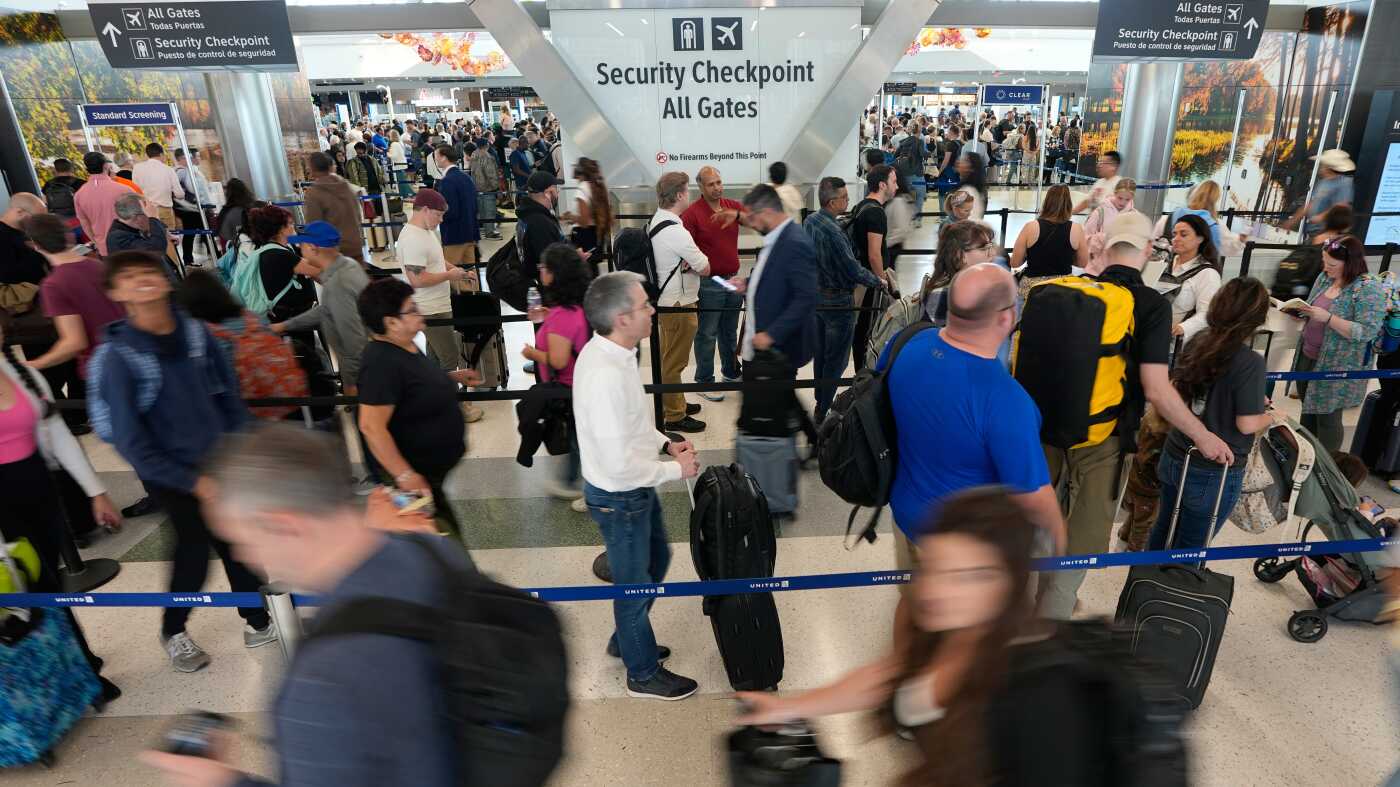
ICE officers could remain at airports after TSA workers are paid

Scathing report claims nation’s oldest labor union ‘betrayed’ MAGA members through ‘shocking’ spending
-

 Sports1 week ago
IOC addresses execution of 19-year-old Iranian wrestler Saleh Mohammadi
-

 Miami, FL4 days ago
Jannik Sinner’s Girlfriend Laila Hasanovic Stuns in Ab-Revealing Post Amid Miami Open
-

 New Mexico1 week ago
Clovis shooting leaves one dead, four injured
-

 Politics1 week ago
Schumer gambit fails as DHS shutdown hits 36 days and airport lines grow
-

 Tennessee7 days ago
Tennessee Police Investigating Alleged Assault Involving ‘Reacher’ Star Alan Ritchson
-

 Minneapolis, MN4 days ago
Boy who shielded classmate during school shooting receives Medal of Honor
-

 Science1 week ago
Record Heat Meets a Major Snow Drought Across the West
-

 Technology1 week ago
YouTube job scam text: How to spot it fast