Midwest
Comer to say Tim Walz ‘enabled fraud,’ failed whistleblowers in bombshell Minnesota hearing

NEWYou can now listen to Fox News articles!
House Oversight Committee Republicans are readying to confront Minnesota Gov. Tim Walz and state Attorney General Keith Ellison at a high-stakes hearing on welfare fraud Wednesday morning.
“While Governor Walz hesitated, taxpayers lost billions. Attorney General Ellison has likewise claimed his office was aggressively holding fraudsters accountable, but when his statements were tested against the record, they fell apart,” Chairman James Comer, R-Ky., will say, according to prepared opening remarks obtained by Fox News Digital.
“We have spoken with over thirty whistleblowers, many of them current employees and Democrats, who say they were ignored, retaliated against, and even surveilled for raising concerns. Instead of protecting the whistleblowers, the Walz administration protected the system that enabled fraud.”
Hours before the hearing kicked off, the committee released a 53-page report that accused both Walz and Ellison of knowing about the fraud allegations far earlier than previously thought.
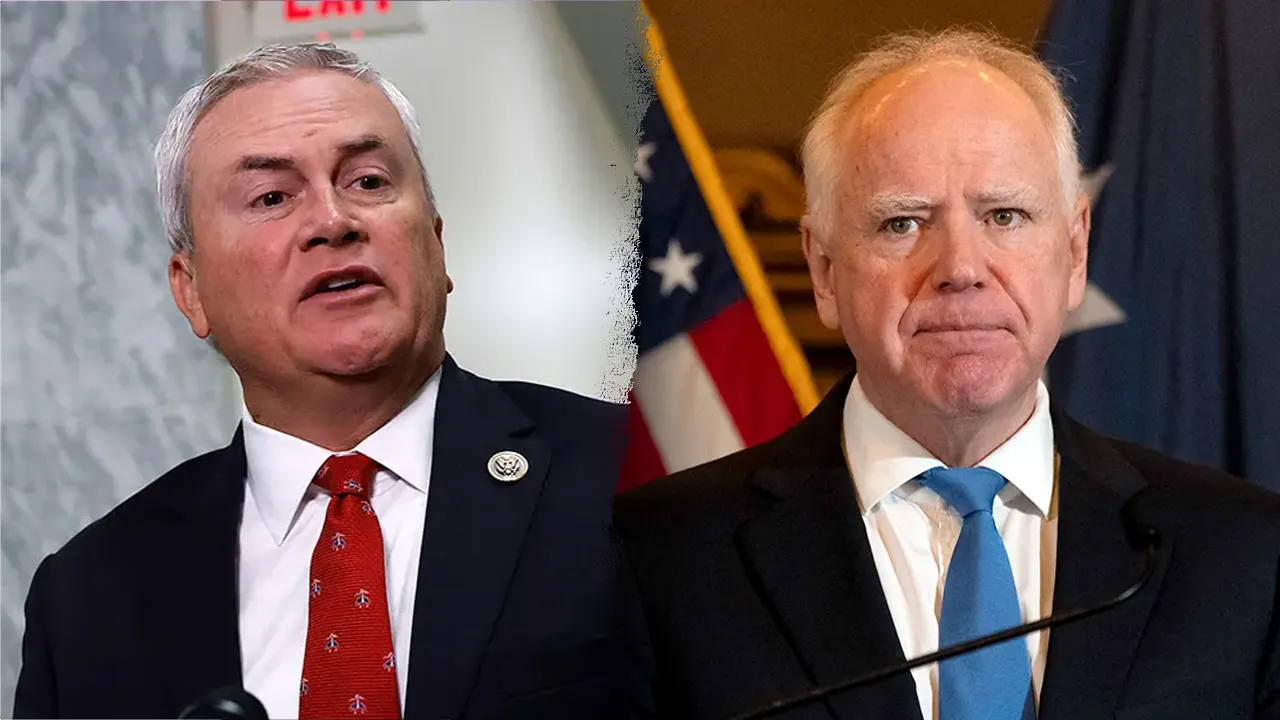
House Oversight Committee Chairman James Comer accused Minnesota Gov. Tim Walz of retaliating against whistleblowers who tried to bring attention to fraud in Minnesota. (Kevin Dietsch/Getty Images; Jerry Holt/The Minnesota Star Tribune via Getty Images)
“While the Committee continues to review documents and meet with whistleblowers, it is evident that Governor Walz and Attorney General Ellison knew about the fraud in federal programs administered by the State of Minnesota much earlier than they told the American people,” the report said.
“Transcribed interviews with current and former public officials from the State of Minnesota have confirmed that Governor Walz and Attorney General Ellison would have been aware of fraud in the [Child Care Assistance Program (CCAP)] and high-risk Medicaid programs administered by DHS as early as spring 2019 and fraud in [state food aid] programs administered by [the Minnesota Department of Education] as early as April 2020.”
Both Walz and Ellison previously pushed back on any accusations that they knowingly allowed fraud in Minnesota’s social programs and have accused Republicans of politicizing the situation.
TREASURY SECRETARY ANNOUNCES CASH REWARDS FOR MINNESOTA FRAUD WHISTLEBLOWERS
The high-profile hearing is the culmination of a monthslong probe by the House Oversight Committee targeting allegations of fraud in Minnesota.
The panel previously interviewed current and former officials within the state’s government, including those focused on food aid.
Minnesota Attorney General Keith Ellison testifies before the Senate Homeland Security and Governmental Affairs Committee on Feb. 12, 2026. (Graeme Sloan/Bloomberg via Getty Images)
Federal prosecutors in Minnesota have charged multiple people with stealing more than $240 million from the Federal Child Nutrition Program through the Minnesota-based nonprofit Feeding Our Future. However, the probe has since widened to multiple state-run programs being investigated for potential fraud. Childcare providers receiving state funding, mainly within the Somali community, are also under scrutiny.
WALZ SLAMS TRUMP ADMIN FOR TEMPORARILY HALTING MEDICAID FUNDING TO MINNESOTA: ‘CAMPAIGN OF RETRIBUTION’
And the committee’s report accused the state’s progressive leadership of ignoring evidence of fraud in a bid to appease the Somali community in Minneapolis.
“The Committee has found that Minnesota lacked adequate oversight efforts to verify that taxpayer dollars were being used appropriately and could have stopped the flow of money to fraudsters at any time but chose not to for fear of political retribution from the politically active Somali community,” the report said.
“Further legislative efforts at the federal level are necessary to prevent this massive waste, fraud, and abuse of federal dollars from ever happening again.”
In his opening statement, Comer will call the scandal “one of the most extensive breakdowns of oversight this Committee has ever examined.”
“Billions of taxpayer dollars were stolen from social services programs while warnings piled up, whistleblowers spoke out, and state officials chose delay and denial over action,” he will say.
“Federal prosecutors estimate that as much as $9 billion may have been stolen from just fourteen Medicaid programs administered by the State of Minnesota. As our investigation has shown, it happened because state leadership failed, repeatedly, to intervene. What we’ve uncovered in Minnesota is not a paperwork error or a few bad actors slipping through the cracks. It is a sustained failure of leadership.”
CLICK HERE TO DOWNLOAD THE FOX NEWS APP
Meanwhile, Democrats on the committee have accused Comer of trying to distract from the fallout of President Donald Trump’s immigration crackdown in Minneapolis — including the killing of two U.S. citizens by federal agents.
“I encourage folks to watch those videos and see what’s happened for themselves. And I’m hopeful that this committee investigates this incident and that we have full accountability,” Rep. Robert Garcia, D-Calif., said during a previous hearing on Minnesota fraud.
Related Article

Read the full article from Here



Manuel Franco claims his $768 million Powerball jackpot
Manuel Franco, 24, of West Allis was revealed Tuesday as the winner of the $768.4 million Powerball jackpot.
Mark Hoffman, Milwaukee Journal Sentinel
The Wisconsin Lottery offers multiple draw games for those aiming to win big.
Here’s a look at July 17, 2026, results for each game:
Winning Mega Millions numbers from July 17 drawing
22-34-45-48-55, Mega Ball: 14
Check Mega Millions payouts and previous drawings here.
Winning Pick 3 numbers from July 17 drawing
Midday: 2-5-2
Evening: 8-9-4
Check Pick 3 payouts and previous drawings here.
Winning Pick 4 numbers from July 17 drawing
Midday: 7-7-7-1
Evening: 7-1-5-1
Check Pick 4 payouts and previous drawings here.
Winning All or Nothing numbers from July 17 drawing
Midday: 03-06-07-08-09-10-13-17-18-21-22
Evening: 02-04-06-12-13-17-18-19-20-21-22
Check All or Nothing payouts and previous drawings here.
Winning Badger 5 numbers from July 17 drawing
03-04-22-23-26
Check Badger 5 payouts and previous drawings here.
Winning SuperCash numbers from July 17 drawing
12-23-24-25-26-33, Doubler: N
Check SuperCash payouts and previous drawings here.
Feeling lucky? Explore the latest lottery news & results
Are you a winner? Here’s how to claim your lottery prize
- Prizes up to $599: Can be claimed at any Wisconsin Lottery retailer.
- Prizes from $600 to $199,999: Can be claimed in person at a Lottery Office. By mail, send the signed ticket and a completed claim form available on the Wisconsin Lottery claim page to: Prizes, PO Box 777 Madison, WI 53774.
- Prizes of $200,000 or more: Must be claimed in person at the Madison Lottery office. Call the Lottery office prior to your visit: 608-261-4916.
Can Wisconsin lottery winners remain anonymous?
No, according to the Wisconsin Lottery. Due to the state’s open records laws, the lottery must, upon request, release the name and city of the winner. Other information about the winner is released only with the winner’s consent.
When are the Wisconsin Lottery drawings held?
- Powerball: 9:59 p.m. CT on Monday, Wednesday, and Saturday.
- Mega Millions: 10:00 p.m. CT on Tuesday and Friday.
- Super Cash: 9:00 p.m. CT daily.
- Pick 3 (Day): 1:30 p.m. CT daily.
- Pick 3 (Evening): 9:00 p.m. CT daily.
- Pick 4 (Day): 1:30 p.m. CT daily.
- Pick 4 (Evening): 9:00 p.m. CT daily.
- All or Nothing (Day): 1:30 p.m. CT daily.
- All or Nothing (Evening): 9 p.m. CT daily.
- Megabucks: 9:00 p.m. CT on Wednesday and Saturday.
- Badger 5: 9:00 p.m. CT daily.
That lucky feeling: Peek at the past week’s winning numbers.
Feeling lucky? WI man wins $768 million Powerball jackpot **
WI Lottery history: Top 10 Powerball and Mega Million jackpots
This results page was generated automatically using information from TinBu and a template written and reviewed by a Wisconsin editor. You can send feedback using this form.

Gunfire erupted Friday during a funeral on Detroit’s west side, leaving five people injured, including the suspect.
At about 5:48 p.m., a physical fight broke out during a funeral at Greater Love Tabernacle Church on Plymouth Road, south of Interstate 96 on the city’s west side, authorities said.
During the fight, one suspect produced a handgun and fired into the crowd, striking multiple people, authorities said.
Officers were already stationed in the area, assigned to assist at a separate visitation at a nearby funeral home after police received threats of violence during that event. One officer who responded to the church in response to the fight saw the shooting and returned fire, striking the shooter.
“I want to thank the Detroit Police Department for the officer’s quick and courageous action, which prevented further harm,” Mayor Mary Sheffield said in a statement late Friday. “This was an act of senseless violence, and it has no place in our city.”
In total, five people were struck, including the suspect, police said. All were hit in the lower part of their body and were hospitalized with non-life-threatening injuries.
Police called the shooting an “isolated incident” and said there was no ongoing threat to the public.
Authorities said four of the injured parties were in their mid-20s, including the suspect. The other victim was in their mid-30s.
Sheffield said the funeral was for a young man who had died in a car crash.
“My thoughts are with them, their families, and everyone affected. I am grateful that all of the victims are expected to survive,” the mayor said.
The suspect was taken into police custody and police recovered the firearm, authorities said.
Police were not sure why the combatants were initially fighting at the church.
Anyone with information is asked to contact Detroit Crime Stoppers at 1-800-SPEAK-UP.
mreinhart@detroitnews.com

When will wildfire smoke leave Wisconsin?
Let’s clear the haze on exactly how smoke from Canadian wildfires is affecting air quality in Wisconsin. Here are answers to common questions.
A 12-year-old was shot and injured during the afternoon of July 17, and Milwaukee police are asking the public for information.
The shooting happened around 6:35 p.m. on the 5600 block of North 60th Street, according to the Milwaukee Police Department. The child was injured and transported to a local hospital for treatment of non-fatal injuries.
Police said the circumstances leading up to the shooting remain under investigation.
Milwaukee police continue to seek unknown suspects. Anyone with information is asked to call 414-935-7360 or, to remain anonymous, contact Crime Stoppers at 414-224-Tips or the P3 Tips App.
Adrienne Davis is a general assignment and breaking news reporter for the Milwaukee Journal Sentinel. Got any tips or stories to share? Contact Adrienne at amdavis@gannett.com. Follow her on X at @AdriReportss.
-

 Tennessee22 seconds ago
Tennessee woman arrested after allegedly trying to drown one of her children in backyard pool
-

 Texas6 minutes ago
How a man once ordered to pay libel damages helped launch an investigation into Islamic private schools
-

 Utah12 minutes ago
Utah Jazz vs Portland Trail Blazers Summer League recap and final score
-
Vermont18 minutes ago
VT Lottery Mega Millions, Gimme 5 results for July 17, 2026
-

 Virginia24 minutes ago
Maryland, Virginia elections officials push back on Trump assertion that system is ‘broken’ – WTOP News
-

 Wisconsin36 minutes ago
Wisconsin Lottery Mega Millions, Pick 3 results for July 17, 2026
-

 West Virginia42 minutes ago
West Virginia Wesleyan College to keep Governor’s School for the Arts through 2030
-

 Wyoming48 minutes ago
Racines runs unopposed for Wyoming State Auditor

