Midwest
Cincinnati mayor opposes judge’s move to grant bail to convicted felon linked to mass shooting gun battle

NEWYou can now listen to Fox News articles!
Cincinnati’s mayor on Tuesday opposed a move by a judge to grant bail to one of two suspects who has multiple previous convictions and is allegedly linked to a mass shooting during a gun battle that injured nine people at a crowded weekend concert.
In a statement, Cincinnati Mayor Aftab Pureval called the $50,000 bond given to Franeek Cobb, 24, “extremely concerning,” saying it’s a public safety issue.
“The decision to allow for the release of the accused is problematic and extremely concerning, and I stand in opposition,” the mayor said.
“This is a community safety issue. The accused, after such a horrific event involving so many victims, should not be on the streets during the court process.”
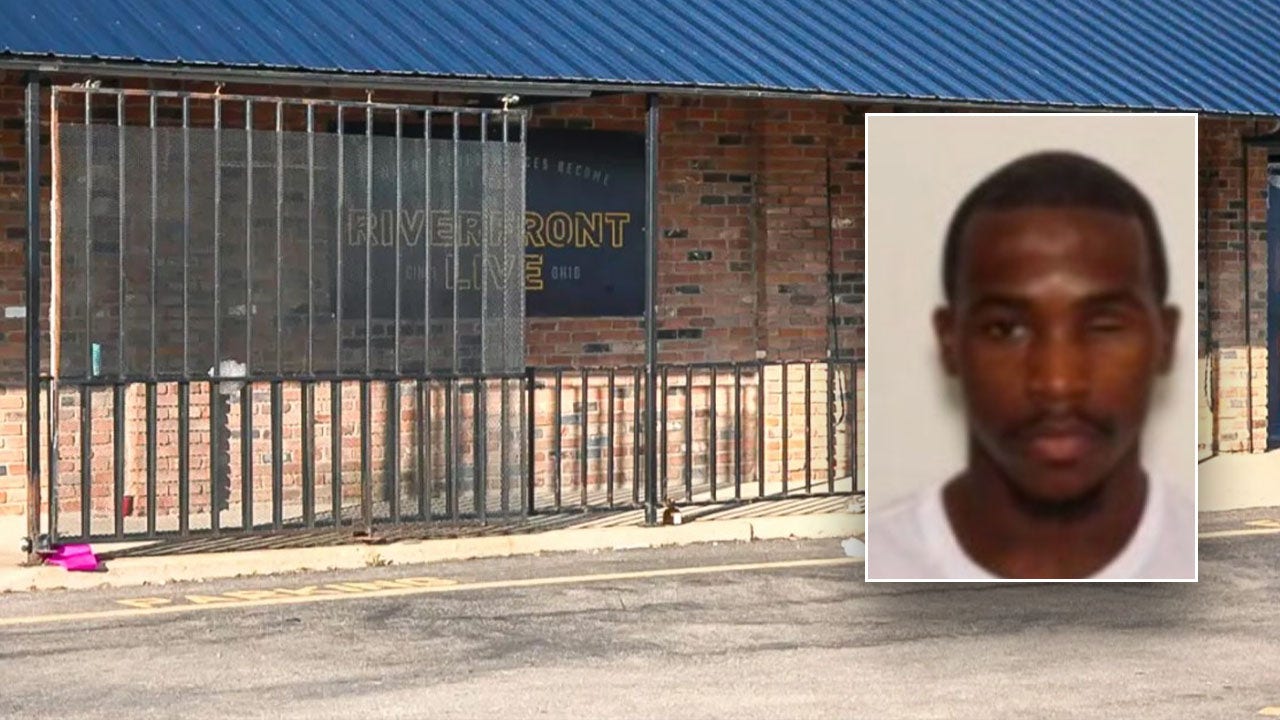
Franeek Cobb, 24, was granted bond despite multiple previous convictions, in a mass shooting at a Cincinnati concert venue. (WXIX via NNS; Hamilton County Prosecutor’s Office)
Pureval said he spoke with the City Law Department for its perspective and Hamilton County Prosecutor Connie Pillich to request a fast-tracked grand jury hearing and ensure Cobb remains in custody during the course of his legal proceedings.
Under state law, Cobb’s case will go to a grand jury within 10 days for formal charges, the Hamilton County Prosecutor’s Office told Fox News Digital.
Cobb and Derrick Long, 29, are accused of shooting nine people during a gunfire exchange at the Riverfront Live music venue in Cincinnati’s East End early Sunday. About 800 people were inside at the time, authorities said.
Prosecutors said Cobb had a personal grudge against someone he saw at the venue and opened fire, Local 12 reported. A prosecutor asked a judge to set a high bond for Cobb, citing his previous conviction that bars him from having a gun.
Both men are charged with one count of felonious assault.
MAN ACCUSED OF MURDERING ALABAMA TEEN CHEERLEADER, SPRAYING BULLETS AT FRIENDS, RELEASED ON BOND
Nine people were injured in a mass shooting early Sunday at Riverfront Live in Cincinnati’s East End during a birthday celebration, police said. (WXIX via NNS)
While Cobb was granted bond, federal prosecutors charged both suspects with illegally possessing a gun or ammunition as a convicted felon Tuesday.
The state charges will go forward first, the prosecutor’s office said, but if Cobb posts bond, he would immediately be taken into federal custody.
Cobb was inside the venue when he spotted Long and opened fire, prompting patrons to seek cover, the Justice Department said. Long fell to the ground before allegedly brandishing a gun and firing multiple gunshots toward Cobb.
Franeek Cobb, 24, and Derrick Long, 29, were charged in a mass shooting at a Cincinnati concert venue. (Hamilton County Prosecutor’s Office)
“Gun violence in Cincinnati must end,” U.S. Attorney Dominick S. Gerace said in a statement announcing the federal charges. “Our top priority is protecting our communities and holding accountable those who threaten them. If you pull a trigger in an illegal act of violence or otherwise illegally possess a firearm or ammunition, rest assured we will do everything we can to send you to federal prison.”.
Investigators seized a handgun that Cobb allegedly dropped at the bar while fleeing. The Bureau of Alcohol, Tobacco, Firearms and Explosives (ATF) determined casings recovered from the area where Long was shooting were all fired from the same .45-caliber gun.
Most victims suffered non-life-threatening injuries, but one person remains in critical condition, authorities said. (WXIX via NNS)
CLICK HERE TO DOWNLOAD THE FOX NEWS APP
Cobb has a 2022 felony conviction of having weapons while under disability. Long has several prior felony convictions, including one case involving trafficking in heroin and another for trafficking fentanyl, as well as failure to comply, carrying concealed weapons, arson and receiving stolen property.
Cobb and Long face up to 15 years on the federal charges.
Related Article

Read the full article from Here



COLUMBIA — Hundreds of Missouri realtors were in Columbia Thursday to show their opposition to a couple of proposals on the August 4th ballot. The Missouri Association of Realtors hosted a statewide rally against Amendments 4 & 5. Realtors distributed tens of thousands of yard signs, bumper stickers, buttons, and literature.
More than 26,000 Missouri realtors want Missourians to vote no on Amendments 4 & 5. They said the proposals ignore tax restrictions that Missouri voters put into the Missouri Constitution. Amendment 4 would modify the current requirements for a simple statewide majority vote. Amendment 5 would require the phase out of the individual state income tax. Matthew Becker is the Treasurer-Elect for the Missouri Board of Realtors and said Amendment 5 would give too much power to state government.
Becker said, “Amendment 5 is nothing more than a bait and switch. Amendment 5 literally wants to go out and give our legislature a blank checkbook for the next 5 years.”
Jefferson City Realtor Logan Gratz said Amendment 4 favors politicians and destroys majority rule for Missourians.
Gratz said, “Realtors have always been major advocates of property owners, of property rights, good business, and good tax policy.”
Springfield area State Representative Bishop Davidson said Missouri realtors were wrong when they opposed Amendments 4 & 5. Davidson said Amendment 5 would improve Missouri’s tax system.
Davidson said, “Right now, the way our tax structure works is old and archaic. It discourages economic growth. When it comes to Amendment 4, what I would say is protecting our Missouri Constitution is important.”
Governor Mike Kehoe’s communication director sent KRCG a statement that said, “Governor Kehoe supports Amendment 5 because it is a revenue-triggered, constitutionally protected path to eliminating Missouri’s individual income tax, allowing workers to keep more of every paycheck.”
Nebraska
Nebraska ag experts say early detection for livestock parasites, illnesses will be important during summer show season

County fairs and livestock shows are ramping up this summer as several cattle illness threats are starting to emerge in Nebraska and other states. Livestock experts aren’t raising alarm about increased spread, but they are encouraging livestock owners to pay more attention this year to biosecurity efforts and the movement of their animals.
Two threats have emerged over the last several months: the rise in a tick-born disease called Theileria and the return of a flesh-eating parasite called the New World Screwworm.
At least 10 feedlots and three breeding herds have reported cases of imported cattle having Theileria. The disease is caused by the Asian longhorn tick, most commonly found on the East Coast. The tick itself hasn’t been found in Nebraska, but the disease can be spread further by reusing needles with an infected animal or through other blood-sucking organisms such as lice. The symptoms include anemia, jaundice, loss of appetite, exercise intolerance and weakness. In some cases, the disease can be fatal.
Cattle owners have been closely watching the spread of the New World Screwworm. It wreaked havoc on U.S. herds decades ago, but it was eradicated from the country in the 1960s. Cases started appearing in Texas in early June, and cattle owners in neighboring states have assumed that the parasite will eventually spread north. The screwworms lay eggs in the flesh of live animals, which can cause infections, disease and death if left untreated.
Nebraska Extension said early detection of the parasite is “critical for successful control efforts.” Possible early signs of New World Screwworm infections include non-healing wounds, depression or restlessness, foul-smelling lesions, presence of maggots in living tissue and animals showing pain or discomfort. They could show this behavior through shaking their heads or showing pain or irritation around wounds.
Several county fairs and shows have already started this summer. The Nebraska State Fair will kick off at the end of August in Grand Island. But several other large-scale shows, including the Burwell Rodeo that brings together animals from outside Nebraska, will culminate over the next few weeks.
Vaughn Sievers, the agriculture director for the Nebraska State Fair, said fair officials work closely with an official State Fair veterinarian to evaluate the health of animals before they are allowed onto fairgrounds.
“To date, the fair has not experienced a disease outbreak,” Sievers said. “However, we coordinate closely with our security and veterinary teams to maintain response plans and designated quarantine areas in the event one were to occur.”
Officials with the Nebraska Department of Agriculture said livestock owners should start biosecurity measures even before they set out to travel to shows. The state agency is recommending livestock owners ensure all their equipment is clean and disinfected, and they should monitor their animal’s health leading up to traveling for shows.
While livestock are at fairs, the department said exhibitors shouldn’t share tools with others, and when using a community hose, they should not allow their animals to drink directly from the hose or dip the community hose in their bucket.
After the shows or fairs are over and animals are heading back to farms, livestock owners should isolate all the show animals for at least two to three weeks, just in case illnesses develop several days after returning home. Experts recommend keeping animals away from nose-to-nose contact, if they’re able.
The Nebraska State Fair has a protocol for handling biosecurity measures and subsequent contingency plans.
Nebraska Extension has provided checklists for ag producers who are taking their animals outside state lines. Lindsay Waechter-Mead, a beef educator with Nebraska Extension, recommended certain regulations with traveling cattle that can take multiple days to complete. Even domestic pets, such as cats and dogs, also require a Certified Veterinary Inspection to cross state lines.

San Francisco voters will decide whether the city should have a public bank after city supervisors this week approved such a proposal to appear on the November ballot.
The city would be the first in the nation to have a municipal government-owned bank. Only the state of North Dakota runs a major public bank in the nation.
But the city’s proposal gives no answer as to where the estimated $325 million in start-up costs will come from as the city faces a $643 million budget deficit.
“In a moment like this, asking voters to commit San Francisco to potentially running a financial institution is asking for trust the city has not yet earned,” said Supervisor Alan Wong, one of the two votes against placing the measure on the ballot.
“Our city’s track record shows that meeting those demands is harder than it sounds, even for institutions designed with the right intentions,” he added.
Socialist Supervisor Jackie Fielder, who just returned from a months-long mental health leave, indicated that future legislation would figure out a revenue steam. Supporters of a bank wanted to get ahead of a 2028 expiration date for a state law that gives cities the power to create their own public banks.
“It feels like an incredible tool to add to the city’s tool kit,” Misha Steier, a spokesperson for the San Francisco Public Bank Coalition, told the San Francisco Chronicle. The coalition was founded by Fielder.
“This is the culmination of years and years of movement effort,” Steier said.
A city bank, supporters say, would unlock financing for thousands of housing units that lack funding to address the housing crisis. It could finance climate goals or lend to small businesses in the area.
“This ensures we have an institution run by real bankers that is accountable, nevertheless, to public priorities and public policy priorities,” Fielder said.
“We can build a public bank that prioritizes reinvesting back into what we all need to sustain our local communities,” added Supervisor Chyanne Chen, who brought forth the measure. “Let us use every tool at our disposal to keep the city affordable and to drive an economic recovery that leaves no one behind.”
The bank would be run by qualified bankers appointed by an oversight committee whose members would be selected by local officials. While it does not establish a revenue stream, the ballot measure would at least enshrine the bank’s rules, structure and mission in the city’s charter — including a provision that it would never lend to fossil fuel corporations or weapons manufacturers.
How startup costs will be funded seems to be difficult to answer. Fielder in February attempted another ballot measure that would impose a higher tax on lending companies to help fund such a bank, though that effort was paused to focus on this new ballot proposal.
Any new taxes may be difficult in the current political environment; this past June, voters in the progressive city even voted down a tax hike on highly paid CEOs.
North Dakota’s bank sees deposits mostly from the state’s collections of taxes and fees and corporate accounts. A very small portion comes from residents as “it is the Bank’s policy not to compete with the private sector for retail deposits,” it said on its website.
The bank has mostly seen success and has turned a profit for many years, which can be returned to the state government’s general fund or used for economic development initiatives. A lot of the success can be traced to the the state’s fracking boom, according to research by University of Illinois Chicago professor Robert S. Chirinko.
But unlike commercial banks, deposits into the public bank are not insured by the federal government, which means North Dakota takes on all the risk. California’s law requires federal insurance, which will give the city more regulatory hurdles as no public bank has sought that approval before.
Chirinko said any success replicating North Dakota’s model will heavily depend on funding. San Francisco’s proposed focus on investing in climate-friendly technology or housing may also not pay off immediately.
“There could be a role there for government, but you have to recognize that you’re not going to get your money back,” he said.
Such banks also can face accusations of unfair political influence. In 2016, North Dakota’s bank financed local law enforcement’s militarized response to controversial protests against the Dakota Access Pipeline, sparking liberal backlash.
Already, critics in San Francisco are saying the same political favoritism could happen for how loans and other financial products would get issued.
“What do they want? An SF Public Bank staffed by cronies of absentee SF Supervisor Jackie Fielder,” claimed tech figure and Y Combinator CEO Garry Tan. “It’ll be a tremendous grift mill robbing the city blind.”
Download The California Post App, follow us on social, and subscribe to our newsletters
California Post News: Facebook, Instagram, TikTok, X, YouTube, WhatsApp, LinkedIn
California Post Sports Facebook, Instagram, TikTok, YouTube, X
California Post Opinion
California Post Newsletters: Sign up here!
California Post App: Download here!
Home delivery: Sign up here!
Page Six Hollywood: Sign up here!
-

 Missouri1 minute ago
Missouri realtors hold statewide rally to vote no on Amendments 4 & 5
-

 Montana4 minutes ago
District court judge blocks new Montana GOP bylaws – WTOP News
-

 Nebraska9 minutes ago
Nebraska ag experts say early detection for livestock parasites, illnesses will be important during summer show season
-

 Nevada16 minutes ago
Local artists on Northern Nevada stages, now through Labor Day weekend
-

 New Hampshire19 minutes ago
Trans athletes drop lawsuit to gain access to girls’ sports in New Hampshire after SCOTUS ruling
-

 New Jersey24 minutes ago
Family describes frantic moments delivering baby on the NJ Turnpike
-

 New Mexico31 minutes ago
Hidden gem in Cloudcroft, New Mexico has best BBQ in US
-

 North Carolina34 minutes ago
North Carolina Airport Looks to Expand Commercial Service | AirlineGeeks.com

