Lifestyle
Word of the Week: Coachella began as a typo. Here's what happened next


The Coachella Valley Music and Arts Festival has been a tradition since 1999. But it’s not actually held in the city of Coachella.
Frazer Harrison/Getty Images
hide caption
toggle caption
Frazer Harrison/Getty Images
Each April, tens of thousands of people flock to the heart of the Coachella Valley to camp, dance and let loose at the music festival by that same name.
The Coachella Valley Music and Arts Festival features hundreds of performers on some half a dozen stages, spread out across two consecutive three-day weekends. This year, performances by the likes of Lady Gaga, Charli XCX, Post Malone, Benson Boone and even an appearance by Sen. Bernie Sanders, I-Vt., instantly went viral.
Coachella’s diverse lineup, celebrity-studded audience, and ample commercial opportunities for brands and social media influencers make it one of the most popular and profitable music festivals in the world. The event — combined with the country music festival Stagecoach, which is always the following weekend — sold about 250,000 tickets in 2024.

The catch?
Coachella the festival does not actually take place in Coachella the city. Since its founding in 1999, it’s been held in nearby Indio. Both are part of the Coachella Valley, which is located in Southern California’s Colorado Desert and is also home to cities like Palm Springs and Indian Wells.
“I think a lot of people who come to this area from other places aren’t really sure what’s what, and I don’t think they really care,” says Jeff Crider, a freelance writer and historian who has written a book about the Coachella Valley. “I think they just come and want to have a good time.”
But it’s worth learning about Coachella, both the place and the festival. The Coachella Valley’s two primary industries, agriculture and entertainment, have rich histories that intertwine in fascinating ways.
The Coachella Valley is synonymous with wealth and celebrity, given its long list of famous visitors and winter residents, including many former U.S. presidents and Hollywood stars. But the region — which is also known for its agricultural production, particularly dates — is also home to a large population of farmworkers, many of whom are immigrants
“Yes, the rich and famous have winter homes here. Yes, we have some of the most famous entertainment events in the world taking place here,” Crider says. “But the majority of the people who live and work out here year round are not rich and famous. Many, many, many of them are struggling to make it.”
Where did the word come from?

Celebrities including Zeppo and Harpo Marx play backgammon in Palm Springs, California, in this undated photo.
Bettmann Archive/
hide caption
toggle caption
Bettmann Archive/
Coachella itself was a product of the country’s railroad system — and a typo.
As the City of Coachella’s website explains, the Southern Pacific Railroad laid the first tracks throughout the valley in 1876, linking it to a growing network of railways across California. A secondary track, called a side spur, was built in present-day Coachella.
“It was literally just like an offramp from the railroad,” Crider explains.
A railroad employee named Jason Rector was tasked with clearing the trees in that area, which became known as Woodspur. Rector is credited with becoming the town’s first permanent resident and “unofficial mayor” for the rest of his life. He also helped name it.
According to the city’s website, during the process of laying out the townsite in 1901, Rector proposed “Conchilla,” which means “little shell” in Spanish and references the fossils that were found in the area.
The developers, in agreement, designed a prospectus that would announce the opening of the new town. But the product they got back from the printer misspelled “Conchilla” as “Coachella.” Rather than delay the announcement, the founders decided to roll with the name — which the valley itself went on to adopt. The town, however, didn’t become a city until 1946.
“‘Coachella’ was a mistake,” Crider says. “They decided just to keep the name, even though ‘Coachella’ itself does not mean anything. It doesn’t mean anything in Spanish, it doesn’t mean anything in English, other than the place that we know as Coachella.”
In the decades that followed, the region’s dry, sunny climate and fertile soil began to attract both farmers and celebrities.
Early growers realized their crops could be ready to harvest long before other regions, and started planting dates and other types of produce to sell without competition. It has an important place in the labor movement too: The first significant farm labor strike — against table grape growers — took place in the Coachella Valley in 1965, led in part by Cesar Chavez.
At the same time, grand hotels like Palm Springs’ El Mirador began drawing high-profile visitors from Los Angeles, about 100 miles away. The 1960’s further boosted tourism, Crider says, thanks to the interstate and air conditioning.
In other words, Coachella Valley was a prominent venue for golf, tennis and other forms of entertainment long before the music festival came on the scene. Crider says it’s been “an escape for the elite literally for a century” — and the Coachella festival has only made the area more famous since then.
“Because just like in the 1920’s and ’30s, when you had the photos of the Hollywood stars lounging by the swimming pool that made this place famous 100 years ago, today what makes this place famous is having pictures of the latest celebrities, Lady Gaga, for example, and others who are at Coachella right now,” Crider adds. “They’re making this place famous, but they’re making the whole valley famous.”
How has the word been used over time?

It took a few years for the Coachella festival — pictured in April 2001 — to grow into the phenomenon it is today.
Tim Mosenfelder/Getty Images
hide caption
toggle caption
Tim Mosenfelder/Getty Images
The Coachella Valley Music and Arts Festival made its debut in early October 1999, with headliners including Beck and Rage Against the Machine and tickets costing $50 per day.
It was the brainchild of concert promoters Rick Van Santen and Paul Tollett, organized by Tollett’s company Goldenvoice — which made its name in the 1980s booking punk rock acts that other promoters wouldn’t.
Tollett also helped the band Pearl Jam book alternate venues during its boycott of Ticketmaster after a dispute in the early 1990s. One of their gigs ended up at the Empire Polo Club — and showed Tollett how prime the venue could be for the large-scale festival of his dreams.
Coachella’s organizers hoped to emulate the multi-act, days-long music festivals that were so popular overseas, such as those in Reading and Glastonbury in the United Kingdom.
“For Southern California, this could be the start of something really special,” Tollett told the Los Angeles Times in 1999.
But that first year wasn’t a huge success, in part because of the intentional lack of corporate sponsors, blazing triple-digit temperatures and a drop in advance ticket sales after Woodstock ’99 descended into violence. Tollett revealed much later that the festival’s first year cost the company $750,000.

Coachella took a break in 2000 and returned in 2001, this time scaled back to a single day and scheduled for the milder weather of April. Its lineups, ticket prices and crowd sizes kept growing.
“The desert town of Indio has become the unlikely location of one of the hottest music festivals in the country,” NPR’s Stacey Bond reported in 2004.
That was the year tickets sold out for the first time, drawing a crowd of 120,000 to see acts including Radiohead and The Cure, as well the reunited Pixies (the first of many reunions on the Coachella stage).
Coachella has expanded and evolved over the years: It eliminated single-day tickets in favor of three-day passes in 2010, added a second weekend starting in 2012 and increasingly broke attendance records until the city increased its cap to 125,000 in 2017.
These days, general admission passes start around $600, not including extra fees for camping and parking. The festival that originally resisted sponsorship deals now boasts dozens of corporate partners, including food, beverage and cosmetic companies.
And while it still showcases dozens of the moment’s biggest artists (144 acts this year), it’s about much more than just music, especially in the era of social media and influencers.
“The word ‘Coachella’ itself has become shorthand for a tastemaker event,” the Los Angeles Times declared in 2019, the festival’s 20th anniversary.
Why does the word matter today?

Festivalgoers enjoy the first weekend of the 2025 Coachella Valley Music and Arts Festival at the Empire Polo Club on Sunday.
Amy Harris/Invision/AP
hide caption
toggle caption
Amy Harris/Invision/AP
Crider says the local economy is dependent on events like Coachella to draw people in, calling the influx of festival goers “a huge shot in the arm for our economy.”
“As someone who has lived in this valley for half of my lifetime, I love seeing the kids come in, come into our stores, buying alcohol, sunscreen, whatever else they need, souvenirs,” Crider says. “And then they line up at grocery stores and they go on buses that take them down to … the polo grounds, where they’re going to see all the music performed. And it’s just a great time.”
That said, the reality of life in the region — and the huge discrepancies in wealth — are not necessarily apparent to people who associate Coachella simply with the festival that bears its name.
He says festival goers who complain about the Coachella heat likely don’t realize that there are farmworkers harvesting produce in that same sun just miles away, or that many of the people putting the food on their restaurant tables rely on food banks themselves.
“That is something that people might not realize when they’re out here spending a gazillion dollars to attend a music festival and being overcharged for drinks and whatnot, as we know that happens,” Crider says. “You wouldn’t think that there would be so much poverty out here at the same time.”
Crider says a lot of young people leave the area for college and don’t return because of a lack of jobs, which is something business interests in the valley are trying to change.
“There have been efforts to try to diversify the economy … so that we don’t remain forever dependent on just agriculture or tourism,” he adds. “But that’s how this area was really created — and it works.”

Lifestyle
Terry Tempest Williams on why women with big ideas get labeled ‘crazy’ : Wild Card with Rachel Martin
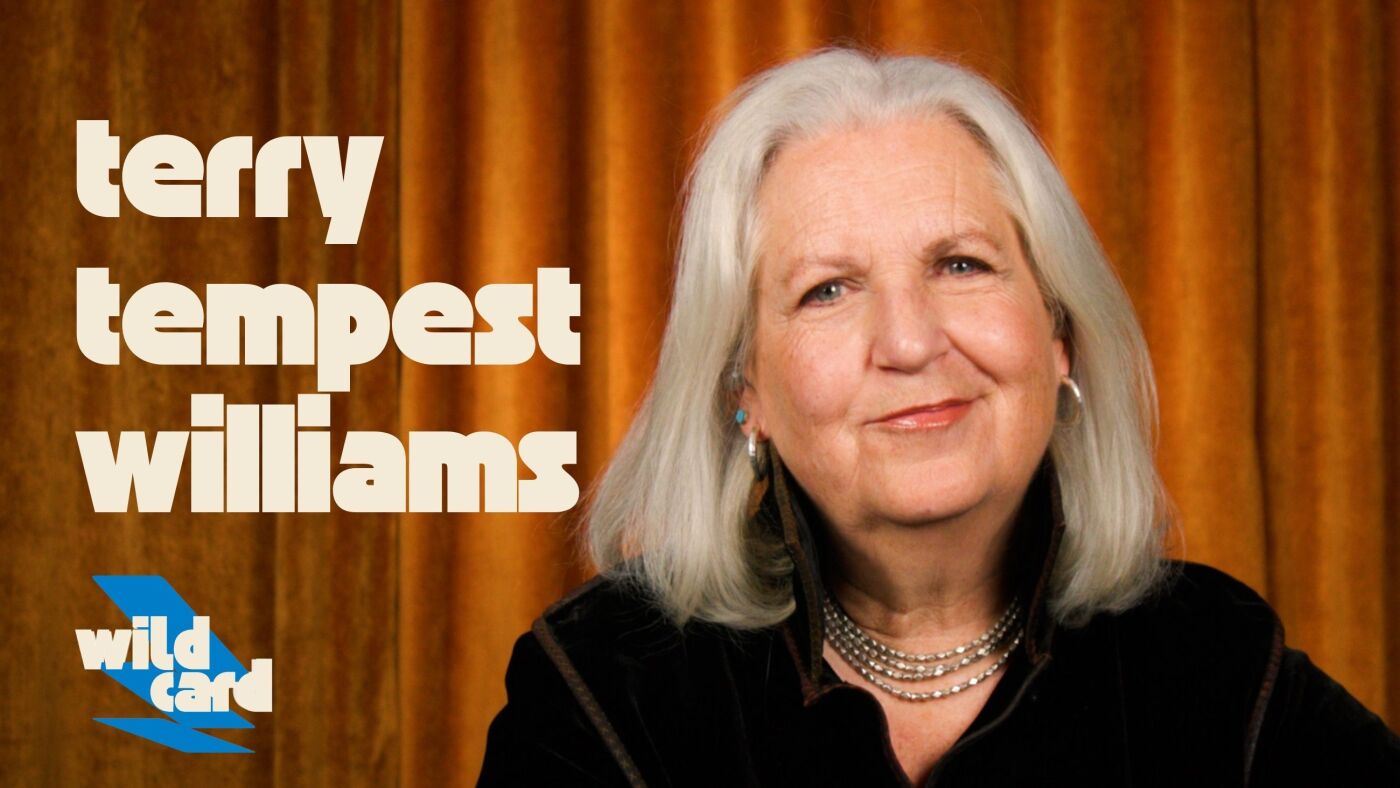
A note from Wild Card host Rachel Martin: I met Terry Tempest Williams about 25 years ago at a writer’s conference in Yosemite Valley. I was a young reporter who was there to do a story about how literature was addressing climate change and she made such a huge impression on me. I had never heard someone talk about the natural world the way Terry did and she had a spiritual depth I hadn’t encountered in my life at that point.
To this day, Terry’s writing always reorients me towards what is good, what is beautiful, and what is true. Her newest book is called “The Glorians.”

For its upcoming Los Angeles venue, experiential art firm Meow Wolf will focus on the art of storytelling, with a specific eye toward skewering our city’s moviemaking magic. To help bring that vision to life, Meow Wolf has entered into a creative partnership with Titmouse, one of L.A.’s most renowned independent animation houses.
The Hollywood-based studio behind popular series such as “Big Mouth” and “Star Trek: Lower Decks” will create animation that will be shown throughout the West L.A. venue, which is on target for a late 2026 opening at the Howard Hughes entertainment complex.
It’s a move that represents a shift for Santa Fe, N.M.-based Meow Wolf. Over the last decade-plus, the art collective has grown beyond its anything-goes, punk-meets-psychedelic roots into an organization with full-scale, maximalist installations in its hometown, Denver, Las Vegas, Houston and the Dallas suburbs. In the past, Meow Wolf kept most of its media in-house.
As part of its larger-than-life participatory art installations, Meow Wolf L.A. will feature a mix of live action and animation, the former filmed by Meow Wolf in its Santa Fe studio. Meow Wolf’s James Stephenson, a senior VP with the company and its creative director of emerging media, said the degree to which the L.A. exhibition will lean into various animation styles necessitated an outside partner. Titmouse’s work, in development by a number of directors with contrasting tones, will be shown on a variety of formats, ranging from cinema screens to full-room projections.
“I really believe in animation as an art form, and I know the Titmouse folks do too,” Stephenson says. “Animation is made by artists. It’s made by artists with their own hands. It’s something that is still very rooted in craft.”
Meow Wolf’s L.A. space is set in a former cinema complex, and will champion its location, taking guests on a journey through a converted movie house and beyond, into a sci-fi-inspired fantasyland with sentient spaceships and a 30-foot-tall mushroom tower. Meow Wolf creatives have spoken of the fantastical movie theater as one that will feature animated, self-aware candy before attendees enter the main exhibition space, making Titmouse’s work some of the first art guests will encounter. Titmouse co-founder Chris Prynoski has said the studio has lined up at least six directors for the exhibit.
An in-progress art installation destined for Meow Wolf L.A. at the art collective’s Santa Fe, N.M., headquarters. The L.A. exhibition will feature animation from Titmouse.
(Gabriela Campos / For The Times)
Titmouse, says Stephenson, is the right partner because “they’re known less for a house style, and more for a house vibe.” Over the years, Titmouse has been behind such diverse shows as “Scavengers Reign,” owning a Jean Giraud influence rooted in French and Spanish surrealism, the lively “Jentry Chau vs. the Underworld,” with an unique color palette that took inspiration from anime and Chinese mythology, the exaggerated comic book feel of Adult Swim’s “Metalocalypse,” and the approachable yet expressive tone of “Star Trek: Lower Decks.”
“Meow Wolf’s vibe is similar to Titmouse’s vibe,” Stephenson says. “It’s artist-first, artist-driven, independent and kinda edgy. They are always trying to find the edge of what’s possible. They try to see how far they can go, and it’s done for fun and in the spirit of taking risks.”
Prynoski says working with Meow Wolf will give Titmouse a sense of artistic freedom it doesn’t always have when delivering content for more traditional Hollywood partners. He says the multi-director approach is a callback to the early days of Warner Bros. Animation, when individual creators put their own stamp on Looney Tunes material.
“I use Bugs Bunny as an example,” Prynoski says. “You’ve got a Friz Freleng Bugs Bunny short. You’ve got a Chuck Jones Bugs Bunny short. You’ve got a Tex Avery Bugs Bunny short. They’re all different versions of Bugs Bunny, and people who are really paying attention can tell which director directed each one. Even though to the layman, these are all Bugs Bunny, but if you lined them up, they are drawing in different styles, sensibilities and techniques.”
Prynoski says that was a centerpiece of his pitch to Meow Wolf, noting that characters will reappear in multiple installations, each handled by a different artist. Meow Wolf L.A., in fact, will be the firm’s most character-driven exhibition, as guests will follow the storylines of three main protagonists throughout the space.
In announcing the partnership, Meow Wolf and Titmouse released an image from an animated work directed by Luca Vitale. It features a key character having a moment with a hummingbird and it’s done in an elegant, slightly anime-influenced style. It’s an image full of movement, reflecting a character in transition with inviting pastels and bold dashes.
“I like that image because I think it captures some of the sense of wonder that we want people to feel,” Stephenson says. “The character is having an encounter with the elusive nature of creativity and reality in a way that makes them have a different perspective of what’s possible.”
Other contributing animation directors to Meow Wolf L.A. include Space Dawg, Felix Colgrave, Alexander Vanderplank and Phimémon Martin, and Jun Ioneda.
Titmouse’s partnership with Meow Wolf will extend beyond the L.A. exhibition. The two will be working on the development of Meow Wolf New York, which is slated to open some time after Los Angeles, and are collaborating on a planned animated series, which Prynoski is spearheading.
Meow Wolf exhibits are the result of sometimes hundreds of disparate artists coming together in a shared space. Distilling that into a signature, singular style for a series could be a challenge. Stephenson pinpoints some guiding principles.
“You really need to feel the hand of the artist,” he says. “You need to feel a DIY aesthetic. You need to feel the materiality. Those are very specific to what we are.”

The Kennedy Center on June 28, with its facade signage still covered by a tarp and scaffolding.
Alex Wroblewski/AFP via Getty Images
hide caption
toggle caption
Alex Wroblewski/AFP via Getty Images
On Wednesday, a federal appeals court denied President Trump’s request to stop the removal of his name from Washington, D.C.’s Kennedy Center. The signage on the building has been covered with tarp and scaffolding since June 13, but in a court filing last month, the center’s current executive director said that Trump’s name has been removed.
In their decision, three judges from the U.S. District Court of Appeals for the District of Columbia Circuit said that the president had failed to prove that the arts center would be “irreparably injured” without Trump’s name attached to it.

NPR requested comment from the Kennedy Center, but did not receive an immediate reply.
This latest round of court decisions is part of the ongoing litigation filed by Rep. Joyce Beatty, D-Ohio, against President Trump and the board of the Kennedy Center. In a statement emailed Wednesday to NPR, Beatty said: “Today’s ruling again affirms that this administration’s efforts to rename the Kennedy Center were unlawful. His name no longer desecrates this sacred memorial, which belongs to the American people. Now it is time for the Trump administration to accept this, comply with the law, and take the tarps down.”
In previous court filings, Trump’s legal team had asserted that removing the president’s name from the arts complex, both on the physical building and in its digital materials, would inflict irreparable harm in both time and money already spent. In the denial, the three judges — Patricia Millett, Robert Wilkins and Gregory Katsas — wrote that since Trump’s name has already been removed, “a stay would not avert those harms.”
Furthermore, Trump had claimed that without his name attached, future fundraising would be threatened “and [will] contribute to the financial decline of the Center.” In response, the appeals judges wrote: “Appellants, however, have failed to support this assertion with any specific facts or evidence. They offer only the conclusory assertions of the Kennedy Center’s Executive Director that were made in a factually unsupported declaration.” The center’s current executive director, Matt Floca, specializes in physical plant management.
The presiding judge in the case, Christopher R. Cooper, has ordered that the center provide him a status report on the center’s operation and programming before the end of this month. As of Wednesday, the center’s calendar lists a small roster of programs, including outdoor free movie screenings, workshops for children, and five free live performances in July on its Millennium Stage. In the past, the Kennedy Center presented over 2,000 arts and education events each year, including free daily Millennium Stage performances.
-

 Louisiana4 minutes ago
Parasitic stomach illness that can cause explosive diarrhea rises in Louisiana
-

 Maine12 minutes ago
Is prison in play for Graham Platner?
-

 Maryland14 minutes ago
Office building in Glen Burnie evacuated after shift in parking garage floor
-

 Michigan19 minutes ago
Menominee, Michigan man arrested on sexual assault charges involving a minor
-

 Massachusetts27 minutes ago
Healey administration vows to appeal as Trump rejects Massachusetts blizzard aid request – The Boston Globe
-

 Minnesota29 minutes ago
Minnesota Looks to Add 1,100 Child Care Slots, With Melrose Among the 11 Funded Communities
-

 Mississippi34 minutes ago
Death of Mississippi teen Nolan Wells under investigation
-

 Missouri42 minutes ago
Missouri realtors hold statewide rally to vote no on Amendments 4 & 5

