Lifestyle
When my mom died suddenly, there was only one place to mourn: Disneyland


My mother, Donna, died unexpectedly earlier this month. On a recent Tuesday morning, she got up as normal, and even went to the salon. That evening, she was in the hospital. Thirty-six hours later, she was gone. These have been among the most difficult weeks of my life.
I spent the first half of March at home near Chicago to grieve with my family and will likely be visiting often throughout the year to continue the process. I’ve never liked the past tense — grieved — as that implies a conclusion to something that changes us, alters our course and continues to define us. There is no neat bow for a box that can be comfortably closed and compartmentalized — here lies memories of a loved one.
And yet we survive, hopefully with something learned.
Upon returning to my adopted residence of Los Angeles, I did what I always do when down: I spent time with my cat, listened to records and then visited Disneyland, the so-called happiest place on earth. Pirates of the Caribbean was always my family’s first stop, and when I went on the ride, I tried to recall family trips — of my parents rushing to the attraction and of my brother attempting to take flash-free pictures, letting the calmly swaying boat take me back to an earlier, more uplifting time. But I mostly spent the day attempting to absorb the atmosphere. My mind needed happiness and joy, and environments that aim to comfort.
Like many in America, I grew up with parents who devoted the bulk of their vacation time to Disney’s theme parks. I’ve kept up the tradition — I write about theme parks for a living, but I also go to Disneyland often in my free time. So much so that one time later in life my mother even questioned it, perplexed by my desire to re-pilgrimage the park in times good or bad. Job promotion? Off to Disneyland. A breakup? Disneyland again. The recent devastating fires that struck our region? Disneyland was there for me.
The author at a young age with his mother, Donna, at Walt Disney World’s Epcot in the 1980s.
(The Martens Family)
“I wonder what we did to you that makes you go there so often,” my ma said a few years back on the phone while I sat in the lobby of Disney’s Grand Californian Hotel. I didn’t really answer — I laughed, probably sighed — but in hindsight, I wish I had been a bit more talkative. I would have reminded my mom of what she did, because in Disneyland I saw many of the lessons she attempted to impart.
So today, Ma, I’ll tell you what you did that makes me go to Disneyland so often. You instilled in me a belief in goodness. You inspired in me optimism, that I could and should do whatever I want and I am capable of achieving my goals. And somehow — despite all the worrying, and yes, my mom worried a lot — there was an idea that things would work out in the end, no pixie dust needed. She told me in early March that she hoped she lived long enough to read my first book, believing that goal of mine was an inevitability. That book will be dedicated to her.
My mom inspired in me optimism. Despite all the worrying, there was an idea that things would work out in the end, no pixie dust needed.
— Todd Martens
My mom never tired of my crazy dreams. When I said I wanted to be on “Saturday Night Live,” she drove me to weekly improv classes at Second City. And when I said I maybe wasn’t funny enough to be on “Saturday Night Live,” we switched to acting classes. And when I was tired of making errors in Little League, my mom encouraged me to maybe think about something else. I was scared to. My mom recognized my early tendency to avoid confrontation, and I was afraid my dad would be upset. But my mom sat me down and carefully explained what to say and how to be honest and express what I wanted. My dad, of course, wasn’t upset.
It was in moments such as these that this fairy-tale-loving kid saw my mom’s hopes and imagination. I’ve long believed we don’t go to theme parks to escape the world so much as to help make sense of it, for in Disneyland we see our cultural narratives and stories reflected back to us. An attraction such as Snow White’s Enchanted Wish isn’t simply about a happily ever after; throughout, we see hard work, perseverance and unexpected tragedies. What’s more, its recently refreshed ending centers Snow White’s reliance on community rather than her magical husband, and argues that true love comes only after we’ve put in the time and effort.
Alice in Wonderland takes the unpredictability of life and gives it a Technicolor whirl, assuring us our nightmares are really just dreams. Mr. Toad’s Wild Ride throws us deep into our vices in a statement of our own agency. It’s a Small World, via its whimsy and childlike wonder, makes clear we’re not really all that different, rendering the divisions and hate in the world temporarily meaningless. Pirates of the Caribbean shows the ways in which greed and gluttony turn us into caricatures, while the Haunted Mansion finds frivolity in the afterlife, reminding us to enjoy our time while we’re here.

The author, Todd Martens, left, and his mother, Donna, at a recent wedding in Chicago. Donna died unexpectedly this month.
(The Martens Family)
For at Disneyland, exaggerations are the norm, and if we let ourselves live in these abstracted worlds, we can sense their heightened emotions. And what I admired most about my mom, who worked most of her life as a preschool teacher, was both her ability to feel everything deeply and find new ways to spin what was happening around her. When my friends and I broke a small vase by hitting Wiffle balls inside the house on a rainy day, she didn’t scold. She suggested we switch to hitting a dust rag around the room, instead. Thus, Dust Ball was born.
One thing I’ll never forget is the way in which any global conflict when I was younger would pain her. She had a deep-rooted fear that war would lead to a draft and my older brother would be called into service. As a young child, I wasn’t aware that she had earlier lived through such moments with my father, nor did I fully understand what a draft was. I just saw my mom needed a hug.
As I got older, I saw this moment for what it was. I saw it as a sign of someone who cares, deeply. Someone who feels, immensely. Someone who fantasizes, brilliantly. I saw imagination. I saw concern. And I saw love. I also saw a way to look at life — to dream, to fear, to wonder, to hope, and when someone asks what’s wrong, to tell them and to accept that hug.
And so it was that I found myself at Disneyland just 48 hours after returning to L.A. I partly wanted to see some familiar faces. I also wanted to bask in the eternal power of fairy tales. All of the park has lessons to impart, even Star Wars: Galaxy’s Edge, where tales of good and evil are stand-ins for the haves and the have-nots — the pure rugged and close to nature while the oppressors are obsessed with image and mechanical and technological artifice.
I also just wanted to remind myself of those parental life lessons. Among the items I brought back to L.A. was one of my mom’s adult coloring books, a gift from my father that I placed on my coffee table and will forever cherish. I’ve thumbed through it daily since returning, smiling at her love of art and dedication to the coloring craft, but also to remember that every day I’ll have my mom’s guidance.
And that means to embrace, to worry, to wonder and to daydream. Because that is how we never stop living. And my mom will not stop living with me.



Michael B. Jordan plays twin brothers Smoke and Stack in Sinners.
Warner Bros. Pictures
hide caption
toggle caption
Warner Bros. Pictures
Ryan Coogler’s supernatural horror stars Michael B. Jordan playing twin brothers who open a 1930s juke joint in Mississippi. Opening night does not go as planned when vampires appear outside. “In a straightforward metaphor for all the ways Black culture has been co-opted by whiteness, the raucous pleasures and sonic beauty of the juke joint attract the interest of a trio of demons … they wish to literally leech off of the talents and energy of Black folks,” writes critic Aisha Harris. The film made history with a record 16 Academy Award nominations.
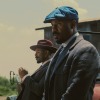

We asked our NPR audience: What movie would you recommend to someone who loved Sinners? Here’s what you told us:
Near Dark (1987)
Directed by Kathryn Bigelow; starring Adrian Pasdar, Jenny Wright, Lance Henriksen
If you want another cool vampire movie with Western kind of vibes, check out Kathryn Bigelow’s Near Dark — super underseen and kind of hard to find, but really gritty and sexy and another very different take on what you might think is a genre that had been wrung dry. – Maggie Grossman, Chicago, Ill.
30 Days of Night (2007)
Directed by David Slade; starring Josh Hartnett, Melissa George, Danny Huston
It follows a group of people in a small Alaskan town as they struggle to survive an invasion of vampires who have taken advantage of the month-long absence of the sun. Both this and Sinners revolve around a vampire takeover and the people’s fight to outlast the “night.” – Nathan Strzelewicz, DeWitt, Mich.

The Wailing (2016)
Directed by Na Hong-jin; starring Kwak Do-won, Hwang Jung-min, Chun Woo-hee, Jun Kunimura
In this South Korean supernatural horror film, a mysterious illness causes people in a quiet rural village to become violent and murderous. A local police officer investigates while trying to save his daughter, who begins showing the same disturbing symptoms. The film blends folk horror, religion, and psychological dread, exploring themes of faith, evil, and moral weakness. Like Sinners, it centers on a supernatural force corrupting a close-knit community, builds slow-burning tension, and examines spiritual conflict and human frailty. – Amy Merke, Bronx, N.Y.
Fréwaka (2024)
Directed by Aislinn Clarke; starring Bríd Ní Neachtain, Clare Monnelly, Aleksandra Bystrzhitskaya
In this Irish folk horror film, a home care worker, Shoo, is assigned to stay with an elderly woman who’s convinced she’s under siege by malevolent fairies. Like Sinners, Fréwaka blends folk traditions and social commentary with horror. The social failures Shoo copes with (untreated mental health issues, religious abuse) are just as frightening as the supernatural forces. – Kerrin Smith, Baltimore, Md.
And a bonus pick from our critic:
Ma Rainey’s Black Bottom (2020)
Directed by George C. Wolfe; starring Viola Davis, Chadwick Boseman, Glynn Turman
This is an adaptation of August Wilson’s play about a legendary blues singer (Viola Davis) muscling through a recording session with white producers who want to control her music. Chadwick Boseman’s blistering in his final role. – Bob Mondello, NPR movie critic
Carly Rubin and Ivy Buck contributed to this project. It was edited by Clare Lombardo.

The tiny town of West Goshen, Calif., was exactly the kind of place that community solar was designed for.
Near Visalia, most of its 500 residents live in mobile homes, where companies won’t install rooftop panels without a solid foundation. And until recently, they used propane for heating and cooking, with price fluctuations in the winter posing hardships for low-income families.
Community solar, in which residents get a discount on their bills for subscribing as a group to small solar arrays nearby, was designed to help low-income residents, apartment dwellers, renters and others who can’t put panels on their own roofs.
Over the last 11 years, New York, Maine, Minnesota, Massachusetts and other states have built thriving community solar programs. But California has built, at most, only 34 projects since 2015, and experts say that’s a generous accounting.
“We’ve had community solar for a dozen years, and it simply has not produced anything of scale and anything of note,” said Derek Chernow, director of Californians for Local, Affordable Solar and Storage, a developer trade group that’s pushing to get a more robust program off the ground. “Projects don’t pencil out.”
The West Goshen residents were among the lucky few, becoming part of a community solar project in 2024.
“It has kind of allowed us to kind of breathe a little bit,” said resident and community organizer Melinda Metheney. Her bill has dropped by about $300 in the summer months, thanks to the 20% community solar discount, stacked with other low-income discounts and clean energy incentives, she said.
West Goshen’s panels sit about 10 miles out of town, in a field surrounded by farms. Energy and climate experts agree California must add much more clean energy to its grid, some 6 gigawatts by 2032, the California Public Utilities Commission said in a new plan last week.
Assemblymember Christopher M. Ward (D-San Diego), who in 2022 authored a bill to create a more effective community solar program, said the state needs to double its annual solar installation rate to reach that goal and is not on track to do that using only large utility-scale solar farms and individual rooftop arrays.
“We need mid-scale community solar,” he said.

Energy and climate experts agree California must add much more clean energy to its grid, some 6 gigawatts by 2032, the California Public Utilities Commission said in a new plan last week. Above, solar panels at Extra Space Storage in Pico Rivera.
(Kayla Bartkowski / Los Angeles Times)
He and a coalition of environmental groups, solar developers and the Utility Reform Network, a ratepayer advocacy group, worked to put his 2022 law into effect. They coalesced around requiring utilities to pay community solar developers and customers for the electricity they feed to the grid using the same formula they use for people who install rooftop solar.
But in May 2024, the California Public Utilities Commission decided to go with a late-in-the-game proposal backed by the state’s investor-owned utilities to pay community solar at a lower rate.
The agency, along with its public advocate’s office, argued that crediting solar developers at the higher rate would raise bills for customers who don’t have solar, who would still have to shoulder the cost of grid maintenance. It’s similar to the argument they’ve made to cut incentives for rooftop solar.
The new program relied on federal money, including the Biden administration’s Solar for All, to sweeten the deal for developers. But the utilities commission spent very little of the $250 million available under that grant before the Trump administration tried to claw it back last summer, and now it is held up in litigation.
At a legislative oversight hearing last week, Kerry Fleisher, the commission’s director of distributed energy resources, blamed the loss for the new program’s failure to launch.
“There’s been a tremendous amount of uncertainty in terms of the Solar for All funding that was intended to supplement this program,” Fleisher said. “That’s part of the reason why this has taken longer than normal.” She said the commission still plans to release a program in the next several months.
Ward, the San Diego lawmaker who wrote the community solar bill, called the program “fatally flawed” in an interview.
He’s now considering a bill to bring the community solar program more in line with what he initially envisioned — higher incentives, requirements for battery storage, and compliance with state law that mandates new houses be built with solar.
A study last year funded by a solar trade group found that could save California’s electric system $6.5 billion over 20 years. But Ward’s effort to revive his program last year failed to pass the Assembly appropriations committee.
“All the other states in our country that have adopted similar community solar program models, they are working,” said Ward, adding that 22 states have programs comparable to the one solar advocates want in California. “The writing on the wall suggests that, exactly as we feared years ago, this was not the way to go.”
California Public Utilities Commission spokesperson Terrie Prosper called California “a leader in cost-effective, least-cost solar deployment overall compared to any other state,” in an emailed statement.
Under the commission’s definition, the state has brought on 34 projects, representing 235 megawatts of community solar. But studies from groups such as the Institute for Local Self-Reliance and Wood Mackenzie use different definitions for community solar, and they show California far behind at least 10 other states.
Meanwhile, advocates and developers involved in successful community solar projects in California say they were difficult to get off the ground.

Homes in the Avocado Heights area of Los Angeles County are part of a community solar project.
(Kayla Bartkowski / Los Angeles Times)
One that came online in May in the unincorporated communities of Bassett and Avocado Heights in the San Gabriel Valley provides solar electricity to about 400 low-income residents. They get 20% discounts on their electric bills for subscribing to panels installed on two Extra Space Storage building rooftops in Pico Rivera.
Organizers said it took nearly five years to find the right location and comply with utility requirements. They also got a grant in addition to funding provided by the state utilities commission’s solar program.
It “would not have happened if it hadn’t been for the grant,” said Genaro Bugarin, a director at the Energy Coalition nonprofit that proposed and coordinated the project.
Brandon Smithwood, vice president of policy at Dimension Energy, the developer for the project in West Goshen, said he still hopes to see a community solar program in California that compensates projects for the way they help out the grid.
“We’ve seen it can work, and we know what we have won’t work,” Smithwood said at the hearing.

There’s a three-story house in Baltimore that looks a bit imposing. You walk up the stone steps before even getting up to the porch, and then you enter the door and you’re greeted with a glass case of literary awards. It’s The Clifton House, formerly home of Lucille Clifton.
The National Book Award-winning poet lived there with her husband, Fred, starting in 1967 until the bank foreclosed on the house in 1980. Clifton’s daughter, Sidney Clifton, has since revived the house and turned it into a cultural hub, hosting artists, readings, workshops and more. But even during a February visit, in the mid-afternoon with no organized events on, the house feels full.

The corner of Lucille Clifton’s bedroom, where she would wake up and write in the mornings
Andrew Limbong/NPR
hide caption
toggle caption
Andrew Limbong/NPR
“There’s a presence here,” Clifton House Executive Director Joël Díaz told me. “There’s a presence here that sits at attention.”
Sometimes, rooms where famous writers worked can be places of ineffable magic. Other times, they can just be rooms.

Princeton University Press
Katie da Cunha Lewin is the author of the new book, The Writer’s Room: The Hidden Worlds That Shape the Books We Love, which explores the appeal of these rooms. Lewin is a big Virginia Woolf fan, and the very first place Lewin visited working on the book was Monk’s House — Woolf’s summer home in Sussex, England. On the way there, there were dreams of seeing Woolf’s desk, of retracing Woolf’s steps and imagining what her creative process would feel like. It turned out to be a bit of a disappointment for Lewin — everything interesting was behind glass, she said. Still, in the book Lewin writes about how she took a picture of the room and saved it on her phone, going back to check it and re-check it, “in the hope it would allow me some of its magic.”
Let’s be real, writing is a little boring. Unlike a band on fire in the recording studio, or a painter possessed in their studio, the visual image of a writer sitting at a desk click-clacking away at a keyboard or scribbling on a piece of paper isn’t particularly exciting. And yet, the myth of the writer’s room continues to enrapture us. You can head to Massachusetts to see where Louisa May Alcott wrote Little Women. Or go down to Florida to visit the home of Zora Neale Hurston. Or book a stay at the Scott & Zelda Fitzgerald Museum in Alabama, where the famous couple lived for a time. But what, exactly, is the draw?

Lewin said in an interview that whenever she was at a book event or an author reading, an audience question about the writer’s writing space came up. And yes, some of this is basic fan-driven curiosity. But also “it started to occur to me that it was a central mystery about writing, as if writing is a magic thing that just happens rather than actually labor,” she said.
In a lot of ways, the book is a debunking of the myths we’re presented about writers in their rooms. She writes about the types of writers who couldn’t lock themselves in an office for hours on end, and instead had to find moments in-between to work on their art. She covers the writers who make a big show of their rooms, as a way to seem more writerly. She writes about writers who have had their homes and rooms preserved, versus the ones whose rooms have been lost to time and new real estate developments. The central argument of the book is that there is no magic formula to writing — that there is no daily to-do list to follow, no just-right office chair to buy in order to become a writer. You just have to write.
If you loved ‘Sinners,’ here’s what to watch next

Meta’s AI glasses reportedly send sensitive footage to human reviewers in Kenya

Iran continues firing missiles, drones at neighboring states, with multiple interceptions reported

Paxton vows he’s ‘staying in this race’ even if Trump backs Cornyn in Texas GOP clash

Do collagen supplements really improve skin? Major review reveals the truth

Florida High School Football Rankings: Top 25 teams – Oct. 21

Cleary's 21 help Le Moyne down Central Connecticut State 69-64 in OT

How old is Bo Nix? What to know about Oregon quarterback ahead of 2024 NFL Draft

99th annual Pony Swim held in Virginia

Indiana Members Credit Union announced as new anchor tenant at Bottleworks District
Paxton vows he’s ‘staying in this race’ even if Trump backs Cornyn in Texas GOP clash

Which Kurdish groups is the US rallying to fight Iran?

Man accused of plot to assassinate Trump testifies Iran pressured him, says Biden and Haley were other possible targets

DHS defends McLaughlin against allegations husband’s company profited millions from ad contracts: ‘Baseless’

Fareed Zakaria’s takes on Trump and the collapse of nuclear stability
-

 World1 week ago
Exclusive: DeepSeek withholds latest AI model from US chipmakers including Nvidia, sources say
-

 Massachusetts1 week ago
Mother and daughter injured in Taunton house explosion
-

 Wisconsin3 days ago
Setting sail on iceboats across a frozen lake in Wisconsin
-

 Maryland4 days ago
AM showers Sunday in Maryland
-

 Florida4 days ago
Florida man rescued after being stuck in shoulder-deep mud for days
-

 Denver, CO1 week ago
10 acres charred, 5 injured in Thornton grass fire, evacuation orders lifted
-

 Massachusetts2 days ago
Massachusetts man awaits word from family in Iran after attacks
-

 Oregon6 days ago
2026 OSAA Oregon Wrestling State Championship Results And Brackets – FloWrestling