Lifestyle
The Olsen Twins Go to the Beach


There was a Cybertruck parked on Main Street in East Hampton, outside the Altuzarra store. It was a Sunday afternoon in June, and traffic stalled for a moment. Even the rich are not immune to rubbernecking a brutalist behemoth.
The monster truck marked the end of an avenue of monograms — the island’s main luxury shopping drag, with $850 raffia handbags and $15,000 decorative surfboards. You know their names: Louis Vuitton, Loewe, Lululemon.
Two and a half miles down this same street, however, quaintness emerged. East Hampton turned into Amagansett, and that flashy boutique strip became a town square with white wood-paneled cottages. There was a shoe store called Brunch, a children’s clothing chain called Pink Chicken, a jewelry and gift shop called Love Adorned. A Cybertruck here would read as a declaration of war.
It was near these cottages that the Row, a brand founded in 2006 by Ashley and Mary-Kate Olsen, quietly opened a store on Memorial Day weekend.
Quietly is how the Row tends to operate. Not only in its clothing — often described as “quiet luxury,” a term used to describe very expensive basics — but also in its communication.
The founders rarely give interviews, advertise or otherwise promote their line. While the Row did announce its Amagansett opening on Instagram, that account is more outwardly devoted to sharing modern art than to moving product. In February, the brand caused a stir at Paris Fashion Week by asking its runway show attendees to “refrain from capturing or sharing any content during your experience” — which is, for many, the primary reason for attending a fashion show. The audience was encouraged to write down thoughts instead.
Somehow this stance works. In an industry overrun by influencers, the Row’s silence is stark. Monasticism is chic. There is an impression of exclusivity and taste, buoyed by the extreme prices. One of the Row’s most popular items, the Margaux bag, ranges in price from $3,490 to $6,810, depending on size and material. It is timeless and ladylike, the kind of purse that might remind Kendall Jenner of Jacqueline Kennedy Onassis.
The Row’s stores also have a reputation for being intimidating at times, even among seasoned high-end shoppers.
One loyal Row customer told me she felt like “peasantry” in the Los Angeles store, which houses an untouchable swimming pool. At the store in Manhattan — a townhouse with a limestone spiral staircase — “there is one guy who works there that all my friends are afraid of, who radiates a very ‘you can’t sit here’ vibe,” said Jess Graves, the writer of a shopping newsletter called The Love List, “even to girls I know who walk in wearing the brand head to toe.”
The Amagansett shop is different. It operates out of a house with roots in the 19th century, formerly occupied by Tiina the Store, the Hamptons’ Gap for billionaires. (Tiina stocked the Row.)
It has a porch and a screen door and a woven beige carpet. The fitting rooms are harshly lit behind denim patchwork curtains. (By contrast, the spacious wood-floored dressing rooms at the Upper East Side store, where I recently tried on a $1,550 white cotton poplin tent dress that made me look, tragically, like a hospital patient, have soft lighting and softer robes.)
There is no statement artwork in Amagansett, unlike the London store, where an oval light installation by James Turrell greets visitors at the entrance. The vintage furniture is noteworthy — there’s a black chaise shaped like a person from the 1970s by Olivier Mourgue Bouloum and a white painted wooden lounge chair from the 1930s by Robert Mallet-Stevens. But the décor, with its Asian and African influences, is not the point.
The point of the store is the large selection of jewelry, home wares, snacks and skin care by more than 20 brands and artisans that are not the Row. Shampoo from Florence. Beaded necklaces from Greece. A mother-of-pearl caviar set. A bronze lighter carved to resemble tree bark. A packet of dried mango and a jar of raw almonds. Vintage glass candlesticks that can be purchased only in a set of a dozen for $16,000.
There are racks of ready-to-wear clothes made by the Row, of course, the selection tailored to this beach town: bike shorts ($1,050), denim shirts (also $1,050), ribbed tank tops ($670), sleeveless silk maxi-dresses ($1,890). Ms. Graves bought herself a raffia bag here earlier in the season. (“It felt very appropriate while I’m out here this summer,” she said.)
But the Row confirmed that the Amagansett store is its first attempt at a “local” store concept. What this presumably means is a space that is more relaxed, filled with objects that complement the brand’s vision of itself, staffed by sales associates who do not scare people away but warmly help shoppers track down sold-out jelly flats. Not that the Row’s fans are easily scared away: Even those who are intimidated don’t stay away for long, these masochists for cream-colored cashmere.
In retrospect, the popular jelly shoes, along with the beach towels that models wore as scarves on the Row’s runway in September, may have been a sign that the brand was loosening up — that brightness and humor were coming to this austere world. (Its most recent look book showed a silky camisole dress layered over pants, Y2K-style.)
A British client of the Row visiting the Amagansett store marveled at the vibe shift. Where was the icy indifference? “I don’t think it would fly with the audience here,” she said.



Abdul’s vehicle promotes his work as a carpet repair man in Mumbai, India.
Martin Roemers
hide caption
toggle caption
Martin Roemers
Homo Mobilis is not just a photography book about cool cars.
The phrase is Latin for “mobile human.” This project by Dutch photographer Martin Roemers depicts all kinds of vehicles: cars the likes of which you’ve probably never seen before, including one with a garden sprouting from its roof, along with animal-drawn transport and bicycles.
And Roemers is not just looking for visual details. He uses vehicles as a vehicle for philosophical questions: How do our methods of transportation represent our identities, reflect global inequalities and illustrate the changing nature of mobility as we drive forward in the 21st century.
Roemers spent nearly five years on this project, visiting eight countries in four continents and photographing around 200 cars and other vehicles. 160 of these found their way into the book. He identifies the owners by first name only.
In an interview over a zoom call from his home in the Netherlands, he shares his thoughts on the project with NPR — his ninth book of photography. This interview has been edited for length and clarity.
Tell us about the car you chose for the cover of the book.
In 2019, on a trip to Mumbai, India, my wife and I passed by a carpet shop as we made our way from our hotel to a café for breakfast. In front of this shop was an old black car. We often forget how cars aren’t just to get us from point A to point B. In many countries like India and China, they’re precious real-estate space. This particular car was riveting, because it was more than a car. It was a statement, like a billboard. It had “Afghan Carpets” emblazoned on it, advertising the store. It made me think about the many ingenious ways in which people used their vehicles.
I strongly believe that the spirit of the car reflects that of its owner or its driver. It says something about the culture they come from, their world view, identity and even about society itself.

Suresh, a climate activist, believes all cars should have rooftop gardens to counteract pollution. He lives in Bengaluru, India.
Martin Roemers
hide caption
toggle caption
Martin Roemers
Can you give us an example of what you mean?
In Bangalore [now called Bengaluru], I saw a car parked on the street. It had a little garden on its roof. It was filled with sprouting grass and wild plants. When we located the owner, we learnt that he was a lawyer, but he was also a climate activist, who believed that people should reduce their carbon footprint. So he wanted to convey that message through his car. He told me you can grow plants on any kind of vehicle and that he waters his “garden” everyday!
What inspired the idea?
This particular project explores the relationship between vehicles and their owners.
The idea for the book came to me in 2015, when I was working on a project called Metropolis — documenting life in the world’s largest cities. My aim was to capture the energy and life in bustling urban environments.
I saw cars everywhere, including some truly unusual vehicles I’d never seen before. They were an integral part of an urban environment, but I wondered, if I isolated them, plucked them off of the roads so that you could focus solely on the vehicle as an object, what stories would that tell?
That must have required extensive preparation.
There was a lot to organize. I needed permission from the car owners to be able to photograph their vehicles in a studio-like setting. We asked the owners to bring their cars to the spot we picked, and [we] rented [a] van to lug around the 12-meter-long steel poles over which we could hang the white backdrop. And we needed people to help set this all up.
Why was this style of photography important to you?
In its natural setting — on a road with traffic — the background can be chaotic. When you place the car against a white backdrop, there are no distractions. You can focus solely on the vehicle and the people who own it.
Which countries did the project cover?
I included Germany, because it’s the biggest car producer in Europe. The Netherlands, because that’s home for me. I chose Senegal, because like other West African countries, they import a lot of old cars from Europe — cars that wouldn’t pass inspection there anymore but are now on the streets. Senegal has a growing middle-class as well, and that is represented in the sheer diversity of cars you see on the roads.

Mor drives this minibus in Séguel Thioune, Senegal.
Martin Roemers
hide caption
toggle caption
Martin Roemers
I loved the shot of the newspaper vendor [and the bicycle he uses to sell papers] in Senegal. What’s his story?
He’s really amazing! He’s an artist and you can tell, because he’s really making a fashion statement. He also has to make a living — and so that’s where the newspaper cart hitched to a bicycle comes in. In Senegal, especially in urban areas like Dakar, newspapers are often sold by street vendors who may use small, mobile kiosks, stands, or simply carry them by hand to offer to drivers and pedestrians.

Mbaye, standing by his bicycle, is an artist and newspaper vendor in Ngaparou, Senegal.
Martin Roemers
hide caption
toggle caption
Martin Roemers
You also photographed in North America.
I spent a lot of time in the U.S., especially in Los Angeles. There are people from the unhoused [homeless] community for whom the car doubles up as a home. These are people from all walks of life. I met an artist who lives in a camper van, an immigrant from Mexico, a retired construction worker who was living in his car for three years.

Juan, an immigrant from Mexico, lives in a camper in Santa Monica, Calif.
Martin Roemers
hide caption
toggle caption
Martin Roemers
There are a couple of unusual images that you took in China of men on motorized cargo bikes — they look like tricycles that are hitched to carriers and piled high with stuff. Can you tell me about those vehicles and their owners?

Qinfang and grandson in a Fuju electric vehicle, Shanghai, China.
Martin Roemers
hide caption
toggle caption
Martin Roemers
Those are electrical vehicles by the way. China is much more advanced in terms of EVs and much further along in electrification than any other part of the world. And these were vehicles I’d never seen before. They’re both the same type of vehicle, but I was struck by how they were used for very different purposes. In one, we see a guy selling children’s toys on a street in a park. It looked lovely — so full of color and life. And in a stark contrast, in the second image, another man uses the same kind of vehicle, but this time, it’s piled high with all kinds of recycling junk.
It reminds me of how vehicles can often be ingenuously repurposed — like Sunny, a chicken vendor in the city of Nashik, Maharashtra [a western Indian state], who transformed his auto into a cage-holding mobile market stand. If someone wants a chicken, he will slaughter it afresh right there.

Sunny’s vehicle enables him to earn money as a chicken vendor. He lives in Bajaj Nashik, Maharashtra, India.
Martin Roemers
hide caption
toggle caption
Martin Roemers
In China, you’ve taken images of electric autos and their drivers.
Yes, I found them interesting. These taxi drivers cannot afford big cars. They use these inexpensive vehicles that were originally designed for people with disabilities and for wheelchair users, but today, anyone can hop on. It’s interesting how vehicles adapt to social and economic needs.
You mention how cars are often associated with new beginnings and spirituality in some parts of the world.
It struck me how cars are tied to sentiment and spirituality, especially in India.
I spent some time at a BMW dealership in Bengaluru. The car salesman told me that some clients hire a priest to do pujas [Hindu prayers that involve chanting] right in the showroom, when the client comes to pick up a new car. It’s not something I’ve seen anywhere else in the world. In China, when you pick up a new car, it can be decked out in flowers. To celebrate a new car is like a rite of passage.

The priest Nagabushna chants prayers to protect a new car from misfortune and accidents in Bengaluru, India.
Martin Roemers
hide caption
toggle caption
Martin Roemers
You have pictures of big families lining up in front of their cars in India.
Yes, I like to portray the human element in car portraits. I’ve photographed a family of four, and another with six members along with their cars. In one picture, there are 12 people. To me, I definitely felt that cars in this context represented a sense of community, of family bonding. Sometimes, it’s about friendship too. When I was taking a picture of a truck and its driver in Malegoan in the western Indian state of Maharashtra, I spotted some kids laughing and returning home from school on bicycles. They agreed to be photographed alongside the truck — I invited them to join because they add another layer of mobility to the portrait.
You have photographed the hand-pulled carts, many of which are banned in some Indian cities.

Dinu pulls a rickshaw in Kolkata, India
Martin Roemers
hide caption
toggle caption
Martin Roemers
I noticed it the last time I was in Kolkata in 2008. There were many more of these hand-pulled rickshaws and now there are less. The city wanted to get rid of it, it was controversial, a relic from colonial times. It also represented India’s caste system — the people who pulled these carts to make a living were from a lower caste, but the people they ferried around were from a higher caste. It made me think about how these systems resist change. And that says something about society. That’s why I focused on these vehicles. To me, it represented a unique part of the city’s heritage and a livelihood for many, though they are gradually being phased out for modern alternatives like auto-rickshaws and e-rickshaws.
And there are plenty of modern cars, too.
I photographed students at a university in the Netherlands who had developed a hydrogen car. We may have invented the wheel, but I wanted my book to show how transport is constantly evolving — it’s rich, layered with culture and meaning — an entire spectrum.
The book concludes with images of scrapped vehicles — why was it important to depict the end of life of a car?

Shredded cars in the Netherlands.
Martin Roemers
hide caption
toggle caption
Martin Roemers
A car can be a big deal for some people. It can play a huge role in their lives, it can mean a lot to them personally and culturally, but at the end of the day, in spite of its significance, I wanted to show how it’s just a hunk of metal.
Kamala Thiagarajan is a freelance journalist based in Madurai, Southern India. She reports on global health, science and development and has been published in The New York Times, The British Medical Journal, the BBC, The Guardian and other outlets. You can find her on X @kamal_t
Your turn: Readers! Is there a vehicle in your life, present or past, with a meaningful connection to your place in the world, to your identity? Send a photo and your story to globalhealth@npr.org and we may use it in a follow-up post.
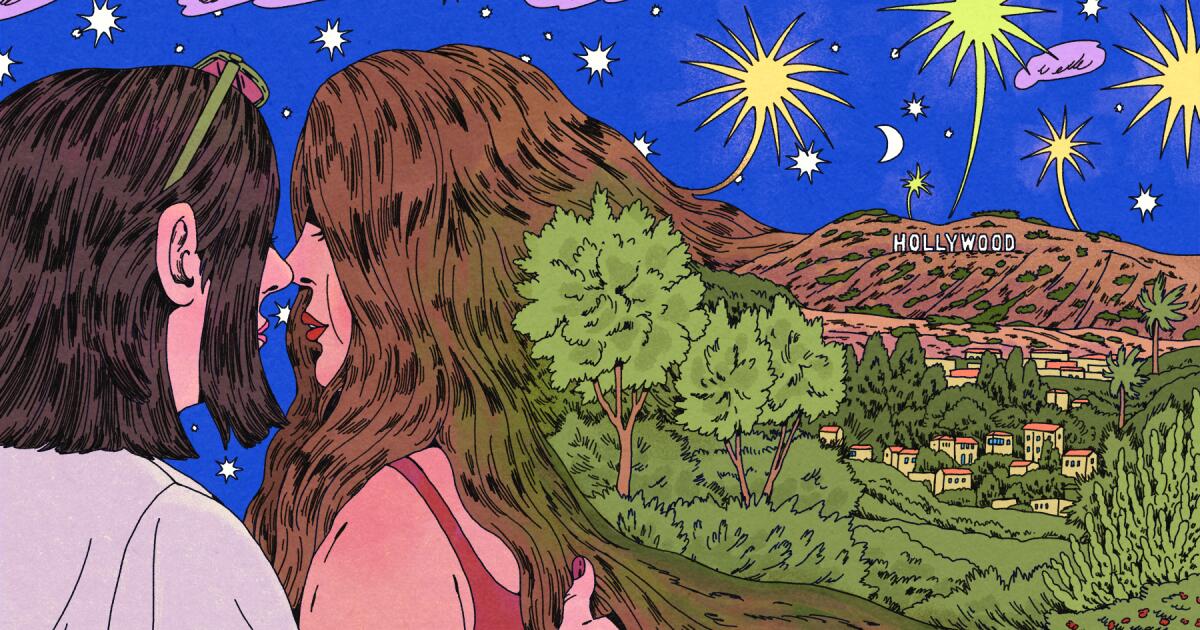
Two weeks after selling all my furniture and another two weeks before quitting my job, I made eyes with a girl at a queer event in West Hollywood. She had long, wavy brown hair with an intense stare to match. We didn’t speak until hours later. It was past midnight.
She had just moved from New York, she said. I didn’t tell her, but I was moving there at the end of the summer. Her stare was no longer intense now as we talked. It was soft, welcoming, curious. But I knew we would be missing each other.
I said it was nice to meet her and promptly left the bar.
When we matched on Tinder days later, it felt almost inevitable.
“Hi!” she wrote. “Did we meet briefly at Hot Flash on Saturday or was this a dream / do you have a twin?”
I looked closely at how she appeared in the light. In her first picture, she stood in a one-piece on a boulder, smiling, a waterfall pummeling behind her. In another, she was on a beach in black workout pants, hair settling in waves at her chest. So much of attraction exists in the realm of the ineffable, but if I had to articulate what drew me to her, the answer might be the image of her smile. She embodied a loveliness, a presence, I was longing for; something I hadn’t found in L.A. — or had lost.
“Not sure if this is a line lol but I’m going to go with yes,” I wrote back. “No twin unfortunately.” We made a plan to find each other not long after during Pride. We stood off to the side at Roosterfish, the same bar where we met. She wore a white frilly shirt and distressed black jorts and loafers. I didn’t hurry off this time.
We continued our conversation over juice the next day, around the corner from the Pride parade at the Butcher’s Daughter. She told me almost offhand what brought her to L.A.: She identified more with the lifestyle here — it was more laid-back, outdoorsy, spacious. And she had ended a long-term relationship in New York.
This didn’t faze me. I knew many people who traversed the L.A.-New York pipeline in both directions. A romantic rupture, or dissatisfaction, wasn’t an uncommon revelation. If I were to look closely at my own reasoning for wanting to leave L.A., I was sure I would discover one too.
By then I was living back at my parents’ house, all my books in storage and anticipating my summer of isolation in the Valley. I told her I was leaving my job days later and then immediately heading to Vermont for a writing residency. And then my summer was, but for my writing and job hunt, free and open. I made no mention of my anticipated move to New York. I wasn’t trying to be deceptive; I think I was trying to be protective. Once you say the thing, you will always have said it. I wasn’t sure what it was I wanted anymore.
“You are lovely,” she texted me that night.
The next weeks passed quickly. I wrote on the East Coast, though I didn’t feel the usual desire to stick around, and I wasn’t sure why. When I returned to L.A., I texted her.
We had a picnic at Barnsdall Art Park days after the Fourth of July. An L.A. native, I had somehow never been to the famed East Hollywood park with its clear-day view of Griffith Observatory. She brought paints, and while I hadn’t painted for over a decade at least, I managed to paint on a note card the fruit she’d laid out: two raspberries and three blueberries. We kissed at the end of the date, but my sunglasses bumped her face and my hair came between our mouths. I moved both out of the way.
“This feels like a rom-com,” she said. I laughed. It was true.
She left the next day for Hawaii, where she had to be for work through August. She sent me pictures of banyan trees, shared her plans to read my favorite book on the beach in the early mornings, told me she was a hopeless romantic: that she believed both in the lightning of connection and the build, not getting broken by it.
I would read her texts and reply from Barnsdall, with a book recommendation of hers in tow, the note card of painted berries as its bookmark, or from the beach. I’ve never been much of a beach person, but I spent a lot of time on the sand that summer, from Santa Barbara and Malibu to Oceanside. I felt a closeness with her there, like I could sense her too looking out beyond the horizon.
Meanwhile, I received an offer for a job that, contrary to my intentions, would be in the L.A. office. If the offer had arrived two months earlier, I wouldn’t have even considered it. Now, I wasn’t sure what to do. I was still interviewing for positions in New York, but I knew I wanted to be around when she returned. I accepted the offer. I would start after Labor Day. I would remain in L.A.
I could only admit the real reason to a select few.
In early August, back in town for a mere 48 hours, she sent me a list of date ideas: a comedy show, a concert at the Hollywood Bowl, cooking dinner at her place. In the end, we opted for a cold plunge and sauna. I’m highly sensitive to (and avoidant of) extreme temperature. The fact I joined her for this activity surprised even me.
“You make me brave,” I told her. She blushed. I meant it.
My entire body shuddered from the cold water, and she helped me out after only 30 seconds. Meanwhile, she stayed submerged for three minutes at a time. Our kiss was longer that day, natural and intuitive. I’d held her face between my hands.
The next time I saw her was the day before Labor Day. She was back from Hawaii for good now. We went to a rooftop screening of “Before Sunrise” at the Montalbán Theatre in Hollywood. She got us a refill of popcorn. She put on lip gloss midway, popped a breath mint, offered me one too. She rested her hand in the space between us. At one point, leaning forward, she turned back to give me a look. I thought I knew what that look meant, but I was wrong.
“I think I may not be ready to let someone in yet romantically,” she texted the next day.
Friendship felt disingenuous. She said she understood.
And the day after that, as planned, I started my job. Her, my reason for doing so, now lost to me — until she wasn’t. I ran into her later that fall in Venice. She was stopped at a red light with the top down. I was walking back from the beach.
I called her name from the sidewalk. She didn’t hear me. I called twice more. She looked up.
“I can’t help but feel like you’re meant to be in my life in some way,” she texted the next morning.
And so we played Rummikub at a restaurant in Laurel Canyon. We sent voice notes as we sat in traffic. We exchanged music, shared a playlist. She drove in a rainstorm to meet me for a Shabbat dinner.
But she still wasn’t able to open her heart, she said, and she couldn’t ask me to wait.
I can’t imagine a world where this is the end. This imagining stems less from a premonition of the future than a feeling of how deeply she has shaped my present. Meeting her reconnected me to something essential within myself and this city I call home. How, even with her gone, I’ve stayed.
The author is a writer from Los Angeles.
L.A. Affairs chronicles the search for romantic love in all its glorious expressions in the L.A. area, and we want to hear your true story. We pay $400 for a published essay. Email LAAffairs@latimes.com. You can find submission guidelines here. You can find past columns here.
Editor’s note: Have a dating story to tell about starting fresh? Share it at L.A. Affairs Live, our new competition show featuring real dating stories from people living in the Greater Los Angeles area. Find audition details here.

The seal of the Federal Communications Commission hangs between two American flags; the FCC is urging broadcasters to air more “patriotic” content in the run-up to the country’s 250th celebrations this summer.
Mark Wilson/Getty Images
hide caption
toggle caption
Mark Wilson/Getty Images
The Federal Communications Commission (FCC) is urging broadcasters to air more “patriotic, pro-America” content in honor of the 250th anniversary of the signing of the Declaration of Independence.
In a statement issued on Friday, FCC Chairman Brendan Carr described the “Pledge America Campaign” as a way for broadcasters to align themselves with the Salute to America 250 Task Force, the group created by President Trump to oversee the 250th anniversary celebrations at the federal level.
Carr said the country’s broadcasters should use their national reach and ability to inform and entertain audiences by upping programming that “celebrates the American journey and inspires its citizens by highlighting the historic accomplishments of this great nation from our founding through the Trump Administration today.”
Bemoaning the decline of civics education across the country, Carr cited the song-filled, animated kids’ ABC series Schoolhouse Rock! as a classic example of the sort of programming he’d like to see broadcasters do more of. Created in the run-up to the country’s 200th anniversary, Schoolhouse Rock! aired from 1973 to 84. It was revived in the 1990s, as well as, in a direct-to-video format, the 2000s. Archived episodes are still available via streamers such as Disney+ and Amazon Prime Video.
Archival news research conducted by NPR suggests the FCC issued no such pledge for patriotic broadcasting in the run-up to the 1976 bicentennial. NPR has reached out to the FCC for confirmation.
Carr’s suggestions for today’s broadcasters also include starting each day with the “Star Spangled Banner” or the Pledge of Allegiance; introducing segments that highlight “local sites of significance” to national and regional history such as National Park Service locations; and airing works by canonical U.S. composers such as John Philip Sousa, George Gershwin, Duke Ellington and Aaron Copland.
According to the statement, radio and TV organizations are under no obligation to participate in the FCC’s initiative. “Broadcasters can voluntarily choose to indicate their commitment to the Pledge America Campaign,” the agency said.
Various TV and radio organizations have already been working on patriotic, history-focused projects marking the 250th anniversary — well ahead of the “Pledge America Campaign” announcement.
One notable example is Ken Burns’ The American Revolution documentary series for PBS, which premiered in November. One of the largest broadcast media groups, Nexstar Media, which operates more than 200 owned or partner stations in 116 markets, announced offerings related to the anniversary, including “My American Story.” A December press release describes the production as “a year-long cross-platform campaign celebrating the diverse voices and values that define our nation as it approaches the 250th anniversary of the signing of the Declaration of Independence and the founding of the Republic.”
Meanwhile, NPR’s coverage includes the series America in Pursuit, which launched last month and can be heard on member stations around the country. “250 years ago, the Declaration of Independence boldly heralded the birth of the United States of America — a new nation founded on the democratic promise of life, liberty, and the pursuit of happiness,” the online series page states. “NPR’s series America in Pursuit explores what that promise has meant and what it means today.”
In response to a request for comment on the FCC’s announcement, Sinclair Inc., a major network TV group, said it announced in October the launch of “Amazing America 250: From Neighborhood to Nation,” which it billed as a multi-platform celebration of American history, culture, innovation and community spirit. “We honor and celebrate America’s ongoing journey and look forward to continuing to highlight stories that make our great nation unique,” said Sinclair spokesperson Jessica Bellucci in an email to NPR.
NPR will add responses from other broadcasters as they come in.

Kentucky Homeland Security warns of synthetic drug more potent than fentanyl detected in central Kentucky

NBC’s ‘The Voice’: Checking in with some of Louisiana’s past musical success stories

Maine Casino Sues State Over Recently Enshrined Online Casino Law

2 arrested after Maryland authorities break up illegal car meets across 4 counties

What is CLEMIS? The Michigan law enforcement data program, explained

Florida High School Football Rankings: Top 25 teams – Oct. 21

Cleary's 21 help Le Moyne down Central Connecticut State 69-64 in OT

How old is Bo Nix? What to know about Oregon quarterback ahead of 2024 NFL Draft

99th annual Pony Swim held in Virginia

Indiana Members Credit Union announced as new anchor tenant at Bottleworks District

Armed man shot and killed after ‘unauthorized entry’ into Mar-a-Lago: Secret Service

Small but mighty: Colombia’s Muslim community celebrates Ramadan

Homeland Security suspends TSA PreCheck and Global Entry airport security programs

Video: How Lunar New Year Traditions Take Root Across America

Newsom weighs in on social media age restrictions, citing experience as a parent: ‘We need help’
-

 Montana3 days ago
2026 MHSA Montana Wrestling State Championship Brackets And Results – FloWrestling
-

 Culture1 week ago
Romance Glossary: An A-Z Guide of Tropes and Themes to Find Your Next Book
-

 Oklahoma5 days ago
Wildfires rage in Oklahoma as thousands urged to evacuate a small city
-

 Science1 week ago
What a Speech Reveals About Trump’s Plans for Nuclear Weapons
-

 Culture1 week ago
Video: How Much Do You Know About Romance Books?
-
News1 week ago
Second US aircraft carrier is being sent to the Middle East, AP source says, as Iran tensions high
-

 Politics1 week ago
Tim Walz demands federal government ‘pay for what they broke’ after Homan announces Minnesota drawdown
-

 Politics1 week ago
Schumer’s ‘E. coli’ burger photo resurfaces after another Dem’s grilling skills get torched: ‘What is that?’

