Lifestyle
The Hundreds at 20: An oral history

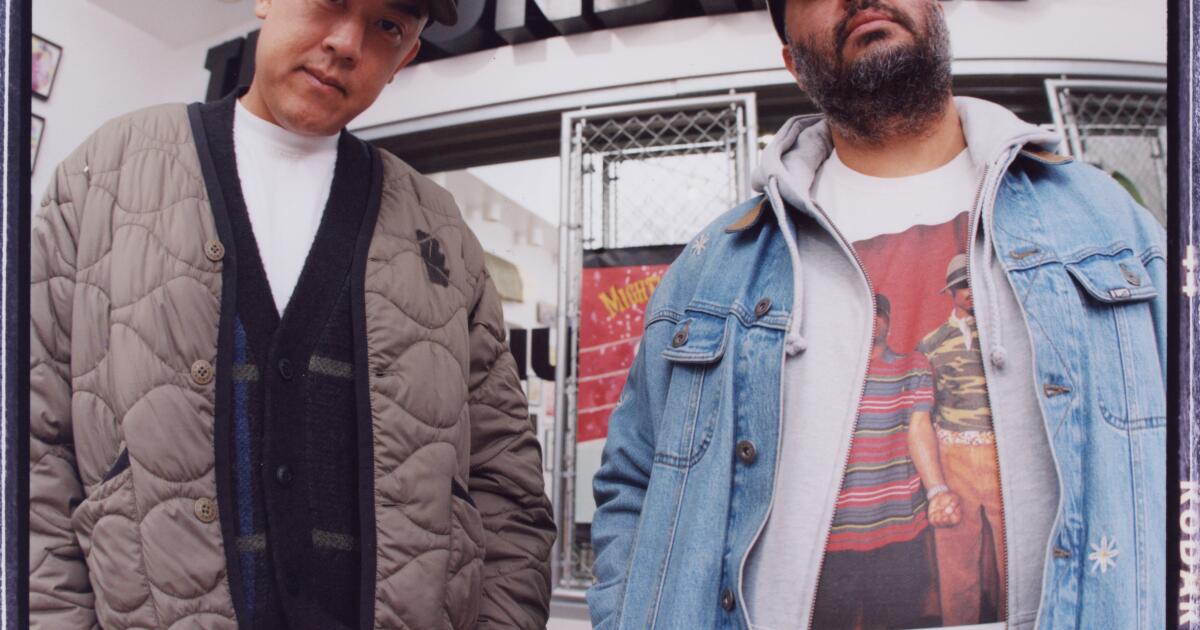
Bobby Kim, left, and Ben Shenassafar, a.k.a. Bobby Hundreds and Ben Hundreds, are co-founders of the brand.
Over the last 20 years, The Hundreds has been hundreds of different things to hundreds of different people: a study hall; a clubhouse; viral before viral; a line out the door; a pioneer in the blog space and later Web3; a perpetually sold-out food festival; block parties that attracted thousands; a beacon of partnership; a riotous celebration at Disneyland that is still remembered in hushed tones; a collaboration machine; a catalyst for a movement; a magnetic force — both physical and spiritual — that compelled kids from all over the world not just to consume but contribute to The Culture.
Today, you can trace The Hundreds’ lineage across a network of streetwear, art, food and storytelling. Its legacy can still be felt around L.A. in some of the city’s most recognizable names and brands: Kacey Lynch of Bricks & Wood, Grammy-winning artist Tyler, the Creator, skater Na-Kel Smith and restaurateurs Jon Shook and Vinny Dotolo. Each a testament to the strength of the name: The Hundreds. It has always been about power in numbers — being stronger together.
“I think it starts with Bobby and I. Our friendship. Our partnership. It starts there,” says Ben Shenassafar, who co-founded the brand with Bobby Kim in the early 2000s while at Loyola Law School. Then they were two 20-somethings whose creative ambitions extended far beyond their classroom. They dreamed of creating a streetwear brand that told stories about the subcultures they were a part of, about the world around them and about things they were into. That idea has blossomed into an empire that, 20 years on, continues to grow and give back.
To commemorate two decades in the game, we spoke to people in the Hundreds multiverse to do the impossible task of telling the story of 20 years of the brand, from the beginning.
Bobby Hundreds, co-founder of The Hundreds: It was like [seeing] a colorful flower in a black-and-white world. My first impression of Ben: He had this very thick, dark, black beard. And he wore these heavy sunglasses, [a lime green] Supreme shirt, black Air Jordan 4s.
Ben Hundreds, co-founder of The Hundreds: I think we were sitting outside of Professor Bryan Hull’s class.
Bobby Hundreds: I was wearing Air Force 1s, they had custom Louis Vuitton swooshes on them, and he’s just like, “I like your Air Force 1s.” I was like, “Where did you get your Supreme shirt?” And he’s like, “I went to New York.” We didn’t have a store here [yet]. There was no online shopping. So I was like, “Oh, this dude is putting in the work. He actually cares about streetwear.”
Siamak Vaziri a.k.a. “Mak,” managing partner at Vaziri Law Group, original third partner of The Hundreds: We met Bobby within probably a month or two at the beginning of law school. Early on, we began to realize we’re not going to be in the top 10% [of our class] and we’re not gonna get one of those big, lavish summer jobs. The conversation turned to, “What can we do that’s cool and fun and at the same time, potentially make a few bucks doing it?”
Ben Hundreds: We had to have been in the library [trying to figure out how] to make money. Like, “What should we do this summer? We should start a brand, we should start a company.” Bobby’s like, “Dude, I shoot photos and write stories and I could design a T-shirt or two.” Mak and I were like, “We can make them and sell them.” Just kind of naive like that.
Mak Vaziri: In a very short period, I saw Bobby’s creative side. It was apparent in everything he did, whether he was drawing, writing, music or whatever. He really had a creative side and it showed.
Bobby Hundreds: I always knew that I liked to write and be a journalist. I loved culture. I loved doing these deep dives and telling the rest of the world. But I was also an artist and I wanted my art to be seen. I just wanted to get in front of eyes. So [if] people are not going to go to the gallery [to see my work], then I’m going to bring the gallery to them. If I put it onto T-shirts and they’re walking around L.A., it’s going to force conversations.
Bobby Hundreds.
Ben Hundreds: Bobby came up with a list of names. It came down to two. One was The Ropes, and one was The Hundreds. In the end, we all thought The Hundreds sounded better. Bobby’s really into typography and when he wrote out the words “The Hundreds,” he liked the way the letters looked and how it all lined up.
Misa Shimotsu-Kim, associate dean and dean of students, USC Gould School of Law; Bobby’s wife: Their paths just crossed at the exact right time. And they both were like, “We don’t want to do this. We don’t want to be stuck in an office for the rest of our lives.” In his studio apartment, they set up shop.
Mak Vaziri: We met with a guy that did some screen printing in the Valley. Obviously, 11 out of the 12 were screwed up.
Ben Hundreds: This kid was like 21. [He had] a print shop deep in a shed in the back of his parents house. We went to pick them up, and they’re all f—ed up. We’re in school. We don’t have any money. I remember being in the car sad, angry.
Bobby Hundreds: We salvaged maybe 20, 25 shirts out of 144 shirts.
Ben Hundreds: I remember saying, “Our company’s over before it even started.”
Misa Shimotsu-Kim: And they’re like, “Oh my God. We promised these to Fred Segal. We need them yesterday.” So they literally brought the box over to my mom. She got her sewing machine out of the garage. She just did the entire box — the first box that they ever sold.
Ben Hundreds: We sold something to [the buyer at Fred Segal]. And then from there, we went over to Dom [DeLuca] at Brooklyn Projects. And we’re like, “Yo, like you want The Hundreds? We sell to Fred Segal.” He’s like, “You do?” We’re like, “Yeah, of course we do. What do you mean? We’re The Hundreds.”
Dom DeLuca, a.k.a. “Brooklyn Dom,” founder and owner of Brooklyn Projects: One day they came and they’re like, “Hey, you know, we’re doing this brand.” They showed me the [T-shirt] and it was a Chuck D silhouette. I was like, “Oh s—, I like that.” They were like, “It’s called The Hundreds — like, the voice of the hundreds.” I forget the meaning now but it was a cool message.
Ben Hundreds: This is 2005. Up until that point, we had a couple of hit T-shirts, one of them being Hip-Hop Is Dead. I remember getting the phone call from Dom saying, “Hey, this shirt sold out. We need more.” Then I remember the second one that was really big was the Mousey T-shirt — Mickey Mouse with the Nikes.
Brooklyn Dom: Once they did their bootleg Mickey Mouse, the Hip-Hop Is Dead [T-shirts] — the early ones — I knew that they had [something]. You start seeing kids all over California wearing it.
Jon Hundreds, first employee of The Hundreds, CEO of Mixed Media Productions, Ben’s brother: Everyone kind freaked out on the [Hip-Hop Is Dead] shirt. That was our first, I guess you could say, viral [hit] for back then.
Misa Shimotsu-Kim: They had a lot of big moments. I remember pretty early on Jay-Z was wearing their paisley all-over print hoodie [on the Hangar tour].
Bobby Hundreds: Everything was possible. Anything could be done because there was no blueprint. There are clothing brands and fashion companies, but not the way that we wanted to do it. We were like, “This has never been done before because Ben and Bobby have never done this before.” We can reset whatever the paradigm is here.
Misa Shimotsu-Kim: At the very core of it, I always knew that no matter what he would do, it would be about community and it’d be about people.
Ben Hundreds: I mean, we were part of something really early. None of us knew what the hell we were doing or what was bubbling at that time. In 2006, no one was even coming to Fairfax. It was just a handful of us. There was nowhere to eat on the street. Nowhere.
Bobby Hundreds: There was not a lot of traffic back then. We were thinking of trying to find a space — just kind of like a little playground for us to skate, party, play soccer, read magazines all day. All brands [would] hang out there — the Diamond guys would come hang out with the Turntable Lab kids. They would all congregate there and it was a cool place to be.
Westside 5ive, former Rosewood manager: We call it Rosewood College, Rosewood University, because if you didn’t go to college, this was the next best thing for you.
Diane Abapo, director of content at Goat and editor-in-chief of Greatest: It ended up being an unofficial school campus for me. I became like a student, trying to understand streetwear and Rosewood — specifically The Hundreds shop.
Mike Enriquez, former retail operations manager of The Hundreds: They definitely, unknowingly — Ben, for sure — shaped me into a man.
None of us knew what the hell we were doing or what was bubbling at that time.
— Ben Hundreds
David Rivera, creative director of The Hundreds: I was always around, kickin’ it, talking shop. I was like, “Oh, I want to run this brand one day.”
Anwar Carrots, founder and creative director of Carrots: It was just a place to watch culture go down. This was our spot to dwell and start making s— of ourselves as human beings.
Bobby Hundreds: That street has a lot of history there. [Westside] 5ive would have 5ive Fridays where he would just set up a grill every Friday afternoon and just barbecue.
Westside 5ive: 5ive Day was basically my day to unwind [on Fridays]. I would bring the grill out. I would have the homie cook.
Bobby Hundreds: A lot of music videos were shot there. Kreayshawn shot her music video for “Gucci Gucci” there. There have been so many fights. So many fights. Brawls with guys and other brands on the street. I won’t name names.
Mike Enriquez: I’ve seen all kinds of rapper fights. I was there firsthand for every single one.
Dillon Francis, DJ, former intern at The Hundreds: It was just so fun running back and forth in the alleyways of that Rosewood area. The amount of people that were stopping by. … Morrissey stopped by one time.
Ben Hundreds: So this is what happened. Dillon Francis was at the shop and Morrissey walked into this sunglass store next door. The manager of the store at the time, Tony — he still works for us — Tony is the biggest Morrissey fan of all time. Anyone who works at The Hundreds listens to Morrissey because of Tony. And so Tony f—ing freaked out. We all basically stood outside the store waiting for him to come out. And Tony asked him to sign his arm. Morrissey signed his arm and Tony went and tattooed it that night.
Westside 5ive: The craziest person [I helped] to this day? Nas gave me $50!
Bobby Hundreds: [Nas] was in there and we were listening to the new Jay-Z album for the first time. He was like, “Is this Jay’s new album?” — they had had their beef at the time and there was no one in the store — so he sat there bobbing his head and was like, “Not bad.” We were like, “Woooow, this is crazy.” He was a good supporter of the brand.
Westside 5ive: All these people: You listen to them, you look up to them, you watch them. In my head I’m fanning out crazy. And then when they leave I’m like, “Yo, that was Nas!”
Bobby Hundreds: Kid Cudi came in one day to the shop feeling a certain kind of way and bought everybody whatever they wanted — whoever was in the store that day got a shopping spree. Frank Ocean walked into the store one day and he looked at a shirt which had a phrase that I use a lot: “Maintain the Mystery.” He says, “Oh my God, I need this.”
“When we opened up that store, that store was our life,” says Ben Hundreds.
Westside 5ive: One of the funniest things — which was not funny — was the Chris Brown and Rihanna s—. We caught them prior [to the assault]. They come in [to Rosewood] and are happy, look good. Everything’s f—ing amazing. We’re helping them out. She’s rocking the short hair. And then we hear about [the assault] later that day. We was like, “Noooo!” Our craziest times were Grammy weekend, BET Awards weekend, any good awards show coming to town.
Bobby Hundreds: My memory is unfortunately not as clear anymore, but they definitely did come in like [one] day before or the day of.
Westside 5ive: This is the epicenter, it was hella cracking at this time. We had Champagne bottles in the shop every damn weekend. Moet every day. Clicquot every f—g day. Smoking the best weed. When you come to Rosewood, you get the real.
Ben Hundreds: When we opened up that store, that store was our life. It had a huge art installation on one half of the wall. We had double racks because we didn’t have enough space. It was super dark. It was really small. The music was really loud. God, I miss that store so much. It was a clubhouse.
Mike Amiri, founder and creative director of Amiri: I was starting in fashion around the same time — with more designer ambitions, which is almost the opposite of what they were doing. It was mostly me alone, while they were building this really organic community. I remember hanging out when their shop was starting to open in the early days. And it was just the crew of skater kids and you couldn’t tell who was shopping there or who worked there.
Jon Hundreds: The first The Hundreds block party was like 500 or 600. The second one was like 2,500. The police had to come to try to shut it down. It was gnarly. People loved it. We were all stars back then on the block, on Fairfax. Everyone knew us for that block party.
Glenjamn, historian and photographer: I thought, “This is special. This is our summer of ’69. This is our Woodstock. When we’re young, and we’re supposed to have fun and do epic s—.” I was very cognizant about that. These kinds of events were just melting pots, they were very natural. Nobody was trying to sell you on anything yet. We were all starting at ground zero right now. We got drunk on the street because we could. There’s something like wholesome about that because you can’t really do that anymore.
Mike Brillstein, a.k.a. “Thee Mike B,” DJ: The first one they had a license from the city and everything, but the cops showed up, helicopters showed up. It was good content for the blog. I think that was an important part of what was happening with them at that time. You wanted to be photographed with them and hanging out around them and be on that blog. Those parties were a good way to do that. People definitely showed up and were wearing their most rare shoes, their most exclusive T-shirts.
Brooklyn Dom: It was the blueprint for Hypebeast and Complex. Everybody that I know, myself included, we would go on The Hundreds blog to see what’s going on, what’s new in the industry, because they were constantly on it.
Mike Cherman, founder and creative director of Market: Before there was Instagram, to me Instagram existed on The Hundreds website. I would just follow it every day.
Anwar Carrots: They were literally posting their lives and showing people in their lives, and Bobby was a good writer. He’s writing all this s— about their day. He made it seem so in-depth.
Bobby Hundreds: I wanted to write the stories behind the T-shirts so that there was meaning and purpose behind the art. Why can’t it look good and be beautiful but also have this really compelling narrative or have it be rich with information? It sounds so basic in a day where anyone can fire an Instagram page or a TikTok and a brand is related to a human’s narrative. But at the time it was very foreign to people to think of a personal narrative that is attached to a living brand.
Jeff Staple, founder of streetwear brand Staple, creative agency Reed Art Department and Web3 platform Stapleverse: I thought they were very hungry — hungry about understanding how this whole thing worked and meeting people not just to meet them but to tell their story. Speaking in hindsight, it was probably under the guise of, we have a blog, but really, it was for their own knowledge of wanting to learn as well, just as much as their readers did. Their hustle and tenacity was really one of the most impressive things for me, because I’m of the generation sort of known for being haters. Old boys club [who is] trying to actually hide advice and gems from you so that you can’t get in.
Bobby Hundreds: [There’s] a different generation of streetwear where the brands were divorced from the owners and the artist behind them. It was intentionally designed that way so that the brands felt more mysterious. But The Hundreds was born in a time [when] the users became brands and brands became people. It was all one and the same.
Jeff Staple: In the [older] generation, I understood that there was that sort of gatekeeping. I was trying to be more open-minded about it. I knew that I didn’t want to end up becoming an extinct dinosaur. Bobby was capturing everything, documenting everything, constantly having his camera out shooting and asking questions and then telling that story. Bobby put himself in front of the stage.
You cannot talk about streetwear history without acknowledging the beefs. They are really what set brands apart.
— Bobby Hundreds
Bobby Hundreds: We had no idea that anyone was paying attention. We just had blinders on. It was like, “I’m only talking to myself,” which is why the blog felt so honest. … It wasn’t until Pharrell got upset about something that I was like, “How does Pharrell know that this blog exists?” Someone at one of the skate shops we sold to was like, “Someone on Pharrell’s team said something about the blog — he’s not happy about [a post on Plain Gravy’s “Pharrell Can’t Skate” T-shirt].” And then Lupe [Fiasco] called me out. At that time I freaked out, I felt bad. It’s like if you’re talking s— and the person is in the next room. There was no way for me to get a direct line to anyone on Pharrell’s side at the time. Years later we ran into each other at an event — I think it was SXSW — and I was like “Yo …” and he was like, “I don’t care.”
You cannot talk about streetwear history without acknowledging the beefs. They are really what set brands apart.
Anwar Carrots: I worked at Rogue Status when Rogue Status and The Hundreds were the best of friends. And I was there when they were the worst of enemies. It was one of the biggest streetwear beefs in Fairfax history. I don’t really know what it was internally, but I know it had something to do with a T-shirt.
Bobby Hundreds: That one was very deep. We were very close with the guys who ran it. [Johan “Yo” Esbensen], the co-founder, who is not with us anymore, unfortunately — we were all friends. Yo was actually over at our office one day and he was like, “Hey, we should fabricate a beef. Like the East Coast-West Coast, how that worked for hip-hop.”
Anwar Carrots: Out of nowhere my boss [at Rogue Status] makes these stickers that say, “Streetwear is dead … The Hundreds killed it.”
Bobby Hundreds: Yo was putting up a bright red bumper sticker [on the utility box in front of the shop] and it says, “Streetwear is dead … The Hundreds killed it.” Ben pulls up and sees Yo doing this and he turns his head and walks away. Ben sees the sticker, he’s like, “Oh my God. This is hilarious. He’s starting the fake beef.”
Anwar Carrots: Bobby posted the sticker on his blog and was like, “Yo, I guess we’re killing it.” He knew how to flip a negative into a positive every time. I saluted Bobby for that. My boss was like, “You know what? F— them. We’re gonna do this clothing drive for everybody who wears a The Hundreds T-shirt — drop your T-shirt in here, you get a free Rogue Status shirt.” Diamond also gets involved. Everybody was just upset with The Hundreds. They started burning The Hundreds T-shirts.
Bobby Hundreds: We get a phone call from Yo and he just starts cussing us out. We still thought it was a fake beef. And he was like, “No, f— you guys. Take it off your blog.” He’s like, “This is real.” Ben and I kind of looked at each other. And I remember we were like, “Oh, that was weird. He kind of sounded like he was serious, but maybe he’s performing in front of his friends.”
Anwar Carrots: Halloween ’07, ’08. Bobby’s car got broken into.
Bobby Hundreds: Later that evening I go out to my car — we always used to park on Hayworth and Fairfax — and my windows are broken. I was like, “Does this have anything to do with what’s going on with Yo?” I call him back and he just starts cussing me out. That’s when I was like, “Oh … there’s something up.” We never, ever got to properly talk to him about it. It took us years to talk to people in and around it. Amongst them it was about, “Oh, he was upset that you never supported his parties.” We were like, “Oh God, we had no idea.”
Ben Hundreds: There’s nothing that the two of us haven’t experienced together. We did our 10-year anniversary. We rented out [a part of Disneyland] from 9 to midnight — all of Tomorrowland and Matterhorn. We closed out one of the restaurants and opened up a full bar for VIP. Everyone was wasted. They gave us 2,000 tickets, and we probably gave most of those out to friends. And everybody was there, everybody. Everyone’s doing all kinds of trippy drugs and freaking out. Riding Space Mountain like 20 times in a row, going on Matterhorn like eight times in a row. The party was so crazy. So many people got kicked out. A lot of people talked about that night for years.
Brooklyn Dom: The first thing I went on was this Star Wars ride. I went on it and I got motion sickness. That was part one. Part two was the Space Mountain thing. I went on and I never had such trauma in my life — I was so f— up. I had to sit down on a bench. I didn’t know what to expect. Those guys, they egged me on to do it.
Mike Enriquez: I’ve never seen so many happy adults at Disneyland.
Katie Huston, Ben and Bobby Hundreds’ former assistant: There’s been a couple of instances with Disney where they’re like, “We’re not going to work with The Hundreds again.” But the party was just so much fun. You can’t really regulate a party that size.
Ben Hundreds: We never really knew how pissed Disneyland was until 1704349995. We wanted to throw our 20-year at Disneyland. And we [hop on a call] with the woman that’s helping us and she says: “I don’t know what you guys did. And I don’t understand what happened. But there’s no shot in hell.”
Brooklyn Dom: One thing about The Hundreds is that they put their money where their mouth is. They go all in on something. I think the Family Style thing was definitely a game changer.
Miles Canares, co-founder of Family Style Fest: I was handling food for ComplexCon and Ben and Bobby were openly praising it. Bobby wrote a really nice blog about it. I saw firsthand just how intertwined these two cultures are — streetwear and food. The ideas just started percolating, and I wanted to go independent again. I hadn’t officially met Ben.
Ben Hundreds: I wanted to build a food festival for us. Miles had been operating the food at ComplexCon and I remember looking at Miles and going, “This guy is just copying everything we do. Every post that Bobby and I put up about [restaurants], Miles copies it.” I didn’t like Miles at first. But then Bobby introduced me to him.
Miles Canares: I was always just a fan. The Hundreds are instrumental in the way that I operate, even in the interests of this space. I got an intro email to Bobby. And Bobby responded with, “Hey, connecting you with Ben.” I remember the email verbatim. He goes: “Miles has a food festival. Ben wants a food festival.” It was serendipitous. I quickly remembered just how much of an impact The Hundreds has when we did the first one.
Ben Hundreds: It was just a s—show. We did it at Television City and Television City has never had an event like that before. They were not prepared for thousands of people to show up. They only had one scanner. One entrance. People were pissed. I left it all alone. I had to deal with inside. We got a ton of hate mail during. Bobby had to make a post. We blamed it on CBS. It was just chaos. Inside was a great party. I said, “Anyone who bet on us that day won.”
Jon Shook, chef and co-owner of Jon & Vinny’s, Helen’s Wines, Son of a Gun, Cookbook Market and Carmelized Productions: I remember when they first came up with the idea and we said, “This is a really hard thing to pull off.” To see what it’s become and the way they’ve been able to get the Television City space to allow them to do that right there on Fairfax and tie it back to the streetwear, it’s quite amazing.
Vinny Dotolo, chef and co-owner of Jon & Vinny’s, Helen’s Wines, Son of a Gun, Cookbook Market and Carmelized Productions: We participate in a lot of food events.That one stands out amongst the most exciting. It brings so many different aspects of life to one place and wants things to just be authentic.
Ben Hundreds: I probably think the most important [collaboration of Family Style Fest] is doing Off White X Jon & Vinny’s a couple of years ago. It was important because Virgil [Abloh] was such a sweetheart. He never said no. When we asked him to do this, he was like, “Yeah, of course I want to do something with Jon & Vinny’s, it’s my favorite restaurant.”
Vinny Dotolo: We had been introduced a couple of times to Virgil and to work with such a force in your lifetime, those are the career moments where you’re sort of … There was a lot of common ground. I feel like we spoke the same language in a way.
Ben Hundreds: Adam Bomb Squad. That was one of the most important chapters in company history.
Bobby Hundreds: These NFT collections are like collections of baseball cards. This was the summer of 2021. A lot of other popular projects … were usually clocking in around 7,500 to 10,000 collectibles. We were a community-based brand and our idea was, Why limit to just 10,000? And so we did 25,000. And we thought it was gonna take us about a week to sell through. We had designed a website, where by the end of the week all the Adam Bombs that didn’t sell were going to explode. They sold out within 40 minutes. These 25,000 NFTs just disappeared.
We built this community in this family for the last 20 years and people really see that and really appreciate it and are drawn to it because they also want to belong.
— Ben Hundreds
Jon Hundreds: I was in the kitchen if I remember correctly. I saw Ben and Bobby in the kitchen also. They were just like, “Holy s—. You don’t even know what happened.” They broke the news to me that [the NFTs] completely sold out.
Sandy Mosqueda, digital brand manager of The Hundreds: At that time, we were one of the first brands to even step forward into the Web3 lane. It’s not like we were able to look at other brands or other companies to see what they’re doing and try to learn from them.
Jeff Staple: Amongst the other many indicators and clues, if Bobby is in this and he’s got The Hundreds all in on [NFTs], that’s got to be something. He’s not a dumbass.
Alyasha Owerka-Moore, designer and creative director: I don’t f— with those f—ing [NFTs]. [But] Bobby sat me down and explained it. He’s the only mother—, the only person in the world that if they took an hour to break it down to me I’d be like, “All right.”
Bobby Hundreds: We made a lot of money. We were really excited. People were congratulating us. And thus began the hardest year of my life.
Ben Hundreds: The stress of it didn’t even really start until the launch. It was really hard on Bobby being the face of the company. It was great for business, but there was a dark moment there because people were not happy.
Bobby Hundreds: What people don’t realize is that nothing comes for free, especially in the NFT and crypto space.
Misa Shimotsu-Kim: There were the most highs and lows that he’s ever had in his career. The learning curve was so steep and so significant and there was so much he felt like was on the line.
Bobby Hundreds: I was getting very little sleep. Everyone was like, “Where did you spend all your money?” And I said, “I spent it all on therapy.” On an artistic and creative level, it was probably one of the most flourishing times of my career. Unfortunately the world was not ready for it yet.
Ben Hundreds: That was our last big chapter. We’re opening up a new chapter now. There are a lot of times where I feel like it is just me and Bobby in his apartment still running The Hundreds by ourselves. That’s the way we treat it a lot of the time.
The Hundreds has always been about power in numbers — being stronger together.
Brooklyn Dom: I thought it was gonna be one of these companies that — I’ve been in business so many years — come and go. But they were more personable. They were sponges. It started at the right place at the right time.
Mister Cartoon, artist: Their demeanor, their manner and coming through on what they say adds to their longevity.
Brooklyn Dom: It’s crazy to say this, but The Hundreds, they’re a heritage brand.
David Rivera: [You hear people say], “Oh, The Hundreds? I grew up with that brand.” We get it, we’re nostalgic. But we’re also still making cool stuff and are still pushing fashion and culture forward.
Westside 5ive: I wasn’t going to do anything to not be a part of this.
Ben Hundreds: We built this community in this family for the last 20 years and people really see that and really appreciate it and are drawn to it because they also want to belong.
Bobby Hundreds: Whatever industry I’m participating in, I come at it from a streetwear perspective. The way I speak, the way I present myself in a room, the way that I sympathize and empathize with young people when they’re in protests. That’s all the streetwear for me. As long as I’m here — we’re here — I’ll have something to say.
Photo assistant: Ty Mullen


Inside the World Cup Cultural Exchange
Getty Images/Getty Images
hide caption
toggle caption
Getty Images/Getty Images
What does America look like to visitors?
We’re finding out in real time as fans and athletes from all over the world visit the United States for World Cup matches across the country. From Ranch dressing, to the wonders of all-you-can-eat buffets, tourists are getting a taste of all the USA has to offer, but how do we square the warm welcome for the World Cup with the United States’ recent stances on immigration? Brittany is joined by immigration reporter Jasmine Garsd, and NPR reporter Juliana Kim to find out.
Want more global perspectives on culture? Check out these episodes:
How often do you think about the American Empire?
Make life harder (and better): Learn another language.
Support Public Media. Join NPR Plus.
Follow Brittany on Instagram: @bmluse
For handpicked podcast recommendations every week, subscribe to NPR’s Pod Club newsletter at npr.org/podclub.
This episode was produced by Liam McBain and Corey Antonio Rose. It was edited by Neena Pathak. Our Supervising Producer is Cher Vincent. Our Executive Producer is Barton Girdwood. Our VP of Programming is Yolanda Sangweni.


In central London’s Waterloo Place, a life-size statue that emerged overnight in late April has been creating a stir. When I visited a few weeks after it was erected, local authorities had already set up protective barriers around it.
The installation — signed by the famed street artist Banksy — depicts a man in a suit hoisting a flag as he strides over a precipice. As he marches on, the flag blows backward to cover his face, leaving him unaware he’s only a step away from a perilous fall.
Set among grand monuments celebrating Britain’s past, the “flag man” takes on a particular visual irony at a time when the country — and much of the world — is debating its path forward.
Like many viewers there, I found myself wondering whether this statue is Banksy’s warning about the consequences of uncritical nationalism, or simply a reflection on human shortsightedness. Or, perhaps, it is just prompting us to ponder a broader question: What happens when devotion to a symbol prevents us from seeing what lies ahead?
Whatever the message, the work feels remarkably attuned to the current moment.
For more Far-Flung Postcards, click here.
-

 News6 minutes ago
Newsom’s office responds to SCOTUS ruling on women’s sports as California faces ongoing trans athlete wave
-

 Los Angeles, Ca1 hour ago
Family of boy, 8, killed by falling tree branch at Calabasas park to get $14.6M
-

 Detroit, MI2 hours ago
The worst Detroit sports uniform from every pro team
-

 San Francisco, CA2 hours ago
Discovery Bay driver arrested for San Francisco fatal vehicle collision | Contra Costa Herald
-

 Dallas, TX2 hours ago
Erling Haaland’s Dallas Western wear purchase goes viral
-

 Miami, FL2 hours ago
Miami’s FIFA Fan Fest draws thousands to Bayfront Park to watch Team USA win World Cup match against Bosnia
-

 Boston, MA2 hours ago
2026 Yukon Denali Ultimate gets pricey, but tops the charts
-

 Denver, CO2 hours ago
Nuggets Sign Marvin Bagley to 1-Year Deal: What It Means

