Lifestyle
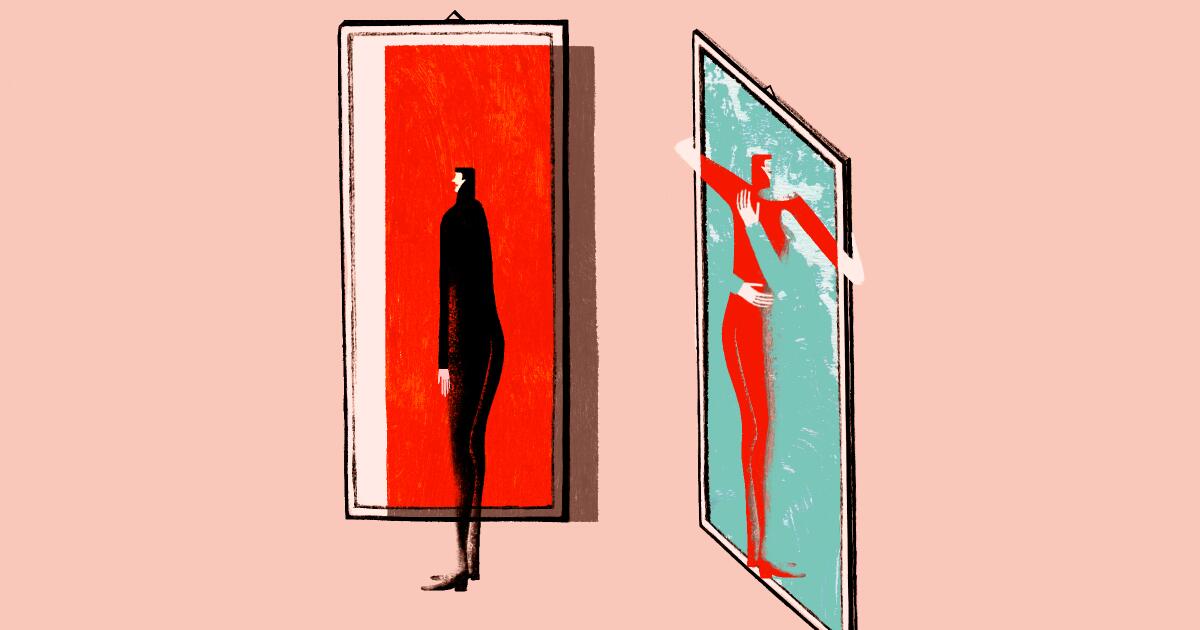
L.A. Affairs: Could a chance romance help me feel whole again after a family tragedy?

In December 2022, I was at Zara in the Glendale Galleria, helping my sister find a coat suitable for a funeral, when he first messaged.
“How are ya?”
It was a loaded question. My 27-year-old brother went to sleep the week before and never woke up, and our family didn’t know why. I was a wreck but I swiped through dating apps seeking a sense of normalcy. Among the suitors, one guy seemed special: artsy and attractive with empathetic eyes. So, I divulged.
“Admittedly not great. My brother died last week,” I responded.
“Well, I know we’re near strangers,” he wrote. “But if you want to talk to someone removed from it, I’m happy to.”
I was taken with his kind response to my overshare, and we established a long-distance rapport (he had just moved from L.A. to New Orleans after a relationship ended).
Three months later, he came to town. I was at a house party in the Pacific Palisades when he texted.
My phone screen showed the time as 11:09 p.m.
“Is this a booty call?” I texted back.
“It is, yeah. Like, adjacent.”
I pondered the proposition. Still grieving, I was acutely aware of mortality and eager for anything to make me feel the opposite. I requested his location.
As I drove east on the 10 Freeway, more texts illuminated on my dash.
“I took a buncha ecstasy. Fair warning.”
Apparently, he was eager to feel something too.
He hopped in my car outside Prime Time Pub. His hair was pulled back and he smelled like beer. We were matching in gray thermals and black pants. I was relieved to feel attracted to him.
“I’m enamored with your face,” he said. So it seemed we were on the same page — or same MDMA.
Throughout the night, his brazen statements continued. “I love your big eyes,” he remarked. “How are you not married?”
I was cautious of his molly-colored claims. Even so, as he followed me into my apartment and leaned down to kiss me, I co-conspired, standing on my toes to meet him.
By morning, his tone was more practical. He shared his plans to sign a lease in New Orleans.
But before he left, he took me to dinner at Tsubaki in Echo Park. Later that night, back in my bed, he ran his fingers over the freckles between my ribs, and said they resembled the constellation Cassiopeia, channeling a scene out of “Serendipity.”
I had wanted to feel something and I was starting to. Yet I was wary of feeling joy.
The next night, I was barhopping the Sunset block in Silver Lake, when I bumped into him having dinner. What were the chances? He kissed my forehead; I stepped on his foot.
Two days later, he ran into me at the reservoir. I slid my headphones around my neck, stunned.
The coincidences humbled me; suddenly, the clamp clenching my atrium loosened a notch. Nevertheless, he left for the Gulf Coast, and we carried on a touch-and-go dialogue, a “Serendipity” JPEG here, photos of his new apartment there.
Then, one night in April, I was having dinner at Greekman’s when he stumbled in. I couldn’t believe it. Here, we’d been planted in the same place unplanned a third time, and yet he hadn’t told me he was in town.
He sent olive oil ice cream to my table, an olive oil branch.
“You looked like you saw a ghost,” he’d later say, conveying that he hadn’t reached out because he needed to remain single.
I understood even if my ego didn’t, and defaulted back to dating apps. Then, something extraordinary happened.
The first two men I went out with had just vacationed in New Orleans. I wrote it off as a Baader-Meinhof frequency illusion, but the signs didn’t stop. One day it was a Louisiana license plate, the next an LSU sweatshirt at Starbucks or Linda Ronstadt’s “Blue Bayou” on the radio.
After a month, I couldn’t ignore the onslaught. I fired off a text.
“I was thinking of you earlier,” he replied.
That was all it took for me to suggest I visit. He obliged, and thus set in motion plans for our third date (if you counted the booty call, which I did).
I booked a plane ticket and checked the forecast: excessive heat warning. We barely left the hotel room. When we did, we traipsed through the French Quarter holding hands. We ate beignets on Bourbon Street and went night swimming.
“How did he die?” he asked as we simmered by the pool.
“Liver failure. Maybe from alcohol or genetics. We don’t really know. He was 27,” I shared, surprised by my vulnerability.
A few weeks after the trip, he invited me back for his photography show. I couldn’t attend, but to show support, I bought a nude he took in the mirror, with proceeds going to Planned Parenthood.
The next time he flew to L.A., I was giddy to reunite, but the sentiment deflated when, in a postcoital moment, he put on his sneakers.
“You’re leaving?”
“We’ll both sleep better this way,” he said in a tone I didn’t recognize.
I didn’t sleep at all. The conversation carried over to morning, when by phone he confirmed my feelings had outpaced his.
“Are you OK?” he asked.
“Yes, I’m fine,” I lied.
But when we hung up, I sobbed. As tears fell from my chin, I wondered how long they had been needing to come out.
In the following days, I moved through the world in a state of compounded grief. Back at the reservoir, the path felt lackluster — a reminder that there was no divine order. I stopped seeing New Orleans signs.
But after the dust settled, in their place came winks from another 6-foot-plus figure from my past, another ghost: Turtles, Pokémon and license plates with my brother’s name, JJ.
I realized they had always been there; they were just too painful to pull into focus. It was easier to get caught up in a blossoming love story than to confront the unending horror of loss.
Weeks later, the full-frontal photo arrived via FedEx, and I asked my friends for their input. “Return to sender” and “Gift the world’s most elevated d— pic to the Louvre,” they suggested.
I weighed their opinions, until a fresh perspective crystallized. In life as in love, art and death, we get to choose what we see and how we interpret it.
So, I hung the photo on my wall.
Some days the image reminds me of getting my heart broken. On others, I recall my courage in being vulnerable — and how I started to open my heart back up.
The author is a screenwriter who lives in Silver Lake. She’s working on a novel.
L.A. Affairs chronicles the search for romantic love in all its glorious expressions in the L.A. area, and we want to hear your true story. We pay $400 for a published essay. Email LAAffairs@latimes.com. You can find submission guidelines here. You can find past columns here.



Once rivals on the tennis court, Martina Navratilova, left, and Chris Evert have become close friends in retirement. They are pictured above at the French Open in 1986.
Trevor Jones/Getty Images Europe
hide caption
toggle caption
Trevor Jones/Getty Images Europe
Chris Evert and Martina Navratilova were the most successful women’s tennis champions of their generation. Both were 18-time Grand Slam tournament winners — and each other’s greatest rivals.
Evert, a Florida native, became a tennis star in her teens. Navratilova was born in communist Czechoslovakia, and emerged as a player after Evert was established. They first faced off during a match in Akron, Ohio, in 1973, when Evert was 18, and Navratilova was 16. Evert won, but Navratilova left an impression.
“I remember thinking to myself, holy cow, when this young girl gets into better shape, she is going to be a force to be reckoned with,” Evert says. “She had so much talent. Her hands were quick, she had a big first serve, she had a big forehand, and she just was so powerful.”

Two years later, on the day she lost a semifinals match to Evert at the U.S. Open, Navratilova defected to the U.S. In the years that followed, her tennis game improved. Though she and Evert had initially been friendly, the friendship cooled as their rivalry heated up.
“Playing Chris was difficult because how can you not like Chris? What’s not to admire?” Navratilova says. “She was like the epitome of cool.”
The new Netflix documentary Chris & Martina: The Final Set tells the story of how Evert and Navratilova re-established their friendship and how they both faced cancer in retirement. Evert was diagnosed with ovarian cancer in 2021; Navratilova was diagnosed with throat and breast cancer in 2022.
“I can’t get away from her,” Evert jokes. “We had a 15-year career, and then we got cancer at the same time. It really is freaky, but I always say: If I want someone to be in the trenches with me, it’s Martina because she has been so supportive and so understanding.”

Navratilova agrees: “We have such a level of trust that we know whatever we say to each other, it stays there. We give each other the best advice we know how to. And there is no ulterior motive, no playing games.”
At the time that this interview was taped, Evert and Navratilova were both in remission from cancer. But late last week, Evert disclosed she’d recently been diagnosed with a recurrence of ovarian cancer.

“We know whatever we say to each other, it stays there,” Martina Navratilova says of her friendship with Chris Evert.
Netflix
hide caption
toggle caption
Netflix
Interview highlights
On supporting each other through cancer
Evert: There are a lot of phone calls between us. … I don’t cook, but Martina would bake bread for me, and her wife Julia would cook, make some chicken soup. … I got a lot of food from Martina. She got a necklace from me.
Navratilova: I get jewelry from Chris, she gets food from me.
Evert: Martina’s and my relationship — because we’ve had one for 50 years — is not the type where we have to talk to each other every day to maintain the closeness. I always knew she was there. She always knew I was there if we needed to talk, and that was that.
On the weakness they experienced with cancer
Navratilova: Chris’ diagnosis and treatment was much more life-threatening than mine, percentage wise, but my treatment was more difficult physically. … I was in New York for seven weeks and I literally sat on a yoga mat, maybe half an hour of the seven weeks, and did some stretching. I couldn’t even do the down dog pose because I would have fallen down. I had absolutely zero strength left.
Evert: The chemo kicked my butt, let’s put it that way. … It left me very weak, very, very weak. After chemo I would have three or four days of intense nausea and I just would feel tingling in my body and it just wasn’t nice. I didn’t have the energy. To walk six blocks was a big deal for me. And it was foreign. You know, it felt like it wasn’t my body, for sure.
On watching the old footage of their matches together for the documentary
Navratilova: For me, it was fun watching with Chris, because we had different reactions to what happened on the court. But what impressed me is how well we played with those wooden rackets. Because you know what? Those rackets are not easy to play with. But you try to put yourself in there physically, what it was like, mentally, what it is like. And it’s like, “Oh, I should have gone down the line,” or, “I can’t believe I missed that shot.” Or “Chris, you had such a great pass.” It was amazing. So it was impressive. … I wish I could still have that six-pack, but anyhow.

Evert: I remember feeling genuinely happy for her. I remember it was her first Wimbledon. That’s always been her dream since she defected. Her family couldn’t be there to watch her. She was all alone. And I just was happy for it. And I knew that this was gonna be one of many for her to win.
On defecting to the U.S. in 1975 when she was 18 years old
Navratilova: I was thrilled to be in the States. I always loved American cars. And when you ordered a ham sandwich, you got, like, two inches of ham and two slices of bread. Whereas growing up, you had thick bread and one slice of ham. So I thought I was in heaven. And it was $2.30 for that sandwich. I still remember it. I couldn’t believe how much ham I was getting.
Lauren Krenzel and Nico Gonzalez Wisler produced and edited this interview for broadcast. Bridget Bentz, Molly Seavy-Nesper and Beth Novey adapted it for the web.


-

 World2 minutes ago
UK asylum seekers could have to pay government $13K before applying for settlement
-

 Politics9 minutes ago
Fetterman unleashes on ‘dirtbag’ wing of Dems after far-left victories: ‘Orgy of socialism’
-

 Health12 minutes ago
Doctors thought man had brain cancer — they found live tapeworms instead
-

 Sports17 minutes ago
Paraguay stuns four-time World Cup champions Germany in penalty shootout after controversial call
-
 Business27 minutes ago
Comcast is spinning off NBCUniversal media and entertainment assets
-
 Entertainment32 minutes ago
Alannah Keyser is latest fired ‘Love Island USA’ contestant to apologize for using a racist slur
-

 Lifestyle39 minutes ago
Chanel’s Bruno Pavlovsky on Reengineering an Iconic Brand
-
 Politics42 minutes ago
Supreme Court limits police use of cellphone data to find crime suspects

