Lifestyle
Horror, a documentary, or kids, there's only good choices at the movies this weekend


Aaron Taylor-Johnson and Alfie Williams in 28 Years Later.
Sony Pictures
hide caption
toggle caption
Sony Pictures
There are only good choices at the cineplex this weekend. A pair of adolescent heroes – one battling a rage virus, the other bargaining with goofy aliens – and a deaf heroine who’s triumphed in an industry that’s never known what to make of her. What’s not to like?
28 Years Later
YouTube
The Rage Virus that escaped from a bioweapons lab in 28 Days Later, and seemed to have escaped the British Isles in 28 Weeks Later has now been contained. Alas, it’s been contained to the British Isles, meaning NATO has warships patrolling the coast, and Britain’s remaining uninfected residents have essentially been left for dead. Spike (Alfie Williams), a lad of 12, has grown up on an island compound separated from the English mainland by a causeway that is passable only at low tide. Residents of the compound must make occasional forays into infected territory for food and fuel, armed only with bows and arrows to defend against raging naked flesh-eaters. Spike’s a decent archer, and on his first trek to the mainland, he makes his first kill. He also learns something that will bring him back on an odyssey that is both terrifying and surprisingly sweet. Jodie Comer’s addled as Spike’s sickly mom, while Aaron Taylor-Johnson is randy as his dad. Ralph Fiennes is on hand as a doctor who’s got a witchy Macbeth thing going after enduring almost three decades of rage-induced sound and fury. And original director Danny Boyle and writer Alex Garland are back to make sure this third episode of their auteur-horror franchise provides scares and scenery in the right proportions to whet appetites for the rest of an already-planned trilogy. Consider mine whetted.
Elio
YouTube
Pixar’s latest excursion to infinity and beyond centers on Elio, an initially insecure 11-year-old orphan (voiced by Yonas Kibreab), who’s so lonely he thinks his only route to happiness is being abducted by aliens. When a passing spaceship filled with otherworldly critters – including a pink manta ray, a pear-shaped granite beetle, an orb-burping entity, and a liquid supercomputer — receives his ham radio greeting, it beams him up to its “communiverse.” He meets a new pal – Glordon (Remy Edgerly), the slug-like son of a bloodthirsty Hylurgian warlord — and has to learn the art of the deal (“start from a position of power”) to negotiate with Glordon’s implacable but ultimately loving dad. Prettily animated in bright pastels and voiced amusingly, the story serves a sweetly conventional set of lessons about friendship, standing up for yourself, and accepting love from allies who share your sensibilities — say, a well-meaning aunt (Zoe Saldana) who happens to be an astronaut-candidate.
Marlee Matlin: Not Alone Anymore
YouTube
At the outset of this compelling documentary, a scarlet-gowned Marlee Matlin arrives at the 2022 Oscars as history’s sole deaf Oscar winner. She’s about to be, as the title has it, “not alone anymore” when her CODA co-star Troy Kotsur wins Best Supporting Actor. It’s pretty clearly a moment of joy for a true pioneer. Then, deaf documentarian Shoshannah Stern marshals a wealth of archival material – from home movies, to Matlin’s screen test for Children of a Lesser God, to screen shots of the bruises her abusive lover and costar William Hurt left on her body – to tell the story of the psychic bruises she suffered along her journey. The trauma left by guilt-ridden parents, dismissive journalists, and a lifetime of debilitating “language deprivation.” With sensitivity to Matlin’s primary language, American Sign Language, Stern lays out the controversies surrounding her Oscars speech, her campaign for closed-captioning, and her anointing of a deaf president for Gallaudet University, a school for the deaf that had always been led by hearing administrators. The result is an intimate portrait of a deaf artist who led a 35-year crusade for equity and inclusion in an industry that’s never quite known how to deal with her.

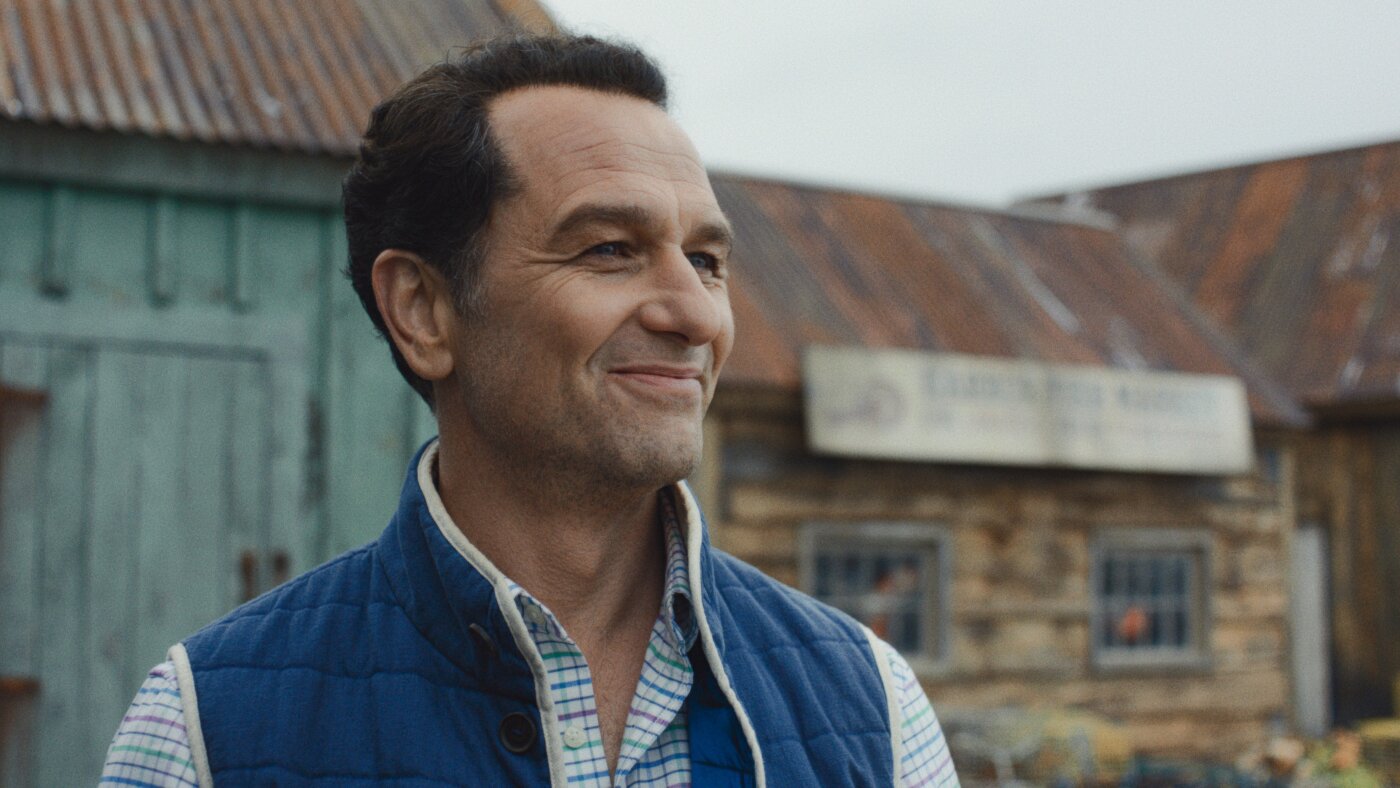
Matthew Rhys was nominated for his role in Widow’s Bay.
Apple TV
hide caption
toggle caption
Apple TV
The 2026 Emmy nominations are here. We’re unpacking the record-breaking nominations for Hacks, plus a big day for Widow’s Bay, The Pitt, and The Bear. We’ll also talk about the snubs and make some early predictions of who will win.
Connect with Pop Culture Happy Hour:
Letterboxd / Facebook
Our weekly newsletter
Support Pop Culture Happy Hour+


Can you say no to a friend’s wedding?
Getty Images/Getty images
hide caption
toggle caption
Getty Images/Getty images
Are we spending too much on other people’s weddings?
Going to a friend’s weddings can be so fun and meaningful… but it can also really hurt your wallet. A survey by LendingTree found that 31% of people who had been to a wedding in the past five years had accrued debt to attend. So what’s driving up the cost of weddings for guests? And what makes it so hard to say no to these expenses?
Brittany breaks it down with Allyson Rees, senior analyst at trend forecasting firm WGSN, and Annie Joy Williams, assistant editor at The Atlantic.
This episode was produced by Liam McBain, with additional support from Corey Antonio Rose. It was edited by Neena Pathak. Our Supervising Producer is Cher Vincent. Our Executive Producer is Barton Girdwood. Our VP of Programming is Yolanda Sangweni.
-

 Rhode Island1 minute ago
Handshake Initiative instills confidence, motivation in students
-

 South-Carolina6 minutes ago
ESPN recruiting writers break down five-star Josh Dobson’s fit with South Carolina
-

 South Dakota13 minutes ago
South Dakota man faces abuse charges after authorities called to NW Iowa casino
-

 Tennessee16 minutes ago
Data centers driving up Tennessee power bills, report finds
-

 Texas21 minutes ago
Family demands investigation after US man killed by ICE agent in Texas
-

 Utah28 minutes ago
Turn your miles into meals
-

 Vermont31 minutes ago
Poll: Most young Vermonters say they’re likely to leave state amid affordability concerns – VTDigger
-

 Virginia36 minutes ago
MEOC Organization hosts annual summer picnic for Southwest Virginia seniors

