Lifestyle
Here’s how to have the most fun at the L.A. Renaissance Faire


I decided that, just this once, I was rooting for evil to win — mainly because I liked their energy more.
The wereboar growled next to Black Pudding, a hulking vicious monster, both focused on ripping Puck and Cordelia to shreds. Oberon, an Archfey god, stood alongside them, concerned. But only one thing would decide the fate of everyone on stage: the D20, a 20-sided die.
For 45 minutes on Saturday morning, a rambunctious audience of elves, fairies, gnomes, wizards and more was transported to another land, far away from any concern for modern life, as they watched the “Dungeons & Shakespeare” live show at the Renaissance Pleasure Faire at the Santa Fe Dam Recreational Area in Irwindale.

Lynx the Sword Swallower prepares the audience for his show.
Before Saturday, I’d never attended a renaissance fair, a reenactment of the English Renaissance in the form of an immersive festival (i.e. why the Irwindale fair is based in the 16th century village of Port Deptford). Although I was not entirely new to fanciful make-’em-ups. My family had been members of the Society for Creative Anachronism, a medieval-era living history organization. We frequently dressed up to visit our local kingdom. Once, a wizard gave me a cape. Another time, I won a plague-themed frog toss.
I’d long forgotten what a blissful escape those weekends had been for a young queer kid living in rural America — until Saturday, when I looked around the fair and realized it was a diverse crowd in every sense of the word.
At the “Dungeons & Shakespeare” show, host Willy Nilly encouraged us to lean into the welcoming atmosphere we found among our fellow outcasts.
“Let’s stop worrying about whether we seem weird and make our stories amazing,” the actor, who grew up in conservative Midland, Texas, told the crowd.
And with that same energy, my wife and I trodded further into the fair in hot pursuit of merriment and wonder.
I should note: The Irwindale fair is packed full of opportunities to spend a day. It can, at times, feel overwhelming (and dusty). Here’s what we learned that will set you up for success, should you fancy a trip back in time.

Guests make their way out of the Renaissance Pleasure Faire at sunset.
1. Thou must plan thy morrow
Translation: You must plan your day.
The best way to have the perfect day?
It depends!
Before your visit, I would recommend loosely plotting out your day using the fair’s map. First, you’ll want to discern which performances you’d like to see. Each weekend’s entertainment schedule is released the prior Wednesday, although it can change due to “weather, illness or Her Majesty’s whim,” as the fair website notes.
There are 12 stages and performance areas, each with their own programming. And it’s a real range.
For example, you’ll find MooNie the Magnif’Cent, a fair staple who mixes clowning, stunts and comedy, all without speaking. Supernova the Strongwoman will dazzle the crowd with risky tricks and demolition. And Dora Viellette teaches her audience about an array of music, from medieval to folk favorites, as she plays the hurdy-gurdy (which is very fun to say aloud).
I’d recommend attending the performance you want to see the most early in the day, as the fair seems to get more crowded as the day progresses.
Similarly, if you’d like to focus the day on playing games and experiencing human-powered carnival rides, I’d recommend doing that first. We originally wanted to practice our archery skills, but because we’d waited until after noon, the line was long every time we checked. That said, I did quickly get to throw 10 javelin for $10 later in the day, and I noticed the lines for the “big swing” — aptly named — and the dragon swing were both short. Additionally, it looked like a fairly quick wait to learn from the teachers at St. Jude’s School of Fencing and the Sword Master’s Challenge, where a worker told my wife, “You look like you’d like to hit someone!” (Trust, it wasn’t me, despite my perpetually high anxiety.)
There are also additional paid activities, like having tea with the queen or imbibing via a pub crawl. And then there are the jousting competitions (more on those below).

Her majesty the queen is seen with her court.
2. The Queen doth nay require fanciful garb
Translation: Costumes are not required but very fun.
About five minutes into the fair, I realized I could entertain myself for probably the entire day by simply people watching. Entertainers and guests’ costumes alike were incredible.
Woodland fairies carrying giant daffodils or wearing hats covered in mushrooms. Knights in real armor. Every version of Merlin the wizard, spanning an expansive gender spectrum. Gnomes in tall red hats. And at least one pickle pope blessing people with herbs. You might say they were kind of a big dill. (Hold your applause.)
There are multiple themed weekends, too, including the first weekend when guests were encouraged to strut out in their best pirate garb.
1

2

3

4

1. Stephanie Divinski looks down at her shoulder puppet. 2. Trilainna Stanton, also known as Prince Rain, of San Diego. 3. Partners Reese Pei, left, and Mariner Song are pictured. 4. Meisha Mock, left, and Aimey Beer both wear wolf masks created by Meisha.
3. Parley with the guildfolk
Translation: Talk to the townspeople.
Around the fair, you have the opportunity to interact with several guilds and performance tropes. “The most fun you’ll get at the fair is from talking to people,” my friend Matthew, who has several years of renaissance fair experience, told me. “As someone who volunteers with a guild, we aren’t just there to sit around and look pretty. Come talk to us.”
I loved watching the fae creatures of the Fantastikals frolic around, getting into mischief. I kept an eye out for Danse Macabre, whose members dance away the threat of the plague to the fair. But I was most starstruck when I met her majesty Queen Elizabeth I. (Note: The actors do not break character, even to tell a journalist their given name outside of their fair life.)
As I waited in line, I observed the diligently trained actors of the Queen’s Court. The lord high treasurer bent down and handed a gold coin to a toddler doddling around as his family waited to meet the queen. He tried to eat it, but was bested by his mother.
1

2

3

1. The Fantastikals, representing nature and the elements, provide a sense of wonder and mischief. 2. Royal guard member Maria DeSilva, left, stands by Anna of Austria, the queen of Spain, and her sister Elisabeth of Austria as they read their Bibles together. 3. A maid of honor to the queen passes the time with canvas work.
“You must be quicker if you are to be successful,” Sir Thomas Heneage, the court’s gentleman usher, told him.
I asked the queen what a newbie like me should know about visiting her village.
“I would tell them that at the fair, there is all the world to be had,” she said. “And no matter what you find that will set your heart alight, you will find it here.”
(I also asked her if it was as fun as it looked to be carried around in a basket by the Yeomen of the Guard, and after a good laugh, she affirmed, “It is truly a highlight of our day.”)

The crowd cheers as the jousters charge one another during the final bout of the day.
4. Hark! What a clatter!
Translation: Prepare for shouting
But it’s the fun kind!
When the fair opens at 10 a.m., guests shout, “Open wide the gates!”
“Huzzah!” is commonly shouted out in celebration, like when you tip someone, or when your trusty javelin strikes the target (mine did not).
And “God save the queen!” is exclaimed during the parades and just about any time the queen is around.
5. By hook and crook, ready thyself for a joust
Translation: It’s essential to attend a joust.

A jousters charges toward his opponent during the final bout of the day.
Attending a joust is one of the quintessential renaissance festival experiences.
At the L.A. fair, there are generally three joust performances per day: the Deptford tournament joust, the queen’s joust and the “joust to the death.”
It’s best to arrive 45 minutes early to get a seat, as the performance space fills to capacity. You will be turned away if it is full.
And it’s competitive. Immediately after sitting down, my seatmate informed me that we were rooting for green and blue, and the other team was our mortal enemies. I hooted and hollered accordingly.
6. There is much fine belly-timber
Translation: There is so much good food.

OK, here’s a confession: I eat a vegan diet. But, I can still appreciate the wide range of food options available — including the iconic turkey leg.
After securing our marinated tofu nachos and poke bowl, my wife and I sat down among other guests. Our tablemates had purchased a litany of fried options, including scotch eggs from the Quail Inn, which also serves bacon-wrapped jalapeño peppers, cheese fritters and “whole, partially deboned quail.”
I personally regret not heading over to Scoops on Tap, where I could have ordered vegan lemon blueberry swirl and mint chip ice cream. Their spirit-infused offerings include buttery beer, mocha stout crush and drumstick stout (which is not turkey-flavored, but rather a vanilla base).
7. Pray thee pay full mind to the merchants
Translation: Take time to learn about the artisans.

Drabbits, hand-crafted and one-of-a-kind shoulder puppets, at the Imagination Adoptorium booth.
Throughout the fair, you can easily find unique and colorful birthday gifts, like dragon eggs or a buy-your-own-fairy house, that would make your nieces, nephews and little cousins quickly proclaim you their favorite relative.
Beyond that, you can speak to artisans who’ve been honing their craft, in some cases, for decades. I asked glass artist Stuart Abelman, who has regular glass-blowing demonstrations during the fair, how his artistry fits into the renaissance fair.
“They’ve been blowing glass for 5,000 years,” Abelman, whose studio is based in Van Nuys, said. “Through the Renaissance, there were incredible glass blowers at Murano, Italy, incredible glass blowers. The queen drank [out of] beautiful glassware. They were the best.”

An assortment of masks are seen in the Mischief Masks booth.
8. Fret not if the winds of fate blow you elsewhere
Translation: Don’t worry if you can’t attend this specific fair.
California has several renaissance fairs and similarly themed events throughout the year. And, for the most adventurous, there are other fairs across the country and world, including the Texas Renaissance Festival, said to be the largest in the U.S.
Fairs scheduled this year in California include: Escondido Renaissance Faire (spring event: April 25–26, May 2–3; fall event: TBD); Summer Renaissance Fantasy Faire in Idyllwild (June 13–14); Central Coast Renaissance Festival in San Luis Obispo (July 18–19); Idyllwild Renaissance Faire (Sept. 12–13); and the Northern California Renaissance Faire in Hollister (Sept. 19–Oct. 25).
I spoke to Deptford’s lord mayor, Sir Barnubus Bliss, about what’s most important to him about folks experiencing the fair closest to L.A.
The Original Renaissance Pleasure Faire
When: Saturdays and Sundays through May 17
Where: Santa Fe Dam Recreation Area, 15501 Arrow Highway, Irwindale. Note: The fair’s organizers advise you to not put the address in your GPS. It’s recommended that you take the 210, exit off Irwindale Ave (#38) and follow the signs to the fair. Upon arrival, you will pay the $15 entrance fee to the park, and then be directed to a large parking area.
Tickets: $53 for adults and children 13 or older, $28 for children 5 to 12, and free for kids 4 and younger. Although you can buy tickets at the fair, it’s logistically easier to buy them online at renfair.com.
“Every time someone comes through those doors, I always wish them a ‘Welcome home,’” he said, “because it is my understanding that no matter where you are from, no matter what your life has been, when you come within these gates, when you are within our walls, you are at home, no matter where you were beforehand.”

Nik Frey, far left, and his partner Joanna Dominguez, far right, sword fight with Bexleigh Kilker, 9, and Bexleigh’s dad Kevin, as they all wait out traffic after opening day at the Renaissance Pleasure Faire.
And I felt that as I watched adults gallivant around with childlike glee. As my wife and I left the fair, I did not find myself immediately reaching for my phone. I wanted to stay, just a while longer, in a world where seemingly everyone is welcome to be just as they are.




I didn’t think anyone would take my Hinge prompt seriously. My ideal first date is … hot yoga. The prompt was partly a joke, written by a friend because I couldn’t figure out what to write. If anything, I figured the prompt would explain the series of yoga pictures scattered across my profile, proving to potential suitors that I wasn’t simply a yoga poser like most Angelenos who view vinyasa as just another workout trend.
I was a “serious yogi,” and to date me would mean respecting my daily practice and being OK with the 3,000 small Ganesha statues tucked into every crevice of my apartment.
Still, I was surprised and slightly amused when Noah asked, in all seriousness, if I would like to go to a yoga class with him and then get dinner afterward. In my effort to go on as many dates as possible as quickly as possible, I said yes, of course. I was a couple of months removed from an eight-year relationship that ended badly. I had convinced myself it would take 100 bad first dates before I found anyone remotely interesting. At least a yoga date for date No. 14 would be slightly more exciting than recounting life stories over drinks at the local bar.
In the texting convo that followed planning our date, Noah and I exchanged music tastes. He is a raver and loves EDM, and I am a Swiftie who also, as it turned out, loves EDM. We learned we attended Chapman University at the same time. We both worked on the Fox lot during the same years. And we share an appreciation for tofu, which he called a “gift from the heavens,” making my vegan heart skip a beat.
Noah and I met at a popular hot yoga studio in Hollywood for our one-hour Bikram-vinyasa fusion date. There was something familiar about him that I initially attributed to having crossed paths in college at some point. In the moments before class, we unloaded our gym bags and shoes into separate lockers outside of the yoga room while exchanging hellos that I expected to be awkward but somehow felt easy and unforced. My interest piqued.
In the yoga room, we set up our mats in the second row. As the class started and the instructor dimmed the lights to an orange glow, it hit me that hot yoga might be a horrible first date idea. We were two strangers, our yoga mats a little too close together, already sweating profusely as the yoga teacher instructed us into sun salutations. I couldn’t decide whether to focus on the class, the poses and keeping my breath slow or if I should try to continuously look cute since this was a date. I kept accidentally catching Noah’s eye in the mirror, and through facial expressions, tried to communicate that I was having fun and in no way subtly judging his yoga practice.
At some point during class, Noah slipped his shirt off and, even through my sweat-filled gaze, I caught a glimpse of his six-pack in the mirror. He met my eyes right as I started to blush, and I looked away fast, embarrassed at having been caught staring. The room suddenly felt hotter and more humid than before. I struggled to steady my breath. Yes, this was definitely a horrible yet interesting first date idea.
The teacher cued us onto our bellies for a backbend sequence. My eyes met Noah’s in the mirror again. This time I turned to look at him, and he smiled a surprisingly familiar smile that meant, “I know this is weird, but I’m having fun too.”
“That was a nice class,” Noah said once our hour was up and we were back in the air-conditioned studio lobby. “It’s one way to see your date sweaty and half-naked.”
I laughed in agreement as we parted ways to shower and change for dinner.
We met again at Cafe Gratitude on Larchmont Boulevard and ordered dishes called “I Am Grateful” and “I Am Remarkable” while recounting the class from our perspectives. He told me about his interest in yoga, how he only recently began practicing as a way to help with mobility. I told him yoga keeps me grounded. I showed off the book I kept in my purse, a story about living Jewishly in modern times, which led to a discussion of how we both grew up Jewish on opposite sides of the country. I liked how neither of us ordered a drink with dinner, choosing water over alcohol as the conversation remained interesting and focused. I liked how he was nice to the server and that his eye contact put me at ease. I liked how after paying the check, he walked me to my car and asked if he could kiss me.
I nodded, and he closed the distance between us. We kissed, and with it came a memory: Freshman year of college, orientation week or shortly afterward, I was at a football party with the girl who would soon be my sorority big. I was drunk and chatty and looking to make friends. I started talking to a freshman boy, and that conversation soon turned to making out, the way most drunken college flirting did back then.
My eyes opened, I pulled away from the kiss. “Have we done this before?” I asked.
Noah blushed then nodded softly.
“Freshman year, I think,” he said, “at a party.”
“A football party?”
“Yes!” He laughed, and I did too.
We kissed again. It was the type of kiss you don’t forget. The type that makes sense.
“Well, we have to do this again,” he concluded.
We said good night. He texted me a song to listen to. I played it in the car on repeat until I arrived home.
Until Noah, I thought an invisible string was only the name of a Taylor Swift song. Now, I know better.
The author is a community builder, writer and yoga teacher. She lives in Echo Park. She’s on Instagram: @allegramarcelle.
L.A. Affairs chronicles the search for romantic love in all its glorious expressions in the L.A. area, and we want to hear your true story. We pay $400 for a published essay. Email LAAffairs@latimes.com. You can find submission guidelines here. You can find past columns here.
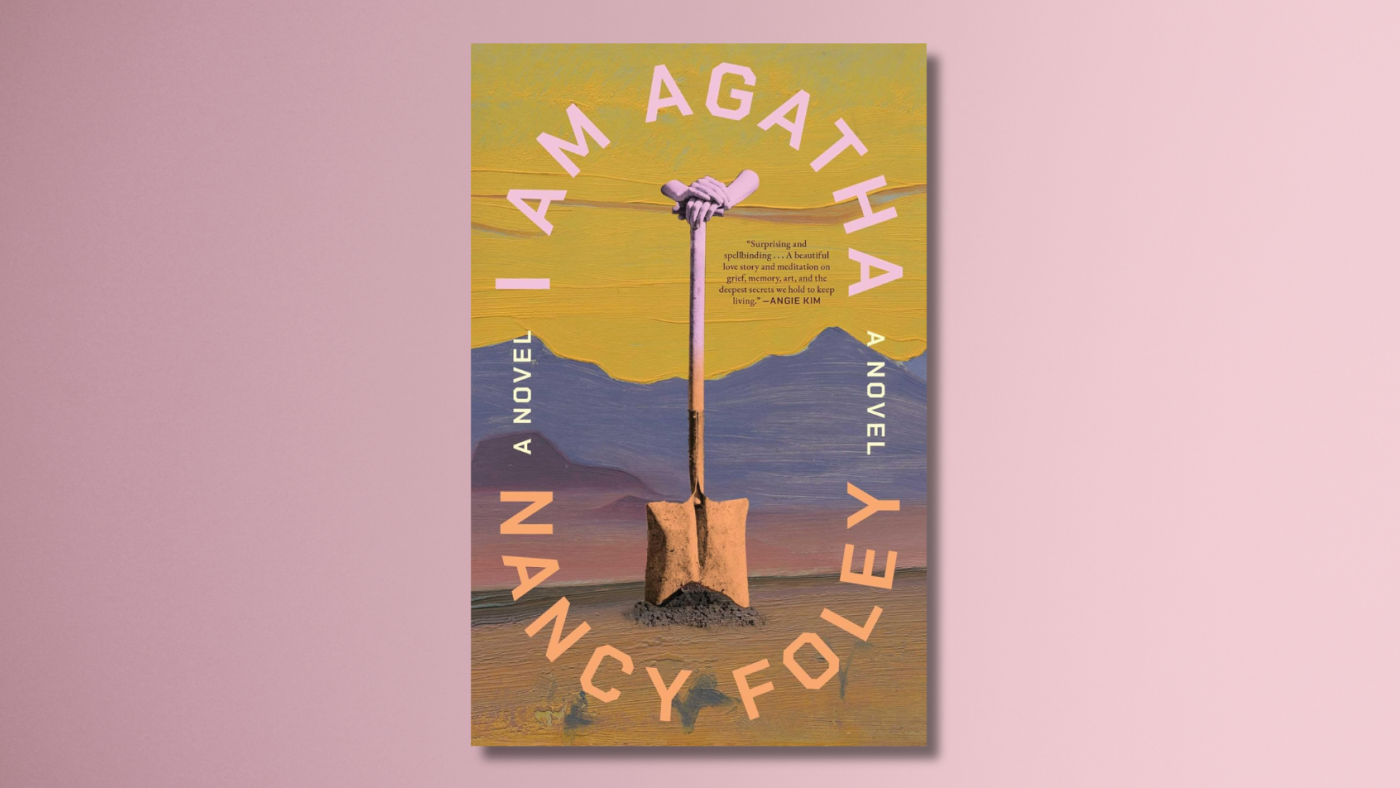
Agatha Smithson is that rare person who lacks the gene for self-doubt. Brash and brutally dismissive of anyone who disagrees with her, Agatha is the main character and unreliable narrator of Nancy Foley’s deviously plotted debut novel, I Am Agatha.
If you’re one of those readers who prizes likeability above all else in your fictional characters, you may be inclined to give I Am Agatha a pass. But that would be a mistake. This is a strange, fresh story about artistic ambition and personal autonomy willingly abridged for love. And, all too unusually, the love affair here is between two women in their 60s.
Agatha’s character is inspired by the real-life minimalist painter Agnes Martin, known for her canvases covered in graphs and stripes. Martin lived for years in New Mexico near Georgia O’Keeffe.
Diagnosed with paranoid schizophrenia, Martin was a solitary person, although she had significant relationships with women. Foley, who grew up in New Mexico, says that her novel was inspired by rumors of such a relationship between a friend of her grandmother’s and Martin.
I Am Agatha takes place mostly in the 1970s, with flashbacks to Agatha’s rough youth in Canada and allusions to a hard time in New York, including a stint at Bellevue. New Mexico offers Agatha a new start and an austere landscape that jibes with her art and own personality. Here’s Agatha, in her typical brusque, pared-down manner of speaking, describing the view from the adobe house she built herself high upon a mesa:
My house looks west out over a canyon that although far from any ocean whatsoever yet resembles one in scope and light. This ocean canyon heaves waves of shale and basalt, quartz and silt. Cloud shadows flit across its rock floor like ghost boats.
There is no other place on Earth like Mesa Portales. I have traveled to many places, so mine is not an uninformed opinion. The truth is that there is a hierarchy. Some places are objectively better, just as some people are objectively better than others.
The “objectively better” person Agatha wants to bring to live with her on Mesa Portales is her longtime secret love, a woman named Alice who’s now declining into dementia. But, there are two obstacles to Agatha’s caretaking plan: The first is Alice’s adult son, Frank Jr., who plans to move his mother into a care facility in Taos.
At one point, Agatha and Frank argue over this plan and Frank Jr. drops some bombshell news. Agatha tells us: “I’m startled but won’t let him take my own breath away from me and puff himself up with it.” It’s hard not to root for a character who knows how to sling words around like that.
The other obstacle seems more immovable: It’s Alice’s daughter, Lorna, who’s buried in the backyard of Alice’s house. Years ago, Lorna was murdered by her abusive husband, and Alice likes to sit every day by her daughter’s grave, which is planted with violets and lilacs. I’m not giving much away when I point out that Agatha’s practical, if grotesque, solution to this dilemma is revealed in the cover art of I Am Agatha; metaphorically, that book jacket hits readers over the head with a shovel.

This novel becomes even more deliciously weird as a pattern emerges: That is, whenever Agatha talks with Frank Jr. or other characters about Alice’s welfare, Alice is never present. She’s always taking a walk or a nap or just unavailable.
It becomes impossible to ignore that Agatha is estranged from a lot of people. She makes brief enigmatic references to a falling out with O’Keefe, and an academic colleague, and a parasitic graduate student who’s writing her thesis on Agatha’s art. As a narrator, Agatha turns out to be no more forthcoming to us readers than she’s been to any of these characters — former friends she now regards as antagonists.

In its ingeniously duplicitous narrative structure, I Am Agatha is reminiscent of Patricia Highsmith’s magnificent Ripley novels. Not that Agatha is an amoral con artist like Tom Ripley, but she will do anything to safeguard Alice, her fading love. “We are all of us hunted animals from the moment we are born,” says Agatha, contemplating old age and death. None of us will outrun Mortality, but watching brilliant and wily Agatha try is captivating.
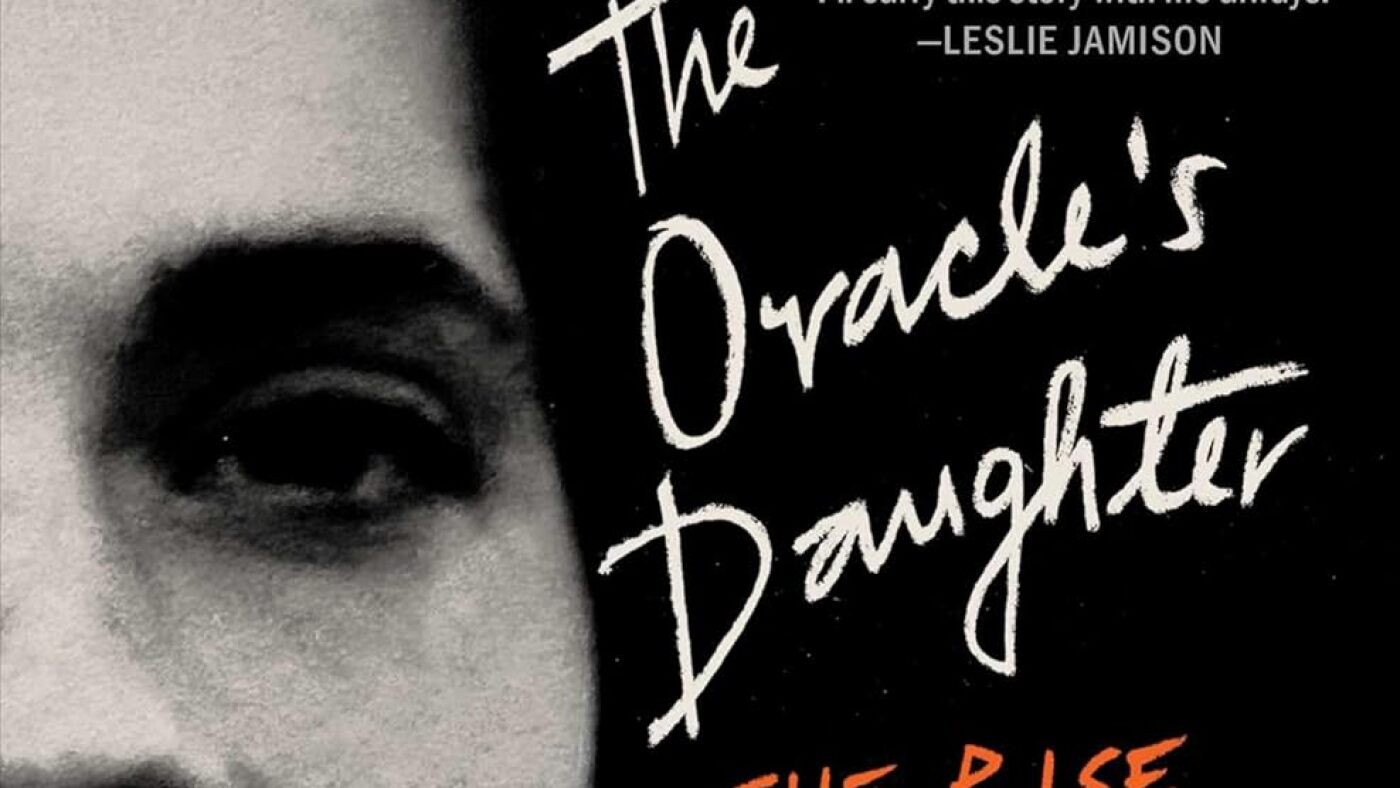
In 2017, a gaunt, bespectacled, 71-year-old woman wearing a crisp white uniform with two stars on the shoulder was arrested in New Mexico. This was Deborah Green, nee Lila Carter, the leader and self-described general of the Aggressive Christianity Missions Training Corps (ACMTC) – a cult that had been operating with impunity for three decades, despite various attempts by former members to get law enforcement to shut it down.
“But Deborah looked so small, so frail – so old” when she was arrested, writes Harrison Hill in his new book, The Oracle’s Daughter: The Rise and Fall of an American Cult. And yet this was the woman who with her rantings and ravings about God and hell had struck fear into the hearts of her followers.
Hill’s book closely follows two characters – Maura Aluzas and Sarah Green – and their journeys into and out of ACMTC. It also explores the broader landscape of cults in the U.S. and how their logic and approach to religion have become less and less fringe over the years, to the point where ACMTC’s messy doctrine seems, in a twisted way, to have been ahead of its time.
Maura Aluzas met Lila in the late 1960s, when Maura worked at a hospital and helped care for Lila’s dying brother. The young women became close friends for a time; both women were seekers, each wishing to lead a meaningful, intentional life. During the near-decade they were out of touch, both embraced Christianity, and they certainly weren’t alone in their newfound fervor when, in 1980, Lila Carter – now married to Jim Green – reached out to Maura to share that she and her husband had found God; the 1970s had seen a resurgence of religious zeal. When the Greens returned to California, the families spent time together and Maura’s husband, Steve, was impressed with the Greens’ vision of a spiritual army that would “take up arms against the forces of secularism and mainstream Christianity.” Maura wasn’t entirely convinced, but she loved her husband and still held an old loyalty to the Lila she’d once known, even if this new, born-again version was harsher and stranger. And, so, when Steve wanted to move closer to Lila and Jim Green, Maura Aluzas agreed.
This began a series of incremental choices that wouldn’t, at the time, have felt as extreme as they seem in hindsight. Maura and Steve became the first members of the Greens’ church. They raised children in the harsh environment that Lila – who’d renamed herself Deborah – cultivated. And because of her lingering doubts, or simply because she refused to beat her children as firmly as Deborah thought she should, Maura was punished. She was first ostracized then exiled. Although being banished was painful, for Maura, it eventually became a relief, a way to escape.
The twists and turns Hill follows throughout this true story are extraordinary, and the author does a wonderful job of contextualizing the painful, sometimes horrifying choices his subjects made – especially those involving women leaving their children, which, as he points out, would be perceived very differently if these women had been men.
How and why do people end up in cults? Why did Maura Aluzas join ACMTC if she was never fully on board? Well, Hill reminds readers, no one really “joins” a cult. “They join what they believe to be an alternative community, or an especially devoted religious group.” Gradually, things change, but by then, the group has become a home, a kind of family.
Those born into or raised in a cult, of course, have no choice in the matter of joining. Sarah Green, Deborah and Jim’s first child, grew up in ACMTC, moving with her parents and their followers as they sought to avoid legal consequences for their various actions. When she escaped in adulthood, she left behind three young children of her own – practically speaking, she couldn’t run away with them. She tried to go back to get them, but her mother allowed her to see them only briefly before effectively hiding them away. Part of Sarah still believed that she was very literally going to hell for leaving ACMTC; she rationalized that her children, at least, could still be granted entry to heaven.
Our culture is fascinated by cults, and there’s an element of self-soothing to be found in consuming media about them. We would never join a cult, we tell ourselves. But it’s generally believed now that what makes a person vulnerable to a cult isn’t anything innate about them but rather a confluence of factors relating to their circumstances, their support networks, and the options open to them. I was often reminded, while reading this book, of a now-iconic scene in the second season of Fleabag, when Phoebe Waller-Bridge’s character, who is grieving the death of her friend – which she believes to have been her fault – confesses to the priest she’s in love with that she wants someone to tell her what to do. She wants to be told “what to like, what to hate, what to rage about.” Most of all, she wants someone to tell her what to believe in and how to live her life.
It’s a relatable impulse, even for those who consider themselves fiercely independent. As Hill points out, the Greens were hippies, enthusiastic members of the counterculture before they became Christian extremists. “Hippies placed a premium on freedom,” he writes, “on the right to improvise their lives as they saw fit. And yet the 1960s and seventies also revealed the limits of freedom – how an endless array of options could be confusing, overwhelming, even debilitating. Sometimes it simply feels better being told what to do.”
Indeed – and it is precisely when we’re most confused and overwhelmed that we are most susceptible to losing sight of what we actually believe in and how we actually want to live. The Oracle’s Daughter is a story about the terror of losing the self but it’s also, gratifyingly, a story about finding the way back to it.
Ilana Masad is a fiction writer, critic, and founder/host of the podcast The Other Stories. Her latest novel is Beings.

Now the FAA says gamers are the answer to its air traffic controller shortage

Iran regime uses former Soviet republic to dodge sanctions, fund war machine: report

Swalwell’s former female staffer drops bombshell allegations of sexual assault, exposing himself: report

This everyday drinking pattern could quietly raise liver disease risk

Minor league team plates 10 runs in one inning on just one hit, zero errors in frigid conditions

Florida High School Football Rankings: Top 25 teams – Oct. 21

How old is Bo Nix? What to know about Oregon quarterback ahead of 2024 NFL Draft

Cleary's 21 help Le Moyne down Central Connecticut State 69-64 in OT

99th annual Pony Swim held in Virginia

Indiana Members Credit Union announced as new anchor tenant at Bottleworks District
Swalwell’s former female staffer drops bombshell allegations of sexual assault, exposing himself: report

NASA’s Artemis II prepares for splashdown on Earth

Trump proposes painting executive office building white

Rep Randy Fine joins House Freedom Caucus: ‘Strongest group of conservative patriots in Congress’

Trump issues NATO ultimatum to reopen Strait of Hormuz ‘within days’
-

 Atlanta, GA6 days ago
1 teenage girl killed, another injured in shooting at Piedmont Park, police say
-

 Education1 week ago
Video: YouTube’s C.E.O. on the Rise of Video and the Decline of Reading
-

 Movie Reviews1 week ago
Vaazha 2 first half review: Hashir anchors a lively, chaos-filled teen tale
-

 Georgia3 days ago
Georgia House Special Runoff Election 2026 Live Results
-

 Education1 week ago
Video: Toy Testing with a Discerning Bodega Cat
-

 Pennsylvania4 days ago
Parents charged after toddler injured by wolf at Pennsylvania zoo
-
 Milwaukee, WI4 days ago
Potawatomi Casino Hotel evacuated after fire breaks out in rooftop HVAC system
-
 Entertainment1 week ago
Inside Ye’s first comeback show at SoFi Stadium