Lifestyle
Here are some of the NPR stories that had a big impact in 2024

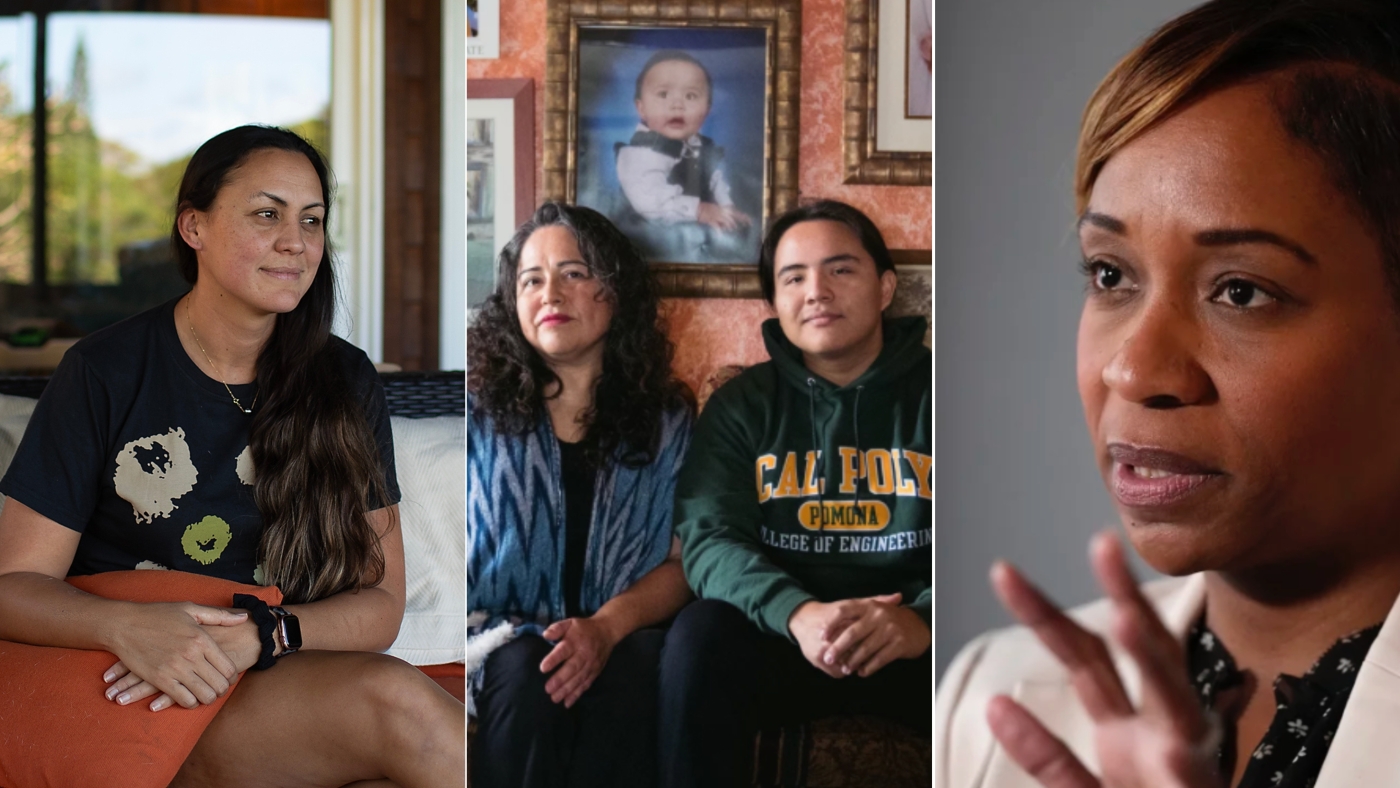
Photos from some of our most impactful stories of 2024.
Ryan Kellman/Gabriella Angotti-Jones/Charles Krupa/AP/NPR
hide caption
toggle caption
Ryan Kellman/Gabriella Angotti-Jones/Charles Krupa/AP/NPR
As journalists working to fulfill NPR’s mission of creating a more informed public, the metrics of success for our work can be a bit more amorphous than in other professions.
How do you measure impact when your independent, nonprofit newsroom isn’t pressuring you to meet a quota on sales, clicks or signups?

If you ask the reporters, editors and producers from all over the world involved in creating our award-winning coverage on everything from TikTok’s internal policies to new voting districts in a disenfranchised Alabama community, they’d all have a different answer.
Sometimes it can be one email from a listener sharing how the information they’ve learned has helped them in their own lives.
Impact can be practical, like finally learning what kind of electric car to buy. And impact can be personal, like feeling a little more seen by reporting that covers the expanse of the opioid epidemic in the United States. Other times, impact can translate to real changes in local communities, or even the federal government.

The important thing to remember is that every ripple made by our coverage is tied to NPR’s core belief that we should live in a world challenged and invigorated by a deeper understanding and appreciation of events, ideas and cultures.
Below, you’ll find a list of stories compiled by NPR staffers that we felt prompted some of the strongest changes and reactions from our listeners, and the leaders in their communities too. It’s a good reminder of what our work can do — and how much we have cut out for us in the years to come.
The Education Department fixes its $1.8 billion FAFSA mistake
NPR’s Education Desk covered the problematic rollout of the FAFSA form in December 2023 and early January 2024, and it was our story that broke the news that the Biden administration was finally going to fix the biggest problem behind the rollout — a mistake that would have cost lower-income students dearly.
“For this story, we personified the mistake’s toll by finding a student and his mother who seemed to have been hurt by it (not easy since it was still early days),” reporter Cory Turner says. “Once we had the story ready, we did our due diligence, taking it to the Education Department for comment and to ask, once again, why they hadn’t yet agreed to fix this incredible mistake. It was in this back-and-forth, in this case just hours before the story was set to publish and air, that the Biden administration officially reversed itself and told NPR that it would, at last, fix the problem. … It’s impossible to know precisely what was happening behind the scenes at the Department, but this story — and the further discomfort it would have caused the administration — was certainly softened by the sudden, exclusive commitment to NPR in the opening sentences that a fix was finally on the way.”
Helping victims of crypto scams get their money back
This is a follow-up story to an investigation NPR reporter Bobby Allyn did of a crypto scam that was stealing the life savings of elderly people. After this story, the Massachusetts attorney general sued the obscure company Allyn investigated and got its crypto assets frozen by a judge, and one of the victims in the story got all of his money back — more than $140,000 that had been stolen from him.
“I first stumbled upon this story after meeting an elderly victim of the scam at a police station in LA,” Allyn says. “He was reporting the crime, and I chased him down after overhearing it, and took down his information. And months later, I published an investigation on the company’s tactics and how it managed to defraud him and others out of hundreds of thousands of dollars.”
Helping people learn how to reduce their stress
This year NPR offered our audiences a unique opportunity to learn science-backed stress reduction techniques through a collaboration with researchers at Northwestern University.
NPR Health Correspondent Allison Aubrey has been covering health and well-being for decades. She reported on a study by Judith Moskowitz, which showed that stress reduction techniques can help improve well-being in people who are dealing with significant stress, like caring for a loved one with Alzheimer’s disease or living with a cancer diagnosis.
Aubrey wanted to know if these same techniques would help people cope with everyday stress. Moskowitz agreed to open her stress reduction course to our audiences, and she will be analyzing the data in the new year. Aubrey also talked to many other researchers to bring our audiences the best science has to offer to help people cope with stress.

The response to this series was incredible. But most rewarding were the personal notes we got from people who took part in our series. Here are a few examples:
- “Thank you for creating this for everyone!” wrote Andy C., a high school counselor in Delaware. He has started a “Mid-Week Reset,” for his colleagues. “It helps my staff feel more connected to making the school a better place and allows me time to connect with my colleagues which makes me feel less alone and that I matter.”
- Kris G. is another teacher who loved our series. “I love its suggestions because they are realistic and usable for high school, middle school and elementary school. As a teacher, students always express their ‘stress’ and inability to move forward. These techniques quickly move them beyond the stress and make them re-center their fears as focus.”
Prompting a multimillion-dollar hospital donation from a tech billionaire after investigating his real estate investments
Dara Kerr reported this scoop about billionaire Marc Benioff buying up hundreds of acres of land in a small rural Hawaii town. Discussion in Hawaii among locals and the ensuing attention and questions the story generated galvanized Benioff himself to donate $150 million to hospitals in Hawaii within days of the story publishing.
The story generated a lot of buzz, with many big names in journalism “writing about it in their own columns or newsletters, focusing on the consequences of how billionaires choose to spend their money,” said chief business editor Pallavi Gogoi.
Prompting the VA to reassess an error in its mortgage program
In a yearlong series of stories, NPR held the Department of Veterans Affairs accountable for an error in its mortgage program that put tens of thousands of veterans at risk of losing their homes. Chris Arnold and Quil Lawrence won several awards for the early stories, but the impact was steady all year.
First the VA froze all foreclosures for six months. After more NPR stories, the VA extended that freeze at least until the end of this year. Further investigation revealed thousands of vets forced into terrible modified mortgages by the same VA screwup.

Natalie Donaldson is currently dealing with Veteran Affairs forbearance policy changes that resulted in her monthly payments jumping 50%.
Michael Noble Jr. for NPR/For NPR
hide caption
toggle caption
Michael Noble Jr. for NPR/For NPR
Eventually reporters were able to discover that at least 1,300 vets had been forced into loan modifications that raised their payments by 50%.
“Natalie Donaldson is one, and getting her help felt great, since she’d survived a traumatic time in the military. Keeping her home seemed key to her hard-won peace of mind,” Lawrence said.
Inspiring legislation to ban the practice of octopus farming in the U.S.
In February, NPR published a story looking at a Spanish seafood company’s bid to build what would be the world’s first massive octopus-farming facility, in the Canary Islands.
Sen. Sheldon Whitehouse, D-Rhode Island, noticed NPR’s story — and a few months later, he introduced a bill in Congress to ban any similar projects in the U.S.

“It was a neat surprise to get a note from the senator’s office saying he had noticed the story and was about to introduce a bill banning octopus farming. The bill hasn’t passed — but in August, 100 experts published a letter in Science magazine supporting the bill,” reporter Bill Chappell explained.
Shining a spotlight on what community care can look like worldwide
This is a bilingual visual story about Colombia’s caregivers that shows hard-working families, men, women and children taking care of themselves and their community. It was a finalist at the National Association of Hispanic Journalist awards this year in the digital story category, in Spanish and in English, and was also a finalist in photography.
“It’s about a unique solutions story from a part of the world which we don’t hear many solutions stories from. Their community center is funded by a local government assistance project; the images show them in everyday activities at home and in their community. The story brings to life a community we don’t hear much about. The world needs to know there are efforts afoot to make this world a better place,” wrote NPR’s Laura Soto-Barra, who contributed to the story.
Amplifying the growing worldwide struggle for families to be able to feed their children
This story spotlighted a “silent” issue — the struggle of working families to afford three healthy meals a day for their kids — to the fore. Reader response was strong, expressing a desire to help. One of the families will be featured on the Dr. Phil talk show next year, and one of the photographers said he brought food and other gifts to the family he’d profiled.

JUL 21, 2024. Snacks are an important part of Tomás’ nutritional diet. So his parents have followed a diet outside of junk food on most occasions. Here Tomás eats puffed rice cereal while his parents cook.
Alejandra Leyva for NPR
hide caption
toggle caption
Alejandra Leyva for NPR
“A U.N. report this year highlighted the growing issue of malnutrition among kids under age 5 as families struggle to afford food that is often more expensive due to climate-related growing issues. We wanted to know who those families are and worked with The Everyday Project, a global consortium of photojournalists, to identify and profile 9 families around the world, from Mississippi to Mexico to Malaysia,” wrote Marc Silver, one of the story’s editors.
Connecting listeners with a community land trust in Lahaina
After this story aired on the uncertainty of property rights in Lahaina after the fire disaster there, the folks in the story received a surge in donations, as well as support and offers to help from around the country. At first, they were confused why people so far from the Maui community were getting in touch. Then they realized their story had been on NPR.
Lauren Sommer was one of the first reporters in Lahaina after the extreme wildfire destroyed homes and took lives.
“I stayed in touch with a few sources, including a few that were very concerned their friends and neighbors wouldn’t be able to afford to rebuild, allowing developers to buy properties in a tourism hotspot. They started the community land trust from scratch, learning as they went, and I was able to go back to Maui to cover it and a few other stories. At a time when they felt the national media had forgotten about Lahaina’s disaster, they were very grateful that NPR returned,” Sommer wrote.
Giving listeners tools to stay healthy while scrolling
In 2024, season two of Body Electric featured host Manoush Zomorodi diving further into the impact of technology on our health, including how scrolling affects our breathing and what earbuds are doing to our hearing. The BE team also started a new type of podcast episode: 5-minute walk-and-talk breaks with Zomorodi.
As part of this series, the team worked with researchers at Columbia University Medical Center to understand how we can offset the detrimental effects of this screen-filled lifestyle. Last year, the team at Columbia published a study that found regular movement breaks — five minutes out of every thirty — counteracted the harmful effects of sitting all day.
“In 2023, over 23,000 people joined a Body Electric challenge to move for five minutes every half-hour, every hour or every two hours for two weeks and report back to researchers,” said host Manoush Zomorodi on NPR’s Morning Edition.
Spurring the DOJ to investigate how targeted violence was handled in some Virginia schools
“This was way off my usual beat — I’m a business reporter — but I’d previously done a story on growing Latino populations in the area and how that fueled the growth of different businesses,” said WHRO reporter Ryan Murphy.
One of the contacts from that story called him months later to say she’d heard from families about this targeted violence in the schools, and the dismissiveness of school officials, and didn’t know where else to turn for relief, Murphy said.

Teresa Rodriguez (left) and Leo Medina (center right) worry about sending their sons to school after the boys were attacked in December by a large group outside Norview High.
Ryan Murphy/WHRO
hide caption
toggle caption
Ryan Murphy/WHRO
“This source connected me with families and translated during interviews to help me tell a story about a community that, because of language barriers, often goes overlooked — a story I couldn’t have brought to light by myself,” he said.
Now, the Department of Justice has launched an (still ongoing) investigation into how this violence was handled.
Helping consumers across the Gulf South navigate outlandish utility bills
This series from the Gulf States Newsroom highlighted a utility billing issue — and its possible solution — each month from around the Gulf South.
The work of reporters Stephan Bisaha and Drew Hawkins produced a variety of impacts, including engaging the community through callout sourcing. Many people featured in the stories reported back that their experiences prompted utility companies to look into their issues — some for the first time, despite many previous calls, and some reported that their stories prompted utility companies to move their issue up the priority list.
“The thing is, though, these complaints tend to act like the problems are unique to each city. In reality, they’re endemic across the region. It took a few years of hearing stories of missing water bills in Birmingham, inexplicable power expenses in New Orleans and the 2022 water crisis in Jackson for me to realize how this is really a shared tradition,” wrote Bisaha, who also won a Murrow award for his reporting on this piece.
Providing resources to voters in a historically disenfranchised and newly formed voting district in Alabama
Maya Miller and Nellie Beckett spent months leading up to the November election covering the issues facing Alabama’s newly created District 2, and the effort there to get out the vote and represent this historically marginalized area. With support from WFYI’s America Amplified initiative, they produced stories and social content that highlighted the intersecting challenges and concerns of central Alabama.

Gulf States Newsroom community engagement reporter Maya Miller hears from Alabama State University student leader and District 2 voter Tyrin Moorer outside of the Dunn-Oliver Acadome in Montgomery, Alabama, on Nov. 5, 2024.
Nellie Beckett/Gulf States Newsroom
hide caption
toggle caption
Nellie Beckett/Gulf States Newsroom
The impact included local political strategists sharing out the FAQ voter guide, and 527 downloads of the Gulf States Gumbo podcast unpacking the project to cover District 2.
The team pursued this coverage to tell the story of a historically marginalized area in Alabama, newly recognized with redistricting as a focus of Black voting power and a region with assets to frame as well as challenges to tackle. Tackling stories of issues and voting power led Maya and Nellie down the path of community engagement reporting.
This story received contributions from Arielle Retting, Manuela López Restrepo, and Amy Morgan.

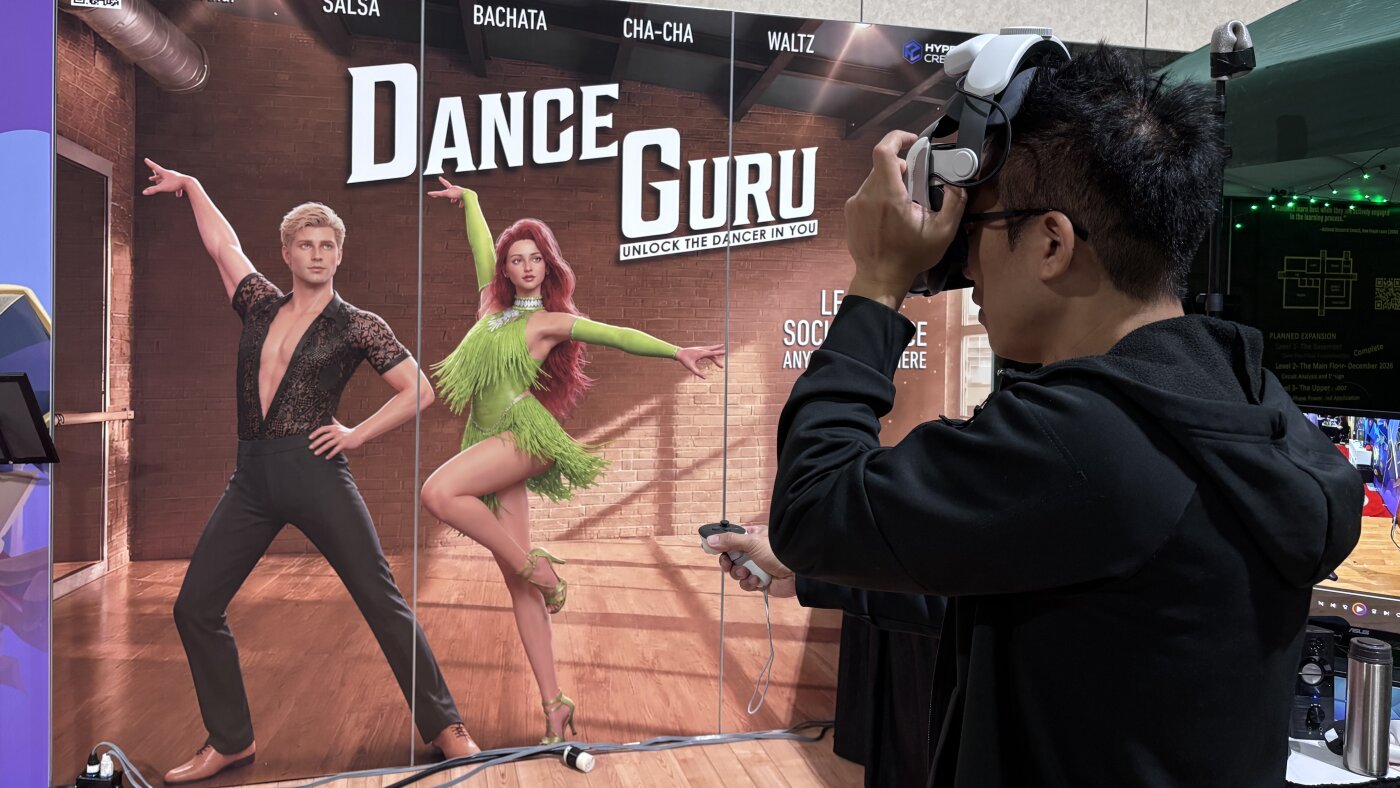
Entrepreneur David Huang tests out a VR headset while conducting demonstrations of the social dance lesson app Dance Guru at the Augmented World Expo in Long Beach, Calif., June 17, 2026.
Chloe Veltman/NPR
hide caption
toggle caption
Chloe Veltman/NPR
Wedding season is in full swing, bringing with it a familiar sense of dread for anyone who fears the dance floor.
But relief may finally be at hand with the help of a new app, Dance Guru, and a virtual reality (VR) headset.
The social dance instruction app transports users to a spacious, digital dance studio. Waiting inside is a computer-generated coach: a handsome, male avatar wearing a shirt open to his navel. He speaks with a slightly gravelly English accent.
“Watch me now,” he instructs at the start of a waltz lesson — which NPR tried out at the Augmented World Expo in Long Beach, Calif., an annual conference showcasing the latest developments in virtual and augmented reality.
The avatar then demonstrates a basic box step.
From there, the lesson becomes interactive. The coach tells the user to hold his hand while an electric pinging sound tracks the student’s foot placement.
“One, two, three, four, five, six,” the virtual teacher counts down.
When the user stumbles, he remains remarkably patient. “Do not worry, foundations take time. Let’s try that again. Work on grounding your steps more intentionally.”
Solving the beginner’s dilemma
Dance Guru creator David Huang said he came up with the idea for the app a couple of years ago out of frustration.
“I always wanted to learn to dance and I was always terrible at it,” Huang said. “And I always ended up stopping midway through the lessons.”
He soon realized that many beginners hit the exact same roadblocks.

“Private lessons are too expensive, and you feel like you’re always forgetting the dance steps,” Huang said. “You cannot find a partner to dance with. So I figured maybe I can create something like this.”
The Dance Guru platform currently offers tutorials in salsa, bachata, waltz, and cha-cha, in both lead and follow modes. To make the digital instruction feel authentic, Huang used motion-capture technology to record the movements of real-life dance teachers — with their permission.
Building on the legacy of online tutorials and video games
Dance Guru belongs to a small but growing wave of apps using VR to demystify social dance. At a nearby booth, conference attendee Victor Chen is testing out a competing app called Trip the Light. It currently offers salsa lessons, as well as freestyle options, where a user can dance with a partner without having to learn specific steps.

Trip the Light’s booth at the Augmented World Expo included posters of the app’s virtual instructors. Real-life performers, who gave Trip the Light permission to motion capture their movements, were used as a basis for these avatars.
Chloe Veltman/NPR
hide caption
toggle caption
Chloe Veltman/NPR
“A lot of times when you’re trying to learn a choreography, it’s watching a YouTube video and you have to pause it, rewind, and play it,” Chen said. “If you were to have a virtual avatar dancing in front of you and correcting for any parts that you missed, it might be a lot easier.”
Interactive video games like Dance Dance Revolution and Just Dance, and YouTube tutorials have been helping people improve their skills in private for years. But those games are mostly aimed at solo players. Unlike the new generation of immersive VR apps, they cannot simulate the mechanics or confidence required for partner dancing on a live dance floor.
The reality check
But this kind of app won’t work for every dancer.
“Everyone learns a little bit differently. And so unless you have a game that has lots of different ways of teaching, you’re going to have things that work for some people and don’t work for others,” said Ariana Katana, a trained contemporary dancer and dance content creator who’s active on YouTube, Twitch and other platforms. “Also, it’s hard to dance with a headset on.”
And then there’s the issue of not being able to physically feel a virtual partner’s hand or shoulder while dancing with them. Patrick Ascolese, the creator of Trip the Light, said the experience could become more tactile in the future. “Haptic suits and wearables will be coming, but I think we’re a little away from that,” he said.
Ascolese said even with their limitations, immersive tools like Trip the Light have immense potential as judgment-free training grounds — giving reluctant dancers the baseline confidence they need to eventually step onto the dance floor with real partners in the real world, including at weddings.
“Just like anything else, practice makes perfect,” said Ascolese. “So the more time you spend in VR with a virtual partner, it works towards helping you get over that social hurdle. We are teaching you the moves that you have to do in order to go out and have fun.”
Jennifer Vanasco edited the broadcast and digital versions of this story. Chloee Weiner mixed the audio.

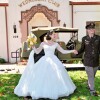


For half a century, Deidre Hall has taken on every kind of disaster in the drama-packed town of Salem, Ill., as a star of “Days of Our Lives.”
There was the time — actually, it happened twice — when her character, Dr. Marlena Evans, was famously possessed by the devil and even levitated.
In Sunday Funday, L.A. people give us a play-by-play of their ideal Sunday around town. Find ideas and inspiration on where to go, what to eat and how to enjoy life on the weekends.
Or the time a serial killer, who was actually Marlena under hypnosis, seemed to kill several beloved characters. The long-running show’s storylines have become legendary, and in March, while promoting “Hail Mary,” actor Ryan Gosling even gave Hall a shout-out, admitting he was a fan, praising the hard work of soap opera actors and calling her an “OG acting inspiration.”
But Hall’s real life in Santa Monica is much quieter than her character’s, and she likes it that way.
“When I bought my house in Santa Monica, I didn’t realize how great it would be to live near Montana Avenue,” says Hall, 78, about the popular shopping spot. Every day, she walks to the main street with her golden retriever, Riley, and enjoys Pilates, art and good food along the way. “The owners of the Farms Market even keep dog biscuits, so guess where the dog wants to go every time we walk — the Farms, of course,” she says, laughing.
When she isn’t filming the daily soap opera, which airs on Peacock, Hall enjoys raising monarch butterflies, exploring the shops and restaurants on Montana, and hosting movie nights at home with her two sons.
Here’s what a perfect day in L.A. looks like for her.
This interview has been lightly edited and condensed for length and clarity.

7 a.m.: Breakfast and dog walk
I usually kick off my day with a protein shake, feed our golden retriever and take her out for a walk. She’s a phenomenal girl. When we adopted her, her name was Riley, but I did think about naming her after Mrs. Hughes from “Downton Abbey.”

10 a.m.: Church and garden time
After I walk the dog and go to church, I like to spend some time in my yard. I’m not a natural gardener, but I really enjoy it. I started raising monarch butterflies because my identical twin sister, who played my twin on the show, planted a butterfly garden. Monarchs are amazing because they are transitional. Every year, they travel from Mexico to southern New England, but it’s getting harder for them. Their numbers have dropped by about 80%. To help, I plant milkweed, which is what they need to survive. I buy my milkweed from the Staghorn Garden on Wilshire Boulevard in Santa Monica. Julie, who owns the nursery, is delightful and has a wide variety of milkweed. The monarchs always seem to find my garden. Julie was raising some caterpillars too, and she cared a lot about them. We talked about how important it is to help the butterflies. That’s why I do this. Sometimes I get milkweed with eggs already on it, and Julie knows her butterflies are going to a good home.

1 p.m.: Walk to Montana Avenue for some lunch
I live near Montana and love taking long walks, going to Pilates and trying out the great restaurants nearby, like R+D Kitchen and La La Land. I’m a big fan of the waffles at the Courtyard Kitchen. Just a few days ago, I had a chicken salad on raisin bread with an Arnold Palmer, and it was delicious. It is right on Montana and has a nice outdoor seating area. It’s one of my favorite spots. La La Land always has a long line in the morning, which is perfect if you want coffee. They serve coffee, doughnuts, croissants and avocado toast. There’s plenty of outdoor seating, and you can even bring your dog.

2 p.m.: Peek inside a clock shop
There’s a small clock shop on Montana Avenue that’s closed on Sundays, but if you walk by, you’ll see all kinds of clocks — standing, table and wall clocks. The owner is great at fixing them. Once, I bought a wall clock from MacKenzie-Childs, but it didn’t work. And I was really upset because it matched everything else on my countertop. I brought it to the owner and said, “I love this, but I can’t make it work.” He fixed it right away. His name is John, but I call him Geppetto. And we all know why. He really does have a magic touch.

2:30 p.m.: Visit a neighborhood art gallery
Ten Women Gallery is run by 10 artists, all of whom show their work there. I was drawn to some watercolors there, bought a few cards and spoke with one of the artists. She told me, “You seem to love watercolors,” and mentioned that the artist who painted them, Pamela Harnois, lives in Los Angeles and teaches nearby. I got Pamela’s name and found out she taught at the Brentwood Art School. I was so inspired by her gift that I started taking private lessons with her on Saturdays. That gallery is where I discovered my love for watercolor painting.

3 p.m.: Grab some ice cream at Rori’s
The other day, my longtime girlfriend wanted to get ice cream and told me, “We are walking to Rori’s Artisanal Creamery.” It’s a small shop on Montana near Lincoln. They make everything themselves, using local ingredients from grass-fed cows with no added hormones. The place is family-owned and probably has the healthiest ice cream you’ll find. They switch up their flavors often, but my favorite is the salted caramel.

6 p.m.: Family dinner and movie night at home
R+D Kitchen is always packed, so my sons, who are 31 and 33, do the cooking. They come over, and together we make salads and cook dinner. There’s a neighborhood grocery store called the Farms, off Montana, a small family-run place that has everything we need. Everyone knows each other there, and people bring their dogs. We try to have movie night every Sunday. Sometimes the day changes, but we always make sure to have one night a week where we cook a meal and sit down as a family. Keeping that tradition has become really important to us. My sons are great cooks, which is funny because they definitely didn’t get that from me. [Laughs]
9 p.m.: Take Riley for one last walk and visit neighbors
After dinner, I take my dog for a walk. It’s a great way to meet neighbors. We always go around the same block. We’ve met so many people, and since she’s a golden retriever, she loves meeting everyone.

10 p.m.: News, knitting and bedtime
I am a news junkie, so I usually watch whatever is on the news before I go to bed. I have a long-standing passion for knitting. Lately, though, the news would make me drop a stitch.
For Iris van Herpen, couture is a laboratory as much as a runway. Our chief fashion critic, Vanessa Friedman, takes us inside this Dutch designer’s latest Paris show — from sci-fi-inspired gowns to an audacious attempt at a dress made of charged plasma.
-
Lifestyle16 minutes ago
Shy on the dance floor? Virtual reality ‘partners’ aim to help you find your groove
-

 Technology28 minutes ago
Are you filthy enough for a $700 portable shower?
-

 World30 minutes ago
Former British MP and reality TV star Ann Widdecombe found dead; man arrested for murder
-

 Politics36 minutes ago
Trump takes unusual step, lets bipartisan housing bill become law unsigned amid SAVE pressure campaign
-

 Health43 minutes ago
Eating common dairy food every day may slow biological aging, study suggests
-

 Sports46 minutes ago
CM Punk to defend Undisputed WWE Championship against Cody Rhodes at SummerSlam
-

 Technology51 minutes ago
Would you pay $8,000 for a robot to fold laundry?
-
 Business58 minutes ago
Legendary Television City may be be sold in further blow to Hollywood

