Lifestyle
Explore the California spot serving up weed country fun the wine country way


As you drive through some of California’s most storied agricultural land, a few hours north of the Bay Area, you’ll zoom past fields full of plants straining under the weight of their almost-ready-to-harvest bounty. After checking into your boutique hotel, you’ll get to sample some of the local flavor and watch the setting sun. The next day, you might explore some of the region’s historic spots. Or maybe you’ll attend a friend’s wedding on a ranch next to a working farm.
At the end of the weekend, you’ll drive home with some of the local wares and likely a deep emotional connection to the place you just visited. That may sound like a classic wine-country excursion in the Napa or Sonoma valleys, but what if you swapped in pot plants for grape vines and consumption lounges for tasting rooms? What would a weed head’s version of the wine-enthusiast weekend look like?
To find out, I headed to Mendocino County, one of three counties that make up California’s famed Emerald Triangle, the historic cannabis-growing region of the state since the 1960s. (It’s roughly triangle-shaped, with corners of its wide base in Humboldt and Trinity counties.) The Emerald Triangle turns out to be the perfect place to court canna-tourists the wine-country way.
As the southernmost point of that triangle, Mendocino County has a bonus. It’s much closer to major population centers such as San Francisco (about 110 miles) than Humboldt or Trinity counties (270-plus miles). It’s also home to the 15-mile-long Anderson Valley, whose warm days, cool nights and maritime fog close to the coast make for top-notch pinot noirs but also, according to the region’s cannabis farmers, give the sun-grown herb here a distinctive terroir.
As a visitor might quickly discover, smaller cultivators are favored over industrial-size farms here, and the county tourism commission actively courts the budding canna-tourism market. Mendocino County has emerged as one of the best places to explore craft cannabis the way folks have long adventured their way through wine country.
So if you’re looking for an alternative adult getaway any time of year (though the pot plants are bigger closer to harvest in the fall), make sure the places listed below are high on your list of Mendocino County must-visits. Just remember, if you’re going to smoke up along the way, pick a designated driver.
Drive the Cannabis Trail
( Luke McGarry / For The Times)
Created in the spirit of the state’s Wine Road and Cheese Trail that provide self-motivated visitors with a rough DIY points-of-interest itinerary, the Cannabis Trail highlights some of the people, places and seminal moments in the history of the marijuana movement with special plaques.
The entirety of the trail includes more than two dozen monuments, cultural landmarks and points of interest stretching across nine counties, with a handful of stops in Mendocino County. These include Area 101 in Laytonville (the birthplace of the 20-year-old Emerald Cup cannabis competition) and the Plantshop dispensary in Ukiah (where a plaque commemorates the back-to-the-land movement of the 1970s).
While the Cannabis Trail isn’t exactly a new effort (it was launched nearly a decade ago by cannabis travel consultant Brian Applegarth), its partnership with tourism boards that highlight stops in Mendocino and Humboldt counties and Oakland is. And that’s a result of increased cannabis-related tourism, says Visit Mendocino County’s executive director, Ramon Jimenez.
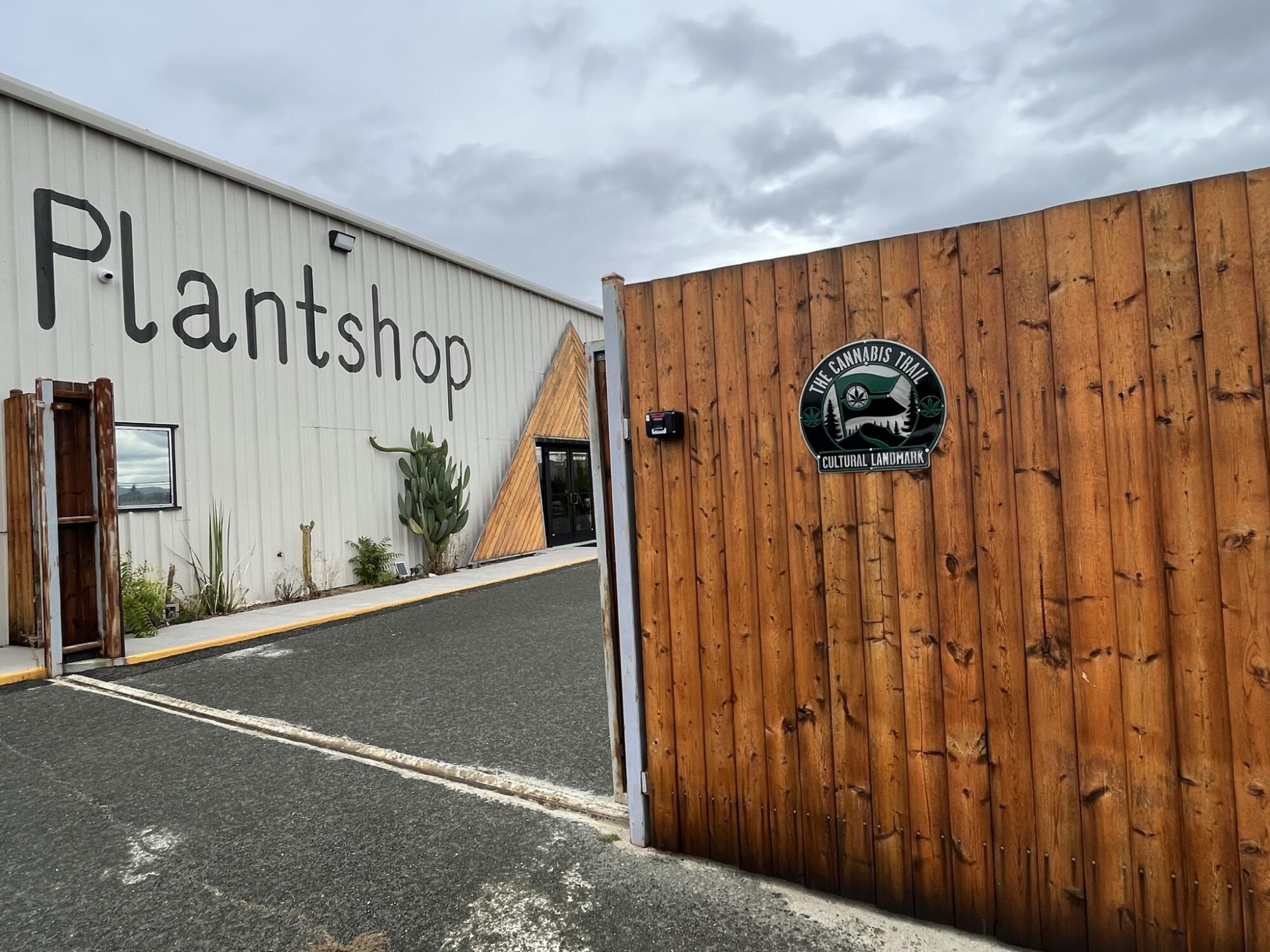
A Cannabis Trail cultural landmark plaque outside the Plantshop cannabis dispensary in Ukiah.
(Adam Tschorn / Los Angeles Times)
“Since leisure-use cannabis legalization, Mendocino County tourism has seen a constant uptick in visitors, about 60% more annually since 2017 [based on Transient Occupancy Tax collections],” Jimenez said. “As travelers become more educated, they want to move past the lounges and dispensaries to an authentic place of source. … This growth has spurred a new co-op between Visit Oakland, Visit Mendocino County and Humboldt County Visitors Bureau [focusing] on the Cannabis Trail.”
Watch hash get made at Heritage Hash Co.
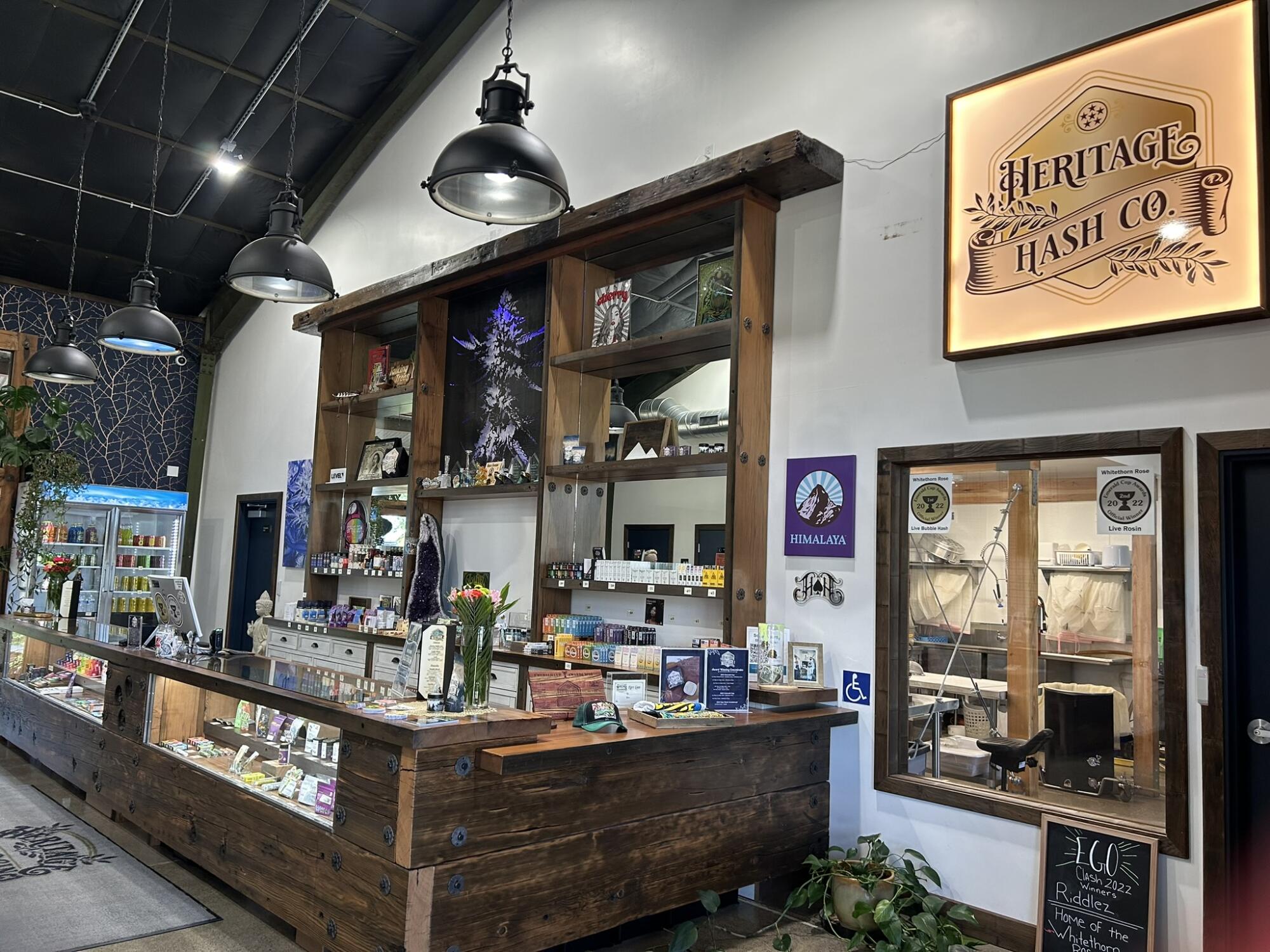
The Heritage Hash Co. dispensary in Ukiah has a window, far right, that allows customers to see hash being made by hand on-site. And just like in the wine-making process, hash-making involves very large stainless steel vats.
(Ashley Jones)
One of the fun things about touring a winery is getting to see some of that behind-the-scenes magic before you hit the tasting room; the immense stainless steel vats, the wooden barrels stacked floor to ceiling and the bottles clattering along an assembly line.
Mendocino’s weed country has its own version of that — kind of — at Heritage Hash Co. (1076 Cunningham St., Ukiah, heritage-mendocino.com). That’s where, inside a corrugated metal and weathered wood building, you’ll find a full-service multi-brand dispensary heavy on local wares. That’s where you’ll also find a square, wood-framed window that allows you to watch solventless hash being made by hand on-site in what looks like a cross between an industrial kitchen and Willy Wonka’s chocolate factory. Only instead of Oompa Loompas, it’s white-coated hash makers stirring cauldrons with comically large paddles, squeezing rosin in presses and pulling gooey strips of freshly made concentrate like saltwater taffy. (And, yes, just in case you were curious, there are plenty of immense stainless steel vats involved here too.)
And because Heritage, which bills itself as the world’s first public hashery, happens to also be permitted for on-site consumption, you can lean further into the tasting-room vibe by buying some of what the brand makes (extracts that range from $25 to $65 a gram) behind that magical window and trying it before you head out. (But only if someone else is behind the wheel.)
Throw a weed-friendly wedding at Yokayo Ranch
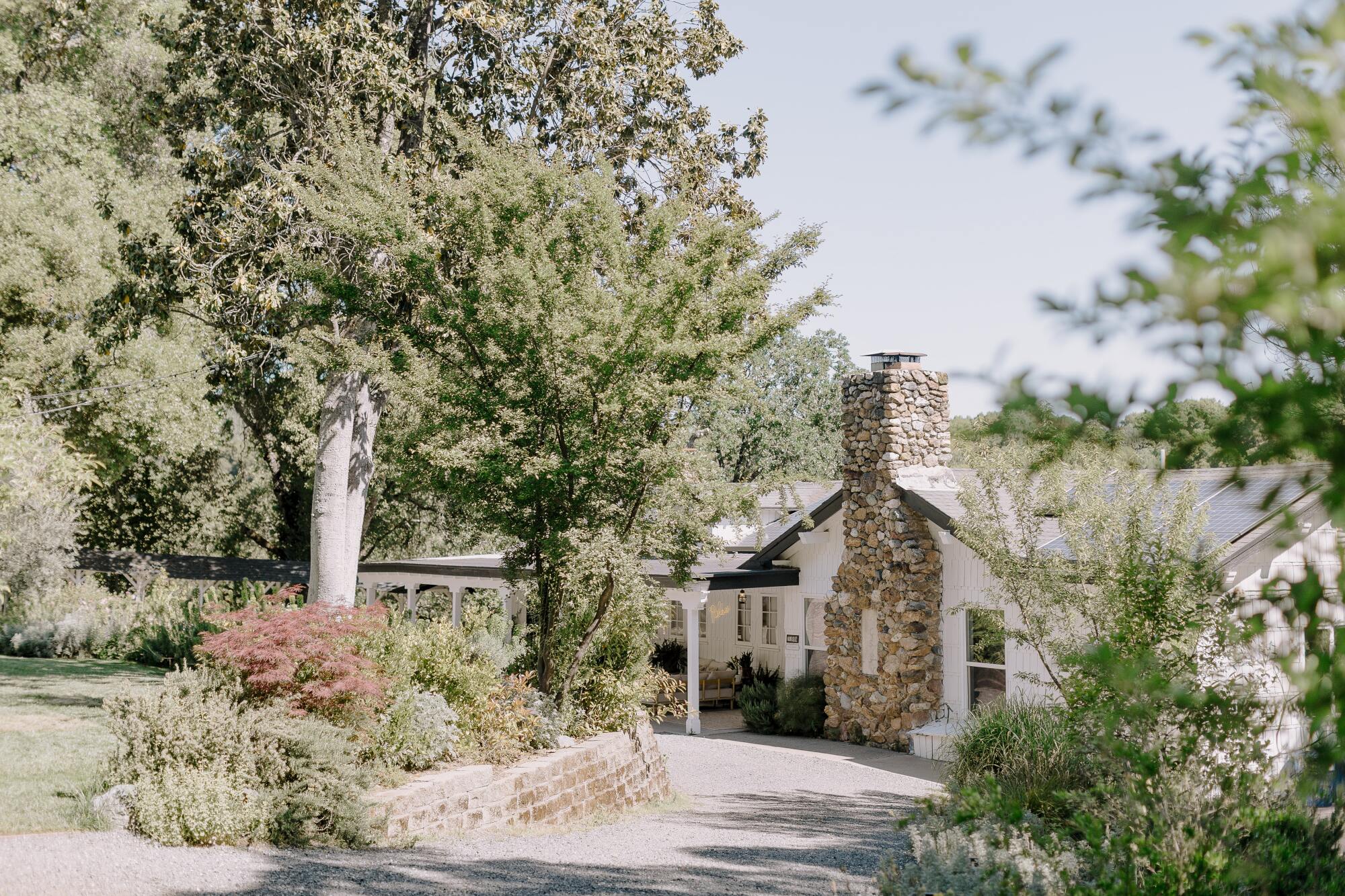
Ukiah’s Yokayo Ranch, which has been catering to the cannabis-friendly wedding crowd since 2019, is right next door to Mendocino Grasslands, a working weed farm.
(Gretchen Gause)
If your dream wedding involves saying “I do,” complete with a joint-rolling bar at the reception and a tour of the working weed farm next door, you’d be hard pressed to find a better setup than the one at Yokayo Ranch (800 Hensley Creek Road, Ukiah, yokayoranch.com). That’s where Rachel Powell has been booking nug-filled nuptials along with other weed-friendly events since deciding to embrace the cannabis tourism culture in 2019.
“We get people from all over,” Powell said. “But most of our clients are from San Francisco and L.A. and they’re much more interested in the cannabis [aspect]. We realized that it can really play to our strengths. For example, a lot of our people want to have cannabis bars versus alcohol [bars].”
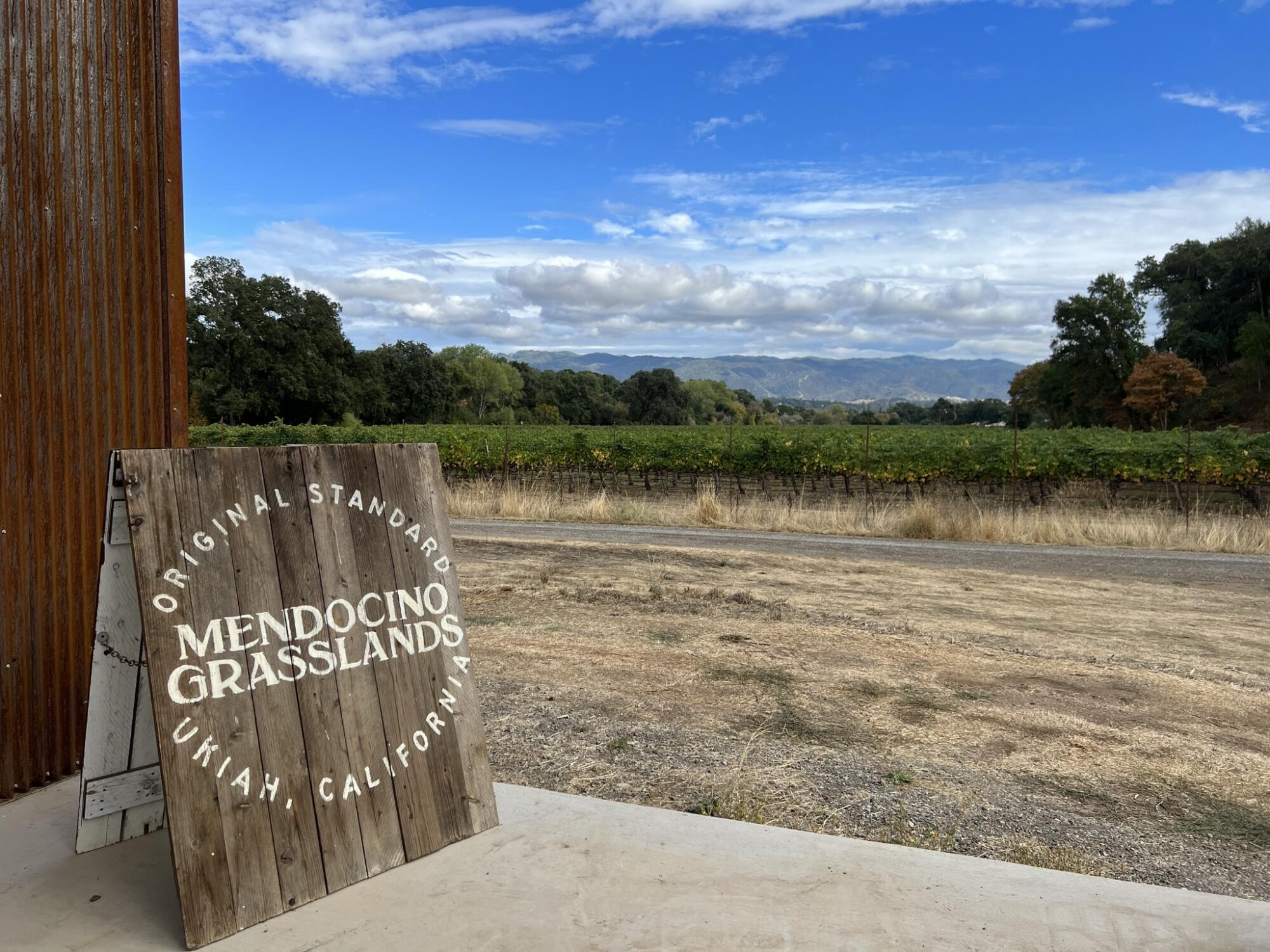
A field of grapevines viewed from Mendocino Grasslands, a working cannabis farm adjacent to Yokayo Ranch.
(Adam Tschorn / Los Angeles Times)
The property, which can accommodate about 45 overnight guests, consists of a 1920s-era main house, a cluster of cabins, nine glamping tents (each with a queen bed) and an outdoor ceremony space, all on a hillside high above Mendocino Grasslands. That’s the neighboring weed farm run by Powell’s brother, Ian. “When people come to stay for a wedding, we let them know there’s also a farm and we’d be happy to give them a farm tour,” she said. “And every group wants a farm tour.”
The brother-sister duo are hoping to eventually expand the farm-tour offerings to the general public. Right now, they’re mostly arranged for guests who are renting the Yokayo Ranch venue. “We’d like to offer tours that can be booked directly through Mendocino Grasslands,” Powell said. “And they would end with a farm dinner where people break bread in this really beautiful place where they’re surrounded by food, flowers and cannabis — all of these things that come from the ground.”
She added that the ultimate goal is to source everything for these meals (“Right down to the quinoa”) from within 25 miles of the farm. Wedding event packages, which include two nights of lodging for up to 29 people, start at around $20,000. If you’re not tying the knot but want to rent the whole place, you and your buds can plan on $2,400 to $3,500 per night with a two-night minimum.
Make your way to the Madrones
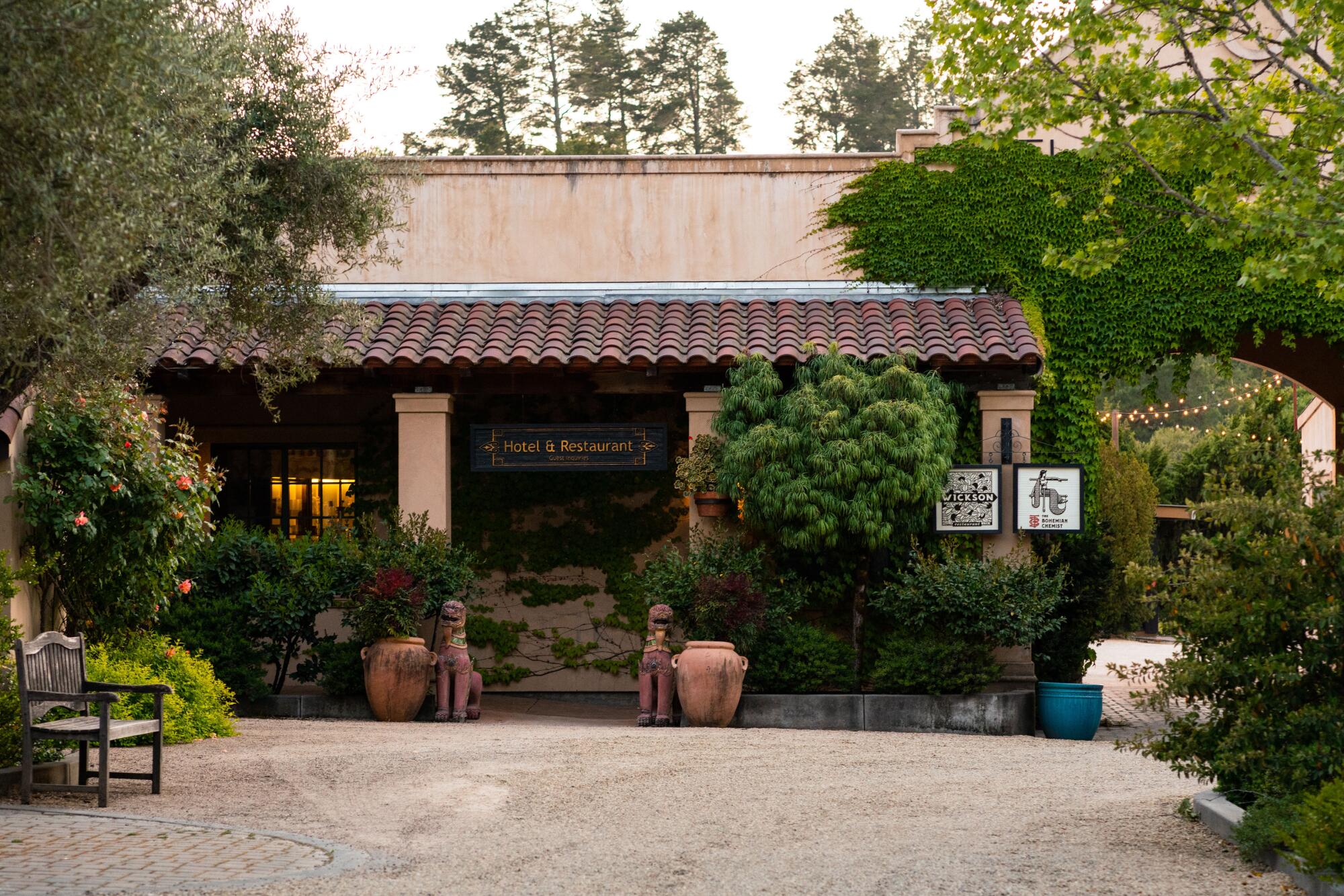
The Madrones in Philo, Calif., includes a hotel, a restaurant and the only licensed cannabis dispensary for miles around.
(Nikolas Zvolensky)
If you’ve got the bandwidth to visit only a single Mendocino County destination — or simply want to see what a fully realized weed-country-is-the-new-wine-country world can look like — blaze a trail down the Anderson Valley Highway to the Madrones with its on-site dispensary (9000 Highway 128, Philo, themadrones.com and thebohemianchemist.com).
A Mediterranean-meets-rustic-California compound bordered by a vineyard on two sides and dense forest on another, it’s the creation of partners (in business and life), Jim Roberts and Brian Adkinson. The boutique property includes a nine-room hotel (rooms, which accommodate two to four people each, start at $285), an on-site restaurant specializing in wood-fired fare (the Wickson) and two winery tasting rooms (Long Meadow Ranch and Wentworth Vineyards). A bottle cork’s toss down the road is another cluster of cabins and a wedding venue surrounded by redwood trees (the Brambles). Also, keep a look out for the ghost-white cat named Blanche roaming the grounds.
What makes the place of special interest is a tiny shop just to the right of the front door. Called the Bohemian Chemist, it’s a dispensary with the vibe of an Art Deco apothecary. Its glass and wooden cabinets and display cases are stocked with cannabis products and accouterments, both heavy on the local offerings. The shop’s namesake brand is sourced (mostly) from the owners’ Sugar Hill Farm just down the road; uncommon cultivars of sun-grown herb with names like Swazi Gold or Big Sur Holy Weed that even the most seasoned weed head probably hasn’t laid eyes (or lungs) on.
Its focus on rare cultivars has earned it a cultural landmark stop on the Cannabis Trail.
Other local brands on the shelves crammed with bell jars and vintage microscopes include packets of Anderson Valley Reserve flower, hash and live rosin badder from Heritage Hash Co. Locally made paraphernalia options include glass pipes from CoolHandSuuze and an exclusive edition of the Proto Pipe, the Swiss Army knife of pot pipes, made just about 50 miles up the road in Willits.
Customers who avail themselves of the shop’s cannabis can decamp to a small outdoor patio space just off the hotel’s gift shop and consume their locally grown goods while gazing out at the rows of grapes in Goldeneye’s vineyard next door. If your visit happens to fall between late May and late October, this is where you’ll find a seasonal third-Sunday-of-the-month cannabis farmers marketplace offering a showcase local legacy brands. (The full calendar and additional information can be found on the Madrones’ website.)
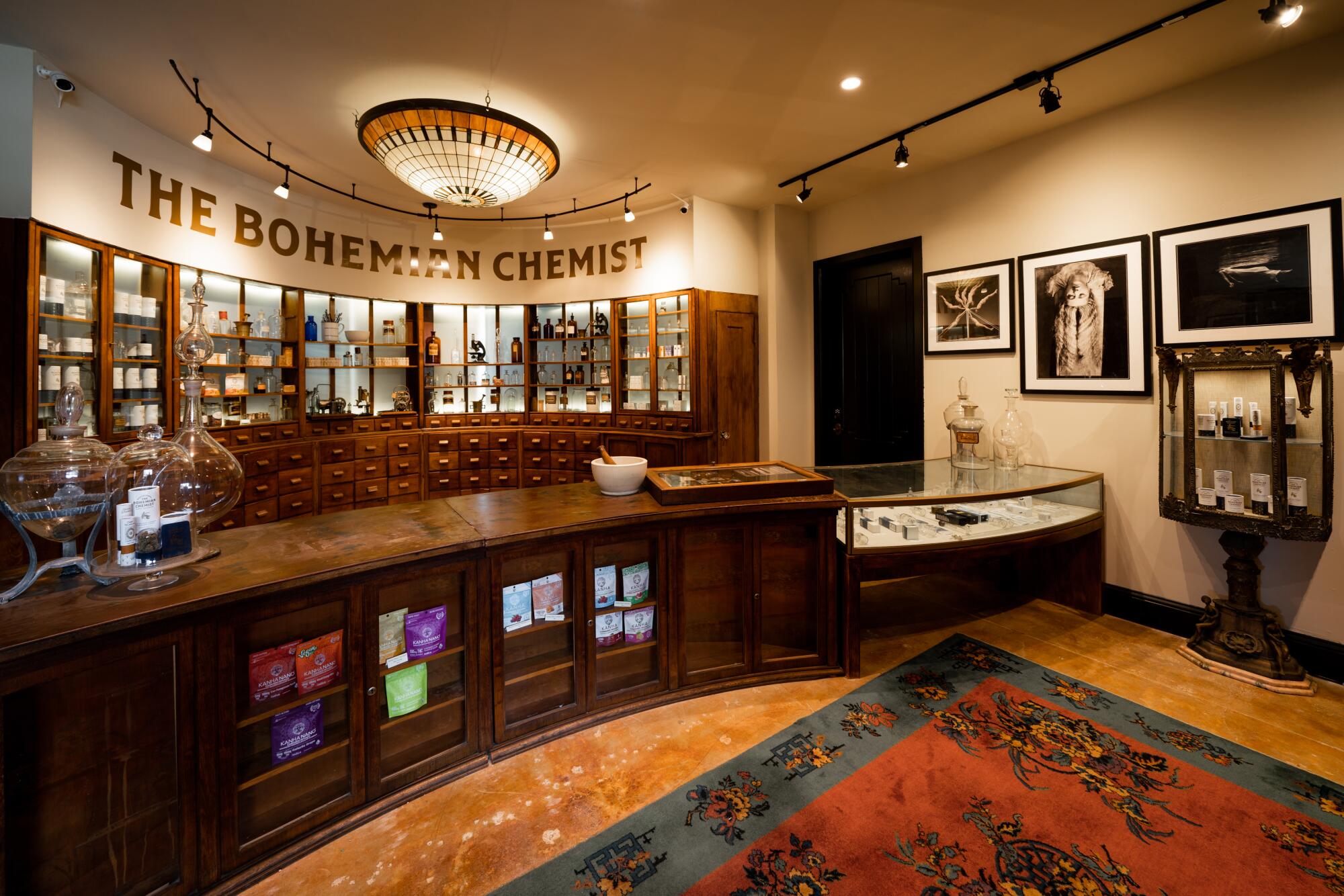
The Bohemian Chemist cannabis dispensary in Philo, Calif.
(Nikolas Zvolensky)
Roberts and Adkinson, who had been growing cannabis legally on their farm since 2016 (under the state’s pre-Prop. 64 medical marijuana law), opened the hotel property in 2010 and then the dispensary in June 2020 after being directly inspired by the wine-tourism business model.
“The retail part stemmed from the fact that we would have visitors who wanted to purchase cannabis, and we’d have to send them up to Ukiah,” Adkinson said.
“We had this crop growing,” added Roberts. “And we’re thinking, ‘What’s going to be the best way to actually get it to market?’ And we looked around at all these little wineries that are on our property and thought the best model would be to do something like they did. They sell [wine] at the tasting rooms. They have [wine] clubs and they have bottle shops. We knew that those three pillars provide a pretty strong foundation for a small winery, and we figured the same thing could happen with cannabis. So we got a micro-business license that allowed us to do all three of those things.”
The couple says the cannabis side of their business isn’t immune from the challenges facing the rest of the state’s legal weed business such as regulations, high taxes and a thriving illicit market. But approaching their business like the small wineries that surround them has paid off.
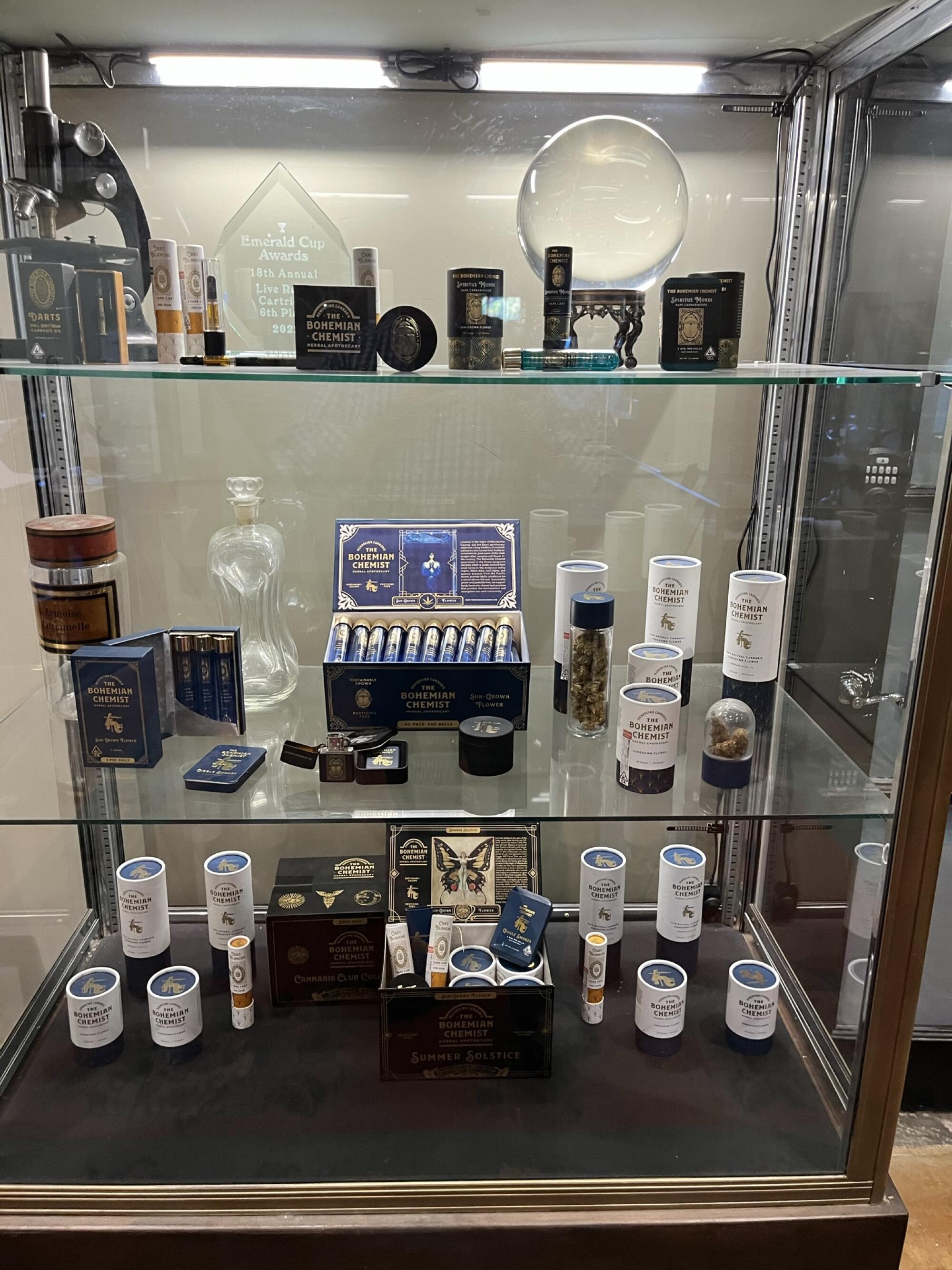
A glass case at the Bohemian Chemist apothecary is a showcase for the brand’s cannabis products, which are grown in a nearby part of the Anderson Valley.
(Adam Tschorn / Los Angeles Times)
“We’re not exactly making a killing,” Roberts said. “But [2023] was a hard hotel year because of all the weather incidents, and the cannabis business actually floated the hotel business. And it had been the other way around as a startup.”
With almost four years under their belt of running the only dispensary in Anderson Valley, the couple has discovered that catering to wine country and weed country visitors has a certain synergy, specifically that their best sales day of the year isn’t on 4/20 or the day before Thanksgiving. It’s during the annual Anderson Valley Pinot Noir Festival the third weekend of May each year.
“It’s typically something like this,” Roberts said. “A woman will come into the Bohemian Chemist and say, ‘My husband loves wine but I don’t really care for it that much. But now we can both be happy because I love cannabis.’”

Matthew Rhys was nominated for his role in Widow’s Bay.
Apple TV
hide caption
toggle caption
Apple TV
The 2026 Emmy nominations are here. We’re unpacking the record-breaking nominations for Hacks, plus a big day for Widow’s Bay, The Pitt, and The Bear. We’ll also talk about the snubs and make some early predictions of who will win.
Connect with Pop Culture Happy Hour:
Letterboxd / Facebook
Our weekly newsletter
Support Pop Culture Happy Hour+


Can you say no to a friend’s wedding?
Getty Images/Getty images
hide caption
toggle caption
Getty Images/Getty images
Are we spending too much on other people’s weddings?
Going to a friend’s weddings can be so fun and meaningful… but it can also really hurt your wallet. A survey by LendingTree found that 31% of people who had been to a wedding in the past five years had accrued debt to attend. So what’s driving up the cost of weddings for guests? And what makes it so hard to say no to these expenses?
Brittany breaks it down with Allyson Rees, senior analyst at trend forecasting firm WGSN, and Annie Joy Williams, assistant editor at The Atlantic.
This episode was produced by Liam McBain, with additional support from Corey Antonio Rose. It was edited by Neena Pathak. Our Supervising Producer is Cher Vincent. Our Executive Producer is Barton Girdwood. Our VP of Programming is Yolanda Sangweni.
-

 San Francisco, CA9 minutes ago
What’s next for San Francisco Giants as MLB trade deadline approaches?
-
 Dallas, TX14 minutes ago
Dallas millionaire files lawsuit against groundwater district
-

 Miami, FL21 minutes ago
7 more women arrested at southwest Miami-Dade massage parlors, accused of prostitution in undercover sting
-

 Boston, MA24 minutes ago
‘They’re my buddies’: 96-year-old Back Bay woman befriends French soccer team
-

 Denver, CO29 minutes ago
Denver officers cited for separate incidents, 1 fired
-

 Seattle, WA36 minutes ago
Study finds dangerous chemicals in the breast milk of Seattle moms
-

 San Diego, CA39 minutes ago
Tom Krasovic: Justin Verlander’s announcement recalls Padres’ 2004 draft blunder
-
 Milwaukee, WI44 minutes ago
‘Peace on Every Block’ brings Milwaukee community together to fight gun violence

