Lifestyle
Actress Shannen Doherty dies at 53, after a nearly decade-long battle with breast cancer


Shannen Doherty, best known for her roles in Beverly Hills 90210 and Charmed, died Saturday after her years-long battle with breast cancer.
Neilson Barnard/Getty Images
hide caption
toggle caption
Neilson Barnard/Getty Images
Shannen Doherty could narrow her eyes and set her jaw with the best of the legendary divas. She could end a confrontation scene with the line, “I hate you both! Never talk to me again!” and storm off, and it made you want to throw your hands in the air and yell, “YEAH! GET ‘EM!” She could also cry over a broken heart, nervously flirt, or defiantly pop off on adults who just didn’t understand.
Man, she was so much fun.
Doherty, who died at 53, almost ten years after she was first diagnosed with breast cancer, was a child actor, most notably on Little House on the Prairie. She was in Heathers in 1988, which is a bright spot on any résumé. But she became an icon as Brenda Walsh on Beverly Hills, 90210, one of the biggest hits of the early ’90s and the spark for many teen soaps that came later.*
The show debuted in 1990 when Shannen Doherty was 19. Its premise was that Brenda and her twin brother Brandon (Jason Priestley) moved out to Beverly Hills from Minnesota (apparently the most not-California state the writers could think of) to attend high school with the wealthy and beautiful. Brenda was our heroine and did all the heroine things: falling in love with “bad boy” Dylan McKay (Luke Perry), learning to fit in with rich blonde friends Kelly (Jennie Garth) and Donna (Tori Spelling), surviving a robbery, losing her virginity, being scared she was pregnant. The usual.
The show ran for ten seasons, but Brenda only stayed for four. As Doherty and 90210 both became popular, stories circulated about her being difficult on set, and Brenda’s own sometimes obnoxious behavior (the creation of writers!) began to curdle. The line between Brenda and Shannen blurred, and a noisy population of people decided to hate them both. In fact, they began to treat the two as one person. By the time Doherty was 22, there was an entire article in the L.A. Times about the anti-fan club for people who hated Doherty/Brenda, and their newsletter, and the telephone tip line they set up to collect any nasty gossip about her that anybody cared to dump out. (Sad that the phrase “touch grass” was not invented early enough for people who set up telephone tip lines about celebrities they disliked.) She had reported feuds on set, the stories escalated, and she left.

Brian Austin Green, Shannen Doherty and Ian Ziering of BH 90210 speak during the Fox segment of the 2019 Summer TCA Press Tour at The Beverly Hilton Hotel on August 7, 2019 in Beverly Hills, California.
Amy Sussman/Getty Images
hide caption
toggle caption
Amy Sussman/Getty Images
The show, while sometimes fun, was never as good without her. Never. Love you, Val, but no.
A few years later, she was cast in the sister-witches show Charmed, also from Aaron Spelling, the megaproducer behind 90210. (Apparently, whatever people may not have liked about her, they were okay with her helping them make money.) The cycle repeated: she was popular, then there were reports of difficulties on set, then she left. Doherty kept working, but she was never the big deal she had been during those years in the early ’90s.
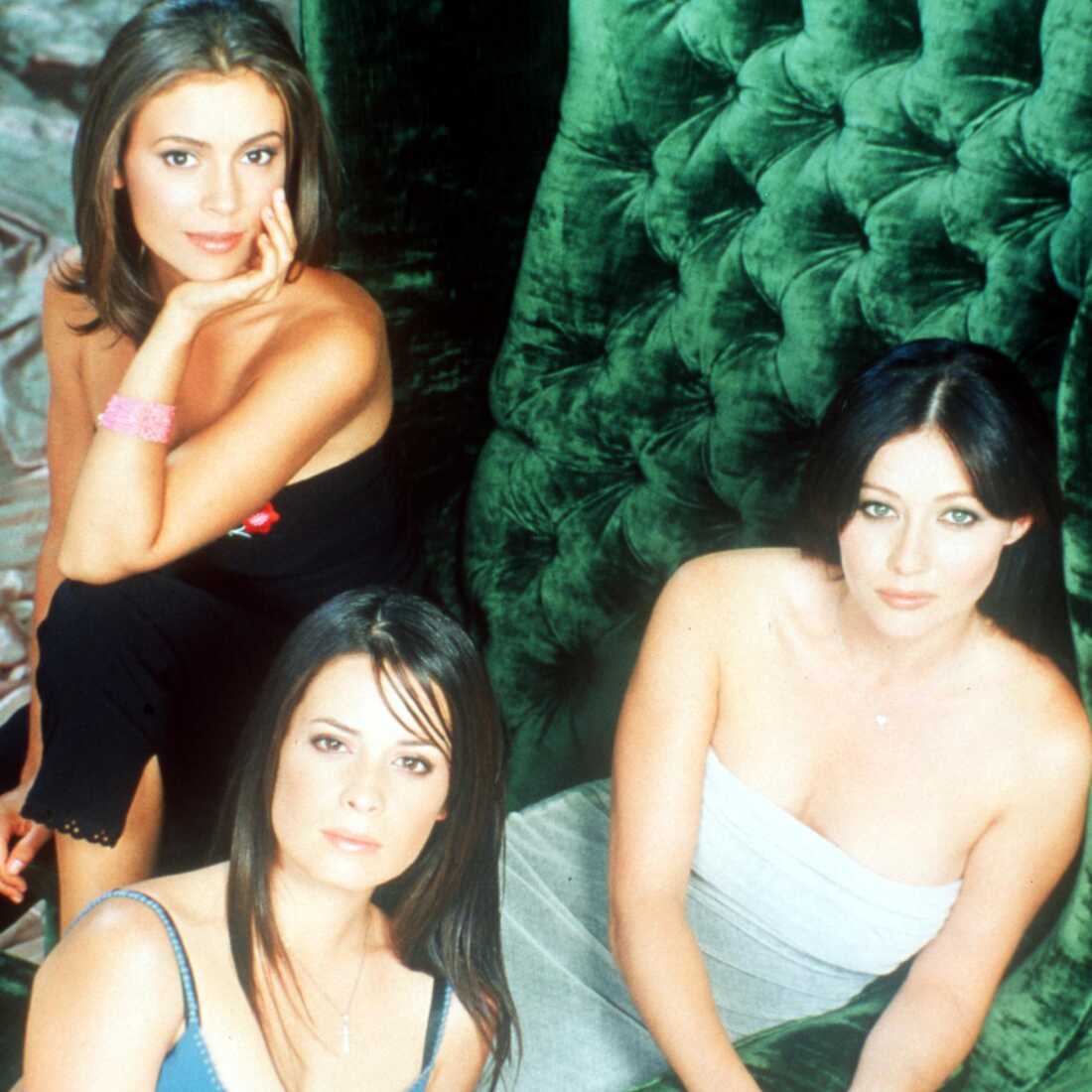
367898 Alyssa Milano, Holly Marie Combs, Shannen Doherty from the tv show “Charmed”.
Hulton Archive/Getty Images
hide caption
toggle caption
Hulton Archive/Getty Images
She announced her breast cancer diagnosis in 2015. And in November of last year, almost four years after she announced that her cancer had reached stage 4, she started a podcast called Let’s Be Clear with Shannen Doherty. She talked about cancer. Jason Priestley came on. Tori Spelling came on. Holly Marie Combs from Charmed came on. Kevin Smith — who directed her in Mallrats — came on. Less than a month ago, she ran a conversation with Katherine Heigl, who is another famous supposedly “difficult on set” actress, and perhaps one of only a few people who could understand the existence of an “I hate you” club. Doherty just did not quit, did not go away, did not become quiet.
It’s hard to talk about her impact because the kind of TV star Shannen Doherty was really doesn’t exist anymore. To capitalize on 90210‘s popularity, Fox ran 22 episodes in the first season, then 28 in the second, 30 in the third, and 32 in the fourth. There was just so much work in those years. Brenda wanted to become an actress. She went to Mexico with Dylan against her parents’ wishes. She moved back to Minnesota and then back to Beverly Hills. She got involved in animal rights activism — which was Doherty’s passion as well. She almost got married in Vegas! She won the lead in the college production of Cat on a Hot Tin Roof! She pretended to be French! She pretended to be a Brooklyn diner waitress! This is part of how actors become admired and indelible: from the sheer volume of exposure. Imagine a live-action prime-time hour-long drama series in 2024 that has a new episode for more than 60 percent of the weeks in a given year. (They stayed on that 32-episode pace for several seasons after she left.) It was just a different universe.
The line between a firecracker and an arsonist can be razor-thin in the public imagination. Between “outspoken” and “difficult,” between “feisty” and other words that haunt practically every woman who’s ever said no to anybody about anything in a situation where it really mattered. I don’t know what it was like to work with her — or any of her colleagues, for that matter. Was it worse than lots of other college-aged kids would have been with hundreds of people relying on them week after week after week? I don’t know. I just know what it was like to watch her work, and it was very, very good.
There is a very plausible argument that without Shannen Doherty, I would not be in this job. She made 90210 work, 90210 and its recap culture begat Dawson’s Creek and its recap culture, and that begat Television Without Pity, where I first wrote for money.

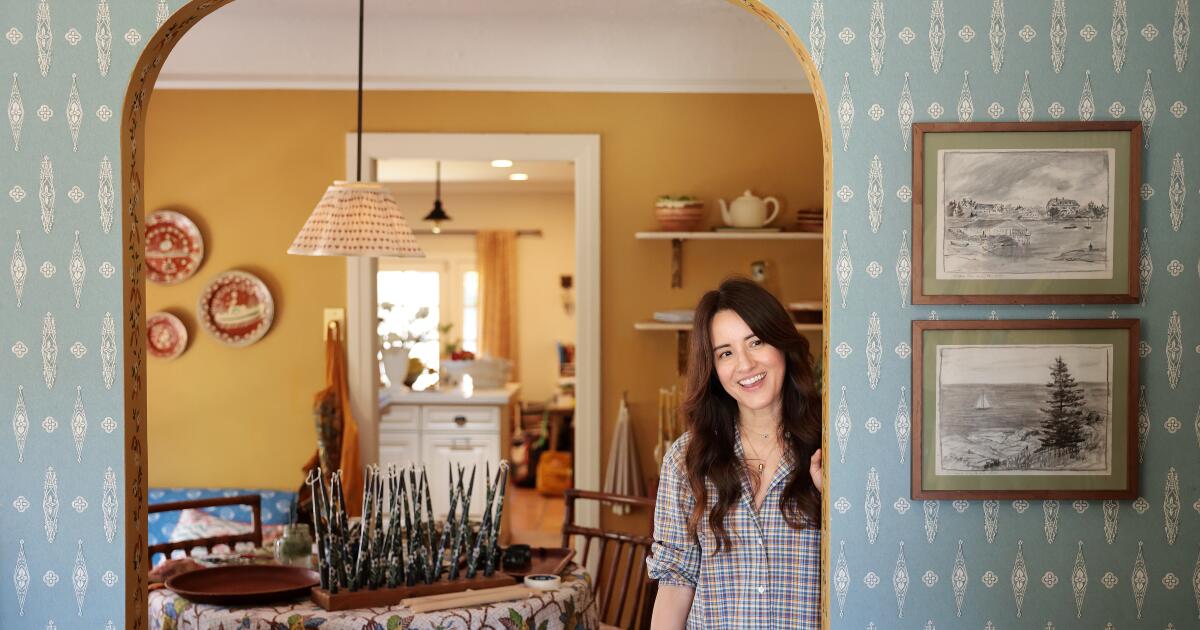
It was after the death of her son, Laith, that Esme Saleh decided to become a folk artist.
She had always been creative, experimenting with watercolors and learning to sew and embroider at a young age.
“I had a creative inkling,” she said, “but I never pursued it.”
Everything changed on Aug. 17, 2013.
In this series, we highlight independent makers and artists, from glassblowers to fiber artists, who are creating original products in and around Los Angeles.
When Saleh was nine months pregnant, she woke up with stomach pains and presumed she was in labor. She and her husband, Nasim, immediately went to the hospital, where doctors checked her and put the baby on a heart monitor. Saleh’s blood pressure was high, however, and the baby’s heart rate kept dropping. After about an hour, his heartbeat stopped. Doctors rushed her in for an emergency C-section, but it was too late. Laith did not survive.
Saleh lost a tremendous amount of blood and developed postpartum HELLP syndrome, a dangerous form of preeclampsia, but doctors were able to stabilize her.
When she woke up, the first thing she asked was, “How’s my baby?”

After losing her son in 2013, Esme Saleh left her job as a television producer. Since then, she has sold her hand-painted candles to local designers in Los Angeles and to LVMH in Paris.
“Aug. 17, 2013, was the most difficult day of my life, and Aug. 22 was the second most difficult, the day we drove home with an empty car seat,” she said of her and her husband’s new reality.
They named their son Laith Finn Saleh.
“His first name means ‘lion’ in Arabic. His middle name is an ode to Huckleberry Finn — sharp wit, kind heart, strong moral compass — all the attributes he’s imparted on us in spirit,” said Saleh, 45.
After such a devastating loss, she found it difficult to trust the world again. “It was hard to trust anything,” she said. “The medical system. Myself. It made me realize the fragility of bringing anything to life. We take so much for granted.”
So after years of working as a television producer, Saleh left broadcast journalism and leaned into her creative spirit.
She grew up in San Diego. Her mother was raised on a farm in Mexico, and her father moved from Tijuana to Los Angeles to be near her mother, who started working for a family in Sherman Oaks at 16. They eventually settled in San Diego, where Saleh’s father, now a church deacon, worked as a car salesman.


“The word Mystic has also become a driving force of what this journey means to me,” Saleh says. “A magical, otherworldly journey that has led me to some beautiful friendships, projects and unlimited well of curiosity. When I paint each pair of candles, it feels like I’m imparting a piece of that magic.”
“He always wanted to be a weatherman on TV,” she said, explaining how he hoped to get his big break on television by doing a weather report from the car lot.
Saleh wanted to be a broadcast journalist as her father had. After graduating from San Diego State, she interned in the sports department at CBS affiliate KFMB-TV although she didn’t know much about sports. She enjoyed sharing information with people, learned how to write plays of the week and felt she had found the right career.
But during a summer class at Mesa College, she started to think journalism might not be for her.


Saleh’s home is filled with her artwork. “My home expresses a lot of the things that I do,” she says. “If it works here, then I feel like I can put it out in the world.”
“I’m an empath — a sensitive soul — so when I was reading news about death and destruction, my eyes could not lie,” she said. Her professor told her, “This may not be your thing.” But when she arranged flowers on camera, she really came alive. She decided to work behind the scenes as a producer.
Her professor helped her get her first network news job in 2003, and she moved to Los Angeles, working on hard news and entertainment coverage.
After losing Laith a decade later, she couldn’t keep doing red-carpet interviews and acting like everything was fine. “It all felt so different, superficial and hard,” she said. “I felt like there was a bigger purpose out there for me. It’s in the small things that we find the big things.”
She started by painting folk art-inspired invitations for a friend’s baby shower. She painted delicate flowers, oranges and leaves on glass, leather and even lampshades. She created a logo. “I was just trying to say yes to things that were really scary,” she said. “Laith gave me the courage to do that.”

“I was just trying to get out of hole,” Saleh says of taking up painting after her son died.
Her first son, she said, became “a catalyst for painting.”
Then, at the first Thanksgiving during the COVID-19 pandemic when people could gather again, she had a light-bulb moment. “I was setting the table and didn’t have flowers or anything to add to decorate, so I thought, ‘I have these candles. I’m going to paint them and make them fancy,’ ” she said.
Her guests were impressed.
As time went on, painting taper candles helped her find joy again, and others noticed too.
“The one thing I hear when people pick up a pair of my candles is, ‘This makes me so happy. It makes me feel like there’s life here,’ ” she said.
1

2

3

1. Saleh sometimes leads painting workshops where participants can decorate items like ornaments and lampshades.
2. Leather napkin rings Saleh has painted for Nathan Turner. 3. Saleh’s hand-painted candles retail for approximately $42 to $50.
One of the hardest parts of losing a child “is that you’re not just grieving the person, you’re grieving the future you imagined with them,” said Chicago-based grief specialist Carla Harvey. “A lifetime of love suddenly has nowhere to go. Creating art doesn’t erase grief, but it can become a way to carry it.”
Saleh created her brand Mystic by Esme in 2021, but it took her some time before she could gather the courage to try to sell them.
When she brought a shoebox full of samples to Nickey Kehoe, the L.A. store agreed to carry her candles. “I was beside myself,” Saleh said.
“Her candles were absolutely beautiful, and she had a fantastic spirit that made selling them a no-brainer,” said interior designer Todd Nickey, co-founder of Nickey Kehoe.

Saleh gets a surprise kiss from her dog Olive while painting candles at her dining room table.
Saleh viewed her new side project as a way to earn extra money for piano lessons for her 11-year-old son Linus, who is an entrepreneur like his mother. “I felt proud painting the candles while he was in lessons in the next room,” she said. “It became this circular economy, and it led to bigger opportunities for me.”
Last year, luxury conglomerate LVMH commissioned Saleh to paint 465 pairs of candles, or 930 candles in total, for its Chaumet jewelry brand. The collection was unveiled at an elaborate event at the Abbaye des Vaux de Cernay, just outside Paris.
“It was fun,” Saleh said about the process, which took six months from conception to delivery. “I felt like I was dressing my candles up for a party.”
Always a hard worker, which she attributes to being a first-generation child of immigrant parents, Saleh has now created a candle collection for Pierce and Ward in Los Feliz, leather napkin holders for interior designer Nathan Turner and pomegranate wrapping paper for Olive Ateliers. The candles retail between $42 to $50 for a pair, and recently, she developed a handsome pewter candle shaver that will be released in the winter.

Her dining room can sometimes feel like “an assembly line,” Saleh says.

Saleh holds a pair of candles she has embellished with florals.
Occasionally, she leads painting workshops, and she loves helping others tap into their creativity. The most meaningful one for her was an ornament workshop attended by several victims of the 2025 Los Angeles wildfires. “Without saying anything, we understood each other,” she said. “I understood that they were trying to create memories.”
Saleh knows what it means for things not to last — “impermanence,” she calls it — whether it is homes, candles or life itself.
She paints every day in the art-filled dining room of her home (unless it’s Little League season), surrounded by her family, candles and her two dogs, Lennon and Olive. ”Painting is like meditation,” she said. “You can sit in your dining room and tune everything out and just be in the moment.”

Even the family’s summer bucket list receives an artistic flourish.

An arch inside Saleh’s home receives a personalized touch.
She knows painting candles isn’t new, but she believes her motivation and the care she puts into each candle makes them special beyond their looks.
She has learned to look at the world that way, that painting in her dining room has offered her healing and joy, that she can trust herself and her body, that continuing to be inspired by her two boys — “one in spirit and the other here on Earth” — means that Laith will always be with her.
Many people think healing means moving on, said grief specialist Harvey, but “it’s really about finding ways to move forward while keeping the people we love woven into our lives. That’s what I see in her candles, not an ending, but an ongoing relationship with her son.”
“I feel like my son is channeling through this medium,” Saleh said, her voice breaking as she painted a taper. “He’s whispering to me, ‘Mom, this is your path.’ That has been my driving force. We’re going to grow this together.”
Lifestyle
Terry Tempest Williams on why women with big ideas get labeled ‘crazy’ : Wild Card with Rachel Martin
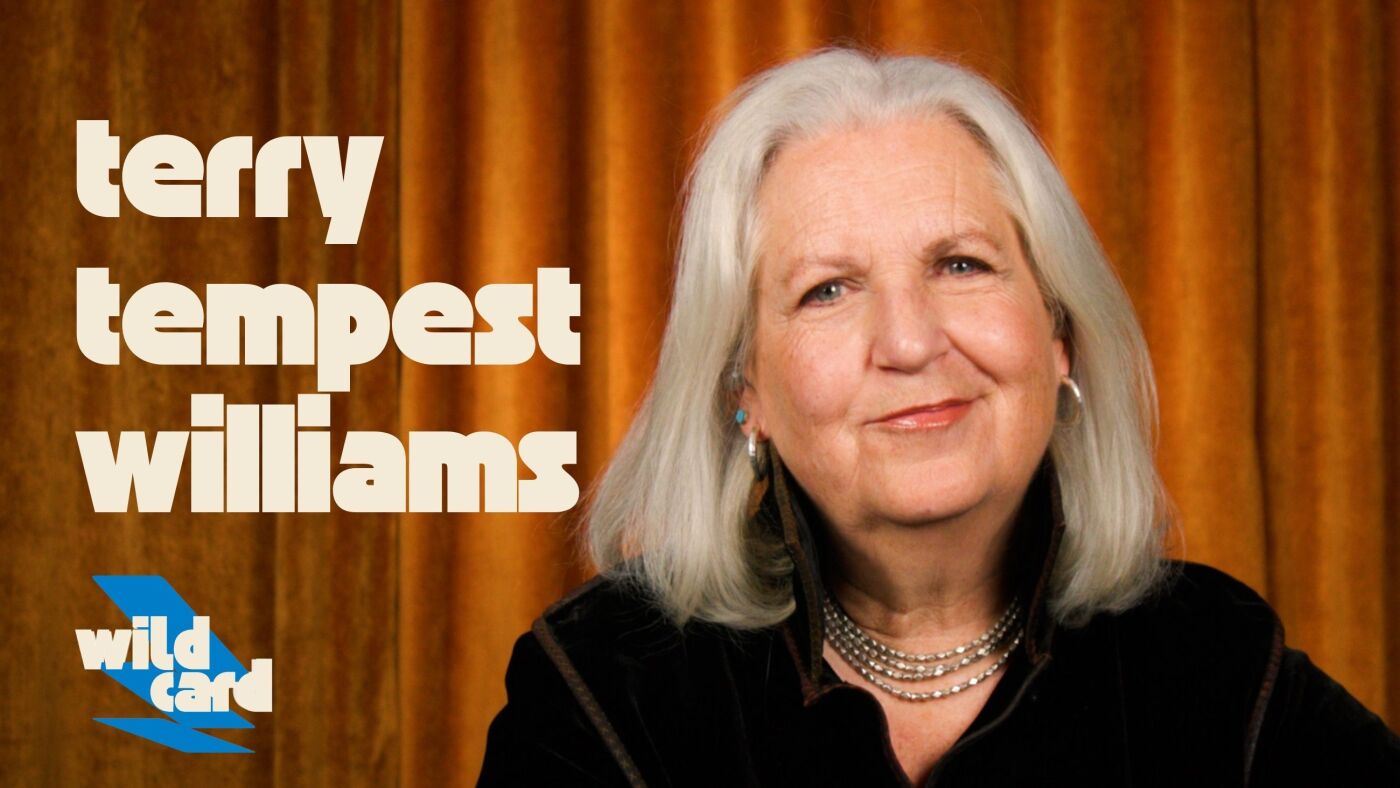
A note from Wild Card host Rachel Martin: I met Terry Tempest Williams about 25 years ago at a writer’s conference in Yosemite Valley. I was a young reporter who was there to do a story about how literature was addressing climate change and she made such a huge impression on me. I had never heard someone talk about the natural world the way Terry did and she had a spiritual depth I hadn’t encountered in my life at that point.
To this day, Terry’s writing always reorients me towards what is good, what is beautiful, and what is true. Her newest book is called “The Glorians.”

For its upcoming Los Angeles venue, experiential art firm Meow Wolf will focus on the art of storytelling, with a specific eye toward skewering our city’s moviemaking magic. To help bring that vision to life, Meow Wolf has entered into a creative partnership with Titmouse, one of L.A.’s most renowned independent animation houses.
The Hollywood-based studio behind popular series such as “Big Mouth” and “Star Trek: Lower Decks” will create animation that will be shown throughout the West L.A. venue, which is on target for a late 2026 opening at the Howard Hughes entertainment complex.
It’s a move that represents a shift for Santa Fe, N.M.-based Meow Wolf. Over the last decade-plus, the art collective has grown beyond its anything-goes, punk-meets-psychedelic roots into an organization with full-scale, maximalist installations in its hometown, Denver, Las Vegas, Houston and the Dallas suburbs. In the past, Meow Wolf kept most of its media in-house.
As part of its larger-than-life participatory art installations, Meow Wolf L.A. will feature a mix of live action and animation, the former filmed by Meow Wolf in its Santa Fe studio. Meow Wolf’s James Stephenson, a senior VP with the company and its creative director of emerging media, said the degree to which the L.A. exhibition will lean into various animation styles necessitated an outside partner. Titmouse’s work, in development by a number of directors with contrasting tones, will be shown on a variety of formats, ranging from cinema screens to full-room projections.
“I really believe in animation as an art form, and I know the Titmouse folks do too,” Stephenson says. “Animation is made by artists. It’s made by artists with their own hands. It’s something that is still very rooted in craft.”
Meow Wolf’s L.A. space is set in a former cinema complex, and will champion its location, taking guests on a journey through a converted movie house and beyond, into a sci-fi-inspired fantasyland with sentient spaceships and a 30-foot-tall mushroom tower. Meow Wolf creatives have spoken of the fantastical movie theater as one that will feature animated, self-aware candy before attendees enter the main exhibition space, making Titmouse’s work some of the first art guests will encounter. Titmouse co-founder Chris Prynoski has said the studio has lined up at least six directors for the exhibit.
An in-progress art installation destined for Meow Wolf L.A. at the art collective’s Santa Fe, N.M., headquarters. The L.A. exhibition will feature animation from Titmouse.
(Gabriela Campos / For The Times)
Titmouse, says Stephenson, is the right partner because “they’re known less for a house style, and more for a house vibe.” Over the years, Titmouse has been behind such diverse shows as “Scavengers Reign,” owning a Jean Giraud influence rooted in French and Spanish surrealism, the lively “Jentry Chau vs. the Underworld,” with an unique color palette that took inspiration from anime and Chinese mythology, the exaggerated comic book feel of Adult Swim’s “Metalocalypse,” and the approachable yet expressive tone of “Star Trek: Lower Decks.”
“Meow Wolf’s vibe is similar to Titmouse’s vibe,” Stephenson says. “It’s artist-first, artist-driven, independent and kinda edgy. They are always trying to find the edge of what’s possible. They try to see how far they can go, and it’s done for fun and in the spirit of taking risks.”
Prynoski says working with Meow Wolf will give Titmouse a sense of artistic freedom it doesn’t always have when delivering content for more traditional Hollywood partners. He says the multi-director approach is a callback to the early days of Warner Bros. Animation, when individual creators put their own stamp on Looney Tunes material.
“I use Bugs Bunny as an example,” Prynoski says. “You’ve got a Friz Freleng Bugs Bunny short. You’ve got a Chuck Jones Bugs Bunny short. You’ve got a Tex Avery Bugs Bunny short. They’re all different versions of Bugs Bunny, and people who are really paying attention can tell which director directed each one. Even though to the layman, these are all Bugs Bunny, but if you lined them up, they are drawing in different styles, sensibilities and techniques.”
Prynoski says that was a centerpiece of his pitch to Meow Wolf, noting that characters will reappear in multiple installations, each handled by a different artist. Meow Wolf L.A., in fact, will be the firm’s most character-driven exhibition, as guests will follow the storylines of three main protagonists throughout the space.
In announcing the partnership, Meow Wolf and Titmouse released an image from an animated work directed by Luca Vitale. It features a key character having a moment with a hummingbird and it’s done in an elegant, slightly anime-influenced style. It’s an image full of movement, reflecting a character in transition with inviting pastels and bold dashes.
“I like that image because I think it captures some of the sense of wonder that we want people to feel,” Stephenson says. “The character is having an encounter with the elusive nature of creativity and reality in a way that makes them have a different perspective of what’s possible.”
Other contributing animation directors to Meow Wolf L.A. include Space Dawg, Felix Colgrave, Alexander Vanderplank and Phimémon Martin, and Jun Ioneda.
Titmouse’s partnership with Meow Wolf will extend beyond the L.A. exhibition. The two will be working on the development of Meow Wolf New York, which is slated to open some time after Los Angeles, and are collaborating on a planned animated series, which Prynoski is spearheading.
Meow Wolf exhibits are the result of sometimes hundreds of disparate artists coming together in a shared space. Distilling that into a signature, singular style for a series could be a challenge. Stephenson pinpoints some guiding principles.
“You really need to feel the hand of the artist,” he says. “You need to feel a DIY aesthetic. You need to feel the materiality. Those are very specific to what we are.”
-

 Technology8 minutes ago
Microsoft’s carbon emissions went up 25 percent last year
-

 World11 minutes ago
Jailed Catholic woman’s hunger strike highlights Iran religious persecution — US demands action
-

 Politics16 minutes ago
Israel shares intelligence warning Iran plotted new assassination attempt against Trump: report
-

 Health23 minutes ago
Parasitic infection causing ‘explosive’ stomach illness exceeds 1,000 cases in northern state
-

 Sports26 minutes ago
London descends into disorder as Morocco fans flood streets after World Cup elimination by France
-

 Technology31 minutes ago
Google turns old phones into cloud servers
-
 Business38 minutes ago
Waymo is starting robotaxi service in San Diego
-
 Entertainment41 minutes ago
‘Children of Blood and Bone’ author won’t see film after feud with star Amandla Stenberg

