Lifestyle
12 novels that NPR critics and staff were excited to share with you in 2024


Have you ever wondered what your co-workers are reading in their spare time? Every year, I get to find out as we put together Books We Love — NPR’s annual, year-end books guide. There are always a handful of titles that show up again and again in the nominations list. Here are a dozen novels that our staffers and critics were particularly eager to tell you about in 2024. To see the full list, head over to Books We Love.

All Fours by Miranda July
It’s the novel that blew up a thousand group chats. The unnamed protagonist, a 45-year-old artist, says goodbye to her husband and young child and embarks on a solo road trip. She’s just a half hour from home when she takes a detour that’s geographically unremarkable but yields massive emotional consequences. It is a journey of creative and sexual fulfillment, unhinged interior design, and exploring desire within the liminal space of perimenopausal middle age. Miranda July’s protagonist makes choices that you may find hilarious, relatable, or infuriating, but they are never boring. — Wailin Wong, host, The Indicator from Planet Money

Come & Get It by Kiley Reid
Told through multiple perspectives, I could not put this snappy page-turner down even though I had no idea where it was going until its jaw-dropping crescendo. Set at the University of Arkansas, this story follows several college students and a writing professor over the course of a year, largely through the lens of their relationship with money — how it motivates them, how it gets them into and (for some) out of situations — as well as race, sexuality, power and social status. As a Southerner and the graduate of a Southern university, I found myself nodding along excitedly to Reid’s apt depictions of contemporary Southern culture. — Beck Harlan, visuals editor, Life Kit
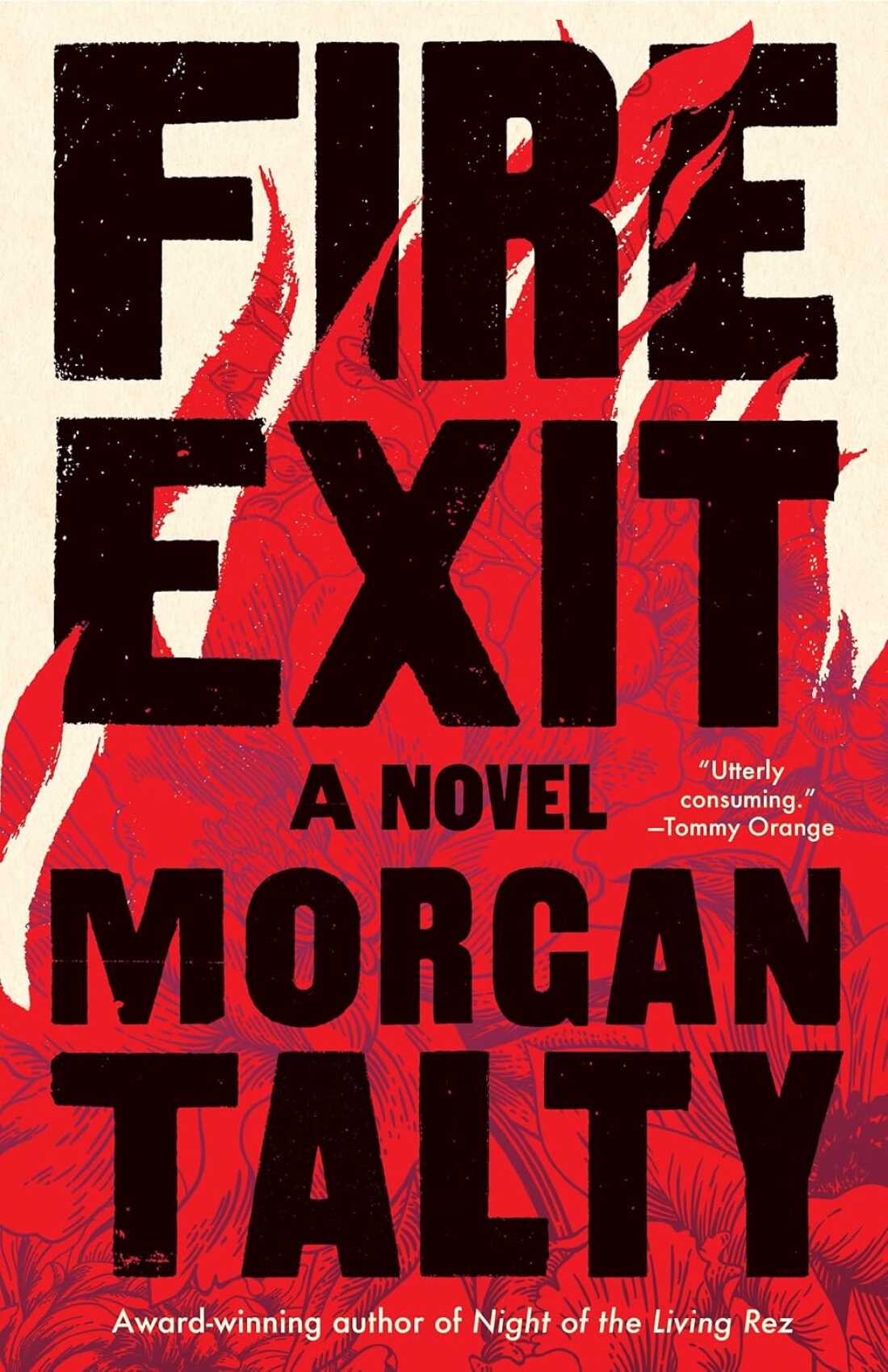
Fire Exit by Morgan Talty
Penobscot writer Morgan Talty cuts right to the bone. His non-native narrator, Charles, was raised on the reservation but can no longer live there. In spare language that perfectly matches the rugged Central Maine landscape, Talty explores the ties of blood, culture and personal history. Saying goodbye to these characters was like waving goodbye to a friend after a too-short visit: wistful but grateful for the time together. — Andrea de Leon, Northeast bureau chief

Funny Story by Emily Henry
Daphne always loved the way her fiancé described their meet-cute — until he decided he loved someone else: his childhood best friend, Petra. Scorned and stranded, Daphne moves in with the only person who could understand: Petra’s ex, Miles. The ex of my enemy is my friend, I guess? Emily Henry delivers another sweet and suspenseful romantic comedy, with a slow burn that has you wanting the best for Daphne and Miles, but especially Daphne as she comes out of her shell. Above all, Funny Story is a reminder that the most important relationship you have is the one you have with yourself. — Arielle Retting, growth editor

The God of the Woods by Liz Moore
Early one morning in 1975, a summer camp counselor finds an empty bunk. A 13-year-old camper has vanished. As the search begins along the banks of a lake in the Adirondacks, this 500-page drama unfolds — and it is worth every page! Liz Moore’s storytelling captures such an authentic picture of youth, young friendship and family secrets. There are thoughtful, well-developed characters, unexpected revelations, a history of a serial killer recently escaped, captivating storylines, shocking connections and surprising answers to every single mystery along the way. The God of the Woods has become a personal favorite of the year! — Lori Lizarraga, host, Code Switch

How to End a Love Story by Yulin Kuang
If a ’90s rom-com grew up and went to therapy, this sparkling book would be the result. After penning a popular YA book series, Helen Zhang gets a seat in the writers room where it’s being adapted into a TV show. Unfortunately, Grant Shepard is also one of the writers in that room. Grant was the charming homecoming king at their high school, whereas Helen was awkward and introverted. He’s also the reason Helen’s sister is dead — kind of. It’s been years since the accident, but the writers room reopens old wounds and forces Helen and Grant to be vulnerable with each other. Even as Helen wrestles with their past, the two begin a present-day romance that is sexy and tender. This book is a raised glass to second chances and late bloomers. — Lauren Migaki, senior producer
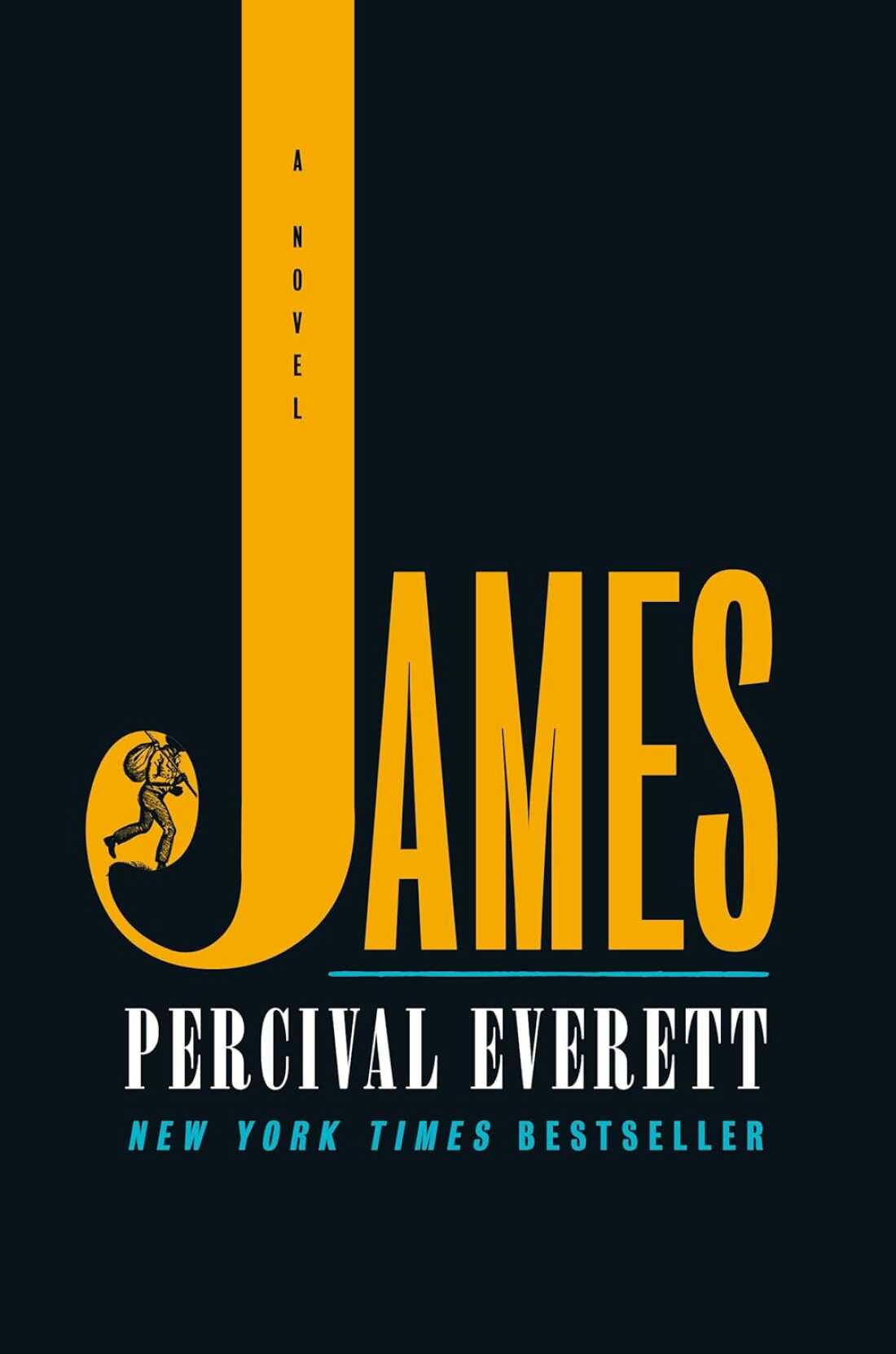
James by Percival Everett
The jokes in James range from chin scratchers to knee slappers to gut busters, although I’m not sure Percival Everett would even classify them as “jokes.” In his reimagining of the Huckleberry Finn story, Everett mines language, history and irony to showcase brutal truths about America. And yes, it’s often funny. But, like the original source material, things can quickly turn deadly serious depending on how the river flows. The novel is thrilling, hilarious, heartbreaking and a strong argument for Everett as one of the best doing it right now. — Andrew Limbong, correspondent, Culture Desk and host, Book of the Day

Margo’s Got Money Troubles by Rufi Thorpe
The simple way to describe this is as a story of a college gal getting knocked up by her English teacher and resorting to starting an OnlyFans to make ends meet. Not sold yet? Well, then let me add that this book opens up far wider and deeper than its premise. You’ll come to care so deeply about Margo, her professional wrestler father, Jinx, and all the relationships she forms as she figures things out. A warm, heartfelt, hilarious novel that I won’t soon forget. — Elise Hu, host, TED Talks Daily podcast, author of Flawless

Martyr! by Kaveh Akbar
Kaveh Akbar’s Martyr! is a portrait of Cyrus Shams — a man consumed by addiction, depression and spiritual untethering. Full of sadness and righteous anger, especially when it comes to the American tendency to negate the value of certain Middle Eastern lives, it’s also one of the funniest books I’ve read in years. Martyr! is propelled by those kinds of contradictions. It breezes by while knocking you over. It strikes an optimistic note within its fatalism. It suggests death might provide the meaning of life. Ultimately, it could leave you in tears of laughter or of sorrow. Or most likely both. — Dave Blanchard, supervising editor, Wild Card

Avid Reader Press / Simon & Schuster
The Ministry of Time by Kaliane Bradley
You’d think a novel about the bureaucracy of a time travel government agency might be kinda, boring? But from the moment you meet the book’s enigmatic protagonist — as she starts a new job in the U.K.’s top secret new time travel agency — to the introduction of the dashing Graham Gore, an 1847 Arctic explorer plucked through time, you’ll be hooked. Come for the romance, stay for the unraveling of a mystery, the nuanced, genre-bending treatises on race and identity, and the long-lingering ideas on colonialism, empires and the mutability of history. — Christina Cala, senior producer, Code Switch

Real Americans by Rachel Khong
In the final third of this novel, a Chinese immigrant notes how she and her American-born roommate eat an apple differently. I attuned so closely to this observation as an American-born Chinese that I immediately shared it with my mother, who immigrated to the U.S. around the same time as the character does in the book. There are many such crystalline moments in this intergenerational saga, which also employs subtle science fiction elements in its portrait of one family’s attempts to obviate the pain of the past and set new narratives into motion. — Wailin Wong, host, The Indicator from Planet Money

The Women by Kristin Hannah
“You’re only going to be a nurse until you get married,” her mother said. But Frankie McGrath had other ideas, ones that would lead her away from her wealthy family’s conservative outlook on how daughters should behave. Kristin Hannah’s The Women follows young Frankie’s transformation, when after working as a nurse in California and tending to a wounded soldier, and missing her soldier brother, she joins the Army as a nurse. That takes her from a comfortable life of known expectations to one of the chaos and danger of war, new career opportunities and love. Tangled love. When Frankie returns home, she finds her country still protesting the war and those who served. The Women shines a light on a then-little-known aspect of the war: the women who also served in Vietnam, as nurses. — Jeanine Herbst, news anchor
This is just a fraction of the 350+ titles we included in Books We Love this year. Click here to check out this year’s titles, or browse nearly 4,000 books from the last 12 years.




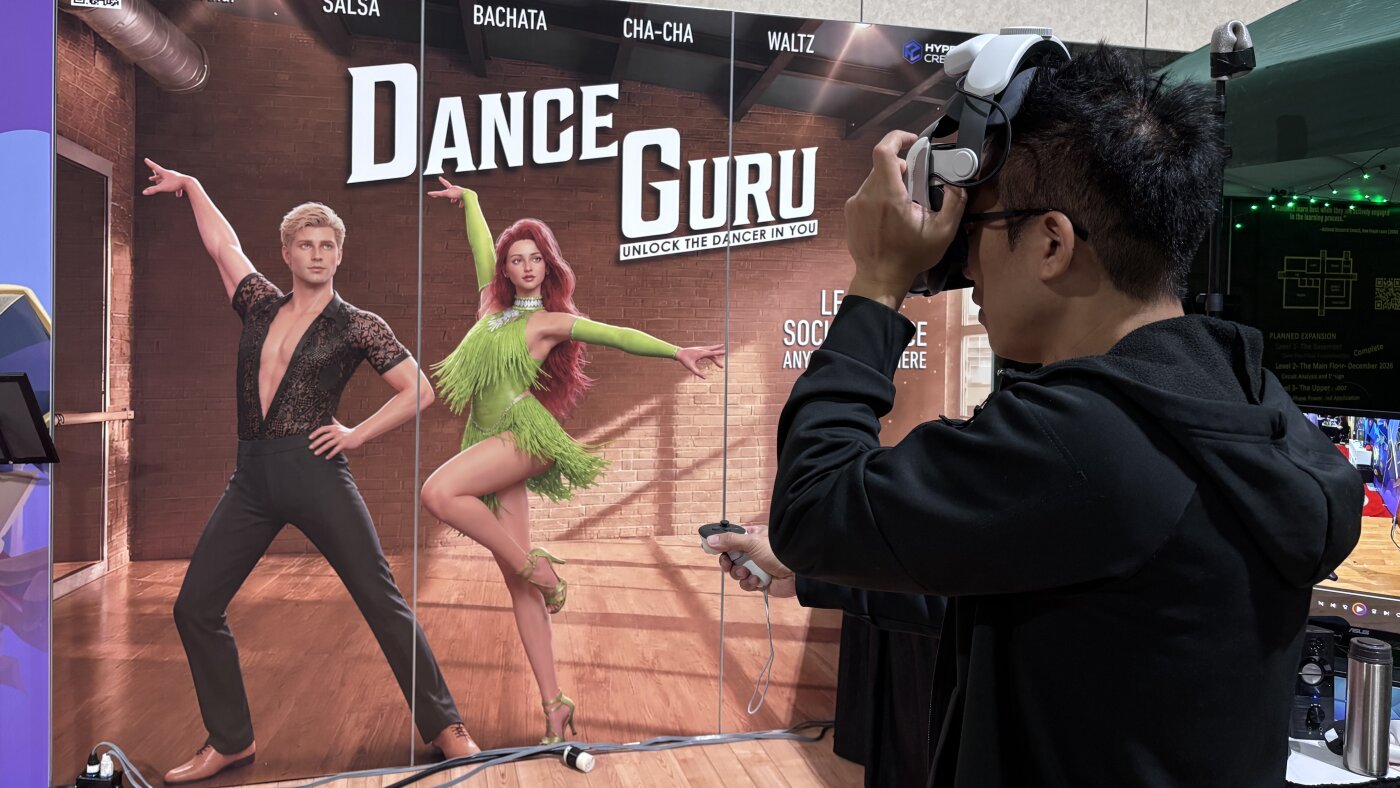
Entrepreneur David Huang tests out a VR headset while conducting demonstrations of the social dance lesson app Dance Guru at the Augmented World Expo in Long Beach, Calif., June 17, 2026.
Chloe Veltman/NPR
hide caption
toggle caption
Chloe Veltman/NPR
Wedding season is in full swing, bringing with it a familiar sense of dread for anyone who fears the dance floor.
But relief may finally be at hand with the help of a new app, Dance Guru, and a virtual reality (VR) headset.
The social dance instruction app transports users to a spacious, digital dance studio. Waiting inside is a computer-generated coach: a handsome, male avatar wearing a shirt open to his navel. He speaks with a slightly gravelly English accent.
“Watch me now,” he instructs at the start of a waltz lesson — which NPR tried out at the Augmented World Expo in Long Beach, Calif., an annual conference showcasing the latest developments in virtual and augmented reality.
The avatar then demonstrates a basic box step.
From there, the lesson becomes interactive. The coach tells the user to hold his hand while an electric pinging sound tracks the student’s foot placement.
“One, two, three, four, five, six,” the virtual teacher counts down.
When the user stumbles, he remains remarkably patient. “Do not worry, foundations take time. Let’s try that again. Work on grounding your steps more intentionally.”
Solving the beginner’s dilemma
Dance Guru creator David Huang said he came up with the idea for the app a couple of years ago out of frustration.
“I always wanted to learn to dance and I was always terrible at it,” Huang said. “And I always ended up stopping midway through the lessons.”
He soon realized that many beginners hit the exact same roadblocks.
“Private lessons are too expensive, and you feel like you’re always forgetting the dance steps,” Huang said. “You cannot find a partner to dance with. So I figured maybe I can create something like this.”
The Dance Guru platform currently offers tutorials in salsa, bachata, waltz, and cha-cha, in both lead and follow modes. To make the digital instruction feel authentic, Huang used motion-capture technology to record the movements of real-life dance teachers — with their permission.
Building on the legacy of online tutorials and video games
Dance Guru belongs to a small but growing wave of apps using VR to demystify social dance. At a nearby booth, conference attendee Victor Chen is testing out a competing app called Trip the Light. It currently offers salsa lessons, as well as freestyle options, where a user can dance with a partner without having to learn specific steps.

Trip the Light’s booth at the Augmented World Expo included posters of the app’s virtual instructors. Real-life performers, who gave Trip the Light permission to motion capture their movements, were used as a basis for these avatars.
Chloe Veltman/NPR
hide caption
toggle caption
Chloe Veltman/NPR
“A lot of times when you’re trying to learn a choreography, it’s watching a YouTube video and you have to pause it, rewind, and play it,” Chen said. “If you were to have a virtual avatar dancing in front of you and correcting for any parts that you missed, it might be a lot easier.”
Interactive video games like Dance Dance Revolution and Just Dance, and YouTube tutorials have been helping people improve their skills in private for years. But those games are mostly aimed at solo players. Unlike the new generation of immersive VR apps, they cannot simulate the mechanics or confidence required for partner dancing on a live dance floor.
The reality check
But this kind of app won’t work for every dancer.
“Everyone learns a little bit differently. And so unless you have a game that has lots of different ways of teaching, you’re going to have things that work for some people and don’t work for others,” said Ariana Katana, a trained contemporary dancer and dance content creator who’s active on YouTube, Twitch and other platforms. “Also, it’s hard to dance with a headset on.”
And then there’s the issue of not being able to physically feel a virtual partner’s hand or shoulder while dancing with them. Patrick Ascolese, the creator of Trip the Light, said the experience could become more tactile in the future. “Haptic suits and wearables will be coming, but I think we’re a little away from that,” he said.
Ascolese said even with their limitations, immersive tools like Trip the Light have immense potential as judgment-free training grounds — giving reluctant dancers the baseline confidence they need to eventually step onto the dance floor with real partners in the real world, including at weddings.
“Just like anything else, practice makes perfect,” said Ascolese. “So the more time you spend in VR with a virtual partner, it works towards helping you get over that social hurdle. We are teaching you the moves that you have to do in order to go out and have fun.”
Jennifer Vanasco edited the broadcast and digital versions of this story. Chloee Weiner mixed the audio.



For half a century, Deidre Hall has taken on every kind of disaster in the drama-packed town of Salem, Ill., as a star of “Days of Our Lives.”
There was the time — actually, it happened twice — when her character, Dr. Marlena Evans, was famously possessed by the devil and even levitated.

In Sunday Funday, L.A. people give us a play-by-play of their ideal Sunday around town. Find ideas and inspiration on where to go, what to eat and how to enjoy life on the weekends.
Or the time a serial killer, who was actually Marlena under hypnosis, seemed to kill several beloved characters. The long-running show’s storylines have become legendary, and in March, while promoting “Hail Mary,” actor Ryan Gosling even gave Hall a shout-out, admitting he was a fan, praising the hard work of soap opera actors and calling her an “OG acting inspiration.”
But Hall’s real life in Santa Monica is much quieter than her character’s, and she likes it that way.
“When I bought my house in Santa Monica, I didn’t realize how great it would be to live near Montana Avenue,” says Hall, 78, about the popular shopping spot. Every day, she walks to the main street with her golden retriever, Riley, and enjoys Pilates, art and good food along the way. “The owners of the Farms Market even keep dog biscuits, so guess where the dog wants to go every time we walk — the Farms, of course,” she says, laughing.
When she isn’t filming the daily soap opera, which airs on Peacock, Hall enjoys raising monarch butterflies, exploring the shops and restaurants on Montana, and hosting movie nights at home with her two sons.
Here’s what a perfect day in L.A. looks like for her.
This interview has been lightly edited and condensed for length and clarity.

7 a.m.: Breakfast and dog walk
I usually kick off my day with a protein shake, feed our golden retriever and take her out for a walk. She’s a phenomenal girl. When we adopted her, her name was Riley, but I did think about naming her after Mrs. Hughes from “Downton Abbey.”

10 a.m.: Church and garden time
After I walk the dog and go to church, I like to spend some time in my yard. I’m not a natural gardener, but I really enjoy it. I started raising monarch butterflies because my identical twin sister, who played my twin on the show, planted a butterfly garden. Monarchs are amazing because they are transitional. Every year, they travel from Mexico to southern New England, but it’s getting harder for them. Their numbers have dropped by about 80%. To help, I plant milkweed, which is what they need to survive. I buy my milkweed from the Staghorn Garden on Wilshire Boulevard in Santa Monica. Julie, who owns the nursery, is delightful and has a wide variety of milkweed. The monarchs always seem to find my garden. Julie was raising some caterpillars too, and she cared a lot about them. We talked about how important it is to help the butterflies. That’s why I do this. Sometimes I get milkweed with eggs already on it, and Julie knows her butterflies are going to a good home.

1 p.m.: Walk to Montana Avenue for some lunch
I live near Montana and love taking long walks, going to Pilates and trying out the great restaurants nearby, like R+D Kitchen and La La Land. I’m a big fan of the waffles at the Courtyard Kitchen. Just a few days ago, I had a chicken salad on raisin bread with an Arnold Palmer, and it was delicious. It is right on Montana and has a nice outdoor seating area. It’s one of my favorite spots. La La Land always has a long line in the morning, which is perfect if you want coffee. They serve coffee, doughnuts, croissants and avocado toast. There’s plenty of outdoor seating, and you can even bring your dog.

2 p.m.: Peek inside a clock shop
There’s a small clock shop on Montana Avenue that’s closed on Sundays, but if you walk by, you’ll see all kinds of clocks — standing, table and wall clocks. The owner is great at fixing them. Once, I bought a wall clock from MacKenzie-Childs, but it didn’t work. And I was really upset because it matched everything else on my countertop. I brought it to the owner and said, “I love this, but I can’t make it work.” He fixed it right away. His name is John, but I call him Geppetto. And we all know why. He really does have a magic touch.

2:30 p.m.: Visit a neighborhood art gallery
Ten Women Gallery is run by 10 artists, all of whom show their work there. I was drawn to some watercolors there, bought a few cards and spoke with one of the artists. She told me, “You seem to love watercolors,” and mentioned that the artist who painted them, Pamela Harnois, lives in Los Angeles and teaches nearby. I got Pamela’s name and found out she taught at the Brentwood Art School. I was so inspired by her gift that I started taking private lessons with her on Saturdays. That gallery is where I discovered my love for watercolor painting.

3 p.m.: Grab some ice cream at Rori’s
The other day, my longtime girlfriend wanted to get ice cream and told me, “We are walking to Rori’s Artisanal Creamery.” It’s a small shop on Montana near Lincoln. They make everything themselves, using local ingredients from grass-fed cows with no added hormones. The place is family-owned and probably has the healthiest ice cream you’ll find. They switch up their flavors often, but my favorite is the salted caramel.

6 p.m.: Family dinner and movie night at home
R+D Kitchen is always packed, so my sons, who are 31 and 33, do the cooking. They come over, and together we make salads and cook dinner. There’s a neighborhood grocery store called the Farms, off Montana, a small family-run place that has everything we need. Everyone knows each other there, and people bring their dogs. We try to have movie night every Sunday. Sometimes the day changes, but we always make sure to have one night a week where we cook a meal and sit down as a family. Keeping that tradition has become really important to us. My sons are great cooks, which is funny because they definitely didn’t get that from me. [Laughs]
9 p.m.: Take Riley for one last walk and visit neighbors
After dinner, I take my dog for a walk. It’s a great way to meet neighbors. We always go around the same block. We’ve met so many people, and since she’s a golden retriever, she loves meeting everyone.

10 p.m.: News, knitting and bedtime
I am a news junkie, so I usually watch whatever is on the news before I go to bed. I have a long-standing passion for knitting. Lately, though, the news would make me drop a stitch.
For Iris van Herpen, couture is a laboratory as much as a runway. Our chief fashion critic, Vanessa Friedman, takes us inside this Dutch designer’s latest Paris show — from sci-fi-inspired gowns to an audacious attempt at a dress made of charged plasma.
-

 Colorado4 minutes ago
Colorado mountains could see near-record temperatures as heat dome develops over the West
-
Connecticut11 minutes ago
I moved from Connecticut to the South chasing a cheaper, simpler life. It wasn’t at all what I expected, so I moved back.
-

 Delaware12 minutes ago
New information on “sophisticated cybercriminal attack” against Delaware County
-

 Florida19 minutes ago
NW Florida authorities make two more arrests in murder case
-

 Georgia26 minutes ago
How Georgia football can make sure they are the defining program of the 2020s
-

 Hawaii29 minutes ago
Filipino dignitaries embrace RIMPAC hospitality amid outside protests – Hawaii Tribune-Herald
-

 Idaho34 minutes ago
Follow the clues and find $15,000 in East Idaho's biggest treasure hunt yet
-

 Illinois41 minutes ago
Real estate sales in Peoria, Tazewell, Woodford counties for July 11, 2026

