Connect with us

Fitness

Exercise advice: 8 methods to turn brisk walking into a total-body workout – PUNE PULSE

Published

on

Exercise advice: 8 methods to turn brisk walking into a total-body workout – PUNE PULSE
Walking is more than just getting around. These eight methods will help you turn walking into a total-body exercise. With these suggestions, your daily stroll can turn into an all-encompassing exercise that strengthens your cardiovascular system, works a variety of muscle areas, and keeps you motivated.

By Khushi Maheshwari 

Walking is an excellent kind of exercise if you could only do one thing for the rest of your life. It’s among the easiest and most convenient types of physical activity. It’s also reasonably priced and free.

Though it has many advantages, most people only consider walking as a means of transportation from point A to point B. Walking is fantastic for your heart and circulation, helps you lose weight, improves your brain and creative faculties, balances your mood, speeds up your metabolism, encourages deeper sleep, and much more. You may make your regular stroll into a full-body workout by adding a few innovative strategies.

Just picture transforming your stroll into a workout that targets your arms, shoulders, core, and even your head! It’s not as hard as you would think, and you don’t need expensive equipment or a gym membership.

Advertisement

All set to exude enthusiasm on your walk? Here are some tips from Rohit Sakunia, the founder of ArtE Media Tech, a pan-India full-stack agency, on how to make your stroll productive from head to toe.

Certainly! Here’s an expanded and fully paraphrased version with additional detail:

1. Energize Your Walking Stride: Speed walking isn’t just for leisurely strolls anymore. Boost your pace to elevate your heart rate and maximize calorie expenditure. Focus on maintaining proper posture—shoulders back, core engaged—and swing your arms vigorously. Picture it as a purposeful, strong march. If you track your steps with a pedometer, challenge yourself with intervals of faster walking. Achieving and surpassing these challenges provides a rewarding dopamine rush, boosting motivation and satisfaction with your workout.

2. Integrate Interval Training: Keep your walking routine dynamic by incorporating intervals of higher intensity. Alternate between brisk walking and short bursts of faster walking or light jogging. This approach keeps your body adaptable and enhances cardiovascular fitness over time.

3. Incorporate Arm Exercises: Why limit your workout to your legs? Enhance your routine by carrying light hand weights or using water bottles for exercises such as bicep curls, shoulder presses, or triceps extensions as you walk. This transforms your walk into a comprehensive full-body workout, enhancing muscular endurance and toning your arms effectively.

Advertisement

4. Make Use of Terrain: Seek out inclines or stairs during your walk to add variety and challenge. Walking uphill engages your glutes, hamstrings, and calves more intensely while also improving cardiovascular endurance. For an added challenge and to target your lower body further, try incorporating lunges uphill.

5. Engage Your Core: Focus on maintaining a strong core by practicing good posture throughout your walk. Activate your abdominal muscles by pulling your belly button in towards your spine. Additionally, include standing side crunches or twists to target your obliques, improving core stability and strength.

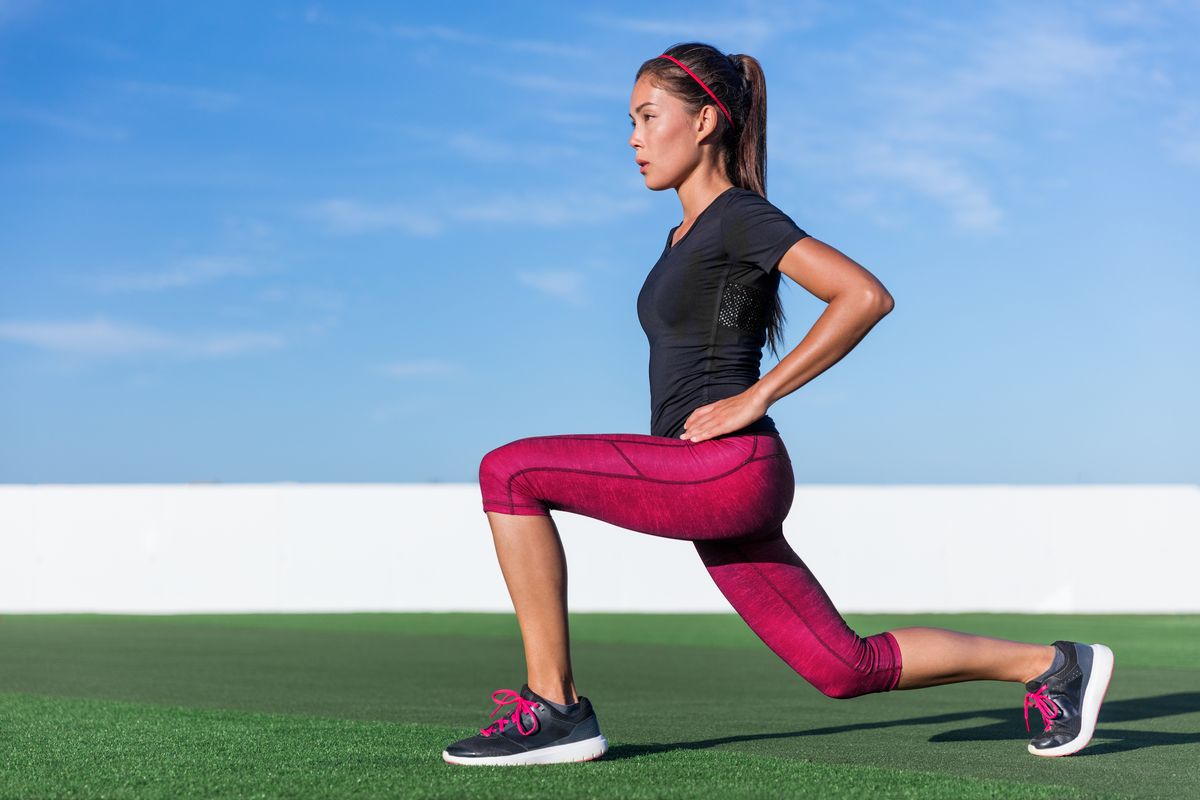
6. Incorporate Walking Lunges: Break up the monotony of a straight walk by integrating walking lunges into your route. Pause every few minutes to perform a set of lunges, which not only strengthen your legs and glutes but also enhance your balance and flexibility over time.

7. Utilize Resistance Bands: Add variety and resistance to your workout by bringing along resistance bands. Perform exercises like rows, chest presses, side steps, and squats to target different muscle groups. These portable pieces of equipment increase the intensity of your movements, promoting muscle strength and toning during your walk.

8. Add Dynamic Moves: Infuse enjoyment and variety into your routine with playful and dynamic movements such as skipping, side shuffles, or high knees. These not only elevate your heart rate but also make your workout more enjoyable and less predictable.

Advertisement

By integrating these strategies into your walking regimen, you’ll not only enhance your physical fitness but also keep your workouts engaging and effective. Each element targets different facets of fitness—from cardiovascular health and calorie burn to muscle strength and flexibility—ensuring a comprehensive and rewarding exercise session every time you step out for a walk.

Continue Reading
Click to comment

Leave a Reply

Your email address will not be published. Required fields are marked *

This site uses Akismet to reduce spam. Learn how your comment data is processed.

Fitness

Is there an ideal workout split for lifting?

Published

on

Is there an ideal workout split for lifting?
play

If you’re venturing into the world of lifting, there are more than a few ways to go about curating a workout split that supports your fitness goals.

Whether you’re interested in Olympic lifting or powerlifting, the activity offers immense benefits for developing muscle, improving mobility, boosting energy levels and relieving stress. 

Advertisement

For the unfamiliar, a workout split simply refers to how you curate your exercise routine and how to divide which exercises you’ll complete over a week’s worth of time, says Dr. Robert Trasolini, an orthopedic surgeon and sports medicine specialist at Northwell Health. 

Is there one split for lifting that prevails above the rest? Here’s what fitness experts say. 

Is there an ideal workout split for lifting?

“No, there really isn’t a perfect split,” says Alex Milton, a certified strength and conditioning specialist and the director of sports performance at MedStar Health. How you vary your upper and lower body workouts over the course of a week will ultimately depend on how much time you can dedicate to going to the gym. 

If you’re able to commit four to five days at the gym, one gym session could be dedicated to an upper body workout that concentrates on building strength in your chest, shoulders or arms, and the following session could focus on the lower body to work your legs, lower back and posterior chain.

Advertisement

If you’re heading to the gym closer to two to three times a week, it may be more beneficial to complete full-body lifts to stay more consistent with your workouts, Milton recommends.

The push-pull-legs split is one type of lifting framework that prioritizes strength building and muscle development, says Trasolini. “Push” exercises primarily work your body’s anterior front structure, and could look like a mix of chest, shoulder and tricep workouts. “Pull” exercises consist of pulling weights toward your body, such as back or bicep workouts. The third and final portion of the split centers around leg workouts, which could include squats or dead lifts. 

Incorporating recovery into your split is essential, says Dr. Trasolini. From a physiological standpoint, exercising works to break down the muscle with the intention of rebuilding it. “You need that recovery time for your body to see the damage, reassess and then repair,” he says.

Advertisement

How to lift weights

If you’re not yet an experienced weightlifter, prioritize the quality of your reps over quantity, the experts say. “There’s a big fear factor with weightlifting,” says Milton. “A lot of people think they’re gonna get hurt when they (lift), so naturally, they want to do higher reps because the weights (are) lighter and they feel a little bit more comfortable.” 

Higher reps put a bit more emphasis on cardio conditioning and endurance, whereas starting with a lower range of reps (around four to eight) will have a greater demand on your muscles and central nervous system as you gradually increase the load and intensity, Milton explains. 

If you’re a beginner to lifting, Trasolini recommends working with a fitness professional, such as a certified personal trainer or sports medicine specialist, to prioritize correct form and reduce your risk of injury while lifting. 

Advertisement
Continue Reading

Fitness

‘This is the single best strength exercise for runners,’ says a running coach

Published

on

‘This is the single best strength exercise for runners,’ says a running coach

We’re runners, so, naturally, we want to run. So when faced with a choice between lacing up the best running shoes and heading out into the fresh air, or grabbing some dumbbells for a strength workout, the run almost always comes out on top.

But strong runners aren’t made by running alone. Whatever your level, strength training is essential. It helps you run more efficiently, stay injury-free and keep going for longer. That’s why many coaches now include structured strength sessions alongside mileage plans.

Continue Reading

Fitness

The Bellabooty band has changed the way I strength train at home—and it’s 20% off right now on Amazon

Published

on

The Bellabooty band has changed the way I strength train at home—and it’s 20% off right now on Amazon

I rarely find a piece of equipment that changes the way I work out.

I’m very loyal to my favorites—kettlebells and my ab wheel—so when something makes it into my routine, I want to shout about it.

I was sent the Bellabooty band at the turn of the year but only started using it recently. I regret every workout I did without it.

For glute bridges in particular, which I used to do with a kettlebell uncomfortably loaded on my pelvis, it’s been a game-changer.

What’s more, it’s now reduced by 20% on Amazon, a rare dip in price according to online price trackers.

Advertisement

Initially, I just used the band as a pad to protect my hip bones for kettlebell hip thrusts. This alleviated some of the discomfort, but it isn’t strictly how the band is intended to be used.

It’s primarily used to to attach equal weights to each side, with the band making hip thrusts more comfortable.

The strap is high quality and the velcro is secure, so you don’t have to worry about dropping anything. Plus, the material is easy to wipe clean and it’s compact enough to throw in your gym bag and take with you.

(Image credit: Future/Lou Mudge)

Advertisement

That’s not all it can do, though. It can be used as a padded shoulder yoke for weighted squats, so you’re not limited by how long you can hold dumbbells in a front rack position for.

If you own very heavy dumbbells, it can also be used to hold your feet while you perform sit-ups.

Continue Reading

Trending