Fitness
A Trainer’s #1 Weekly Workout to Lose Weight & Build Muscle


Embarking on a fitness journey that combines weight loss and muscle building requires a well-crafted workout plan. The simultaneous building of muscle and loss of fat is called body composition, and it’s one of the most efficient fitness models I recommend to my clients. I’ve designed this weekly workout to lose weight and build muscle just for you. This regimen seamlessly integrates strength training and cardiovascular exercises to sculpt muscle mass while burning fat for maximum effectiveness.
Consistency is key in any fitness journey. This weekly routine brings together strength training, cardiovascular exercises, and rest days to optimize fat loss and muscle building. Remember to pair this workout with a balanced diet and sufficient hydration for the best results. Always consult with a fitness professional or healthcare provider before starting a new exercise program.
Keep reading for my best-recommended weekly workout to lose weight and build muscle. And when you’re finished working up a sweat, be sure to check out the 5 Most Effective At-Home Workouts for Weight Loss.
Day 1: Full-Body Strength Training
Full-body strength training contributes to fat loss by engaging multiple muscle groups, increasing calorie expenditure during and after your workout. It promotes muscle growth as compound exercises, like squats and deadlifts, stimulate the release of growth-promoting hormones, fostering muscle hypertrophy. The enhanced muscle mass resulting from full-body strength training further elevates your basal metabolic rate, supporting effective weight management and fat loss over time.
1. Squats
Stand with your feet shoulder-width apart. Lower your body as if sitting on a chair, keeping your back straight and your chest up. Straighten back into a standing position. Perform three sets of 12 to 15 reps.
2. Bench Press
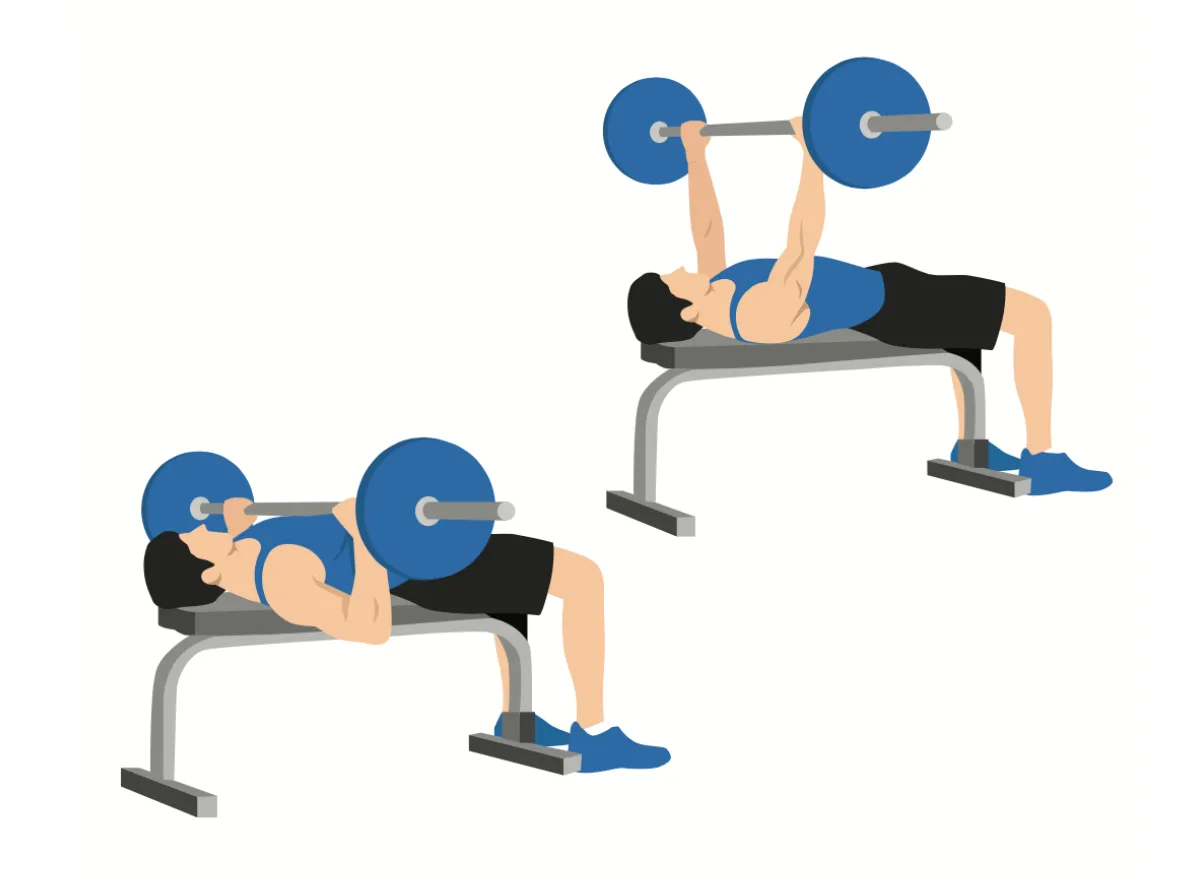
Lie on a flat bench with a barbell at chest height. Lower the bar to your chest, and push it back up. Complete three sets of 10 to 12 reps.
3. Bent-Over Rows
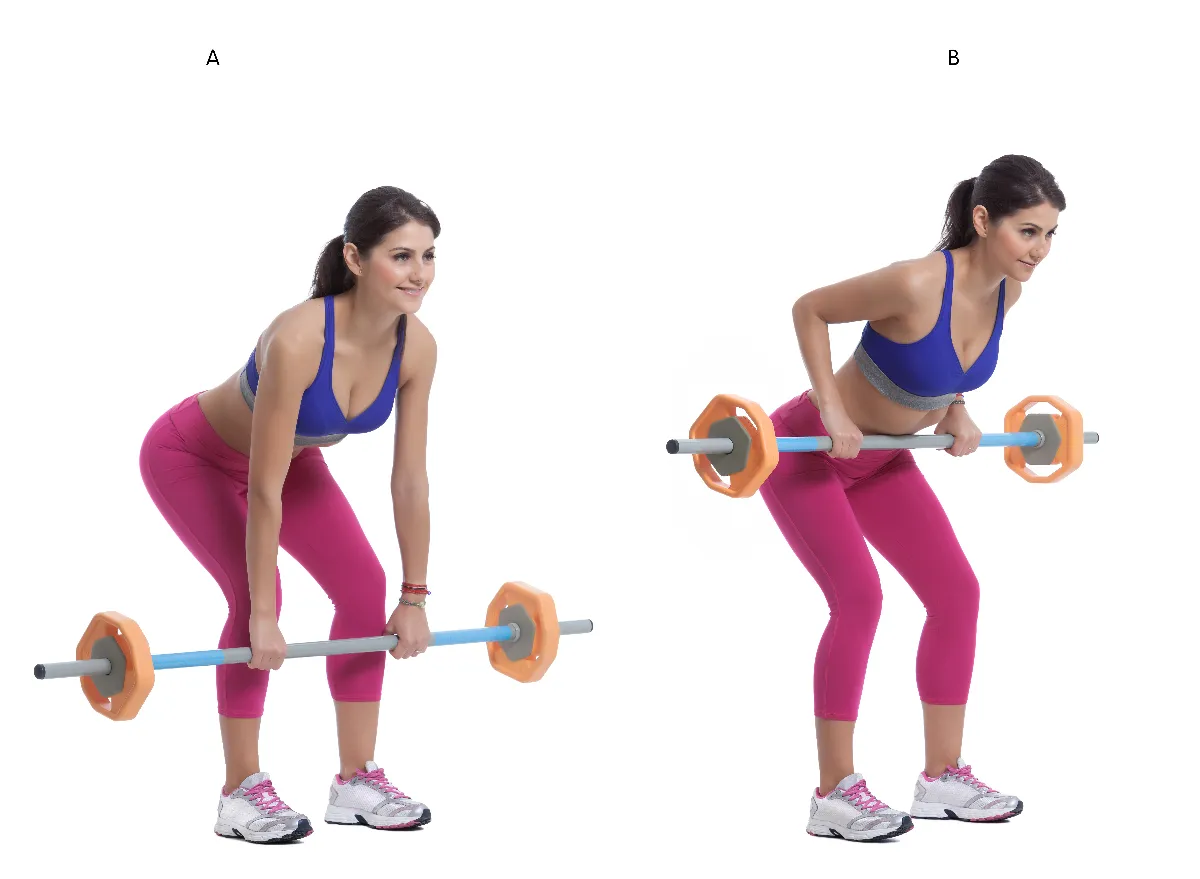
Hold a barbell with an overhand grip. Hinge at the hips, and pull the barbell to your chest. Aim for three sets of 12 to 15 reps.
Day 2: Cardiovascular Focus—High-Intensity Interval Training (HIIT)
High-intensity interval training (HIIT) contributes to fat loss by creating an afterburn effect known as excess post-exercise oxygen consumption (EPOC), where the body continues to burn calories post-workout, promoting a sustained calorie deficit. The intense bursts of activity during HIIT trigger the release of growth hormone, facilitating muscle growth and development. Additionally, HIIT stimulates the production of enzymes that enhance fat oxidation, making it an efficient and time-effective method for simultaneously burning fat and promoting muscle hypertrophy.
1. Sprint Intervals
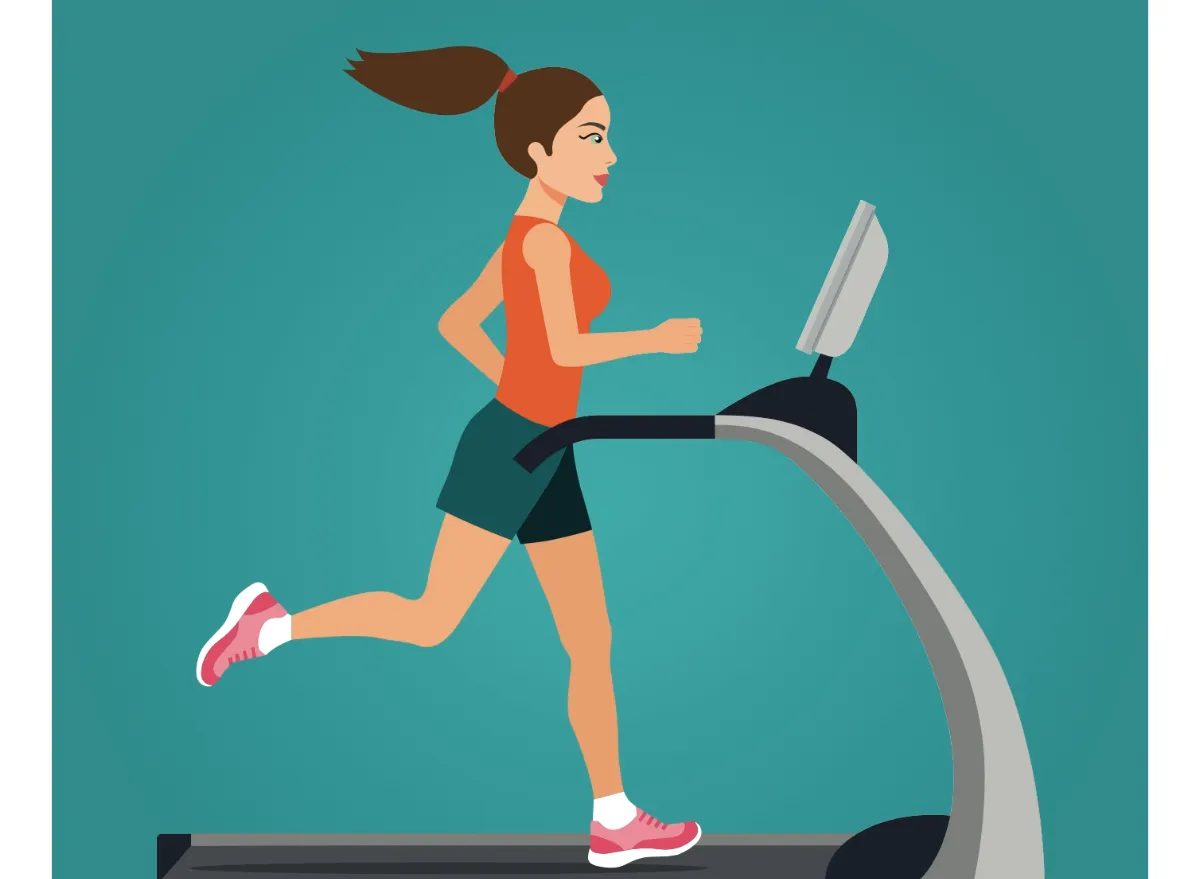
Sprint at maximum effort for 30 seconds. Follow with 30 seconds of rest or light jogging. Repeat for five minutes.
2. Burpees
Start in a standing position, then squat down and place your hands on the ground. Jump your feet back, landing in a plank position. Perform a pushup, then jump your feet back toward your hands. Explosively jump into the air, reaching overhead. Repeat for three sets of 10 to 15 reps.
3. Jump Squats
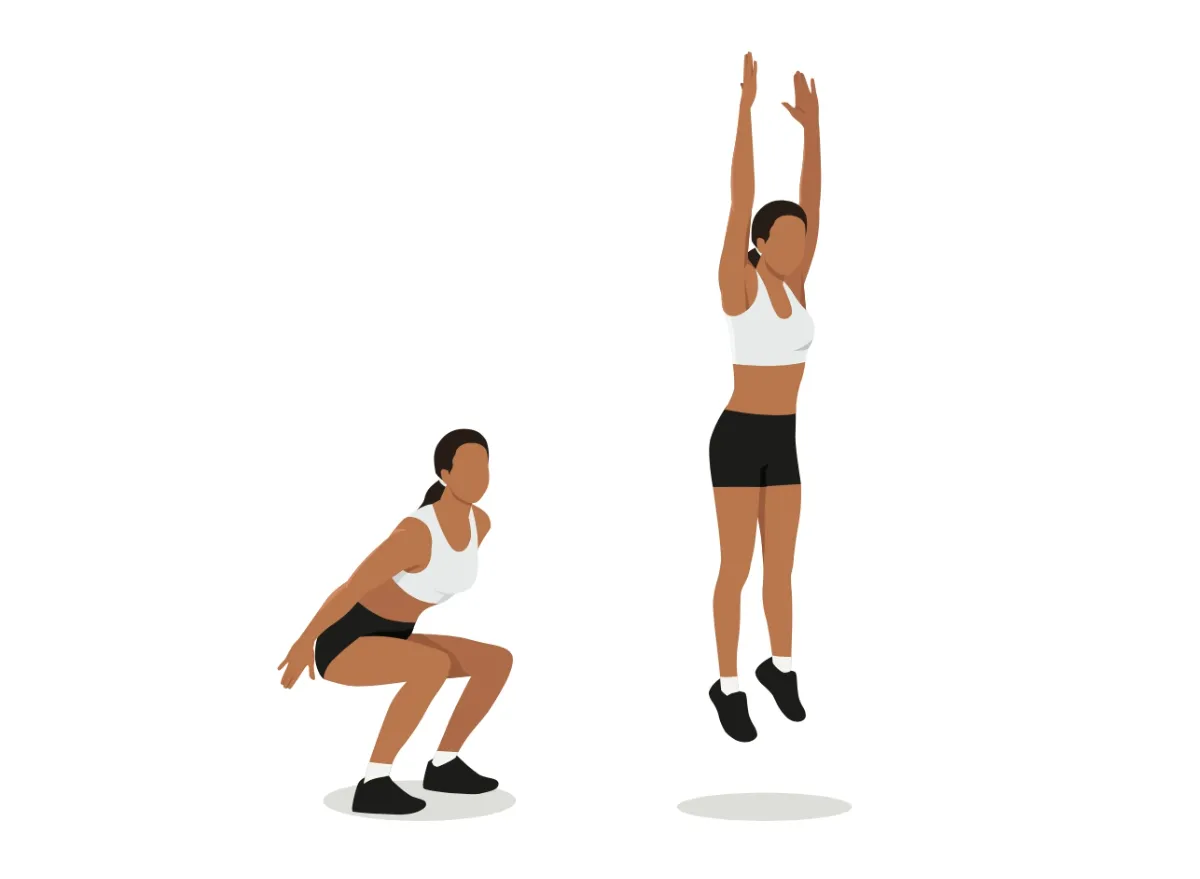
Stand with your feet shoulder-width apart. Lower your body into a squat position, keeping your back straight and your chest up. Explosively jump upward, extending your hips and knees. Perform three sets of 15 to 20 reps.
Day 3: Active Recovery
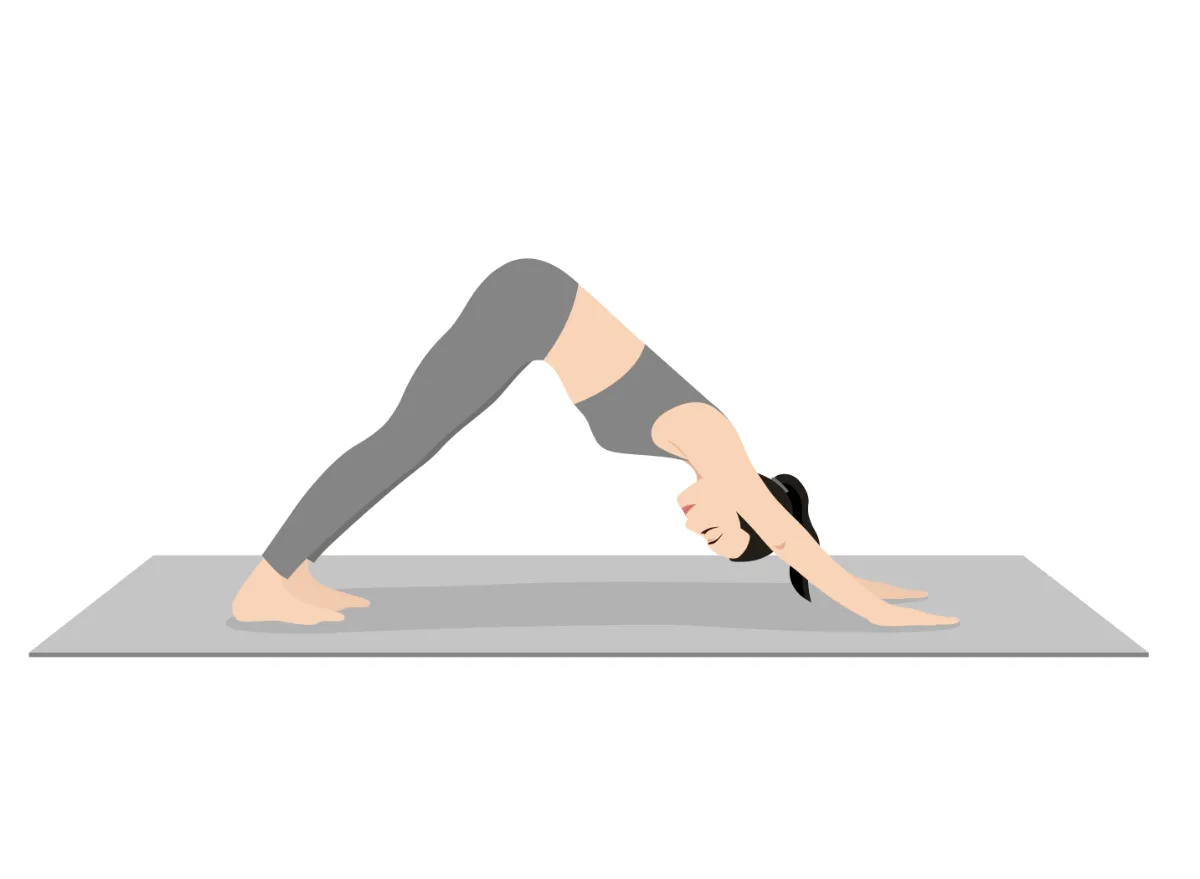
Recovery days are crucial when working out, as they allow for proper muscle repair and growth, preventing overtraining and reducing the risk of injuries. During recovery, the body replenishes energy stores and repairs micro-tears in muscle tissue caused by intense workouts, contributing to overall strength development. Adequate rest also balances hormone levels, promoting optimal metabolism and ensuring the sustainability of long-term fitness goals by preventing burnout and promoting mental well-being.
Engage in light activities such as walking, yoga, or swimming. Allow your body to recover while maintaining mobility by stretching. Drink plenty of water, get adequate sleep, and eat meals rich in nutrients and protein.
Day 4: Core and Stability Training
Core-strengthening exercises contribute to fat loss by engaging multiple muscle groups, increasing overall calorie expenditure, and promoting a higher metabolic rate. Additionally, a stronger core enhances stability and allows for more effective performance in compound movements, leading to increased muscle growth. As the core muscles develop and become more defined, they contribute to an aesthetically sculpted physique while supporting functional strength and improved posture.
1. Planks
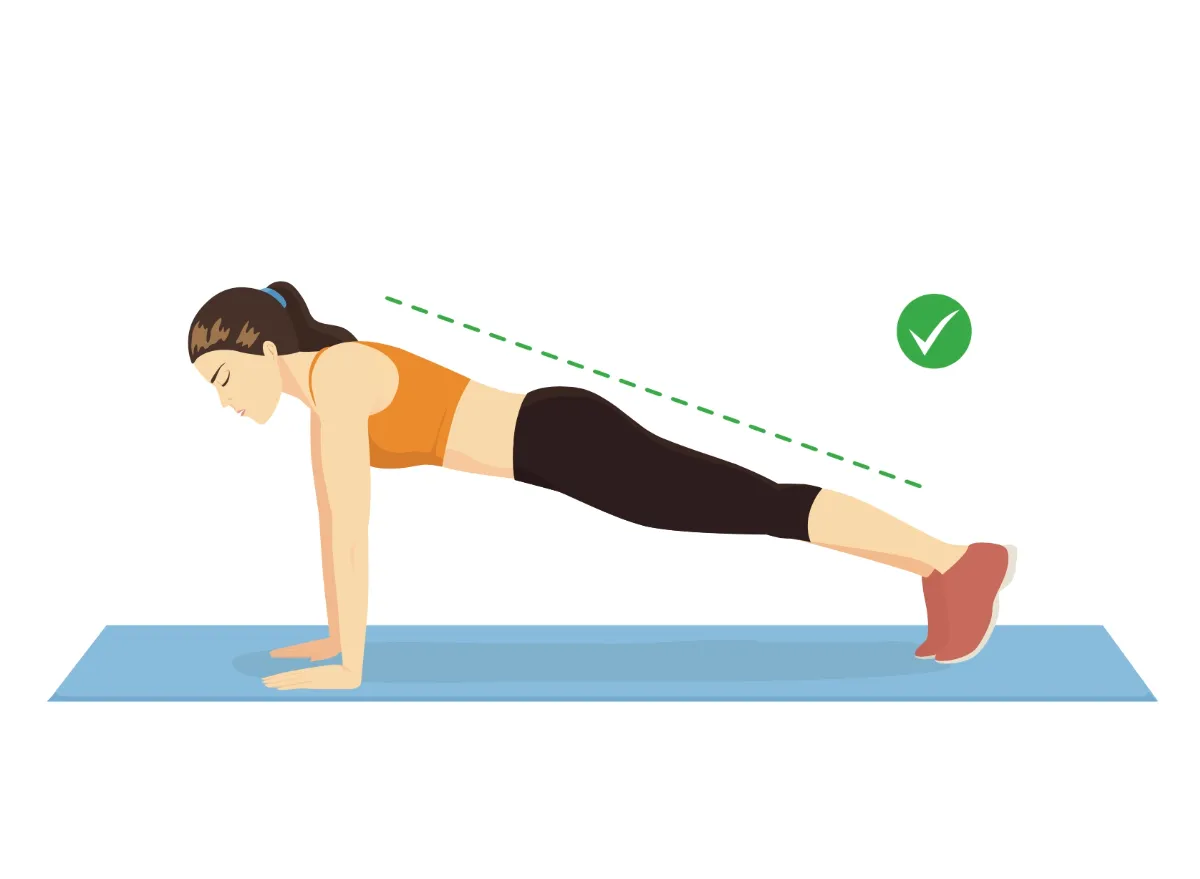
Hold a plank position with a straight line from your head to your heels. Aim for three sets, holding for 30 to 60 seconds.
2. Russian Twists
Sit on the floor, and lean back slightly. Rotate your torso while holding a weight or medicine ball. Perform three sets of 20 twists.
3. Bicycle Crunches
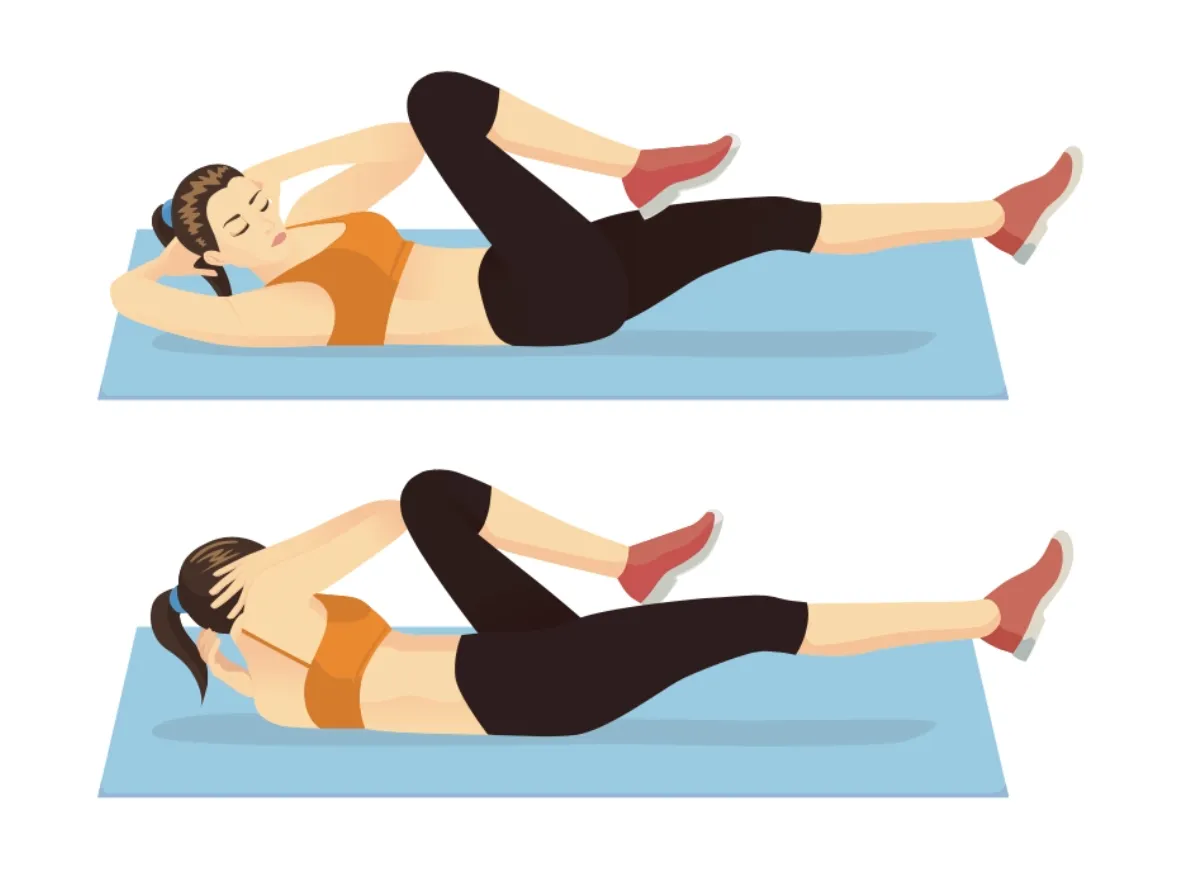
Lie flat on your back with your hands placed behind your head and elbows pointing outward. Lift your legs off the ground, and bend your knees at a 90-degree angle. Bring your right elbow toward your left knee while simultaneously straightening your right leg. Continue alternating sides in a pedaling motion. Aim for three sets of 15 to 20 reps.
Day 5: Cardiovascular Endurance—Long-Duration Cardio
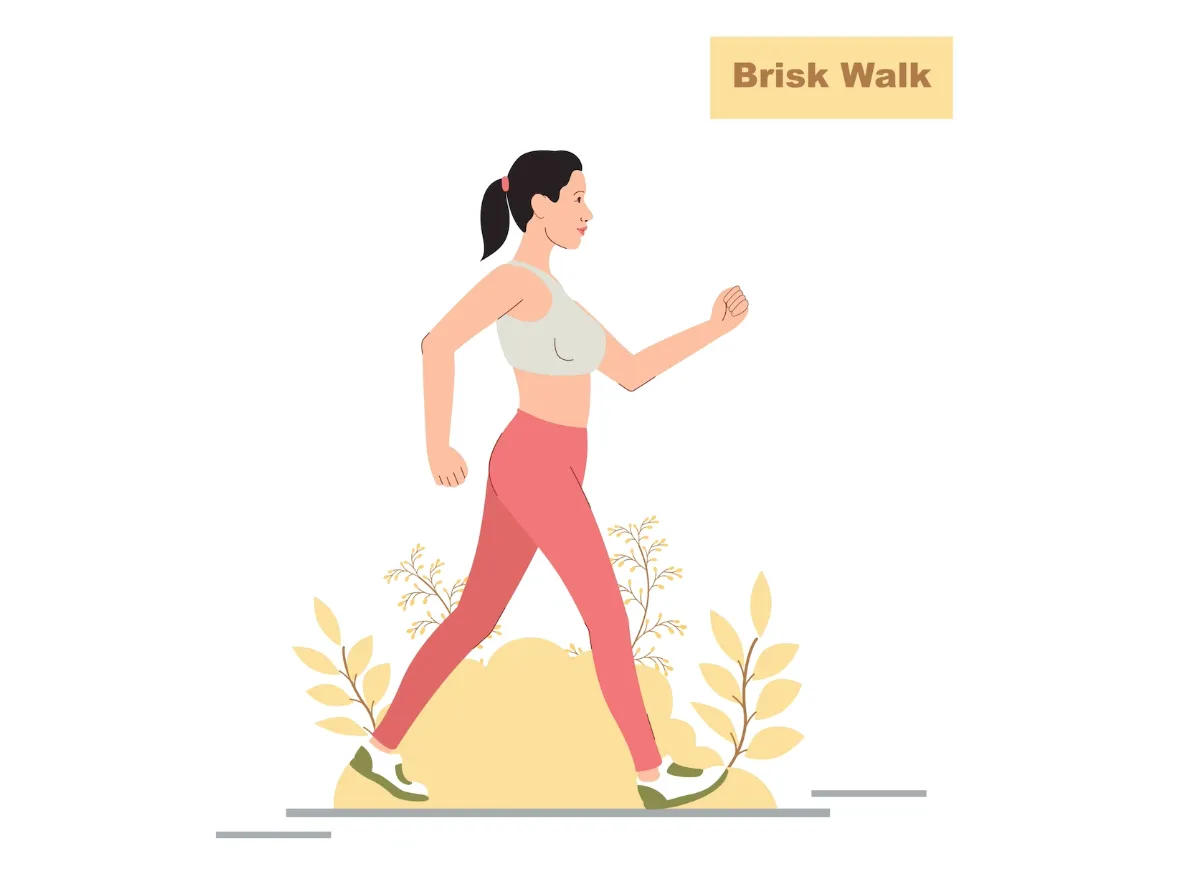
Long-duration cardio contributes to fat loss by promoting a sustained calorie burn, creating a calorie deficit essential for weight reduction. Additionally, it enhances cardiovascular endurance, enabling the body to efficiently utilize stored fat for energy during extended aerobic activities. While not directly promoting muscle growth like resistance training, consistent long-duration cardio supports overall health, aiding in a well-rounded fitness routine that complements muscle-building efforts.
Engage in moderate-intensity cardio for 45 to 60 minutes (jogging, brisk walking, cycling, or swimming).
Day 6: Compound Movements for Full-Body Engagement
Compound movements engage multiple muscle groups simultaneously, leading to a higher calorie expenditure during workouts. This increased energy demand supports fat loss by creating a calorie deficit. Additionally, compound movements stimulate the release of growth-promoting hormones, such as testosterone and growth hormone, fostering muscle growth and enhancing the overall metabolic rate for sustained fat loss.
1. Deadlifts
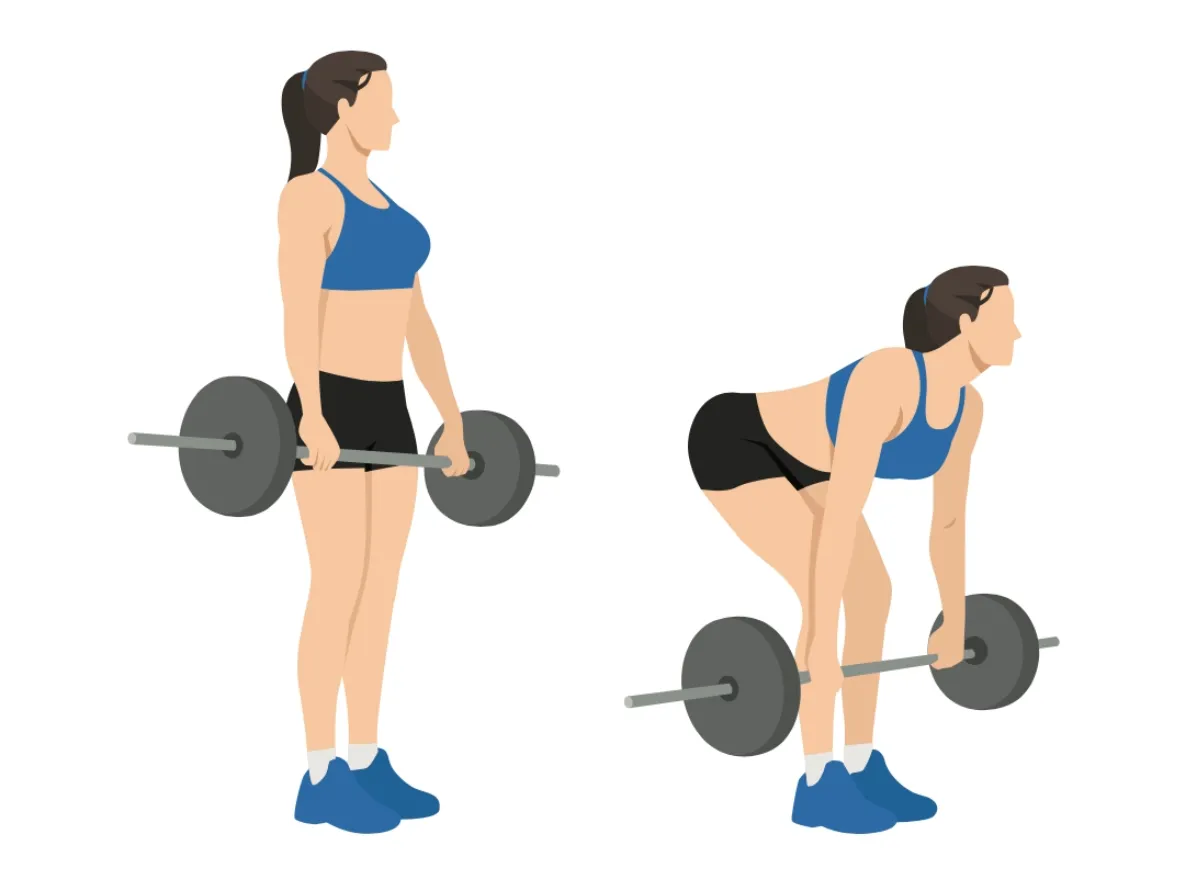
Lift a barbell from the ground using a hip hinge movement. Keep your lower back straight, and engage your core throughout the motion. Lower the barbell back to the ground. Complete three sets of 10 to 12 reps.
2. Overhead Press
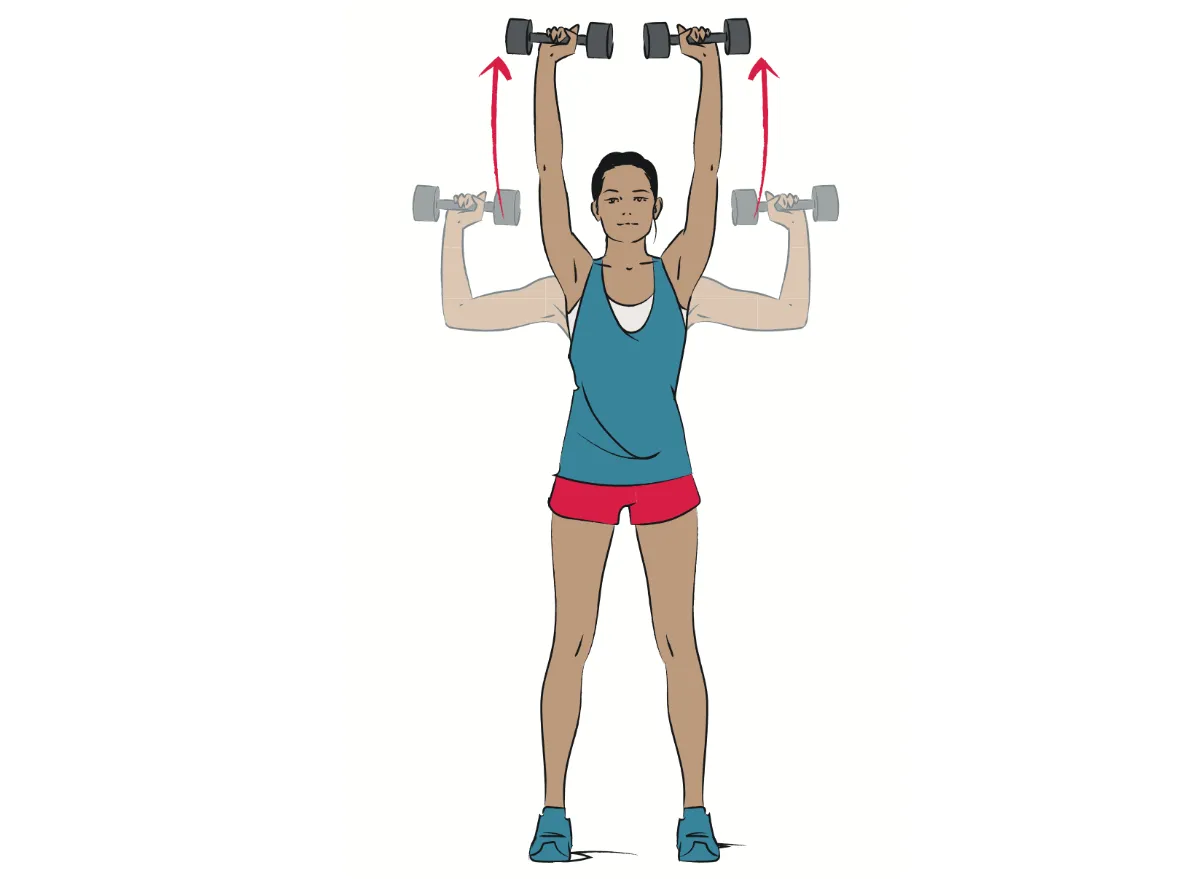
Grip a barbell or dumbbell in each hand and hold at shoulder height. Lift the barbell or dumbbells straight overhead, fully extending the arms. Aim for three sets of 12 to 15 reps.
3. Kettlebell Swings
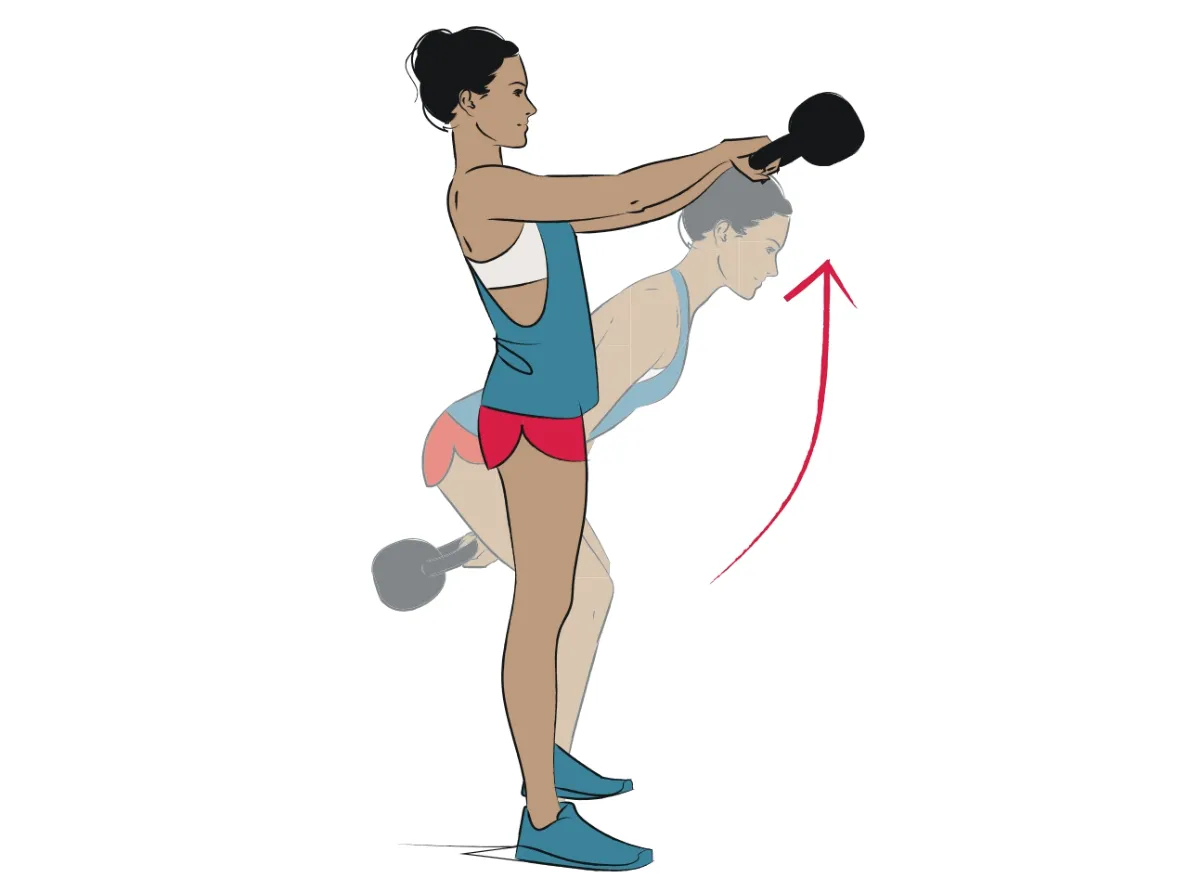
Stand with your feet shoulder-width apart, holding a kettlebell with both hands in front of you. Hinge at the hips, keeping a slight bend in the knees, and swing the kettlebell back between your legs. Explosively thrust your hips forward, swinging the kettlebell to chest height. Allow the kettlebell to swing back down, and repeat for three sets of 15 to 20 reps.
Day 7: Rest and Recovery
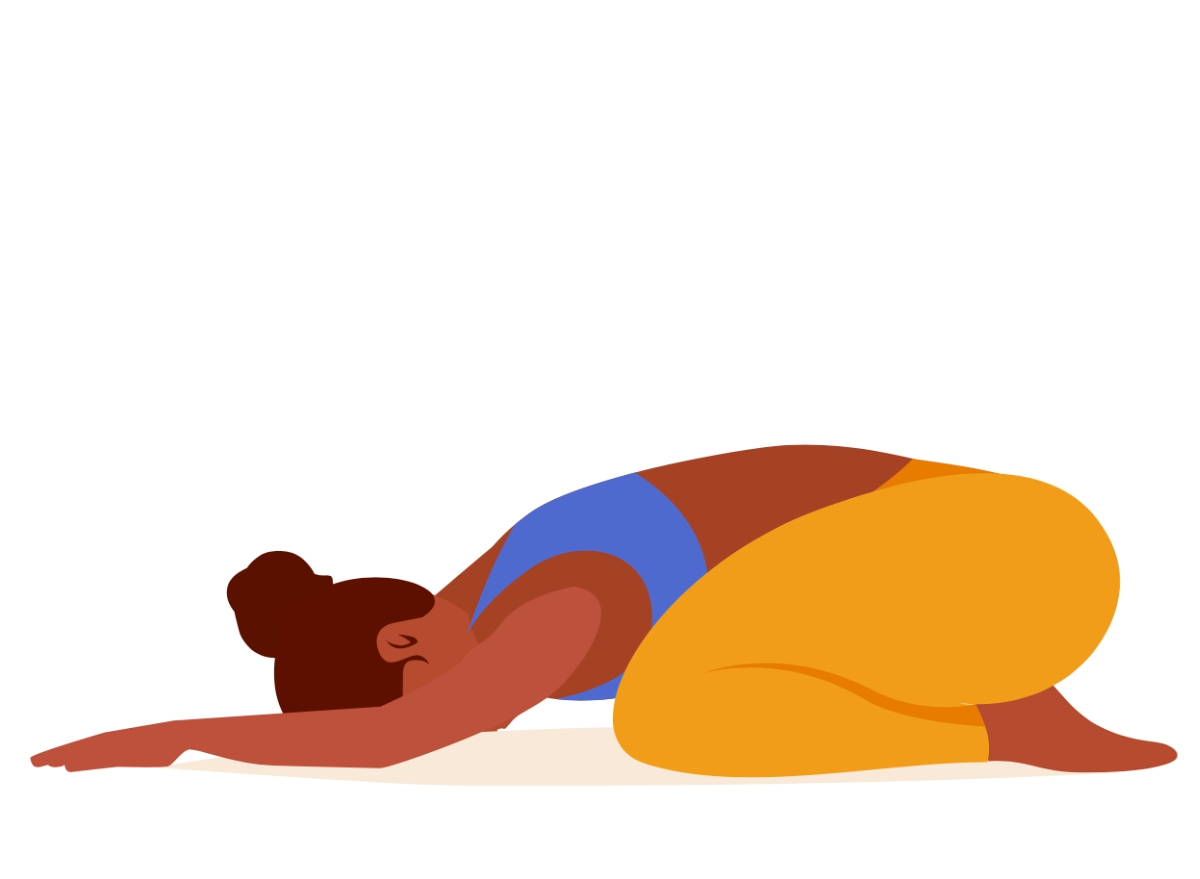
This weekly workout to lose weight and build muscle wraps up with another rest and recovery day. Feel free to engage in light activities like yoga, walking, or swimming. Give your body the time it needs (and deserves!) to recover while preserving mobility through light stretching.

Sign up for our newsletter!



Fitness
80-year-old fitness icon Joan MacDonald reveals her simple exercise for a stronger, more stable core

Joan MacDonald didn’t enter a gym until she was 70. Really. Since then, the 80-year-old has transformed her health by losing three stone and building significant muscle, and now coaches other women through her training platform, Train With Joan, which she launched to help others boost their fitness at any age.
The premise of her app is simple: minimal-equipment workouts built around no-fuss, effective exercises that can be done anywhere. One ‘powerful core and stability exercise’ she swears by is alternating bodyweight clock taps. ‘This movement helps strengthen the muscles that keep you stable, balanced and moving well as you age,’ Joan explains.
Bodyweight clock taps benefits
Think they look too simple? That’s the point. Joan is adamant that ‘You don’t need complicated workouts to start getting stronger. Sometimes the most effective movements are the simple ones you do consistently.’
According to Joan, regularly performing bodyweight clock taps help:
- ‘Strengthen your core which supports your spine and reduces strain on your lower back.
- ‘Improve balance and coordination, helping you stay steady on your feet.
- ‘Increase hip stability, which supports your knees and joints.
- ‘Build functional strength for everyday movements like stepping, turning and reaching.
- ‘Help reduce fall risk by improving control and body awareness’
How to do bodyweight clock taps
Find a demo from Joan above, along with instructions for how to do them with proper form below.
- Stand on one leg with a slight bend in your supporting knee and brace your core.
- Keeping your hips level, reach your free foot forward to lightly tap the floor in front of you (12 o’clock), then return to the centre.
- Continue tapping to different “clock” positions—such as 3, 6 and 9 o’clock—maintaining your balance and control throughout.
- Complete all reps on one leg before switching sides.
Form tip: Move slowly and focus on staying stable. The goal is controlled movement, not how far you can reach.
How many reps and sets to do
Joan shares her advice, according to your fitness level.
- Beginners: ‘3 taps per leg x 8-10 reps’
- Intermediate: ‘3 taps per leg x 10-12 reps’
- Advanced: ‘3 taps per leg x 12-15 reps’

One of our most frequently asked questions here at Women’s Health? How to build muscle and burn fat at the same time. So, we asked superstar trainer Oyinda Okunowo exactly how to do it. In this 4-week plan – created exclusively for Women’s Health COLLECTIVE members – you’ll get the workouts and nutrition guidance needed to help you on your way to better body composition. Tap the link below to unlock 14 days of free access to Oyinda’s plan and start training today.
Get the plan
As Women’s Health UK’s fitness director and a qualified Pilates and yoga instructor, Bridie Wilkins has been passionately reporting on exercise, health and nutrition since the start of her decade-long career in journalism.
After earning a first-class degree in journalism and NCTJ accreditation, she secured her first role at Look Magazine, where she launched the magazine’s health and fitness column, Look Fit, before going on to become Health and Fitness writer at HELLO!
Since, she has written for Stylist, Glamour, Cosmopolitan, Marie Claire, Elle, The Metro, Runner’s World and Red. Today, she oversees all fitness content across Women’s Health online and in print, spearheading leading cross-platform franchises, such as ‘Fit At Any Age’, which showcases the women proving that age is no barrier to exercise.
She has also represented the brand on BBC Radio London, plus various podcasts and Substacks – all with the aim to encourage more women to exercise and show them how. Outside of work, find her trying the latest Pilates studio, testing her VO2 max for fun (TY, Oura), or posting workouts on Instagram.

In the 19 years since retiring from professional tennis, Tim Henman has barely aged. A large part of that comes down to his approach to fitness. The 51-year-old believes that ‘being active is always going to be a part of my identity’, which helps him maintain a consistent training routine.
Even while spending much of his time covering tennis as a commentator and pundit, and serving on the board at Wimbledon, Henman still makes time for his own athletic pursuits. Especially now that he has a different kind of motivation.
How Tim Henman Stays Fit After Retirement
‘I’ve got a gym at home and I try to exercise pretty regularly because I feel much better for it,’ Henman tells Men’s Health. ‘But one of my passions is wine. So if I’m having a few glasses of wine – you’ve got to treat yourself – then that definitely incentivises me to get in the gym. I’ve always exercised and I think it’s good for me both physically and mentally.’
That doesn’t mean Henman is completing brutal workouts or chasing specific performance goals. Instead, he prefers a straightforward routine that supports his lifestyle and helps him manage the wear and tear accumulated during his tennis career.
‘I don’t run that much anymore. We’ve got dogs at home, so I walk them a lot, and if I’m at tournaments or working, I’ll do quite a bit of incline walking on the treadmill. Then it’s just a good mix of weights and core work. I’m not trying to run any marathons – I’m just trying to stay in relatively good shape,’ he says.
‘I understand my body and know what I can and can’t do, especially because I’ve had three elbow surgeries and a shoulder surgery. So I’m a little careful around those joints.
‘Posture is so important for shoulder health. I focus on resistance-band exercises to make sure I’m strong through my back and maintaining good posture. Then the core is so important, so I try to stay strong through planks and side planks as much as possible.’
Why Henman Is Excited for the Laver Cup
His approach to fitness has changed dramatically over the past two decades. Where he once played tennis every day, Henman admits he’s now lucky if he gets on court twice a year. These days, golf is his sporting obsession.
That doesn’t mean he’s any less passionate about tennis, however, as he prepares to return as Team Europe vice-captain at the Laver Cup this September at The O2.
‘I’m so excited,’ he says. ‘The first time I ever experienced the Laver Cup was at The O2 when Roger Federer was retiring. I’d never seen the event live and I was probably a bit sceptical at that stage. But I was there working for television and, for those three days, I was completely blown away by the delivery of the event, the intensity of the players and the quality of the matches.
‘Tennis is an individual sport and players spend most of the year competing on their own. But I’d struggle to name any player, male or female, who doesn’t enjoy being in a team environment every once in a while.
‘The way the Laver Cup has evolved and grown is so special, and Federer deserves a lot of credit for that vision.
‘With an arena like The O2, it’s one of the biggest venues in tennis. There’ll be 17,000 or 18,000 people packed in there and, with the roof on, the atmosphere is incredible.’
Laver Cup returns to The O2, London, from 25-27 September, bringing together many of the world’s biggest tennis stars as Team Europe takes on Team World in the sport’s unique team competition. Tickets are on sale now via AXS, the official ticketing partner of The O2. Visit lavercup.com for more information.
Ryan is a Senior Writer at Men’s Health UK with a passion for storytelling, health and fitness. Having graduated from Cardiff University in 2020, and later obtaining his NCTJ qualification, Ryan started his career as a Trainee News Writer for sports titles Golf Monthly, Cycling Weekly and Rugby World before progressing to Staff Writer and subsequently Senior Writer with football magazine FourFourTwo.
During his two-and-a-half years there he wrote news stories for the website and features for the magazine, while he also interviewed names such as Les Ferdinand, Ally McCoist, Jamie Redknapp and Antonio Rudiger, among many others. His standout memory, though, came when getting the opportunity to speak to then-Plymouth Argyle manager Steven Schumacher as the club won League One in 2023.
Having grown up a keen footballer and playing for his boyhood side until the age of 16, Ryan got the opportunity to represent Northern Ireland national futsal team eight times, scoring three goals against England, Scotland and Gibraltar. Now past his peak, Ryan prefers to mix weightlifting with running – he achieved a marathon PB of 3:31:49 at Manchester in April 2025, but credits the heat for failing to get below the coveted 3:30 mark…
You can follow Ryan on Instagram or on X
Fitness
Quote of the day by Cher: ‘Nothing lifts me out of a bad mood better than a hard workout on my…’ – motivating life lessons by Oscar-winning actress of Moonstruck and singer of Believe on exercise, mental health, fitness and how this daily habit can transform your mood and mindset

Quote of the Day Today: Cher on Exercise
Cher said, “Nothing lifts me out of a bad mood better than a hard workout on my treadmill. It never fails. Exercise is nothing short of a miracle,” as per BrainyQuote.
What Cher’s Quote Means: Why Exercise Can Transform Your Mood
Cher’s quote highlights the powerful connection between physical activity and emotional well-being. Rather than seeing exercise as only a fitness routine, she describes it as something that consistently helps improve her mood and clear her mind.
Her words suggest that movement can provide more than physical benefits. A workout can help reduce stress, increase energy, and shift attention away from negative thoughts. By calling exercise “nothing short of a miracle,” Cher emphasizes the positive impact it has had on her own life.
Life Lesson from Cher’s Quote
The quote reminds readers that small, healthy habits can make a significant difference in everyday life. While exercise may not solve every problem, making time for physical activity can help people feel stronger, calmer, and better equipped to handle daily challenges. Cher’s message encourages people to view exercise not as a chore, but as an investment in both physical and mental well-being.
Who Is Cher
Cher (born May 20, 1946, in El Centro, California) is an American singer, actress, and entertainer whose career has spanned more than five decades. According to a Britannica report, she is known for her success in music, film, and television and for continually reinventing herself.
Cher’s Early Life
Born Cherilyn Sarkisian, Cher faced financial hardships during childhood and struggled with undiagnosed dyslexia. She left school at age 16 and moved to Los Angeles, where she began her entertainment career.
Cher’s Rise to Fame
Cher found success with Sonny Bono as part of Sonny and Cher. Their 1965 hit “I Got You Babe” launched their careers, and she later became a solo star with number one hits including “Gypsys, Tramps & Thieves,” “Half-Breed,” and “Dark Lady,” as per the Britannica report.
Cher’s Acting Career
Cher earned critical acclaim for films including Silkwood and won the Academy Award for Best Actress for Moonstruck (1987). She also starred in Mask, The Witches of Eastwick, Burlesque, and Mamma Mia! Here We Go Again.
Cher’s Legacy
Cher made a successful music comeback with Believe, winning a Grammy Award for the hit song. She later received Kennedy Center Honors in 2018, was inducted into the Rock and Roll Hall of Fame in 2024, and published Cher: The Memoir, Part One the same year, as per the Britannica report.
-

 Rhode Island3 minutes ago
Our Favorite Write-Ins From the 2026 Best of Rhode Island Readers’ Poll – Rhode Island Monthly
-

 South-Carolina10 minutes ago
South Carolina National Guard lifts suspensions for pilots in July Fourth flyover
-

 South Dakota13 minutes ago
South Dakota T. rex could bring $30 million or more at auction
-

 Tennessee18 minutes ago
Rescue teams pull kayakers and dog from Red River in Tennessee
-

 Texas25 minutes ago
Fetus found deceased along Lewisville Lake shoreline was discarded intentionally, police say
-

 Utah28 minutes ago
Tyler Robinson preliminary hearing expected to wrap up Friday – KSLNewsRadio
-
Washington32 minutes ago
Bengals 2026 Opponent Preview: Washington Commanders
-

 Vermont33 minutes ago
Beau Welling’s Stowe Country Club Revamp Signals New Vermont Golf Era


