San Francisco, CA
18-year-old dies in crash on I-80 near SoMa district


(KRON)– An 18-year-old is dead, and several others are injured after an early morning crash on eastbound I-80, near the 7th street off ramp in San Francisco’s SoMa district, according to California Highway Patrol San Francisco (CHP SF).
The crash occurred around 1:00 a.m. between a tractor-trailer, a Recology truck semi, and a grey Chevrolet Camaro, according to CHP officials.
Police said the Camaro was traveling eastbound just west of 7th Street when it made an illegal lane change to the right, colliding with the tractor-trailer as it was approaching the off-ramp.
Both vehicles crashed into the sand barrels at the top of the 7th Street off-ramp, officials said. The tractor-trailer continued onto the offramp, where it came to a stop, blocking all lanes.
After hitting the sand barrels, the Camaro continued, launching over the off-ramp bridge railing, where it dropped 25 feet and landed in the San Francisco Police Department Impound parking lot beneath the off-ramp and hitting several vehicles in the impound yard, police said. The Camaro landed upside down on top of another car.
Police said four people were inside the Camaro. The driver, an 18-year-old man, had moderate injuries and managed to get himself out of the car, police said. The right front passenger, a 17-year-old male, suffered moderate injuries as well.
The two rear passengers, both 18-year-old men, suffered major injuries. One is being treated at a local hospital, and the other was pronounced dead at 1:50 a.m. at the scene of the crash, police said.
The other three passengers in the Camaro were wearing seatbelts, and the 18-year-old who died was not wearing a seatbelt.
CHP SF officials do not believe alcohol or drugs were a factor in this crash.

San Francisco, CA
A Leak of San Francisco Police Drone Footage Exposes the New Reality of Urban Surveillance

Just after noon on a Saturday last month, a Skydio X10 quadcopter hovered about 200 feet over a San Francisco apartment complex, watching police chase a man hiding behind a parked car. The target of this manhunt lay down on the pavement, apparently unaware that he remained in full view of the flying eye overhead. The 5-pound drone had, in fact, already followed him across the city, zooming in on his black SUV’s license plate, keeping the vehicle locked at the center of its video frame until he pulled over. Now it watched the police as they closed in and surrounded him.
As the officers approached, the man adjusted his hiding spot, moving to the other side of the parked car. At that moment, however, another Skydio drone zoomed in on his location, one of four Skydio quadcopters that had followed the man in just the prior hour. This one had been called away from a nearby McDonald’s, where it had been watching two people who’d exited the suspect’s car a few minutes earlier—and now began watching him from a second angle.
Within seconds, three officers converged on the man, two pointing weapons at him, then tackled him as half a dozen more police arrived on the scene. Police records provided to WIRED by the San Francisco Police Department show the entire street-and-sky response followed from what the SFPD described as an alleged “auto boost/strip” incident—the suspected theft of car parts or another object from a vehicle.
This glimpse of modern drone-enabled police surveillance, including the highly sensitive video of the man’s physical takedown, wasn’t voluntarily released by the SFPD—which, like most US police departments, rarely releases drone videos even in response to public records requests. Instead, it was accidentally livestreamed onto the open internet via Skydio’s website. That’s where two security researchers, Sam Curry and Maik Robert, discovered that the SFPD was leaking all of the real-time footage from five of its surveillance drones, including both color and thermal imaging, accompanying location metadata, and the drone pilots’ names and email addresses, to anyone who merely found the public web address where the videos were hosted.
Curry and Robert say they reported their discovery to Skydio around two days after discovering it, and it was quickly taken offline. By then, though, the researchers had watched police carry out what appeared to be multiple arrests and searches as well as tracking cars and individuals from the sky, all visible at a fully public web address.
“There’s a certain trust given to the police to use these things correctly,” says Curry. “When you’re watching a drone feed live, you can look into dozens of different apartments, you can see police zooming in on people, you can see arrests. The fact that all of this was exposed feels like a really big issue from a privacy perspective.”
The leaked feed of video captures two forced detentions—whether any actual arrests were made is unclear from the footage—a police visit to an apartment in a high-rise apartment building, and an apparent search of an alley populated with homeless people, as well as numerous other more ambiguous instances where police used drones to surveil individuals, vehicles, or buildings. While the feed remained live, Curry and Robert began archiving the public stream of data and videos and later shared the results with WIRED.
The archive Curry and Robert captured offers a detailed record of SFPD drone operations over about 48 hours in mid-June. It includes 60 videos from 20 separate flights, with each mission recorded from three feeds: a color camera, a thermal camera that renders people as heat signatures, and a third view from the drone’s rooftop dock. WIRED analyzed all 20 color videos with software that detects people, vehicles, and other objects in images. The review found that the cameras had filmed hundreds of people and vehicles across the 20 flights. In a single frame, as a drone hovered over a downtown intersection, the software counted 34 people crossing the street or standing on the sidewalks. Across all of the videos the footage showed clear faces of dozens of people.
Together, the videos amount to more than three hours of aerial color footage and roughly the same amount of thermal footage. The archive also includes second-by-second telemetry logs for every flight—more than 5,000 GPS points in all tracing over some 44 miles—recording each drone’s latitude and longitude, altitude, speed, heading, and battery level from takeoff to landing. Six SFPD pilots’ names and email addresses also appear across the logs.

The San Francisco Giants conclude this four-game series against the Colorado Rockies this afternoon from Oracle Park.
Taking the mound for the Giants will be right-hander Trevor McDonald, who enters today’s game with a 5.46 ERA, 3.99 FIP, with 50 strikeouts to 20 walks in 59.1 innings pitched. His last start was in the Giants’ 9-3 loss to the Toronto Blue Jays on Tuesday, in which he allowed eight runs on 11 hits and one walk in two and a third innings.
He’ll be facing off against Rockies right-hander Michael Lorenzen, who enters today’s game with a 6.46 ERA, 4.83 FIP, with 72 strikeouts to 35 walks in 92 innings pitched. His last start was in the Rockies’ 4-3 win over the Los Angeles Dodgers on Tuesday, in which he allowed three runs (two earned) on six hits with five strikeouts and three walks in six innings.
Who: San Francisco Giants vs. Colorado Rockies
Where: Oracle Park, San Francisco, California
Regional broadcast: NBC Sports Bay Area
Radio: KNBR 680 AM/104.5 FM, KSFN 1510 AM
San Francisco, CA
I’m a writer who left LA for an AI startup in San Francisco. It was like stepping into a whole new world.

I moved from Los Angeles to San Francisco because of a cold DM on X.
I grew up in the LA suburbs, and after attending college there I built my career in journalism across the country, first covering local news, and then crypto. I liked my comfortable life with friends and family.
Then in February, the chief of staff at Corgi, the AI insurance startup that recently went viral for its seven-day workweek, messaged me on X to ask if I would be interested in a role. I’d never heard of Corgi, but I’d seen a lot of people in crypto pivot to the AI industry and wanted to check it out.
A week later, I flew to San Francisco to visit the team, and in March, I joined them as their Head of Brand. My entire life changed in an instant.
Moving from Los Angeles to San Francisco felt like stepping into a completely different value system

Courtesy of Erika Lee
In San Francisco, there’s a strong sense that AI is transforming the city and a level of intensity that I don’t think people outside the Bay Area fully appreciate. Everyone here believes they’re early to something massive.
Everyday, I meet people who’ve moved across state and city lines to work at startups in San Francisco. Like me, they’re willing to make extraordinary sacrifices for the possibility of being part of the next OpenAI or Anthropic.
In LA, one of the first questions people would ask me at events was, “What’s your Instagram?” Conversations often orbited around who you knew, what parties you were invited to, and how well you’ve curated yourself online.
In San Francisco, online curation still matters, but in a different way. People ask for your LinkedIn or X account. Or sometimes they skip social media entirely and ask, “What are you building?” Nobody seems particularly interested in whether you’re fashionable, attractive, or influential online. The currency is ideas, fundraising, and products.
Neither city is better; they optimize for different things. For now, I’m happy to be working with my head down in San Francisco, where I’m more productive and motivated than I was in LA.
My journalism background was more valuable than I expected
Coming from journalism, I assumed I’d be the least technical person in almost every room.
When you think of Silicon Valley, you think of engineers and founders who’ve raised millions of dollars. Conversations move quickly from product roadmaps to fundraising. At times, I wondered whether someone with an entirely different skillset really belonged in this environment.
Over time, I realized I was wrong. In the age of AI, companies compete on narrative, taste, and making people care. Storytelling is becoming infrastructure. OpenAI has highlighted the enormous opportunity for new forms of creative and narrative work emerging alongside AI, while hiring roles dedicated specifically to shaping the stories that help executives and customers understand the technology.
Rippling is hiring a Head of Storytelling to build its editorial voice and point of view, and Notion now has an entire Storytelling function within the company. In a world where everyone has access to the same models, the advantage increasingly belongs to the people who can synthesize ideas, understand culture, create meaning, and tell compelling stories. The humanities aren’t becoming less valuable in the AI era, they may be becoming more valuable than they have been in decades.
Courtesy of Erika Lee
Since journalists can identify what matters in a sea of information and explain complicated topics clearly, my experience is incredibly useful for writing, editing, and shaping content about Corgi’s brand.
Changing industries doesn’t always mean leaving behind the skills you love most. Sometimes, it means finding a new way to use them.
I’m glad I moved despite the emotional trade-offs
I still miss many things about Los Angeles, like being close to my family, familiar neighborhoods, and the comfort of a city where I always knew the best spots to meet friends for coffee. LA shaped who I am, and I don’t think anywhere will ever replace it.
But moving to San Francisco has stretched me in ways staying comfortable never could have. I didn’t just change address, I moved into an entirely different world. I’m surrounded by people who genuinely believe they’re living through one of the most consequential technological shifts of our generation.
Whether history proves them right remains to be seen, but as a journalist used to documenting periods of change from the outside, I’m glad I’m experiencing this defining moment where the action is happening.
Like many others, I’m willing to uproot my life to be part of this once-in-a-lifetime shift. Even with the uncertainty, long hours, and emotional trade-offs that came with leaving my life in Los Angeles behind, I’m grateful I said yes to that cold message on X.
-

 New York58 minutes ago
How a Family of 5 Lives on $46,000 a Year in Wakefield
-

 Los Angeles, Ca1 hour ago
Southern California braces for 110-degree heat, thunderstorms this week
-
 Detroit, MI1 hour ago
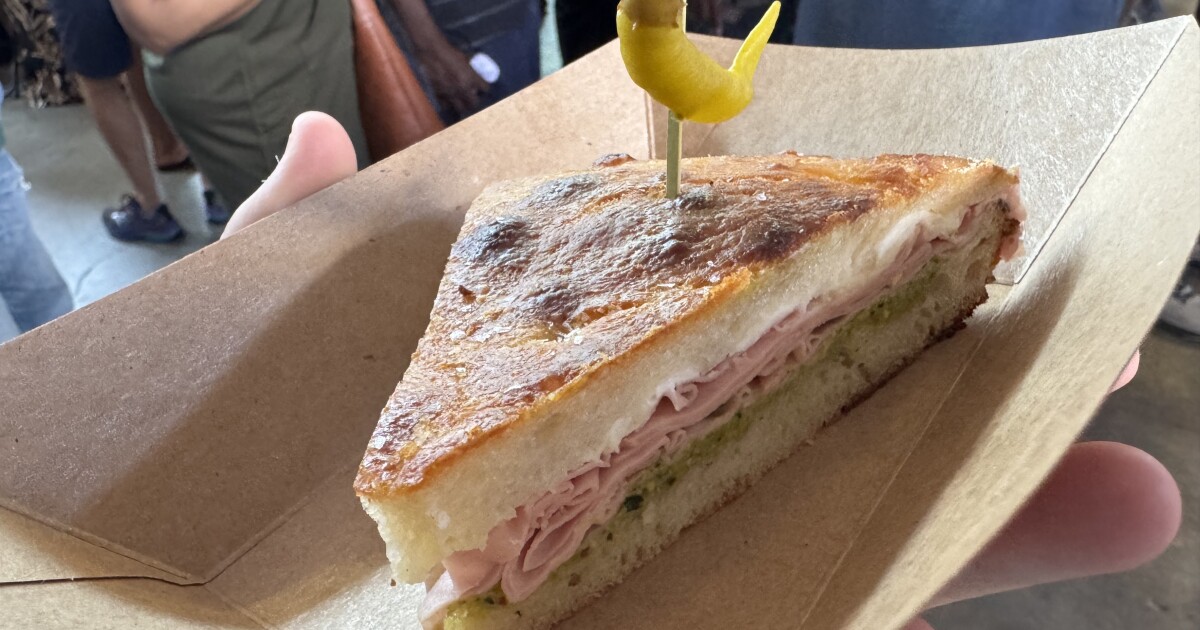
Detroit Sandwich Party returns to Eastern Market on Sept. 6
-

 San Francisco, CA2 hours ago
A Leak of San Francisco Police Drone Footage Exposes the New Reality of Urban Surveillance
-

 Dallas, TX2 hours ago
Viral East Dallas coffee shop fears major sales drop amid six-week road closure
-

 Miami, FL2 hours ago
3 hurt in fire on Lincoln Road that started underground
-

 Boston, MA2 hours ago
Rideshare driver charged in Logan airport passenger assault to appear in court
-

 Denver, CO2 hours ago
Denver area events for July 13

