Finance
Starting 2026 on solid financial footing


BIRMINGHAM, Ala. (WBRC) – With the new year quickly approaching many people are looking for ways to get their finances back on track. Financial expert Jim Sumpter says the first step is to review your budget, understand what you’re earning and spending, and rebuild any emergency savings used over the holidays. He also warns about hidden costs like forgotten subscriptions or missed gift return deadlines, which can quickly add up.
When it comes to saving, Sumpter recommends starting small. Even an extra $50 per paycheck or skipping one dinner out a month can add up to over $1,000 in a year. Tackling credit card debt doesn’t have to be overwhelming either — focus on one card at a time and make consistent extra payments.
The key, Sumpter emphasizes, is building habits over time. “Start small, create a habit, do something for 30 days, then another 30, and another 30,” he says. By spring, these habits become second nature, making saving, budgeting, and paying off debt much easier. Small, consistent steps now can set you up for a financially stronger year ahead.
Get news alerts in the Apple App Store and Google Play Store or subscribe to our email newsletter here.
Copyright 2025 WBRC. All rights reserved.



UK inflation held at 3% in the year to February, before the start of the conflict in the Middle East, which has sent energy costs soaring and led to concerns of a resurgence in pricing pressures.
The latest consumer price index (CPI) reading from the Office for National Statistics (ONS), released on Wednesday, was in line with consensus expectations. This came after inflation fell to 3% in January from 3.4% in December.
The ONS said that clothing made the largest upward contribution to the monthly change in inflation in February, while motor fuels was the biggest downward contributor.
Read more: Multiple Bank of England interest rate rises expected after energy price surge
The data covered the period before the start of the conflict between the US, Israel and Iran on 28 February. The conflict has disrupted oil (BZ=F, CL=F) and gas (NG=F) supply, sending prices soaring, with concerns that a prolonged energy price shock could push inflation back up.
Grant Fitzner, chief economist at the ONS, said: “The largest upwards driver was the price of clothing, which rose this month but fell a year ago.”
“This was offset by falls in petrol costs, with prices collected before the start of the conflict in the Middle East and subsequent rise in crude oil prices.”
The Bank of England (BoE) warned last week that inflation will be higher in the “near term” due to the shock from higher energy prices, as it announced it had kept interest rates on hold at 3.75%.
Commenting on February’s inflation figures, chancellor Rachel Reeves said: “In an uncertain world we have the right economic plan, taking a responsive and responsible approach to supporting working people in the national interest.”
“We’re taking £150 off energy bills and providing targeted support for those facing higher heating oil costs. We’re also acting to protect people from unfair price rises if they occur, bring down food prices at the till, and cut red tape to boost long-term energy security — building a stronger, more secure economy.”
Ruth Gregory, deputy chief UK economist at Capital Economics, said: “The economy entered the energy price shock caused by the conflict in the Middle East with CPI inflation stuck at 3.0%.”
“And based on our current working assumptions about oil and gas prices, we now think CPI inflation could rise to a peak of about 4.6% in Q4.”
“With the energy price shock likely to extinguish growth and add to the already elevated unemployment rate, in our baseline scenario we still think an extended interest rate pause is more likely than interest rate hikes,” she said.

What if the global financial system could move at the speed of the internet unlocking trillions in value while expanding access to capital worldwide?
Developed in collaboration with Dante Disparte, Chief Strategy Officer and Head of Global Policy & Operations at Circle; Fred Thiel, Chairman and Chief Executive Officer of MARA, Inc.; and Ryan Hayward, Head of Digital Assets and Strategic Investments at Barclays, this report on digital assets and tokenized finance reveals how a rapidly emerging $16–30 trillion market is transforming traditional finance into a real-time, programmable, and borderless ecosystem.
It explores how the tokenization of real-world assets, the explosive growth of stablecoins processing over $30 trillion annually, and instant (T+0) settlement are redefining liquidity, reducing cross-border costs, and reshaping global investment flows. The report also highlights the critical role of financial inclusion, addressing a $330 billion SME financing gap alongside the rise of AI-driven transactions, energy-powered infrastructure, and evolving regulation that will ultimately determine who leads and who benefits in the next era of finance.

Brent crude (BZ=F) and West Texas Intermediate (CL=F) futures contracts marched higher on Tuesday morning, having plummeted more than 10% at one point in Monday’s trading session. Questions continue to swirl around the potential reopening of the Strait of Hormuz and an end to the conflict between Iran and the US and Israel.
Brent crude (BZ=F) gained 1.7% after the opening bell in London, to around the $97.50 per barrel mark. West Texas Intermediate (CL=F) also rose 1.7% to $89.55 per barrel.
The moves come amid conflicting reports about talks between Iran and the US to end fighting. On Monday, president Donald Trump delayed strikes on Iranian power plants, having given Iran a deadline to restore trade through the Strait of Hormuz, saying Washington had productive conversations with Tehran.
But Tehran has since denied that it has been in touch with US negotiators, accusing Washington of price manipulation.
On Sunday night, Trump and prime minister Keir Starmer held a 20-minute phone call about the situation.
“They agreed that reopening the Strait of Hormuz was essential to ensure stability in the global energy market,” a Downing Street spokesperson said.
On Saturday, Trump gave Iran a 48-hour deadline to reopen the Strait — a measure set to expire shortly before midnight UK time on Monday.
In a Truth Social post, Trump wrote: “If Iran doesn’t FULLY OPEN, WITHOUT THREAT, the Strait of Hormuz, within 48 hours from this exact point in time, the United States of America will hit and obliterate their various POWER PLANTS, STARTING WITH THE BIGGEST ONE FIRST!”
Yesterday, Iran’s defence council said in a statement that the “only way for non-hostile countries” to pass through Strait of Hormuz is “coordination with Iran”.

Meta loses $375 million lawsuit to New Mexico AG

Today in History: March 25, 1958 – North Dakota Press plans UND headquarters

More than half of Ohio Immigrant Hotline reports came from Columbus area

Senate approves slate of bills increasing teacher pay, investing in school security
Oregon Lottery Mega Millions, Pick 4 results for March 24

Florida High School Football Rankings: Top 25 teams – Oct. 21

How old is Bo Nix? What to know about Oregon quarterback ahead of 2024 NFL Draft

Cleary's 21 help Le Moyne down Central Connecticut State 69-64 in OT

99th annual Pony Swim held in Virginia

Indiana Members Credit Union announced as new anchor tenant at Bottleworks District

LaGuardia Crash Timeline: Moments Before Air Canada Plane Collided With Fire Truck

Chicago alderwoman apologizes for ‘wrong place at the wrong time’ comment on slain student

Fake Euronews website targets Hungary election with false claims
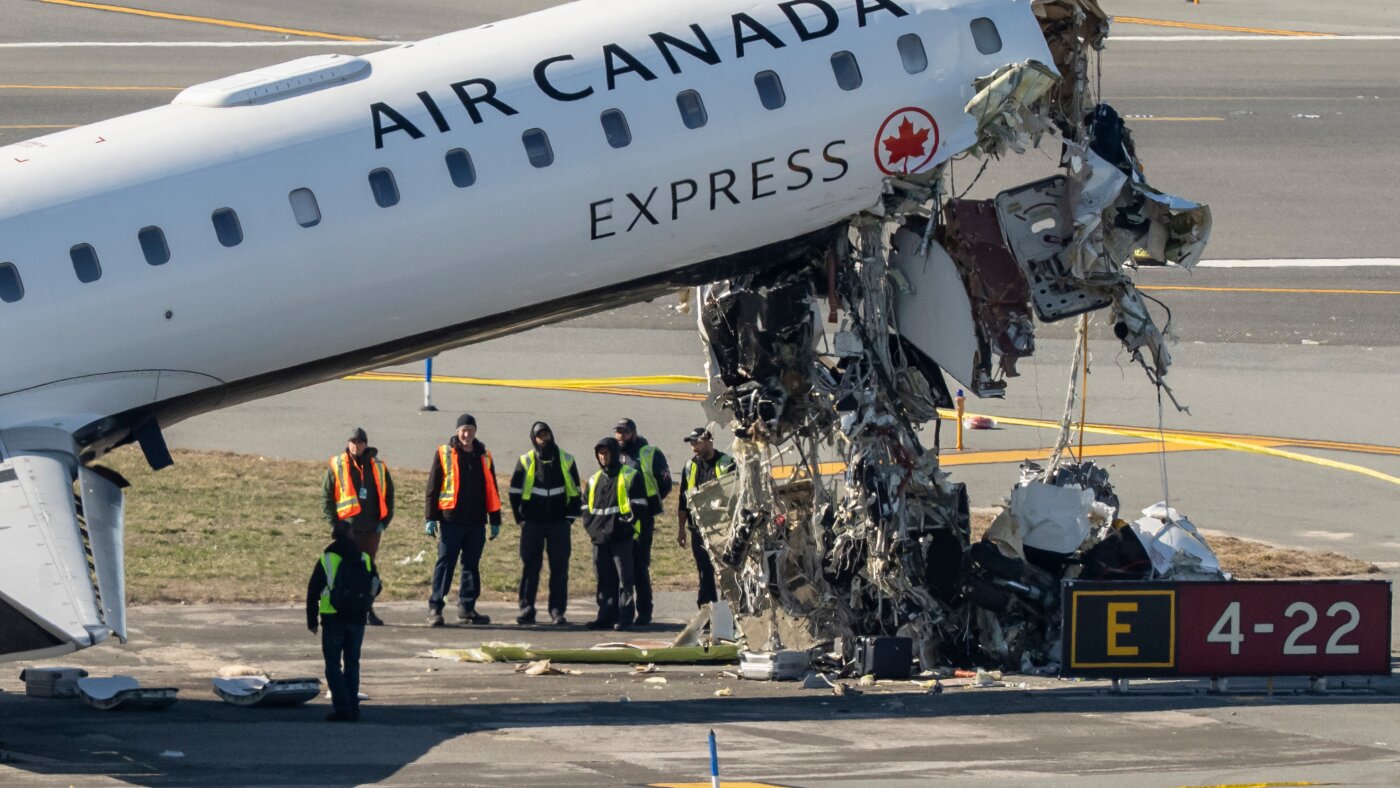
An air traffic controller was juggling extra roles during the LaGuardia plane crash

Iran War: Pentagon set to send thousands of elite 82nd Airborne troops to region | BBC News
-

 Detroit, MI6 days ago
Drummer Brian Pastoria, longtime Detroit music advocate, dies at 68
-

 Georgia1 week ago
How ICE plans for a detention warehouse pushed a Georgia town to fight back | CNN Politics
-

 Movie Reviews6 days ago
‘Youth’ Twitter review: Ken Karunaas impresses audiences; Suraj Venjaramoodu adds charm; music wins praise | – The Times of India
-

 Alaska1 week ago
Police looking for man considered ‘armed and dangerous’
-

 Education1 week ago
Video: Turning Point USA Clubs Expand to High Schools Across America
-

 Sports4 days ago
IOC addresses execution of 19-year-old Iranian wrestler Saleh Mohammadi
-
 Science1 week ago
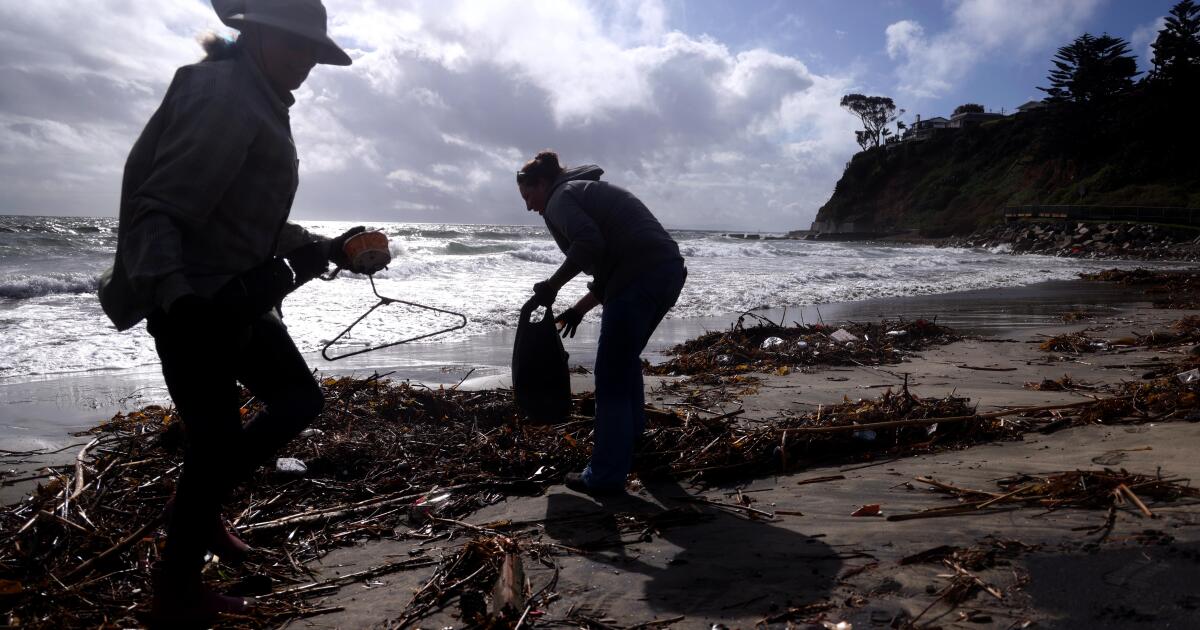
Industrial chemicals have reached the middle of the oceans, new study shows
-

 Science1 week ago
How a Melting Glacier in Antarctica Could Affect Tens of Millions Around the Globe