Connect with us

Entertainment

Meet the 8 Noche de Cumbia acts bringing the tropics to Hollywood

Published

on

Meet the 8 Noche de Cumbia acts bringing the tropics to Hollywood

The Hollywood hills are alive, once again, with the dance rhythms of cumbia.

Noche de Cumbia is back and bigger than ever, with shows at both the Hollywood Bowl and the Ford. The two-night concert series features the originators and innovators of the Latin music genre. As its hissing güiro, whistling gaitas and lively horns flow through Los Angeles, Noche de Cumbia aims to celebrate its roots, embrace its variations and encourage a night full of dancing.

The well-loved genre originated along the Caribbean coast of Colombia, where a simple rhythm pattern took hold of the region’s Afro-Indigenous communities. Gaining popularity in the 1930s and 1940s, the musical style spread to other Latin American countries. As each area and country began to adopt the energetic style, the rhythms stayed the same, but with distinct spins. To this day, new kinds of cumbias, like rock and pop infusions, dominate Latin music.

Kicking off Saturday night at the Ford, artists like Los Gaiteros De San Jacinto, one of the genre’s earliest touring groups, and Reyna Tropical, who focuses her sound around activism, will share the stage, creating an expansive look at the history of cumbia. Co-presented by Cumbiaton, a Latina-led music collective and party series, the night will also highlight the marimba-rock of Son Rompe Pera and the uplifting sounds of Yeison Landero’s accordion.

On Sunday night, the Hollywood Bowl’s shell-like silhouette will be filled with the musical stylings of performers from Colombia, El Salvador and Mexico, including the father-son duo Grupo Cañaveral de Humberto Pabón and the orchestral sounds of La Sonora Dinamita and Los Hermanos Flores. Yeison Landero and Los Gaiteros De San Jacinto will also perform.

Advertisement

Beyond the programming at the Hollywood amphitheaters, cumbia can be heard all over the city as a part of Cumbiaweek. Events will be held daily through Sept. 27 and vary widely, from a marimba workshop with the band Son Rompe Pera to documentary screenings at the Consulate General of Mexico.

Get to know the Noche de Cumbia acts at two of L.A.’s most celebrated venues

The Ford

Son Rompe Pera
Centered on the hollow tunes of the marimba, Son Rompe Pera brings the rebellious spirit of punk to the Afro-Indigenous beats of cumbia. From the Mexico City municipality of Naucalpan de Juárez, the band is made up of the three Gama brothers — marimba player and guitarist Allan “Mongo,” marimbist Jesús “Kacho” and percussionist José Ángel “Kilos” — as well as bassist Raúl Albarran and drummer Ricardo López. When experimenting more with the marimba, an instrument their late father taught them, they unintentionally created this fusion of rock-style cumbia.

“We weren’t looking for how to create this sound. It happened because we were playing and traveling with [Chilean cumbia group] Chico Trujillo and we just stumbled upon it,” Allan “Mongo” Gama said. “Right now, we feel very happy about that because it makes us work harder to keep making music like this.”

Advertisement

When reminiscing about playing the marimba at weddings and quinceañeras as a kid, he recalls the strong emotions he felt when listening to Mexican cumbias. He says there’s “always something that excites you about the sound” and looks forward to re-creating that energy.

“Sometimes we think that, [their shows are] going to be a relaxed party, and it always ends up crazy and in every place we’ve toured, everyone kind of explodes when we play. And honestly so do we,” he said. “If people are going through a bad time, sometimes our performances will help relieve them of that stress.”

Reyna Tropical

Reyna Tropical
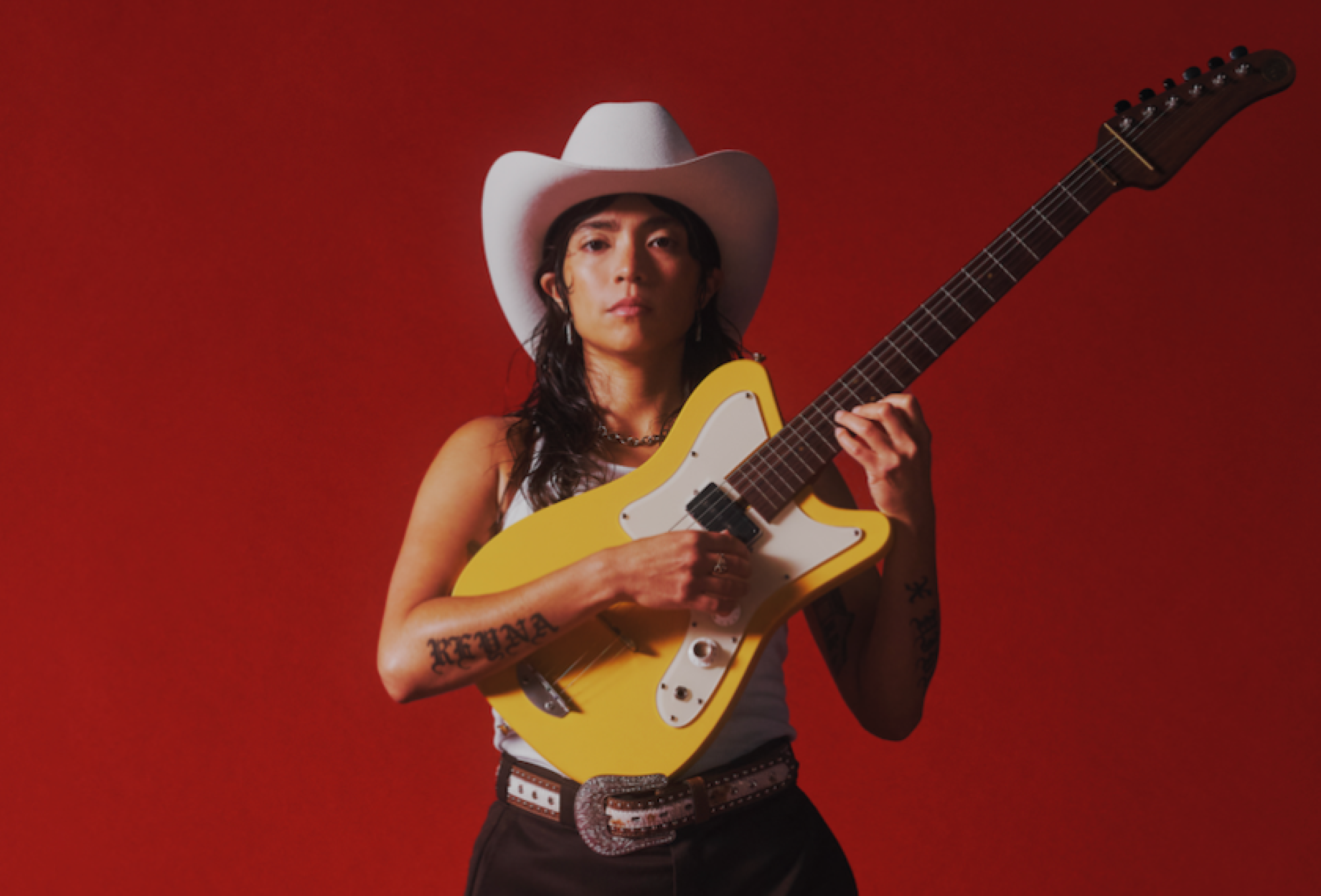
Fabiola Reyna of Reyna Tropical “doesn’t make cumbias.” Instead, her sound “embodies the sounds of liberation,” emphasizing cumbia’s roots as the sound of African and Indigenous communities. The Mexican American singer-songwriter says that bringing attention to its origins through her music is the least she can do.

“My own personal experience as a queer brown woman from the border has always been one of very political nature,” she said. “I was born with that perspective of life. So, to find sounds like cumbia that are created for liberation, it just feels extremely nurturing and nourishing.”

The band started as a duo with Reyna and producer Nectali “Sumohair” Díaz, who died in 2022. Telling stories of queer love and channeling her grief into her debut album, “Malegria,” Reyna blends birdsong melodies with eclectic lines of percussion. With every song that she makes, the 32-year-old performer emphasizes the effects of the Latin diaspora, whether through lyricism or drum patterns.

Advertisement

“I think what’s important to talk about is Afro-Mexico and Afro-Indigenous innovation — the sounds of cumbia and reggaeton — these Latin sounds that we hear, are being built from and are being distributed from. For me, I think as a Norteña and as a queer person, it’s important to integrate the injustices of Afro-Latindad, one that I will never experience, but I can very well see.”

The Hollywood Bowl

Grupo Cañaveral de Humberto Pabón

Grupo Cañaveral de Humberto Pabón
Of Corraleros del Majagual fame, Humberto Pabón Olivares and his son Emir Pabón continue their legacy in Mexican cumbias with Grupo Cañaveral. Formed in 1995, the group is the artistic initiative of Emir Pabón as he’s the main singer-songwriter and producer. He concentrates on bridging the gap between the styles of him and his father.

“I learned everything from my dad, from to interpreting music and to recording music,” Pabón said. “With Grupo Cañaveral, I want to create music without losing the essence of his sound but put the new sound that younger generations are working on today.”

Recently, they have focused on bringing together the styles of different kinds of música Mexicana such as corridos tumbados and mariachi — collaborating with Sonoran rapper Lefty SM and Norteño singer Adriel Favela. When performing these fusions with his father, he says the exchange between themselves and the crowd is what makes them memorable.

La Sonora Dinamita

La Sonora Dinamita
Every time La Sonora Dinamita lead singer Vilma Diaz performs, she looks forward to singing “Escandalo,” the group’s biggest hit. As the steady rhythm and peppy horns start to play, Diaz is typically greeted with loud screams from the audience and she absorbs the energy. Credited with helping popularize cumbia, the Colombian orchestra was first formed in 1960 and has always featured 10 brass instruments and a powerful female voice. Over the years, their lineup has changed several times, with Diaz joining as the vocalist in 1988.

Advertisement

“La Sonora Dimamita is totally different from the other cumbia bands,” Diaz said. “It’s practically the mother of the rest of the bands. Cumbias all have same rhythm, but the style in every country changes. We were one of the first bands that played original Colombian cumbia style around the world.”

Given cumbia’s danceable nature, she says she always tries to create the atmosphere of a family party at shows. Having played the Hollywood Bowl in 2017, she is going into this weekend’s show with high expectations.

“The Bowl had a beautiful audience. Everyone was full of energy and dancing,” Diaz said. “I always treat the crowd like my family. I’ll tell jokes in between the songs and ask everyone to get up and move. I play too much with them, but in a very good way.”

Los Hermanos Flores

Los Hermanos Flores
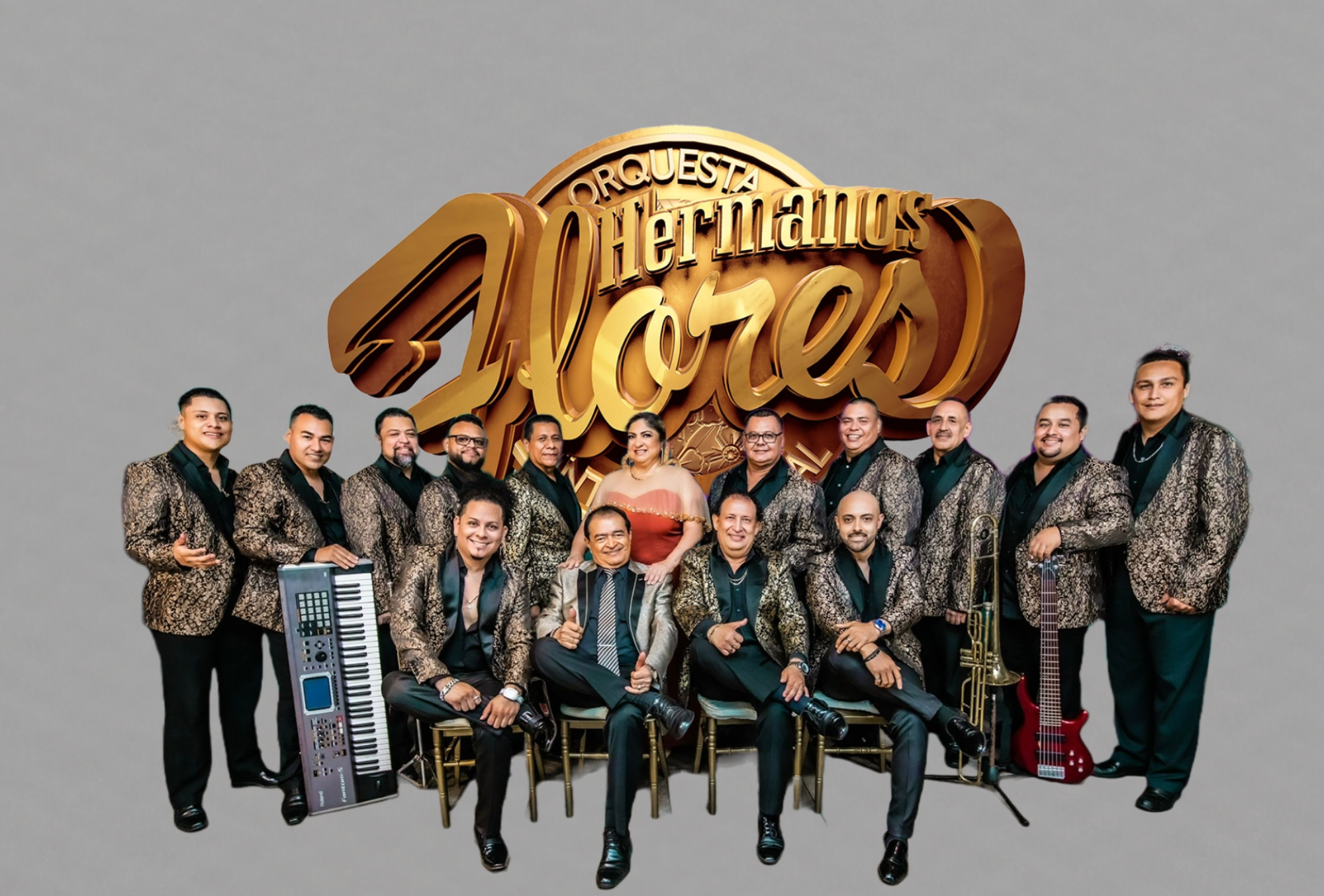
Nora “Nory” Flores has dedicated the past 56 years of her life to Los Hermanos Flores, known for its blend of traditional cumbia percussion and the jazzy sounds of the saxophone and trumpet. The Salvadoran outfit was founded in 1962 by her father, Don Andres Rodriguez. Joining the group with her 10 siblings, Flores started on the sax before becoming a vocalist. Today, she says she looks forward to sharing her family’s story and sound.

“In my country, if there is no cumbia at Christmas, there is no Christmas,” she said. “It’s something that’s very important to our country. Cumbia can never be missing in the homes, either by tradition or by memories.”

Advertisement

Los Hermanos Flores are considered to be one of the most prominent cumbia groups from El Salvador and widely considered the country’s musical ambassador. Today, Flores is one of three remaining family members in the ensemble, along a sibling and a nephew.

“We are still in charge of the orchestra, so we will continue to take it far with the same cumbia tradition of Los Hermanos Flores,” she said. “We hope to give our best.”

Playing the Hollywood Bowl and the Ford

Yeison Landero

Yeison Landero
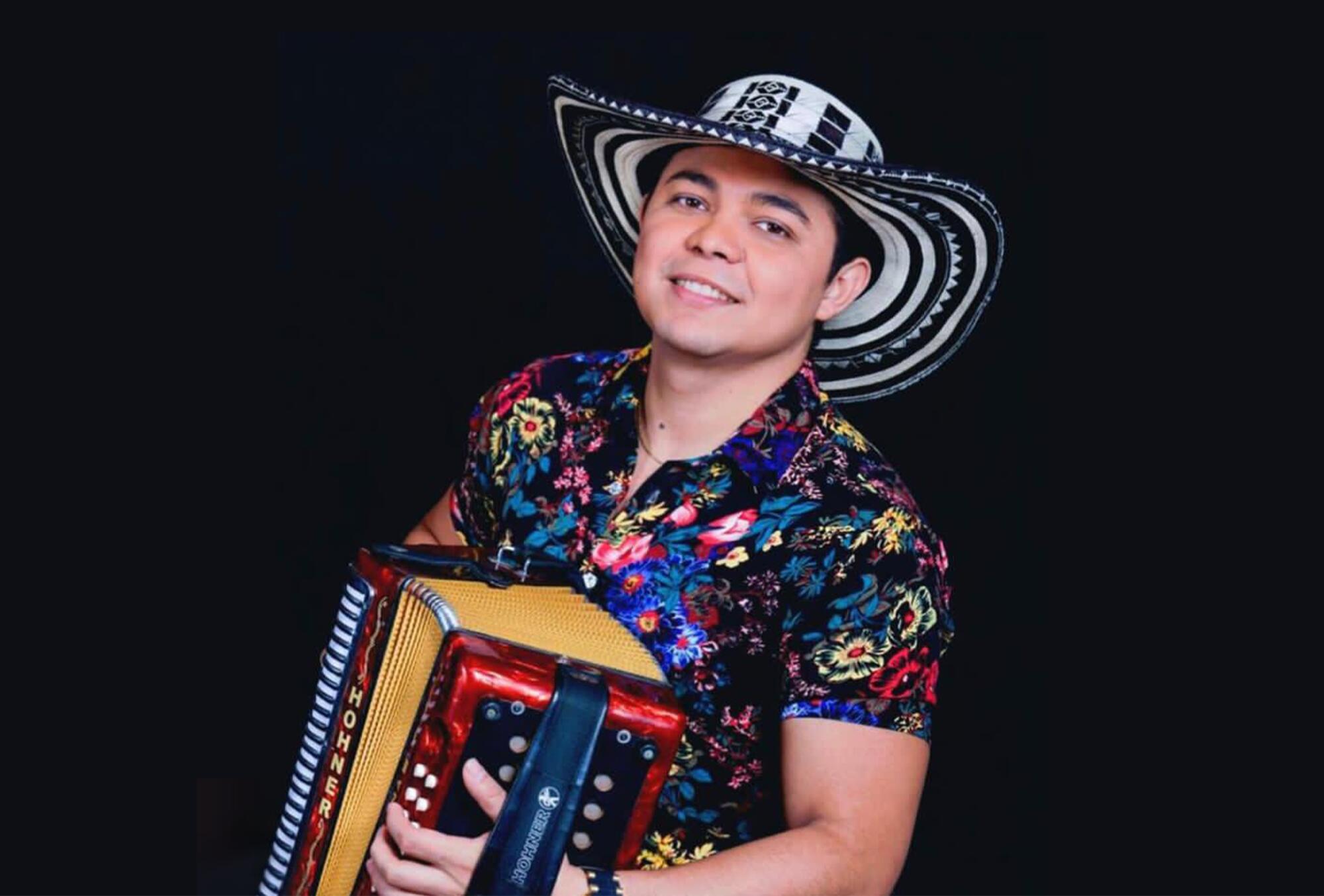
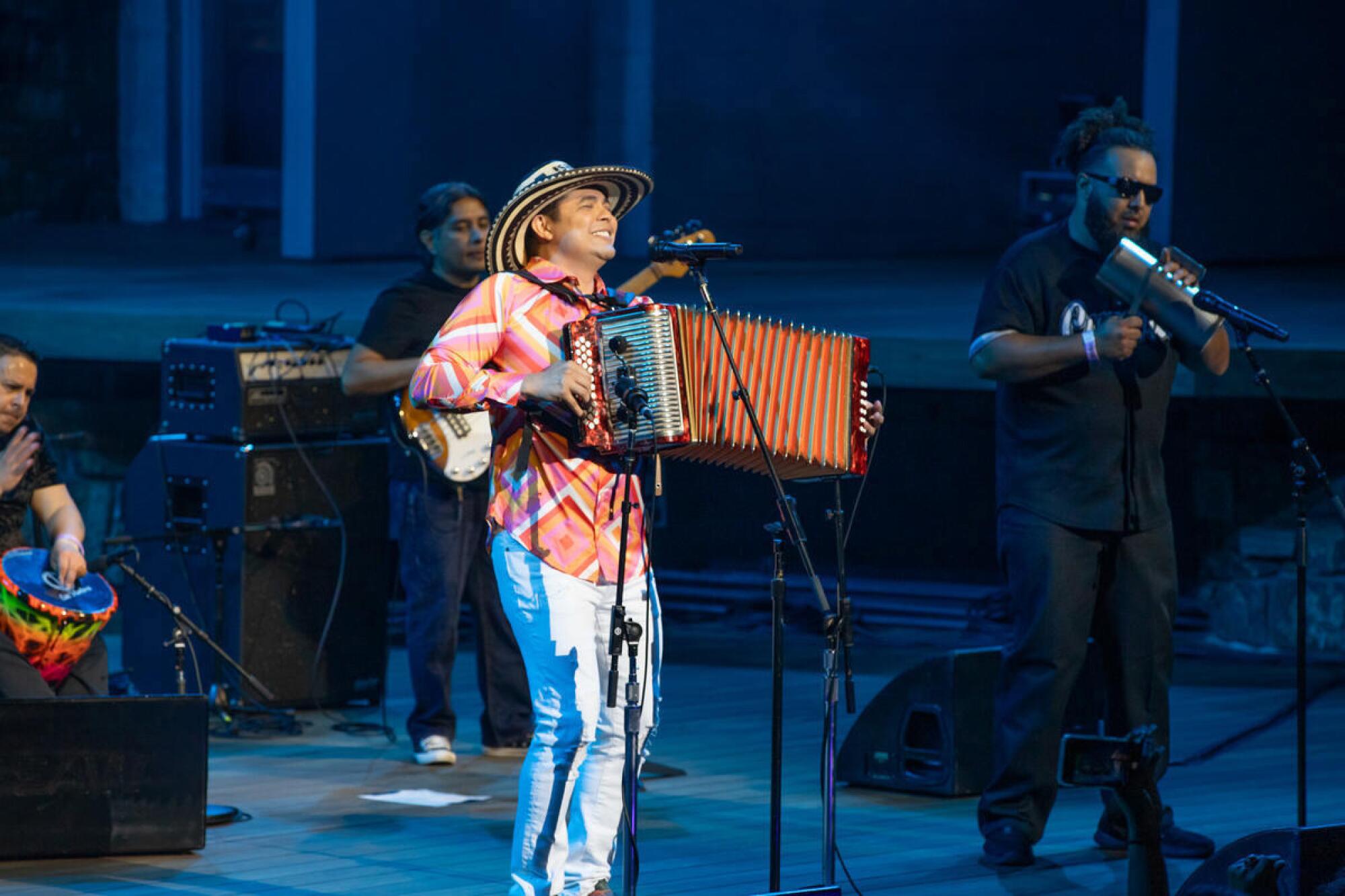
One thing Yeison Landero will always remember about his grandfather was his “desire to keep his music alive.” He is the grandson of Andres Landero, the first músico to incorporate the wind instrument into cumbia. Raised in the Montes de Maria, right outside of San Jacinto, Colombia, Landero picked up an accordion at age 7 — becoming his grandfather’s only musical apprentice. Trained in musical traditions of the campesinos, Landero emphasizes these sounds with his own modern spin.

“One of the main takeaways [from my grandfather] was to create my own style,” Landero said. “Even though I include a lot of traditional instruments, I will often take influences from all around the world. I will mix the accordion with a short flute and add in an electric guitar and the timbales.”

Ever since releasing his first album, “Landero Vive,” a tribute record to his grandfather, the accordionist has dedicated his life to touring and sharing his familial legacy.

Advertisement

“I believe that my grandfather is in heaven celebrating, happy [and] applauding, that cumbia continues to carry the same message of resistance and union for everyone as he created it,” he said.

Cumbiaton LA held Noche de Cumbia at the Ford

Cumbiaton
In between each of the acts, Cumbiaton will fill in the gaps. Responsible for keeping the energies high and the crowd on its feet, various performers from the all-female collective spin anything from psychedelic cumbias to sonideras. As the co-presenter of the Ford’s programming, Cumbiaton founder Zachil Vasquez, a.k.a. DJ Sizzle, uses the breaks between artists as a way to share the bigger picture of the genre with the audience.

“We were able to tell the story of the evolution of cumbia from what it started at its roots in Colombia to what it’s manifested into the fusion between Mexican, American, Chicano, soul, cumbia, and then go back into a full cumbia party,” said Vasquez. “It’s really beautiful to see not a single person sitting in their seats.”

In 2017, Vasquez started Cumbiaton on a stage made of milk crates, in a small bar in Boyle Heights. Her idea was to create a space for her friends to connect through cumbia in a safe space for women, queer people and people of color.

“I never saw myself in stages like the Ford or the Hollywood Bowl,” Vasquez said. “But the universe said, ‘Girl, dream bigger.’ ”

Advertisement

Los Gaiteros de San Jacinto
Gabriel Torregrosa, director and drummer in Los Gaiteros, says the sound of the Colombian group emphasizes “ancestrality above all.” Since the 1950s, this traditional San Jacinto ensemble has taken one of cumbia’s earliest sounds, of airy flutes and forceful percussion, all over the world. To this day, the seven-part band takes pride in crafting its own organic instruments.

“Our main instrument, the gaita, is made from the cactus wood and beeswax,” said Torregrosa. “Even our maraca is made from a [hollowed] circular fruit that has seeds inside.”

Given the band’s longevity, many of the roles have been passed through generations, ensuring this kind of cumbia will always have a spot in the modern soundscape.

“The most important thing is that this tradition never dies,” Torregrosa said. “We have a big commitment to spreading our sound, teaching the music, the craftsmanship of our instrument and bringing this legacy and heritage to as many places as we can … never letting people forget about tradition and the Indigenous roots of cumbia.”

Advertisement

Movie Reviews

Maxime Giroux – ‘In Cold Light’ movie review

Published

on

Maxime Giroux – ‘In Cold Light’ movie review

Maxime Giroux – ‘In Cold Light’

Advertisement

The action is relentless in the complex thriller In Cold Light, a tense combination of crime and fugitive tale and family drama. It is the third feature and first English language film by Maxime Giroux, best known for a very different kind of film, the critically acclaimed 2014 drama Felix & Meira.

The tension and high energy of In Cold Light almost overwhelm the film, but are relieved, barely, by moments of character development and introspection that keep the audience pulling for the restrained and outwardly cold main character. 

Speaking at the film’s Canadian premiere, director Giroux admitted he found creating an action film a challenge. Part of his approach was using very minimal dialogue, especially for the central character, letting the action speak for itself, and allowing silence to intensify suspense. Giroux has said he likes the lack of dialogue and speaks highly of the importance of silence in cinema; he prefers using “physical aspects of communication” in his films. 

Young Ava Bly (Maika Monroe) is a competent and businesslike drug dealer, working in partnership with her brother Tom (Jesse Irving) and a small team. As the film begins, Ava has just been released from a brief prison sentence. She is hoping to return to her former position, but her brother’s associates consider her a risk due to her recent incarceration. While she works to re-establish herself, a shocking encounter with a corrupt police officer sends Ava’s life into chaos and forces her to go on the run.

Ava’s fugitive experience introduces a new character, to whom Ava turns for help: her father, Will Bly, played by Troy Kotsur, known for his excellent performance in CODA. Their first interaction is handled in a fascinating way, as Will is deaf and the two communicate through sign language. This, of course, provides another form of the silent interaction the director prefers; he explained that much of the father-daughter interaction was rewritten with the actor in mind. Their conflict is nicely expressed through a scene in which their initial conversation is intermittently cut off by a faulty light which goes out periodically, making communication through sign momentarily impossible, nicely expressing the rift between father and daughter. 

Advertisement

As Ava continues to evade danger, her escape becomes complicated by new information, placing her in a painful dilemma. We gradually learn more about Ava, her background, and her character through occasional flashbacks and glimpses of her dreams. The plot becomes more complex and more poignant, and gains features of a mystery as well as an action tale, as she is pressed to choose from among equally unacceptable alternatives.

The climax of her efforts to protect both herself and those close to her comes to a head as she meets with the director of a rival drug gang. Veteran actress Helen Hunt is perfect in the minor but significant role of Claire, the rival drug lord, who plays odd mind games with Ava in an intriguing psychological fencing match. It’s an unusual scene, in which Ava’s personality is made clearer, and Claire’s understated dominance and casual speech do not quite conceal the threat she represents. 

The frantic pace and emotional turmoil are enhanced by the camera work, which tends to focus tightly on Ava, and by a harsh, minimal musical score that sets the tone without distracting from the action. Giroux chose to shoot the film in Super 60; he describes digital as “too perfect” for the look he was going for, and since “Ava is rough,” the film portrays her better. The director describes the entire movie as “rough,” in fact, and deliberately chose a dark, washed-out look for much of the footage, occasionally using light and colour, in the form of fireworks, lightning, or a colourful carnival, to both relieve and emphasise the darkness. 

The dynamic, intense story holds the attention in spite of the lengthy, sometimes repetitive chase scenes and subdued dialogue. Ava’s predicament, and the difficult decisions she is forced to make, are made surprisingly relatable, from the initial disaster that starts the action to the surprising flash-forward that concludes the film, on as high a note as the situation could allow. Fans of action movies will definitely enjoy this one.

Advertisement
Continue Reading

Entertainment

Meet the Mexican American talent behind ‘KPop Demon Hunters’

Published

on

Meet the Mexican American talent behind ‘KPop Demon Hunters’

The House of Pies, a Los Feliz institution, is bustling on a chilly January morning.

It wouldn’t be shocking if some of the patrons here for breakfast were casually chit-chatting about the cultural behemoth that “KPop Demon Hunters” has become. After all, the 2025 animated saga about three music stars fighting otherworldly foes is now the most-watched movie ever on Netflix; “Golden,” its showstopping track, has since become the first Korean pop song to ever win a Grammy.

But for Danya Jimenez, 29, who sits across from me sipping coffee, the reception to the movie she began writing on back in 2020 isn’t entirely surprising, but certainly delayed.

“When we first started working on it, I was like, ‘People are going to be obsessed with this. It’s going to be the best thing ever,’” she recalls. But as several years passed, and she and her writing partner and best friend Hannah McMechan, 30, moved on to other projects. They weren’t sure if “KPop” would ever see the light of day. Production for animation takes time.

It wasn’t until she learned that her Mexican parents were organically aware of the movie that Jimenez considered it could actually live up to the potential she initially had hoped for.

Advertisement

“Without me saying anything, my parents were like, ‘People are talking about this’ — like my dad’s co-workers or my aunt’s friends — that’s when I started to realize, ‘This might be something big,’” she says.

“But never in my life did I think it would be at this scale.”

“KPop Demon Hunters” is now nominated for two Academy Awards: animated feature and original song. And that’s on top of how ubiquitous the characters — Rumi, Mira and Zoey — already are.

“Everyone sends me photos of knockoff ‘KPop Demon Hunters’ dolls from across the border,” Jimenez says laughing. “My friend got me a shirt from Mexicali with the three girls, but they do not look anything like themselves. She even got my name on it, which was awesome.”

Advertisement

After graduating from Loyola Marymount University in 2018, Jimenez and McMechan quickly found their footing in the industry, as well as representation. But it was their still unproduced screenplay, “Luna Likes,” about a Mexican American teenage girl obsessed with the late chef and author Anthony Bourdain, that tangentially put them on the “KPop” path.

“Luna Likes” earned the pair a spot at the prestigious Sundance Screenwriters Lab, where Nicole Perlman, who co-wrote “Guardians of the Galaxy,” served as one of their advisors. Perlman, credited as a production consultant on “KPop,” thought they would be a good fit.

Jimenez didn’t see the connection between her R-rated comedy about a moody Mexican American teen and a PG animated feature set in the world of K-pop music, but the duo still pitched. Their idea more closely resembled an indie dramedy than an epic action flick.

“If [our version of ‘KPop’] were live-action, it would’ve been a million-dollar budget. It was the smallest movie ever. Our big finale was a pool party,” Jimenez says. “We had all of the girls and the boys with instruments, which obviously is not a thing in K-pop, and everyone was making out.”

Advertisement

Even though their original pitch wouldn’t work for the film, Maggie Kang, the co-director and also a co-writer, believed their voices as two young women who were best friends, roommates and creative collaborators could help the movie’s heroines feel more authentic.

“Maggie had already interviewed all of the more established writers, especially older men,” Jimenez says. “She knows the culture. She knew K-pop, she’s an animator. She just needed the girls’ voices to come through, so I think that’s why we got hired.”

Kang confirms this via email: “It’s always great to collaborate with writers who are the actual age of your characters! Hannah and Danya were exactly that,” she says. “They were very helpful in bringing a fresh, young voice to HUNTR/X.”

Neither Jimenez nor McMechan were K-pop fans at the time. As part of their research, they both started watching K-pop videos, but it was McMechan who got “sucked into the K-hole” first. Still, it didn’t take long until the video for BTS’ “Life Goes On” entranced Jimenez.

“K-pop is a river that you fall into, and it just takes you,” Jimenez says. BTS and Got7 are her favorite groups. For McMechan, the ensemble that captivates her most is Stray Kids.

Advertisement

In writing the trio of demon hunters, the co-writers modeled them after themselves. The characters’ propensity for ugly faces, silliness and a bit of grossness too, stems from the portrayals of girlhood and young womanhood that appeal to them. Jimenez, who says she was an angsty teen, most closely identifies with the rebellious Mira.

“I have a monotone vibe,” says Jimenez. “People always think that I’m a bitch just because I have a resting bitch face,” she says. “But as you can see in the movie, Mira cares so much about having everyone be really close. I feel like that’s how I’m with all my friends.”

Characters with strong personalities that are not simplistically likable feel the truest to Jimenez. In “Luna Likes,” the prickly protagonist is directly inspired by her experiences growing up, as well as the bond she shared with her dad over Bourdain’s “Parts Unknown” show.

“There’s a pressure to show that Mexicans are nice people and we’re hard workers. I was like, ‘Let’s make her kind of bitchy and very flawed,’” Jimenez says about Luna. “She’s a teenager in America and she should be given all the same opportunities — and also the forgiveness for being an ass— and [as] selfish at that age as anybody else.”

Hannah McMechan, left, and Danya Jimenez, co-writers of "KPop Demon Hunters," in Los Angeles

Hannah McMechan, left, and Danya Jimenez, co-writers of “KPop Demon Hunters,” met in college.

(Carlin Stiehl / For The Times)

Advertisement

Though their upbringings were markedly different, it was their shared comedic sensibilities that connected Jimenez and McMechan when they met in college. The two were close long before deciding to pen stories together. “Having a writing partner is the best. I feel bad for people who don’t have a writing partner, no offense to them,” says Jimenez.

McMechan explains that their writing partnership works because it’s grounded on true friendship. And she believes they would not have gotten this far without each other. While McMechan’s strong suit is looking at the bigger picture, Jimenez finds humor in the details.

“Danya is definitely funnier than me,” says McMechan. “It’s really hard to write comedy in dialogue versus comedy in a situation because if you’re putting the comedy in the dialogue, it can sound so forced and cringey. But she’s really good at making it sound natural but still really funny.”

Though she had been writing stories for herself as a teen, Jimenez didn’t consider it a career path until as a high schooler she watched the romantic comedy “No Strings Attached,” in which Ashton Kutcher plays a production assistant for a TV series.

Advertisement

“He is having a horrible time. But I was so obsessed with movies and TV, and I was like, ‘That looks incredible. I want to be doing what he’s doing,’” she recalls. “And my dad was like, ‘That’s a job.’”

Danya Jimenez, one of the co-writers of "KPop Demon Hunters," stands near the Sunset Strip in Los Angeles.

Danya Jimenez grew up in Orange County.

(Carlin Stiehl / For The Times)

As an infant, Jimenez spent some time living in Tijuana, where her parents are from, until the family settled back in San Diego, where she was born. And when she was around 5 years old, Jimenez, an only child, and her parents relocated to Orange County. Until then, Jimenez mostly spoke Spanish, which made for a tricky transition when starting school.

“I knew English, but it just wasn’t a habit,” she recalls. “I would raise my hand and accidentally speak Spanish in class. My teachers would be like, ‘We’re worried about her vocabulary.’ That was always an issue, so it’s really funny that I turned out to be a writer.”

Advertisement

As she points out in her professional bio, it was movies and TV that helped with her English vocabulary, especially the Disney sitcom “Lizzie McGuire.”

Jimenez describes growing up in Orange County with few Latinos around outside of her family as an alienating experience. She admits to feeling great shame for some of her behaviors as a teenager afraid of being treated differently and desperate to fit in.

“I would speak Spanish to my mom like in a corner because I didn’t want everyone else to hear me speak Spanish,” Jimenez confesses. “If my mom pulled up to school to drop me off playing Spanish hits from the ‘80s or banda, I was like, ‘Can you turn it down please?’”

Like a lot of young Latinos, she’s now taking steps to connect with her heritage, and, in a way, atone for those moments where she let what others might think rob her of her pride.

“During the pandemic I cornered my grandma to make all of her recipes again so I could write them down,” she recalls. “Now I have them all written down on a website. Or if my mom corrects me for something that I’m saying in Spanish, I now listen.”

Advertisement

At the risk of angering her, Jimenez describes her mother as a “cool mom,” and compares her to Amy Poehler’s character in “Mean Girls.” Raised in a household without financial struggles, Jimenez doesn’t often relate to stories about Latinos in the U.S. that make it to film and TV. Her hope is to expand Latino storytelling beyond the tropes.

“That’s very important to me, to just tell Latino stories or Mexican stories in a way that’s just authentic to me and hopefully someone else is like, ‘Yes, that’s me,’” she says. “A lot of people have certain expectations for Latino stories that I’m not willing to compromise on.”

Though they still would like to make “Luna Likes” if given the chance, for now, Jimenez and McMechan will continue their rapid ascent.

They’re “goin’ up, up, up” because it is their “moment.” They recently wrapped the Apple TV show “Brothers” starring Matthew McConaughey and Woody Harrelson that filmed in Texas. They are also writing the feature “Attack of the Fifty Foot Woman” for Tim Burton to direct, with Margot Robbie in talks to star.

“I feel like I’ve just been operating in a state of shock for the past, I don’t know how many months since June,” says Jimenez in her signature deadpan affect. “But if I think about it too much, I’d be a nervous wreck.”

Advertisement
Continue Reading

Movie Reviews

Jeremy Schuetze’s ‘ANACORETA’ (2022) – Movie Review – PopHorror

Published

on

Jeremy Schuetze’s ‘ANACORETA’ (2022) – Movie Review – PopHorror

PopHorror had the chance to check out Anacoreta (2022) ahead of its streaming release! Does this meta-horror flick provide interesting story telling or is it a confusing mess.


Let’s have a look…

Synopsis

A group of friends heads to a secluded woodland cabin for a weekend getaway, planning to film an experimental horror movie. As the shoot progresses, the project begins to fall apart—until a real and terrifying presence emerges from the darkness.

Anacoreta is directed by Jeremy Schuetze. It was written by Jeremy Schuetze and Matt Visser. The film stars Antonia Thomas (Bagman 2024), Jesse Stanley (Raf 2019), Jeremy Schuetze (Jennifer’s Body 2009), and Matt Visser (A Lot Like Christmas 2021)

Advertisement


My Thoughts

Antonia Thomas delivered an outstanding performance as the female lead in Anacoreta. It was remarkable to watch her convey such a wide range of emotions with authenticity and depth. I was continually impressed by her ability to switch seamlessly between different dialects. I absolutely loved her delivery of the dialogue of telling The Scorpion and the Frog fable.

Anacoreta employs a distinctive, meta-horror style of storytelling. The narrative follows a group of friends creating a “scripted reality” horror film, and as the plot unfolds, the boundary between their staged production and their actual lives becomes increasingly blurred. This was interesting, but at the same time frustrating as a viewer.

Check out Anacoreta on Prime Video and let us know your thoughts!

Advertisement
Continue Reading

Trending