Connect with us

Crypto

Revealed: Countries with the Highest Cryptocurrency Ownership, 2024 – CEOWORLD magazine

Published

on

Revealed: Countries with the Highest Cryptocurrency Ownership, 2024 – CEOWORLD magazine

A recent report by CEOWORLD magazine has ranked countries based on their cryptocurrency ownership rates. The study found that the United Arab Emirates (UAE) has the highest percentage of its population who own crypto, with almost 30.39% of the UAE’s total population owning crypto. This is largely due to the country’s favorable regulations towards blockchain technology, and the use of cryptocurrency is legal. Vietnam ranks second-highest among countries with the highest cryptocurrency ownership, with almost 21.19% of the total population owning crypto. The rapid digitization of the economy in Vietnam is responsible for the surge in crypto ownership across the country.

It is worth noting that if we were to rank countries based on the number of people who own cryptocurrency, India would come in first place with 93 million crypto owners, followed by China with 59 million, and the US with 52 million crypto owners coming in third place.

Countries with the Highest Cryptocurrency Ownership, 2024

Rank Country Population Ownership Ownership Percentage
1 United Arab Emirates 9,516,871 2,892,107 30.39
2 Vietnam 98,858,950 20,945,706 21.19
3 United States 339,996,563 52,888,108 15.56
4 Iran 89,172,767 12,000,000 13.46
5 Philippines 117,337,368 15,761,549 13.43
6 Brazil 216,422,446 25,955,176 11.99
7 Saudi Arabia 36,947,025 4,201,789 11.37
8 Singapore 6,014,723 664,627 11.05
9 Ukraine 36,744,634 3,885,037 10.57
10 Venezuela 28,838,499 2,970,365 10.3
11 South Africa 60,414,495 6,041,450 10
12 El Salvador 6,364,943 636,494 10
13 Argentina 45,773,884 4,451,944 9.73
14 Thailand 71,801,279 6,902,630 9.61
15 Canada 38,781,291 2,714,177 7
16 Pakistan 240,485,658 15,879,216 6.6
17 India 1,428,627,663 93,537,015 6.55
18 Mexico 128,455,567 8,409,115 6.55
19 Russia 144,444,359 8,749,780 6.06
20 Nigeria 223,804,632 13,261,259 5.93
21 Germany 83,294,633 4,814,430 5.78
22 United Kingdom 67,736,802 3,888,092 5.74
23 Turkey 85,816,199 4,825,626 5.62
24 Kenya 55,100,586 2,796,738 5.08
25 Morocco 37,840,044 1,921,753 5.08
26 Colombia 52,085,168 2,582,764 4.96
27 France 64,756,584 3,056,511 4.72
28 Nepal 30,896,590 1,410,342 4.56
29 Indonesia 277,534,122 12,205,132 4.4
30 China 1,425,671,352 59,134,683 4.15
31 Japan 123,294,513 5,096,970 4.13
32 South Korea 51,784,059 2,120,185 4.09
33 Ecuador 18,190,484 695,148 3.82
34 Cambodia 16,944,826 582,232 3.44
35 Spain 47,519,628 1,452,158 3.06
36 Egypt 112,716,598 3,423,723 3.04
37 Belarus 9,498,238 285,325 3
38 Malaysia 34,308,525 1,011,146 2.95
39 Poland 41,026,067 1,200,394 2.93
40 Netherlands 17,618,299 489,182 2.78
41 Australia 26,439,111 726,241 2.75
42 Portugal 10,247,605 276,185 2.7
43 Peru 34,352,719 881,811 2.57
44 Bangladesh 172,954,319 4,318,791 2.5
45 Italy 58,870,762 1,469,892 2.5
46 Lebanon 5,353,930 132,845 2.48
47 Hong Kong 7,491,609 180,991 2.42
48 Tanzania 67,438,106 1,621,947 2.41
49 Georgia 3,728,282 89,055 2.39
50 Taiwan 23,923,276 567,594 2.37
51 Palestine 5,371,230 126,293 2.35
52 Honduras 10,593,798 241,679 2.28
53 Bulgaria 6,687,717 150,302 2.25
54 Algeria 45,606,480 1,022,874 2.24
55 Ghana 34,121,985 759,162 2.22
56 Seychelles 107,660 2,347 2.18
57 Chile 19,629,590 421,831 2.15
58 Dominican Republic 11,332,972 243,632 2.15
59 Moldova 3,435,931 72,498 2.11
60 Tunisia 12,458,223 257,623 2.07
61 Jamaica 2,825,544 58,011 2.05
62 Bolivia 12,388,571 252,801 2.04
63 Switzerland 8,796,669 177,525 2.02
64 Somalia 18,143,378 351,706 1.94
65 Czech Republic 10,495,295 200,955 1.91
66 Sri Lanka 21,893,579 416,339 1.9
67 Iraq 45,504,560 845,138 1.86
68 Mozambique 33,897,354 630,991 1.86
69 Ivory Coast 28,873,034 537,819 1.86
70 Serbia 7,149,077 131,775 1.84
71 Ethiopia 126,527,060 2,259,197 1.79
72 Belize 410,825 7,366 1.79
73 Costa Rica 5,212,173 92,614 1.78
74 Kazakhstan 19,606,633 341,971 1.74
75 Armenia 2,777,970 48,266 1.74
76 DR Congo 102,262,808 1,758,920 1.72
77 Kyrgyzstan 6,735,347 115,621 1.72
78 Cameroon 28,647,293 481,930 1.68
79 Romania 19,892,812 333,758 1.68
80 Bahamas 412,623 6,638 1.61
81 Sweden 10,612,086 170,092 1.6
82 Jordan 11,337,052 178,935 1.58
83 Estonia 1,322,765 20,564 1.55
84 Greece 10,341,277 157,757 1.53
85 Myanmar 54,577,997 806,426 1.48
86 Rwanda 14,094,683 208,229 1.48
87 Slovakia 5,795,199 85,537 1.48
88 Uzbekistan 35,163,944 512,332 1.46
89 Guatemala 18,092,026 263,422 1.46
90 Belgium 11,686,140 168,588 1.44
91 Mongolia 3,447,157 49,553 1.44
92 Zimbabwe 16,665,409 238,138 1.43
93 Finland 5,545,475 77,263 1.39
94 Laos 7,633,779 105,579 1.38
95 Barbados 281,995 3,856 1.37
96 Uruguay 3,423,108 46,251 1.35
97 Albania 2,832,439 38,109 1.35
98 Austria 8,958,960 120,181 1.34
99 Hungary 10,156,239 134,603 1.33
100 Panama 4,468,087 59,505 1.33
101 Senegal 17,763,163 230,279 1.3
102 Benin 13,712,828 178,470 1.3
103 Latvia 1,830,211 23,797 1.3
104 New Zealand 5,228,100 67,275 1.29
105 Mali 23,293,698 293,819 1.26
106 Croatia 4,008,617 50,520 1.26
107 Togo 9,053,799 113,348 1.25
108 Israel 9,174,520 113,814 1.24
109 Nicaragua 7,046,310 87,095 1.24
110 Paraguay 6,861,524 85,078 1.24
111 Mauritius 1,300,557 16,082 1.24
112 Lithuania 2,718,352 33,462 1.23
113 Cyprus 1,260,138 15,415 1.22
114 North Macedonia 2,085,679 25,111 1.2
115 Uganda 48,582,334 578,284 1.19
116 Denmark 5,910,913 70,605 1.19
117 Madagascar 30,325,732 356,559 1.18
118 Azerbaijan 10,412,651 121,397 1.17
119 Norway 5,474,360 63,735 1.16
120 Slovenia 2,119,675 24,498 1.16
121 Montenegro 626,485 7,239 1.16
122 Bosnia and Herzegovina 3,210,847 36,202 1.13
123 Ireland 5,056,935 56,166 1.11
124 Saint Lucia 180,251 2,002 1.11
125 Zambia 20,569,737 220,509 1.07
126 Trinidad and Tobago 1,534,937 16,467 1.07
127 Angola 36,684,202 381,696 1.04
128 Namibia 2,604,172 26,961 1.04
129 Botswana 2,675,352 27,457 1.03
130 Malta 535,064 5,504 1.03
131 Maldives 521,021 5,353 1.03
132 Luxembourg 654,768 6,484 0.99
133 Suriname 623,236 6,170 0.99
134 Fiji 936,375 9,082 0.97
135 Iceland 375,318 3,626 0.97
136 Burkina Faso 23,251,485 223,201 0.96
137 Haiti 11,724,763 111,385 0.95
138 Tajikistan 10,143,543 95,902 0.95
139 Republic of the Congo 6,106,869 58,015 0.95
140 Libya 6,888,388 64,863 0.94
141 Gabon 2,436,566 22,528 0.92
142 Bahrain 1,485,509 13,536 0.91
143 Afghanistan 42,239,854 381,110 0.9
144 Malawi 20,931,751 187,835 0.9
145 Qatar 2,716,391 24,557 0.9
146 Guyana 813,834 7,127 0.88
147 Brunei 452,524 3,892 0.86

Have you read?
Best countries for hiring freelancers.
Highest Paid Big Pharma CEOs And Top Executives.
Best Websites For CEOs, business leaders, and high-net-worth individuals.
Best Executive Search Firms And Consultants in America.
Revealed: Most Powerful Women In The World.


Add CEOWORLD magazine to your Google News feed.


Follow CEOWORLD magazine headlines on: Google News, LinkedIn, Twitter, and Facebook.

Advertisement

This report/news/ranking/statistics has been prepared only for general guidance on matters of interest and does not constitute professional advice. You should not act upon the information contained in this publication without obtaining specific professional advice. No representation or warranty (express or implied) is given as to the accuracy or completeness of the information contained in this publication, and, to the extent permitted by law, CEOWORLD magazine does not accept or assume any liability, responsibility or duty of care for any consequences of you or anyone
else acting, or refraining to act, in reliance on the information contained in this publication or for any decision based on it.


Copyright 2024 The CEOWORLD magazine. All rights reserved. This material (and any extract from it) must not be copied, redistributed or placed on any website, without CEOWORLD magazine’ prior written consent. For media queries, please contact: info@ceoworld.biz


SUBSCRIBE NEWSLETTER

Advertisement
Continue Reading
Click to comment

Leave a Reply

Your email address will not be published. Required fields are marked *

This site uses Akismet to reduce spam. Learn how your comment data is processed.

Crypto

Russia’s Sanctions-Busting Cryptocurrency Empire

Published

on

Russia’s Sanctions-Busting Cryptocurrency Empire

In early March, the Central Asian state of Kyrgyzstan made a bold move, announcing that it was preparing to take the European Union to court. A few days earlier, the bloc had threatened to ban exports of sensitive dual-use goods to Kyrgyzstan in order to prevent their reexport to Russia—a proposal that enraged Kyrgyz officials, who fear that could harm their country’s reputation as Central Asia’s most law-abiding, Western-friendly state. The EU’s concerns about covert shipments of dual-use goods to Russia from Kyrgyzstan are valid, but they may well obscure an even larger issue. Over the past year, Moscow has developed a crypto-based sanctions-evading channel powered by the Russian fintech company A7 and the ruble-linked cryptocurrency A7A5. Part of these flows are routed through Kyrgyzstan.

Western sanctions cut off their targets from global finance, including the SWIFT messaging network, cross-border correspondent banking relationships, and clearing mechanisms for dollar payments. For sanctioned economies, the workaround is obvious: developing Western-proof financial channels. This is what the Kremlin set out to do in late 2024, when it supported the creation of A7, a Moscow-based start-up that specializes in cryptocurrencies. The firm looks innocuous on paper, but scratch beneath the surface, and the Kremlin’s fingerprints appear everywhere. Fugitive Moldovan oligarch Ilan Shor founded A7 after Russia granted him citizenship. The state-owned bank Promsvyazbank, which serves Russian defense firms, controls 49 percent of A7. To underline the Kremlin’s interest in the venture, Russian President Vladimir Putin attended a virtual ribbon-cutting ceremony for the opening of A7’s Vladivostok branch in September 2025.

In early March, the Central Asian state of Kyrgyzstan made a bold move, announcing that it was preparing to take the European Union to court. A few days earlier, the bloc had threatened to ban exports of sensitive dual-use goods to Kyrgyzstan in order to prevent their reexport to Russia—a proposal that enraged Kyrgyz officials, who fear that could harm their country’s reputation as Central Asia’s most law-abiding, Western-friendly state. The EU’s concerns about covert shipments of dual-use goods to Russia from Kyrgyzstan are valid, but they may well obscure an even larger issue. Over the past year, Moscow has developed a crypto-based sanctions-evading channel powered by the Russian fintech company A7 and the ruble-linked cryptocurrency A7A5. Part of these flows are routed through Kyrgyzstan.

Western sanctions cut off their targets from global finance, including the SWIFT messaging network, cross-border correspondent banking relationships, and clearing mechanisms for dollar payments. For sanctioned economies, the workaround is obvious: developing Western-proof financial channels. This is what the Kremlin set out to do in late 2024, when it supported the creation of A7, a Moscow-based start-up that specializes in cryptocurrencies. The firm looks innocuous on paper, but scratch beneath the surface, and the Kremlin’s fingerprints appear everywhere. Fugitive Moldovan oligarch Ilan Shor founded A7 after Russia granted him citizenship. The state-owned bank Promsvyazbank, which serves Russian defense firms, controls 49 percent of A7. To underline the Kremlin’s interest in the venture, Russian President Vladimir Putin attended a virtual ribbon-cutting ceremony for the opening of A7’s Vladivostok branch in September 2025.

Advertisement

A7 offers access to a unique product: A7A5, a cryptocurrency issued by the obscure Kyrgyz firm Old Vector and regulated by Kyrgyz financial rules. It is also backed by Promsvyazbank’s deposits. Three features of A7A5 make it clear that its creators designed it for sanctions evasion at an industrial scale. First, the Promsvyazbank backing ensures virtually unlimited liquidity. Second, Russian firms can convert rubles into A7A5, circumventing the restrictions on ruble payments and Russian-held accounts implemented by all major cryptocurrency exchanges since 2022. Third, A7A5 holders can use the platform’s instant swap service to convert their coins into mainstream, dollar-pegged stablecoins, such as tether. Conveniently, the service lacks know-your-customer (KYC) processes to verify identities, hindering efforts to attribute transactions to sanctioned Russian firms.

This anonymity may sound counterintuitive, since the blockchain technology behind cryptocurrencies relies on public ledgers. However, “public” does not mean “identified.” The ledger records transfers between wallet addresses, not identifiable individuals or firms—like a highway where every car is visible but none has a license plate identifying its owner. The fact that A7A5’s crypto-to-stablecoin swap service has no KYC processes further reinforces anonymity. While Western security services can monitor A7A5 transactions in real time, connecting a wallet to a sanctioned Russian firm is a more difficult undertaking. Attribution requires names, documents, or intercepted communications, which the entire A7A5 architecture is designed to deny.

Experts estimate that A7A5 turnover stood at around $72 billion$93 billion in 2025, a range that is equivalent to as much as one-third of Russia’s entire imports bill. Meanwhile, A7 processed some $39 billion in transactions linked to sanctions evasion, a figure roughly equivalent to Russia’s prewar annual import bill for high-tech—and often dual-use—goods. The list of cryptocurrency addresses doing business with A7 reads like a who’s who of sanctions evasion networks. Many of the addresses are tied to Chinese, Southeast Asian, and South African firms that procure sensitive electronic goods, dual-use equipment, and shipping services that Moscow can use for its war effort. TRM Labs, which specializes in blockchain investigations, has also tied A7-linked addresses to U.S.- and European Union-designated terrorist groups such as Iran’s Islamic Revolutionary Guard Corps and Hamas.

Western policymakers have no simple solution for curbing crypto-enabled sanctions evasion. For starters, consider the obvious issue: A7, Promsvyazbank, and Old Vector are all under U.S. sanctions, meaning they already operate outside Western financial channels and their owners have nothing to lose. Moreover, addressing sanctions evasion often resembles a game of whack-a-mole: Designate an entity, and it will soon reopen under a different name. Garantex, a Russian crypto exchange that specialized in money laundering, drug trafficking, and terrorist financing, illustrates this challenge. Washington sanctioned Garantex in 2022, yet the exchange still operated for three more years. After a joint U.S.-EU law enforcement operation seized the firm’s domains and servers in Germany and Finland in 2025, five other exchanges replaced Garantex within weeks.

Western policymakers also face a tricky political environment domestically. In the United States, President Donald Trump, his family, and some of his business partners have embraced cryptocurrencies with gusto. He has launched his own memecoin, embraced dollar-backed stablecoins that networks such as A7 plug into, and pushed for financial deregulation. Just a few weeks after A7 fell under U.S. sanctions, Donald Trump Jr. was a VIP speaker at the Token2049 cryptocurrency conference in Singapore, where A7A5 was a platinum sponsor. A7A5 abruptly disappeared from the program after Reuters sent a request for comment to the organizers.

Advertisement

Meanwhile, European policymakers also know that there is little they can do about Russia’s cryptocurrency activities. MiCA, the EU’s cryptocurrency regulation, only applies to EU-based exchanges. Therefore, the legislation cannot reach networks operating entirely outside European jurisdiction, such as A7/A7A5 or even tether. Implementing new sanctions on Russia-enabled cryptocurrencies would also be easier said than done. The bloc had planned an EU-wide ban on all crypto transactions with Russia-based counterparties in its 20th sanctions package, but Hungary’s and Slovakia’s vetoes over energy measures have put the new package in limbo.

Not all is lost, though. EU policymakers still have options to curb the rise of cryptocurrencies designed for illicit activities, such as A7A5. One option would be to collaborate with the United States to pressure issuers of dollar-pegged stablecoins to implement robust KYC checks. The goal would be to prevent anonymous A7A5 holders from converting their assets into mainstream stablecoins. With Trump in the White House, however, this is probably a steep ask—but it remains worth a try. Alternatively, the EU could pressure A7A5’s weak points over which the bloc has leverage—its dependence on Kyrgyzstan—to disrupt the network’s operations. Threatening to ban the export of EU-made dual-use products to Kyrgyzstan could be a useful stick in such discussions.

Moscow’s newfound interest in cryptocurrencies is not an outlier. Tehran has offered to accept cryptocurrency payments for its drone and missile sales, and Pyongyang steals cryptocurrency to boost its revenues. Together, these developments raise the question of how effective sanctions are against the growth of financial networks that the U.S. deregulation drive is helping to build. The Western sanctions toolbox was designed for a world of banks and wire transfers, not one in which cryptocurrencies can be exchanged for dollars in seconds—no questions asked. With A7A5, Moscow has provided a proof of concept. It’s likely only a matter of time before other sanctioned regimes follow in its footsteps.

Advertisement
Continue Reading

Crypto

Washington State Targets Kalshi in Illegal Online Betting Lawsuit

Published

on

Washington State Targets Kalshi in Illegal Online Betting Lawsuit

Is Kalshi Legal in Washington State? AG Says No, Files Suit

The complaint, filed in King County Superior Court, targets Kalshi‘s binary event contracts, wagers priced between one cent and 99 cents that pay out $1 to winners and nothing to losers. Washington argues those contracts meet the state’s statutory definition of gambling under RCW 9.46.0237: “ staking or risking something of value upon the outcome of a contest of chance or a future contingent event not under the person’s control.”

Brown’s office is seeking a permanent injunction, full restitution for Washington residents’ losses, disgorgement of Kalshi’s profits, and civil penalties for each violation. Investigators also want a full accounting of every Washington user’s transactions.

The AG’s office did not limit its targets to sports betting. The complaint accuses Kalshi of offering markets on elections, Supreme Court cases, entertainment outcomes, public health data, and international conflicts. “For Kalshi, every event, every tragedy is nothing more than a potential way for Americans to risk their fortunes,” Brown said in a statement accompanying the filing.

Kalshi, founded in 2018 and publicly launched around 2021, operates as a CFTC-designated contract market for event contracts — a category of commodity derivatives. The company expanded aggressively into sports betting in 2025 and has marketed its platform as “legal betting in all 50 states.”

The company moved the case to federal court immediately after the filing, citing exclusive federal jurisdiction. A Kalshi spokesperson said Brown’s office had a scheduled meeting with Kalshi before filing suit and that going forward with the complaint was premature. Kalshi also disputed specific market claims in the complaint, saying it does not offer war markets as alleged.

Advertisement

Washington has among the strictest gambling statutes in the country. Its 1889 state constitution prohibited gambling on state lands. The 1973 Gambling Act tightly limited most forms of wagering, and the 2006 legislation explicitly banned online gambling. State officials insist Kalshi operates outside all three frameworks.

Washington is not acting alone. At least 11 states have issued cease-and-desist orders against prediction market platforms. Arizona filed criminal charges against Kalshi in March 2026. Nevada obtained a temporary restraining order barring Kalshi from offering sports, politics, and entertainment markets, and a separate 60-day preliminary injunction covering Coinbase’s Kalshi-powered products. An Ohio federal judge ruled Kalshi must follow state gambling laws for sports betting.

Kalshi has also notched federal wins. Courts in New Jersey and Tennessee ruled in its favor. A case in Michigan involves rival platform Polymarket, which filed preemptively. Utah, where Kalshi sued to block a proposed ban, remains active.

The legal conflict centers on a direct clash between state police powers and federal commodities law. The CFTC has issued guidance on manipulation and is weighing additional rules. Trump administration CFTC Chair Brian Selig and prior agency amicus briefs have sided with federal preemption.

Legal experts tracking the cases say the disagreement could reach the U.S. Supreme Court. States argue prediction market platforms are sportsbooks operating without state licenses, targeting young adults through leaderboards, push notifications, and influencer promotions. Kalshi disputes that framing, saying its exchange is structurally different from state-regulated sportsbooks and casinos.

Advertisement

Washington residents using Kalshi may lose access to the platform while litigation proceeds. The state’s restitution claim draws on the Recovery of Money Lost at Gambling Act, which allows consumers to reclaim gambling losses.

The case is in its earliest stages. The federal transfer ruling will determine which court hears the matter first.

FAQ 🔎

  • What is Kalshi being sued for in Washington? Washington AG Nick Brown alleges Kalshi operates an illegal online gambling service in violation of the state’s Gambling Act and Consumer Protection Act.
  • Is Kalshi legal in Washington State? Washington says no — the state is seeking a permanent injunction to block Kalshi from operating within its borders.
  • How does Kalshi respond to the Washington lawsuit? Kalshi moved the case to federal court, arguing it operates under exclusive CFTC jurisdiction that preempts state gambling laws.
  • What states have taken action against Kalshi? Washington, Arizona, Nevada, Ohio, and at least 11 other states have filed lawsuits, criminal charges, or cease-and-desist orders against Kalshi or rival prediction markets.
Continue Reading

Crypto

Bill aims to protect victims in NH from crypto ATM scams

Published

on

Bill aims to protect victims in NH from crypto ATM scams

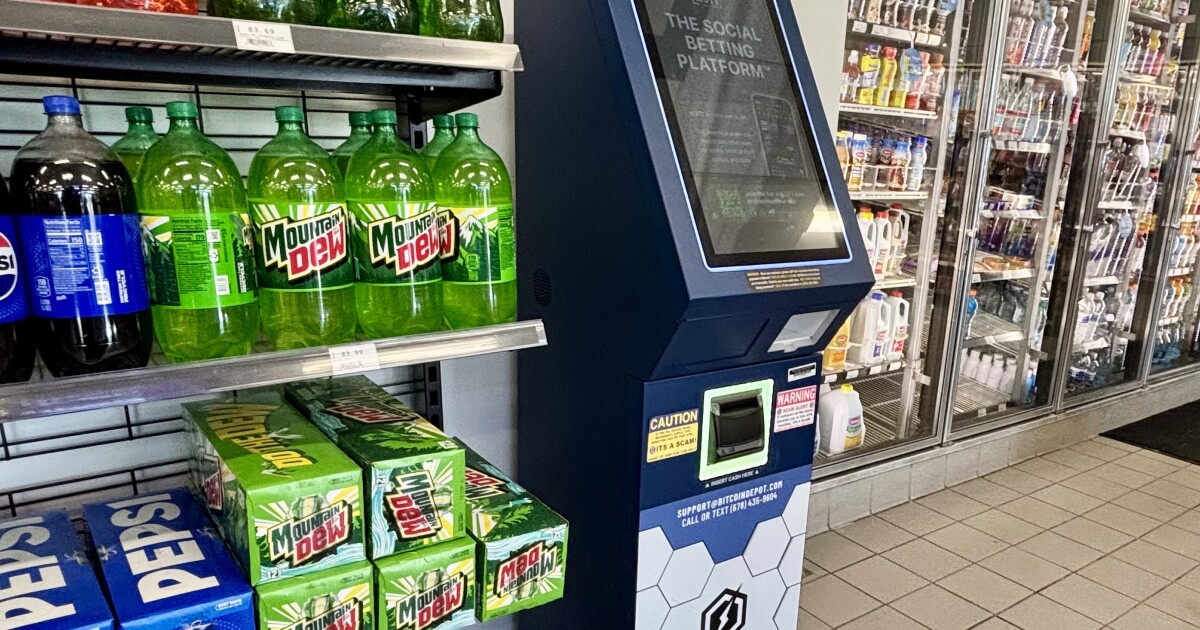
Victims scammed at cryptocurrency ATMs in New Hampshire could be reimbursed if they report the fraud within 14 days under a bill that cleared the Senate Thursday. The bipartisan legislation aims to stem an increase in cryptocurrency scams that cost Granite Staters $22 million in 2024.

A crypto scam plays out like most financial fraud, except the scammer persuades the victim to deposit cash into a cryptocurrency ATM. Once the ATM converts the money into cryptocurrency, it becomes very difficult to trace and reclaim.

Hampton’s police chief told lawmakers just over $2.6 million was lost to scammers in his town in 2024. The average age of the victims was 66.

Sen. Virginia Birdsell, a Hampstead Republican, urged colleagues to pass the legislation in the Senate Thursday.

“This is becoming a scourge on our elderly,” she said.

Advertisement

Under the bill, cryptocurrency ATM operators would have to hold a person’s first deposit for 48 hours to give them time to cancel it if they detect a scam. Operators could not accept more than $2,000 a day from a person. And operators would have to refund a scam victim if the victim reports fraud to the operator and authorities within 14 days.

Nearly 25 other states have similar laws, though many allow a victim to be funded within 90 days of a deposit.

Massachusetts is suing a crypto ATM operator, Bitcoin Depot, for allegedly allowing criminals to scam victims with its machines. Maine reached a $1.9 million settlement with the same operator this year and is giving victims until Wednesday to file a claim.

The New Hampshire bill heads next to the House.

Advertisement

Continue Reading

Trending