Crypto
3 Reasons Bitcoin Could Outperform XRP (Ripple) and Ethereum Over the Next Year | The Motley Fool


The dominant cryptocurrency could find a lot of new buyers in this investment environment.
When it comes to cryptocurrency, one name stands out above the crowd: Bitcoin (BTC -0.28%). The original cryptocurrency accounts for roughly 63% of the entire crypto market cap.
However, Bitcoin is so big that it doesn’t always produce the best returns. More recently, XRP (XRP -0.51%) has gotten a lot of attention as regulatory pressure eases on the company, and its utility has gotten a major boost from several advancements from Ripple. Meanwhile, Ether (ETH 0.33%) is often seen as the backbone of DeFi, with its smart contract blockchain doing most of the heavy lifting in the industry.
While there’s a case to be made for either to outperform Bitcoin, I think Bitcoin will ultimately outperform amid the current environment. Here are three reasons why investors should consider the king of cryptos.
Image source: Getty Images.
1. The flight to quality
President Donald Trump has quickly and aggressively enacted wide-reaching tariffs on just about everything imported into the United States since taking office in January. Not only has he announced massive potential tariffs on imports, he’s also paused them, said he will carve out exceptions, and unpaused certain tariffs.
All of this leads to massive amounts of uncertainty in the market. It’s hard to know what to do with your money if the playing field could completely change tomorrow.
When markets are uncertain, they sell off riskier assets. That’s certainly true of the entire cryptocurrency market, and Bitcoin hasn’t been immune.
However, of all the cryptocurrencies investors could buy, Bitcoin is the highest-quality investment. It has significant institutional backing and a lot of big stakeholders, and the U.S. government now holds Bitcoin as part of its strategic cryptocurrency reserve. Investors selling risky altcoins are likely to move their money to Bitcoin.
As such, it’s no surprise that Bitcoin has held up better than either XRP or Ethereum in the last few months. I expect that will continue to be the case as long as the macroeconomic environment remains uncertain.
2. Investors pulling money out of the U.S. markets
Since Trump’s tariff announcement, we’ve seen both U.S. stocks and U.S. debt decline in value. That’s not typically how it works. Remember, investors usually move from risky assets (stocks) to safer assets (Treasuries). However, the decline in Treasuries suggests investors are completely abandoning U.S. markets instead of shifting from risky assets to safer assets.
Those investors will be looking for a safe asset to buy. Foreign debt could be an option; gold is another, but Bitcoin presents an interesting case as well. That’s particularly true as a result of a second-order effect from the mass exodus from U.S. securities. The U.S. dollar has grown significantly weaker in the last few weeks.
The U.S. Dollar Index has fallen more than 10% since Trump took office in January. The dollar weakened considerably after the tariffs were announced on April 2, and it failed to bounce back after Trump announced a pause on those tariffs. When the U.S. dollar weakens, it typically results in higher pricing for Bitcoin.
3. Inflation could push the price higher
Bitcoin is seen as a hedge against inflation. Most economists agree the tariffs will be inflationary.
That only makes sense. An escalating trade war with taxes on every import, from manufacturing equipment to parts to final products, will have a huge impact on the final price of goods. Combine that with the weakening U.S. dollar, and we’ll see massive inflationary pressure.
Since Bitcoin has a fixed supply, a dollar that can buy less will theoretically apply to Bitcoin as well. That means the price of Bitcoin will go up.
The economics of Bitcoin don’t exist in a vacuum, though. The three factors outlined here, all fallout from Trump’s tariffs, point to Bitcoin performing relatively well compared to other cryptocurrencies and other assets in general. The longer the macroeconomic environment remains uncertain, the longer the trade war goes on, the more money we’ll see flow into Bitcoin compared to other cryptocurrencies. As such, investors may see Bitcoin’s dominance of the market extend even further over the coming months.
Adam Levy has positions in Bitcoin, Ethereum, and XRP. The Motley Fool has positions in and recommends Bitcoin, Ethereum, and XRP. The Motley Fool has a disclosure policy.


Is Kalshi Legal in Washington State? AG Says No, Files Suit
The complaint, filed in King County Superior Court, targets Kalshi‘s binary event contracts, wagers priced between one cent and 99 cents that pay out $1 to winners and nothing to losers. Washington argues those contracts meet the state’s statutory definition of gambling under RCW 9.46.0237: “ staking or risking something of value upon the outcome of a contest of chance or a future contingent event not under the person’s control.”
Brown’s office is seeking a permanent injunction, full restitution for Washington residents’ losses, disgorgement of Kalshi’s profits, and civil penalties for each violation. Investigators also want a full accounting of every Washington user’s transactions.
The AG’s office did not limit its targets to sports betting. The complaint accuses Kalshi of offering markets on elections, Supreme Court cases, entertainment outcomes, public health data, and international conflicts. “For Kalshi, every event, every tragedy is nothing more than a potential way for Americans to risk their fortunes,” Brown said in a statement accompanying the filing.
Kalshi, founded in 2018 and publicly launched around 2021, operates as a CFTC-designated contract market for event contracts — a category of commodity derivatives. The company expanded aggressively into sports betting in 2025 and has marketed its platform as “legal betting in all 50 states.”
The company moved the case to federal court immediately after the filing, citing exclusive federal jurisdiction. A Kalshi spokesperson said Brown’s office had a scheduled meeting with Kalshi before filing suit and that going forward with the complaint was premature. Kalshi also disputed specific market claims in the complaint, saying it does not offer war markets as alleged.
Washington has among the strictest gambling statutes in the country. Its 1889 state constitution prohibited gambling on state lands. The 1973 Gambling Act tightly limited most forms of wagering, and the 2006 legislation explicitly banned online gambling. State officials insist Kalshi operates outside all three frameworks.
Washington is not acting alone. At least 11 states have issued cease-and-desist orders against prediction market platforms. Arizona filed criminal charges against Kalshi in March 2026. Nevada obtained a temporary restraining order barring Kalshi from offering sports, politics, and entertainment markets, and a separate 60-day preliminary injunction covering Coinbase’s Kalshi-powered products. An Ohio federal judge ruled Kalshi must follow state gambling laws for sports betting.
Kalshi has also notched federal wins. Courts in New Jersey and Tennessee ruled in its favor. A case in Michigan involves rival platform Polymarket, which filed preemptively. Utah, where Kalshi sued to block a proposed ban, remains active.
The legal conflict centers on a direct clash between state police powers and federal commodities law. The CFTC has issued guidance on manipulation and is weighing additional rules. Trump administration CFTC Chair Brian Selig and prior agency amicus briefs have sided with federal preemption.
Legal experts tracking the cases say the disagreement could reach the U.S. Supreme Court. States argue prediction market platforms are sportsbooks operating without state licenses, targeting young adults through leaderboards, push notifications, and influencer promotions. Kalshi disputes that framing, saying its exchange is structurally different from state-regulated sportsbooks and casinos.
Washington residents using Kalshi may lose access to the platform while litigation proceeds. The state’s restitution claim draws on the Recovery of Money Lost at Gambling Act, which allows consumers to reclaim gambling losses.
The case is in its earliest stages. The federal transfer ruling will determine which court hears the matter first.
FAQ 🔎
- What is Kalshi being sued for in Washington? Washington AG Nick Brown alleges Kalshi operates an illegal online gambling service in violation of the state’s Gambling Act and Consumer Protection Act.
- Is Kalshi legal in Washington State? Washington says no — the state is seeking a permanent injunction to block Kalshi from operating within its borders.
- How does Kalshi respond to the Washington lawsuit? Kalshi moved the case to federal court, arguing it operates under exclusive CFTC jurisdiction that preempts state gambling laws.
- What states have taken action against Kalshi? Washington, Arizona, Nevada, Ohio, and at least 11 other states have filed lawsuits, criminal charges, or cease-and-desist orders against Kalshi or rival prediction markets.
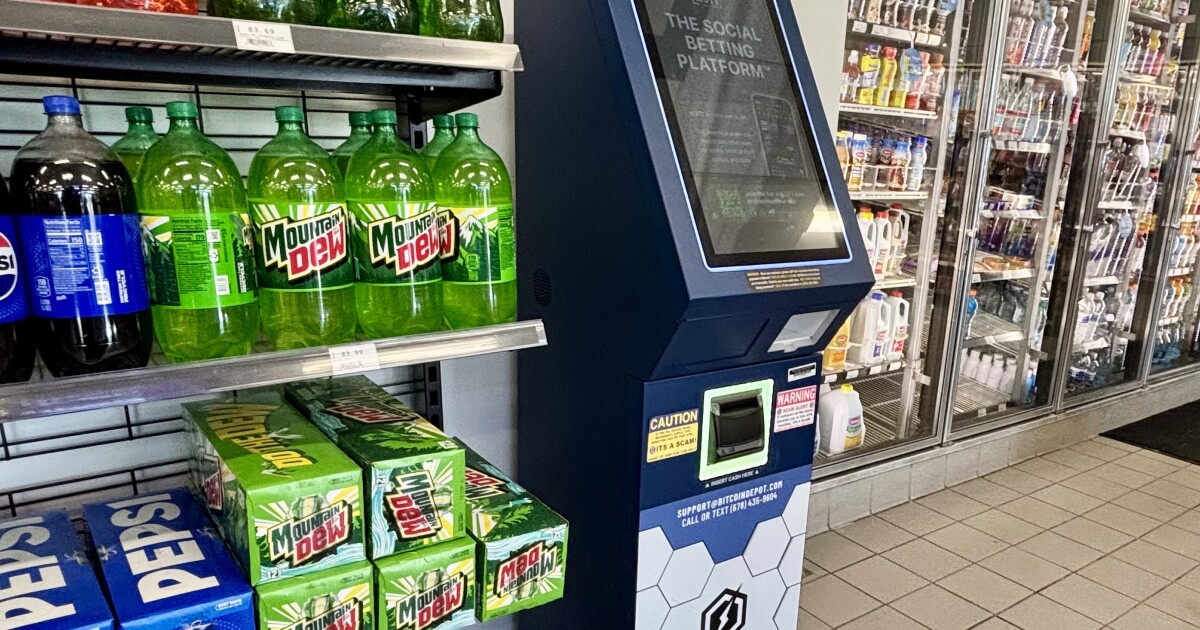
Victims scammed at cryptocurrency ATMs in New Hampshire could be reimbursed if they report the fraud within 14 days under a bill that cleared the Senate Thursday. The bipartisan legislation aims to stem an increase in cryptocurrency scams that cost Granite Staters $22 million in 2024.
A crypto scam plays out like most financial fraud, except the scammer persuades the victim to deposit cash into a cryptocurrency ATM. Once the ATM converts the money into cryptocurrency, it becomes very difficult to trace and reclaim.
Hampton’s police chief told lawmakers just over $2.6 million was lost to scammers in his town in 2024. The average age of the victims was 66.
Sen. Virginia Birdsell, a Hampstead Republican, urged colleagues to pass the legislation in the Senate Thursday.
“This is becoming a scourge on our elderly,” she said.
Under the bill, cryptocurrency ATM operators would have to hold a person’s first deposit for 48 hours to give them time to cancel it if they detect a scam. Operators could not accept more than $2,000 a day from a person. And operators would have to refund a scam victim if the victim reports fraud to the operator and authorities within 14 days.
Nearly 25 other states have similar laws, though many allow a victim to be funded within 90 days of a deposit.
Massachusetts is suing a crypto ATM operator, Bitcoin Depot, for allegedly allowing criminals to scam victims with its machines. Maine reached a $1.9 million settlement with the same operator this year and is giving victims until Wednesday to file a claim.
The New Hampshire bill heads next to the House.

Crypto ATM Data 2026: 597 Net Removals
Recent figures show the global count of crypto ATMs edged close to the 40,000 mark this month, yet data recorded on March 29, 2026, reveals a net reduction of 769 machines. The year opened with a drop of 139 crypto ATMs, followed by the addition of 231 new installations in February.
An additional 80 units were installed at the beginning of March, according to Coin ATM Radar’s net growth logs, though the removal of 769 machines ultimately pushed the year’s total to a net loss of 597. As of this weekend, the global tally of crypto ATMs sits at 38,928 machines. Geographic data from Coin ATM Radar shows the U.S. holds 30,247 of those units, representing 77.7% of the total.
Canada follows with 3,839 crypto ATMs, accounting for 9.9% of the worldwide figure. Europe maintains 1,727 machines, or roughly 4.4% of the overall count of 38,928. Taken together, the U.S., Europe, and Canada host 35,813 machines, comprising 92% of the global share. The remaining 8% is distributed across Asia, Oceania, and other regions.
The crypto ATM tracking site further indicates that the top ten global operators collectively oversee 30,450 machines, representing 78.2% of the total. The industry’s leading provider is Bitcoin Depot, which runs a commanding 9,246 machines (23.8% market share). It is followed by Coinflip with 5,493 machines (14.1%) and Athena Bitcoin with 4,045 machines (10.4%).
Rockitcoin holds a solid footprint with 2,757 machines (7.1%), while Bitstop and Margo operate 2,372 (6.1%) and 2,138 (5.5%) machines, respectively. Stats further show that bitcoin ( BTC) remains the most widely supported asset, available across nearly all machines tracked worldwide by Coin ATM Radar.
Following bitcoin, altcoins as a collective category are supported by 38,910 machines, suggesting that nearly every ATM offering bitcoin also includes at least one alternative asset. Among individual altcoins, ethereum ( ETH) leads with support at 22,200 locations, closely followed by litecoin ( LTC) at 21,292 and tether ( USDT) at 19,894.
Roughly 91.6% of crypto ATMs are configured to facilitate cryptocurrency purchases, while the remaining machines support both buying and selling of digital assets. Logs from Coin ATM Radar offer a revealing snapshot of recent crypto ATM reductions in 2026, showing that the 40,000 threshold remains just out of reach for the industry at present.
Whether the crypto ATM count clears 40,000 this year depends largely on whether operators expand or continue pulling machines. The numbers show a market sorting itself out; large providers like Bitcoin Depot, Coinflip, and Athena hold the majority of installations, while smaller operators account for the gap. With North America controlling over three-quarters of the global count, the industry’s direction remains tied closely to conditions in a single market.
FAQ 🔎
- How many crypto ATMs are there in the world in 2026? As of March 29, 2026, Coin ATM Radar tracks 38,928 active crypto ATMs globally.
- Which country has the most Bitcoin ATMs? The United States leads with 30,247 machines, representing 77.7% of the worldwide total.
- Who is the largest crypto ATM operator in 2026? Bitcoin Depot operates 9,246 machines, giving it a 23.8% share of the global market.
- What cryptocurrencies do crypto ATMs support? Bitcoin is available at nearly all machines, with ethereum supported at 22,200 locations and litecoin at 21,292.

Depleted Detroit Pistons drag West-best Thunder into OT before falling

SF Supervisor Jackie Fielder on leave due to mental health condition; her staff set to take over

3 things to know about Stars-Bruins: Dallas wraps East Coast road trip looking to turn things around

Trump shares renderings of his presidential library — a massive skyscraper in Miami

Red Sox offseason pitching additions clobbered by Astros in 2026 debuts

Florida High School Football Rankings: Top 25 teams – Oct. 21

How old is Bo Nix? What to know about Oregon quarterback ahead of 2024 NFL Draft

Cleary's 21 help Le Moyne down Central Connecticut State 69-64 in OT

99th annual Pony Swim held in Virginia

Indiana Members Credit Union announced as new anchor tenant at Bottleworks District

Emanuel pushes back on ‘straight White man’ question, says ideas matter most in 2028

French police make two more arrests over foiled attack on Bank of America

‘What’s going on?’: US judge calls aspects of new Pentagon press policy ‘weird’

Video: Iran to Allow More Oil Ships Through Strait of Hormuz, Trump Says

Dem senator warns deportation could let Virginia woman’s illegal immigrant killer ‘escape accountability’
-

 Sports1 week ago
IOC addresses execution of 19-year-old Iranian wrestler Saleh Mohammadi
-

 Miami, FL5 days ago
Jannik Sinner’s Girlfriend Laila Hasanovic Stuns in Ab-Revealing Post Amid Miami Open
-

 South-Carolina2 days ago
South Carolina vs TCU predictions for Elite Eight game in March Madness
-

 New Mexico1 week ago
Clovis shooting leaves one dead, four injured
-

 Politics1 week ago
Schumer gambit fails as DHS shutdown hits 36 days and airport lines grow
-

 Minneapolis, MN5 days ago
Boy who shielded classmate during school shooting receives Medal of Honor
-

 Tennessee1 week ago
Tennessee Police Investigating Alleged Assault Involving ‘Reacher’ Star Alan Ritchson
-

 Science1 week ago
Record Heat Meets a Major Snow Drought Across the West