Business
Warren Buffett Plans to Step Down as Berkshire Hathaway CEO by End of 2025


Warren E. Buffett has been at the forefront of American capitalism for decades as the chief executive of Berkshire Hathaway, the conglomerate he built into a $1.1 trillion colossus.
By the end of the year, he is preparing to give up that role.
Mr. Buffett said at Berkshire’s annual shareholder meeting on Saturday that he plans to ask the company’s board to approve making Gregory Abel, his heir apparent, the chief executive by the end of the year.
Mr. Abel would have “the final word” when it comes to the company’s operations, how it invests and more, Mr. Buffett, 94, told the tens of thousands of Berkshire shareholders at the meeting in Omaha.
But Mr. Buffett added that he “would still hang around and conceivably be useful in a few cases.” He will remain chairman of Berkshire — turning that role over to his son Howard Buffett upon his death — and remains the company’s single biggest shareholder, with a roughly 14 percent stake that is worth about $164 billion.
Mr. Buffett’s plan, which he said had been known only to two of his children who sit on the company’s board, Howard and Susan Buffett, was greeted by a minute-long standing ovation by Berkshire shareholders. Mr. Abel, 62, appeared surprised by his boss’s announcement. After the announcement, several board members attending Berkshire’s meeting hugged each other.
Though Mr. Buffett looked in good health, having led several hours of questions from investors on Saturday, changes to this year’s annual meeting — his 60th at Berkshire — reflected his advancing age. He used a cane, which he first mentioned in the company’s annual letter in February, and shortened the shareholder question session by several hours.
If the board approves the plan, it would signify the end of an era for one of the most successful companies in modern capitalist history, and one of its most famous investors. Mr. Buffett has amassed a Midas-like fortune by being a savvy stock picker, buying up companies and holding them for the long term.
Through that investing philosophy, he assembled a conglomerate that runs a huge insurance operation, a major railroad, dozens of consumer companies and oversees a vast stock portfolio.
Among Berkshire’s most notable holdings are names that many consumers recognize: the auto insurer Geico, the BNSF railroad, the power utility Berkshire Hathaway Energy, Dairy Queen, See’s Candies, Fruit of the Loom, the paint company Benjamin Moore and the private jet company NetJets. Together, those businesses helped Berkshire grow a cash hoard that now sits at nearly $348 billion, more than the stock market valuation of McDonald’s.
Berkshire’s financial firepower has made Mr. Buffett one of the most influential businessmen in the world, giving his pronouncements on many topics, including politics, great weight. That included his criticism of President Trump’s trade policies, which Mr. Buffett took aim at on Saturday.
“Trade should not be a weapon,” Mr. Buffett said at the annual meeting. “I don’t think it’s right and I don’t think it’s wise.”
Mr. Buffett’s comments on tariffs were far from his first foray into politics. A Democratic supporter, his name was attached to a proposal years ago by former President Barack Obama that would have raised taxes on millionaires. But Mr. Buffett has kept a low profile for months, and even on Saturday he did not mention Mr. Trump by name.
Mr. Buffett’s plan to step down would complete one of the most-watched leadership transitions in corporate America. For years, he faced questions about who could take over Berkshire, a uniquely complicated business, and a number of executives had been floated as his successor.
But in 2021, Mr. Buffett finally confirmed that it would be Mr. Abel who joined the Berkshire fold when the company bought his energy business in 2000. Since then, the Canadian executive has risen through the ranks, turning what is now called Berkshire Hathaway Energy into one of America’s biggest power producers.
Mr. Abel is currently the vice chairman of Berkshire’s businesses other than insurance. Oversight of the conglomerate’s behemoth insurance operations has remained with Ajit Jain, a longtime Buffett lieutenant. Mr. Buffett and other executives have professed their belief that Mr. Abel could maintain Berkshire’s culture.
“Greg is ready,” Ronald L. Olson, a longtime Berkshire director who is also stepping down, told CNBC after Mr. Buffett’s announcement on Saturday.
Mr. Olson added that he hoped Mr. Buffett could serve as a valuable sounding board for Mr. Abel, much as Charles T. Munger, Mr. Buffett’s longtime business partner who died in 2023, did.
Together, Mr. Buffett and Mr. Munger entertained investors and more — notably at the Berkshire annual meetings, now in their 60th year — with a sort of vaudeville act, Mr. Buffett as the wry optimist and Mr. Munger as the sharp-tongued pessimist.
Berkshire’s latest financial report card underscored the complications that Mr. Abel will confront as chief executive.
The company reported a sharp drop in first-quarter earnings, with operating income — Mr. Buffett’s preferred measure — down 14 percent from the same time a year ago to $9.6 billion. Using generally accepted accounting principles, Berkshire reported a nearly 64 percent drop in net income, largely because of paper investment losses.
But while markets have grown more volatile in response to Mr. Trump’s whipsawing approach to trade, Mr. Buffett professed little worry about the effects of that volatility on Berkshire.
“It’s really nothing,” he told shareholders, suggesting that riding out market vicissitudes was part of stock investing.
The company reported that a “majority” of its businesses had lower sales and earnings in the first three months of the year, particularly in insurance underwriting income, which was hit by losses tied to the California wildfires.
In a regulatory filing on Saturday, Berkshire warned that Mr. Trump’s trade policies were generating “considerable uncertainty,” which could affect the company’s operating results. “We are currently unable to reliably predict the potential impact on our businesses, whether through changes in product costs, supply chain costs and efficiency, and customer demand for our products and services.”
Berkshire’s cash pile grew to $347.7 billion, a record, reflecting that Mr. Buffett has not found the kind of blockbuster investment opportunities that helped put the company on the map. In the past, he has acknowledged that given Berkshire’s size, it is nearly impossible now for Berkshire to find deals that could meaningfully augment its earnings.
During his question-and-answer session with shareholders at the annual meeting on Saturday, Mr. Buffett acknowledged stocking up on cash to prepare for any potential buying opportunity. He revealed that he had weighed a potential $10 billion investment, but later refused to elaborate.
Berkshire continued to be a net seller of stocks, selling $4.68 billion worth of equity in the quarter, compared with $3.18 billion in purchases.
One matter that Mr. Buffett did not directly address on Saturday is what would happen to Todd Combs and Ted Weschler, whom he hired more than a decade ago to help pick stocks for Berkshire. The two have been widely expected to become Berkshire’s stock pickers after Mr. Buffett steps away, though Mr. Combs has also become the chief executive of Geico.
A number of prominent corporate and business leaders were on hand on Saturday, including the Microsoft co-founder Bill Gates, Tim Cook of Apple (which is one of Berkshire’s biggest stock holdings) and the billionaire financier William A. Ackman. Two first timers, Hillary Rodham Clinton and Priscilla Chan, the wife of Meta’s chief executive Mark Zuckerberg, were also present.
Andrew Ross Sorkin contributed reporting.



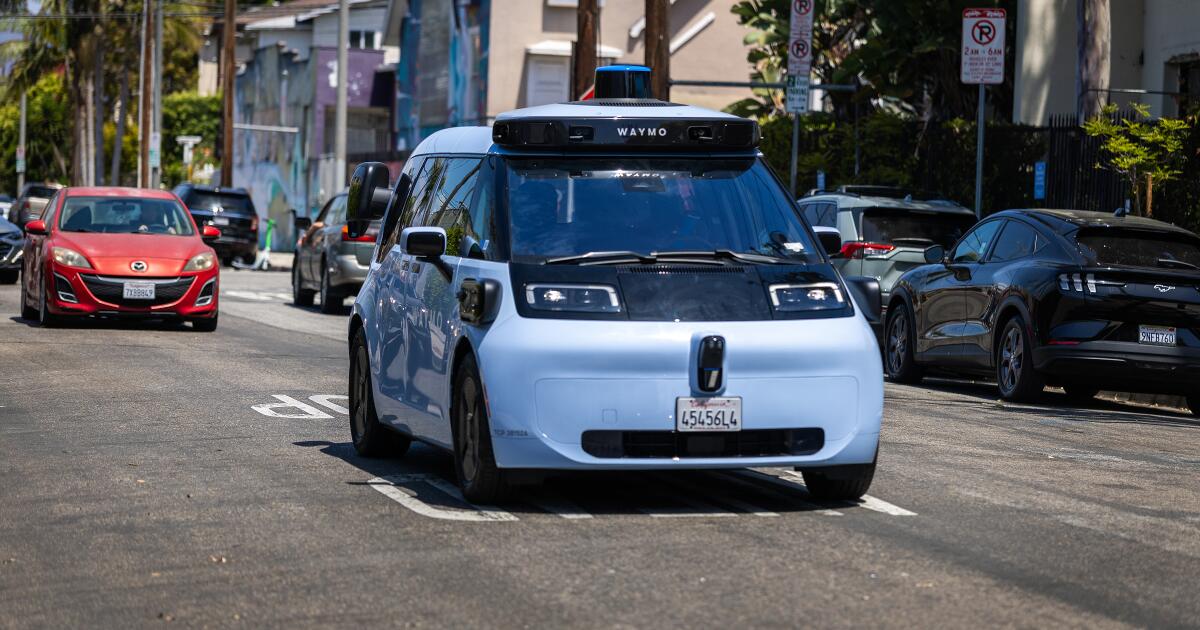
Waymo, the driverless taxi company that operates in more than 10 cities, will soon serve customers in San Diego.
The company has been testing its autonomous vehicles in San Diego with a safety driver behind the wheel since earlier this year. Rides without a human driver became available to employees Thursday and will open to members of the public later this year.
Waymo, which announced the expansion Wednesday, will also bring its taxis to Tampa, Las Vegas and Denver.
“If you’re in one of these four new cities, download the app to be notified when it’s time to ride,” the company said in a blog post.
Waymo has offered fully autonomous rides in San Francisco since 2022 and in Los Angeles since 2024.
It also serves customers in Nashville, Phoenix, Miami and other cities.
In May, Waymo launched a cheaper robotaxi dubbed the Ojai, which is better equipped for difficult driving conditions such as snowy roads.
The Ojai will supplement Waymo’s fleet of Jaguar I-Paces, the company said. In San Diego, services will be provided with the Ojai.
Waymo also announced Wednesday it’s beginning autonomous driving with a safety driver in its newest retrofitted vehicle, the Hyundai IONIQ 5.
“This phase allows us to validate our technology for fully autonomous operations as we work to bring riders even more ways to enjoy Waymo in the future,” the company said.
The company plans to eventually have tens of thousands of driverless taxis made per year, starting with the Ojai, then scaling using the IONIQ 5s.
The move into San Diego and three other cities widens the gap between Waymo and its competitors in the robotaxi race.
Elon Musk’s Tesla robotaxis and Amazon-owned Zoox are shuttling customers autonomously, but are nowhere near the scale at which Waymo operates.
Other companies are working on autonomous trucks and freight trains.
Waymo’s San Diego service area will include Pacific Beach, Normal Heights, La Playa and Southcrest, among other neighborhoods, the company said.
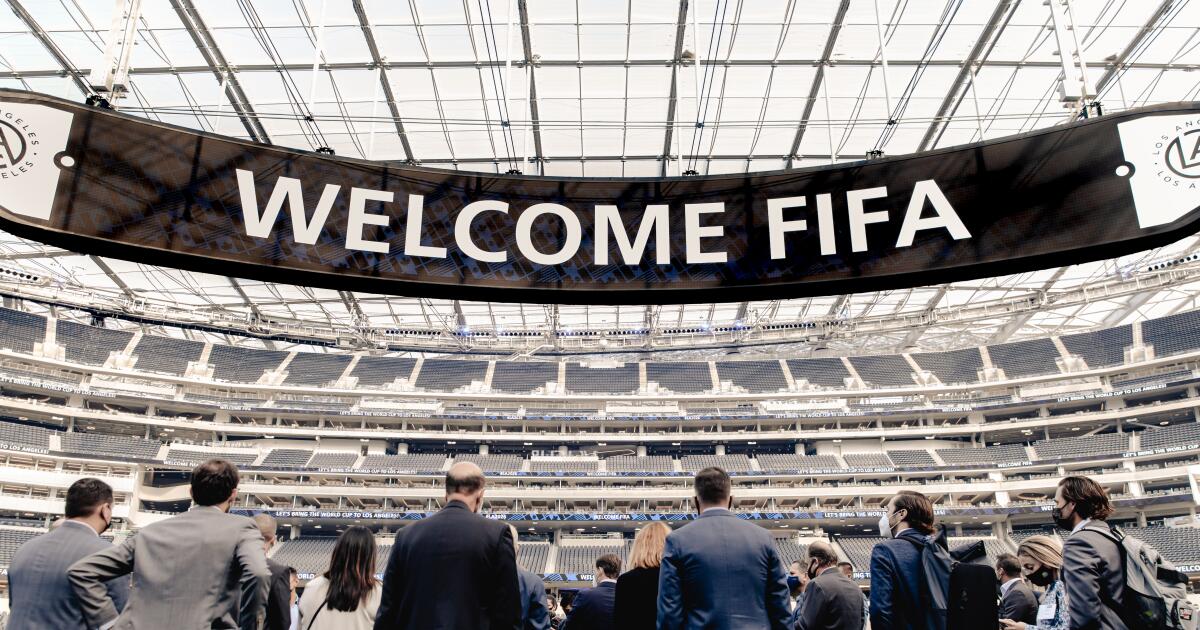
StubHub is getting a red card from some World Cup fans
Two World Cup customers are suing the New York-based ticket-selling company, alleging “false and misleading” advertising that left them without tickets or a refund for the World Cup games they paid to attend.
In federal court in New York last week, two Californians — Julia Reeker Moghal and Reuben Renteria — sued StubHub seeking monetary damages and a ban on the company selling World Cup tickets. The lawsuit aims to become a class action and comes after weeks of fierce criticism and complaints from customers regarding the company’s practices.
Throughout the World Cup, videos have emerged on Instagram and TikTok of StubHub customers describing their nightmare experiences with the ticket-selling platform.
Some said they had purchased tickets to World Cup games as early as November of last year, booked flights and hotels and arranged travel plans, then StubHub notified them days to weeks before the match of a refund for their tickets, which they never requested.
There were similar complaints about last-minute cancellations from people who bought Coachella tickets on StubHub.
In the lawsuit, Moghal said she had purchased three tickets for nearly $2,000 for the June 18 match between Switzerland and Bosnia-Herzegovina at SoFi Stadium in Inglewood, which were then canceled by StubHub. Moghal said she was contacted by StubHub and told her tickets would remain canceled, then was later told the tickets would be available one hour before the game.
When the match began, Moghal said she was at SoFi Stadium, but the tickets never came.
Renteria said he paid around $2,300 for the June 18 Mexico versus South Korea match in Guadalajara, Mexico, but they were canceled
“Devoted soccer fans have traveled from around the world to attend World Cup matches — and they reasonably relied on StubHub to provide the tickets they paid for as well as on StubHub’s warranty,” Blake Hunter Yagman, the attorney representing the two, said in a statement. “Instead of rewarding their business, StubHub sold them World Cup tickets that they either could not provide or on speculation, only to be stranded, in many cases, at the stadium gates without any recourse.”
According to StubHub’s website, its Fan Protect Guarantee states the platform will deliver valid tickets or refund in the event of a ticket issue, and that it will “go out of our way to find replacement tickets” of a comparable value. The lawsuit alleges the replacement tickets many fans were given by StubHub were worse than their original tickets.
FIFA, the World Cup organizer, states in its terms and conditions that the FIFA Marketplace, its own ticket-selling platform, is the only authorized platform for World Cup tickets, and that only tickets purchased through it are guaranteed by FIFA to be valid.
Despite the risk of purchasing through a third-party platform such as StubHub, many fans opted to do so to avoid the 30% FIFA resale tax, believing that the Fan Protect Guarantee would safeguard their order.
Since World Cup tickets began selling on FIFA Marketplace last September, fans have expressed disappointment in the expensive price tag. FIFA utilized a dynamic pricing system for the sale, and as sales phases progressed leading up to the games, the cost of tickets increased tremendously. In March, the extreme cost of tickets prompted 69 members of Congress to write a letter to FIFA urging them to lower their prices.
Tickets for the upcoming Friday match between Spain and Belgium in Los Angeles are selling on StubHub for over $1,300.
StubHub said in various statements to the news and in legal proceedings that ticket cancellations were a result of transfer problems and issues with FIFA’s ticketing infrastructure.
StubHub did not respond to requests for comment.
A FIFA spokesperson responded to this accusation in a statement, saying, “FIFA has no visibility over, or control of, secondary market ticket transactions carried out on third-party platforms. The transactions facilitated on these platforms occur entirely independently of FIFA’s official ticketing platform. With reference to the reliability of the services available to fans on FIFA’s official ticket platform, FIFA rejects any suggestion that the functional issues being experienced by users of third-party platforms with respect to FIFA World Cup 2026 tickets are the result of FIFA’s ticketing infrastructure.”
Business
Commentary: Trump wants to let companies make fewer disclosures, thus keeping investors in the dark

Trump’s SEC is considering eliminating the mandate for quarterly corporate financial reports, but even some big investors call it a lousy idea.
This being the “information age,” it would be understandable if investors sometimes feel inundated with too much information to wade through about the stocks in their mutual fund portfolios.
The Securities and Exchange Commission, bowing like a puppy to the urgings of President Trump, is considering exactly the wrong solution to this supposed burden. It’s proposing to allow public companies to give their investors less information, as though that’s a good thing.
On May 8, the SEC proposed rescinding its mandate that public companies report financial results on a quarterly schedule. Instead, it suggests, semiannual and annual reports should suffice.
This takes an already-unlevel playing field where Main Street investors are already disadvantaged, and makes it more unlevel.
— Dennis Kelleher, Better Markets
The SEC left its proposal open for public comment for 60 days, meaning the window closed Monday. By then, the agency had received more than 68,000 comments, according to a tracker posted online by accounting professor Tzachi Zach of Ohio State.
Almost 99.9% of the comments were negative. Several organizations of institutional investors and auditing professionals, as well as a tsunami of individual investors, expressed opposition.
A similar initiative the SEC aired in 2018, during Trump’s first term, received an overwhelmingly negative response and was eventually dropped.
The tide of opposition coming from individual investors shouldn’t be surprising. “Taking away basic quarterly information means investors are blind for six months at a time,” says Dennis Kelleher, co-founder and chief executive of the investor advocacy nonprofit Better Markets.
That’s especially true for small investors, though perhaps not so much for major institutions, insiders or deep-pocketed individuals. “If you’re a big dog, you’ll get the information anyway,” Kelleher told me. “And insiders, who are trading in their own stock all the time, will have the information. This takes an already-unlevel playing field where Main Street investors are already disadvantaged, and makes it more unlevel.”
Trump set off the latest initiative with a social media post on Sept. 15, advocating the move to a six-month reporting schedule. It read, in part, “This will save money, and allow managers to focus on properly running their companies. Did you ever hear the statement that, ‘China has a 50 to 100 year view on management of a company, whereas we run our companies on a quarterly basis???’ Not good!!!”
As was usual with Trump, his argument was a string of uninformed and irrelevant non sequiturs.
It’s doubtful that eliminating quarterly reports will save much, if any, money. Most 10-Qs are cookie cutter documents disclosing financial figures already embedded in corporate records.
The idea that managers would become empowered to “focus on properly running their companies” if only they were relieved of the burden of preparing a report every three months is just malarkey: Any CEOs who feel the impulse to drop everything and involve themselves in what is essentially an automated process can’t be very good at their jobs.
As for China’s “50 to 100 year view on management of a company,” what would that even mean, even if it were true? China doesn’t operate on a 50 to 100 year corporate horizon, but rather on a string of five-year plans. The most recent of these was adopted by the government in March, covers the period up to 2030, and is its 15th in a row.
Despite the flaws in Trump’s arguments, Trump’s SEC Chairman Paul Atkins, a former corporate lawyer and securities industry consultant, fell into line. Within a few days of Trump’s post, he showed up on CNBC to minimize the potential effect of the change. Private companies rely on semiannual reports, after all, he noted, although the idea of taking private companies as models for publicly traded corporations might not strike experienced investors as the wisest thing.
Atkins cited an enduring chestnut, for which there’s no evidence, that quarterly reporting is responsible for “short-term thinking” in corporate suites (though he admitted that his evidence was “anecdotal”). And he suggested that small investors have ample access to corporate information even without quarterly reports — why, he said, they can just tune in to CNBC!
“To propose change in what our rules are now would be a good way forward,” he said. “So I welcome the president’s putting this up for discussion.”
Something more insidious undergirds the SEC’s proposal than its immediate effect on corporate behavior. The agency rationalizes its proposal as seeking “a tradeoff between reducing regulatory burdens … and promoting efficient financial markets through timely disclosure.”
The problem here, Kelleher points out, is that “reducing regulatory burdens” isn’t part of the SEC’s mission in any way, shape or form. It’s a regulatory agency, and its mission since its founding in 1934 has been to protect investors, not to make things fluffier for stock issuers.
The history of financial disclosure in the U.S. shows a long-term trend favoring more disclosure, not less. In the 1880s, quarterly reporting by railroads and other transportation companies were common.
Early on, pressure for more frequent disclosure came not from government regulators, who barely existed before 1934, but from investors. The reporting of quarterly earnings, notes corporate finance expert Owen Lamont of Acadian Asset Management, was “a bottom-up historical phenomenon reflecting voluntary arrangements between firms and investors, not a top-down phenomenon imposed by law.”
By 1931, according to financial historians, 63% of New York Stock Exchange-listed firms were publishing their quarterly earnings. The Big Board mandated that frequency for most listed companies in 1939. The SEC mandated semiannual reports in 1955 and quarterly reports, as Atkins said, in 1970.
The evidence in favor of dropping the quarterly reports is uniformly thin. Some advocates cite a 2018 op-ed in the Wall Street Journal by JPMorgan Chase CEO Jamie Dimon and Warren Buffett that was headlined “Short-Termism Is Harming the Economy.”
Couple of points about this: First, the target of Dimon and Buffett wasn’t quarterly financial reporting, but quarterly earnings guidance — that is, the practice of some top executives who project their earnings into the future. (This guidance usually comes at the same time they issue their SEC disclosures.)
It’s guidance, they wrote, that is “a major driver” of short-termism in corporate behavior. That’s because management is giving itself a target it feels obligated to meet, even if factors outside its control interfere with the quest.
Furthermore, Dimon and Buffett wrote, “Our views on quarterly earnings forecasts should not be misconstrued as opposition to quarterly and annual reporting.” They called transparency about financial and operating results “an essential aspect of U.S. public markets … so that the public, including shareholders and other stakeholders, can reliably assess real progress.”
Individual investors may be unmoved by the SEC’s proposal because — let’s be candid — how many of them read quarterly earnings reports, anyway? But that’s unimportant, Kelleher says, because other market participants are reading them. “So that information is in the marketplace, and that’s what actually enables price discovery, so stock prices roughly reflect what’s going on at a company, most of the time.”
More to the point, the quarterly reports reflect the highest-quality, detailed information, the information the SEC requires executives to disclose on pain of facing a civil lawsuit from the agency or even criminal liability for faking data. “Main Street investors, whether they read quarterly reports or not, are the real beneficiaries,” Kelleher says.
That’s so. The bottom line is that quarterly financial reporting helps investors. It doesn’t promote short-term behavior and its costs, modest as they are, don’t outweigh its benefits.
Over the decades, scandal-ridden corporations have hidden fraudulent behavior in the interstices between mandated disclosures—think Enron, WorldCom and Tyco, among others. Why give any corporation, even an honest one, the opportunity to disclose less?
-

 Sports22 seconds ago
London descends into disorder as Morocco fans flood streets after World Cup elimination by France
-

 Technology6 minutes ago
Google turns old phones into cloud servers
-
Business13 minutes ago
Waymo is starting robotaxi service in San Diego
-
 Entertainment16 minutes ago
‘Children of Blood and Bone’ author won’t see film after feud with star Amandla Stenberg
-
 Lifestyle20 minutes ago
After her son’s death, she found a new purpose. ‘He’s whispering: Mom, this is your path’
-
 Politics28 minutes ago
Iran ceasefire is ‘over,’ Trump says, and orders additional strikes
-
 Science30 minutes ago
Diarrhea-causing cyclosporiasis exceeds 1,000 cases in U.S. What Californians should know
-
 Sports36 minutes ago
Arthur Fery’s fairy-tale Wimbledon run puts British wild card on brink of history

