Business
Commentary: Forget tariffs — GOP proposals on student loans will crack the economy

While economists and the general public are preoccupied with the threat to U.S. economic growth stemming from Donald Trump’s tariff policies, serious as that is, they may be overlooking another serious threat.
This one comes from Trump’s approach, abetted by Republicans in Congress, to the student loan crisis.
It’s not a trivial matter. Nearly 43 million Americans owe a combined $1.6 trillion in student debt, according to figures from the U.S. Department of Education. Efforts to relieve borrowers of this weight invariably proposed by Democrats have been stymied by conservatives on Capitol Hill and federal courts.
“Instead of helping the 5 million borrowers that have fallen into default and the millions more that are behind and now at risk of default later this year, this Administration appears set on inflicting massive economic harm on millions of Americans.
— Aissa Canchola Bañez, Student Borrower Protection Center
Now things look worse. There’s no longer any talk in Congress of student loan relief. It’s been supplanted by partisan efforts to increase the burden, by raising the costs of student loans and closing off paths for struggling borrowers to manage their payments.
“Instead of helping the 5 million borrowers that have fallen into default and the millions more that are behind and now at risk of default later this year, this Administration appears set on inflicting massive economic harm on millions of Americans—a decision that will further drag down an already struggling economy,” Aissa Canchola Bañez, policy director for the Student Borrower Protection Center, said recently.
The damage wreaked by Trump policies on student loans is already showing up in economic statistics. According to a report by the Federal Reserve Bank of New York, about 9.7 million student loan borrowers have seen their credit scores plummet since late last year, when delinquencies and defaults on those loans began to be listed on credit reports.
Many borrowers who enjoyed superprime credit scores (760 or higher on scales that typically top out at 850) could see their scores decline to subprime levels below 620. For those borrowers, the results could include “reduced credit limits, higher interest rates for new loans, and overall lower credit access,” the N.Y. Fed reported.
The credit score declines resulting from the resumption of college loan payments was a factor in a sharp increase in the rejection rate for mortgage refinancings, to nearly 42% in February from 26.7% a year earlier, to 14% on car loans from 1.5% a year earlier, and to 22% on credit card applications from 16.6% over the same period.
The consequences could be even broader. Many landlords check credit scores to judge potential tenants, those with low scores might be turned away. Fewer mortgage refinancings, auto purchases, and less credit generally are all drags on the economy.
It’s true that payments on student loans resumed during the Biden administration. Payments were suspended on federal student loans and and interest rates temporarily set at 0% during the pandemic emergency, beginning March 13, 2020. The pause ended as of October 2023, but the Biden administration provided a one-year “on-ramp” during which missed or delayed payments wouldn’t show up in borrowers’ credit reports. That ended early this year, triggering the credit score crash for borrowers in arrears or default.
Biden’s efforts to relieve the burden on millions of student borrowers were stymied by federal court rulings in lawsuits brought by conservative activists. More recently, the Trump administration has proceeded to tighten the screws on borrowers.
Student loan delinquencies (red line) have risen stratospherically since a pandemic-era suspension of payments ended last year.
(Federal Reserve Bank of New York)
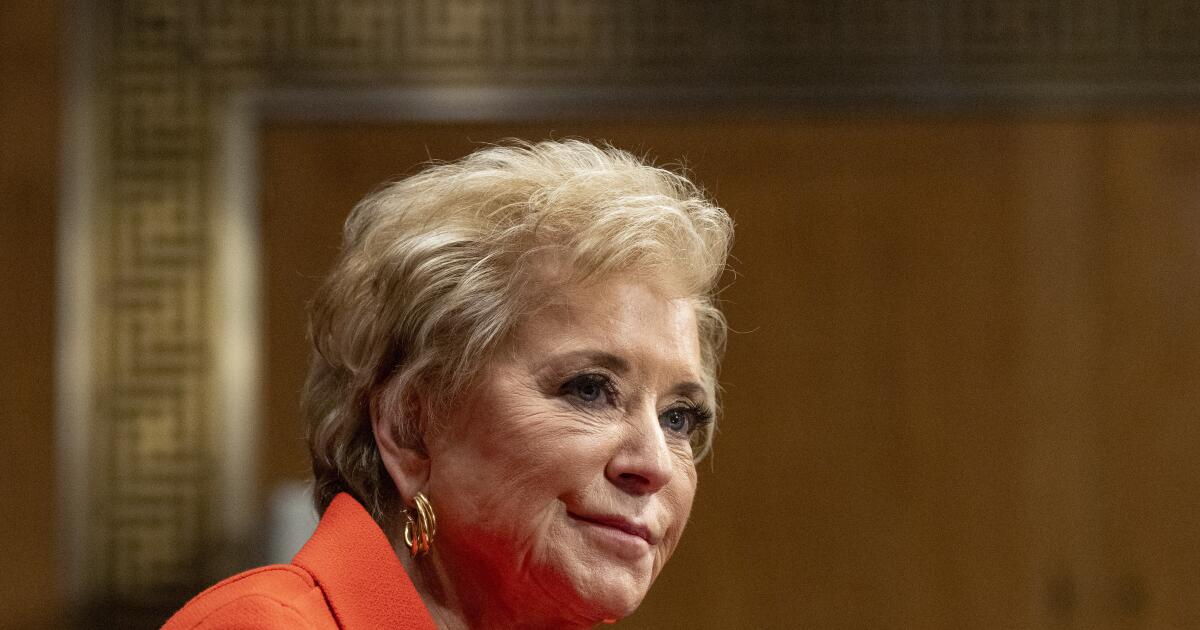
On April 21, Education Secretary Linda McMahon announced that defaulted loans would be put in collection, subjecting the borrowers to having their wages garnished and their federal tax refunds and even Social Security benefits seized to make the payments. (Responding to a public uproar, the administration backed away from plans to take Social Security benefits from an estimated 450,000 defaulting borrowers aged 62 and older who are receiving Social Security.)
“American taxpayers will no longer be forced to serve as collateral for irresponsible student loan policies,” McMahon said.
Pressure on households struggling to afford higher education will be intensified by provisions in the budget bill passed narrowly on May 22 by the GOP majority in the House. The measure, which is pending before the GOP-majority Senate, takes several whacks at student aid and consequently the accessibility of higher education.
Among its provisions are these:
— A change in the calculation of permissible student loans. Under current law, the figure is based on the cost of the program a student is attending. The proposal would peg loans to the median cost of all similar programs. That would leave students at higher-priced universities (such as private institutions) without the ability to access federal loans for the full cost of their education.
As it happens, no system currently exists for determining the median prices. At the Department of Education’s office that would make the calculation, almost all the employees have been fired.
— The bill eliminates direct subsidized student loans for undergraduates, which don’t accrue interest while the borrower is in school.
— The bill raises the maximum in federal loans that a student can take out to $50,000, up from the current $31,000. But the current limit includes up to $23,000 in subsidized loans. Since those would no longer exist, the full amount would be in costlier unsubsidized loans. The Student Loan Protection Center calculates that the average borrower who takes out the maximum annual loan amount would pay nearly $2,900 more in interest over the current amount.
— The GOP would eliminate the SAVE plan, which was implemented by the Biden administration but blocked by a federal appeals court ruling in a lawsuit brought by red states. The SAVE plan required enrollees to pay 5% of their discretionary income annually, with unpaid balances forgiven after 20 years (25 years for those with graduate loans). Those with original loans of $12,000 or less would have their balances forgiven after 10 years. Elimination of the plan would affect about 8 million student borrowers.
— The GOP would scrap rules allowing borrowers to temporarily defer payments due to unemployment or economic hardship and limits. It also places new limits on forbearance — a temporary pause on loan payments — which states loans can’t be in forbearance for more than 9 months during any 24-month period.
For all that Republicans crow about removing the burden on taxpayers from the student loan crisis, the real beneficiary of these changes would be the private student loan industry, such as banks and private equity firms, which long have hankered after the opportunities created by student loans. With fewer options available from federal programs, student borrowers would increasingly be thrust into the welcoming arms of Wall Street.
That’s a problem for student borrowers, because the private lending industry has a wretched history, rife with deceptive practices. Private lenders were the subject of more than 40% of student loan-related complaints to the Consumer Financial Protection Bureau since 2011, even though they accounted for only 8% of outstanding loans. Private loans, moreover, lack some of the consumer protections traditionally provided by government loans, including deferrals, and typically carry higher interest rates.
With their actions and proposals, McMahon and the GOP lawmakers have underscored the majestic hypocrisy of the student debt debate. Among the most common arguments against relief is that canceling existing debt would be unfair to all those who already paid off their loans. As I’ve explained in the past, this is the argument from pure selfishness and a formula for permanent governmental paralysis.
In a healthy society government policy moves ahead by taking note of existing inequities and striving to address them. Following the implications of the “I paid, why shouldn’t you” camp to their natural conclusion means that we wouldn’t have Social Security, Medicare or the Affordable Care Act today.
Among the most common claims is that debt relief would disproportionately benefit wealthy families; in fact, low-income households would benefit the most, the Roosevelt Institute has shown.
As I pointed out last year, among the Republicans who weighed in with tendentious lectures about meeting one’s obligation to pay back a loan were members of Congress who had taken out loans of hundreds of thousands of dollars each from the pandemic-era Paycheck Protection Program — and had them completely forgiven.
The GOP’s lame defense was that the PPP loans were not expected to be repaid, if they were used to keep the borrowers’ workers employed during the pandemic. Couple of problems with that: Days before Biden took office, the Small Business Administration deleted almost all the database red flags designating potentially questionable or fraudulent loans subject to further review. The red flags included signs that a recipient company had laid off workers or were ineligible to participate in the program.
As many as 2.3 million loans, including 54,000 loans of more than $1 million each, thus may have received a free pass.
Then there’s the questionable ethics of elected officials taking massive advantage of a program they themselves enacted. They could have made themselves ineligible, but where’s the fun in that?
I observed separately that many congressional critics of loan relief had themselves received their college, graduate and professional educations as gifts from the taxpayers: They had attended public (i.e., taxpayer-supported) state universities, typically in an era when tuition for state residents was much lower than today, even accounting for inflation.
Among those who were apparently educated on the taxpayers’ dimes is Secretary McMahon, a North Carolina native who holds a degree from East Carolina University, a public institution supported by the taxpayers of North Carolina. I asked McMahon’s office to reconcile her statement on student loans with her education at a public university, but received no reply.
The threat to the economy is real and immediate. Households burdened with student debt tend to delay or forgo homeownership and face difficulties in starting a family or building up savings. Eradicating student debt, or even materially reducing its burden, would produce a significant economic stimulus. But who in the White House or on Capitol Hill is even listening?




Business
California-based company recalls thousands of cases of salad dressing over ‘foreign objects’

A California food manufacturer is recalling thousands of cases of salad dressing distributed to major retailers over potential contamination from “foreign objects.”
The company, Irvine-based Ventura Foods, recalled 3,556 cases of the dressing that could be contaminated by “black plastic planting material” in the granulated onion used, according to an alert issued by the U.S. Food and Drug Administration.
Ventura Foods voluntarily initiated the recall of the product, which was sold at Costco, Publix and several other retailers across 27 states, according to the FDA.
None of the 42 locations where the product was sold were in California.
Ventura Foods said it issued the recall after one of its ingredient suppliers recalled a batch of onion granules that the company had used n some of its dressings.
“Upon receiving notice of the supplier’s recall, we acted with urgency to remove all potentially impacted product from the marketplace. This includes urging our customers, their distributors and retailers to review their inventory, segregate and stop the further sale and distribution of any products subject to the recall,” said company spokesperson Eniko Bolivar-Murphy in an emailed statement. “The safety of our products is and will always be our top priority.”
The FDA issued its initial recall alert in early November. Costco also alerted customers at that time, noting that customers could return the products to stores for a full refund. The affected products had sell-by dates between Oct. 17 and Nov. 9.
The company recalled the following types of salad dressing:
- Creamy Poblano Avocado Ranch Dressing and Dip
- Ventura Caesar Dressing
- Pepper Mill Regal Caesar Dressing
- Pepper Mill Creamy Caesar Dressing
- Caesar Dressing served at Costco Service Deli
- Caesar Dressing served at Costco Food Court
- Hidden Valley, Buttermilk Ranch
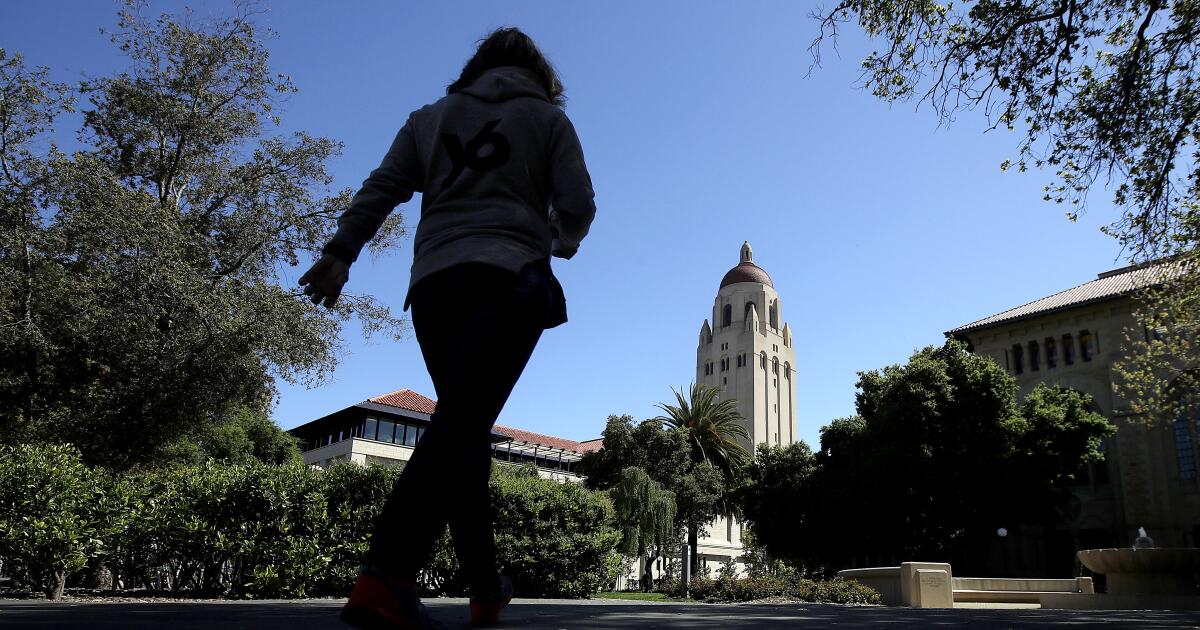
A Stanford software engineering degree used to be a golden ticket. Artificial intelligence has devalued it to bronze, recent graduates say.
The elite students are shocked by the lack of job offers as they finish studies at what is often ranked as the top university in America.
When they were freshmen, ChatGPT hadn’t yet been released upon the world. Today, AI can code better than most humans.
Top tech companies just don’t need as many fresh graduates.
“Stanford computer science graduates are struggling to find entry-level jobs” with the most prominent tech brands, said Jan Liphardt, associate professor of bioengineering at Stanford University. “I think that’s crazy.”
While the rapidly advancing coding capabilities of generative AI have made experienced engineers more productive, they have also hobbled the job prospects of early-career software engineers.
Stanford students describe a suddenly skewed job market, where just a small slice of graduates — those considered “cracked engineers” who already have thick resumes building products and doing research — are getting the few good jobs, leaving everyone else to fight for scraps.
“There’s definitely a very dreary mood on campus,” said a recent computer science graduate who asked not to be named so they could speak freely. “People [who are] job hunting are very stressed out, and it’s very hard for them to actually secure jobs.”
The shake-up is being felt across California colleges, including UC Berkeley, USC and others. The job search has been even tougher for those with less prestigious degrees.
Eylul Akgul graduated last year with a degree in computer science from Loyola Marymount University. She wasn’t getting offers, so she went home to Turkey and got some experience at a startup. In May, she returned to the U.S., and still, she was “ghosted” by hundreds of employers.
“The industry for programmers is getting very oversaturated,” Akgul said.
The engineers’ most significant competitor is getting stronger by the day. When ChatGPT launched in 2022, it could only code for 30 seconds at a time. Today’s AI agents can code for hours, and do basic programming faster with fewer mistakes.
Data suggests that even though AI startups like OpenAI and Anthropic are hiring many people, it is not offsetting the decline in hiring elsewhere. Employment for specific groups, such as early-career software developers between the ages of 22 and 25 has declined by nearly 20% from its peak in late 2022, according to a Stanford study.
It wasn’t just software engineers, but also customer service and accounting jobs that were highly exposed to competition from AI. The Stanford study estimated that entry-level hiring for AI-exposed jobs declined 13% relative to less-exposed jobs such as nursing.
In the Los Angeles region, another study estimated that close to 200,000 jobs are exposed. Around 40% of tasks done by call center workers, editors and personal finance experts could be automated and done by AI, according to an AI Exposure Index curated by resume builder MyPerfectResume.
Many tech startups and titans have not been shy about broadcasting that they are cutting back on hiring plans as AI allows them to do more programming with fewer people.
Anthropic Chief Executive Dario Amodei said that 70% to 90% of the code for some products at his company is written by his company’s AI, called Claude. In May, he predicted that AI’s capabilities will increase until close to 50% of all entry-level white-collar jobs might be wiped out in five years.
A common sentiment from hiring managers is that where they previously needed ten engineers, they now only need “two skilled engineers and one of these LLM-based agents,” which can be just as productive, said Nenad Medvidović, a computer science professor at the University of Southern California.
“We don’t need the junior developers anymore,” said Amr Awadallah, CEO of Vectara, a Palo Alto-based AI startup. “The AI now can code better than the average junior developer that comes out of the best schools out there.”
To be sure, AI is still a long way from causing the extinction of software engineers. As AI handles structured, repetitive tasks, human engineers’ jobs are shifting toward oversight.
Today’s AIs are powerful but “jagged,” meaning they can excel at certain math problems yet still fail basic logic tests and aren’t consistent. One study found that AI tools made experienced developers 19% slower at work, as they spent more time reviewing code and fixing errors.
Students should focus on learning how to manage and check the work of AI as well as getting experience working with it, said John David N. Dionisio, a computer science professor at LMU.
Stanford students say they are arriving at the job market and finding a split in the road; capable AI engineers can find jobs, but basic, old-school computer science jobs are disappearing.
As they hit this surprise speed bump, some students are lowering their standards and joining companies they wouldn’t have considered before. Some are creating their own startups. A large group of frustrated grads are deciding to continue their studies to beef up their resumes and add more skills needed to compete with AI.
“If you look at the enrollment numbers in the past two years, they’ve skyrocketed for people wanting to do a fifth-year master’s,” the Stanford graduate said. “It’s a whole other year, a whole other cycle to do recruiting. I would say, half of my friends are still on campus doing their fifth-year master’s.”
After four months of searching, LMU graduate Akgul finally landed a technical lead job at a software consultancy in Los Angeles. At her new job, she uses AI coding tools, but she feels like she has to do the work of three developers.
Universities and students will have to rethink their curricula and majors to ensure that their four years of study prepare them for a world with AI.
“That’s been a dramatic reversal from three years ago, when all of my undergraduate mentees found great jobs at the companies around us,” Stanford’s Liphardt said. “That has changed.”

Walt Disney Co. is expanding its presence in the Middle East, inking a deal with Saudi media conglomerate MBC Group and UAE firm Anghami to form a streaming bundle.
The bundle will allow customers in Bahrain, Kuwait, Oman, Qatar, Saudi Arabia and the UAE to access a trio of streaming services — Disney+; MBC Group’s Shahid, which carries Arabic originals, live sports and events; and Anghami’s OSN+, which carries Arabic productions as well as Hollywood content.
The trio bundle costs AED89.99 per month, which is the price of two of the streaming services.
“This deal reflects a shared ambition between Disney+, Shahid and the MBC Group to shape the future of entertainment in the Middle East, a region that is seeing dynamic growth in the sector,” Karl Holmes, senior vice president and general manager of Disney+ EMEA, said in a statement.
Disney has already indicated it plans to grow in the Middle East.
Earlier this year, the company announced it would be building a new theme park in Abu Dhabi in partnership with local firm Miral, which would provide the capital, construction resources and operational oversight. Under the terms of the agreement, Disney would oversee the parks’ design, license its intellectual property and provide “operational expertise,” as well as collect a royalty.
Disney executives said at the time that the decision to build in the Middle East was a way to reach new audiences who were too far from the company’s current hubs in the U.S., Europe and Asia.

U.S. launches strikes in Syria targeting Islamic State fighters after American deaths

Hamline University student brags on video that he celebrated Charlie Kirk’s assassination

Crockett’s potential successor has repeatedly railed against US in reparations push: ‘It’s been evil’

Louisiana manhunt continues as dangerous inmate charged with attempted murder remains on the run

Suspect accused of causing massive fatal pileup was illegal immigrant who obtained CDL in New York: feds

Florida High School Football Rankings: Top 25 teams – Oct. 21

Cleary's 21 help Le Moyne down Central Connecticut State 69-64 in OT

How old is Bo Nix? What to know about Oregon quarterback ahead of 2024 NFL Draft

99th annual Pony Swim held in Virginia

Video: ‘It Didn’t Have to Happen This Way:’ U.Va. Faculty Call for Review of Police Response to Protests
U.S. launches strikes in Syria targeting Islamic State fighters after American deaths

Trump administration touts ‘most secure border in history’ as 2.5 million migrants exit US

How the reparations loan for Ukraine fell apart at the eleventh hour

Trump’s push to end transgender care for young people opposed by pediatricians

Takeaways from an eventful 2025 election cycle
-

 Iowa5 days ago
Addy Brown motivated to step up in Audi Crooks’ absence vs. UNI
-

 Iowa7 days ago
How much snow did Iowa get? See Iowa’s latest snowfall totals
-

 Maine4 days ago
Elementary-aged student killed in school bus crash in southern Maine
-

 Maryland5 days ago
Frigid temperatures to start the week in Maryland
-

 Technology1 week ago
The Game Awards are losing their luster
-

 South Dakota6 days ago
Nature: Snow in South Dakota
-

 New Mexico3 days ago
Family clarifies why they believe missing New Mexico man is dead
-

 Nebraska1 week ago
Nebraska lands commitment from DL Jayden Travers adding to early Top 5 recruiting class