Business
Commentary: Exploring the moon while cutting NASA? Why Trump’s 2027 budget misfires


Trump’s budget proposal takes aim at programs that make Americans smarter, healthier and safer. What’s his real agenda?
The oldest, most enduring cliche about government policy is the one about how budgets are political, not fiscal, documents.
The Trump administration’s budget proposal for the 2027-28 fiscal year, unveiled Friday, seems designed to set a new standard for partisan ideology as a spending standard.
You may have seen news coverage of the budget’s top lines, which call for $1.5 trillion in defense spending next year and cuts totaling $73 billion in nondefense spending. But those figures fail to communicate the raw flavor of the budget cuts or how they’re described in the 92-page document.
It’s an extinction-level event for science.
— Casey Dreier, Planetary Society, on budget cuts at NASA
Nor do they provide perspective for the magnitude of the defense increase or the damage that would be wreaked upon crucial social programs.
The defense request, for instance, would be a 42% increase over the current year, but it might be better judged as what Todd Harrison of the pro-business American Enterprise Institute describes unhappily as “the highest level of funding for defense in US history, surpassing even the peak funding during World War II.”
Adjusted to today’s dollars, Harrison calculates, the World War II peak was a bit lower than $1.2 trillion.
The administration minimizes the overall budgetary effect of its spending plans by projecting average growth in gross national product at 3% annually over the next decade.
That’s an ambitious goal, to say the least. Over the last 25 years — that is, in this century — U.S. economic growth has reached or exceeded 3% in only three years, including a pandemic-era surge to 6.1% in 2021. Last year it was only 2.1%.
On the other side of the ledger, the nondefense budget would be cut by 10%. But programs the White House has specifically targeted for being contrary to its ideology would suffer far more devastating cuts. Some scientific programs, such those concerned with global warming or the social and economic implications of science, technology and healthcare policies would be slashed by more than 50%.
NASA may be enjoying a moment just now, as its Artemis II spacecraft rounded the far side of the moon Monday, preparatory to heading back to Earth in the first moonshot since Apollo 17 last landed men on the lunar surface in December 1972.
But Trump proposes slashing the agency’s budget by $5.6 billion, or 23%. It gets worse: Trump would cut NASA’s science division by $34 billion, or 47%, canceling more than 40 projects, of which about 20 are currently underway.
“It’s an extinction-level event for science,” Casey Dreier, chief of space policy at the Planetary Society, told Nature.
Among the programs facing extinction is NASA’s Office of Science, Technology, Engineering, and Mathematics Engagement, which aimed to interest minority students in those so-called STEM disciplines.
“NASA will inspire the next generation of explorers through exciting, ambitious space missions,” the budget says, “not through subsidizing woke STEM programming and research that prioritizes some groups of students over others.”
The budget leaves unclear how those “exciting, ambitious space missions” will come to pass, since it also cuts $297 million from NASA’s annual spending on space technology.
The proposed cuts to science programs more generally would be devastating. The National Science Foundation, one of the most important scientific grant-making agencies in the world, would lose $4.8 billion, or 55% of its funding.
The language the budget uses to rationalize such cuts speaks volumes about the drivers of its draconian cuts in nondefense spending: It’s an expression of Trumpian culture war hobby horses such as hostility to diversity, equity and inclusion (DEI) initiatives. The term “woke” or its derivatives appear 32 times in the budget document — as many times as it appears in Project 2025, the far-right roadmap for a second Trump term published by the Heritage Foundation in 2023.
The $8.5 billion in proposed budget cuts to K-12 spending would include the elimination of the $70-million Teacher Quality Partnership, which the budget describes as a program to “train teachers … on divisive ideologies.”
Among those, the budget says, are “inappropriate and divisive topics such as Critical Race Theory, diversity, equity, and inclusion, social justice activism,” and “anti-racism.” Nothing in the document explains why any of those things are considered bad; the terms are merely shibboleths that Trump’s core audience is expected to accept as gospel.
Services for transgender individuals would take a major hit from the budget: Among the $204.5 million in Treasury Department funding for community development initiatives on the chopping block would be support for “gender extremism,” such as for clinics that provide “‘gender-affirming hormone therapy’ and other services to young patients.”
As I’ve reported, Trump has bought heavily into conservative attacks on gender-affirming care, including by spouting claims that I labeled in 2024 as “deranged and despicable,” such as that schoolchildren are being kidnapped by school administrators and subjected to surgery against their will.
Perhaps the most concentrated assault in the proposed budget, as my colleague Hayley Smith reported, is the one aimed at research, development, and construction of renewable energy sources. The budget plan contains no fewer than 20 references to what it calls the “green new scam.”
This is an infantile reference to what’s typically known as the “Green New Deal,” a raft of policies incorporating a transition from fossil fuels such as oil, gas and coal to renewables as well as the concept of “environmental justice,” meaning efforts to ensure that the transition doesn’t overly burden disadvantaged communities.
Trump has consistently called for more development of fossil sources, including a revival of coal despite its unrelenting and inevitable glide path toward extinction as a component of U.S. energy generation. The budget plan doubles down on this policy, calling renewables R&D a “leftist” ideology. This is tied to policies “opening up more Federal land and waters for oil, gas, and clean coal development,” the document says. (“Clean coal,” which is to say nonpolluting coal, is a myth, as I’ve reported.)
The budget plan pays tribute to another Trump obsession, the supposed evils of wind power. Cuts to the Interior Department budget would “put a stop to disastrous offshore wind energy projects that harm hardworking coastal communities, precious wildlife, and American military readiness.” None of these assertions about wind power is supported by reality.
Some cuts appear to reflect a determination to exact retribution from agencies that have thwarted cherished conservative goals. The National Institutes of Health, a consistent target of conservative budget-cutters, would lose $5.9 billion, or 12.5% of its budget. That would include major cuts to the National Institute of Allergy and Infectious Diseases, which was formerly headed by the respected immunologist Anthony Fauci.
The budget drafters couldn’t resist taking a swipe at Fauci, who has been the target of smears from Republicans who have tried to blame him, absurdly, for the COVID pandemic. The budget document accuses Fauci of steering government funds to the Wuhan (China) Institute of Virology, which it called “the likely source of the COVID-19 pandemic.”
There’s no compelling evidence that a laboratory was a source of the virus, as I’ve documented: The overwhelming weight of scientific judgment is that the virus reached humans from natural zoologic sources. The budget plan resurrects the long-debunked conspiracy theory that Fauci orchestrated a 2020 scientific paper that judged the lab-leak theory to be “improbable.” The budget drafters assert that Fauci (who retired in 2022) “commissioned” the paper, which is simply untrue.
Another theme percolating through the budget plan is the need to protect our wealthiest taxpayers from, well, taxes. The budget would cut $1.4 billion from the budget of the Internal Revenue Service, reversing a restoration of the agency’s enforcement capabilities undertaken during the Biden administration. Trump cut IRS staffing by 20,000, or 27%. The document asserts that the IRS “has been weaponized against the American people, small businesses, and non-profit organizations.”
According to the Yale Budget Lab, every dollar the IRS spends on audits yields more than $7 in returns. Plainly that’s not coming from average Americans, but from the upper crust.
None of this means that the budget proposal isn’t valuable, to an extent. It’s a convenient one-stop window into Trump’s personal fixations: the elimination of “radical gender and racial ideologies that poison the minds of Americans,” the horrors of “the globalist climate agenda,” the “invasion” of violent criminals from abroad, and so on. In other words, there’s nothing new under the Trumpian sun.



In late March, Iran circulated a shaky video supposedly showing an American F/A-18 under attack. Iranian officials claimed they had destroyed the jet, though the Pentagon denied that. The video quickly earned millions of views online, demonstrating how Iran has exploited the global media ecosystem to propagate an image of military prowess.
The New York Times reconstructed how Iran was able to use overt and covert global networks alongside unwitting participants to spread its message through social media, state-affiliated news organizations and American influencers.
Here is how the claim went from a single post to a global audience of millions in 69 minutes.
1:04 p.m.
An obscure account on X, linked to Iran, posted the video first, in English, at 1:04 Eastern, followed a minute later by a post on Telegram by Iran’s Islamic Revolutionary Guards Corps. The posts received little attention at first, according to an analysis based on data from Alethea, Graphika and Cyabra, three companies monitoring online activity during the war.
1:04 p.m.
Almost simultaneously, official accounts of Iranian embassies and consulates repeated the claim on X, giving the narrative an imprimatur of legitimacy.
1:06 p.m.
An Iranian state television network then shared the video on X. Within a minute, RT, Russia’s international network, reposted the video with its own logo. The timing suggested coordinated coverage of the war from Iran and Russia.
1:14 p.m.
One of the most popular posts about the attack, from a pro-Russian influencer account known as Megatron, amassed nearly two million views, according to Graphika. At that point, there was no confirmation of an attack from any other sources.
1:21 p.m.
Sixteen minutes after its first post on Telegram, the Revolutionary Guards posted an update, claiming that the jet had been “precisely hit” and “fell into the Indian Ocean,” a detail that may have been intended to explain why there was no evidence of wreckage on the ground.
1:25 p.m.
The conversation surrounding these posts included suspected bot accounts mingled with authentic profiles, according to an analysis by Cyabra, suggesting some of the engagement was manufactured. Replies to RT’s post, for instance, often featured “short, affirmative comments” with celebratory emojis to show support for Iran, Cyabra’s analysis said.
1:32 p.m.
As the video spread, prominent influencers began posting about it, giving a boost to Iran’s narrative whether they intended to or not. Sulaiman Ahmed, an anti-Israeli activist with more than 800,000 followers on X, shared RT’s video about 10 minutes later.
1:33 p.m.
Ed Krassenstein, an American influencer, shared the claim to his more than one million followers on X. While his post made it clear that the attack was not confirmed by any other sources, influence campaigns benefit from the attention of prominent voices to amplify their narratives to broader audiences.
“I am always as careful as I can be to note where the information is coming from if it’s from a foreign government,” Mr. Krassenstein said in response to questions.
The number of posts mentioning the F-18 or similar terms began to surge, generating more than 35 million views on X alone that day, according to data from Tweet Binder by Audiense. Some users doubted the claim, but many pro-Iranian accounts celebrated the attack as a military triumph.
2:00 p.m.
Barely an hour had gone by, and the narrative had reached millions of views on social media, amplified by authentic and fake accounts based in dozens of countries, from Afghanistan to Yemen. The video appeared not only on X and Telegram but also on TikTok, Facebook and Instagram.
2:01 p.m.
Mario Nawfal, an influencer who has spread right-wing talking points and misinformation in the past, also shared RT’s post and video to his more than 3.2 million followers, noting the historical significance of an attack — “if true.”
“Our approach is to present claims transparently while clearly signaling their verification status, allowing our audience to assess credibility in real time,” Mr. Nawfal wrote in a statement.
2:05 p.m.
Prominent news organizations around the world began reporting on the claim. They included Pravda, Al Jazeera, the India Economic Times and official state media in China. Many repeated Iran’s claim that it had shot down the jet.
2:13 p.m.
An hour and nine minutes after the claim, the United States Central Command posted a denial on X, saying no American aircraft had been shot down. Its post created a new flurry of debate. Some users wrestled with the language, asking whether the plane had in fact been hit but not “shot down.” It declined to comment further.
Despite the statement from Central Command, Iranian, Chinese and Russian state broadcasters continued to feature the video over the next 24 hours, and to post about it across social media. An anchor on Russia 24 reported on “the destruction of yet another U.S. Air Force aircraft,” citing Iranian sources along with the denial from Central Command.
Since the video appeared, no evidence has emerged that Iran shot down an American F/A-18 jet. (This month, Iran successfully downed an F-15E Strike Eagle and an A-10 Warthog.) Still, millions consumed the narrative, spread by witting and unwitting actors.
“By the time an official denial lands,” the monitoring company Alethea wrote in an analysis, “audiences in multiple countries have already processed the story as confirmed.”

Tech behemoths, including Oracle and Meta Platforms, are laying off hundreds of California workers as they invest heavily in artificial intelligence.
Some of the top companies in tech that already had announced big plans to lay off thousands have revealed more details about where they are cutting in recent government filings.
Software giant Oracle has shed more than 700 workers in Santa Monica, Redwood City, Pleasanton and Santa Clara, filings to the California Employment Development Department show. The company, which was founded in California before moving its headquarters to Texas, started notifying employees of mass layoffs in late March.
Oracle declined to comment. The company hasn’t said publicly how many workers it has laid off. Several news outlets, citing people familiar with the matter, reported that the company laid off thousands of employees across multiple divisions.
As of May 2025, Oracle had 162,000 workers.
Software developers, analysts, sales representatives and product managers were among California Oracle workers who lost their jobs. Laid-off employees will officially separate from the company June 1.
California is home to some of the world’s most powerful and largest tech companies. But as they race ahead to advance AI-powered tools that can generate text, images and code, workers are anxious that businesses will automate tasks and shrink their workforce workforces. Tech companies also are more wary about their expenses, even as they spend billions of dollars on data centers and developing new products.
In March, Meta began laying off employees who worked on its virtual reality efforts.
The company laid off roughly 200 employees at its offices in Burlingame and Sunnyvale. They’re expected to leave the company May 29. Meta laid off engineers, recruiters, product managers and other workers.
“Teams across Meta regularly restructure or implement changes to ensure they’re in the best position to achieve their goals. Where possible, we are finding other opportunities for employees whose positions may be impacted,” a Meta spokesperson said in a statement.
Meta has been doubling down on its efforts to sell AI-powered smart glasses and is working on more powerful AI that surpasses human intelligence. The company, which debuted a new AI model Wednesday, is building a personal “superintelligence” to help people achieve their goals, create and be more productive.
Meta had 78,865 workers as of December 2025.
Chipmaker Qualcomm recently laid off more than 60 workers. The cuts hit employees across various offices in San Diego. Laid-off employees are anticipated to leave the company May 26. Various information technology and cybersecurity jobs were among the roles slashed as part of the layoffs.
Qualcomm didn’t immediately respond to a request for comment.
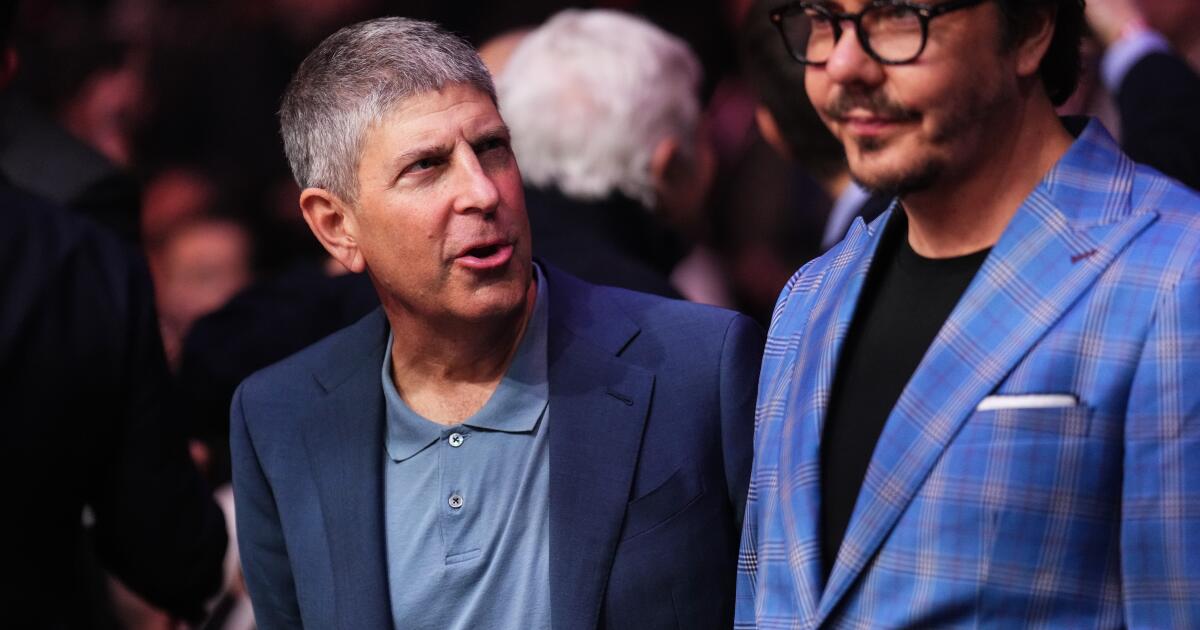
Jeff Shell agreed to step down as president of Paramount Skydance after becoming entangled in a legal battle with a controversial Las Vegas gambler and self-styled “fixer.”
Paramount announced Shell’s departure Wednesday after the two sides negotiated an amicable resolution to the drama. Paramount said its external review into Shell’s conduct, initiated by Paramount’s board of directors, found no violation of securities laws.
Shell also resigned as a Paramount board member to focus on his legal skirmish, the company said.
His departure comes after just eight months on the job.
Paramount Skydance “is grateful for Mr. Shell’s many contributions and to have relied on him as a valued advisor,” the company said in its statement.
The veteran entertainment executive officially joined the media company with David Ellison’s takeover in August, though he had been a key member of Ellison’s team for nearly two years as the group worked to assemble the pieces of the tech scion’s growing empire. Ellison’s Skydance Media acquired Paramount and then pulled off a stunning $111-billion deal to buy Warner Bros. Discovery in late February.
Shell brought substantial experience running a media company to Ellison’s inner circle, a group that included former investment bankers and others who haven’t run a large-scale enterprise. But his role within the company long felt awkward because key division managers, including the heads of CBS, the Paramount movie studio and the company’s streaming businesses, reported to Ellison, which left Shell with a nebulous portfolio.
He wasn’t planning to stay on after the company acquires Warner Bros. Discovery, according to two people close to the situation who were not authorized to speak publicly. Paramount hopes to complete that deal this summer.
Shell’s exit this week was prompted by his unlikely association with the high-roller, Robert James “R.J.” Cipriani, who created a public stir after his dealings with Shell went south.
Cipriani sued Shell in Los Angeles County Superior Court on March 9, alleging fraud and breach of an oral contract. Cipriani claimed that he provided Shell with “sophisticated, high-value crisis communications services,” according to his suit.
He alleged Shell spilled corporate secrets, which Shell has denied. Cipriani said he reported Shell to the U.S. Securities & Exchange Commission because Shell allegedly had discussed highly sensitive Paramount information with him: Paramount’s $7.7-billion deal last summer to bring UFC mixed-martial arts fights to CBS and other Paramount outlets.
Cipriani accused Shell of failing to deliver on a verbal pledge to help him produce an English-language version of a Roku TV Spanish music show.
Shell maintained Cipriani fictionalized the two men’s dealings, then spread “false and salacious lies to extract a massive payday,” according to a counterclaim filed by Shell. Cipriani has been seeking $150 million in damages.
In his court documents, Shell said the two men met only twice and that Shell owed him nothing.
But the Cipriani controversy made Shell’s future at Paramount untenable, the sources told The Times.
There was just “too much noise,” one of the sources said.
The Ellisons wanted to stay focused on building Paramount and completing their Warner Bros. takeover. The company needs to line up regulatory approvals in the U.S. and abroad.
Jeff Shell, Paramount Skydance president.
(Paramount / Skydance)
Paramount’s board last month hired the Gibson Dunn law firm to look into Cipriani’s allegations.
The firm conducted a “complete and thorough” review, Paramount said.
“The facts demonstrated that [Cipriani’s] allegations do not establish a securities law violation,” Paramount said. “Mr. Shell promptly notified PSKY of these accusations and is taking forceful legal action.”
Paramount Skydance, and its board members also named in Cipriani’s lawsuit, plan to respond “to the frivolous and baseless claims against PSKY and its named board members and stockholders,” the company said.
The firm attributed Shell’s decision to step down as “consistent with Mr. Shell’s commitment to prioritizing PSKY’s success.”
His departure comes three years after he was ousted as NBCUniversal chief executive.
NBCUniversal-owner Comcast hired a law firm to investigate him after a CNBC anchor filed an internal sexual harassment claim against him. Shell stepped down, acknowledging that he’d had an “inappropriate relationship” with the journalist, who has since left the company.
The job at Paramount was envisioned to be his second act.
Shell’s dealings with Cipriani began with an August 2024 meeting at litigator Patty Glaser’s Century City office.
At the time, Glaser represented both men and urged Cipriani to “cease” his efforts to drum up damaging stories about Shell, who was trying to recover from the scandal that cost him his job at NBC.

Robert James “R.J.” Cipriani in Amazon Prime Video’s 2025 series, “Cocaine Quarterback.”
(Courtesy of Prime)
Near the end of that meeting, Cipriani pledged to help Shell keep negative publicity at bay, according to sources and court documents.
The two men communicated via text messages, on-and-off, for about 18 months.
“Nobody believed me,” Cipriani said Wednesday. “The best thing I did was cooperate with Gibson Dunn and showed them that the texts were real.”
It’s unclear whether Ellison will look to bring in other experienced media executives or look to senior Warner Bros. Discovery executives following Paramount’s proposed takeover of that company.
Times staff writer Stacy Perman contributed to this report.

Where to watch Arizona Diamondbacks vs. New York Mets: Live stream, start time, TV channel, odds for Thursday, April 9

Connor Smillie Named to SEC Community Service Team

California Candidate Offers Donors Money-Back Guarantee

Colorado health officials identify 2 additional measles cases in Weld County, possible exposure in El Paso County

UGA student dies after fall while hiking in Connecticut

Florida High School Football Rankings: Top 25 teams – Oct. 21

How old is Bo Nix? What to know about Oregon quarterback ahead of 2024 NFL Draft

Cleary's 21 help Le Moyne down Central Connecticut State 69-64 in OT

99th annual Pony Swim held in Virginia

Indiana Members Credit Union announced as new anchor tenant at Bottleworks District

Video: The Fragile Cease-Fire in Iran

Spanberger ripped after taking credit for billions in investments secured under GOP predecessor: ‘Pathetic’

Newsletter: NATO holds amid fragile Iran ceasefire
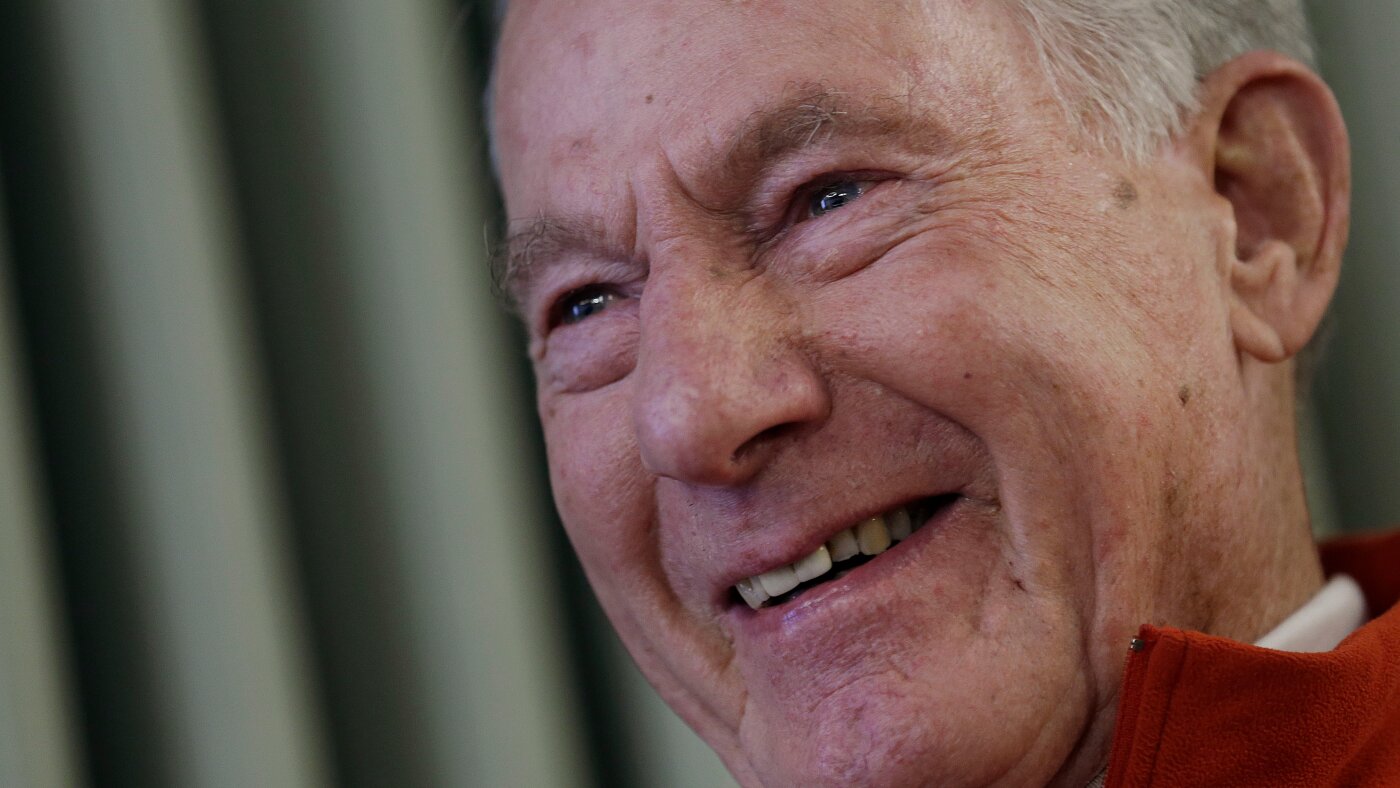
Jim Whittaker, the first American to summit Mount Everest, dies at 97

Video: Military Families Bear the Burden of War, Again
-

 Atlanta, GA4 days ago
1 teenage girl killed, another injured in shooting at Piedmont Park, police say
-

 Culture1 week ago
Do You Know Where These Famous Authors Are Buried?
-

 Movie Reviews1 week ago
Vaazha 2 first half review: Hashir anchors a lively, chaos-filled teen tale
-

 Georgia2 days ago
Georgia House Special Runoff Election 2026 Live Results
-

 Education1 week ago
Video: We Put Dyson’s $600 Vacuum to the Test
-

 Pennsylvania3 days ago
Parents charged after toddler injured by wolf at Pennsylvania zoo
-
 Milwaukee, WI3 days ago
Potawatomi Casino Hotel evacuated after fire breaks out in rooftop HVAC system
-
 Entertainment1 week ago
Inside Ye’s first comeback show at SoFi Stadium