Business
Commentary: A proposed new ‘fix’ for Social Security that harms workers and protects the rich

How worried are America’s wealthy about the possibility they’ll be hit with a higher tax for Social Security?
Plenty, judging from the endless creativity of their proposals to improve the program’s fiscal condition by cutting benefits rather than raising revenue (typically from our most affluent taxpayers).
The latest run at this fence comes from the Committee for a Responsible Federal Budget, which as I’ve explained before is an offspring of the late billionaire hedge fund operator Peter G. Peterson, who was an obdurate foe of Social Security. The committee dubs its proposal the “Six Figure Limit,” which is accurate enough: It would cap annual Social Security benefits at $50,000 per person, or $100,000 per couple.
The $100,000 amount will continue to erode to the point that it is a subsistence level benefit unrelated to prior earnings, just as conservatives have been advocating since 1936.
— Nancy Altman, Social Security Works
Make no mistake: This is a benefit cut. It’s part and parcel of the enduring Republican and conservative project to protect their rich patrons from paying taxes to cover their fair share of the costs of social programs.
As recently as a White House event Wednesday, President Trump revived the old “guns or butter” debate—it was Lyndon Johnson who said during the Vietnam War that the country could afford both, but Trump stated that as long as “we’re fighting wars…it’s not possible for us to take care of daycare, Medicaid, Medicare, all these individual things.”
Trump said those programs should be taken up by the states, which would have to raise their own taxes, allowing the federal government to “lower our taxes.”
The committee claims its proposal would affect only the richest, but that’s true only as a snapshot of current conditions. About 1.2 million of the 53.6 million retirees receiving benefits today, or about 2.3%, receive enough from Social Security to breach the $50,000 annual cap.
Typically they’re retirees who earned the maximum taxable wage income — $184,500 this year — almost every year of their work careers, and also opted to defer receiving their benefits until age 70 to receive a higher monthly stipend. Thanks mostly to inflation, however, the cap will creep into the middle class as sure as water seeks its own level; that may take years, but by the time today’s youngest workers retire, it would be entrenched in the system.
The proposal reflects one of Pete Peterson’s hobby horses, which was the idea that scads of money could be saved by means-testing Social Security so billionaires like himself don’t get handouts they don’t need.
The Six Figure Limit reads like a stepchild of that notion, but as I’ve reported before, the problem with it is that means-testing Social Security wouldn’t save the program much money unless you started cutting means-tested benefits at incomes as small as $50,000.
The CRFB’s proposal, as embodied in an explanatory manifesto posted on its website, doesn’t explain why $100,000 should be the cutoff, other than that maybe it’s a nice round number.
“This is a program that, when you go back to its founding, was a measure of protection against falling into poverty,” Marc Goldwein, the committee’s senior policy director, told CBS News. “The fact that an income support program would pay six figures is a little silly.”
I asked the committee what’s “silly” about a couple receiving $100,000 from Social Security after they’ve paid for it all their working lives, and given that U.S. median household income was $1,071 when Social Security was founded in 1935 and today it’s $83,730. I didn’t hear back.
The committee acknowledges that only “a small fraction of retirees” currently receive benefits of $50,000 or more today. But it frets that “$100,000 benefits will become increasingly common as Social Security’s benefit formula leads benefits to grow over time.” This isn’t quite true: It’s economic growth, more than the benefit formula, that does that, by advancing average wages.
Social Security advocates and experts have responded to the proposal with disdain. Nancy Altman, president of Social Security Works, labels it a “Trojan horse.”
That’s because of its proposed structure. The committee presents three possible models: Two would fix the cutoff at $50,000 per person for 20 or 30 years. The third would allow it to increase in accordance with the chained consumer price index, a little-used inflation metric that rises more slowly than the commonly used urban CPI.
Either way, Altman observes, “the $100,000 amount will continue to erode to the point that it is a subsistence level benefit unrelated to prior earnings, just as conservatives have been advocating since 1936.”
The CRFB manifesto is a scary document. It asserts that the cap would be a boon for economic growth by reducing federal borrowing and prompting retirees to rely more on resources such as personal savings and investment returns.
This happens, it says, according to “a large body of research” finding that “workers — especially high-income workers — increase their private retirement savings in response to reductions in expected public pension benefits.” In other words, if you’re afraid your Social Security is going to be cut, you put more in your IRA.
That makes sense, but only superficially. First, what about everyone other than “high-income workers”? Many middle- and working class households already struggle to meet common everyday expenses, let alone saving for college and retirement. Where will they find the money they’ll need once Social Security is gutted?
Second, who says workers invariably save more when they’re afraid of Social Security cuts? The committee footnotes this assertion to a Congressional Budget Office meta-analysis of 30 studies, conducted in 1998. What did the CBO learn? It was that no one knows.
Some studies, the CBO said, found that each dollar of expected Social Security reduces personal savings, but the range of reduction was “between zero and 50 cents.” In other words, the phenomenon may or may not be real. And if not, this pillar of the Six Figure Limit crumbles to dust. People will be thrown back on personal resources that don’t exist.
The CRFB manifesto contains other specious arguments. For example, it argues that America’s Social Security benefits are unduly generous in global terms. It validates this conclusion by comparing the maximum benefit in the U.S. in 2024 ($93,452 for a couple) to those of such other advanced economies as France ($69,403 in purchasing parity with the U.S.), Canada ($43,608) and the Netherlands ($41,765).
Yet the comparisons are suspect. National pension systems are highly diverse. France’s social security program, for example, is a mandatory supplement to private pensions, unlike in the U.S. In some countries, old-age benefits are part of broad social programs that include universal government-paid healthcare as well as government child care and other social services that don’t exist in the U.S. I asked the CRFB to respond to these issues, but received no reply.
It’s important to keep in mind that proposals like this have one fundamental goal: sparing the wealthy from an increase in their Social Security payroll tax, which is the only way to ensure the program’s fiscal feet stand on dry ground other than cutting benefits.
This year, the tax of 12.4% is levied on wage income up to $184,500, with half paid out of worker paychecks and half directly by employers. That means workers will pay a maximum $11,439, with employers paying the same.
On wages higher than the income tax cap, the rate drops to zero. For someone with income of, say, $500,000, the effective rate for each side falls from 6.2% to about 4.3%; for those with $1-million incomes, it falls to 2.28% on each side. Since the tax is on wage income alone, wealthier taxpayers get an additional break — half of the income or more for the richest Americans is in the form of investment income, which isn’t taxed at all for Social Security.
Making such so-called unearned income part of their tax base and eliminating the tax cap would improve Social Security’s fiscal balance far more than the Six Figure Limit, but that would significantly increase the Social Security tax liability of millionaires and near-millionaires. That may explain why their cat’s paws in Congress and at conservative think tanks expend so much energy finding alternatives to a tax hike.
It’s tempting to relegate this latest idea to the pile of transparent maneuvers to avert a higher Social Security tax, but the danger is that policymakers and pundits will parrot the argument that $100,000 is just too much for a retirement pension. The Washington Post editorial board started the process on March 24 with an unsigned editorial headlined, “Nobody needs over $100,000 per year in Social Security benefits.”
The piece balanced the putative generosity of Social Security against the federal government’s $39-trillion debt and a federal deficit “larger than during the Great Depression,” as though those are the consequences of providing for 53 million retirees, disabled persons and their dependents, rather than enormous tax cuts provided for the wealthy. The Post’s owner, Amazon.com founder Jeff Bezos, is one of the richest men on Earth.
Anyway, the Post’s screed elicited a well-deserved beat-down from Max Richtman, president of the National Committee to Preserve Social Security and Medicare, who crisply informed the board that its editorial was “based on the fallacy that Social Security is a welfare program. It is, in fact, social insurance.”
As he explained, “workers pay into the program and receive payments to replace income upon retirement, disability or the death of a family breadwinner. These are the ‘hazards and vicissitudes of life’ that President Franklin D. Roosevelt referred to when signing Social Security into law.”
Richtman is right about Social Security, and the CRFB is wrong. For the beneficiaries who have been saved from poverty in their old age or after disability, the difference is more than rhetorical. It’s a fact of life.



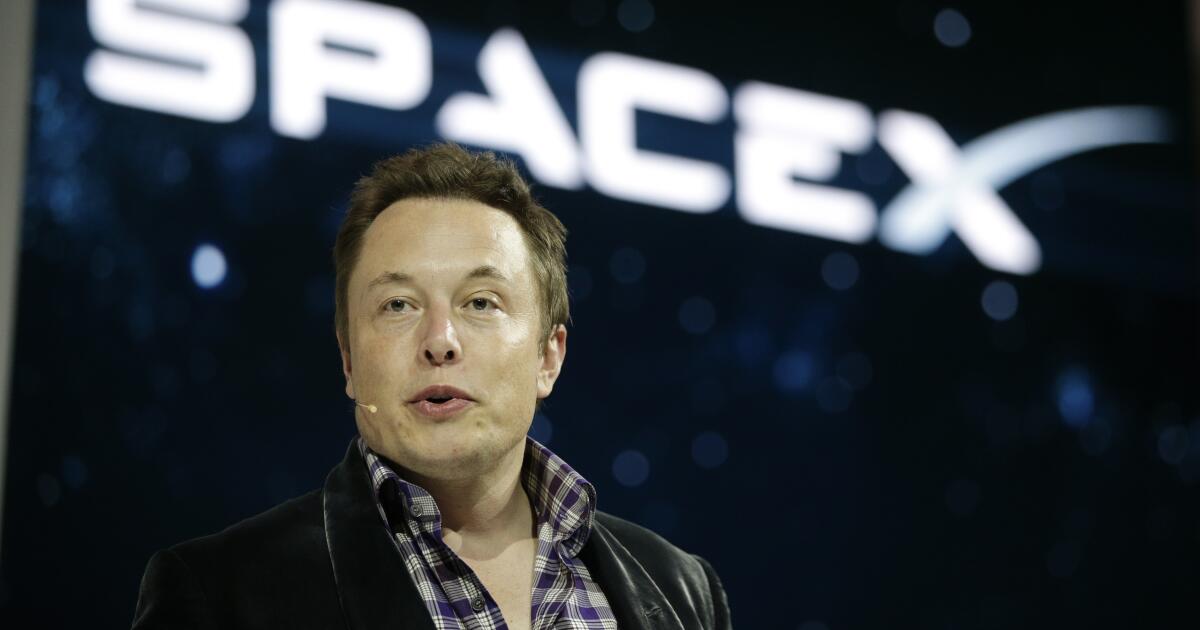
A recent policy change by NASA has given Elon Musk’s SpaceX a greater role in the Artemis moon program just as the company contemplates a record initial public offering.
When the first American crew since 1972 orbits around the moon this month, SpaceX’s stylized logo will be nowhere to be found — but it might as well be plastered everywhere.
Elon Musk’s rocket company is preparing what is expected to be the largest initial public offering in history, and it has as much, if not more, riding on NASA’s Artemis program as Boeing and the other contractors that built the SLS rocket that will blast the astronauts into space and the Orion capsule carrying them on their mission — a fly-by of our closest celestial neighbor.
Radical changes announced in February by new NASA Administrator Jared Isaacman to speed up the country’s return to the moon could make the program more reliant on SpaceX on future launches.
That includes using its massive Starship rocket to ferry crews and construction materials to the moon, where Isaacman said NASA now plans to build a research and exploration station as it faces competition from a joint China-Russian team.
SpaceX, which maintains a large presence in Southern California’s burgeoning aerospace sector, is readying an initial public offering possibly for this summer that is expected to be the largest in history, perhaps raising as much as $75 billion. It follows Musk’s merging of his xAI artificial intelligence company into his rocket company in February.
The funds would help pay for Musk’s equally giant if quixotic plans: building his own Moonbase Alpha colony, manufacturing millions of driverless cars and robots, and putting artificial intelligence data centers into space, using satellites that use solar energy to do AI computations.
Here’s what to know about what this means for SpaceX, which has large operations in Hawthorne and launches its workhorse Falcon 9 rockets from Vandenberg Space Force Base in Santa Barbara County.
How important is it for SpaceX that NASA is returning American astronauts to the moon?
Wedbush analyst Dan Ives calls the Artemis launch a “watershed” event for the company, which he expects will be a leader in the new space economy where trillions will be spent on artificial intelligence, space infrastructure and related businesses.
“The moon ultimately represents the golden goose for Musk and SpaceX,” he said. “It’s a fourth industrial revolution and we just happen to live in it.”
What plans does SpaceX have for the moon?
Musk has long said that his life’s ambition is to colonize Mars, but in February the world’s richest man posted on X that his company first planned to build “a self-growing city on the Moon, as we can potentially achieve that in less than 10 years.”
What would be the purpose of such a city?
A moon outpost would solve some of the same technological challenges a Mars colony would face without the same level of cost and risk, given how much faster and less expensive it is to reach the moon. Musk also has sketched out a futuristic vision of building AI data centers on the moon with the help of the company’s Optimus robots and catapulting them into space.
Catapulting data centers into space from the moon sounds like science fiction. How is that even possible?
At a February presentation, Musk said that the lower gravity of the moon would allow the satellites to be shot into space using a magnetic accelerator — what he called a “mass driver” — radically reducing the cost compared with Earth launches, in which rockets expend tons of fuel to escape gravity. “I want to just live long enough to see the mass driver on the moon, because that’s going to be incredibly epic,” he said. That timeline doesn’t even consider that SpaceX has yet to launch a data center satellite from Earth.
How does this fit into NASA’s plans?
In March, Isaacman announced the government’s own highly ambitious plans to spend $20 billion to start building a sustained human presence on the moon within seven years. While the SLS rocket would still lift the Orion capsule into Earth’s orbit, Artemis could now rely on the Starship rocket, still in its testing and development phase, to dock with the capsule in Earth’s orbit and ferry astronauts to the moon, where it would land the crew and building materials. A spacecraft being developed by Jeff Bezos’ Blue Origin could serve as another moon lander given the vast payload needed for a moon colony. The first crewed mission to the moon’s surface is planned for 2028.
How does this tie in to SpaceX’s IPO?
SpaceX has confidentiality filed for an IPO expected later this year sources told Bloomberg on Wednesday. It could value the company at $1.75 trillion, which would allow it to sell just a fraction of its shares yet still raise more than twice as much as the current largest IPO on record: Saudi Aramco’s $29.4-billion oil-and-gas offering in 2019. Given its massive size, SpaceX is in talks with at least 21 banks to sell the securities to investors, Reuters reported.
The company has a massive need for capital if it is going to pull off Musk’s dreams, which he said rely on vast numbers of AI chips. In February, he announced the construction of a giant chip fabrication plant in Austin, Texas, because of a lack of supply from existing chipmakers.
How are financial markets reacting to Musk’s plans?
The IPO has drawn huge attention given its size and SpaceX’s prospects for growth.
“As an investor, I’m excited. As a human being, I’m excited. It’s just opening a whole different world, a universe, essentially, that we were not exposed to before. We went to the moon over 50 years ago, and that was it. Nothing has happened really since then,” said Mike Alves, founder of Pasadena’s Vida Vision Fund, which has a stake in SpaceX and xAi that accounts for 45% of his AI and robotics fund.
An analysis of the IPO by PitchBook assigns no revenue to Musk’s AI data centers or his Moonbase Alpha plan but estimates that the company earned $7.5 billion in profit last year on nearly $16 billion of revenue from its Starlink satellite network, commercial launch services for third parties and other businesses.
It estimates that growth from the company’s Starlink internet, launch and nascent satellite phone service could boost profit to $60 billion and revenue to $150 billion by 2040 — making an IPO that values the company at $1.5 trillion “expensive but not irrational.”
Are there skeptical voices about SpaceX and its IPO?
Yes, plenty. There are technological hurdles for SpaceX to carry out its plans. Most immediately, the Starship rocket that NASA is relying on — even bigger than Apollo’s Saturn V — has suffered some bad test flights. SpaceX also must master a key technological hurdle: refueling the rocket while it’s in Earth’s orbit so it has enough fuel to carry out its flight to the moon, land there and return to Earth. Beyond that, Musk’s plans to manufacture millions of chips and robots aren’t close to becoming a reality.
“There is an AI-hungry market at the moment and there’s a lot of investors waiting for those opportunities to happen,” said Igor Pejic, author of “Tech Money.” “But you face the likelihood that it might never happen, or it might happen in three years, five years, 10 years from now.”

Since the end of February, the three major stock market indices — the Standard & Poor’s 500, the Dow Jones industrials and the Nasdaq composite — have fallen by a few percentage points.
One might ask: That’s all? Doesn’t the market know there’s a war on?
Yes, the stock market knows. It just doesn’t care as much as you might think it should.
It feels like this drawdown should be worse than this given everything going on in the world.
— Ben Carlson
History tells us that we shouldn’t be all that surprised. Although geopolitical events like the launch of military actions tend to rattle the securities markets in the short term, investors eventually shift to the long view, assuming that these conflicts will eventually be resolved and the door reopened to bullish sentiment.
The major downturns of the past, such as the crashes of 1929, 2000 and 2008, have been caused less by external events than by business and investment internals, such as threats to economic structure — over-leveraging in the first, the dot-com crash in the second and the housing crash in the third. Those were genuine crashes, not short-term downturns.
The Iran war hasn’t yet taken on the coloration of an economic threat, although that bulks large on the horizon if the disruption of oil supplies created by the closing of the Strait of Hormuz continues or tightens or the Middle East energy infrastructure sustains more damage.
Indeed, two of the most severe downturns of recent times are associated with oil — the Arab oil embargo of 1973, following the Yom Kippur War, which brought the S&P 500 down by more than 16% over a period of about six weeks, and Iraq’s seizure of Kuwaiti oilfields in 1990, which caused a 16% drop in the S&P over about two months.
Let’s take a look at the condition of the stock market since the U.S. attacks on Iran began on Feb. 28, and then place it in the context of market behavior after other major events, dating back to the start of World War II.
From Feb. 28 through Thursday’s trading close, the S&P lost 4.31%, the Dow, 5.05% and the Nasdaq, 3.57%. Those declines feel ugly, in part because they’ve occurred over a short time frame of about five weeks. But in the grand scheme of things, they’re modest.
“It feels like this drawdown should be worse than this given everything going on in the world,” Ben Carlson of Ritholtz Wealth Management posted last week. But Carlson observed that 5% pullbacks are common, in good times and bad — only three years since 1990 have gone without one.
There were two each in 2023, 2024 and 2025, which all ultimately delivered double-digit S&P returns. None, obviously, came close to the 10% pullback known as a correction, which by Carlson’s reckoning occurs on average every 1.8 years.
The latest pullbacks have come with the stock market percolating along at historically generous valuations. This year, the S&P’s price-earnings multiple has hovered around 30x, well above its historical average of less than 20x. That alone should have had investors bracing for a reversal or even a correction.
When similar events occur during bull markets, external events are often a trigger rather than a cause. Investors look for reasons to take profits, even though the rationales may have nothing to do with the market action.
To place things in a longer perspective, let’s review how the stock market has reacted to great global events of the past. (Thanks to Ryan Detrick of the financial advisory firm Carson Group for compiling these statistics.)
The Pearl Harbor attack of Dec. 7, 1941, brought the S&P down by 11% over the following three months — but one year later the market was up by 4.3%. One month after Richard Nixon’s resignation on Aug. 9, 1974, the market was down by 14.4%; one year later it was up by 6.4%. The market entirely shrugged off the Cuban missile crisis, the Kennedy assassination, the Hamas attack on Israel on Oct. 7, 2023, and Russia’s 2014 annexation of Crimea and its 2022 invasion of Ukraine; none was associated with a market decline over the following month.
Even when events did precede a market decline, stocks often recovered within weeks or months. North Korea’s invasion of the South in 1950, launching the Korean War, took the market down 12.9% over the next two weeks, but as Kelly Bogdanova of RBC Wealth Management documents, it made up the loss over the next 56 trading days. Similarly, the Russian invasion of Ukraine in February 2022 is blamed for a 7.4% decline over the following two weeks, but the market broke even 27 trading days later.
Bogdanova notes that after the 1990 Kuwait invasion, which knocked the market down by 16% over seven weeks, the market didn’t break even for an additional four months. But that was oil talking.
The current market environment may be unique, because it’s entirely in the hands of one reckless individual. As the late Michael Metz of Oppenheimer & Co. taught me, the stock market typically rises in times of economic growth and economic downturns, as long as investors know where things stand on the turn of the wheel.
What they hate is uncertainty, and no one revels in squeezing uncertainty until it screams for mercy like Trump. Consider how the market got whipsawed by his announcement of “Liberation Day” tariffs, a faux-protectionist stunt that took place on April 2, 2025, and therefore marked its one-year anniversary Thursday.
The draconian tariffs were announced, amended, partially withdrawn, reimposed, etc., etc., until investors got queasy on the merry-go-round. The Supreme Court finally put a stop to the shenanigans on Feb. 20.
One month after the initial announcement, investors still didn’t know what to make of it. The S&P was virtually flat, the Dow had lost 2.15% and the Nasdaq was up 2.1%. Since then, investors have learned enough about Trump’s decision-making to disregard the chatter. (This is the TACO trade, for “Trump Always Chickens Out,” in action.) As of Thursday, the S&P had gained 13.7% since Liberation Day, the Dow was up 9.1% and the Nasdaq was up 19.3%.
The Iran war is driving a whipsaw all its own. The market has been rising and falling in accordance with whether investors buy into Trump’s optimism or grow downcast at the absence of any endgame, a judgment that can change minute by minute. But it has remained in a tight range of 3 to 5 percentage points.
The latest week provides a good illustration: Tuesday saw shares turn in their best day in months, with the Dow gaining 1,125 points, or 2.49%, and the other indices roughly matching its performance.
But on Thursday, the stock index futures markets plummeted after Trump’s vacuous address to the nation, ostensibly due to disappointment that he didn’t provide an ending date or show that he knows what he’s doing. Yet investors didn’t show the same anxiety once trading started, sending the indices into a sort of fugue state. The S&P gained a meager 7.37 points, or 0.11%, the Dow lost 61.07 (0.13%) and the Nasdaq gained 38.23 points (0.18%), all on volume a fraction of what it has been in recent weeks. The trading range held.
It’s possible, of course, that the market will be stirred out of its slumber by a major development. A ceasefire, say, or something bad. Or that the Iran war will transition to a new phase that makes it resemble the oil embargos of the past rather than a transitory disruption of the status quo. We won’t know until it happens.
Until then, the average investor’s choice is between moving everything into cash, or strapping in for the ride.
Business
Consumers aren’t clicking the PayPal button. It’s a big problem for California’s fintech pioneer

PayPal, once the cutting-edge trailblazer of digital payments, is struggling to cash in on consumer clicks like it used to.
The San José fintech giant is losing market share to competitors and had to swap out its leadership recently as its shares plunged, and it scrambled for a faster fix.
When online shoppers reach the checkout screen, they’re not clicking on the PayPal button to buy items as much as they did in the past. People have payment options from Apple, Google and others, some of which are easier to use on their smartphones.
A slowdown in PayPal’s branded checkout is at the core of the company’s biggest challenges, analysts and company executives said.
In February, PayPal let go of its chief executive, who had been working to fix the problem, but the company said his “pace of change and execution” over two years didn’t meet the board’s expectations.
In the fourth quarter, PayPal’s online branded checkout growth slowed to 1%. The company reported an adjusted profit of $1.23 per share on revenue of $8.68 billion, missing Wall Street’s expectations.
Since January, PayPal’s stock price has fallen by more than 20%.
“The problem is that transition and push for branded checkout really has not paid off,” said Grace Broadbent, a senior analyst of payments for eMarketer.
PayPal attributed the slowdown partly to the “K-shaped economy,” in which wealthier Americans see their incomes rise while lower-income Americans struggle financially. PayPal has many middle-income customers and some lower-income customers, so a pullback in spending affects use of its payments platform.
Other factors that have hurt it recently include product execution and a hit in high-growth areas such as crypto, gaming and ticketing.
The slowdown raised questions about whether PayPal’s turnaround efforts were working. The company makes most of its money by charging fees for payment services.
“The vast majority of PayPal’s profits come from the branded checkout button,” said Mizuho analyst Dan Dolev. “The yield they get when you click on the branded checkout button is multiples of any other product that they have.”
Now the pressure is on Enrique Lores, who became PayPal’s president and chief executive in March, to get the company back on track. Lores was on PayPal’s board for nearly five years and came from computer and printer maker HP, where he served as chief executive. PayPal is investing $400 million to improve and grow branded checkout this year.
“The payments industry is changing faster than ever, driven by new technologies, evolving regulations, an increasingly competitive landscape, and the rapid acceleration of AI that is reshaping commerce daily,” Lores said in a February statement. “PayPal sits at the center of this change, and I look forward to leading the team to accelerate the delivery of new innovations.”
PayPal has seen growth in its subsidiary Venmo, a social mobile payment app, and its buy-now-pay-later services. The company is scheduled to report its first-quarter earnings in May.
“They’re going through some hard times, but I still think there’s a lot of value in PayPal,” Dolev said. “Not that many companies out there that have this kind of moat, which is a global wallet that everyone recognizes.”
Before PayPal transformed into a multibillion-dollar company with 23,800 employees and 439 million active consumer and merchant accounts across roughly 200 markets, the startup weathered a lot of change.
Founded in 1998 under a different company name by Max Levchin, Peter Thiel and Luke Nosek, the startup initially focused on security software for handheld devices before shifting to digital payments.
After merging with Elon Musk’s online bank X.com, the company was renamed PayPal. The platform made it possible for people to securely send money digitally using their email address, which was easier than writing up a check or filling out a money order.
PayPal went public in 2002 and shortly after EBay acquired the startup for $1.5 billion. In 2013, PayPal acquired the fintech company Braintree, which owned the social payment service Venmo, giving PayPal an edge in mobile commerce.
Two years later, it became an independent company when it split from EBay.
PayPal’s founders and early employees, dubbed the “PayPal Mafia” by Fortune magazine in a 2007 story, would go on to invest or build successful Silicon Valley companies.
During the COVID-19 pandemic in 2020, PayPal was flying high. People spent a lot of time stuck at home and online shopping skyrocketed. PayPal’s stock price peaked in July 2021, but has plummeted since then.
Over the last five years, its share price has dropped more than 80%.
“Now the industry is maturing, so there’s less growth to go around,” Broadbent said.
The competition is heating up, especially in the United States.
PayPal’s core users in the United States are projected to grow by fewer than 1% year-over-year to 92.1 million in 2026, eMarketer forecasts. Nationwide, Apple and Google are expected to see their digital wallet users grow more, reaching 90.5 million and 55 million U.S. users, respectively.
Apple Pay is popular among Gen Z and makes it easy to pay by double-clicking the side of their phone.
“They do so much more shopping on their phone than ever before, so Apple Pay is ingrained in their iPhone,” Broadbent said.
Google has also integrated its payment service into products such as its browser, Google Chrome. Then there are more buy-now-pay-later services that people are taking advantage of as they spread out their spending on expensive items.
Other challenges are on the horizon for payment services.
Tech companies are contending with the rise of artificial intelligence, which could disrupt the way people shop. Tech executives have talked about a future in which AI agents will shop and buy items on behalf of consumers, with their approval.
Last year, PayPal teamed up with AI company Perplexity so people could use its service to purchase products from retailers such as Abercrombie & Fitch and Ashley Furniture within Perplexity’s chat interface.
“That’s a future challenge for PayPal that opens up a lot of different dynamics of who’s gonna win,” Broadbent said.

Map: Minor Earthquake Strikes Near San Diego

Video: Trump Escalates Threats to Devastate Iran

Video: Watch Live: Artemis II Mission

Can You Name These Novels Based on Their Characters?

Even when Arsenio Hall’s show was a hit, ‘everyone wanted it to be something else’

Florida High School Football Rankings: Top 25 teams – Oct. 21

How old is Bo Nix? What to know about Oregon quarterback ahead of 2024 NFL Draft

Cleary's 21 help Le Moyne down Central Connecticut State 69-64 in OT

99th annual Pony Swim held in Virginia

Indiana Members Credit Union announced as new anchor tenant at Bottleworks District
Map: Minor Earthquake Strikes Near San Diego

Trump claims he’d win as the president of Venezuela — just needs to ‘quickly’ learn Spanish

US Supreme Court clears path for Steve Bannon criminal case dismissal
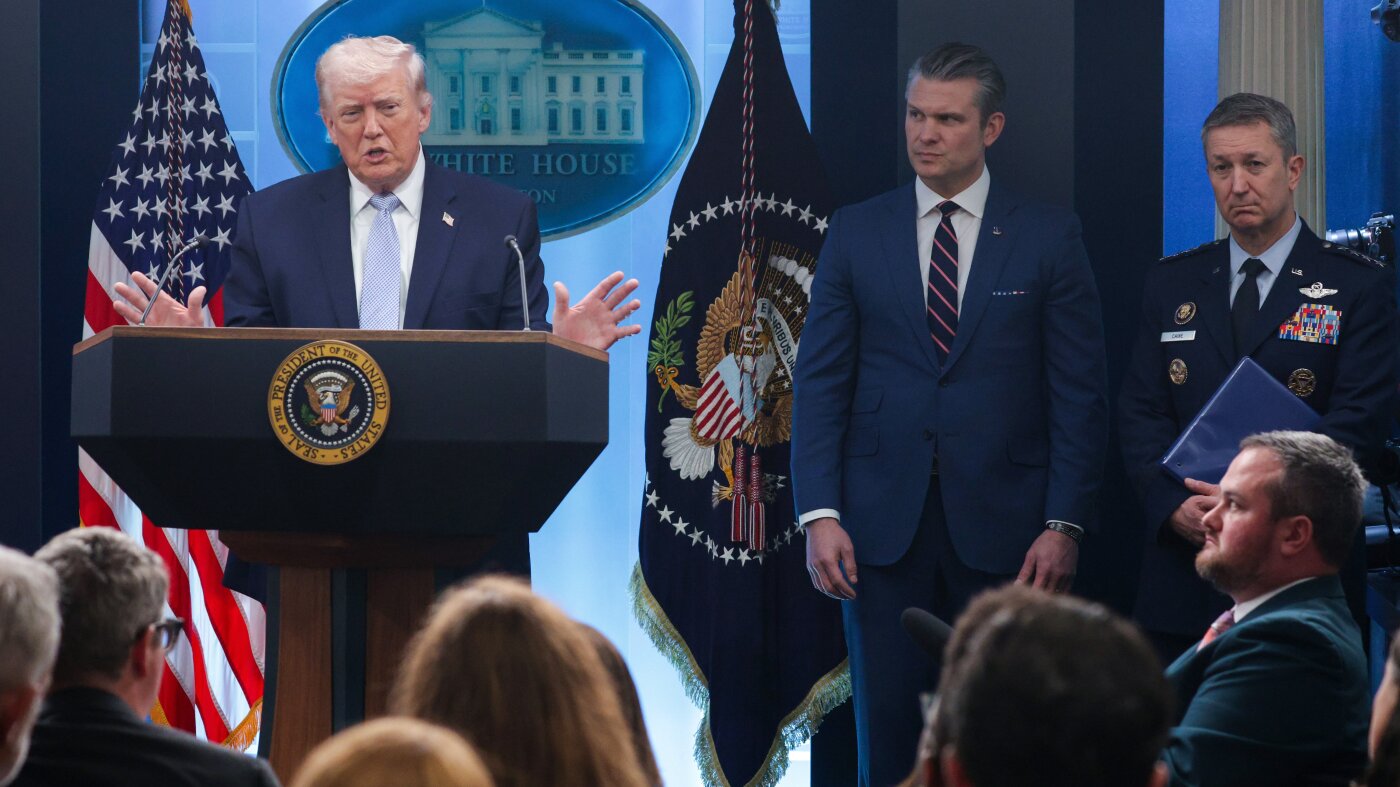
Trump reiterates threats to bomb Iran’s power plants and bridges

Trump threatens Iranian infrastructure over Strait of Hormuz | BBC News
-

 South-Carolina1 week ago
South Carolina vs TCU predictions for Elite Eight game in March Madness
-

 Atlanta, GA2 days ago
1 teenage girl killed, another injured in shooting at Piedmont Park, police say
-

 Vermont1 week ago
Skier dies after fall at Sugarbush Resort
-

 Movie Reviews5 days ago
Vaazha 2 first half review: Hashir anchors a lively, chaos-filled teen tale
-

 Politics1 week ago
Trump’s Ballroom Design Has Barely Been Scrutinized
-

 Atlanta, GA1 week ago
Fetishist ‘No Kings’ protester in mask drags ‘Trump’ and ‘JD Vance’ behind her wheelchair
-
 Entertainment5 days ago
Inside Ye’s first comeback show at SoFi Stadium
-

 Politics1 week ago
JD Vance says he was ‘obsessed’ with UFOs, believes aliens are actually ‘demons’