Business
Column: Two key antiabortion studies have been retracted as junk science. Will the Supreme Court care?

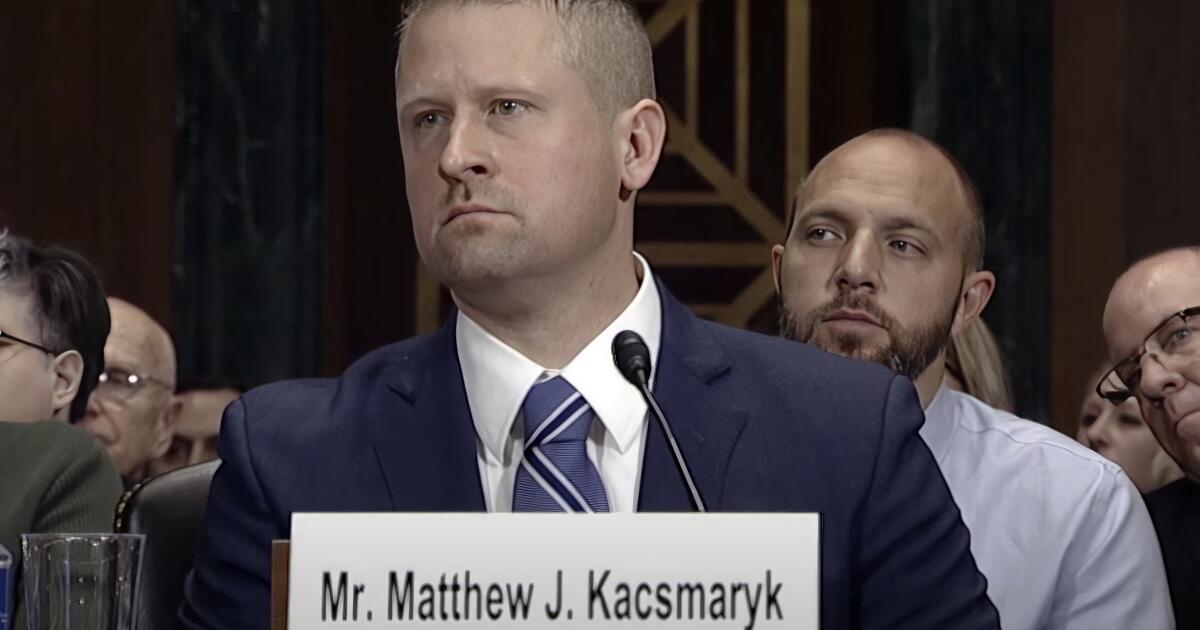
If the effort to ban medication abortion now before the Supreme Court demonstrates anything, it’s that the damage caused in our society by junk science can be disastrous indeed.
That’s the implication of the retraction of two scientific studies, announced Monday by the journal publisher Sage. The studies provided the purported rationale for a Texas federal judge’s ruling overturning the approval of the abortion drugs by the Food and Drug Administration.
It’s impossible to overstate the potential ramifications of the ruling issued April 7 by federal Judge Matthew Kacsmaryk of Amarillo, Texas, which invalidated FDA approvals of the drug mifepristone dating back to 2000.
Experts identified…unjustified or incorrect factual assumptions, material errors in the authors’ analysis of the data, and misleading presentations of the data that…demonstrate a lack of scientific rigor and invalidate the authors’ conclusions in whole or in part.
— Retraction notice of research on mifepristone
Kacsmaryk’s ruling was the basis for an outstandingly loopy decision by the U.S. 5th Circuit Court of Appeals on Aug. 19, which narrowed his ruling somewhat but not entirely. The Supreme Court has scheduled oral arguments on the case for March 26.
The worst-case scenario is that the Supreme Court will follow Kacsmaryk in revoking the FDA’s approval. That would block access to what has become the most common abortion method in the U.S. Providers would have to shift to other medications that are not as effective as mifepristone.
The court could also narrow the reach of the FDA’s actions in 2000, when it declared mifepristone safe and effective, and in 2016 and 2021, when it allowed patients to order the drug online and receive it by mail or from pharmacies rather than at doctors’ offices.
The court could restore previous rules limiting the use of mifepristone to the first seven weeks of gestation instead of the current 10 weeks. It could require that it be administered only through a physician’s prescription and only directly by doctors.
The damage could go further. An expansive Supreme Court ruling could cripple the FDA’s authority to determine the safety and efficacy of drugs and subject its judgments to increasingly partisan challenges. It could bring an antique, long-disregarded 150-year-old antipornography law to legal prominence.
Let’s start at the beginning, with Kacsmaryk’s 2023 ruling. As I’ve reported in the past, Kacsmaryk’s jurisprudence has been a blot on the judicial system since he joined the court in 2019 as a Trump appointee. Kacsmaryk is the only federal judge in the Amarillo district of the federal court in the Northern District of Texas.
That has made his courthouse a favored venue for right-wing litigants. A former functionary of a conservative Christian legal group, he has been a dependable foe of efforts to protect LGBTQ+ legal rights and access to contraceptives.
His record made him the ideal judge for a coalition of antiabortion groups including the American Assn. of Pro-Life Obstetricians & Gynrecologists and the Christian Medical & Dental Associations waging an attack on medication abortion.
Kacsmaryk’s April 7 ruling bristled with antiabortion terminology such as the terms “unborn human” and “unborn child”; abortion providers were labeled “abortionists.” By contrast, a ruling protecting access to mifepristone issued the same day by federal Judge Thomas Owens Rice of Washington state, an Obama appointee, used neutral language, such as a reference to “institutions and providers who provide abortion care.”
Kacsmaryk accepted common talking points of the antiabortion movement as legal conclusions. He cited the Comstock Act, an antipornography law enacted in 1873, no fewer than 29 times. He accepted as read the antiabortion movement’s contention that it barred the shipment of mifepristone through the U.S. mail, even though federal courts had rejected that interpretation for more than 100 years.
He questioned the FDA’s judgment that the drug was safe and effective, despite overwhelming evidence to the contrary. The core of Kacsmaryk’s findings questioning the FDA’s approval of the drug came from two studies led by James Studnicki, director of data analytics at the Charlotte Lozier Institute, which says in the mission statement on its website that it “advises and leads the pro-life movement with groundbreaking scientific, statistical, and medical research.”
Among the institute’s principal aims is “to warn women about the dangers of chemical abortion and expose the harms of the FDA’s current abortion pill policy that simply ignores the known risks.”
Kacsmaryk cited the Studnicki papers to endorse the plaintiff organizations’ conclusions that adverse reactions to mifepristone could “overwhelm the medical system and place ‘enormous pressure and stress’” on doctors due to “significant complications requiring medical attention,” and that women taking the drug were reporting to emergency rooms at much greater rates than those who had undergone surgical abortions.
Sage’s retraction notice explodes those claims. The papers were published in 2021 and 2022 in Sage’s Health Services Research and Managerial Epidemiology journal. (A third Studnicki paper published in 2019 but not cited by Kacsmaryk was also retracted.)
Sage’s inquiry was triggered by Chris Adkins, a pharmaceutical sciences professor at South University School of Pharmacy in Savannah, Ga.
Among the flaws Adkins pointed to was that one study appeared to inflate claims about adverse reactions to the drug by failing to distinguish ER visits for routine complaints from those due to the drug. Nor did the Studnicki research factor in the increases in medication abortions starting in 2000 or the increase in Medicaid enrollments in the same period, which was a factor in the growth of medication abortions.
Sage said that in its pre-retraction review, “experts identified fundamental problems with the design … and methodology” of the questioned papers, as well as “unjustified or incorrect factual assumptions, material errors in the authors’ analysis of the data, and misleading presentations of the data that … demonstrate a lack of scientific rigor and invalidate the authors’ conclusions in whole or in part.”
Sage also noted that the papers declared that the authors had no conflicts of interest in researching and writing the papers. In fact, all but one of the authors of the studies Kacsmaryk cited were affiliated with the Charlotte Lozier Institute, the American Assn. of Pro-Life Obstetricians and Gynecologists, or the Elliot Institute, which are antiabortion advocacy organizations. Although the authors had disclosed their affiliations, Sage reported, they had not acknowledged that these posed a conflict.
Studnicki objects to the retractions, responding that the action is “unjustified” and that his data are “accurately reported.”
Kacsmaryk’s ruling has caused immense confusion in the administration of mifepristone. The 5th Circuit appeals court overturned his rejection of the FDA’s original 2000 conclusion that mifepristone is safe and effective, but upheld his overturning of the FDA’s loosening of restrictions on the use of the drug issued in 2016 and 2021. It stayed injunctions on those uses until the Supreme Court rules, however.
The appeals court opinion featured one of the more curious flights of fancy by a federal judge — a separate opinion by Appellate Justice James C. Ho, another Trump appointee. He advocated overturning the 2000 FDA approval as well as the 2016 and 2021 revisions, on the grounds that abortions cause “aesthetic injury” to doctors forced to participate in the procedure, even if only by treating patients for adverse reactions.
“Unborn babies are a source of profound joy for those who view them,” Ho wrote. “Doctors delight in working with their unborn patients — and experience an aesthetic injury when they are aborted.”
The real injury that could arise from the Supreme Court’s consideration of mifepristone would be to the use of science to validate judicial opinions by substituting junk science for rigorous research.
More than 20 years of medical practice has established that the drug is safe and effective for its purpose — indeed, safer than many other drugs in common use in the U.S. Revoking its approval would be based on no scientific evidence at all, only on politics. And that won’t be good for anyone.



Dear Mr. Pelley:
I meant what I said in my letter last week to the 60 Minutes team: joining 60 Minutes is the honor of my career and I am grateful to be working alongside the people who have contributed to the most important television journalism brand this country has ever produced. While I’m new to 60 Minutes, I’ve devoted my career to investigative journalism and storytelling. I started this job excited to collaborate and to benefit from the wisdom and experience of the 60 Minutes veterans, with you among them. For that reason, one of the first things I did in my new role was call you to talk and invite you to dinner. It is a profound disappointment that you rejected that overture and chose ambush instead. Yesterday, you hijacked my first meeting with staff to disparage me, my qualifications, and my intentions with remarkable incivility and contempt. I welcome a diversity of viewpoints and respectful debate among the team, but this was nothing of the sort. Yesterday’s performative display of hostility enacted in front of the staff instead of in a civil, private conversation-demonstrated that you have no interest in contributing to the future success of the show, or approaching my new tenure with a mind open to collaboration and progress. I am here to deliver first-in-class news programming, not to make headlines about newsroom drama. I am eager to work alongside those who share this goal.
Despite yesterday’s misconduct, I had hoped that in sitting down with you today we could find a path forward together. You made clear that you are not interested in such a path.
Your antipathy to the future of the show has come through loud and clear. And I have heard you. I therefore write on behalf of CBS News, Inc. (“CBS”) to inform you that your employment with CBS is terminated for cause effective immediately. Enclosed is your formal termination letter.
Sincerely,
Nick Bilton
Executive Producer, 60 Minutes

The co-founder of Aspiration, Joseph Sanberg, was sentenced to 14 years in prison on Monday after defrauding investors and lenders of over $248 million.
The startup, an eco-friendly digital banking company boasting fossil fuel-free investments, carbon offsets for gas purchases, and a debit card with cash-back benefits for shopping at clean companies, was founded by Sanberg and Andrei Cherny. Cherny left the company in 2022 and has not been charged.
Sanberg, an Orange County native, pleaded guilty to wire fraud in October after being arrested in March last year. Aspiration subsequently filed for bankruptcy and liquidated all of its assets by July.
Sanberg and venture capitalist Ibrahim AlHusseini, who also faces charges, together forged a series of bank statements in order to obtain loans. From 2020 to 2021, the pair forged AlHusseini’s bank statements to show millions of dollars in assets in order to obtain millions of dollars from lenders.
Additionally, they forged a letter from their audit committee stating that $250 million in funds were available, when in reality Aspiration had less than $1 million. The amount of loans defrauded exceeded $248 million.
In 2021, Sanberg artificially inflated Aspiration’s 2021 revenue by $44 million by recruiting 27 fake customers to sign letters of intent pledging tens of thousands of dollars per month for tree planting services. Sanberg himself funded the contracts and used the inflated revenue numbers to obtain more loans.
The charges sparked an NBA investigation into salary cap allegations due to Aspiration’s connections with Clippers owner Steve Ballmer.
Ballmer personally invested $60 million in Aspiration, all of which was lost. He is now the target of a civil lawsuit alleging his participation in the scheme. Ballmer denies the allegations.
The team announced a $300-million sponsorship deal with Aspiration, and Clippers player Kawhi Leonard signed a four-year, $28-million marketing contract with the company, which reportedly performed no duties. The issue has raised concerns about how players are circumventing the NBA’s salary cap.
The team lost the $300-million sponsorship deal and an additional $20 million paid for carbon offset purchases.

Residents in the city of Monterey Park will be the first in the nation to vote on a permanent ban on data centers Tuesday.
If approved, Measure NDC would prohibit data centers within the city limits and could only be overturned by another vote.
Yard signs saying “No Data Center” in English and Chinese with images of dragons line sidewalks in the San Gabriel Valley city.
As a wave of data center opposition sweeps the country, numerous towns and counties across the U.S. have instituted temporary moratoria and other restrictions on the facilities. But only a handful have instituted indefinite bans, and just four other towns have sent related matters to the ballot.
Supporters are hoping the vote will set a precedent for the rest of the region, where residents are fighting proposals in Vernon and City of Industry.
“This is about as permanent a ban as we can get,” said Steven Kung, co-founder of the group No Data Center Monterey Park. “Winning Measure NDC would send a huge message to the rest of the San Gabriel Valley about how residents don’t want data centers.”
The ballot measure emerged from the fight against a 247,000-square-foot center proposed in 2024 by the Australian-owned investment firm HMC StratCap for a residential area in Monterey Park.
The facility would have sat less than 500 feet away from the nearest home and used three times the electricity of the 60,000-person, predominantly Asian American city.
While the developer touted the potential for jobs and tax revenue, residents expressed concerns about noise and air pollution, rising electricity rates and a potential to lower property values.
The company pulled its plans in late March following public outcry and a March 4 city council vote to extend a temporary data center moratorium and place a ban on Tuesday’s ballot.
In a letter to the city council, HMC StratCap said it would pursue a different use for the land and would not engage in a ballot measure fight.
The city council later banned data centers indefinitely, the first in California to do so, said Mayor Elizabeth Yang. But she’s still been out campaigning for the measure with all four other council members.
“If a council puts in an ordinance, a future council can reverse it too,” said Yang. “With the ballot measure, unbanning it is a lot harder because you need the entire city to vote on it.”
The measure proposes the ban “to protect air quality, drinking water resources, and public health” and “prevent impacts to electricity and water rates.”
While California places third in the country for existing data centers with about 300 facilities, it hasn’t been a hot spot in the recent AI-driven data center boom. High electricity rates, expensive land and regulatory hurdles mean that fewer, and smaller, facilities are currently planned than in Virginia, Texas, Georgia, Illinois or Arizona.
“Most of California’s data centers are small by today’s standards,” said Shaolei Ren, an engineering professor at UC Riverside who studies how to reduce the environmental impacts of data centers. “Ten years ago, they would be medium-sized, but the power demand for new AI data centers has increased a lot.”
The average operating data center demands 45 megawatts, according to the Washington Post, while the average planned one would draw 430 MW. The one proposed for Monterey Park would have required about 50 MW at peak demand.
As proposals crop up in SoCal, they’re met with fierce opposition. Montebello, El Monte and Baldwin Park have all enacted temporary moratoria, and Alhambra recently banned data centers as part of a zoning code update. City of Industry, Vernon, City of Commerce and Santa Fe Springs are moving in the other direction, trying to court developers and streamline data center approvals. Community groups are fighting that.
Outside the San Gabriel Valley, residents of Coachella and Imperial County are showing up in droves to protest local proposals.
Matthew Shaw, a volunteer with the Coalition for Responsible Data Center Development, who recently published a report on opposition to AI data centers, said a vote to ban them in Monterey Park “would lead to copycats, partially because so many groups are just opposed to any data center development at all.”
While there is no formal opposition to Measure NDC, some building trades like Ironworker Local 433 supported the Monterey Park data center when it was still live before city council. Those in the data center industry are lamenting the state of public opinion.
“These are multi-billion-dollar assets that are built by multi-trillion-dollar companies. These things will get done,” said Mehdi Paryavi, chairman of the International Data Center Authority. “My biggest problem is that our industry does not invest enough in community engagement.”
Paryavi said towns that seek to limit data centers are missing out on thousands of jobs generated by data center construction, operations and customers, as well as faster artificial intelligence speeds and better performance.
Kung said local community organizers are “looking at the empirical evidence” and seeing a ban as a win.
“We’ve never seen a city that embraces a data center and is like, ‘Look how our quality of life has increased, look how all the revenue has gone into citywide improvements,’” he said. “That just doesn’t exist.”
-

 San Diego, CA49 seconds ago
Morning Report: Runoffs Largely Set
-

 Milwaukee, WI6 minutes ago
MPS staffer who got plea deal in slapping case had earlier incident
-

 Atlanta, GA13 minutes ago
19 new metro Atlanta restaurants opened in May, but 11 closed
-

 Minneapolis, MN16 minutes ago
Motorcyclist seriously injured in north Minneapolis hit-and-run
-

 Indianapolis, IN21 minutes ago
New stores in Indianapolis include indoor kid’s playground, cafe
-

 Pittsburg, PA28 minutes ago
Blanche says DOJ
-
Augusta, GA31 minutes ago
Amy Elizabeth Black Obituary May 29, 2026 – Platt’s Funeral Home
-
Washington, D.C31 minutes ago
Sherry Abedi has been appointed as General Manager at LINE DC


