Governor Peninsula – Episode 11: Nancy has abandoned her dream of running for the Den, but as it turns out she has a big job to do. #akleg pic.twitter.com/RzYuovx3Kl
— The Alaska Landmine (@alaskalandmine) June 15, 2026
Alaska
Addressing marine debris and harmful algal blooms


Dear Alaskans,
As the state with more coastline than the rest of the country combined, Alaska has a direct stake in the health of our oceans, fisheries, marine ecosystems, and coastal communities. For this reason, I have supported numerous federal programs and legislative efforts that strengthen ocean research, improve marine debris response, protect coastal communities, and support the Alaskans whose livelihoods depend on healthy oceans.
A critical issue that has been a particular focus of my work in this space is marine debris. Marine debris—especially plastics and other forms of ocean pollution—poses a serious threat to coastal ecosystems, marine life, and our coastal communities that depend on healthy oceans. To address this challenge, I authored the Save Our Seas Act, signed into law in 2018, and the Save Our Seas 2.0 Act, signed into law in 2020. SOS 2.0, which I worked closely on with Senator Sheldon Whitehouse of Rhode Island, is the most comprehensive ocean debris legislation ever passed by Congress. SOS 2.0 also established the congressionally chartered Marine Debris Foundation, which is now headquartered in Juneau.
Building on this work, my SOS 2.0 Amendments Act was signed into law in December 2025, strengthening the Marine Debris Foundation and reauthorizing NOAA’s Marine Debris Program. I am also working to pass my Save Our Seas 2.0 Marine Debris Infrastructure Programs Reauthorization Act, which would reauthorize proven Environmental Protection Agency grant programs that combat plastic waste and microplastics. At the same time, I am developing SOS 3.0 to build on the success of the first two Save Our Seas laws.
Another serious threat to Alaska’s coastal resources is harmful algal blooms. HABs can endanger marine life, damage coastal ecosystems, threaten commercial, recreational, and subsistence fisheries, and put the health and well-being of Alaskans at risk. That is why I introduced the Harmful Algal Bloom and Hypoxia Research and Control Amendments Act to reauthorize and strengthen the original 1998 law. This legislation will help ensure communities have access to HABs observation data, monitoring and mitigation training, and testing for HABs toxins. The bill passed the Senate in September 2025.
To build on these specific issues, as well as support additional oceanographic programs in our state, I continue to support the NOAA Sea Grant Program and the Integrated Ocean Observing System, two important programs that strengthen ocean research, coordination, and public-private partnerships. I am a cosponsor of legislation to reauthorize these programs, and I support robust funding for both programs every year.
There is more work to do to address plastic pollution, marine debris, and harmful algal blooms in Alaska and around the world. I will continue working with colleagues on both sides of the aisle to advance practical, lasting solutions. The health of our oceans, fisheries, and marine life should never be a partisan issue—it is a responsibility we all share.
Sincerely,

Dan Sullivan
United States Senator


Just five days remain until the end of the special session Governor Mike Dunleavy (R – Alaska) called for his gasline bill. The House overwhelmingly passed their version of the bill on Friday (6/12/2026) afternoon. The Senate is coming in tomorrow to receive the House bill, which will be referred to the Senate Finance Committee. It’s not clear what will happen with such little time left and factoring in the Senate has very different ideas than the House on the bill. After opening an investigation, the Division of Elections has determined that Dan Sullivan of Petersburg (Decoy Dan) is ineligible to challenge Senator Dan Sullivan (R – Alaska). The matter may ultimately be decided by the courts if Decoy Dan decides to go that route. The June 27 withdrawal deadline for the primary is 13 days away. And just over two months remain until the August 18 primary!
A friendly message and reminder to all our readers. The Landmine is made possible by myself and a team of awesome Alaskans. I have been covering the legislative session in Juneau for the last seven years and finished my eighth session in May. I am here now covering the end of the special session. We will be covering all the 2026 Alaska elections in-depth. If you enjoy the content we provide, please consider making a one time or recurring monthly donation. You can click here to donate. We have a system that makes it super easy. We would really appreciate it. And thanks to everyone who has been supportive.
Check out the eleventh episode of Governor Peninsula! In this episode, after deciding not to run for the Den, Nancy finds out she has a big job to do. And make sure to tell us what you think.
Gasline bill overwhelmingly passes House, faces uncertainty in Senate
The following is an excerpt from this week’s special edition of the Alaska Political Report. You can click here for more information about the Political Report. A subscription is $1,299/year per organization. Discounted pricing is available for non-profits and government entities. Our coverage of the budget starts with the governor’s proposed budget, and we track everything in detail through the entire process. If you have any questions or would like to subscribe, please email jeff@akpoliticalreport.com.
The House overwhelmingly passed their version of the gasline bill, House Bill 381, early Friday afternoon by a vote of 34-5. This came after hearing only four amendments – one of which was withdrawn, two of which failed, and one passed that was a cleanup amendment.
The bill was the result of work done in the House Finance Committee over the last several weeks. Several amendments were adopted in the finance committee last week, including many conceptual amendments that were done on the fly. This made it difficult to properly analyze all of the changes made to the bill in the finance committee. Here are some highlights:
- Alternative Volumetric Tax (AVT): The House version includes 6 cents for pipeline components, 13 cents for treatment and capture components, and 13 cents for the LNG plant. This is an increase from the 6/12/12 amounts included in Senate Bill 2001 – the version currently in Senate Finance. Based on the example given by Legislative Finance in a recent presentation to Senate Finance, this would result in a roughly 4% increase in the tax rate for in-state gas and a 7% increase for exported gas over the Senate version of the bill. The tax rate grows with inflation but the inflation adjustment has a floor of 1% per year and a ceiling of 2%.
- The new version of the bill limits the price charged on gas sold to utilities. The limit is set at $16 per million BTU and grows with inflation.
- The majority of AVT revenue goes to impacted communities and will be collected directly by the local governments.
- Provisions are included in the bill to allow for legislative disapproval of certain actions by the Alaska Gasline Development Corp. (AGDC) including issuance of bonds and transfer of sale of interest in the project. Legislative Legal drafted a memo that calls into question the constitutionality of those provisions in the bill.
- The bill also includes a variety of reporting requirements for AGDC regarding project cost and activity.
Most House members left Juneau Friday evening. The Senate is scheduled to gavel in on Monday morning. They will receive the House bill, which will be referred to the Senate Finance Committee. The committee has been holding hearings on their version of the bill for the last several weeks.
Many senators have different ideas on what kind of gasline legislation should be passed. Some want to add in the S corp tax, while others want to increase other oil taxes and increase revenues for the haul road. There is also disagreement on how long the property tax holiday should last for the gasline.
It’s hard to predict what the Senate will do, but one thing is certain – the clock is running out for the special session. It ends on June 19.
Another factor is all the bills that were sent to Dunleavy. He must act on those bills by June 18 – one day before the end of the special session. If Dunleavy vetoes a bunch of their bills, it could potentially create a big problem for his gasline bill.
There are two potential outcomes in the Senate. The more likely outcome is they amend the bill to include some of their priorities and send it back to the House for a concurrence vote. There will not be enough time to work out the differences in a conference committee.
The less likely scenario is they wait to see what Dunleavy does on all the bills that were transmitted to him. If Dunleavy waits until the evening of June 18 to act, the Senate could opt to not pass the bill if Dunleavy vetoes enough priority legislation. The Legislature could decide to hold a joint session on June 19 to take up veto overrides, though they lack the votes to override most of his potential vetoes.
If the Senate does send the bill back to the House for a concurrence vote, there is no guarantee it will be agreeable to Dunleavy and Glenfarne. In that case, the House could fail to concur with the Senate’s changes. This would kill the bill. Dunleavy would then need to decide if he wants to call them back into another special session. Dunleavy is in D.C. this week and has not indicated what he will do if the Legislature fails to pass a bill he wants.
We are watching things closely and will have updates as they become available.
Other Happenings
The Alaska Division of Elections disqualified Decoy Dan Sullivan of Petersburg from challenging Senator Dan Sullivan, at least for now. It’s possible Decoy Dan sues over the matter. But so far the evidence does not look good for him. He filed and changed his voter registration to run as a Republican, though he’s never been registered as a Republican. Then he hired Amber Lee, a Democratic strategies, which is very suspect. If Decoy Dan is up to no good, that is he is running to deliberately try and confuse voters, or if there is a conspiracy behind his candidacy, he might think twice about taking it to the courts. He, Amber Lee, and others could be deposed and have to take the stand at a trial. If they are up to no good, they might decide ending their game is the best move.
I doubt Julian Chapin, Jonathan Kreiss-Tomkins‘ communications director will be calling me again. Pro tip, Julian: don’t call up members of the media, or anyone for that matter, and be a condescending asshole. This was one of the weirdest political phone calls I’ve ever received.
Just got the most bizarre call from Jonathan Kreiss-Tomkins’ communications director Julian Chapin.
It started off with him aggressively asking me why I think Bill Walker will advance to the final 4 in the governor’s race. I told him because Walker has the highest name ID in…
— The Alaska Landmine (@alaskalandmine) June 13, 2026
There are 13 days before the June 27 withdrawal deadline for the August 18 primary. So far no one has withdrawn from the governor’s race or any of the 50 legislative races. Two people withdrew from the U.S. Senate race and U.S. House race, but those happened a while ago. After June 27, the primary ballot will be set. There is another withdrawal deadline, August 31, for the general election.
This Week’s Loose Unit
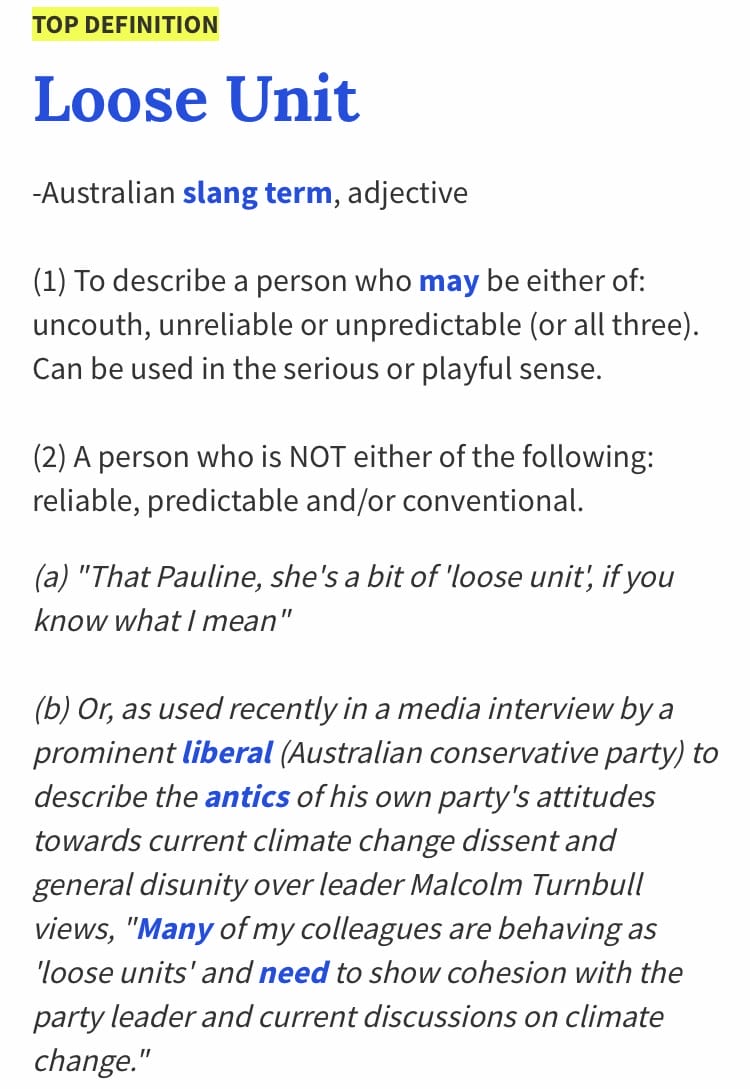
This week’s designee is a real doozy. This week’s Loose Unit is Anchorage Assembly member George Martinez.
If you been paying any attention to the news, you would know an Alaska Public Offices Commission (APOC) complaint was filed against him in February for using campaign funds for a roundtrip flight to Fort Lauderdale, at a cost of $1,255 plus a $1,000 for a carbon offset. He did not even stay in Florida! He just turned right around. The ticket was purchased on December 29, 2025. It’s clear homie was using campaign funds to go on a mileage run. This alone is very loose behavior. But just wait.
APOC held a hearing on June 3 to look into the matter after staff recommended Martinez pay back the $2,225 and be penalized the same amount for his loose behavior. The Commission’s order following the hearing is maximum loose! I HIGHLY recommend reading it all if you want to laugh. It honestly reads like a satire piece.
Dude refused to answer questions about the trip, would not disclose how many Atmos points he received or if it put him over for a new status tier, claimed the trip to Florida was for a “strategic session” to work on his campaign, and said the $1,000 carbon offset was for his “campaign’s commitment to offset emissions for campaign travel.” The funny thing about that is $1,000 is the maximum you can spend for the carbon offset scam to get 5,000 Elite-Qualifying Miles. This guy is the epitome of a Loose Unit!
Here are just a few highlights.
If you have a nomination for this week’s Loose Unit, or if you have any political news, stories or gossip (or any old pics of politicians or public officials) please email me at jeff@alaskalandmine.com.

Alaskan oil and gas production has always been a complicated issue, as energy companies want to tap the region’s vast reserves and environmentalists fear irreparable damage to the vulnerable ecosystem. The Biden administration introduced far-reaching protections in Alaska, aimed at preventing new oil and gas exploration and protecting the environment and wildlife. However, since President Trump came into office last year, he has encouraged new fossil fuel development in the region. Yet the response to the most recent energy auction suggests that energy companies remain hesitant to develop oil and gas operations in the Arctic.
Alaska’s oil production has fallen from a peak of around 2 million barrels per day in the 1980s to less than 430,000 bpd today, with production continuously declining since the early 1990s. In 2024, then-President Biden announced plans to restrict new oil and gas leasing on 13 million acres of a federal petroleum reserve in Alaska to protect wildlife endemic to the region. This marked a shift in direction after the Biden administration approved the $8 billion Willow Project by ConocoPhillips on Alaska’s remote North Slope in 2023.
However, in December 2025, Congress voted to repeal the Biden-era policy in a bid to restore leasing to the full Coastal Plain in support of President Donald Trump’s pledge to boost domestic energy development. Trump has aimed to accelerate Alaska’s oil output as part of his energy-dominance agenda. Upon his inauguration as president last January, Trump signed an executive order aimed at attracting investment to develop the state’s oil and gas.
Recent tests of the region bore positive results for energy firms looking to develop Alaska’s untapped oil reserves. Over the last year, confidence in the region has improved in response to Trump’s favourable policies on fossil fuel development and supporting regulatory changes. ConocoPhillips’ CEO, Ryan Lance, stated in April, “It feels like a bit of the Alaska renaissance.”
ConocoPhillips, Shell, ExxonMobil, Santos, and seven other firms set a record in March by bidding nearly $164 million at a federal auction for oil and gas leases within the National Petroleum Reserve in Alaska (NPRA). This demonstrated the willingness of oil majors Shell and Exxon to return to the region.
However, the auction of oil leases in Alaska’s remote Arctic National Wildlife Refuge (ANWR) in June ended with just nine bids, covering just about 10 per cent of the available land. This undermined Trump’s claims of significant investor interest in the region. The auction attracted $3.7 million in bids, almost half of which came from the state of Alaska’s publicly owned economic development corporation, while no international oil firms offered bids.
This follows a trend seen in President Trump’s first term in office, during which time Congress mandated auctions in the region drew little interest. The few leases that were sold were overturned by the Biden administration. This back-and-forth has, unsurprisingly, harmed investor certainty in the region.
However, the severe volatility in oil and gas prices in recent months, owing to ongoing geopolitical challenges, was expected to spur greater investor interest in new operations. The managing director of research firm ClearView Energy Partners, Kevin Book, stated, “We’re in the middle of a massive supply shortfall, and if there was ever a time to look past political and reputational risks, it would be now.”
Yet only two companies – the state-owned economic development corporation, the Alaska Industrial Development and Export Authority, and Alaska-based Hex L.L.C. – bid in the auction, with bids covering around 70,000 acres of the 689,000 acres on offer. Several reasons were offered for the lack of interest, including the complicated logistics of drilling in remote Alaska and the potential for the next U.S. government to change drilling policies in the region.
Senator Edward Markey and Representative Jared Huffman, both of whom sit on environmental committees in Congress, said the results were “an embarrassment for the Trump administration.” In a joint statement, the two congressmen labelled the auction “an insult to our entire country, by sacrificing and selling off America’s public lands for pennies on the dollar.”
While the ANWR is believed to contain around 11.8 billion barrels of recoverable oil, according to the U.S. Geological Survey, the region also has great environmental importance. The ANWR, which has no roads or facilities, is a critical home to migratory and resident wildlife, including North American bears, caribou, and wolverines. In addition, over 200 bird species flock there to nest.
Bobby McEnaney, the director of the NGO the Natural Resources Defence Council, explained, “Drilling in the Arctic Refuge is reckless, and the market keeps confirming it.” McEnaney added, “This is the third lease sale in a row to be a bust, with major oil companies sitting it out. The government spent public money to hold an auction no major company showed up for, and that tells you everything you need to know about the economics here. It is a remote, fragile landscape that is expensive to drill and risky to bet on.”
By Felicity Bradstock for Oilprice.com
More Top Reads From Oilprice.com

“Mr. President, this is another example of America First, to be honest with you,” said Dunleavy.
“Alaska provides 60 percent of the country’s seafood. We’re the state with halibut, salmon, King Crab, you name it, it comes from Alaska. Alaska’s one of, fishing in Alaska’s one of the oldest industries in that entire state, employs thousands of individuals. Everyone has had fish from Alaska, we know that. But this is an example again of putting Americans first, America first, workers first and really this country first and so on behalf of Alaska, on behalf of all fishermen and women, I want to thank you for what you’re doing for this country, for the state of Alaska as well,” said Dunleavy.
Trump had no idea what he was signing. It appeared that Dunleavy had no idea what Trump was signing. In that they were evenly matched.
Trump thought the proclamation applied to Alaska waters, not to waters near Hawaii, and he had a notion he was saving the fishing industry from shutdowns ordered by his predecessors that Trump was reversing. He asked Dunleavy about it.
“Governor, was this shut down?” Trump asked about the proclamation that had nothing to do with Alaska. “I mean it’s just so hard to believe. So this was trauma for your industry, which is a big industry.”
Dunleavy may be too tall to get a top job with Trump, but he is as small as anyone in the inner circle. He couldn’t answer the question, so he oozed obsequious and changed the subject.
“Well, your deregulation is what really helps Alaska,” Dunleavy said. “It helps the fishermen. We, the country doesn’t need more regulation. We need less regulation. And that includes for this industry as well. From that perspective, and it’s across the board, we could talk about oil and gas and so forth, but this is about fish. But your deregulation approach is really what we need. We don’t need more costs. And as you said, we probably don’t need electric boats either,” Dunleavy said, a line that drew a smile from the winner of the FIFA peace prize.
“We need the focus on getting seafood to Americans, putting people to work. And this is exactly what this does. So I just want to thank you,” said Dunleavy.
“Good job,” Trump said.
Your contributions help support independent analysis and political commentary by Alaska reporter and author Dermot Cole. Thank you for reading and for your support. Either click here to use PayPal or send checks to: Dermot Cole, Box 10673, Fairbanks, AK 99710-067
-

 Los Angeles, Ca9 minutes ago
Woman hospitalized in L.A. nearly 2 weeks with no ID found
-

 Detroit, MI27 minutes ago
Detroit man arrested over investigation into stolen vehicle infotainment systems
-
 Miami, FL37 minutes ago
Saudi Arabia vs. Uruguay kicks off Miami’s first World Cup match Monday night
-

 San Francisco, CA39 minutes ago
SF moving July 4 fireworks show to Golden Gate Bridge
-

 Dallas, TX42 minutes ago
5 most intriguing non-division games on the Cowboys schedule
-

 Boston, MA54 minutes ago
Harvard Book Store to open Boston location near Faneuil Hall
-

 Denver, CO57 minutes ago
Tour Five of Denver’s Most Stylish Homes – 303 Magazine
-

 Seattle, WA1 hour ago
Longing for a place to slow down, reconnect, & make things? Try ‘Art Club’ in Seattle!

