Governor Peninsula – Episode 11: Nancy has abandoned her dream of running for the Den, but as it turns out she has a big job to do. #akleg pic.twitter.com/RzYuovx3Kl
— The Alaska Landmine (@alaskalandmine) June 15, 2026
Alaska
The Sunday Minefield – June 14, 2026


Just five days remain until the end of the special session Governor Mike Dunleavy (R – Alaska) called for his gasline bill. The House overwhelmingly passed their version of the bill on Friday (6/12/2026) afternoon. The Senate is coming in tomorrow to receive the House bill, which will be referred to the Senate Finance Committee. It’s not clear what will happen with such little time left and factoring in the Senate has very different ideas than the House on the bill. After opening an investigation, the Division of Elections has determined that Dan Sullivan of Petersburg (Decoy Dan) is ineligible to challenge Senator Dan Sullivan (R – Alaska). The matter may ultimately be decided by the courts if Decoy Dan decides to go that route. The June 27 withdrawal deadline for the primary is 13 days away. And just over two months remain until the August 18 primary!
A friendly message and reminder to all our readers. The Landmine is made possible by myself and a team of awesome Alaskans. I have been covering the legislative session in Juneau for the last seven years and finished my eighth session in May. I am here now covering the end of the special session. We will be covering all the 2026 Alaska elections in-depth. If you enjoy the content we provide, please consider making a one time or recurring monthly donation. You can click here to donate. We have a system that makes it super easy. We would really appreciate it. And thanks to everyone who has been supportive.
Check out the eleventh episode of Governor Peninsula! In this episode, after deciding not to run for the Den, Nancy finds out she has a big job to do. And make sure to tell us what you think.
Gasline bill overwhelmingly passes House, faces uncertainty in Senate
The following is an excerpt from this week’s special edition of the Alaska Political Report. You can click here for more information about the Political Report. A subscription is $1,299/year per organization. Discounted pricing is available for non-profits and government entities. Our coverage of the budget starts with the governor’s proposed budget, and we track everything in detail through the entire process. If you have any questions or would like to subscribe, please email jeff@akpoliticalreport.com.
The House overwhelmingly passed their version of the gasline bill, House Bill 381, early Friday afternoon by a vote of 34-5. This came after hearing only four amendments – one of which was withdrawn, two of which failed, and one passed that was a cleanup amendment.
The bill was the result of work done in the House Finance Committee over the last several weeks. Several amendments were adopted in the finance committee last week, including many conceptual amendments that were done on the fly. This made it difficult to properly analyze all of the changes made to the bill in the finance committee. Here are some highlights:
- Alternative Volumetric Tax (AVT): The House version includes 6 cents for pipeline components, 13 cents for treatment and capture components, and 13 cents for the LNG plant. This is an increase from the 6/12/12 amounts included in Senate Bill 2001 – the version currently in Senate Finance. Based on the example given by Legislative Finance in a recent presentation to Senate Finance, this would result in a roughly 4% increase in the tax rate for in-state gas and a 7% increase for exported gas over the Senate version of the bill. The tax rate grows with inflation but the inflation adjustment has a floor of 1% per year and a ceiling of 2%.
- The new version of the bill limits the price charged on gas sold to utilities. The limit is set at $16 per million BTU and grows with inflation.
- The majority of AVT revenue goes to impacted communities and will be collected directly by the local governments.
- Provisions are included in the bill to allow for legislative disapproval of certain actions by the Alaska Gasline Development Corp. (AGDC) including issuance of bonds and transfer of sale of interest in the project. Legislative Legal drafted a memo that calls into question the constitutionality of those provisions in the bill.
- The bill also includes a variety of reporting requirements for AGDC regarding project cost and activity.
Most House members left Juneau Friday evening. The Senate is scheduled to gavel in on Monday morning. They will receive the House bill, which will be referred to the Senate Finance Committee. The committee has been holding hearings on their version of the bill for the last several weeks.
Many senators have different ideas on what kind of gasline legislation should be passed. Some want to add in the S corp tax, while others want to increase other oil taxes and increase revenues for the haul road. There is also disagreement on how long the property tax holiday should last for the gasline.
It’s hard to predict what the Senate will do, but one thing is certain – the clock is running out for the special session. It ends on June 19.
Another factor is all the bills that were sent to Dunleavy. He must act on those bills by June 18 – one day before the end of the special session. If Dunleavy vetoes a bunch of their bills, it could potentially create a big problem for his gasline bill.
There are two potential outcomes in the Senate. The more likely outcome is they amend the bill to include some of their priorities and send it back to the House for a concurrence vote. There will not be enough time to work out the differences in a conference committee.
The less likely scenario is they wait to see what Dunleavy does on all the bills that were transmitted to him. If Dunleavy waits until the evening of June 18 to act, the Senate could opt to not pass the bill if Dunleavy vetoes enough priority legislation. The Legislature could decide to hold a joint session on June 19 to take up veto overrides, though they lack the votes to override most of his potential vetoes.
If the Senate does send the bill back to the House for a concurrence vote, there is no guarantee it will be agreeable to Dunleavy and Glenfarne. In that case, the House could fail to concur with the Senate’s changes. This would kill the bill. Dunleavy would then need to decide if he wants to call them back into another special session. Dunleavy is in D.C. this week and has not indicated what he will do if the Legislature fails to pass a bill he wants.
We are watching things closely and will have updates as they become available.
Other Happenings
The Alaska Division of Elections disqualified Decoy Dan Sullivan of Petersburg from challenging Senator Dan Sullivan, at least for now. It’s possible Decoy Dan sues over the matter. But so far the evidence does not look good for him. He filed and changed his voter registration to run as a Republican, though he’s never been registered as a Republican. Then he hired Amber Lee, a Democratic strategies, which is very suspect. If Decoy Dan is up to no good, that is he is running to deliberately try and confuse voters, or if there is a conspiracy behind his candidacy, he might think twice about taking it to the courts. He, Amber Lee, and others could be deposed and have to take the stand at a trial. If they are up to no good, they might decide ending their game is the best move.
I doubt Julian Chapin, Jonathan Kreiss-Tomkins‘ communications director will be calling me again. Pro tip, Julian: don’t call up members of the media, or anyone for that matter, and be a condescending asshole. This was one of the weirdest political phone calls I’ve ever received.
Just got the most bizarre call from Jonathan Kreiss-Tomkins’ communications director Julian Chapin.
It started off with him aggressively asking me why I think Bill Walker will advance to the final 4 in the governor’s race. I told him because Walker has the highest name ID in…
— The Alaska Landmine (@alaskalandmine) June 13, 2026
There are 13 days before the June 27 withdrawal deadline for the August 18 primary. So far no one has withdrawn from the governor’s race or any of the 50 legislative races. Two people withdrew from the U.S. Senate race and U.S. House race, but those happened a while ago. After June 27, the primary ballot will be set. There is another withdrawal deadline, August 31, for the general election.
This Week’s Loose Unit
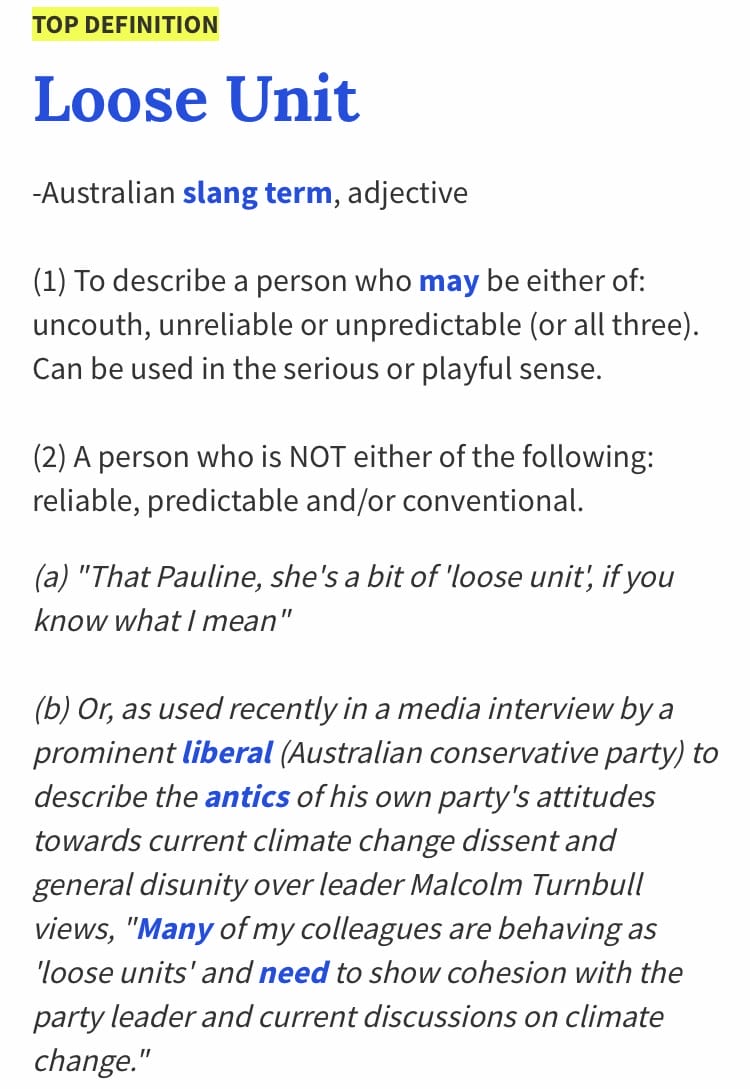
This week’s designee is a real doozy. This week’s Loose Unit is Anchorage Assembly member George Martinez.
If you been paying any attention to the news, you would know an Alaska Public Offices Commission (APOC) complaint was filed against him in February for using campaign funds for a roundtrip flight to Fort Lauderdale, at a cost of $1,255 plus a $1,000 for a carbon offset. He did not even stay in Florida! He just turned right around. The ticket was purchased on December 29, 2025. It’s clear homie was using campaign funds to go on a mileage run. This alone is very loose behavior. But just wait.
APOC held a hearing on June 3 to look into the matter after staff recommended Martinez pay back the $2,225 and be penalized the same amount for his loose behavior. The Commission’s order following the hearing is maximum loose! I HIGHLY recommend reading it all if you want to laugh. It honestly reads like a satire piece.
Dude refused to answer questions about the trip, would not disclose how many Atmos points he received or if it put him over for a new status tier, claimed the trip to Florida was for a “strategic session” to work on his campaign, and said the $1,000 carbon offset was for his “campaign’s commitment to offset emissions for campaign travel.” The funny thing about that is $1,000 is the maximum you can spend for the carbon offset scam to get 5,000 Elite-Qualifying Miles. This guy is the epitome of a Loose Unit!
Here are just a few highlights.
If you have a nomination for this week’s Loose Unit, or if you have any political news, stories or gossip (or any old pics of politicians or public officials) please email me at jeff@alaskalandmine.com.

Alaska
New Partnerships With State of Alaska & University of Alaska Fairbanks Expand on Critical Minerals & Energy Innovation – CleanTechnica

Support CleanTechnica’s work through a Substack subscription, on Patreon, or on Stripe. Help us produce all of the high-quality, original content we publish week after week despite the challenges of content-scraping AI, antisocial media, inflation, and other hurdles.
NLR Laboratory Director Jud Virden Signs Partnership Agreements at Alaska Sustainable Energy Conference in Anchorage
The National Laboratory of the Rockies (NLR) signed two new memorandums of understanding (MOUs) on May 19 that aim to increase research and innovation in critical minerals, energy, and buildings in Alaska and the Arctic. These partnerships build on longstanding collaborations and are designed to tap into Alaska’s resources in a way that benefits both the state and the nation.
“Alaska faces unique challenges,” NLR Director Jud Virden said. “NLR is proud to partner with the state and its flagship university to develop and accelerate innovative solutions to Alaskan challenges and address our nation’s pressing needs in critical minerals, energy, and buildings.”
At the Alaska Sustainable Energy Conference, joined by U.S. Department of Energy (DOE) Assistant Secretary Audrey Robertson, Alaska’s governor Mike Dunleavy, and University of Alaska Fairbanks (UAF) leadership, Virden signed agreements that will make it easier for NLR to work with these key partners to scale solutions for the real world.
NLR is the only DOE national laboratory with a physical presence in Alaska, located adjacent to the University of Alaska Fairbanks campus. NLR’s Alaska research focuses on energy and building technologies in extreme climates and remote locations, as well as support for military, government, and communities in decreasing energy costs and improving reliability. Recent projects include an analysis of the state’s power grid to address declining natural gas supply within Alaska, an evaluation of methods to stabilize permafrost on military sites, and support for designing a secure, resilient facility on the Alaska-Canada border.
Through the MOU with the university, NLR gains access to UAF expertise in microgrids, engineering, and critical minerals—such as the Alaska Critical Minerals Collaborative, a research unit at UAF connecting government, industry, and researchers to advance critical mineral development across Alaska. The laboratory may also host students and fellows from UAF’s College of Engineering and School of Mines, Arctic engineering, geosciences, and other relevant programs, offering a training ground for the critical mineral workforce of the future.
On the flip side, NLR can provide access to advanced analysis tools, such as the ability to create digital twins of mines and microgrids with its Advanced Research on Integrated Energy Systems (ARIES) platform, and a wide range of capabilities in its new Energy Materials and Processing at Scale (EMAPS) facility that offers partners an entirely new model for “market-first” research: the ability to grow laboratory-scale innovations into scalable and validated market-relevant prototypes under a single roof.
“This partnership leverages the unique strengths of each of our organizations to create something that is greater than the sum of two parts,” UAF Interim Chancellor Mike Sfraga said.
NLR’s agreement with the state is complementary in approach, paving the way for NLR and the state to coordinate resources, share research, and boost Alaska energy and critical mineral production.
“This agreement helps turn Alaska’s resources and know-how into practical solutions,” Gov. Dunleavy said. “By formally partnering with federal researchers who are already based in Alaska, we can lower energy costs, build infrastructure that works in Arctic conditions, strengthen domestic supply chains, and create good-paying jobs, especially in rural and remote communities. It puts Alaska at the center of solutions that matter to both our state and the nation.”
Learn more about NLR critical minerals research and collaborations.
By Molly Rettig, NLR
Sign up for CleanTechnica’s Weekly Substack for Zach and Scott’s in-depth analyses and high level summaries, sign up for our daily newsletter, and follow us on Google News!
Have a tip for CleanTechnica? Want to advertise? Want to suggest a guest for our CleanTech Talk podcast? Contact us here.
Sign up for our daily newsletter for 15 new cleantech stories a day. Or sign up for our weekly one on top stories of the week if daily is too frequent.


CleanTechnica uses affiliate links. See our policy here.
CleanTechnica’s Comment Policy

Southcentral Alaska’s largest natural gas utility said Tuesday it might not have the gas to make it through this winter. That’s after state regulators last Wednesday denied Enstar’s request that would’ve expanded natural gas storage in Kenai, as the region faces a looming natural gas shortage.
Enstar president John Sims said it’s “not looking good” for the utility’s more than 150,000 Southcentral customers heading into the cold, winter months.
“Just to be very blunt, we need additional production in order to make it through this winter,” Sims said. “We are kind of turning over every stone possible and trying to find more gas resources.”
In the order, the Regulatory Commission of Alaska wrote they were “unsure about the timing of the need for additional natural gas storage capacity, including insertion and withdrawal capacity.”
Enstar proposed developing and operating a depleted reservoir known as the Kenai Loop Pool that is currently leased and operated by AIX Energy, LLC., to store gas to use during the colder months.
The utility was seeking an “advanced determination” from RCA that it was prudent, which would allow the project to unlock financing for development, the order says. In its original filing, Enstar said that the project would help ensure there are enough supplies to meet the needs of its customers.
A search for other options
The commission denied the utility’s request in a 17-page order last Wednesday, saying the Department of Natural Resources hadn’t determined if the facility was capable of serving as a gas storage facility. Hilcorp has a competing application for the same storage facility, the order said.
The RCA didn’t respond to a request for comment Tuesday afternoon.
The facility would hold 25 billion cubic feet of gas, which Sims said is appropriately sized for the current supply needs and future natural gas imports.
“The other benefit of having this storage facility right now is we can go to Furie, AIX, to all the small producers and even Hilcorp and say, ‘Hey, whatever volume of gas you produce, I can buy it.’ And I can store that into this storage facility for later use,” he said.
Longer term, utilities are looking to import natural gas, which would impose an unavoidable price increase to thousands of households and businesses. Legislators are currently in negotiations over a multibillion-dollar property tax break for the developer of the Alaska LNG project, Glenfarne. But it’s unknown if, or when, that project will be built.
According to the order, Enstar’s Kenai storage project garnered support from DNR, multiple state legislators and other regional electric utilities. However, some Anchorage-based property management companies said it was “inappropriate” for ratepayers to bear the cost of the project. The project’s $240 million price tag would’ve increased bills for customers by $10 to $12 per month, according to the filing.
Sims said Enstar is filing a petition for the reconsideration of the ruling next week.
“Just in case the commission denies that request, yes, we are looking at other storage options,” he said. “Unfortunately, based on our analysis that we did before we filed with the commission, those options appear to be more expensive.”
Sims said he’s hoping production and storage ramps up, but if it doesn’t, he said the utility may need to ask customers this winter to conserve supplies by lowering their thermostats.
___
This story was originally published by Alaska Public Media and distributed through a partnership with The Associated Press.
Alaska
ICE: Alaska state attorney arrested by immigration officials, held in Tacoma detention center

ANCHORAGE, Alaska (KTUU) – U.S. Immigration and Customs Enforcement arrested Shucheng “Charlie” Yang, 32, a Chinese national and attorney with the Alaska Department of Law, on July 10 in Anchorage, according to an ICE spokesperson.
ICE said Yang violated the terms of his admission and is a “deportable alien.”
He is currently being held at the Northwest ICE Processing Center in Tacoma, Washington, pending immigration proceedings.
Yang pled no contest to a speeding ticket he was cited for on May 22. There are no other charges against him listed in the Alaska court system.
Yang is the most recent person in Alaska to be taken into ICE custody at the Tacoma processing center; a Mexican woman living in Soldotna was deported along with her three children in February.
His arrest also comes days after a Colombian man was shot and killed by a federal immigration officer earlier this week in Maine, fueling a new wave of protests against perceived ICE brutality.
State outlines hiring process
The Alaska Department of Administration responded to general questions about verifying employment eligibility for all full-time hires and said the state requires applicants to self-disclose their employment eligibility during the application process.
“The State of Alaska hires individuals who have the legal right to work in the United States,” Policy Advisor Kate Sheehan said. “This employment eligibility is confirmed through the federally mandated I-9 verification process.”
Yang is listed as Department of Law civil attorney on the State of Alaska employee directory.
Agencies decline to comment on Yang
Both the Alaska Department of Law and the Office of Gov. Mike Dunleavy declined to address Yang’s employment status or arrest.
“As a practice, the Department of Law does not provide comments on personnel issues,” Information Officer Sam Curtis said.
“We do not comment on personnel issues,” Deputy Press Secretary Grant Robinson said.
Alaska’s News Source is reaching out to Yang through multiple channels while he remains detained in Tacoma.
See a spelling or grammar error? Report it to web@ktuu.com
Copyright 2026 KTUU. All rights reserved.
-
 Sports3 minutes ago
World Cup championship and third-place game: Start times and how to watch
-

 World15 minutes ago
Rule of Law in Hungary shows ‘radical change’ under Magyar, EU says
-

 News45 minutes ago
Where Wildfire Smoke Is The Worst Right Now—And What To Do About It
-

 Los Angeles, Ca2 hours ago
LADWP begins long-term repairs after West Hollywood water main rupture
-

 Detroit, MI3 hours ago
Livestream: Mayor Sheffield, Detroit health chief to address wildfire smoke threat
-
 San Francisco, CA3 hours ago
A sculpture of a giant naked woman goes on sale in San Francisco. Bring a crane
-

 Dallas, TX3 hours ago
No ‘straight answer’: Why Pioneer Cemetery is the latest battleground at City Hall
-

 Miami, FL3 hours ago
TSA hosts news conference ahead of World Cup third place match at Miami Stadium

