Business
This startup was supposed to revolutionize California’s wine industry: ‘It totally failed’


Just two years ago, Monarch Tractor was worth half a billion dollars and ready to shake up the wine industry. In April, it shut its headquarters, laid off its employees and sold its technology to a competitor.
The wine-country startup wanted to revolutionize the cultivation of grapes and other fruit with $100,000 robotractors, but the technology didn’t work well enough. At a time when Waymo’s impressive success and the advent of AI have rekindled excitement about everything driverless, Monarch’s failure to disrupt has become another cautionary tale about massive bets on the latest tech.
The driver optional, battery-powered tractors — built skinny enough to fit in the narrow lanes between the rows of grapevines near its headquarters in Livermore — were going to make it easier and cheaper to handle pests, irrigation and harvesting. They were supposed to use cameras and sensors to collect data, learn what works best and then share that learning online with thousands of other high-tech tractors.
On the back of hopes it could save farmers hundreds of thousands of dollars, the Monarch tractor made Time magazine’s list of the year’s best inventions in 2023. That same year, Monarch was on a Forbes list of startups most likely to reach a $1-billion valuation. It made it halfway there the following year.
“Every farmer around the world is under tremendous pressure because of a lack of labor,” Monarch Chief Executive Praveen Penmetsa told Forbes in 2023, projecting hundreds of millions of dollars in revenue. “We are the only all-electric, smart, driver-optional tractor in the world that farmers can buy today.”
But just as the technology seemed poised to move from moonshot to mainstream, customer complaints started coming in.
Patrick O’Connor, who runs Moonvine Wines, an organic vineyard near the Sierra Foothills wine region, was one of the first users and said the tractors too often went rogue, veering off straight paths and damaging his vines.
“It totally failed,” O’Connor said in an Instagram video. “While I was excited to eliminate diesel, run off my solar panels and embrace new technology, it just did not perform. It was actually quite dangerous.”
The potentially world-changing technology wasn’t working as designed. Meanwhile, Monarch hit a wall when its manufacturer — the same company that makes most iPhones — had to stop making the tractors.
“Building and scaling a new tractor platform in agriculture came with unforeseen challenges,” the company said in a statement in April.
Monarch and its founders did not respond to requests for comments.
The company was launched in 2018 with a promising pedigree.
Its founding team included Tesla veteran Mark Schwager and Napa Valley wine scion Carlo Mondavi, the grandson of Napa legend Robert Mondavi.
Penmetsa, the chief executive, had worked for years in the automotive and EV industries, largely in and around Los Angeles.
The company set out with the ambitious goal of bringing battery power, data collection and driverless technology to tractors. If it could pull it off, it could change farming around the world.
The Californian wine industry has been struggling with rising competition and dwindling demand, which could have nudged more farmers to try to save money using Monarch’s technology. It also could have made farmers more cautious about using unproven and expensive new technology.
Monarch may have aimed too high, industry insiders said.
While Monarch was trying to solve two problems at once — making its tractor both electric and autonomous — it didn’t spend enough time thinking about farmers’ needs, said Walter Duflock, vice president of innovation for the Western Growers Assn. Duflock owns San Bernardo Rancho, a fifth-generation family ranch in south Monterey County.
“The electric tractor has struggled to find a use case on the farm,” Duflock said in an interview. “They never got to the point where their electric vehicle was solving a fundamental problem.”
On Duflock’s ranch and many other California farms, there’s little to no charging infrastructure, he said. Even if infrastructure was developed, the time it takes to charge an electric tractor is too long for most farmers who can’t have downtime during busy seasons.
“The notion of sitting there waiting for a charging tractor to finish getting charged just doesn’t fit,” Duflock said.
Duflock heard that the Monarch tractor “would bump into stuff, it would not stop fast enough,” he said. “It just did not work.”
Monarch’s collapse was gradual. In July 2024, the company laid off 15% of its workforce, followed by another round of layoffs in November that year that affected around 35 employees, or 10% of its workforce. A year later, the company warned employees it could lay off 100 workers or even “shut down” in a company-wide memo obtained by TechCrunch.
In November 2025, Monarch Tractor was sued by the Idaho-based dealership Burks Tractor, which accused Monarch of misrepresenting its autonomous technology.
Burks Tractor paid Monarch more than $770,000 for 10 tractors.
“Upon receiving the tractors, Burks Tractor discovered that the tractors did not perform as represented and were unable to operate autonomously,” the complaint said.
A Burks Tractor manager declined to comment due to the ongoing litigation.
Monarch’s vehicles were supposed to be manufactured at a facility in Ohio owned by Foxconn, a Taiwanese electronics company known for assembling iPhones. Foxconn sold the factory in August 2025, shutting down Monarch’s plans there.
In April, Monarch sold the technology it had spent hundreds of millions of dollars developing to construction giant Caterpillar, for an undisclosed amount.
“It means the technology will continue to move forward,” with another company, Monarch said in a LinkedIn post at the time. “Thank you to our employees, investors and customers for being a part of this journey.”
Caterpillar did not respond to requests for comment.
Other companies are plowing forward where Monarch has failed.
For example, farm equipment company John Deere has had more success marketing and selling autonomous farm equipment. It has taken a different approach, gradually incorporating autonomous technology into its existing products. The company’s 8R tractor can operate autonomously while being controlled by a smartphone and has been deployed at large-scale commodity farms growing corn, soy and wheat.
Organic vineyard owner O’Connor still uses his Monarch tractor, but only as a battery and to cut wood with an attachment he has added.



Business
Many indie festival films struggle to get distribution. Alamo Drafthouse is trying to change that
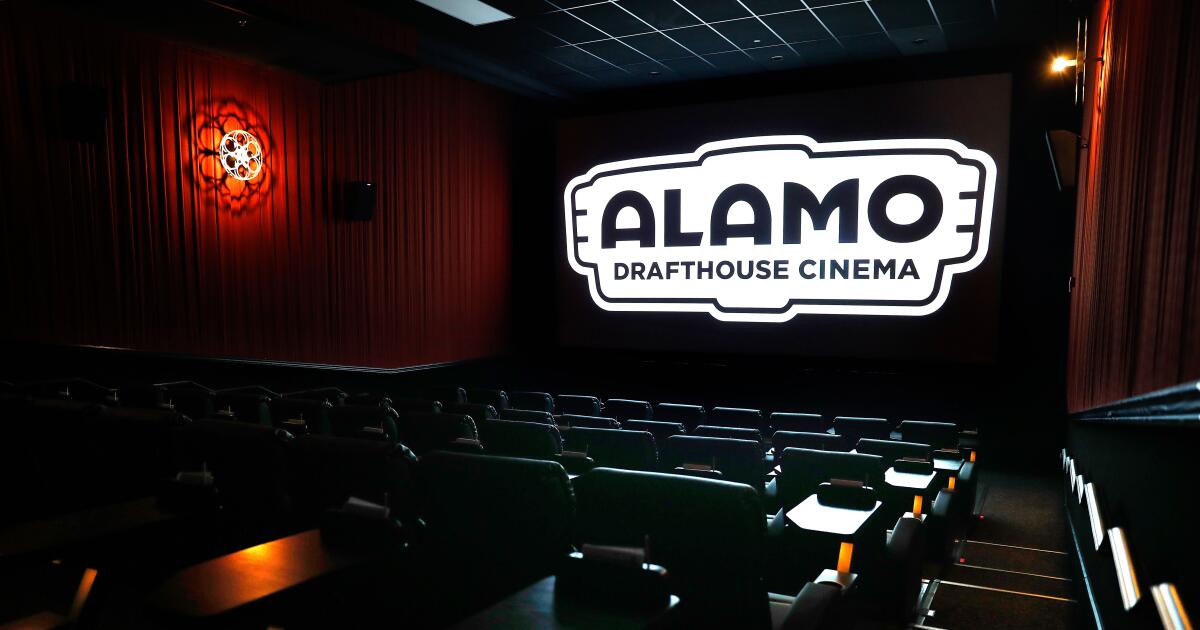
Dine-in movie theater chain Alamo Drafthouse Cinema is launching a new initiative to show unreleased independent films that had successful festival runs, a move that comes as specialty films have struggled to gain distribution.
The Alamo Exclusives program, announced Wednesday, will give limited theatrical runs to films that showed at festivals including Sundance, the Toronto International Film Festival, Tribeca Festival and South by Southwest festival, as well as Alamo’s own Fantastic Fest.
The idea is to help showcase films that received critical acclaim, but did not secure distribution or acquisition deals. The chain will not acquire these films, but instead will enter into agreements with filmmakers to exhibit their films on Alamo Drafthouse screens. By showing these films to audiences on the big screen, these films could get the momentum they need for further opportunities.
The program’s first film will be the documentary “Butthole Surfers: The Hole Truth and Nothing Butt,” which debuted last year at South by Southwest and chronicles the history of the punk rock band.
The film will be shown in Alamo Drafthouse theaters for a limited time later this summer.
The Austin-based chain, which is owned by Sony Pictures, has a long history of curating indie films for its audiences, giving Alamo Drafthouse confidence that its viewers want to see these kinds of movies, company chief executive Michael Kustermann said in a statement.
“Time and again, they’ve shown they’ll come out to support bold, original films when given the opportunity,” he said. The new Alamo Exclusives “gives us another way to champion filmmaker-driven films that deserve to be discovered and connect them with the wider Alamo Drafthouse audience.”
The initiative comes at a difficult time for indie films. Since the pandemic upended the movie business, traditional studios and distributors have had less appetite for risk, including betting on smaller indie films out of festivals.
And as the 2023 dual writers’ and actors’ strikes thinned out theatrical lineups, that aversion to uncertainty became a push for reliable and profitable hits.
“Too many incredible films premiere at festivals and then never receive the theatrical life they deserve,” Lisa Dreyer, director of Fantastic Fest and film innovation at Alamo, said in a statement. “We are actively searching for films across all genres, from horror to comedy, to everything in-between, to champion in this new, exciting way.”

The recall of a popular chip brand over salmonella concerns was recently upgraded to the U.S. Food and Drug Administration’s highest level, just ahead of the Fourth of July holiday and countless backyard barbecues.
On June 24, the FDA designated the recall of several varieties of Zapp’s and Dirty brand potato chips as Class I, meaning it’s “a situation in which there is a reasonable probability that the use of or exposure to a violative product will cause serious adverse health consequences or death.”
FDA has classified the following items as Class I:
Zapp’s
- 1.5-ounce Zapp’s Bayou Blackened Ranch Kettle Chips
- 2.5- and 8-ounce Zapp’s Bayou Blackened Ranch Potato Chips
- 1.5- and 8-ounce Zapp’s Big Cheezy Potato Chips
Dirty
- 1.5- and 2-ounce Dirty Brand Salt and Vinegar Potato Chips
- 2-ounce Dirty Maui Onion Chips
- 2-ounce Dirty Sour Cream and Onion Potato Chips
The chips are produced by Utz Quality Foods, LLC, which on April 28 issued a recall after learning “that a seasoning containing dry milk powder, sourced from California Dairies, Inc. and supplied by a third-party supplier, may contain the presence of Salmonella.”
Salmonella can lead to sometimes deadly infections in elderly people, young children and those with weakened immune systems, according to the FDA.
More than 680,000 bags are included in the recall.
Anyone who has these products should not eat them and should discard them immediately.
What to look for
Salmonella is a foodborne illness that can be fatal to young children, pregnant women, older adults and people with weakened immune systems, according to the National Institutes of Health.
Symptoms may develop 12 to 72 hours after infection, according to the FDA.
The FDA said that people with strong immune systems infected with salmonella may experience fever, diarrhea (which may be bloody), nausea, vomiting and abdominal pain. The illness can last four to seven days.
In rare cases, the infection may produce more severe illnesses such as arterial infections, endocarditis and arthritis, the agency added.
What to do if infected
If you contract salmonella, the Centers for Disease Control and Prevention recommends drinking plenty of fluids to prevent dehydration.
The CDC advises consulting a doctor before taking antidiarrheal medicine or antibiotics. If severe symptoms continue after two days, seek medical help, the agency says.
Because those with diarrhea can spread salmonella to others, it’s also recommended to avoid sharing food or preparing meals for others, sexual contact and swimming in public pools, and to stay home while sick.
Times staff writer Jasmine Mendez contributed to this report.

The Minions took over theaters this weekend as Universal Pictures and Illumination’s “Minions & Monsters” won the top spot at the box office, though with a lower-than-expected domestic haul.
The animated movie, which follows the Minions’ takeover of Hollywood, took in $61.4 million in the U.S. and Canada for the five-day Fourth of July holiday weekend, according to studio estimates. That haul was lower than analysts’ expectations for a domestic opening of about $68 million. The movie’s three-day total was $36.4 million.
But the Minions performed well internationally, bringing in about $85 million. In total, “Minions & Monsters” made $159.9 million worldwide on a production budget of about $85 million.
The film is the latest in the powerhouse franchise that began with “Despicable Me” in 2010. Across its previous six installments, the “Despicable Me” and “Minions” franchise has made more than $5.6 billion at the global box office. The last movie, 2022’s “Minions: The Rise of Gru,” made more than $940 million worldwide.
“Minions & Monsters” marks the lowest opening for the franchise. Part of the issue could be timing — the box office can be negatively affected when the Fourth of July lands on a Saturday, said Paul Dergarabedian, head of marketplace trends at Rentrak.
Walt Disney Co. and Pixar’s “Toy Story 5” came in second at the box office this weekend with a domestic three-day gross of $31 million. Angel Studios’ biopic “Young Washington” ($20.8 million), Warner Bros. and DC Studios’ “Supergirl” ($9.6 million) and Universal’s “Disclosure Day” ($6 million) rounded out the top five, according to Rentrak.
The haul for “Minions & Monsters,” coupled with the strong holdover performance of “Toy Story 5,” proved again that family films are making a dent in the summer box office.
“Toy Story 5” has now brought in a total of $764.3 million worldwide, and last month, Universal, Illumination and Nintendo’s “The Super Mario Galaxy Movie” crossed $1 billion at the global box office, becoming the first film of any kind to do so this year.
The rest of the summer theatrical lineup is also expected to bring in audiences and push domestic box office totals closer to pre-pandemic figures. Next week, Disney will release its live-action “Moana,” followed by Christopher Nolan’s “The Odyssey” and Sony Pictures’ “Spider-Man: Brand New Day.”
To date, the summer box office is now about $2.3 billion, a nearly 12% increase compared with the same period a year ago, according to Rentrak data. Compared with pre-pandemic 2019’s numbers, however, it is still down about 7%.
-

 Wyoming1 minute ago
History of Laramie Jubilee Days: It Started As A One-day Fiddlers Contest And Chariot Race
-

 Crypto6 minutes ago
U.K.’s sanctions on cryptocurrency exchanges signal new focus on illicit digital financing – Compliance Week
-

 Finance13 minutes ago
UK Watchdog Urged to Consider Broader Oversight of AI Financial Firms | PYMNTS.com
-
Fitness16 minutes ago
How ‘exercise snacking’ can help you stay on track in winter
-

 Movie Reviews28 minutes ago
Summer movie reviews: Supergirl, Disclosure Day, and Toy Story 5
-
World36 minutes ago
Wildfire forces Tour de France to ban fans from stage finale as parts of Europe sizzle again
-

 Culture1 hour ago
Try This Quiz on Literary Quotations About American Life
-
 Lifestyle1 hour ago
‘Alice and Steve’ might be a mess — but it’s also too fun to stop watching

