Politics
C.I.A. Director Visits Cuba as Tensions Rise and Island Runs Out of Oil


The C.I.A. said Mr. Ratcliffe had met with Raúl G. Rodríguez Castro, known as “Raulito” or “El Cangrejo” (the Crab), the influential grandson of former president Raúl Castro. Mr. Ratcliffe also met with Lázaro Álvarez Casas, the minister of the interior, as well as the head of Cuba’s intelligence services, a C.I.A. official said.
At the same time, federal prosecutors in Miami were working toward securing an indictment of the elder Mr. Castro, who remains a force in the country’s politics, according to several people familiar with the matter. The scope of the indictment and the number of defendants is being debated, but it could include drug trafficking charges and accusations connected to Cuba’s downing in 1996 of planes run by the humanitarian aid group Brothers to the Rescue, two of the people said.
Mr. Ratcliffe arrived in Cuba the day after Vicente de la O Levy, the minister of energy and mines, announced that oil supplies for domestic use and power plants had been exhausted.
“We have absolutely no fuel oil, absolutely no diesel,” he said. “In Havana, the blackouts today exceed 20 or 22 hours.”
The lack of oil has forced people to rely on charcoal or even wood to cook, and some people have taken to the streets, banging on pots and pans to express their frustration.
The Cuban government has been grappling with a severe energy crisis for more than two years because of crumbling infrastructure and a dwindling oil supply from Venezuela, its longtime benefactor.
Venezuelan fuel stopped flowing to Cuba entirely in January, after the United States seized Venezuela’s leader and took control of its oil industry. Later, the Trump administration imposed an effective blockade barring all foreign oil from reaching Cuba, which had also received shipments from Mexico.
A delivery of an estimated 730,000 barrels of oil from Russia last month permitted by the Trump administration provided a brief reprieve.
The administration also has been working on the Castro indictment for months. The effort is being led by Jason A. Reding Quiñones, a Trump ally who serves as the U.S. attorney for the Southern District of Florida.
The Cuban government said the United States had requested Thursday’s meeting. Cuban officials stressed that their country did not constitute a threat to U.S. national security and should not be included on a list of state sponsors of terrorism, Cuba’s state-controlled newspaper, Granma, reported.
“Once again it was made clear that the island does not harbor, support, finance or permit terrorist or extremist organizations; nor are there any foreign military or intelligence bases on its territory, and it has never supported any hostile activity against the U.S. nor will it allow any action to be taken from Cuba against another nation,” the Cuban government said.



Politics
Biden special counsel’s ‘runaway train’ scooped up sensitive lawmaker info: ‘Abuse of power’

NEWYou can now listen to Fox News articles!
Former special counsel Jack Smith’s investigation into President Donald Trump swept up text messages from nearly 50 members of Congress, bypassing a required review process in what one victim alleged is a direct constitutional violation.
Senate Judiciary Committee Chairman Charles Grassley, R-Iowa, said the situation is more proof Smith’s probe was a “runaway train” of abuses of power, and the elder statesman and Senate Investigations Subcommittee Chairman Ron Johnson, R-Wis., jointly released their filings Tuesday evening.
Grassley and Johnson’s findings were from a full-scale probe of Operation Arctic Frost, the code name for Smith’s endeavor to investigate Trump for alleged corruption and election malfeasance, an operation top Senate Republicans call “worse than Watergate.”
LEGAL WAR ON TRUMP’S AGENDA GAINS FIREPOWER AS FEDERAL LAWYERS DEFECT TO DEMOCRATS
Jack Smith, former U.S. special counsel, arrives for a closed-door deposition before the House Judiciary Committee in Washington, D.C., Dec. 17, 2025. (Getty Images)
Forty-four members of Congress had the contents of their text messages obtained and reviewed by Smith’s team in a way that bypassed protocol. A “filter team” was tasked with reviewing millions of documents in the case and should have had first crack at determining whether such messages were relevant or potentially violated statute or ethics.
Rep. Elise Stefanik, R-N.Y., one of the lawmakers whose texts were swept up in this way, said Tuesday such reviews amounted to clear violations of the Constitution’s speech and debate clause that protects lawmakers from being questioned in “any other place” than the Capitol for legislative acts.
Internal communications have been historically included in that clause in the courts as technology has advanced.
SUPREME COURT JUSTICES HEAD TO CAPITOL HILL FOR FIRST CONGRESSIONAL APPEARANCE SINCE 2019
Stefanik said in a statement that the new records prove Smith’s team “unlawfully and unconstitutionally accessed my private text messages, along with 43 other Members of Congress, in clear violation of the Constitution.”
She said she long suspected there had been “unconstitutional spy[ing] on members of Congress.”
The records were provided by the Trump Justice Department to Grassley and Johnson, which the chairmen said indicated Smith’s team had “circumvented its own filter review process.” The process is additionally meant to protect attorney-client privilege, they said in a statement.
OBAMA-APPOINTED JUDGE TORCHES TRUMP ADMIN IN LATEST COURTROOM SHOWDOWN, REFERS ATTORNEY FOR BAR REVIEW
Former special counsel Jack Smith says the Pledge of Allegiance before he prepares to testify during a hearing before the House Judiciary Committee in the Rayburn House Office Building on Capitol Hill Jan. 22, 2026, in Washington, D.C. (Al Drago/Getty Images)
The news also complicated some of Smith’s prior depositions under oath, including an excerpt in which he answered “no” to a question from a congressional counsel whether records he requested from congresspeople included text messages.
Johnson called the situation a “grotesque example” of Biden-era “weaponization” of the executive branch.
“Jack Smith’s criminal investigation of President Trump was a runaway train that had no brakes,” Grassley added Tuesday.
“Based on the information that’s been produced to me and Senator Johnson, Biden DOJ and FBI investigators apparently ignored their own routine investigative protocols to obtain and review work-related messages from me and dozens of my Republican and Democrat colleagues who were outside the scope of the government’s investigation.”
Grassley added that he hopes Democrats caught up in the otherwise bipartisan text tranche will finally discard their partisanship and recognize the severity of the alleged violations by Smith.
He also indicated he planned to recall Smith before Congress to “hold him accountable.”
Of the 44 members swept up in the text reviews, several were Democrats, including Los Angeles Mayor Karen Bass, Rep. Josh Gottheimer, D-N.J., Sen. Cory Booker, D-N.J., and the top Democrat on the House Armed Services Committee, Rep. Adam Smith of Washington.
Grassley, Johnson and Stefanik were also swept up in the situation, along with top figures like senators Mike Lee, R-Utah; Josh Hawley, R-Mo.; Dan Sullivan, R-Alaska; Rand Paul, R-Ky., former Senate Republican Conference Chairman Lamar Alexander, R-Tenn.; and the late Lindsey Graham, R-S.C.
SIGN UP TO GET THE POLITICS NEWSLETTER
Former House Intelligence Chairman Devin Nunes, R-Calif., was one of the victims, along with current House Judiciary Committee Chairman Jim Jordan, R-Ohio, as well as House Freedom Caucus member Scott Perry of Pennsylvania, EPA Administrator Lee Zeldin of New York, Veterans Affairs Secretary Doug Collins of Georgi, and prominent Trump critic Rep. Thomas Massie of Kentucky.
CLICK HERE TO DOWNLOAD THE FOX NEWS APP
Several lawmakers sounded off on the news soon after Grassley announced his findings, including Hawley, who called for “everyone involved [to] be prosecuted.”
“Joe Biden’s DOJ not only tapped my phone; I just learned they illegally obtained my texts with members of President Trump’s administration,” the Missourian fumed.
Paul called the allegations a “blatant abuse of power and exactly what our Founders warned about,” while citing Smith’s past denial under oath.
Fox News Digital reached out to a representative for Smith for comment.
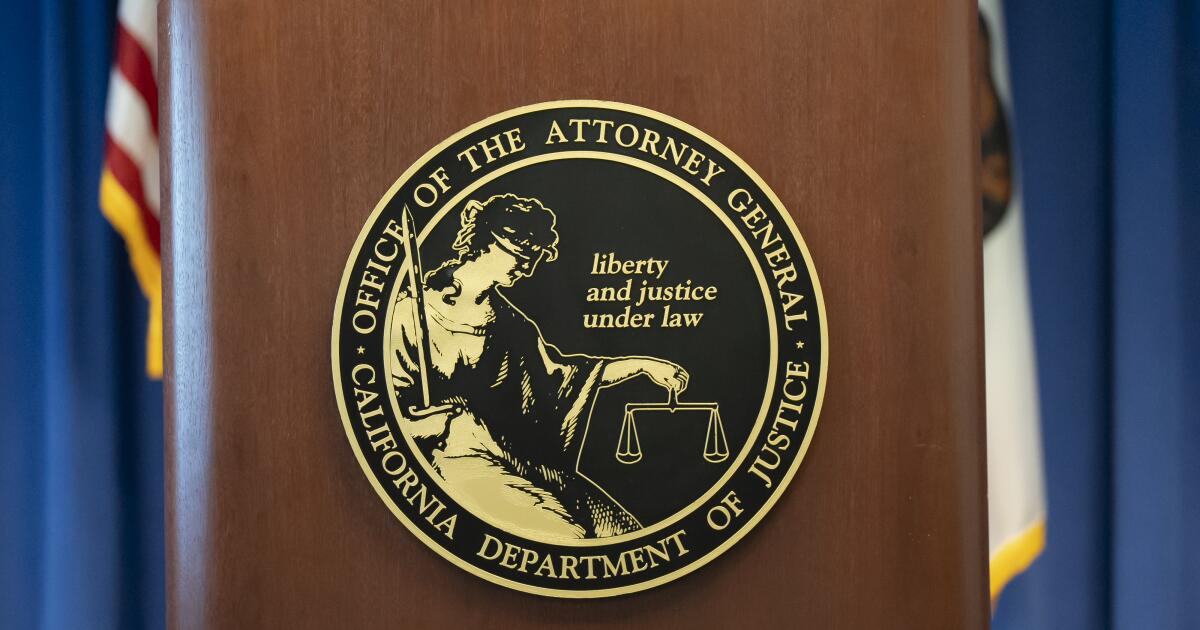
The federal government agreed to temporarily hold off on construction of a planned Immigration and Customs Enforcement facility in Northern California.
The voluntary pause until Sept. 9 comes after the California Atty. Gen. Rob Bonta and Santa Clara County officials sued the Trump administration last month to block the facility from being developed near Gilroy. The lawsuit remains ongoing.
“This pause in the construction, demolition, and development at the site of the challenged ICE facility is a significant step towards protecting our people, our communities, and our environment while the case remains ongoing,” Bonta said in a statement Monday night.
The Department of Homeland Security, which oversees ICE, didn’t immediately reply to a request for comment.
State and local officials believe the facility will be used for short-term detention of up to 150 people at a time, though ICE denied that it would be a detention center.
Community members and advocates for immigrants swiftly opposed the project. ICE has consistently looked to increase its detention capacity in California, where eight detention centers can now hold a combined 9,000 people, though the state has long been a thorn in the agency’s side.
The halt is part of a compromise between both sides involved in the legal action. After the state and county submitted a request for the court to temporarily halt the project, a hearing was set for Oct. 7.
Now, state and federal officials jointly requested that the court move up the hearing by at least a month. The agreement also extends how much time the federal government has to respond.
A federal judge signed off on the agreement Monday night.
The lawsuit, filed in U.S. District Court in San José, alleges that the leased land is zoned exclusively for agricultural use and that the federal government violated laws requiring state and county notification, as well as procedural steps before beginning construction.
Supreme Court justices are asking lawmakers on Capitol Hill to increase their 2027 budget, with most of the additional funding earmarked for security. Ann E. Marimow, a New York Times reporter, explains why the justices say these measures are necessary to protect them from rising threats.
-

 Los Angeles, Ca1 hour ago
Southern California hits hottest day of its extreme heat warning
-

 Detroit, MI1 hour ago
Steve Yzerman out as Detroit Red Wings GM, moves to senior advisor role
-
 San Francisco, CA2 hours ago
Supervisors urge California to expand S.F. speed-camera program
-

 Dallas, TX2 hours ago
Five teens injured after crashing carjacked vehicle during Dallas police chase
-

 Miami, FL2 hours ago
Tokyo-style Neapolitan pizza is coming to Miami, led by legendary pizzaiolo chef Bun
-

 Boston, MA2 hours ago
SEE THE GOOD: Roxbury center reminds young adults ‘You got this’ – Boston News, Weather, Sports | WHDH 7News
-
Denver, CO2 hours ago
Five Points affordable housing building honors Dr. Justina Ford | Rocky Mountain PBS
-

 Seattle, WA2 hours ago
Seattle weather: Hot and sunny day Wednesday, highs in the 80s


