Finance
Fayette schools face accounting concerns as outside reviews continue

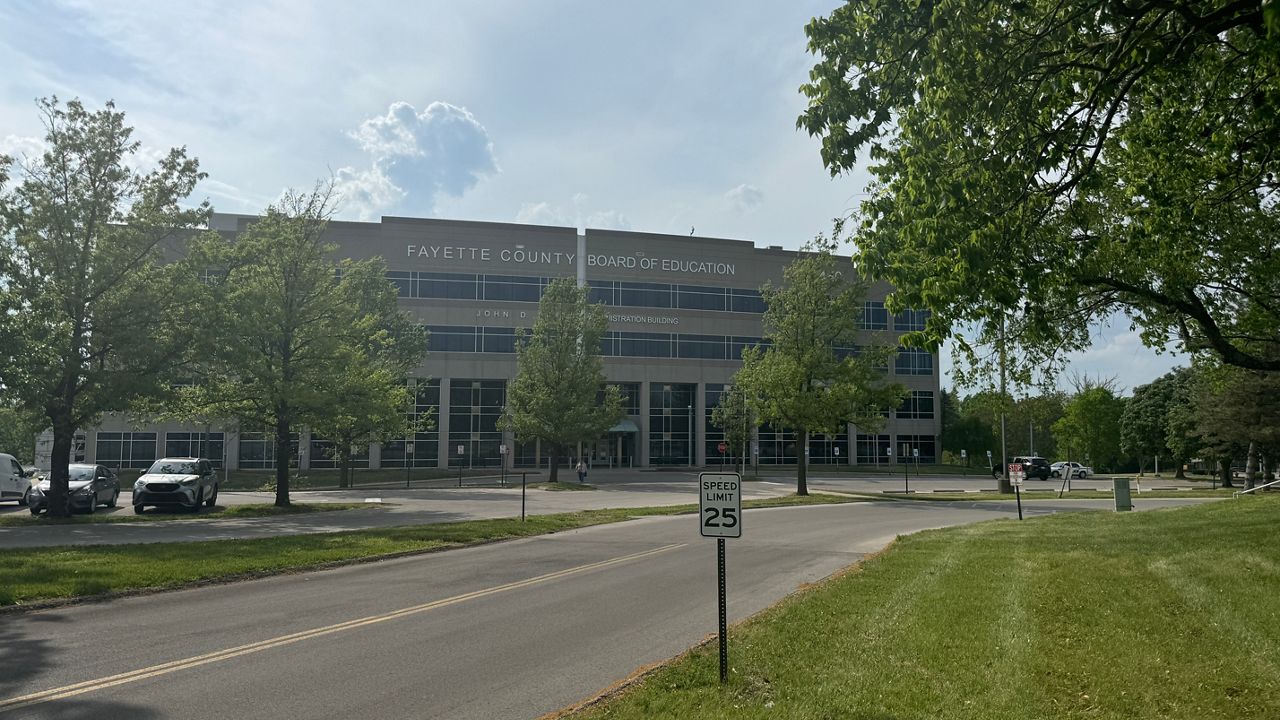
LEXINGTON, Ky. — As the school district works to rectify potentially decades of inaccurate accounting, two finance employees with Fayette County Public Schools are on paid leave. At the same time, two external reviews continue for Kentucky’s second-largest school district.
FCPS Superintendent Demetrus Liggins said he’s been made aware of troubling and deeply concerning information.
“I’ve spoken with several of our district’s financial advisor and our external audit firm and have conducted our that’s conducted our routine audit. and those conversations have also revealed issues that I was unaware of,” Liggins said.
One review is from accounting firm Weaver and Tidwell, hired by the district, and another, which Liggins said he requested, is being conducted by the auditor of public accounts.
While those reviews are ongoing, and based on preliminary reporting, Liggins said he’s been informed of both inaccuracies and improper accounting practices that date back to 2008.
Last month, the district hired Kyna Koch, a former associate commissioner of finance for the Kentucky Department of Education, as the interim chief financial officer.
Since taking on the task, she said she doesn’t have confidence in the numbers she’s been asked to review.
“Federal and state requirements may not have been followed, and our accounting procedures may not have been aligned with acceptable practices,” Koch said.
Koch said inaccuracies were found in revenue collection, record-keeping, invoicing, and that spending guidelines may not have been followed.
Now she’s helping set new measures, like additional reviews, to dig deeper and provide a clearer financial picture.
“It’s clear that these practices are sometimes nuanced and not easily identified through routine financial reports that are provided to the superintendent and the board. Some of these things would not have been readily apparent based on the information typically generated,” Koch said.
Koch is also recommending that the district get a short-term loan to cover expenditures until next fall’s property taxes are collected.
Though the district is not releasing names at this time, Liggins did comment on the status of some finance administrators.
“We currently have three administrators in our financial and accounting office. Two are on paid administrative leave, and one is on medical leave,” Koch said.
Those on paid administrative leave are pending an investigation.
Liggins said while they are still awaiting finalized reports from those outside audits, they’re aiming for accuracy and transparency in their next moves.
“As we continue this work, I’m committed to following the facts wherever they may lead, and whatever they may uncover, we’re only after the truth,” Liggins said.
Liggins was asked on Thursday whether property taxes would increase for the 2026-27 school year. He said they are not currently planning to ask the board to raise property taxes any more than they typically have in years past.
On Monday, Koch will present her latest findings to the board at its regularly scheduled finance meeting.
Koch also said the district plans to have a loan proposal ready as soon as next month.



Anne Arundel County is preparing to launch a new finance and e-procurement system to modernize county operations and improve how businesses interact with local government.
The new platform, called Harbor, is scheduled to go live in July and will replace the County’s legacy procurement system with a centralized cloud-based platform built on Oracle Fusion Cloud.
County officials say the new system is designed to streamline procurement and financial processes while making it easier for both existing and prospective vendors to do business with the County.
From the press release:
“Harbor is a much-needed upgrade that will streamline services for our county agencies and those who do business with the county,” said Anne Arundel County Chief Administrative Officer Christine Anderson.
The platform will serve as a single portal for supplier registration, bid opportunities, invoicing, payment tracking, and contract management, consolidating what had previously been spread across multiple systems. County leaders say the transition is part of a broader effort to modernize operations, improve efficiency, and lower barriers for businesses seeking to compete for county contracts.
For counties, procurement modernization remains an important operational priority as local governments look to improve transparency, strengthen vendor engagement, and simplify access for businesses of all sizes. Anne Arundel County has encouraged interested suppliers to review training materials and registration information ahead of the July launch.
Finance
Quadient Recognized as a Leader in the 2026 SPARK Matrix for Accounts Receivable Applications

Quadient demonstrates continued innovation in AI-driven invoice-to-cash automation and unified finance operations
Paris
Quadient (Euronext Paris: QDT), a global automation platform powering secure and sustainable business connections, announced today it has been recognized for the fifth consecutive year as a Leader in the 2026 SPARK Matrix™ for Accounts Receivable Applications by technology analyst and advisory firm QKS Group. Quadient strengthened its position in the report year-over-year, with a notable improvement in Technology Excellence, reflecting continued innovation in its AI-driven invoice-to-cash solution.
According to QKS Group, Quadient’s leadership position highlights its evolution into a comprehensive, AI-powered platform that delivers strong predictive accuracy and straight-through processing. The analyst firm also emphasized the capability of Quadient’s solutions to unify accounts receivable (AR) and accounts payable (AP), offering finance leaders greater visibility and insights into their business finances to make faster, better decisions on working capital management.
Earlier this month, Quadient announced the release of its new cash dashboard capability for AR and AP that allows finance teams to bring together traditionally siloed data in a single view. An AI assistant summarizes key metrics and provides analysis that helps finance leaders accelerate cash on hand, improve forecasting, reduce risk and uncover opportunities to optimize working capital.
“Quadient has established a strong position in the 2026 Accounts Receivable Automation market through its focus on intelligent automation, cash flow optimization and integrated financial operations,” said Sanjeevi C R, associate vice president, Enterprise Research at QKS Group. “The platform’s evolution from predictive analytics to AI-driven autonomous collections execution represents a meaningful step forward in reducing manual effort across the invoice-to-cash cycle. What differentiates Quadient is its ability to combine collections management, cash application, and payment processing with a unified accounts receivable and accounts payable ecosystem, providing finance leaders with a more holistic view of working capital performance. By enabling greater automation, enhanced cash flow visibility, and more efficient receivables operations, Quadient continues to deliver measurable value for organizations seeking to modernize their financial processes and improve liquidity management.”
QKS Group highlighted the following key strengths for Quadient AR:

The G7 Leaders’ Summit took place in Évia
-

 Missouri3 minutes ago
Missouri Highway Patrol investigating KCPD officer involved shooting
-
Montana6 minutes ago
Montana DEQ works toward impairment designation for Big Hole River
-

 Nebraska11 minutes ago
Tunnel Talk: 5-for-5 impact on Nebraska volleyball, reseat update
-

 Nevada18 minutes ago
Terrible’s takeover of Primm gets Nevada regulatory approval
-

 New Hampshire21 minutes ago
National Guard Helicopter Rescues 80-Year-Old Canadian Hiker From New Hampshire Peak
-

 New Jersey26 minutes ago
New Jersey Hall of Fame Announces Incoming 2026 Class of Inductees
-

 New Mexico33 minutes ago
Former NM GOP treasurer arrested after deadly Las Cruces hit-and-run
-
North Carolina36 minutes ago
NC State, UNC planning nonconference men’s basketball game this season


